How Telematics Improves Route Planning
How telematics uses real-time GPS, traffic data and analytics to cut fuel, shorten routes and improve on‑time deliveries for fleets.
Telematics transforms route planning by using real-time vehicle data to improve efficiency, cut costs, and reduce delivery delays. Here's how it works:
- Real-Time GPS Tracking: Provides live updates on vehicle locations, allowing for instant route adjustments.
- Traffic Analysis: Monitors congestion, accidents, and roadworks to recalculate routes on the fly.
- Fuel Efficiency: Tracks fuel usage and driver habits to lower consumption and operating costs.
- Data Insights: Analyses historical data to refine routes and improve performance over time.
For example, companies like DPD UK and Hermes have slashed delivery times, reduced fuel costs, and improved on-time deliveries by integrating telematics into their fleets. With tools starting at £7.99 per vehicle per month, telematics is an accessible solution for businesses of all sizes. It’s a smarter way to manage van tracking solutions in today’s fast-paced logistics environment.
How telematics helps with route planning and monitoring delivery
sbb-itb-499a7f0
Real-Time GPS Tracking for Better Route Accuracy
Real-time GPS tracking takes the uncertainty out of route planning by providing up-to-the-second updates on vehicle locations. Unlike manual planning, this tech delivers detailed information, including latitude, longitude, altitude, and speed, with an accuracy of 5–10 metres under ideal conditions. By using satellite signals, GPS systems pinpoint vehicle positions and transmit this data through cellular networks to a centralised platform, giving fleet managers a live overview of their entire operation.
How Real-Time Tracking Works
GPS trackers installed in vehicles communicate with satellites orbiting the Earth. These signals, travelling at the speed of light, calculate precise locations. Modern systems also incorporate GLONASS or Galileo networks to minimise disruptions caused by tunnels or dense urban environments. These trackers update vehicle positions every 5–10 seconds - especially crucial for urban fleets - and integrate this data into telematics platforms. The result? Dynamic route maps that adjust in real time based on the fleet's current positions. This live data forms the foundation for the operational improvements outlined below.
Benefits for Fleet Managers
With accurate, real-time updates, fleet managers gain a wealth of actionable insights. For example, live routing has been shown to reduce travel times by 20–30%. In early 2024, DPD UK rolled out GPS telematics across 8,000 vans, cutting missed deliveries by 28% - from 12% to just 8.6% - over six months. Spearheaded by Operations Director Mark Russell, the initiative included live tracking and dynamic rerouting for 15% of parcels daily. This approach shortened travel times by 22% and slashed annual fuel costs by £1.2 million.
Hermes (now Evri) saw similar success in 2023. By equipping 5,500 vehicles with GPS tracking, they boosted on-time delivery rates from 82% to 96% within nine months. Logistics Head Jane Patel oversaw the implementation of real-time ETA updates for customers and dynamic route adjustments to avoid traffic. These changes led to an 18% reduction in mileage - saving 1.2 million kilometres - and a 25% drop in customer complaints. Moreover, 95% of UK businesses report improved delivery accuracy as a key advantage, with average ETA accuracy increasing by 25%.
Real-time dashboards allow managers to reroute vehicles instantly, optimise multi-stop deliveries, and provide customers with precise ETAs. This level of efficiency and accuracy simply isn't achievable with manual planning.
Live Traffic Analysis and Route Adjustments
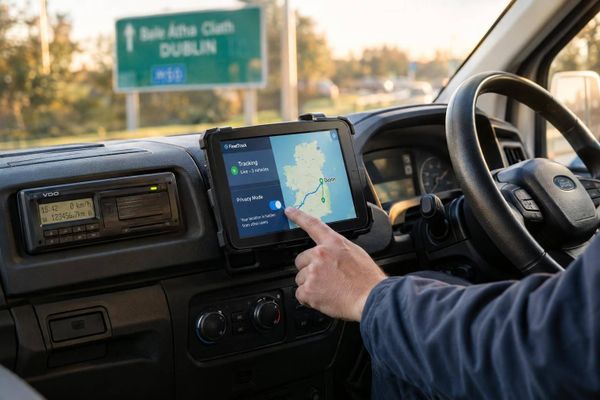
Telematics has taken a step beyond real-time GPS tracking by integrating live traffic data to improve route planning. These systems actively monitor vehicle locations and road conditions, using information from GPS sensors, UK government traffic feeds, and services like TomTom and Google Traffic. When congestion, accidents, or roadworks are detected, the system recalculates routes instantly and updates drivers via in-cab displays or mobile devices.
Using Traffic Data for Live Route Changes
Modern white-label van tracking solutions rely on advanced algorithms to assess current traffic speeds and conditions. When a quicker route becomes available, drivers are notified immediately. For example, during a September 2023 trial involving 800 HGVs, routes were optimised to avoid 65% of delays, resulting in 22% faster journeys. This initiative, led by Operations Director Mark Evans, achieved an 11% reduction in operational costs, saving £750,000.
These systems evaluate multiple route options simultaneously, allowing them to adapt in real-time. This means drivers can avoid congestion as it happens, rather than relying on outdated, historical traffic data.
Impact on Delivery Times and Costs
The benefits of automatic rerouting are clear. Fleets using live traffic data consistently reduce delivery delays by 25–35% and cut fuel consumption by 10–15% by avoiding unnecessary idling and detours. A 2023 UK study revealed that telematics users saved an average of £1,200 per vehicle annually on fuel costs.
Another example from Q1 2023 highlights the impact of AI-powered traffic platforms. A large UK fleet of 1,200 vehicles implemented a system with real-time jam detection and alerts. The results were striking: late deliveries dropped from 18% to 12% (a 32% improvement), and fuel costs were cut by 12%, amounting to £1.1 million in savings. Additionally, on-time delivery rates increased significantly, with 68% of operators reporting improvements, raising punctuality from 75% to 92%.
These real-time traffic adjustments are reshaping route planning for UK fleets, enhancing both fuel efficiency and cost management. Combined with earlier strategies, such innovations are driving a new era of operational efficiency.
Fuel Efficiency and Cost Reduction Through Data Analytics
Telematics turns raw vehicle data into practical insights that help cut fuel costs. By examining fleet-wide patterns, these systems highlight inefficiencies that might otherwise slip under the radar, turning everyday fleet operations into opportunities to save money.
How Telematics Tracks Fuel Usage
Telematics devices gather detailed fuel data from vehicle sensors, including metrics like litres per 100 kilometres, idling times, and refuelling events. Such data is invaluable for pinpointing wasteful habits. For instance, harsh acceleration can increase fuel consumption by as much as 30%, while prolonged idling burns between 0.5 and 1 litre of fuel per hour - accounting for 20–30% of fuel waste in urban fleets. Analytics platforms process this data into straightforward weekly efficiency reports.
A great example comes from DPD UK, which rolled out telematics across 8,000 vans in 2022. This move cut their fuel consumption by 11%, saving an impressive 1.2 million litres annually. Under the guidance of Fleet Director Mark Taylor, the company introduced eco-driving training for drivers and used analytics to optimise routes and reduce idling. The result? Annual savings of £1.8 million, based on a fuel cost of £1.50 per litre.
These insights allow for smarter, data-driven decisions, including optimised route planning, which further slashes fuel expenses.
Cost Savings Through Better Routes
Telematics doesn’t stop at monitoring fuel use - it also helps streamline routes to reduce unnecessary mileage and costs. By calculating the shortest and least congested routes, telematics systems minimise fuel consumption. For UK fleets, these systems also factor in local fuel prices (£1.50–£1.70 per litre) and help avoid low-emission zones, where fines can reach up to £300. On average, fleet managers save between £0.10 and £0.20 per kilometre through optimised routing. For a fleet of 50 vans covering 50,000 kilometres annually, this translates to savings of £25,000 to £50,000 every year.
Optimised routing has a proven track record of delivering results. Between 2021 and 2022, Tesco used telematics to adjust the routes of its 3,200 HGVs, cutting fuel consumption by 7.8% - a reduction of 2.1 million litres. With behaviour scoring and route adjustments led by Supply Chain Director James Reed, Tesco achieved overall savings of £3.15 million.
For fleets looking to adopt these technologies, GRS Fleet Telematics offers fuel tracking tools starting at just £7.99 per vehicle per month. These tools monitor key metrics like fuel efficiency (litres per 100 kilometres) and speed variance, helping fleets maintain ongoing improvements in efficiency.
Using GRS Fleet Telematics for Better Performance
Overview of GRS Fleet Telematics Solutions
GRS Fleet Telematics provides three distinct hardware options designed to suit various business needs across the UK. The Essential plan, costing £35 for hardware, includes a basic wired GPS tracker for straightforward real-time location tracking - ideal for sole traders or smaller fleets. The Enhanced option, priced at £79, adds a hidden Bluetooth backup unit alongside the main tracker, offering an extra layer of security. For those seeking the highest level of protection, the Ultimate tracker, at £119, combines both trackers with an immobilisation feature that prevents unauthorised engine starts. Impressively, this option boasts a 91% recovery rate for stolen vehicles.
All hardware plans come with a software subscription that includes SIM data, platform access, and dedicated account management. The subscription cost varies by plan: the Essential package starts at £7.99 per vehicle per month, a popular choice for smaller businesses. Medium-sized fleets often prefer the Enhanced plan at £12.99 per vehicle per month, while larger fleets managing higher-value assets typically go for the Ultimate package at £19.99 per vehicle per month. Businesses combining tracking with GRS Fleet Graphics also benefit from free installation, lowering initial setup costs. These flexible hardware and software solutions set the stage for enhanced route optimisation, as detailed below.
Features That Improve Route Planning
Real-time GPS tracking is a game-changer for fleet managers, enabling them to monitor and adjust routes on the fly. The system’s geofencing feature adds another layer of efficiency by allowing users to set up virtual boundaries around specific locations, such as delivery zones, depots, or restricted areas like London’s Ultra Low Emission Zone (ULEZ). Vehicles trigger automatic alerts when entering or leaving these zones, helping streamline stop sequences and minimise unnecessary detours - especially useful in congested urban areas.
Another standout feature is driver behaviour monitoring. This tracks key metrics like harsh braking, rapid acceleration, and speeding incidents, providing fleet managers with actionable insights into driving patterns. For example, a logistics company in Manchester using the Ultimate tracker leveraged these analytics to implement tailored coaching. The result? Routes became 25% faster, and the company saved £15,000 annually on fuel costs. These tools allow for smarter journey planning and more effective driver training.
Affordable Telematics Solutions
GRS Fleet Telematics combines advanced features with flexible pricing to cater to businesses of all sizes. The tiered pricing structure ensures companies only pay for what they need. Small businesses can start with the Essential plan at just £7.99 per vehicle per month. Medium-sized fleets often find the Enhanced option, at £12.99 per vehicle per month, to be the perfect balance of cost and features. Meanwhile, larger fleets handling high-value vehicles tend to choose the Ultimate package at £19.99 per vehicle per month. For fleets with more than 10 vehicles, volume discounts make these solutions even more cost-effective.
Manual vs Telematics-Based Route Planning
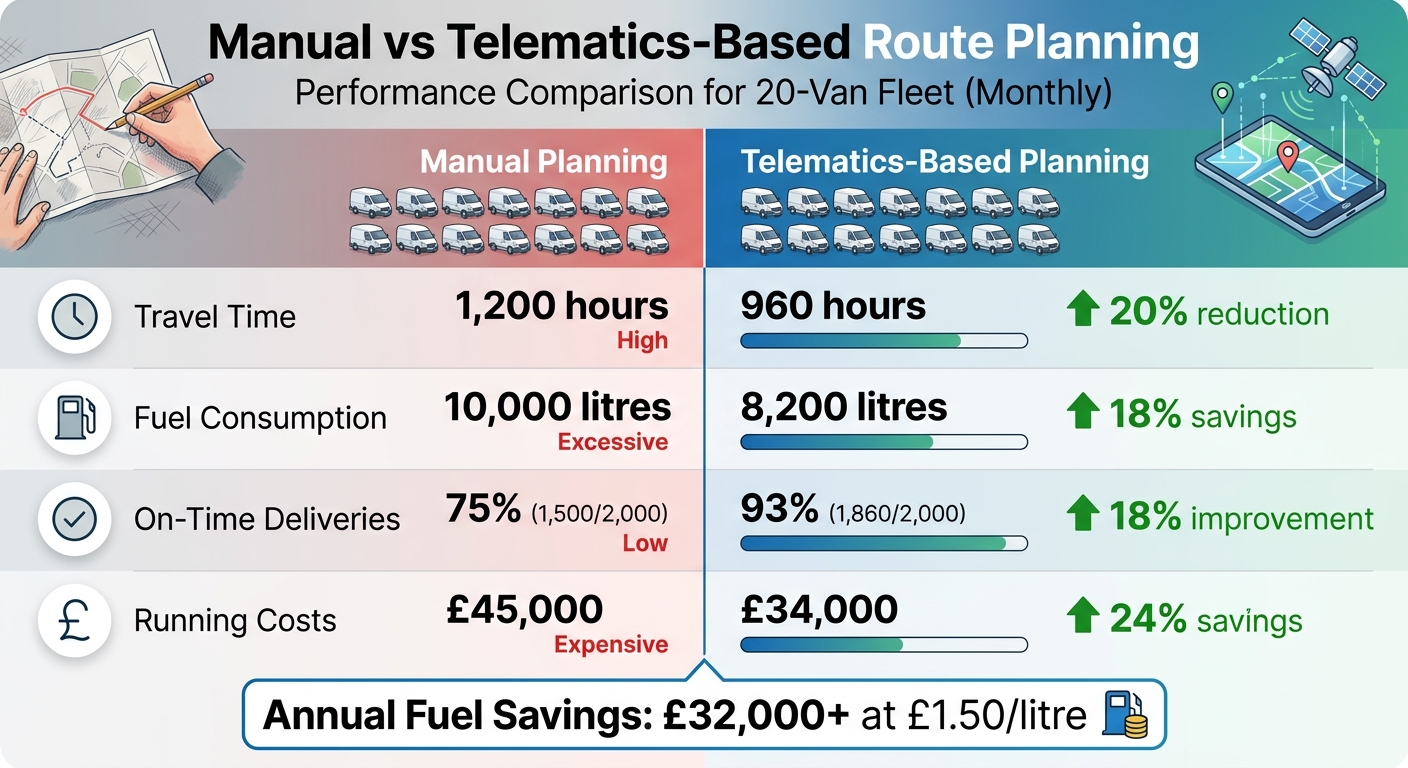
Manual vs Telematics Route Planning: Performance Comparison for UK Fleets
When you compare manual route planning with telematics-based systems, the difference in efficiency and performance is undeniable. Manual planning relies on static maps and driver experience, which means it can't adapt to unexpected issues like traffic jams on the M25 or sudden road closures. In contrast, telematics systems use real-time GPS data and traffic analytics to dynamically adjust routes, improving performance across the board.
Comparison Metrics
The numbers speak for themselves. For a 20-van delivery fleet operating in the UK over a month, the differences are striking:
| Metric | Manual Planning | Telematics-Based | Improvement |
|---|---|---|---|
| Travel Time | 1,200 hours | 960 hours | 20% reduction |
| Fuel Consumption | 10,000 litres | 8,200 litres | 18% savings |
| On-Time Deliveries | 75% (1,500/2,000) | 93% (1,860/2,000) | 18% improvement |
| Running Costs | £45,000 | £34,000 | 24% savings |
These figures highlight how telematics can transform fleet operations. For example, saving 1,800 litres of fuel each month translates to about £2,700 at a fuel price of £1.50 per litre. Over a year, that's more than £32,000 saved - money that can be reinvested into the business.
Case studies from companies like DPD UK and Hermes back up these numbers. They show how telematics enables real-time tracking and dynamic routing, which manual methods simply can't match. By integrating live traffic updates, vehicle data, and historical performance, telematics ensures faster routes, reduced costs, and improved customer satisfaction. For UK businesses managing fleets, it's clear that telematics isn't just an option - it's the smart choice for staying competitive in a fast-paced world.
Continuous Improvement with Data Feedback
Telematics doesn’t just address today’s routing challenges - it creates a feedback loop that helps refine route planning over time. Every trip collects data on fuel consumption, idling, harsh braking, and route deviations. This wealth of information provides insights that manual planning simply can’t uncover. Fleet managers can monitor trends week by week or month by month, pinpointing what’s effective and what needs adjustment. This approach ties seamlessly into the real-time updates discussed earlier.
Tracking and Analysing Fleet Performance
Beyond real-time updates, historical data analysis plays a crucial role in improving fleet operations. Modern telematics platforms transform raw data into easy-to-read visuals, like charts and heat maps. These tools let you quickly identify trouble spots - such as consistently delayed routes, excessive idling, or areas with high fuel consumption.
Take this example: a UK logistics company found that urban deliveries included 15% excess idling. By reviewing three months of data, they adjusted driver training and route planning, cutting idle time by 25% and boosting fuel efficiency by 12%.
DHL UK applied a similar strategy in Q1 2024. By analysing six months of fleet data, they uncovered inefficient routes. The result? An 18% drop in mileage and annual fuel savings of £450,000 across 500 vans. According to Fleet Director Mark Thompson, weekly performance reviews and AI-based route recalibration were key to achieving these results [DHL Sustainability Report 2024].
Using Data to Improve Efficiency
The key is to act on the data. Use it to categorise routes - retain the best ones, improve those underperforming, and remove inefficiencies. Set quarterly goals and regularly review trends to keep progress on track. For example, one case study showed that reassessing routes led to a 22% improvement in on-time deliveries and a 12% reduction in costs.
GRS Fleet Telematics supports this kind of ongoing improvement by offering real-time dashboards and tools for analysing historical data. With regular reviews, UK businesses can achieve measurable efficiency gains without stretching their budgets.
Conclusion: The Future of Route Planning with Telematics
Telematics is reshaping how route planning is done in the UK. Gone are the days of relying on static maps and guesswork - real-time data, GPS tracking, and performance analysis have taken their place. The results? Noticeably reduced mileage, lower fuel costs, faster delivery times, and greater control over fleet operations.
With telematics, fleet managers get a clear view of every journey, drivers follow routes that adapt to live traffic updates, and the system continuously refines itself to improve efficiency. These tools not only save time and money but also help fleets operate smarter and more effectively, as highlighted earlier.
For businesses looking to stay competitive, making the switch to telematics is a logical step. GRS Fleet Telematics offers an affordable solution starting at just £7.99 per vehicle per month. Their system provides real-time tracking, route optimisation, and detailed data analysis, all tailored to enhance route planning. Features such as live traffic updates and fuel efficiency monitoring ensure your fleet is always operating at its best.
This transition isn’t just about adopting new tools - it’s about gaining the insights needed to make better decisions, cut down on waste, and adapt quickly to changing conditions. As discussed earlier, telematics is transforming fleet operations across the UK, turning everyday challenges into opportunities for growth.
No matter the size of your fleet, telematics offers practical benefits that can be felt right away. Now is the time to embrace this technology and start seeing the difference.
FAQs
What do I need to install telematics in my vans?
To get telematics up and running in your vans, you'll need to install tracking devices capable of gathering and sending data. This usually includes fitting GPS units and telematics hardware to track vehicle location, engine performance, and driver behaviour.
It's best to opt for professional installation to ensure the wiring and setup are done correctly. Once everything is in place, the devices link to a central platform, giving fleet managers access to real-time information for smarter route planning.
How accurate is GPS tracking in busy UK cities?
GPS tracking in bustling UK cities offers impressive accuracy, typically pinpointing locations within about 3 metres. Modern developments like SmartNav and 3D building data address common urban challenges, such as signal reflections and interference caused by tall structures. These technologies enhance reliability, ensuring dependable tracking even in crowded cityscapes.
How quickly will telematics pay for itself?
Telematics can pay for itself in as little as 0.3 months, offering businesses the chance to reduce fleet costs by up to 20% and cut fuel usage by 10–15%. By improving efficiency and enabling smarter route planning, it helps companies save money while streamlining their operations.