How Telematics Improves Fuel Cost Allocation
Accurate telematics links fuel use to drivers, vehicles and routes, cutting waste with real-time alerts, routing and predictive maintenance.
Telematics helps UK fleets lower fuel costs and allocate expenses more accurately by combining GPS tracking, vehicle sensors, and van tracking solutions for real-time data analysis. It monitors fuel consumption, driver behaviour, and engine performance, providing precise insights that reduce inefficiencies like idling or harsh driving. Key benefits include:
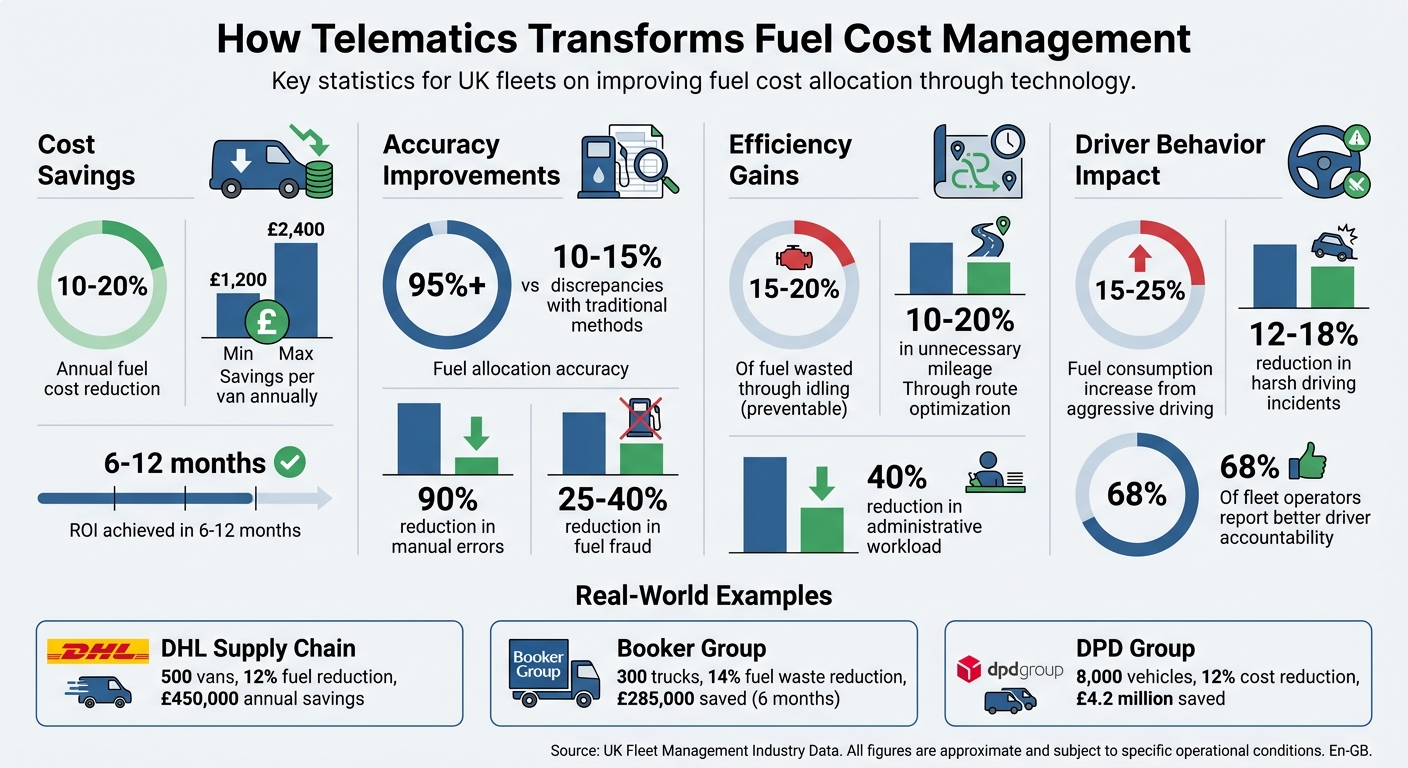
- Fuel Savings: Fleets typically reduce fuel expenses by 10–20% annually.
- Accurate Allocation: Links fuel usage to specific drivers, vehicles, and routes with over 95% accuracy.
- Driver Accountability: Tracks behaviours like idling and speeding, encouraging eco-friendly driving.
- Real-Time Alerts: Flags inefficiencies like excessive fuel use or route deviations.
- Predictive Maintenance: Prevents breakdowns and improves efficiency by identifying engine issues early.
- Integrated Systems: Combines telematics with fuel cards and ERP software for streamlined tracking and reduced fraud.
For example, UK companies like GlobalLogistics and DHL have saved hundreds of thousands of pounds annually by adopting telematics, achieving ROI in under a year. By improving visibility and reducing waste, telematics transforms fleet management into a precise, data-driven process.
Telematics Fuel Savings Statistics for UK Fleets
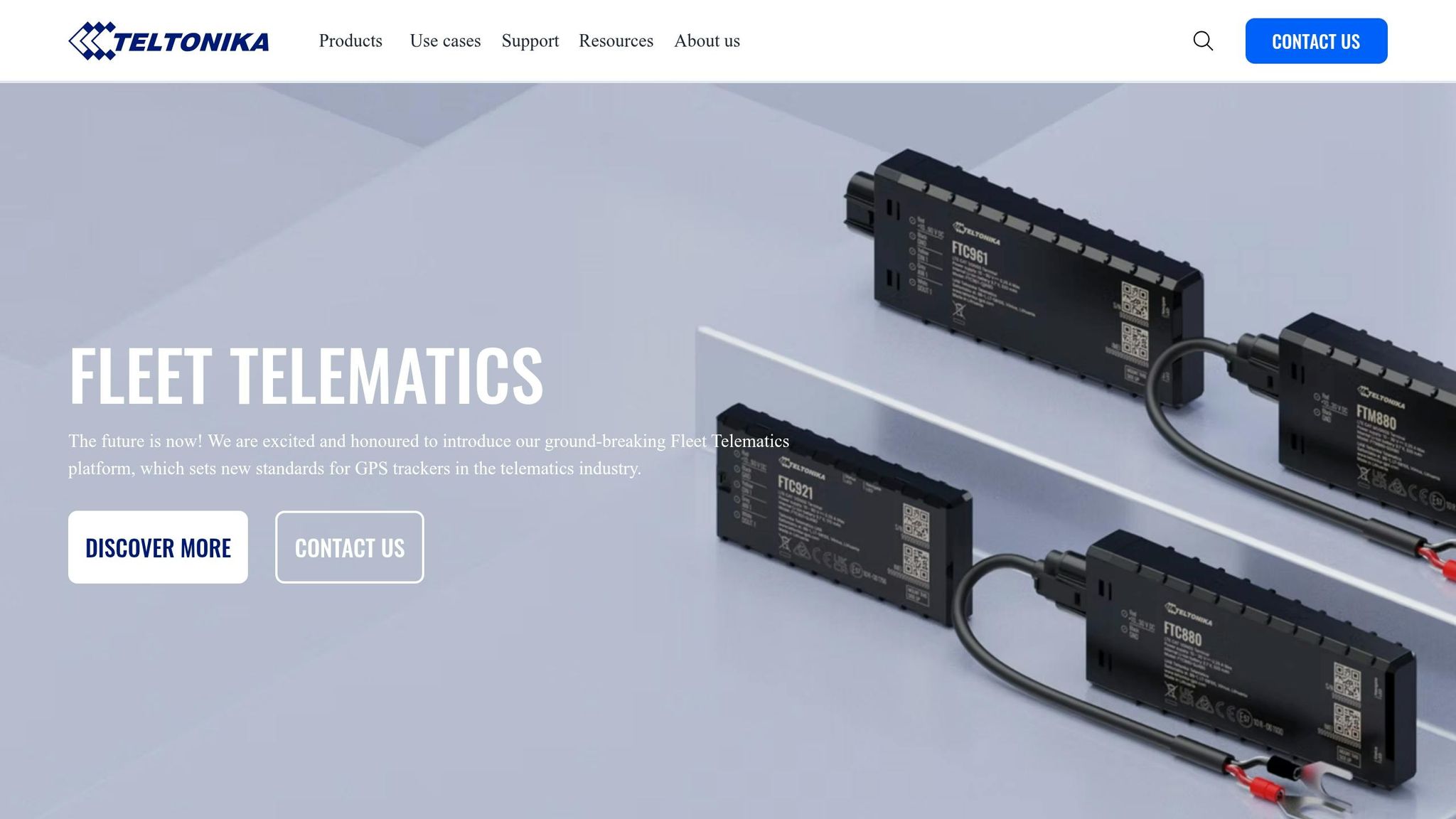
Webinar | Telematics For Efficient Fuel Management | Teltonika
sbb-itb-499a7f0
Real-Time Fuel Tracking and Data-Driven Allocation
Telematics systems connect directly to a vehicle’s engine management system via OBD ports, capturing key data like fuel injection pulses, fuel pressure, and engine load parameters in real time. When combined with GPS data, these systems can calculate fuel consumption per 100 km with remarkable precision. Accuracy levels often exceed 95%, a stark contrast to the 10–15% discrepancies typically seen with traditional fuel card reconciliation methods. This level of accuracy provides the foundation for detailed consumption metrics and real-time alerts, which are crucial for allocating costs effectively.
This precision has a transformative impact on cost allocation. For instance, fleet operators can compare vehicles - such as one consuming 8.5 L/100km versus another at 7.2 L/100km - and allocate costs accordingly. Even fuel wasted during idling, such as 45 minutes of unnecessary engine running, can be identified and accounted for.
Detailed Fuel Consumption Metrics
Telematics platforms track a range of interconnected metrics, including litres consumed, idle time, kilometres travelled, fuel efficiency ratios (L/100km), and cost per kilometre. This data provides a comprehensive view of operations, enabling costs to be allocated across various cost centres, projects, or client accounts.
For example, a UK fleet operator managing 50 vehicles might discover that Vehicle 12, driven by Driver Thompson, accrued £1,247 in fuel expenses during March. Of this, £180 was directly linked to excessive idling. This level of detail not only supports accurate billing but also enables targeted coaching for drivers. Additionally, in multi-stop delivery scenarios, telematics can attribute fuel consumption to specific stages of a journey.
Take the case of Booker Group, a UK wholesaler. Between January and June 2023, the company used white-label telematics across 300 trucks to cut fuel waste by 14%. With Fleet Manager Tom Reynolds overseeing the system, GPS-based driver-specific costing helped achieve £285,000 in fuel savings, with an impressive 95% accuracy in attribution. The ability to generate real-time alerts based on these metrics further helps reduce inefficiencies.
Reducing Fuel Waste with Real-Time Alerts
Building on these detailed insights, real-time alerts flag inefficiencies like excessive idling or sudden fuel usage spikes. Common triggers include idling for more than five minutes, rapid acceleration, harsh braking, speeding, or fuel consumption exceeding vehicle-specific benchmarks by 15–20%.
For instance, if a Ford Transit Custom typically consumes 7.5 L/100km but jumps to 9.2 L/100km, an alert is triggered. Similarly, 30 minutes of daily idling in a fleet of 250 vehicles could waste between £18,000 and £24,000 annually, based on UK fuel prices of £1.40–£1.60 per litre. Notifications delivered via in-cab displays or mobile apps allow drivers to take immediate corrective action.
In 2022, DHL Supply Chain in the UK implemented telematics across 500 vans. Over six months, the company reduced fuel usage by 12%, from 38 L/100km to 33.5 L/100km. Real-time idling alerts - triggered after three minutes of idling - and GPS-tracked route adherence helped achieve £450,000 in annual fuel savings, with precise per-vehicle cost allocation.
Research shows that organisations often achieve fuel cost reductions of 8–15% within the first year of telematics implementation. For a UK fleet operator with 50 vehicles consuming around 2,500 litres of fuel monthly at £1.50 per litre (a monthly fuel budget of £3,750), a 12% reduction would save approximately £450 per month - or £5,400 annually.
Driver Behaviour Analysis for Cost Control
Telematics technology monitors critical driver metrics such as harsh acceleration, sudden braking, speeding, and idling. By tracking these behaviours, it creates detailed profiles that link driving habits directly to fuel costs. Studies show that aggressive driving can increase fuel consumption by 15–25%, with harsh acceleration alone causing a 20–30% spike in fuel use per event. This level of precision helps telematics systems address operational inefficiencies and reshape fuel budgets effectively.
Using tools like key fob logins or mobile apps, telematics assigns unique driver IDs, making it possible to attribute fuel consumption to individual drivers. This eliminates guesswork, replacing it with data-driven accountability and performance-based fuel analytics.
For example, between January and June 2024, Thames Water deployed telematics across 800 service vehicles. Under the leadership of Fleet Manager John Hargreaves, they implemented geo-fenced no-idle zones and provided targeted coaching. These measures reduced idling by 22%, resulting in £450,000 in savings and a 14% boost in efficiency. Similarly, a major UK parcel delivery firm analysed acceleration and braking data across 5,000 vans in 2023. They achieved a 12% reduction in fuel consumption, saving around £1.2 million annually, while harsh driving incidents dropped by 18%.
Performance-Based Cost Allocation
Connecting fuel costs to driver behaviour brings a level of accountability that traditional methods simply cannot achieve. When drivers see their personal fuel consumption compared to that of their peers, it encourages eco-friendly driving through healthy competition. According to a 2025 Fleet News survey, 68% of UK fleet operators reported better driver accountability after adopting performance-based fuel allocation systems. Drivers who maintain low rates of harsh events and minimise idling are rewarded with lower fuel cost allocations, while inefficient habits result in higher costs.
The results speak for themselves. Fleets using telematics to analyse driver behaviour typically see a 10–20% reduction in fuel consumption, as shown in a 2023 study of 1,200 fleets across the UK and EU. This system combines real-time alerts with regular performance reviews. Drivers receive immediate notifications for excessive idling or harsh acceleration, while managers use dashboards to spot trends and provide tailored coaching. For UK fleets, this approach translates to savings of £2–£5 per 100 km per van, creating substantial cost reductions across entire fleets within months.
These insights into driver behaviour lay the groundwork for integrating route planning strategies, further refining fuel cost management.
Route Planning and Geo-Fencing for Expense Allocation
Once fuel costs are linked to driver behaviour, the next step in a telematics strategy is refining routes and implementing geo-fencing. With GPS tracking, vehicle movements can be monitored in real-time, helping to eliminate unnecessary mileage. Features like route history and playback enable a detailed review of travel paths and stops, making it easier to identify detours that drive up fuel costs. Multi-constellation GNSS systems (GPS, GLONASS, Galileo, and BeiDou) provide positional accuracy of up to 2.5 metres. This precision allows fleet managers to match trip data with fuel sensor readings, uncovering unusual consumption patterns and validating reported mileage. By streamlining routes, reducing idle time, and integrating scheduling software for automated dispatching, telematics plays a key role in reducing fuel use and improving expense tracking for UK fleets.
Reducing Fuel Costs Through Better Routing
Accurate route planning builds on driver behaviour insights to fine-tune fuel cost allocation. By regularly analysing travel patterns, fleet managers can spot recurring traffic hotspots or inefficient routes that lead to higher fuel consumption. Updates in under 10 seconds allow dispatchers to quickly reroute vehicles, avoiding delays and wasted fuel. Telematics systems can connect with ERP platforms via open APIs, automating cost allocation based on mileage. Even during signal dropouts, GPS systems store data offline, ensuring complete journey records for accurate fuel cost calculations. These routing improvements work hand-in-hand with geo-fencing to maximise operational efficiency.
Preventing Misallocation with Geo-Fencing
Geo-fencing creates virtual boundaries around specific locations or approved routes, sending instant alerts - via SMS or push notifications - when vehicles cross these limits. This ensures fuel is used only for authorised purposes. Intelligent curfew scheduling further restricts vehicle use outside designated hours, while RFID technology assigns fuel costs and mileage to individual drivers for greater accountability. Managers can use trip history and route replay, complete with timestamps and speed data, to verify journeys and compare fuel consumption against GPS-verified distances. These tools help quickly identify inefficient routes or areas where fuel budgets are being misused.
Predictive Maintenance and Fuel Efficiency
Telematics systems go beyond route planning and geo-fencing by shifting from reactive repairs to predictive maintenance. Using AI algorithms, these systems monitor engine health and usage, catching potential issues early. This not only avoids costly breakdowns but also helps maintain fuel efficiency by preventing the extra fuel usage that comes with poorly maintained engines.
Preventing Efficiency Drops with Engine Alerts
Monitoring engine health offers immediate insights into problems that could harm fuel economy. When telematics systems detect irregularities in engine performance, they send instant alerts to managers, allowing for timely maintenance scheduling. For instance, a UK logistics firm managing 250 vehicles adopted a telematics platform with predictive engine alerts in 2025. Acting on these alerts helped the company avoid 12 major breakdowns and cut vehicle downtime by 40%. Additionally, early detection of engine inefficiencies boosted the fleet's fuel economy, achieving an average increase of 2.3 miles per gallon.
Automated maintenance scheduling, based on mileage and engine hours rather than fixed intervals, ensures vehicles perform at their best. Alerts for anomalies, such as sudden drops in fuel efficiency, can point to mechanical problems or even fuel theft, enabling quick interventions. These real-time notifications also lay the groundwork for smarter budgeting, showing how timely maintenance affects overall fuel consumption.
Using Data for Long-Term Budget Planning
Telematics doesn’t just help in the short term - it also improves long-term budget planning. Historical fuel data provides a solid foundation for forecasting annual fuel costs and spotting spending trends. By linking maintenance events to changes in fuel usage, fleet managers can see how repairs or replacements affect costs. For logistics companies, where fuel often accounts for up to 35% of operational expenses, this data-driven approach turns budgeting into a precise science. Combining van tracking and fuel analytics with telematics records gives managers a complete view of how maintenance timing impacts fuel efficiency, allowing for better financial planning and smarter decisions about fleet upgrades or expansions.
Integrating Telematics with Business Systems
Integrating telematics with business systems takes fleet expense management to a whole new level by simplifying processes and improving accuracy. When telematics connects with fuel cards and enterprise software, it creates a streamlined way to track spending. This setup links GPS data, timestamps, and odometer readings with fuel purchase records, forming a single, reliable record. For example, when a fuel card is used, the system checks whether the vehicle’s GPS location and odometer match the transaction. A 2023 Geotab study found that fleets using this integration reduced fuel fraud by 25–40% and achieved 95% accuracy in expense tracking.
Ensuring Accuracy with Fuel Card Integration
Pairing telematics with fuel cards eliminates guesswork when verifying transactions. In 2023, UK-based waste management company Biffa implemented Teletrac Navman telematics alongside their Fuelcard system across 1,200 vehicles. Under the guidance of Fleet Manager John Hargreaves, the system matched GPS data with 150,000 monthly transactions. This reduced fraudulent claims by 35% - from £45,000 to £29,250 annually - and halved admin time, saving 20 hours each week. Altogether, the project delivered annual savings of £120,000. Adding geofencing further tightened control by limiting card use to approved stations, while automated checks flagged anomalies by comparing litres purchased against actual consumption.
Achieving Complete Cost Transparency
By integrating telematics with ERP and accounting systems, businesses gain full visibility into fuel expenses. Systems like SAP or Xero can pull telematics data into live dashboards, offering a clear view of spending for each vehicle and exposing budget overruns. Research from Cambridge showed this approach cuts overruns by 15–20%. Additionally, the 2024 Arval UK Fleet Report revealed that 68% of fleet managers using such integration reduced fuel cost discrepancies by over 30%. Automated allocation of expenses to specific vehicles, drivers, or jobs slashes manual errors by up to 90%. Dashboards also uncover opportunities for savings - like optimising routes or reducing idle time, which can save £2,500–£10,000 annually for a 20-van fleet, based on diesel prices of £1.65 per litre.
GRS Fleet Telematics: Supporting Precise Fuel Cost Allocation
GRS Fleet Telematics combines real-time monitoring with detailed analytics to help UK fleets manage fuel costs more effectively. For just £7.99 per vehicle each month, this platform offers a cost-effective way to track and allocate fuel expenses, making it a practical choice for businesses ranging from small courier services to large logistics companies. Let’s break down how its features and flexible options simplify fuel cost management.
Key Features for UK Fleet Operators
GRS Fleet Telematics provides tools that directly address the need for accurate fuel tracking. Using dual-tracker technology, the system records vehicle locations and movements, linking fuel usage to specific journeys, drivers, and tasks. This creates a transparent picture of where fuel costs originate. Additionally, eco-driving analytics highlight inefficient driving habits, enabling managers to implement targeted coaching to reduce fuel waste. The platform also includes 24/7 recovery support with an impressive 91% success rate, helping protect fleet assets and maintain operational continuity.
Affordable and Scalable Solutions
With three hardware options - Essential (£35), Enhanced (£79), and Ultimate (£119) - GRS Fleet Telematics caters to various budget levels. The monthly £7.99 fee covers SIM data, platform access, and dedicated support, ensuring there are no hidden costs. Businesses already using GRS Fleet Graphics for vehicle branding benefit from free installation, further lowering initial expenses. This flexible pricing structure ensures fleets of all sizes can achieve precise fuel cost allocation without overspending.
Conclusion
Telematics transforms fuel cost management into a precise, data-driven process. It provides accurate consumption figures for each journey and driver, while pinpointing inefficiencies such as excessive idling - responsible for 15–20% of fuel waste - and harsh acceleration. With route optimisation, fleets can cut unnecessary mileage by 10–20%, and predictive maintenance prevents efficiency losses before they escalate into costly repairs. These tools empower UK fleets to allocate costs fairly, minimise disputes, and achieve measurable savings.
Research consistently highlights the financial benefits of telematics. Fleets adopting these systems can reduce fuel costs by 10–20% annually, translating to savings of approximately £1,200–£2,400 per van at current fuel prices. For example, in 2023, DPD Group achieved a 12% reduction in fuel costs across 8,000 vehicles over a year by implementing telematics-driven route optimisation and driver coaching, saving £4.2 million. Similarly, Eddie Stobart Logistics reported a 15% improvement in fuel efficiency for 1,200 trucks between January and June 2024, thanks to driver behaviour analysis and predictive routing, resulting in £1.8 million in savings.
For UK businesses, telematics delivers these results without requiring excessive investment. By transitioning from reactive management to automated, transparent cost allocation, fleets can reduce administrative workloads by up to 40%, while ensuring compliance with HMRC through accurate mileage and expense tracking.
Telematics goes beyond simple monitoring - it fosters accountability, eliminates inefficiencies, and lays the groundwork for long-term cost control. Fleets that adopt these systems benefit from reduced operating costs and improved resource allocation, often seeing a return on investment within 6–12 months. GRS Fleet Telematics stands out as a prime example, offering UK fleets an accessible, data-focused solution for smarter fuel management.
FAQs
What data does telematics use to measure fuel use accurately?
Telematics uses sensors to gather data on fuel levels, engine performance, vehicle speed, trip distances, and idling times. By analysing this information, businesses gain a clear picture of fuel consumption, enabling them to manage costs more effectively and streamline operations.
How does telematics split fuel costs by driver, vehicle, and job?
Telematics systems gather real-time data on fuel usage, driving habits, and vehicle locations. This detailed tracking helps businesses break down fuel costs by driver, vehicle, and specific tasks. By doing so, it improves cost analysis and tracking, while also identifying and addressing inefficiencies.
How quickly can a UK fleet see payback from telematics?
UK fleets can start seeing returns on their telematics investment in as little as 0.3 months with a basic plan. For more advanced systems, payback is generally achieved within 6 months. The exact timeframe varies based on factors such as the initial investment and the savings generated through better fuel cost management and streamlined operations.