Telematics Data for Load Efficiency Insights
Telematics metrics—payload, fuel, idling and driver behaviour—help fleets cut fuel, reduce downtime and improve load utilisation.
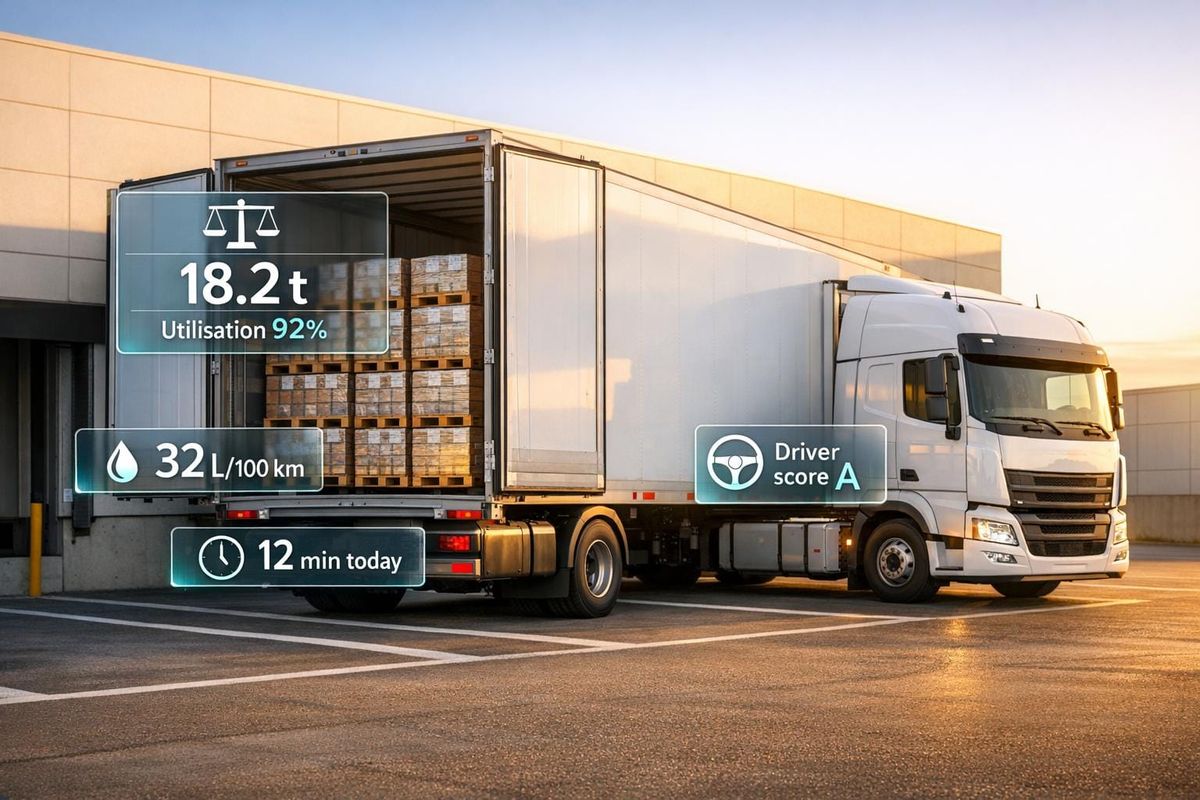
Telematics is transforming fleet management by delivering precise data to improve load efficiency and reduce costs. By tracking metrics like payload weight, fuel consumption, and driver behaviour, fleet operators can optimise vehicle utilisation and cut unnecessary expenses. For instance:
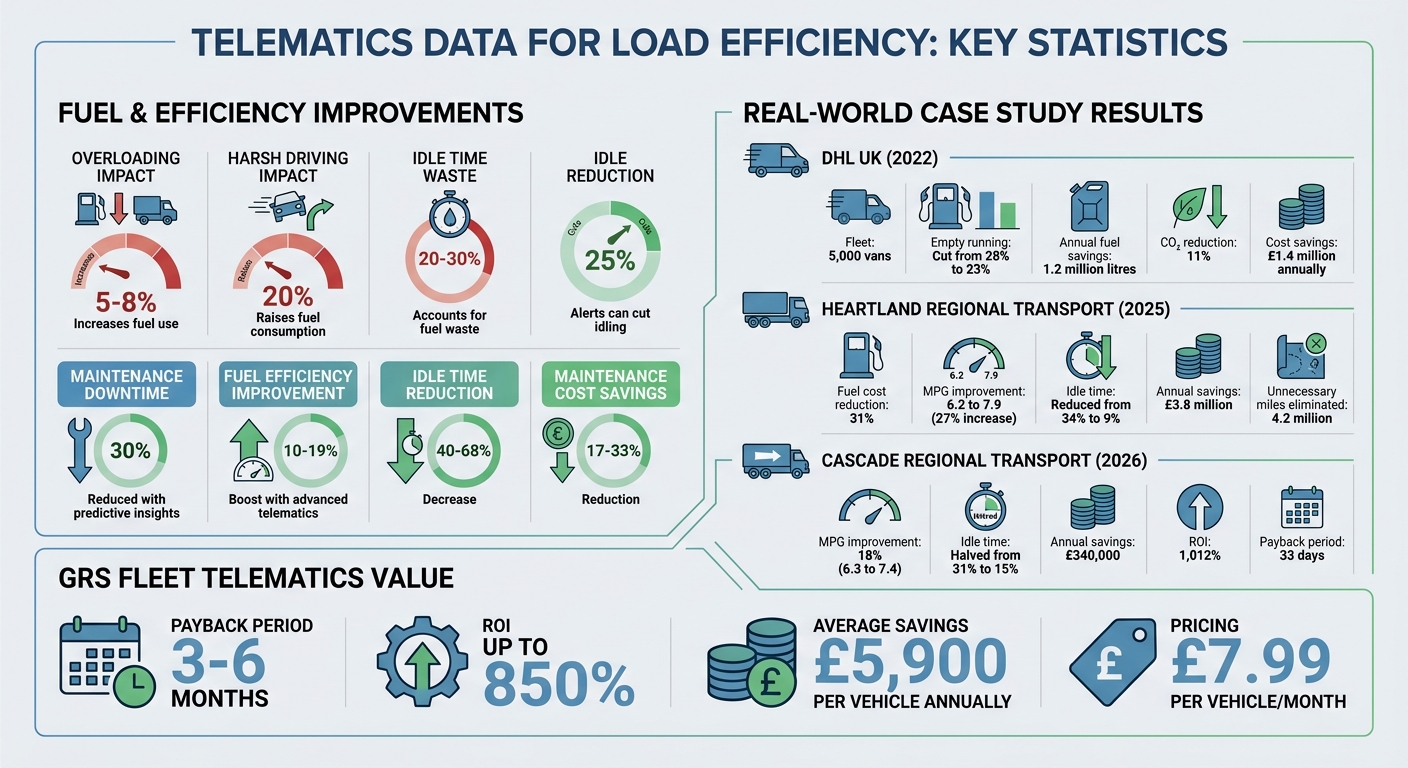
- Fuel savings: Overloading increases fuel use by 5–8%. Telematics helps monitor and reduce waste.
- Driver behaviour: Harsh driving can raise fuel consumption by 20%. Real-time alerts enable targeted training.
- Idle time: Accounts for 20–30% of fuel waste. Alerts can cut idling by 25%.
- Maintenance: Predictive insights reduce downtime by 30%.
Case studies show substantial results. DHL UK saved £1.4 million annually by reducing empty runs, while Heartland Regional Transport cut fuel costs by 31%, saving £3.8 million. GRS Fleet Telematics offers tools like real-time tracking and geofenced alerts for efficient load management, with a payback period as short as 3–6 months.
Telematics is a practical solution for fleets aiming to save money, improve safety, and operate efficiently.
Telematics Impact on Fleet Efficiency: Key Metrics and Cost Savings
Telematics Metrics for Load Efficiency Analysis
Core Metrics for Load and Vehicle Tracking
Payload weight is a cornerstone of tracking load efficiency. Using onboard scales and sensors, fleet managers can measure actual versus optimal loads. This helps avoid overloading, which can lead to fines of up to £300 in the UK, and underutilisation, which wastes resources. By staying within the 44-tonne legal limit for HGVs, fleets can optimise payloads, reducing the number of trips needed to transport the same cargo volume.
Fuel consumption per load is another critical metric, highlighting how efficiently vehicles operate under varying weights. Metrics such as litres per 100 km or fuel per tonne-kilometre are key benchmarks, with vans aiming for under 0.5 litres per tonne-km. Overloading by just 10% can increase fuel consumption by 5–8%. Telematics dashboards help fleet managers correlate these fuel metrics with load data, identifying inefficiencies. Additionally, idling time percentage plays a major role in fuel waste, with idling accounting for 20–30% of fleet fuel consumption. Real-time alerts can help reduce idling by an average of 25%.
Driver behaviour also directly affects load efficiency. Metrics like harsh acceleration and braking, measured in g-forces, as well as braking frequency and speeding events, highlight inefficient driving patterns. Harsh driving can increase fuel consumption by as much as 20%, but with real-time alerts and targeted driver training, fleets can improve efficiency by up to 12%. Similarly, engine performance metrics, including RPM under load, turbo boost pressure, and engine load percentage, provide insights into strain caused by improper loading. These metrics not only guide predictive maintenance but also contribute to a 10–15% improvement in fuel economy.
Together, these metrics empower fleet managers to make immediate, data-driven decisions for better load management.
Using Real-Time Data for Load Management
Real-time telematics data takes these metrics a step further, enabling dynamic operational adjustments. For instance, real-time traffic congestion data, combined with vehicle position and load status, feeds into routing algorithms that can reroute vehicles to avoid delays. This strategy reduces idling, which wastes approximately 1.5 litres of fuel per hour, delivering tangible cost savings.
A great example comes from DHL UK, which in 2022 equipped 5,000 vans with van tracking solutions to monitor payload weight and fuel use. Led by Fleet Manager Tom Reynolds, the team used real-time data to make adjustments that cut empty running from 28% to 23% of miles, saving 1.2 million litres of fuel annually. This initiative also reduced CO₂ emissions by 11% and saved £1.4 million in costs. Similarly, in early 2023, Stobart Group (now Cullosa) applied telematics to 1,200 HGVs, focusing on engine load and idling metrics. After implementing driver training based on real-time insights, harsh driving incidents dropped by 35%, improving fuel efficiency by 9% and saving £850,000 annually.
Geofenced alerts provide another layer of control, flagging load shifts that require immediate action. Dynamic load balancing, for example, can reduce fuel consumption by 18% over a distance of 10,000 km. By identifying underutilisation, managers can consolidate loads, cutting empty miles by up to 25%. This level of visibility - tracking everything from axle weight imbalances to driver performance - allows fleet managers to address inefficiencies before they escalate. The result? Vehicles that consistently operate at their best, even under heavy loads.
sbb-itb-499a7f0
Research on Route Planning and Load Optimisation
Combining Route Planning with Telematics Data
Recent studies highlight how telematics can elevate route planning to a new level of precision. By integrating telematics data, fleets can optimise routes in ways that save both time and fuel. For instance, a 2022 study from the University of Westminster revealed that fleets using telematics-enhanced route planning reduced fuel consumption by 15–20%. This was achieved through better load distribution and shorter, more efficient routes. The secret lies in combining GPS data with real-time traffic updates and vehicle-specific load information, allowing for routes that cut down on unnecessary mileage and fuel use.
In 2023, the Transport Research Laboratory (TRL) reported a 12% improvement in load efficiency - measured as payload per mile - when fleets adopted dynamic rerouting based on telematics data. This approach ensures vehicles operate closer to their optimal capacity on every trip, significantly enhancing overall efficiency.
Using Predictive Analytics for Load Efficiency
Predictive analytics takes telematics data a step further, using historical journey patterns to anticipate and resolve inefficiencies before they occur. For example, analysing past data can reveal recurring issues, like routes that frequently cause vehicle overloading or delivery delays. Verizon Connect's 2024 analysis of 500 UK fleets demonstrated that predictive telematics analytics reduced unplanned downtime by 18% and improved route adherence by 25%, resulting in a 10% boost in load utilisation.
Tesco’s fleet of 1,500 HGVs adopted Trimble telematics in 2024, incorporating predictive analytics to optimise routes. Over just nine months, this system improved route efficiency by 17%, saving an impressive 450,000 litres of diesel annually. The technology used algorithms based on telematics fuel and speed data to perfect load distribution, directly enhancing operational efficiency. Similarly, in 2022, the Stobart Group used Webfleet telematics across 800 lorries, reducing fuel consumption by 14% within a year. By analysing historical data for better load forecasting and dynamic rerouting, they achieved a 16% improvement in payload efficiency.
These examples underline the critical role telematics plays in advancing both route planning and load optimisation, showcasing its ability to drive meaningful improvements across fleet operations.
Case Studies: Measured Results from Telematics Use
Improving Fleet Operations with Telematics
A distribution fleet of 200 vehicles achieved some impressive results after implementing van tracker systems. They managed to cut operational costs by 30%, saving around £1.2 million annually. Compliance violations dropped by 40%, going from 50 to 30 per year, and driver incidents were reduced by the same percentage, decreasing from 20 to 12 per month. These changes resulted in a 200% return on investment (ROI) within just one year. How? By improving route planning, cutting idle time, optimising vehicle use, and balancing payloads better. These operational upgrades also paved the way for significant improvements in fuel efficiency.
Fuel Reduction Through Load Efficiency
Telematics doesn’t just enhance operations - it can drastically reduce fuel expenses too. For instance, in 2025, Heartland Regional Transport, a 600-lorry carrier, implemented a broad telematics strategy that slashed fuel costs by 31%, saving about £3.8 million annually. Their fuel efficiency jumped from 6.2 MPG to 7.9 MPG, an increase of 27%. Idle time was reduced from 34% to just 9%, and smarter load matching cut out 4.2 million miles of unnecessary driving.
Similarly, Cascade Regional Transport saw remarkable results in early 2026. Their fleet’s MPG improved by 18% (from 6.3 to 7.4), idle time was halved (from 31% to 15%), and they saved approximately £340,000 annually. This resulted in an eye-popping 1,012% ROI with a payback period of just 33 days. Additionally, their 200-vehicle fleet reduced fuel costs by 25%, dropping from £960,000 to £720,000 annually.
How GRS Fleet Telematics Improves Load Efficiency
Real-Time Load Monitoring Capabilities
GRS Fleet Telematics offers a robust solution for fleet managers, providing real-time data that streamlines load management and keeps operations running smoothly. By tracking key engine metrics such as fuel usage, oil life, and coolant temperature, the system helps identify inefficiencies caused by improper loads. For example, it can pinpoint when a vehicle is carrying a load that unnecessarily increases fuel consumption or puts undue strain on the engine, allowing managers to address these issues promptly.
The system also features advanced GPS and route tracking, delivering accurate vehicle location updates and geofencing alerts. These alerts flag route deviations that might be linked to load constraints. Additionally, dual-tracker technology ensures uninterrupted monitoring, even if the primary tracker fails. This ensures consistent data collection, which is crucial for analysing and improving load efficiency. Together, these monitoring tools not only enhance operational efficiency but also help cut costs significantly.
Cost and Operational Advantages
GRS Fleet Telematics offers a flexible pricing model that makes it accessible for businesses of all sizes. Subscriptions cost £7.99 per vehicle per month, granting full access to the platform. Hardware options are available at different price points: £35 for basic tracking, £79 for Bluetooth backup, and £119 for immobilisation features.
To make adoption easier, installation is free when paired with fleet branding through GRS Fleet Graphics, reducing upfront expenses. The pay-per-recovery model further simplifies budgeting by aligning recovery costs with actual usage, eliminating the need for hefty initial fees. This pricing structure allows businesses to implement advanced load monitoring systems without a significant financial burden, directly supporting strategies aimed at improving fleet operations.
How can fleets use telematics to improve operational efficiency, driver safety and sustainability?
Conclusion
Telematics has reshaped how fleet operators approach efficiency, offering data-driven insights that turn load management into measurable improvements. By keeping track of weight distribution, fuel usage, and vehicle utilisation, operators can make informed decisions about deploying assets and planning routes. Studies suggest that advanced telematics can boost fuel efficiency by 10–19%, lower idle time by 40–68%, and cut maintenance expenses by 17–33%. These improvements mark a major evolution in fleet management.
The GRS Fleet Telematics system enhances operational performance by transforming raw data into actionable strategies for load management. Its ability to track fuel consumption and pinpoint inefficiencies helps managers tackle problems early. Geofencing alerts further support this by flagging route deviations or load-related issues, enabling quick corrective measures.
These operational benefits directly impact the bottom line. With affordable subscription plans, GRS Fleet Telematics delivers a 3–6 month payback period and up to an 850% return on investment for UK fleets. On average, businesses can save around £5,900 per vehicle annually. Plus, free installation, combined with fleet branding via GRS Fleet Graphics, reduces initial costs, making it accessible for businesses of all sizes.
For fleet operators under pressure to cut costs while maintaining high service standards, telematics offers a clear solution. Accurate load tracking, predictive maintenance, and reliable performance metrics pave the way for better operations. Backed by research and real-world data, telematics has become an essential tool for achieving fleet efficiency and long-term success.
FAQs
What telematics data best shows load efficiency?
Telematics data plays a crucial role in evaluating load efficiency. Key metrics to focus on include route optimisation figures, vehicle utilisation rates, idle time, and fuel consumption per mile. These data points help identify issues like inefficient routes, underused vehicles, and unnecessary fuel consumption, enabling businesses to streamline operations and cut waste.
How do I measure fuel per tonne-kilometre?
To work out the fuel consumption per tonne-kilometre, use this formula:
Fuel per tonne-kilometre = Fuel used (litres) ÷ [Load weight (tonnes) × Distance travelled (km)]
This calculation provides a clear measure of fuel efficiency based on the payload and the distance covered. It's particularly useful for optimising load planning and managing fuel usage effectively.
What’s needed for real-time payload tracking?
Real-time payload tracking relies on telematics devices that integrate GPS technology, sensors to monitor load weight and position, and a management platform to process and present live data. Together, these elements deliver practical insights to help improve load efficiency.