Predictive Analytics for EV Battery Lifespan
Real-time ML predicts EV battery SOH and RUL to reduce degradation, optimise charging and cut fleet battery costs.
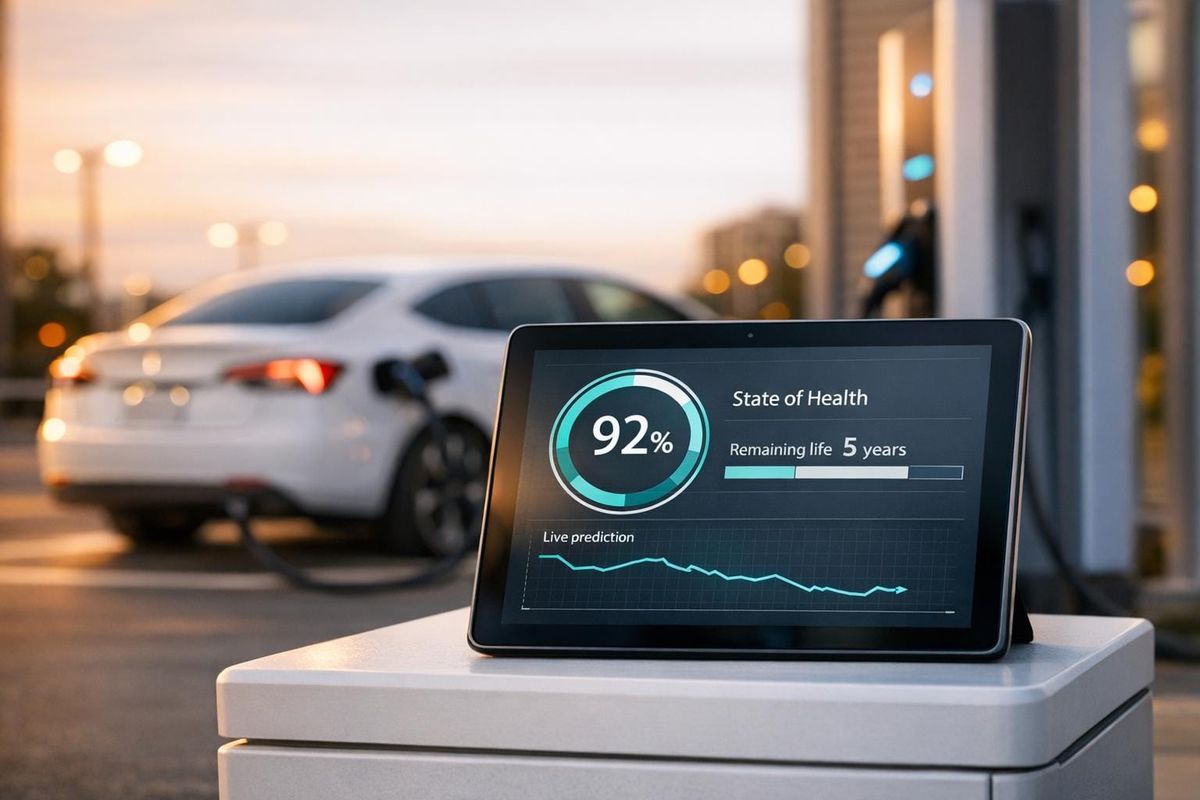
EV battery health directly impacts fleet performance and costs. Predictive analytics uses real-time data and machine learning to forecast battery lifespan, enabling smarter maintenance, charging, and operational decisions. Here's what you need to know:
- Battery Degradation Factors: Charging habits, temperature, driving patterns, and inactivity all influence degradation. High-power DC fast charging can accelerate wear by up to 3.0% annually.
- Predictive Analytics Benefits: Tracks metrics like voltage, temperature, and charge cycles to estimate State of Health (SOH) and Remaining Useful Life (RUL). This helps prevent unexpected failures and reduces downtime.
- Real-World Impact: A UK fleet reduced annual battery wear from 3-4% to 1.8% by adjusting charging practices, saving £45,000 annually and extending battery life by 2–3 years.
Predictive systems help fleet managers make informed decisions, extend battery lifespan, and cut costs through data-driven insights.
AI-Powered Battery Management Systems: The Future of EV Battery Health and Safety
sbb-itb-499a7f0
How Predictive Analytics Works for EV Battery Management
Predictive analytics plays a critical role in managing EV batteries by continuously collecting data, identifying patterns, and forecasting potential degradation. The process begins with gathering data from battery management systems, which is then processed using machine learning models. These models analyse the data to uncover degradation patterns and predict future battery performance. This approach transforms raw sensor data into actionable insights, helping fleet managers make decisions with van tracker systems that extend battery life and improve overall efficiency.
Data Points Used for Battery Monitoring
Accurate predictions depend on monitoring specific metrics that indicate how a battery ages. These include voltage, current, temperature, state of charge, and charge–discharge cycles. Advanced systems also use Incremental Capacity Analysis (ICA) to detect internal issues, such as SEI formation and lithium plating. These mechanisms contribute to capacity loss over time and are crucial for understanding battery health.
Machine Learning Models for Battery Forecasting
Machine learning models, particularly hybrid neural networks like CNNs and LSTMs, are essential in predicting battery performance. Convolutional Neural Networks (CNNs) excel at spotting local patterns in voltage curves, helping to detect distortions that signal degradation. Meanwhile, Long Short-Term Memory (LSTM) networks track how these patterns evolve over thousands of charging cycles, capturing long-term trends that simpler algorithms might overlook.
For example, a hybrid CNN–TCN–LSTM model can predict a battery's State of Health (SOH) with exceptional precision, achieving a root mean square error of just 0.021. This performance surpasses traditional methods by up to 25%. These models also use attention mechanisms to focus on voltage regions most relevant to degradation, improving both diagnostic accuracy and clarity.
Advantages of Real-Time Data Tracking
Real-time tracking adds another layer of effectiveness by enabling immediate responses to anomalies. By processing data with a latency of just 6.1 milliseconds and consuming only 0.63 mJ per sample, these diagnostic systems are ideal for embedded battery management in vehicles. This capability allows fleet managers to make proactive adjustments - such as modifying charging protocols, reassigning vehicles to less demanding routes, or scheduling maintenance during planned downtimes. These real-time insights help prevent unexpected failures, ensuring smoother operations and better fleet reliability.
Extending EV Battery Lifespan with Predictive Analytics
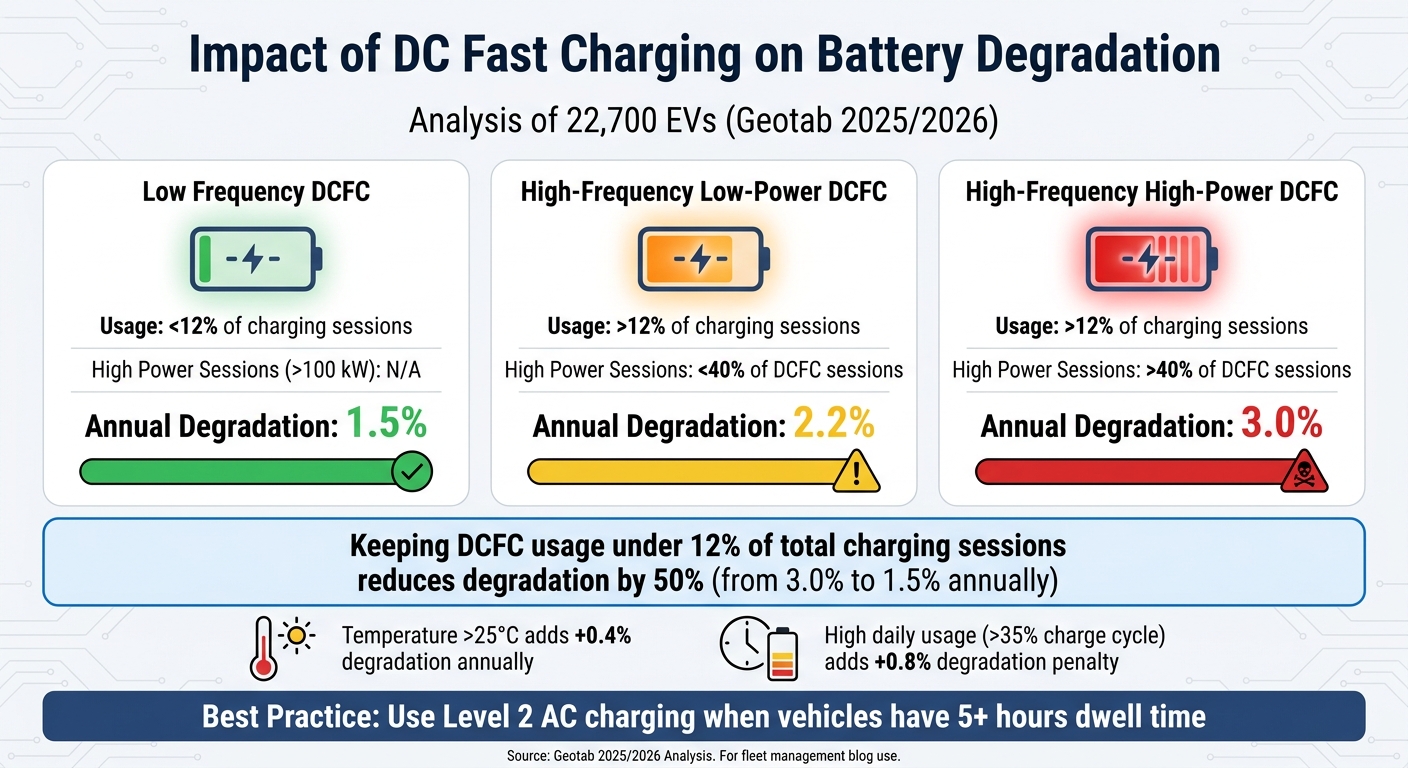
How DC Fast Charging Frequency Affects EV Battery Degradation Rates
Predictive analytics, powered by real-time tracking and machine learning, is transforming how we manage EV batteries. Instead of waiting for issues to arise, these systems enable proactive care by analysing both current data and historical trends. On average, modern EV batteries maintain about 81.6% of their capacity after eight years.
Early Detection and Maintenance
Predictive systems can spot early signs of battery degradation, catching problems before they escalate into costly failures. This eliminates the need for rigid maintenance schedules. Instead, fleet managers can monitor metrics like State of Health (SOH) and Remaining Useful Life (RUL) in real-time, scheduling repairs only when genuinely necessary. For example, minor issues such as unusual voltage drops or temperature increases can be addressed early, preventing further damage. Automated alerts ensure operators are immediately informed of any abnormalities, keeping downtime to a minimum and extending the battery's operational life.
Data-Driven Charging Practices
Charging habits have a significant impact on battery health, and predictive analytics helps identify which practices are most effective. One key factor is the use of high-power DC fast charging (DCFC). Data from 22,700 EVs shows that DCFC sessions exceeding 100 kW lead to an annual degradation rate of 3.0%. With fleet reliance on high-power DCFC increasing from under 10% to about 25% of all charging sessions, understanding these impacts is critical.
| DCFC Usage Group | Usage Criteria | High Power Sessions (>100 kW) | Avg. Annual Degradation |
|---|---|---|---|
| Low Frequency | < 12% of sessions | N/A | 1.5% |
| High-Frequency Low-Power | > 12% of sessions | < 40% of DCFC sessions | 2.2% |
| High-Frequency High-Power | > 12% of sessions | > 40% of DCFC sessions | 3.0% |
(Source: Geotab 2025/2026 Analysis of 22,700 EVs)
To preserve battery health, operators should limit high-power DCFC to essential situations. For instance, if a vehicle has at least five hours of dwell time, Level 2 AC charging is a better option as it reduces stress on the battery. Vehicles that keep DCFC usage under 12% of total charging sessions experience a much lower degradation rate of 1.5% annually. Additionally, avoiding extended parking at very low or very high charge levels can further minimise strain.
Temperature also plays a role. In climates where temperatures exceed 25°C, batteries degrade about 0.4% faster each year. Predictive systems can suggest strategies like adjusting charging schedules or parking in shaded areas during heatwaves to limit heat-related wear. These small, data-driven adjustments not only protect the battery but also optimise energy use.
Better Energy Efficiency
Real-time monitoring can also help pinpoint driving behaviours that unnecessarily drain battery life. Harsh acceleration or aggressive driving increases wear, but telematics data can identify drivers who may benefit from training. Additionally, route optimisation tools use battery health data to plan energy-efficient paths, ensuring vehicles operate within ideal temperature ranges.
Maintaining a State of Charge (SOC) between 20% and 80% is another effective way to extend battery life. However, high daily usage - exceeding 35% of a full charge cycle - can result in an additional 0.8% degradation penalty. By integrating these insights into operations, fleet managers can reduce energy consumption and cut costs. Centralised monitoring systems, like those offered by GRS Fleet Telematics, further enhance efficiency by streamlining these practices across the fleet.
Practical Applications for Fleet Operations
Building on predictive insights, these practical steps help fleet operations run more efficiently and effectively.
Centralised Battery Monitoring Systems
Fleet operators benefit greatly from a centralised system that collects real-time data from all electric vehicles (EVs) into a single dashboard. Key metrics like state of charge, state of health, temperature, voltage, and charging cycles are tracked, allowing fleet managers to spot issues instantly across the fleet.
These systems work best when paired with clear workflows and assigned responsibilities. For example, when a battery's health score dips below 80%, the system can automatically schedule a diagnostic check and notify the driver. This ensures that insights are acted upon promptly, rather than being overlooked in a dashboard.
Telematics Integration for Battery Data
Telematics platforms, such as GRS Fleet Telematics, connect directly to vehicle systems via CANbus or OBD ports, capturing live battery data. This data includes charging habits, discharge rates, temperature changes, and driving behaviour, which feed into predictive models. The platform provides real-time updates on battery performance and flags any deviations from expected conditions.
By integrating with fleet management software, these insights can automatically trigger maintenance requests or influence vehicle assignments. For instance, EVs with weaker batteries can be assigned to shorter routes, avoiding high-demand tasks. This seamless link between battery data and daily operations enables managers to make informed decisions without disrupting workflow, creating a smoother and more efficient process.
Case Study: Battery Lifespan Extension
In 2024, a mid-sized UK logistics company managing 150 electric vans adopted a centralised battery monitoring system combined with telematics tracking. Before this, the fleet experienced annual battery degradation rates of 3–4%, with many vehicles requiring battery replacements after 5–6 years.
The new system revealed that drivers were routinely charging batteries to 100% and leaving vehicles parked in direct sunlight during summer. Both behaviours were accelerating battery wear. Acting on these insights, the company introduced optimised charging rules, capping daily charges at 80% and scheduling them for cooler evening hours. Vehicles with higher battery temperatures were rotated off demanding routes.
Within just a year, the fleet's annual battery degradation rate dropped to 1.8% - a 50% improvement. This extended battery lifespan to 8–9 years, cutting replacement costs by about £45,000 annually. Additionally, better energy efficiency lowered charging costs by 12%. Altogether, the company recouped its initial investment in the new system within 18 months, thanks to these savings.
Conclusion and Key Takeaways
Main Benefits Recap
Predictive analytics can make a real difference in improving battery health, cutting costs, and boosting fleet performance. By reducing annual degradation rates from roughly 2.3% to around 1.5%, it enables smarter charging practices, proactive maintenance, and better route planning - all driven by data. These advancements provide a solid foundation for enhancing fleet management strategies.
Next Steps for Fleet Operators
Take a close look at your current battery monitoring systems. Traditional methods might miss critical degradation patterns that predictive analytics can uncover. To address this, consider integrating telematics hardware through CANbus or OBD ports. This setup captures essential high-frequency data - like voltage, current, temperature, and charge cycles - needed for effective battery management.
For a seamless solution, GRS Fleet Telematics offers tools that connect directly to vehicle systems. These tools deliver real-time battery insights alongside standard fleet tracking features. With this integration, you can monitor battery health, fine-tune charging schedules, and adapt operational strategies - all from one platform. This approach ensures a comprehensive view of electric vehicle fleet performance across the UK.
FAQs
What data is needed to accurately predict EV battery lifespan?
Accurately estimating the lifespan of an EV battery depends on tracking key factors like charge cycles, temperature, State of Charge (SoC), State of Health (SoH), energy efficiency, and driving behaviour. Using telematics and battery management systems, these metrics can be monitored in real time, offering valuable insights to help maintain and improve battery performance.
How can I cut battery wear without sacrificing fleet uptime?
To keep battery wear in check while ensuring your fleet stays operational, it's all about smart charging and keeping an eye on battery health. Aim to keep charge levels between 20% and 80%, steer clear of regularly using high-power DC fast chargers, and try to schedule charging during off-peak hours to reduce strain and costs.
Using tools like GRS Fleet Telematics can make a big difference. These systems give you real-time data on battery performance, helping you plan proactive maintenance. This way, you can minimise wear and keep your fleet running efficiently.
How quickly can predictive analytics deliver ROI for an EV fleet?
Predictive analytics offers impressive potential for electric vehicle (EV) fleets, delivering a return on investment (ROI) in less than a year. By using real-time data and AI for predictive maintenance, fleets can see an average ROI of 520%, with costs recouped within 12 months. This approach can lead to savings of up to 36% on maintenance costs, minimise unplanned downtime, extend battery life, and boost overall fleet efficiency.