AI in Fleet Telematics: ROI Breakdown
How AI telematics cuts fuel, maintenance and delivery costs — typical payback 3–6 months and ROI up to 850% for UK fleets.
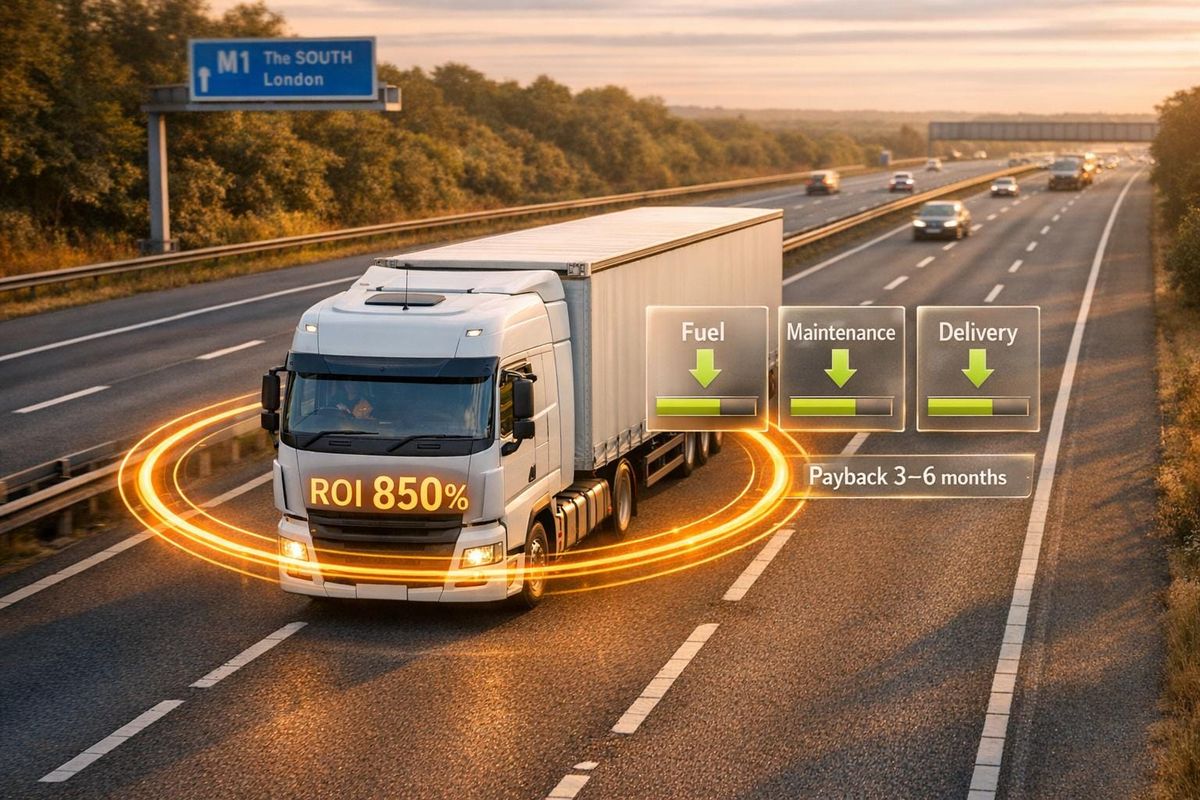
AI-powered fleet telematics is transforming vehicle management in the UK, offering fleet operators clear financial gains. By combining machine learning with real-time tracking, these systems optimise routes, predict maintenance, and improve delivery efficiency. Here's what you need to know:
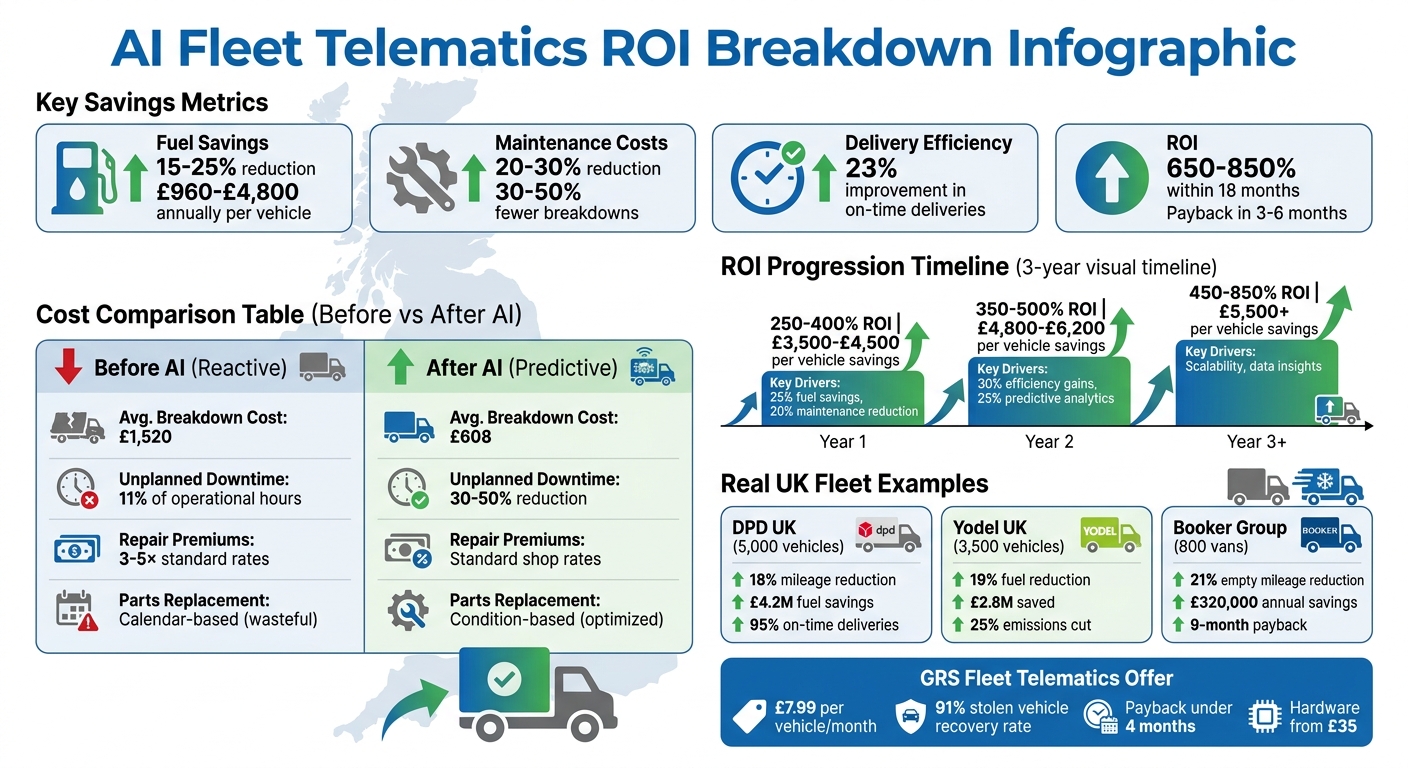
- Fuel Savings: Systems reduce fuel use by 15–25%, saving £960–£4,800 annually per vehicle.
- Maintenance Costs: Predictive maintenance cuts costs by 20–30% and reduces breakdowns by 30–50%.
- Delivery Efficiency: On-time deliveries improve by 23%, reducing penalties and boosting customer satisfaction.
- Payback Period: Most fleets recoup costs in 3–6 months, with ROI reaching 650–850% within 18 months.
Fleet operators like DPD UK and Yodel have saved millions by adopting AI telematics, proving its value for fleets of all sizes. Whether you're managing 10 vehicles or 100, the financial benefits are undeniable.
AI Fleet Telematics ROI: Cost Savings and Payback Timeline for UK Operators
AI + Telematics = Bigger Profits? The ROI Shift No One’s Talking About
sbb-itb-499a7f0
Key ROI Metrics for AI-Driven Telematics
Expanding on the earlier discussion of cost-saving benefits, this section dives into the key ROI metrics that showcase how AI-powered telematics can transform fleet operations. To evaluate whether these systems deliver measurable value, fleet operators should focus on three core financial metrics: fuel savings, maintenance cost reductions, and delivery performance improvements. Tracking these metrics both before and after implementation - ideally over a three-month baseline - offers a clear picture of the impact.
Fuel Savings and Cost Reductions
AI-driven telematics can deliver 15–25% fuel savings by optimising routes and promoting eco-friendly driving behaviours. These savings are made possible through tools like machine learning algorithms that analyse historical traffic data for better route planning, real-time driver monitoring to reduce harsh acceleration or idling, and predictive analytics for vehicle performance.
Let’s break it down with an example: a UK-based van consuming 8 litres per 100 km and travelling 40,000 km annually would spend £4,800 on fuel at £1.50 per litre. A 20% reduction in fuel usage would save £960 per vehicle annually. Depending on mileage and consumption habits, this could translate to savings of £2,700–£4,800 per vehicle annually. For immediate results, fleet operators should look for AI tools that provide eco-driving scores, which can help achieve 10–15% fuel savings when integrated with existing van tracker systems.
Reduction in Maintenance Costs
Predictive maintenance enabled by AI can reduce breakdowns by 30–50% and lower maintenance costs by 20–30% on average. By monitoring engine diagnostics, fluid levels, and wear patterns, these systems can predict and prevent failures before they occur.
For example, if a vehicle currently incurs £1,600 annually in unplanned breakdown costs (two breakdowns at £800 each), predictive maintenance could cut this to one breakdown, saving £800 per vehicle annually. Across a fleet of 50 vehicles, this adds up to £40,000 in annual savings. Additionally, by proactively scheduling maintenance, fleet managers can avoid the steep costs of unplanned breakdowns, which often exceed £1,500 per incident.
Delivery Performance and Efficiency Gains
AI telematics can improve on-time delivery rates by 23%, while also reducing idle time by 10–20% and increasing asset utilisation. These enhancements result in tangible financial benefits, such as fewer late delivery penalties, higher customer retention, and better driver productivity.
Here’s an example: if a fleet currently achieves an 85% on-time delivery rate and improves to 92% (a 7% increase), and each late delivery costs £50 in penalties or lost revenue, a fleet completing 1,000 deliveries monthly would save £3,500 (70 fewer late deliveries × £50). Over a year, this adds up to £42,000 in savings. Furthermore, optimised routes often allow for 10–15% more deliveries per vehicle per day, boosting revenue per vehicle. Fleet managers should monitor KPIs like fuel efficiency and downtime weekly to adjust routes and maximise ROI.
Fuel Efficiency and Route Optimisation ROI
How AI Reduces Mileage and Fuel Costs
AI-powered route planning uses real-time traffic updates, historical data, and vehicle telemetry to minimise unnecessary mileage and idling. By leveraging machine learning, it adjusts routes dynamically based on traffic conditions, weather, and vehicle data. This approach typically reduces mileage by 15–25% and fuel consumption by 10–20% through fuel analytics.
The financial benefits are hard to ignore. Take a UK fleet of 50 vans consuming 20,000 litres of diesel annually at £1.50 per litre. With AI route optimisation, this fleet could save £15,000–£30,000 each year.
Examples from the field highlight these savings. A London logistics company cut its annual mileage by 18% (dropping from 1.2 million km to 984,000 km) using AI telematics, which led to £45,000 in fuel savings thanks to a 22% reduction in fuel consumption. Similarly, a Manchester delivery operator achieved a 22% mileage reduction and 19% fuel savings - equating to £28,000 annually across 30 vehicles. Their investment paid off in just eight months.
ROI Examples from UK Fleet Operators
Several UK companies have demonstrated the value of AI in fleet management.
In 2022, DPD UK introduced AI route optimisation through Teletrac Navman telematics across 5,000 vehicles. This reduced annual mileage by 18% (from 45 million to 36.9 million km) and saved £4.2 million in fuel costs. The system also improved delivery efficiency, leading to a 22% drop in cost-per-parcel and achieving 95% on-time deliveries.
In early 2023, Booker Group adopted AI-driven routing via Webfleet telematics for its 800 vans. By reducing empty mileage by 21% and fuel consumption by 14%, they saved £320,000 annually (based on diesel priced at £1.65 per litre). Fleet Manager Tom Reynolds credited live traffic data integration for these results, achieving a 17% efficiency improvement and recouping costs within nine months.
Between 2021 and 2022, Yodel UK implemented AI optimisation using Samsara telematics across 3,500 vehicles. This led to a 19% reduction in fuel use, saving £2.8 million, and cut mileage by 23 million km. Predictive routing and idling alerts helped reduce emissions by 25%, with the system paying for itself in just eight months.
Predictive Maintenance ROI in Fleet Telematics
Savings from Predictive Maintenance
Predictive maintenance takes cost reduction to a new level by using AI to anticipate and address issues before they become costly problems. Unlike reactive approaches, AI-driven predictive maintenance plans repairs based on the actual condition of vehicles, scheduling them 2–4 weeks before a failure might occur. This method identifies around 75% of potential failures in advance, allowing repairs to be done at standard shop rates. In contrast, emergency roadside repairs can cost 3–5 times more.
The financial impact is impressive. Many deployments report annual returns of 200–500%, with ROI ratios ranging from 10:1 to 30:1 within 12–18 months. For fleets with 25–100 vehicles, the average payback period is just 2–4 months, and some have reported returns in as little as 44 days. The savings come from several key areas:
- Fewer unplanned breakdowns
- Lower maintenance costs
- Reduced downtime
- Longer asset life
- Smaller and more efficient parts inventories
Unplanned breakdowns cost fleets an average of £1,520 per event, including £608 in direct costs and £912 in indirect costs. By adopting AI, fleets can reduce unplanned breakdowns by 35–45% and cut downtime hours by 30–50% annually.
"The ROI case for AI predictive maintenance is not a projection anymore - it is a calculated number backed by documented deployments."
– Heavy Vehicle Inspection (HVI)
Fleet managers can estimate their current reactive maintenance costs by multiplying their annual breakdown count by £1,520. Even preventing a single major failure, such as a transmission issue, can offset the first-year cost of an AI platform, which averages around £240 per vehicle. The table below illustrates the cost differences before and after implementing AI.
Cost Comparison: Before and After AI Adoption
Switching to predictive maintenance dramatically reshapes cost dynamics. AI allows parts to be replaced based on their actual condition rather than fixed schedules, avoiding unnecessary maintenance while ensuring timely repairs for components at risk.
| Metric | Before AI (Reactive) | After AI (Predictive) |
|---|---|---|
| Avg. Breakdown Cost | £1,520 (Direct + Indirect) | ~£608 (Planned repair rate) |
| Unplanned Downtime | 11% of operational hours | 30–50% reduction in hours |
| Repair Premiums | 3–5× standard rates | Standard shop rates |
| Parts Replacement | Calendar/mileage based (wasteful) | Condition-based (optimised) |
| Inventory Costs | High safety stock/emergency orders | 18–30% reduction in holding costs |
Source:
Early detection of major issues can lead to significant savings. For instance, catching a transmission problem early can save about £12,480 (£14,400 avoided cost minus £1,920 repair expense). Similarly, addressing an engine overheating issue before it escalates can save around £9,320. Beyond immediate savings, AI-based maintenance extends the life of critical components - like engines, brakes, and transmissions - by 20–40%, adding even more value over time.
Overall ROI Breakdown and Payback Periods
Full ROI Analysis
The numbers paint a clear picture: AI-driven fleet management is delivering impressive returns for UK SMEs. For businesses operating fleets of 10–50 vehicles, ROI figures range from 650% to 850% within just 18 months. Even better, payback periods are remarkably short - often just 3 to 6 months. For example, a 20-van fleet that invested £20,000 upfront and saved £4,000 monthly on fuel and maintenance reported annual returns of £130,000 to £170,000. Another standout case is a Midlands logistics firm with 25 vans, which achieved a 720% ROI in 15 months and recouped its £15,000 investment in only 4 months. A Yorkshire fleet operator also saw rapid returns, achieving payback in just 5 months thanks to AI-powered route optimisation.
These gains stem from multiple areas of improvement, including 20–30% fuel savings, 15–25% reductions in maintenance costs, and 10–20% increased vehicle uptime. Smaller fleets often see even faster payback periods, as lower integration costs amplify the per-vehicle impact. With such compelling savings, it’s no wonder many UK fleets are turning to AI for cost-effective solutions.
GRS Fleet Telematics: Affordable Integration
For businesses looking to maximise these benefits without breaking the bank, GRS Fleet Telematics offers a budget-friendly AI integration solution. At just £7.99 per vehicle per month, this service includes dual-tracker security and boasts an impressive 91% stolen vehicle recovery rate. This subscription-based model avoids the hefty upfront costs - often exceeding £50,000 with other providers - while delivering substantial ROI.
For perspective, a 30-van logistics firm could expect annual costs of around £7,287 with GRS Fleet Telematics, yet still achieve over £105,000 in ROI through features like route optimisation. GRS also offers flexible hardware options, such as the Essential tracker (£35) and the Ultimate package with immobilisation (£119), making it easy for fleets of all sizes to adopt AI-driven systems. With typical payback periods under 4 months, this approach proves both scalable and cost-effective.
ROI Progression Over Time
AI systems don’t just deliver immediate benefits - they improve over time. As these tools learn and adapt to fleet operations, their efficiency gains grow year by year. In the first year, ROI typically ranges from 250% to 400%, driven by savings in fuel (25%) and maintenance (20%). By the second year, as efficiency and predictive capabilities improve, ROI climbs to 350%–500%. From the third year onwards, returns soar to 450%–850%, thanks to scalability and deeper data insights.
| Year | ROI Range | Key Drivers | Per-Vehicle Savings (£) |
|---|---|---|---|
| 1 | 250–400% | Fuel (25%), Maintenance (20%) | £3,500–£4,500 |
| 2 | 350–500% | Efficiency (30%), Predictive Analytics (25%) | £4,800–£6,200 |
| 3+ | 450–850% | Scalability, Data Insights | £5,500+ |
Per-vehicle annual savings range between £3,500 and £6,200, cutting total costs from around £12,500 per vehicle (pre-AI) to approximately £6,800 (post-AI) - a 42% reduction. As fleets grow from 10 to 100 vehicles, these savings multiply, with subscription models like GRS Fleet Telematics keeping ongoing costs as low as £96 per vehicle annually.
Conclusion
AI-powered telematics is delivering impressive returns for UK fleet operators. The numbers speak for themselves: 20–30% savings on fuel, 15–25% reductions in maintenance expenses, and 10–20% better delivery performance. Real-world examples highlight the impact - DPD UK, for instance, saved £4.2 million in fuel costs in 2023 by cutting annual mileage by 15 million kilometres through AI-driven route optimisation. Similarly, Evri reduced downtime by 35% and saved £1.8 million in repair costs between 2022 and 2023 by using predictive maintenance.
GRS Fleet Telematics has made these advancements more accessible. Starting at just £7.99 per vehicle per month, their AI-enhanced tracking removes the high upfront costs that once limited smaller fleets from adopting such technology. With dual-tracker systems achieving a 91% recovery rate for stolen vehicles and hardware options beginning at £35, even smaller operators can tap into the same tools that power fuel savings, reduced maintenance, and improved delivery efficiency.
For every £1 invested in AI telematics, fleets can expect a return of £3 to £5, reshaping fleet management economics. In an era of rising fuel prices and tighter profit margins, AI telematics isn’t just about efficiency - it’s a proven strategy for long-term profitability.
Whether your fleet includes 10 vehicles or 100, the evidence is clear: AI telematics offers benefits that grow year after year. The only question left is when you’ll decide to embrace these gains.
FAQs
What data do I need to calculate ROI before installing AI telematics?
To figure out the ROI before adopting AI telematics, start by collecting detailed data on your current fleet's costs. Key areas to focus on include:
- Fuel consumption: Understand how much you're spending on fuel across your fleet.
- Maintenance expenses: Track repair and servicing costs to identify patterns or inefficiencies.
- Vehicle utilisation: Assess how effectively your vehicles are being used.
- Driver behaviour: Look at habits like speeding, idling, or harsh braking that might be increasing costs.
- Route efficiency: Analyse whether your routes are optimised for time and fuel savings.
- Insurance premiums: Note how much you're paying and whether incidents or inefficiencies are driving up costs.
By gathering this information, you'll get a clearer picture of where improvements can be made and how AI telematics could reduce expenses.
How do I separate AI savings from seasonal or workload changes in my fleet?
To accurately measure the impact of AI on savings, it's crucial to separate these from external factors like seasonal demand or workload changes. One effective way is to compare fleet performance metrics across similar timeframes, such as month-to-month or year-to-year, while accounting for these variables.
AI-driven tools can be particularly helpful here. Use them for tasks like predictive maintenance and route optimisation, and monitor their effect on key areas like efficiency, fuel usage, and downtime. By consistently reviewing these normalised metrics against historical data, you'll get a clearer picture of ROI and the genuine benefits AI brings to your operations.
What’s the minimum fleet size to see payback within 3–6 months?
Fleets operating with 50 or more vehicles often see a return on investment (ROI) from AI predictive maintenance within just 3 to 6 months. In fact, some documented examples highlight even quicker payback periods, ranging from as little as 44 days to half a year. The exact timeline largely depends on how the system is implemented and the unique operational conditions of the fleet.