How Route Optimisation Reduces Fleet Costs
Save on fuel, maintenance and labour by optimising routes with telematics and real‑time traffic; fast ROI for UK fleets.
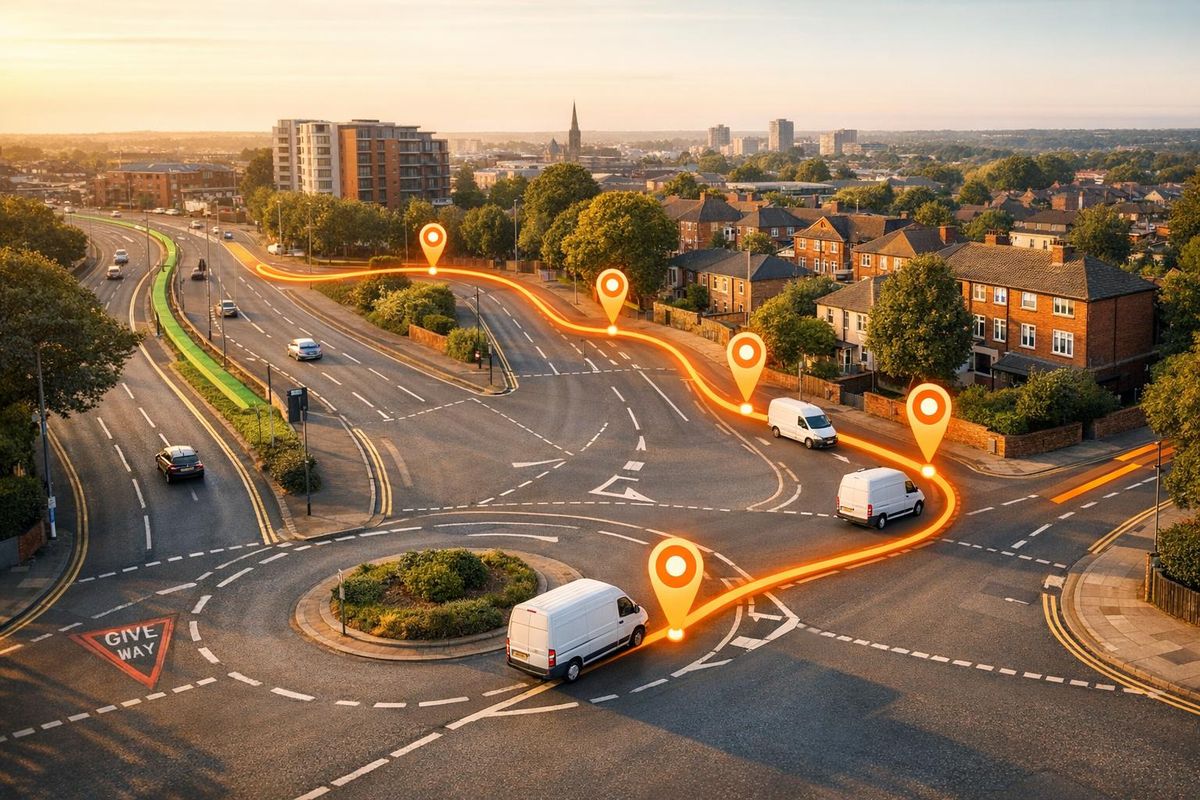
Route optimisation is a straightforward way to cut fleet costs. By improving route planning, businesses can save money on fuel, reduce vehicle wear, and boost driver productivity. Here’s how:
- Fuel savings: Inefficient routes increase fuel use by 15–25%. Smarter routing can reduce this by up to 30%, saving thousands annually.
- Lower maintenance costs: Reducing extra mileage limits wear on tyres, brakes, and engines, extending vehicle life and cutting repair bills.
- Improved productivity: Optimised routes allow drivers to complete more stops, reducing overtime and labour costs.
- ULEZ compliance: Better routing helps avoid fines and meet low-emission zone standards.
For example, a 20-vehicle fleet could save £80,000 to £250,000 annually by addressing poor route planning. Tools like GRS Fleet Telematics combine real-time tracking, eco-driving analytics, and efficient route sequencing to deliver quick savings while supporting operational goals. With fuel prices and regulatory demands on the rise, route optimisation is a practical step for UK fleets to stay competitive.
Fleet Route Optimization Explained: Save Thousands on Fuel Costs with GPS Tracking & AI Routing
sbb-itb-499a7f0
The True Cost of Poor Route Planning
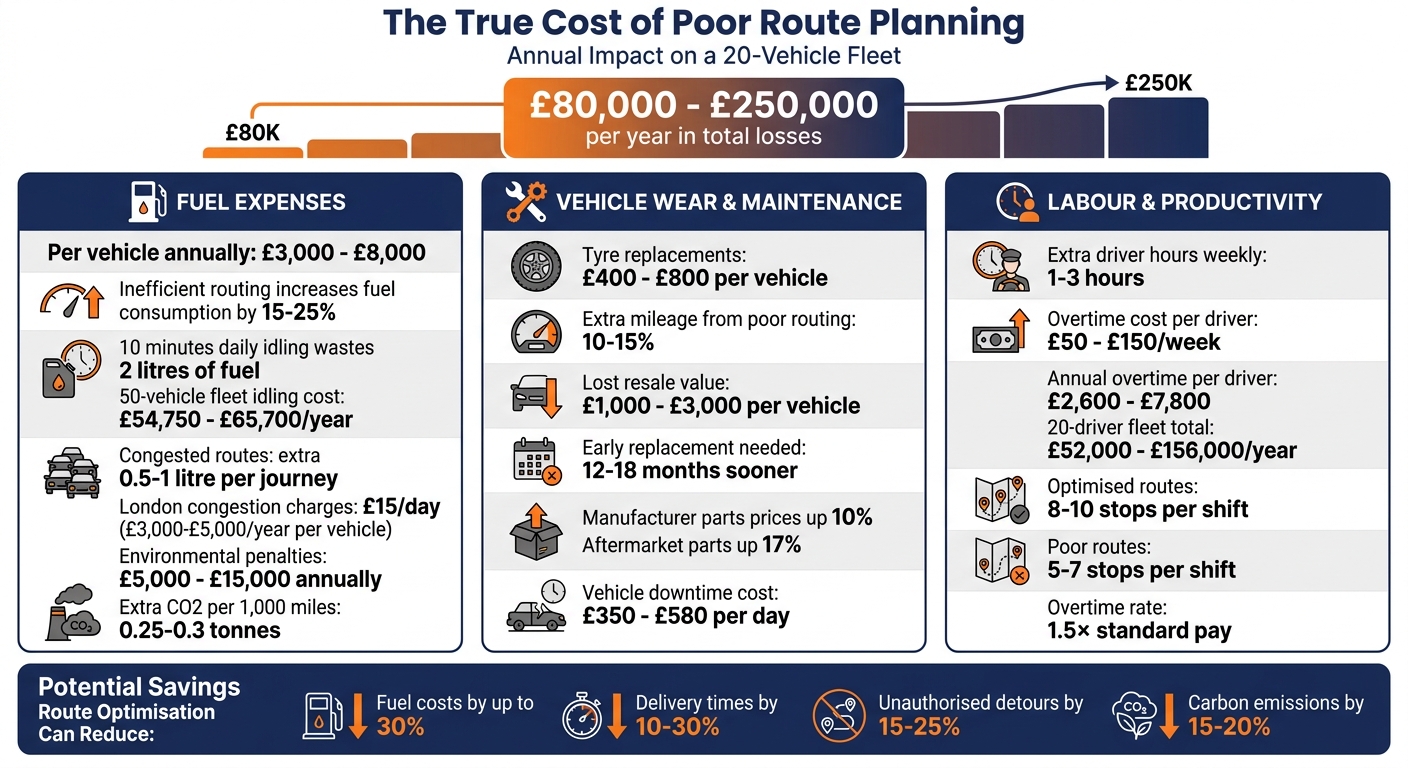
Annual Cost Breakdown of Poor Route Planning for UK Fleets
Poor route planning can cost a 20-vehicle fleet between £80,000 and £250,000 annually. These costs often go unnoticed, but they impact fuel, maintenance, and labour expenses, ultimately reducing fleet efficiency.
Fuel Expenses and Carbon Emissions
Inefficient routes mean more miles driven, increased congestion, and prolonged idling - all of which inflate fuel costs. For example, idling for just 10 minutes daily wastes around 2 litres of fuel, costing a 50-vehicle fleet approximately £54,750–£65,700 per year. Navigating congested areas during peak hours can burn an extra 0.5–1 litre of fuel per journey, while inefficient routing increases fuel consumption by 15–25%, adding £3,000–£8,000 annually per vehicle.
The environmental cost is just as concerning. Every additional 1,000 miles driven by a van produces about 0.25–0.3 tonnes of extra CO2. In London, non-compliant vehicles face congestion charges of £15 per day, potentially adding £3,000–£5,000 annually per vehicle. Poor route planning can also result in £5,000–£15,000 annually in environmental compliance and penalty costs. Beyond the financial aspect, these inefficiencies accelerate vehicle wear and tear, which we’ll explore next.
Vehicle Wear and Tear
Excess mileage doesn’t just burn fuel - it also wears out tyres, brakes, and engines faster. Tyre replacements alone can cost £400–£800 per vehicle, and when poor routing adds 10–15% extra mileage, vehicles hit major service milestones (like 60,000 or 100,000 miles) sooner than expected.
There’s also the issue of resale value. Vehicles with higher mileage typically lose £1,000–£3,000 in residual value. Plus, they often need replacing 12–18 months earlier than planned, disrupting fleet renewal schedules and leading to unplanned capital expenses.
Labour Costs and Lost Productivity
Bad route planning doesn’t just cost money - it wastes time. Drivers may work an extra 1–3 hours weekly due to inefficient routes. With overtime rates (1.5× standard pay), this adds £50–£150 per driver per week, or £2,600–£7,800 annually per driver.
The ripple effect extends to productivity. Drivers on optimised routes might complete 8–10 stops per shift, while those on poorly planned routes may only manage 5–7 stops. This inefficiency often means hiring more drivers to meet the same demand, increasing costs for salaries, National Insurance, and pensions. These challenges vary across sectors, requiring industry-specific tracking solutions to maintain profitability. For a 20-driver fleet, these inefficiencies could total £52,000–£156,000 annually. On top of that, late deliveries can damage customer relationships, risking lost contracts and revenue.
Cutting Fuel Costs Through Route Optimisation
With fuel prices continuing to strain fleet budgets, route optimisation has become a key strategy for cutting unnecessary mileage and improving driving efficiency. Fuel expenses often make up over 60% of operating costs for heavy-duty truck fleets, and 39% of fleets worldwide consider it their largest operational expense. Even small adjustments in routing can lead to noticeable savings, which not only lower fuel bills but also enhance overall fleet performance.
Real-Time Traffic Analysis
Keeping an eye on traffic patterns in real time allows fleet managers to guide drivers away from congested areas. This reduces idling and the stop-start driving that wastes fuel. Avoiding aggressive driving behaviours - such as rapid acceleration and hard braking - can improve fuel economy by 15–30%. By dynamically adjusting routes throughout the day, fleets can sidestep delays caused by traffic jams or busy junctions, ensuring smoother journeys and better fuel efficiency.
Efficient Route Sequencing
Organising routes logically to minimise backtracking and reduce travel distances has a huge impact. A great example is UPS, which cut millions of miles and saved 10 million gallons of fuel annually by optimising its routes to minimise left-hand turns and create efficient loops.
This kind of planning is especially important for electric vehicle (EV) fleets. For EVs, sequencing deliveries to drop off heavier loads earlier in the route helps reduce the vehicle's weight sooner, which extends battery range and lowers energy use.
"A fully loaded EV consumes more energy than an empty one, so optimising delivery orders to reduce weight earlier in the route can extend range."
- Petros Kaplanidis, Product Manager at HERE
Route optimisation technologies can trim fuel costs by up to 30%, with AI-powered systems offering additional savings of up to 20%.
Eco-Driving Insights
Beyond route planning, telematics systems provide real-time feedback to improve driving habits. These systems encourage smoother acceleration, gentler braking, and maintaining optimal speeds - all of which contribute to better fuel efficiency. They also help drivers avoid wasteful practices like excessive idling or harsh cornering.
In one study published in Science Direct, two council trucks trialled optimised route planning. The truck on a consistent daily route cut fuel usage by 62% in just one month, while the truck on less predictable routes achieved an 11% reduction. Combining route sequencing with eco-driving insights creates a culture of fuel-conscious driving, amplifying savings and reducing wear and tear on vehicles. This approach not only lowers fuel expenses but also helps to bring down maintenance costs over time.
Reducing Vehicle Maintenance Costs
Route optimisation doesn't just save on fuel - it plays a big role in cutting down vehicle maintenance costs too. By reducing wear and tear on vehicles, fleets can enjoy lower repair bills and a longer lifespan for their vehicles.
Reducing Excess Mileage
Optimised routes are designed to cut out unnecessary miles by sequencing stops more efficiently. They steer vehicles away from congested areas and minimise stop-and-go driving, which can take a toll on transmissions, cooling systems, and engines. This means less frequent maintenance and lower costs for tyres, brake pads, and engine servicing.
The financial stakes are higher than ever, as vehicle repair costs have surged. Manufacturer parts prices have risen by 10%, while aftermarket parts have jumped by 17%. Reducing mileage not only limits wear and tear but also makes it easier to plan smarter, predictive maintenance schedules, saving money in the long run.
Integrating Preventive Maintenance
When route data is paired with telematics, fleets can tap into predictive maintenance. This approach uses real-time data to monitor vehicle health, flagging potential issues weeks in advance. Repairs are then scheduled only when necessary, avoiding unnecessary servicing costs.
"With predictive maintenance, a fleet manager can keep the trucks on the street by booking ahead of time to ensure the vehicle is in the shop once rather than twice."
- Geotab Team
Telematics also tracks driving habits like harsh braking and rapid acceleration, helping managers distribute workloads more evenly and prevent uneven wear on vehicles. This is especially important given that a single day of downtime for a vehicle can cost between £350 and £580. By combining multiple services - like an oil change and coolant flush - into one shop visit, fleets can reduce downtime and keep operations running smoothly. These strategies not only cut costs but also ensure vehicles stay in top condition for longer.
Improving Driver Productivity and Reducing Labour Costs
Route optimisation isn't just about cutting fuel and maintenance expenses - it also plays a big role in reducing labour costs. By organising schedules efficiently and eliminating unnecessary overtime, businesses can save significant amounts. When delivery routes are well-planned, drivers can complete their tasks during standard working hours, avoiding costly overtime pay. This is particularly important in the UK, where higher overtime rates add to payroll expenses, alongside National Insurance contributions and pension obligations. These potential savings are backed by real-world examples from leading companies.
On-Time Deliveries and Reduced Overtime
Efficient route planning ensures deliveries happen on time by factoring in traffic trends, realistic timeframes, and the best order for stops. Late deliveries often force drivers to work extra hours to meet their commitments, which increases costs. Research indicates that route optimisation can cut delivery times by 10–30%, reducing overtime and improving cost-efficiency per delivery.
Take DPD UK as an example. In 2022, under the guidance of Operations Director John Smith, they introduced route optimisation powered by real-time telematics across their 6,000-vehicle fleet. This strategy, which included AI sequencing and live traffic updates, led to an 18% reduction in overtime hours, saving £4.5 million annually in labour costs, while achieving a 98% on-time delivery rate. Similarly, UPS in the UK implemented the ORION software with telematics for 1,200 drivers in early 2023. This move shaved 22 minutes off each driver's daily route, saving £2.8 million in labour costs and increasing shift productivity by 25%.
Real-Time Tracking and Insights
Real-time tracking takes route optimisation a step further by offering managers constant visibility into driver locations, speeds, and adherence to planned routes. This immediate oversight allows for quick intervention if drivers deviate from their routes. Tools like geofencing create virtual boundaries around delivery zones, sending alerts when vehicles enter or leave these areas. This reduces time spent searching for locations and prevents unnecessary detours that could extend working hours.
GRS Fleet Telematics exemplifies how real-time tracking can cut labour costs. With dual-tracker technology, the system monitors vehicle locations and movement patterns, ensuring drivers stick to optimised routes. It also analyses driver behaviour, identifying habits like harsh acceleration or excessive idling that waste time and fuel. Managers can use weekly reports to spot recurring inefficiencies, retrain drivers on better practices, and reassign resources to busier routes. This approach increases the number of deliveries completed per shift without requiring additional pay.
Using GRS Fleet Telematics for Route Optimisation
GRS Fleet Telematics offers a smart, UK-specific solution to make fleet operations more efficient. Known for its expertise in van tracking, the company helps businesses cut costs on fuel, maintenance, and labour by combining advanced route planning with real-time fleet tracking. Building on the foundation of GRS Fleet Graphics, established in 1991, GRS Fleet Telematics uses GPS tracking paired with route sequencing algorithms designed for UK roads. With real-time data, fleet managers can lower fuel consumption by as much as 20% through traffic-aware planning and predictive analytics on vehicle usage.
Key Features of GRS Fleet Telematics
The platform comes packed with features designed to keep fleets running smoothly:
- Dual-tracker technology: Ensures uninterrupted tracking, even if one device fails, guaranteeing reliable GPS coverage.
- Geofencing: Lets businesses set virtual boundaries around delivery zones, sending alerts if vehicles stray from planned routes. This feature alone can cut unauthorised detours by 15–25%.
- Eco-driving analytics: Scores drivers on habits like acceleration, braking, and idling, promoting fuel-efficient driving. This can save up to 10% on fuel costs while helping businesses adhere to UK emission standards.
- Stolen vehicle recovery: Boasts a 91% recovery rate, using rapid location pings to minimise downtime. For instance, a Manchester logistics firm recovered a stolen van in just four hours.
These features align seamlessly with cost-saving strategies, making the system a practical choice for businesses.
Pricing and Hardware Options
GRS Fleet Telematics provides three hardware packages tailored to different fleet sizes:
- Essential (£35 hardware, £7.99/month): A single wired tracker for basic GPS tracking and route history, ideal for fleets with fewer than 10 vans.
- Enhanced (£79 hardware, £7.99/month): Adds a secondary Bluetooth backup tracker, geofencing, and eco-driving insights, making it suitable for medium-sized fleets needing flexible rerouting.
- Ultimate (£119 hardware, £7.99/month): Includes dual trackers, immobilisation features, predictive maintenance alerts, and API integration. This package is perfect for larger fleets, enabling automated route sequencing that can cut planning time by 40%.
For example, a 10-van fleet using GRS Fleet Telematics could save over £5,000 annually on fuel, with ROI achieved within six months thanks to 12% shorter routes.
Implementation Steps for UK Businesses
Getting started with GRS Fleet Telematics is straightforward:
- Start with a free 7-day trial to evaluate routes and measure baseline costs for fuel and mileage.
- Schedule professional installation, which takes just 30–60 minutes per van with no downtime.
- Complete the dashboard setup, which integrates local metrics with existing fleet software.
- Attend a two-hour virtual training session to learn how to use the optimisation tools.
Once in use, most businesses see a 10–15% fuel reduction within the first week. Monthly reports allow for continuous strategy adjustments, supported by UK-based customer service. For instance, the Manchester logistics firm mentioned earlier reduced its average route mileage by 18%, cutting daily distances from 150 kilometres to 123 kilometres per van. This resulted in annual fuel savings of £14,200 (at £1.50 per litre) and a 12% reduction in overtime costs through improved driver efficiency.
Conclusion
Inefficient route planning can be a silent drain on fleet budgets, leading to higher fuel usage, increased vehicle wear, and wasted driver hours. On the other hand, optimising routes offers a practical way to cut costs across fuel, maintenance, and productivity. These benefits work together, allowing most UK fleet operators to see a return on investment within six to twelve months. To address these challenges, advanced telematics solutions have become a go-to option.
Take GRS Fleet Telematics, for instance. Their route optimisation service starts at just £7.99 per vehicle per month. For a fleet of 10 vans, that’s around £79.90 monthly, which can translate into fuel savings of £1,500–£3,000. With ROI achievable in mere days, features like dual-tracker technology, geofencing alerts, and eco-driving analytics make the benefits measurable. Whether it’s reducing daily mileage from 150 to 123 kilometres or recovering stolen vehicles 91% of the time, the results speak for themselves.
Given the affordability and immediate returns, putting off route optimisation only adds to operating costs. UK businesses that delay risk losing their competitive edge, especially as fuel prices fluctuate and driver shortages persist. Tools like real-time tracking, predictive maintenance, and localised UK support can help operators cut costs quickly while also reducing carbon emissions by 15–20%, contributing to sustainability goals.
To see the impact, focus on metrics like fuel cost per kilometre, average kilometres per delivery, and on-time delivery rates. Monitoring these figures allows businesses to track progress and realise benefits such as reduced overtime, fewer breakdowns, and more jobs completed within standard working hours. Route optimisation isn’t just a nice-to-have - it’s an essential step for UK fleet operators aiming to stay efficient and competitive in today’s challenging market.
FAQs
How do I measure route optimisation ROI in my fleet?
To gauge ROI from route optimisation, focus on tracking key metrics such as fuel cost savings (typically 10–20%), reduced vehicle maintenance costs (around 12–18%), and quicker delivery times (improvements of 18–30%). Compare these savings directly with the costs of implementing the system. Keeping an eye on failed deliveries, vehicle utilisation, and driver behaviour can also provide insights into efficiency improvements. Many fleets recover their investment within 8–12 months, with some achieving ROI in as little as 0.3 months.
What data do I need to optimise routes properly?
To plan routes efficiently, you’ll need access to real-time traffic updates, vehicle tracking data, insights into driver behaviour, current road conditions, weather forecasts, and delivery timetables. Using this information allows for smoother routing, cutting costs and boosting the overall performance of your fleet.
Will route optimisation work for multi-drop and EV routes?
Route optimisation works well for both multi-drop and electric vehicle (EV) routes. It adjusts in real-time to variables like traffic, weather conditions, and operational limitations. This not only boosts efficiency but also helps reduce mileage, cut costs, and minimise emissions, making operations smoother and more environmentally friendly.