Dash Cam Upgrades for Fleet Vehicles
AI-powered fleet dash cams cut accidents and costs, speed up claims, and improve driver behaviour through real-time alerts.
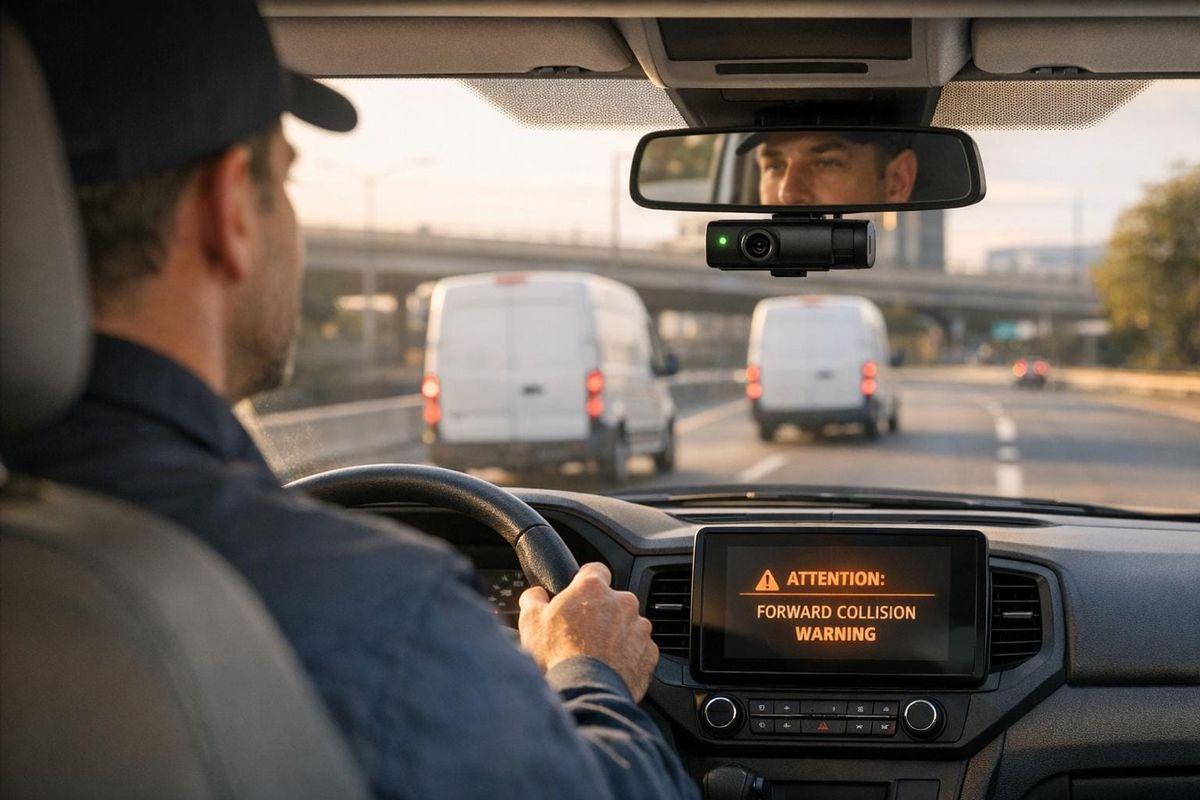
Fleet dash cameras have transformed from simple recording devices to advanced safety tools. Modern systems use AI to detect risky behaviours like mobile phone use or driver fatigue, providing real-time alerts within 200 milliseconds. These upgrades are reducing accident rates by up to 30% and cutting insurance premiums by 58%.
Key benefits include:
- Improved safety: Real-time driver coaching and alerts help prevent accidents.
- Cost savings: Fuel costs drop by up to 24%, and claims processing becomes faster and cheaper.
- Enhanced security: Multi-angle cameras protect against theft and provide evidence for false claims.
- Operational efficiency: Automated logging of driving hours and maintenance schedules reduces admin work.
With 80% of UK van fleets already using van tracking solutions with AI-powered telematics, these systems deliver clear financial returns, often paying for themselves within months. Upgrading your fleet's dash cameras is a smart way to improve safety, reduce costs, and streamline management.
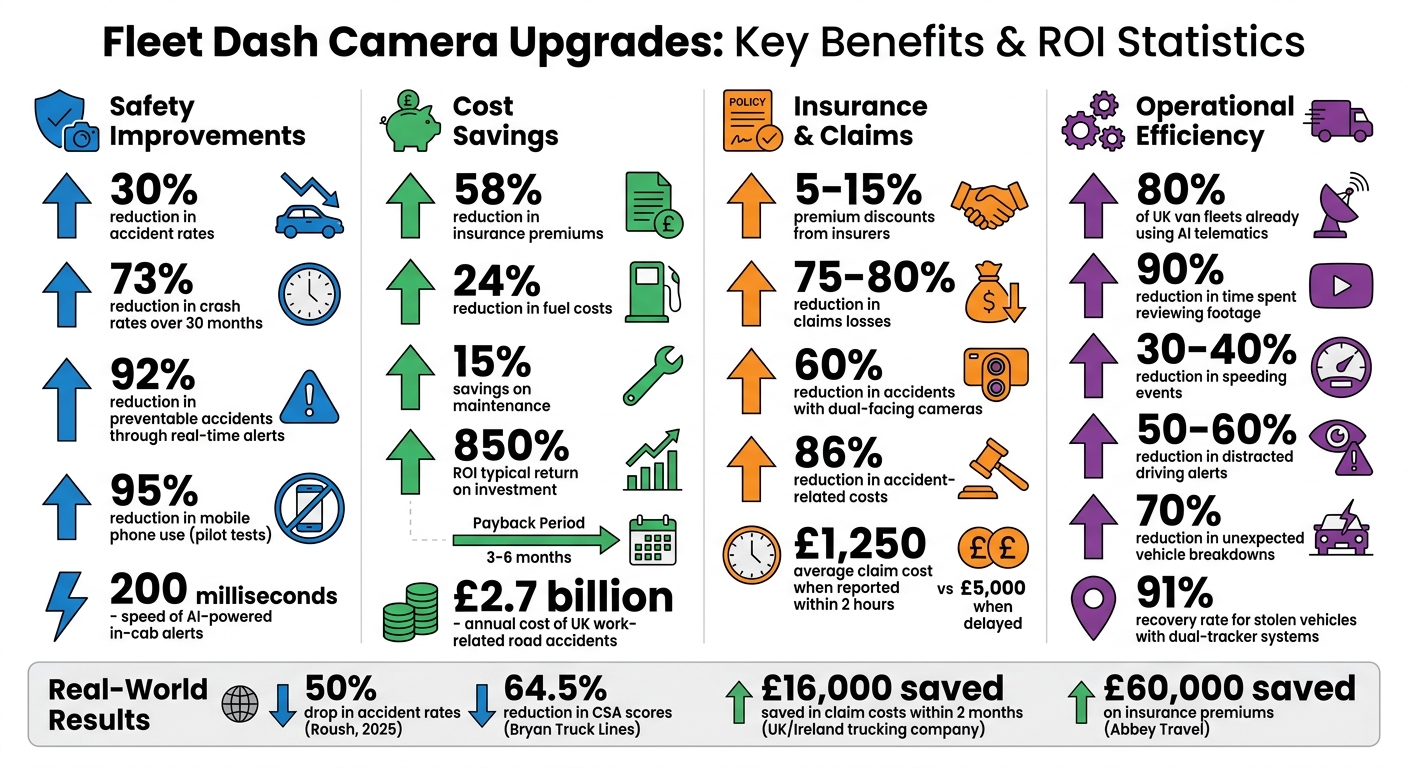
Fleet Dash Camera ROI: Key Statistics and Cost Savings
Benefits of Upgrading Fleet Dash Cameras
Security and Theft Prevention
Modern dash cameras provide coverage from multiple angles - front, rear, and interior - offering a thorough approach to asset protection. The addition of interior monitoring ensures accountability by capturing driver actions and cabin conditions. When paired with fleet tracking systems, these cameras combine video footage with real-time telematics data. This integration allows businesses to keep tabs on vehicle locations and on-board activity, strengthening overall risk management. Together, these features create a solid foundation for managing driver behaviour more effectively.
Driver Behaviour and Safety Improvements
Upgraded dash cameras don't just record incidents - they actively help prevent them. Thanks to advancements in AI, these systems can now detect risky behaviours like mobile phone use, smoking, not wearing seatbelts, or signs of fatigue. Within 200 milliseconds, drivers receive in-cab voice alerts (e.g., "Maintain distance") to address issues in real time. Real-world results back up these innovations. In 2025, Roush achieved a 50% drop in accident rates and fully exonerated their drivers in all incidents, under the guidance of DOT Compliance Manager ReShonda Spears. Similarly, Titan Freight Systems reported zero deductible incidents during the same period. Pilot tests further revealed a 95% reduction in mobile phone use, while a family-owned trucking company with over 100 vehicles in the UK and Ireland saved more than £16,000 in claim costs within just two months.
Efficiency and Cost Savings
Upgraded dash cameras offer more than safety - they also enhance operational efficiency and cut costs. These systems automatically log driving hours, vehicle inspections, and maintenance schedules, easing administrative tasks and reducing the risk of DVSA fines. AI-powered analysis pinpoints areas like excessive idling or inefficient routing, leading to fuel savings of up to 24% through improved coaching and route optimisation. Claims processing also becomes faster and cheaper with features like automatic First Notice of Loss (FNOL), which eliminates the usual five-day delay in reporting accidents. For instance, Bryan Truck Lines reduced their Compliance, Safety, Accountability (CSA) score by 64.5% through AI-driven coaching, while predictive maintenance helped achieve a 70% drop in unexpected vehicle breakdowns. These upgrades offer a comprehensive way to control costs across fleet operations.
sbb-itb-499a7f0
Features to Consider in Modern Fleet Dash Cameras
AI and Real-Time Analytics
Modern fleet dash cameras are redefining safety by actively working to prevent accidents. With AI-driven technology, these cameras use computer vision and machine learning to monitor both road conditions and driver behaviour. External cameras can detect potential hazards like forward collisions, lane departures, tailgating, and pedestrians, while internal cameras keep an eye on driver activity, tracking indicators such as eye movement, blink rate, head position, and distractions like mobile phone use or smoking.
The use of edge computing is a game-changer here. These cameras come equipped with high-speed processors that deliver in-cab voice alerts in under 200 milliseconds. This rapid response allows drivers to correct risky behaviour instantly. Studies show that AI dash cam systems can reduce crash rates by 73% over a 30-month period and lower preventable accidents by up to 92% through real-time alerts. By analysing all driving time but flagging only critical high-risk events, these systems also help managers save time, reducing the need for lengthy footage reviews by up to 90%. Paired with high-resolution imaging, these analytics pave the way for advanced connectivity and safety features.
Video Quality and Cloud Connectivity
Clear, high-quality video is essential for accurate analysis and legal protection. The industry is moving towards 2K and 4K resolution as the standard by 2026, ensuring even the smallest details, like licence plates, are captured clearly - even in poor lighting conditions. Night vision capabilities are also crucial for fleets operating during evening hours.
Cloud connectivity takes video management to the next level. Fleet managers can access live feeds remotely and download specific clips in just minutes. AI features further simplify the process by automatically tagging and uploading significant events, such as harsh braking or collisions, to secure cloud dashboards. This eliminates the need for manual reviews. Additionally, remote health checks notify managers if a camera is obstructed, malfunctioning, or tampered with. Together, high-resolution video and cloud connectivity form the backbone of a modern, integrated fleet management system.
Integration with Fleet Management Systems
The real strength of modern dash cameras lies in their ability to integrate seamlessly with fleet telematics platforms. By combining video footage with GPS data, accelerometer readings, and engine diagnostics, fleet operators gain a detailed, real-time view of vehicle operations. This unified approach eliminates the hassle of managing multiple systems, as video incidents are automatically tagged with precise time and location data.
"Fleet operators gain a holistic view of vehicle operations in real-time from one cloud-based platform." - Aaron Jarvis, Associate Vice President, Geotab
Integrated systems also enable predictive analytics, linking current driver behaviour to future collision risks. This provides early warnings for safety teams, allowing them to address issues proactively. Such integration not only simplifies fleet operations but also enhances safety and cost control. For these reasons, prioritising dash camera systems that integrate seamlessly with telematics platforms is key to achieving a more efficient and safer fleet.
The BEST AI Dash Cams for 2026: ROI, Features, Trust & Deployment Strategy
Installation, Maintenance, and Compatibility
Ensuring proper setup and upkeep of dash cam systems is essential to fully benefit from their features and integration capabilities.
Camera Placement and Coverage
Where you place your cameras can make or break their effectiveness. Forward-facing cameras should ideally sit behind the rearview mirror, within the "wiper zone" - the area cleared by the windscreen wipers during rain or snow. This placement not only ensures clear footage in bad weather but also aligns with UK Department of Transport rules, which prohibit obstructing the driver’s view.
Before diving into installation, perform a detailed audit of your vehicles. Take note of each make, model, and any white-label van tracking or custom configurations. Also, consider other electrical loads like radios or lift gates to avoid overtaxing the battery. For inward-facing cameras, make sure the lens has an unobstructed view - sun visors or mirrors blocking the lens can disrupt AI features like event detection and driver monitoring.
The best installation method is hardwiring the dash cam directly to the fuse panel. This setup supports parking mode and allows for round-the-clock event recording. On vehicles with high auxiliary power use, adding voltage monitors or low-voltage cutoffs can help avoid draining the starter battery. After installation, test the cameras by driving routes with sharp turns or hard braking to ensure the field of view and AI detection work as intended.
Once the cameras are in place, regular maintenance and ensuring compatibility with other systems are key to keeping everything running smoothly.
System Maintenance and Updates
Most dash cam issues stem from power problems, not hardware faults. To keep everything operational, follow a maintenance cycle:
- Inspect camera mounts every 90 days.
- Clean lenses weekly.
- Format SD cards monthly to avoid data corruption.
- Perform remote health checks to catch issues like misaligned cameras, obstructions, or recording failures.
Firmware updates are another critical step. Regularly check for updates from the manufacturer to stay compatible with newer software and to apply security patches.
"The reality most fleet managers don't talk about: Somewhere between the purchase order and the first useful safety alert, half of all fleet dash cam programmes stall." - Rob Freedman, SureCam
To prevent tampering and boost driver acceptance, explain the benefits of dash cams, particularly how they protect drivers from false claims. Also, when routing cables, use zip ties or conduits to keep wires tidy and avoid pinch points, door hinges, or areas near the engine that generate heat.
Compatibility with Existing Systems
Getting dash cams to work seamlessly with your current systems requires more than just plugging them in. Modern dash cams often connect to telematics devices, which provide WiFi and data like GPS and g-force for automatic video uploads. Before rolling out to the entire fleet, test the system under normal operating conditions to make sure it integrates well with your telematics setup.
For example, in 2025, Mitchell Companies reported a 34% reduction in auto claims and saved between £150,000 and £200,000 by using AI-enabled dash cams to clear drivers of false accusations. When choosing hardware, look for options that integrate smoothly with your telematics system, combining video with engine diagnostics for a full view of operations. Test how quickly you can retrieve footage and upload it to the cloud in real-world conditions before deploying the system fleet-wide.
| Feature | Hardwired Connection | Ignition-Switched |
|---|---|---|
| Power Source | Direct to fuse panel | Ignition circuit |
| Parking Mode | Supported (24/7 capture) | Not supported |
| Reliability | High (Gold Standard) | Moderate |
| Battery Risk | Requires voltage monitor | Low |
| Best For | Theft/vandalism protection | Drive-time only incidents |
Measuring ROI from Dash Camera Upgrades
Dash camera upgrades aren't just about improving safety - they also deliver measurable financial returns. By tracking metrics like insurance savings and driver retention, fleet managers can clearly see how these systems pay for themselves over time.
Insurance Savings and Liability Reduction
Dash cameras can lead to significant insurance savings. Many providers offer premium discounts of 5% to 15% for fleets using cameras with event-upload capabilities. Some fleets have seen even greater reductions: Abbey Travel, for instance, saved over £60,000 on premiums after implementing a video-based safety programme, while Antalis experienced a 75% drop in premiums.
Video evidence also protects drivers from false claims, which is crucial since passenger vehicles are involved in around 80% of lorry accidents. Lansberry Trucking reported an 80% reduction in claims losses within a year of installing dash cameras, ensuring they weren't held liable for incidents where they weren't at fault. Similarly, Sprint Waste Services saved £500,000 on premiums at their policy renewal after deploying dash cameras.
Quick claim reporting is another cost-saver. Claims reported within two hours cost an average of £1,250, compared to over £5,000 when delayed. Connected cameras enable instant access to footage, cutting claims resolution times from 90–120 days to just hours.
"Insurers are more willing to offer credits and other discounts, when fleets show tangible progress in reducing risky driving." – Deana Beltsis, Content Marketing Manager, Geotab
Reduced Operating Costs
Dash cameras also help lower everyday operating expenses by improving driver behaviour and vehicle maintenance. AI coaching can reduce speeding events by 30–40% and distracted driving alerts by 50–60% within just a few months. Dual-facing cameras cut accidents by 60% and accident-related costs by 86%.
Better driving habits mean lower fuel consumption and less wear on vehicles. Proactive maintenance, supported by telematics alerts, costs three to four times less than emergency repairs. Vehicles maintained on schedule can last 30–40% longer. Empress Ambulance Services, for example, saved £15,000 per vehicle by reducing downtime through improved driving and timely maintenance.
Dash cameras also improve administrative efficiency. One construction fleet manager reduced time spent on claims administration from 40 hours per month to under 10 hours. In another case, a 136-vehicle construction fleet cut third-party claims by 75% using advanced cameras with real-time alerts to coach drivers and resolve disputes with video evidence.
These savings go beyond day-to-day costs, offering a competitive edge in asset protection and legal defence.
Competitive Advantage and Asset Protection
In a legal environment where "nuclear verdicts" (judgements exceeding £8 million) are increasingly common, dash cameras provide a critical defence. High-quality footage can lead to cases being dropped or settled for less when it clearly shows a third party was at fault.
Driver retention also improves when employees feel protected from false accusations. Since replacing a single driver can cost over £8,000, reducing turnover saves money while demonstrating that the company values its drivers.
Conclusion
Upgrading dash cameras can reshape how businesses approach risk management, driver safety, and cost efficiency. Modern AI-powered systems have come a long way, evolving from basic recording devices into active safety tools capable of delivering real-time alerts in under 200 milliseconds.
These cutting-edge features bring tangible financial benefits. With 80% of UK van fleets already using AI telematics, early adopters typically see returns on their investment within 3 to 6 months. These systems can deliver up to an 850% ROI, driven by a 24% reduction in fuel costs, 15% savings on maintenance, and a 58% drop in insurance premiums. Given that work-related road accidents cost UK businesses around £2.7 billion each year, the real question becomes: can you afford not to upgrade?
Beyond cost savings, integrated systems that combine video with GPS, engine diagnostics, and accelerometer data offer an added layer of protection for both drivers and assets. These tools provide the evidence needed to clear drivers of false claims and defend against costly legal challenges. They also show a genuine commitment to driver safety, which can improve morale and help retain staff.
When selecting a system, look for features that align with your fleet management needs. Choose models that integrate easily with your existing software, meet GDPR requirements, and include advanced options like dual-tracker technology. With dual-tracker systems boasting a 91% recovery rate for stolen vehicles, you’re not just safeguarding your assets - you’re setting the stage for long-term operational success.
Take the step toward smarter fleet management by investing in modern dash cameras. At GRS Fleet Telematics (https://grsft.com), we’re dedicated to providing advanced dash cam solutions designed to enhance safety and efficiency.
FAQs
Will drivers accept inward-facing cameras?
Drivers are becoming more receptive to inward-facing cameras, especially when integrated into AI dash cam systems. These systems play a key role in improving fleet safety while monitoring driver behaviour, contributing to safer and more efficient driving conditions throughout the UK.
Do these dash cams comply with UK GDPR rules?
Although it's not directly mentioned, dash cams used in the UK are anticipated to align with UK GDPR regulations to safeguard data protection and privacy. Additionally, UK laws typically emphasise the importance of high-quality video footage and accurate calibration to ensure both safety and adherence to legal standards.
Can they integrate with our existing telematics?
GRS Fleet Telematics’ dash camera systems work effortlessly with existing telematics systems. They offer API connections that enable real-time data sharing, covering GPS location, speed, driver behaviour, and video footage. The integration process involves verifying software compatibility, linking systems through APIs, and tailoring features such as alerts and reporting. This setup supports smoother fleet management while improving safety, security, and overall operations.