Fuel Theft in Construction Fleets: Prevention with Telematics
Telematics is the most effective defence against fuel theft and waste in UK construction fleets.
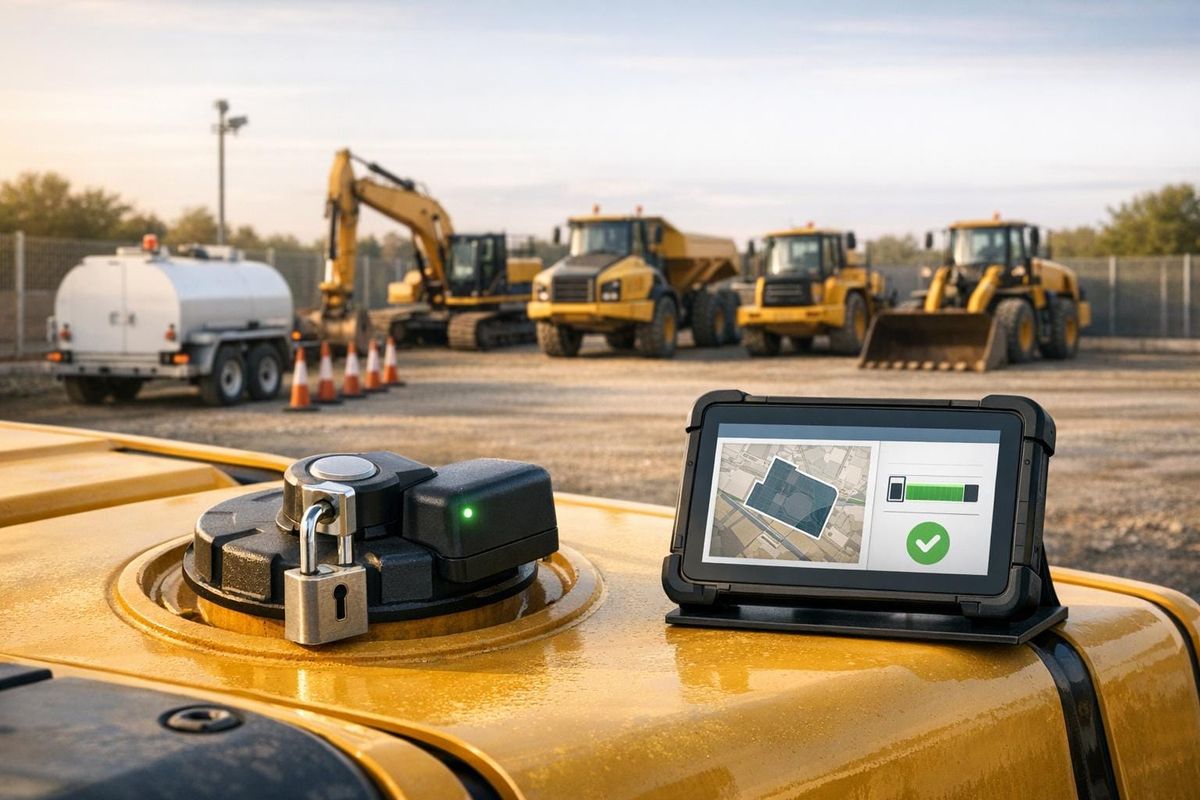
Fuel theft is a growing problem for construction fleets in the UK, costing the industry an estimated £1.4 billion annually. With over 5,200 incidents reported each year, thieves target heavy machinery holding large amounts of diesel, often at remote, poorly secured sites. Losses go beyond stolen fuel, with downtime, equipment damage, and rising insurance premiums adding to the financial burden.
Telematics offers a practical solution by combining real-time fuel monitoring, geofencing, and data analytics to detect and prevent theft. Systems can alert fleet managers to sudden fuel drops, suspicious vehicle movements, or unusual refuelling patterns. Features like remote immobilisation and dual-tracker technology further protect assets and improve recovery rates, with some companies reporting theft reductions of up to 85%.
Beyond theft prevention, telematics helps optimise fuel use, reduce idling, and improve driving habits, delivering measurable savings. With affordable pricing starting at £7.99 per month, UK construction firms can protect their fleets with industry-specific tracking while improving overall efficiency.
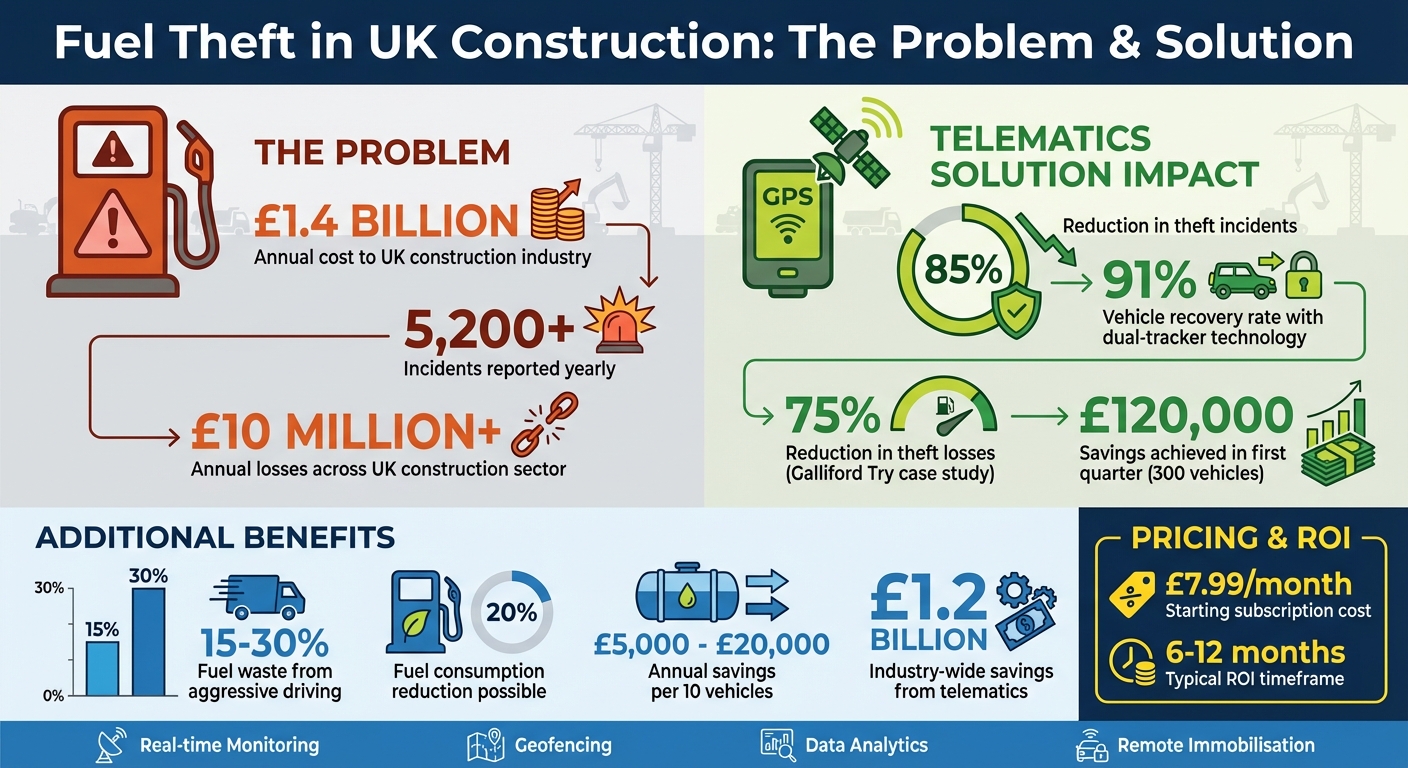
UK Construction Fleet Fuel Theft Statistics and Telematics Prevention Impact
How Telematics Detects and Prevents Fuel Theft
Telematics systems address fuel theft by combining real-time monitoring with data analytics. These two features work hand-in-hand to safeguard construction fleets from external siphoning and internal misuse.
Real-Time Fuel Monitoring and Alerts
Tank sensors embedded in vehicles continuously send fuel level data to a central platform. If fuel levels drop by 20%–30% without corresponding engine activity, the system sends alerts through SMS, email, or app notifications. These sensors, using ultrasonic or capacitive technology, are highly accurate - measuring fuel levels to within 1% of the tank’s capacity - and can detect siphoning within minutes.
Geofencing adds another layer of protection by setting virtual boundaries around authorised areas like depots, work sites, or approved fuel stations. If a vehicle refuels outside these zones or moves during restricted hours (typically between 22:00 and 06:00, when sites are unstaffed), fleet managers are immediately notified. In some cases, the system can even immobilise the vehicle remotely, preventing unauthorised movement.
While real-time alerts provide immediate protection, data analytics enhance the system's ability to detect suspicious activity over time.
Data Analytics for Fuel Consumption Patterns
Telematics systems analyse historical fuel data to establish normal consumption patterns for each vehicle, driver, and route. If fuel usage deviates by 15%–25% from these baselines, the system flags it for review.
GRS Fleet Telematics: Fuel Theft Prevention for Construction Fleets
GRS Fleet Telematics uses real-time monitoring and data analytics to tackle the issue of fuel theft in construction fleets, offering a range of tools to protect your assets.
Security Features for Construction Fleets
GRS Fleet Telematics employs dual-tracker technology to keep your fleet secure. This system combines a hardwired GPS tracker with a concealed Bluetooth unit that operates independently. Even if one device is tampered with, the other ensures uninterrupted monitoring.
The Ultimate package (£119 hardware cost) includes a remote immobilisation feature, allowing fleet managers to disable the engine remotely. This prevents high-value vehicles from being moved overnight, acting as a powerful deterrent. In the unfortunate event of theft, GRS’s 24/7 recovery team uses dual-tracker data to achieve an impressive 91% recovery rate for stolen vehicles.
Other tools, like IoT fuel monitoring and geofencing, add further layers of protection. These features not only prevent unauthorised movement but also help identify inefficiencies. For UK businesses, this package combines advanced hardware with cost-effective solutions.
Flexible Pricing for UK Businesses
To meet the diverse needs of construction fleets, GRS Fleet Telematics offers three pricing tiers:
- Essential: £35 (single wired tracker)
- Enhanced: £79 (dual-tracker system)
- Ultimate: £119 (dual trackers with remote immobilisation)
Monthly subscriptions start at just £7.99 per vehicle, covering all core features. Installation is free when paired with GRS Fleet Graphics branding services, helping businesses save on upfront costs. Many construction firms report seeing returns on their investment within 6 to 12 months, thanks to reductions in fuel consumption, maintenance expenses, and theft-related losses.
How to Implement Telematics to Secure Your Fleet
Introducing telematics into your fleet doesn’t have to be a daunting task. Start with a thorough fleet audit to identify high-risk vehicles, such as diggers, dumpers, or vans carrying expensive tools. Professional installation, carried out at authorised UK centres, typically takes only 1–2 hours per vehicle. This ensures proper 4G/5G connectivity and compliance with GDPR regulations.
Take Galliford Try as an example. In the first quarter of 2023, the company implemented fuel monitoring telematics across 300 diggers. The system, which included alerts for unusual fuel consumption, led to a 75% reduction in theft losses, saving £120,000. Under the guidance of Operations Director Lisa Patel, the firm even managed to remotely immobilise five vehicles during theft attempts. This case highlights how telematics can deliver measurable results in just a few months. Once installed, the next step is setting up alerts to detect unusual activity as it happens.
Setting Up Alerts and Notifications
After installing telematics devices, configuring alerts is the key to spotting threats quickly. Use the telematics dashboard to create instant notifications for specific events. For instance, set fuel alerts to flag drops of over 10% outside working hours or sudden losses exceeding 20 litres. For construction fleets, geofence alerts can be established using a 100-metre radius around site boundaries or postcode mapping, which can help prevent 85% of theft attempts within five minutes of detection.
Customise notifications to be sent via SMS or email for 24/7 monitoring. For example, if a 50-litre fuel drop occurs at 2:00 am, you can check the vehicle’s location on the dashboard, review live camera footage (if available), and activate remote immobilisation - provided the vehicle is off public roads. In cases of theft, contact the police via 999 for emergencies or 101 for non-emergencies, supplying them with precise GPS coordinates. By calibrating alerts based on historical data, you can cut down false alarms by 30%, ensuring your team only responds to genuine threats. Once alerts are in place, advanced tools like immobilisation can offer an additional layer of protection.
Using Immobilisation and Recovery Tools
Remote immobilisation allows you to disable a vehicle’s engine or starter motor through an over-the-air command. For construction vehicles, this feature should only be used when the vehicle is stationary and not on public roads, to comply with the UK Road Traffic Act and avoid legal issues. One UK construction firm reported recovering 15 out of 18 stolen vehicles in 2023, with immobilisation preventing 70–90% of thefts in progress.
GRS Fleet Telematics offers a 24/7 recovery service that works closely with UK police forces. Using live tracking data, their team achieves response times of under 30 minutes. At just £7.99 per month, this service boasts an impressive 91% recovery rate.
sbb-itb-499a7f0
Long-Term Benefits of Telematics for Construction Fleets
Telematics offers a powerful way to combat fuel theft, reduce operating costs, and enhance fleet efficiency. In the UK, companies report annual savings ranging from £5,000 to £20,000 for every 10 vehicles equipped with telematics systems. According to the Road Haulage Association, the industry as a whole has saved £1.2 billion thanks to telematics.
These financial benefits are closely tied to telematics' ability to refine driving habits and optimise fuel usage.
Improving Fuel Efficiency Through Eco-Driving
Telematics systems monitor driving behaviours like harsh acceleration, heavy braking, and speeding in real time. These aggressive driving habits can waste 15–30% of fuel. By providing instant feedback and driver performance scores, telematics encourages smoother driving. For example, a UK construction company introduced driver leaderboards and targeted training, resulting in monthly diesel savings of £2,500 across a 50-vehicle fleet. This translated to a fuel consumption reduction of up to 20%. Fleet managers also report diesel savings of £0.10–£0.20 per kilometre, which adds up to over £10,000 annually for a fleet of 20 vehicles covering 50,000 kilometres.
Telematics also tracks engine idling through GPS, sending alerts when vehicles idle for more than five minutes. Idling can account for 5–10% of a fleet's fuel consumption. One UK haulier used geofence alerts and engine shut-off features to cut idling by 40%, saving 1,200 litres of diesel every month. At a diesel price of £1.50 per litre, this resulted in substantial cost savings.
Improving Operations with Data Insights
The benefits of telematics extend beyond fuel savings, as it provides valuable insights that improve overall fleet operations. Historical GPS data helps optimise routes by avoiding traffic and construction areas, reducing mileage by 10–15%. A Midlands-based construction company applied this data to streamline routes for 30 lorries, saving 8% on fuel - equivalent to £15,000 annually - while improving on-time performance from 75% to 95%.
Telematics dashboards also evaluate drivers on safety, efficiency, and compliance. This data supports targeted training, which has been shown to lower accident rates by 30% and reduce maintenance costs by 15%. In one case, performance benchmarking resulted in a 12% increase in daily jobs completed, with fleets achieving 25% better utilisation in terms of hours and kilometres per vehicle.
Conclusion: Protecting Your Fleet with GRS Fleet Telematics
Fuel theft is an ongoing challenge for construction fleets, costing UK businesses thousands of pounds each year while disrupting essential operations. With annual losses from fuel theft surpassing £10 million across the UK construction sector, taking proactive steps to prevent these incidents is crucial. This is where telematics comes into play, offering tools like real-time monitoring, geofence alerts, and data analytics to detect suspicious activity before it leads to costly losses.
GRS Fleet Telematics provides a robust solution with its dual-tracker technology. By combining a hardwired GPS tracker with a hidden Bluetooth backup, it ensures uninterrupted monitoring. This approach has achieved an impressive 91% recovery rate, safeguarding engines, fuel, and other assets from unauthorised movement.
Beyond theft prevention, GRS Fleet Telematics enhances fleet efficiency. Features like detailed fuel usage reports help pinpoint waste, eco-driving analytics can cut fuel consumption by up to 15%, and geofencing keeps track of vehicle movements across work sites. Starting at just £7.99 per month, this system quickly offsets its cost by preventing losses and improving operational efficiency.
Customers have seen the benefits firsthand:
"Since installing GRS van trackers, we've had zero thefts and have recovered two attempted van thefts thanks to the dual-tracker system." - Mark Richards, Operations Manager, BuildRight Construction
Take action today. Visit grsft.com to arrange a free demonstration and discover how GRS Fleet Telematics can protect your fleet. With flexible pricing, 24/7 support, professional recovery services, and advanced fleet analytics, you'll gain both peace of mind and greater control over your operations from day one. Don’t wait - secure your fleet now with GRS Fleet Telematics.
FAQs
How accurate are fuel level sensors in telematics?
Fuel level sensors integrated into telematics systems, like those offered by GRS Fleet Telematics, provide precise real-time fuel monitoring. These sensors not only send alerts to identify and prevent potential theft but also help minimise inefficiencies. This leads to improved fuel management and strengthens the security of the entire fleet.
What’s the best fuel theft alert threshold to set?
To set the right fuel theft alert threshold, you need to consider your fleet's usual fuel consumption patterns and any potential risks. Setting up alerts to track equipment usage and flag unexpected drops in fuel levels is a smart way to spot unusual activity. This allows you to quickly identify and respond to any suspicious behaviour, helping to tackle theft before it escalates.
Is remote immobilisation legal in the UK?
Remote immobilisation is permitted in the UK as part of telematics solutions for fleet management. However, strict safety measures must be in place. These measures ensure that engines are only disabled when vehicles are stationary, reducing the risk of accidents or other hazards.