Emergency Response Modules for Fleet Operators
Real-time tracking, driver alerts and dual trackers reduce incidents, speed recoveries and cut costs for UK fleets.
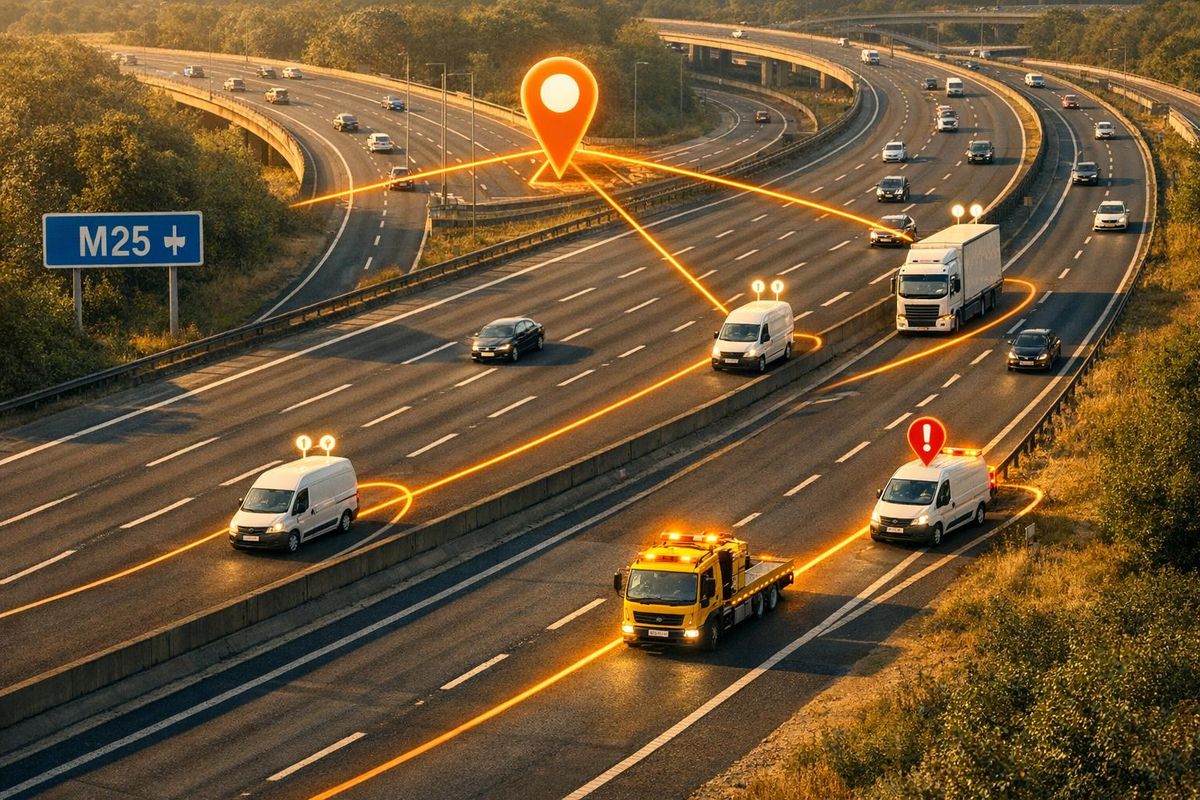
Fleet operators in the UK can improve safety, cut costs, and recover stolen vehicles with emergency response modules. These programmes combine real-time tracking, driver safety alerts, and theft prevention tools to reduce risks and enhance fleet performance. Key benefits include:
- Real-time tracking: Cuts response times by up to 50%, helping recover stolen vehicles quickly.
- Driver safety alerts: Tools like speed and geofencing alerts reduce accidents and improve incident management.
- Theft prevention: Dual-tracker systems achieve over 90% recovery rates, saving fleets from major losses.
- Cost savings: Efficient driving habits lower fuel costs by up to 10%, while fewer accidents reduce insurance premiums.
With training and customisation, fleets can tailor these systems to their needs. Operators using these modules report fewer incidents, faster recovery times, and better overall performance.
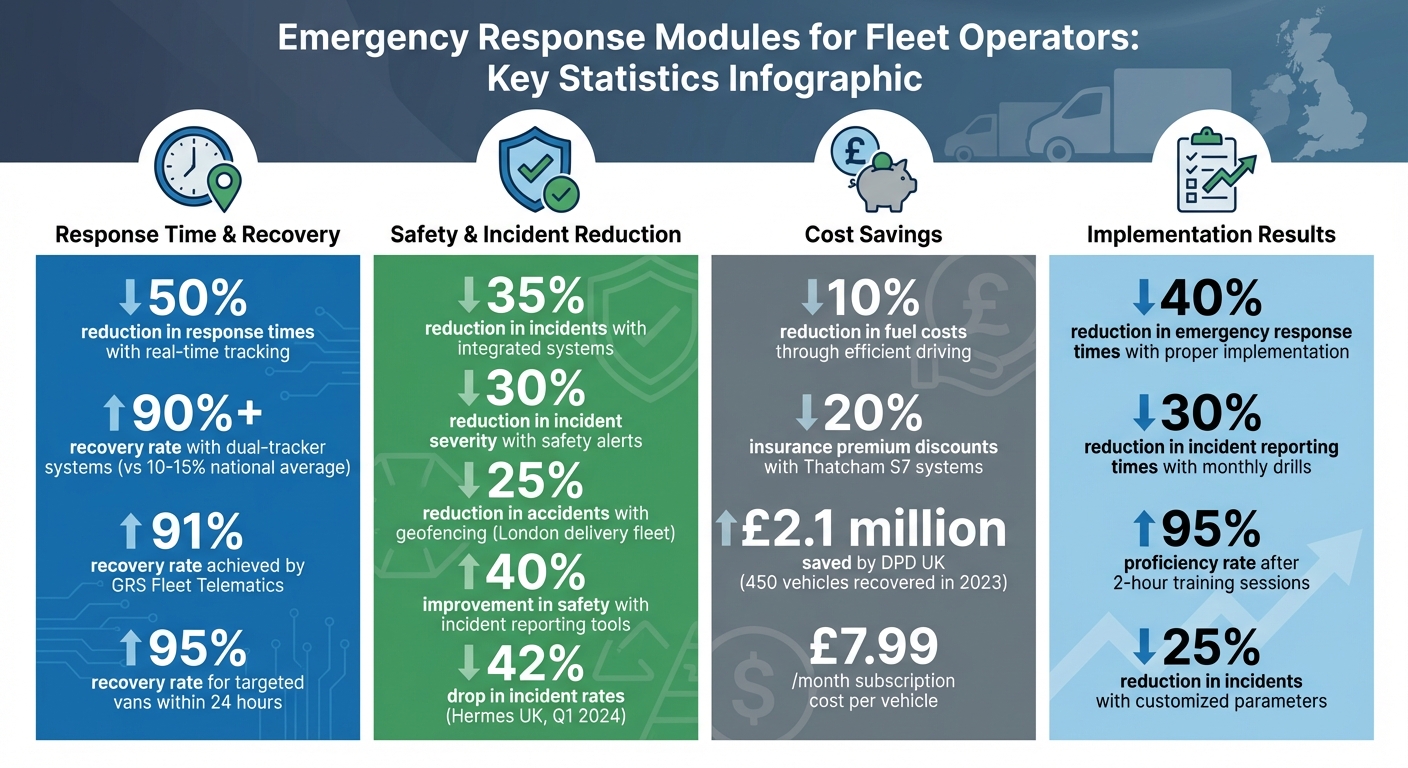
Emergency Response Modules Impact on UK Fleet Operations: Key Statistics
Core Components of Emergency Response Modules
Emergency response modules rely on precision monitoring, timely alerts, and well-coordinated recovery systems. These elements are crucial for equipping fleet operators with the tools they need to safeguard both drivers and assets. At the heart of these systems are real-time tracking, safety alert mechanisms, and vehicle recovery protocols, which work together to minimise risks. Industry analyses show that this integrated approach can reduce incidents by 35%. Together, these components form the foundation of effective fleet safety practices.
Real-Time Tracking and Monitoring
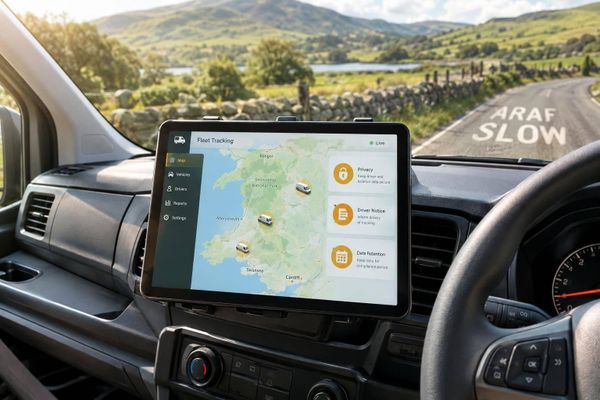
Live GPS tracking plays a pivotal role in cutting response times by up to 50%, as it provides precise location data for vehicles during emergencies like accidents or breakdowns. This technology allows fleet managers to share exact coordinates with emergency services in a matter of minutes. For instance, in one UK logistics case, real-time telematics enabled the recovery of a stolen van within just two hours, preventing the loss of valuable cargo. Beyond theft recovery, the system also monitors driving behaviour, such as harsh braking or speeding in rural areas, alerting managers to potential hazards like rollovers before they escalate.
Driver Safety Alerts and Incident Reporting
Safety alerts are another critical feature. Speed alerts activate when vehicles exceed 100 km/h, while geofencing alerts notify managers when vehicles enter unauthorised zones. These tools have been shown to reduce the severity of incidents by 30% in UK fleets. For example, a London-based delivery fleet implemented geofencing around congestion zones, cutting accidents by 25% and enabling remote coaching for drivers. Incident reporting tools, like one-button systems, allow drivers to log near-misses with photos and timestamps, helping fleets identify patterns and improve safety across industries by 40%. In Q1 2024, Hermes UK reported a 42% drop in incident rates after training 5,000 drivers to use panic buttons and incident reporting, preventing 320 theft attempts in the process [Hermes Fleet Safety Case Study, Otelog, April 2024]. These proactive measures ensure quicker responses and better preparedness for vehicle recovery.
Vehicle Recovery and Theft Prevention
When it comes to theft prevention, dual-tracker technology has proven to be highly effective, achieving recovery rates of over 90%. This is a significant improvement compared to the national average of 10-15% for vehicles without telematics. Dual-tracker systems provide redundancy, ensuring a backup tracker activates if the primary one is disabled, leading to a 95% recovery rate for targeted vans within 24 hours. In 2023, DPD UK successfully recovered 95% of 450 stolen vans, saving £2.1 million in losses. Their system alerted control rooms within 90 seconds of thefts, allowing police to recover vehicles in an average of four hours [DPD Annual Sustainability Report 2023]. These results highlight how advanced recovery systems significantly mitigate financial and operational risks for fleets.
sbb-itb-499a7f0
GRS Fleet Telematics: Emergency Response Capabilities
GRS Fleet Telematics combines dual-tracker security, real-time monitoring, and round-the-clock recovery support. With a 91% vehicle recovery rate and a cost-effective subscription of £7.99 per month, it offers a reliable solution for fleet management. Here's a closer look at its emergency response features.
Real-Time Tracking and Dual Tracker Security
The system employs a dual-tracker setup: a primary hardwired GPS tracker and a secondary, hidden Bluetooth-powered backup. If the main tracker is tampered with or disabled, the backup immediately activates. This redundancy addresses a significant issue, as single trackers are disabled in 40% of theft cases. GPS updates every 5–10 seconds are available via a user-friendly web or mobile app.
In one notable instance from 2025, a Manchester courier fleet recovered a stolen van within 90 minutes using dual trackers. The stolen goods, valued at £15,000, were also retrieved. Geofencing played a crucial role by flagging the vehicle's unauthorised departure, highlighting the system's ability to recover most stolen vehicles within 24 hours. This capability is especially important in the UK, where a van is stolen every 8.5 minutes.
Driver Safety and Geofencing Features
The platform goes beyond theft prevention with features designed to enhance driver safety. Alerts monitor harsh braking, rapid acceleration, collisions, and signs of driver fatigue, providing immediate notifications to fleet managers. Drivers can also use a built-in panic button to report emergencies with precise location data, ensuring incidents are logged for insurance or post-incident reviews. One logistics company reported a 25% drop in unreported incidents after adopting the system.
Geofencing adds another layer of security by creating virtual boundaries. Alerts are triggered if vehicles enter or leave restricted areas or operate during unauthorised hours. A case study revealed a 30% reduction in urban fleet accidents, as geofencing integrated with driver behaviour scoring to support proactive training. Fleet managers can also set speed alerts - such as notifications at 80 km/h - and define approved zones, receiving instant updates when these boundaries are crossed. These features integrate seamlessly into the broader emergency response framework.
24/7 Recovery Support and Pricing
A key component of the system is its 24/7 recovery support. A dedicated UK-based team monitors vehicles around the clock, coordinating with local police through integrated APIs to report thefts. The average response time is under 15 minutes, with on-site assistance provided when necessary. This robust support has enabled GRS Fleet Telematics to maintain a 91% recovery rate, recovering over 150 vehicles annually for UK clients.
"GRS van trackers have transformed how we manage our housing maintenance fleet. We've reduced response times by 40%, improved our environmental reporting, and can demonstrate clear accountability to residents and stakeholders." - James Wilson, Fleet Operations Manager, City Council
Pricing for the software subscription starts at £7.99 per vehicle per month, which includes SIM/data, an account manager, and access to the platform. Hardware options range from the Essential tracker (£35) for basic real-time tracking, to the Enhanced tracker (£79) featuring dual-tracker technology, and the Ultimate tracker (£119) which adds immobilisation functionality. Fleet branding through GRS Fleet Graphics also includes free installation.
Implementation Guide for Emergency Response Modules
Training Drivers and Fleet Managers
Start with 2-hour classroom sessions covering essential features like panic button usage, real-time alerts, and geofencing. These sessions often result in a 95% proficiency rate among drivers and managers. Follow up with simulator-based exercises to prepare for scenarios such as breakdowns, theft, and accidents.
Conduct monthly tabletop drills, which have been shown to reduce incident reporting times by 30%. Fleet managers should also receive focused training on analysing telematics reports and using live data during emergencies. Quarterly refresher courses and regular testing of alert triggers - like brief, safe speed threshold breaches - help ensure the system performs effectively when needed.
These steps establish a strong foundation for tailoring telematics systems to suit specific fleet requirements.
Customising Telematics for Fleet Requirements
Tailor telematics settings based on vehicle types and operational routes. For instance, urban delivery vans benefit from tighter geofencing (50–100m radius) in city centres, while heavy goods vehicles (HGVs) may require route deviation alerts for motorway operations. GRS Fleet Telematics supports dual-tracker configurations with alerts calibrated to UK speed limits (in mph) and metric distances for compliance. A Midlands logistics company, for example, customised its system for ADR hazardous goods transport, cutting emergency response times by 40%.
Adjust driver behaviour thresholds to align with your fleet’s specific risks. For example, set harsh braking alerts at a deceleration of 0.8g and monitor driver fatigue by tracking hours worked against the UK Working Time Regulations, which cap daily driving at 10 hours. Fleet consultants have reported a 25% reduction in incidents after implementing such tailored parameters.
Begin with a pilot programme involving 20% of the fleet. Use the initial feedback to fine-tune geofencing boundaries and alert sensitivities before a full rollout. Integrating telematics with existing systems via APIs ensures smooth data sharing across platforms.
Tracking Metrics for Ongoing Improvement
Consistent monitoring is key to making strategic improvements. Aim for response times under 5 minutes in urban areas and under 10 minutes on rural routes. According to a 2025 Fleet News survey, top-performing fleets maintain average response times below 5 minutes through continuous oversight. Track key metrics such as incident resolution rates (targeting 90%), vehicle recovery success rates, and false positive alerts using cloud-based dashboards that display weekly KPIs.
Data analysis has identified peak incident times - such as 6–8 PM on motorways - leading to predictive routing strategies that reduced incidents by 18% over six months. Monthly reviews with managers, combined with benchmarking against Freight Transport Association standards (e.g., 85% recovery rates), can further refine protocols. Additionally, addressing delayed reporting - responsible for 68% of UK fleet incidents - through app-based reporting systems has reduced delays by 40%, as noted in the 2024 DVSA report. Regular audits help maintain high recovery rates, such as the 91% achieved by GRS Fleet Telematics.
Conclusion
Emergency response modules have transformed fleet management by shifting the focus from reactive measures to proactive risk management. With tools like real-time tracking, automated incident detection, and instant driver alerts, these systems tackle the primary cause of most fleet incidents: human error, which accounts for 90% of crashes. By addressing issues early, they help prevent situations from escalating.
Beyond improving safety, these modules offer clear financial incentives. For instance, vehicles equipped with Thatcham S7 certified systems can enjoy insurance premium discounts of up to 20%. As GRS Fleet Telematics highlights:
"Vehicle theft doesn't just cost you a single vehicle – it can jeopardise your entire business".
GRS Fleet Telematics provides these systems at competitive rates, with hardware starting at £35 and software subscriptions priced at £7.99 per vehicle monthly. Impressively, they report a 91% recovery rate for stolen vehicles, thanks to their dual-tracker setup, which ensures uninterrupted tracking even in difficult conditions.
The benefits of these systems go beyond technology. Effective implementation, including tailored training and customisation, is essential. Fleet operators who follow these best practices have reported tangible results, such as a 40% reduction in emergency response times through accurate vehicle location tracking.
Integrating emergency response modules isn’t just about adopting new tools; it’s about creating a robust safety framework that safeguards assets, protects personnel, and ensures operational continuity. By combining advanced technology with thoughtful implementation, fleets can achieve safer, more efficient operations.
FAQs
What should we do first after a theft alert?
When you receive a theft alert, the first step is to verify the situation using your telematics system’s real-time location data. This allows you to confirm if the vehicle has indeed been stolen and helps identify its exact location. Once you’ve confirmed the details, ensure all information is correct before reporting the incident to the appropriate authorities.
How do we set geofences without triggering too many false alerts?
To cut down on false alerts when using geofences, it’s crucial to configure boundaries with care and fine-tune sensitivity settings. Focus on creating accurate virtual perimeters around important areas like depots or customer locations, and set alert thresholds that match your operational needs. Regularly revisit and refine your geofence settings, taking into account vehicle movement patterns. This helps to minimise alerts triggered by minor GPS shifts or slow movements across boundaries.
What training do drivers need to use panic buttons and incident reporting correctly?
Drivers require proper training to effectively use panic buttons and incident reporting tools. For incident reporting, they need to become familiar with using telematics systems, mobile apps, and checklists to ensure reports are both accurate and submitted promptly.
When it comes to panic buttons, training should focus on recognising emergency situations where activation is necessary and understanding the correct steps to use the button. Emphasising its purpose - securing immediate help - can make drivers feel more prepared. Hands-on demonstrations and straightforward guidelines are key to building confidence and ensuring these tools are used correctly when needed.