Fleet Tracking Regulations Explained: A Guide for Courier Businesses in the UK
Practical UK guidance for couriers on lawful fleet tracking: lawful basis, transparency, DPIAs, private-use limits and retention.

Jurisdiction Scope
UK-wide employment and data-protection context; specific operational rules may additionally depend on the vehicle, driver, and devolved or sector-specific requirements.
sbb-itb-499a7f0
Overview of Fleet Tracking Laws
Applicable Business Type
Courier businesses and employers operating delivery fleets in the UK
Country or Region
United Kingdom
A UK-focused compliance guide for courier businesses using GPS tracking, telematics, or other vehicle-monitoring systems. It explains lawful basis, transparency, privacy safeguards, monitoring limits during private use, DPIAs for high-risk monitoring, and proportionate retention of tracking data.
Legal Requirements Summary
UK courier businesses may use fleet tracking where they can demonstrate a lawful, necessary, and proportionate purpose under UK data-protection law. They must notify drivers and passengers, safeguard access and other data rights, and complete a DPIA for high-risk monitoring. Tracking should normally be restricted to business use; monitoring during private use is rarely justifiable. UK GDPR does not prescribe a universal retention period, so businesses must set, justify, review, and enforce a purpose-based retention schedule.
Main Regulatory Topics
- UK GDPR and lawful basis
- Driver and passenger transparency
- Driver consent and employment power imbalance
- Data Protection Impact Assessments
- Private-use and off-duty tracking
- Data minimisation and proportionality
- Privacy by design and technical safeguards
- Retention and deletion
- Data-subject rights
- In-vehicle surveillance, cameras, and audio
Key Compliance Obligations
- Identify and document a lawful basis for collecting vehicle-location and telematics data.
- Provide clear privacy information to drivers and passengers, including the monitoring purpose, controller identity, and relevant rights; use suitable vehicle signage where appropriate.
- Carry out a Data Protection Impact Assessment before high-risk monitoring, such as continuous driver-behaviour monitoring, cameras, audio, or analytics that infer or make decisions about drivers.
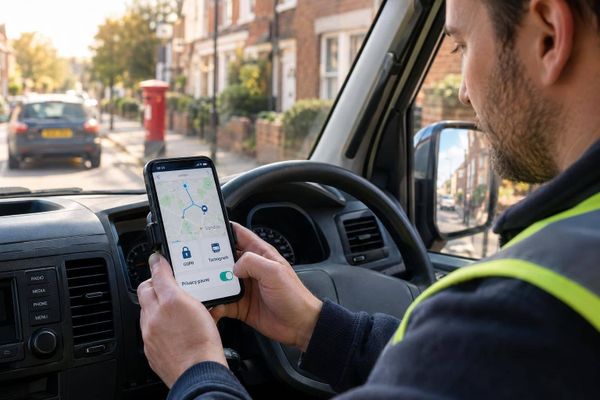
- Limit monitoring to what is necessary and proportionate, especially where vehicles may be used privately; do not routinely monitor private use and provide a means to deactivate tracking where appropriate.
- Use privacy-by-design technical controls, including suitable device configuration and disabling audio by default unless exceptional use is strongly justified.
- Create and regularly review a retention schedule; delete tracking information when it is no longer necessary and do not retain it merely for possible future use.
- Respect workers’ data-protection rights and maintain transparent records of purposes, lawful basis, and retention periods.
Driver Consent Requirement
Consent Rule: Driver consent is not automatically required for ordinary business vehicle tracking. The employer must identify and document an appropriate lawful basis, inform drivers and passengers, and ensure monitoring is necessary and proportionate. Consent is subject to a high standard and is often unsuitable in employment because it may not be freely given. Where vehicles are available for private use, monitoring outside work is generally difficult to justify and drivers should be able to disable tracking during private use.
Data Retention Period
Minimum Retention: No fixed statutory period stated; retain tracking information only as long as necessary for the documented purpose, with a justified and regularly reviewed retention schedule.
Enforcement Authorities
- Information Commissioner’s Office (data protection and employee/vehicle monitoring)
- Traffic Commissioners (goods-vehicle operator licensing)
- Driver and Vehicle Standards Agency (operator-compliance and road-transport enforcement)
Penalties for Non-Compliance
Non-compliance can lead to ICO regulatory action under UK data-protection law, including investigation and enforcement measures, and may expose the business to complaints, compensation claims, reputational damage and employment disputes. Inadequate operator-licence, drivers’ hours, tachograph or maintenance compliance can result in adverse operator-compliance findings and Traffic Commissioner action affecting the operator’s licence, as well as road-transport enforcement consequences. The sources do not establish a single fixed penalty for fleet tracking itself; sanctions depend on the specific breach, data harm and transport offence.
Implementation Best Practices
Document the business purpose, lawful-basis assessment, proportionality decision, system configuration and retention schedule before installation. Configure geofencing, role-based access, audit logs, working-hours limits and private-use privacy controls where available. Give couriers a concise policy and training, provide an accessible privacy notice and vehicle signage, and establish a process for access requests, complaints, security incidents and deletion. Review tracking reports periodically for accuracy and bias; use a manager to verify context before taking employment action. For regulated goods operations, reconcile tracking with tachograph, drivers’ hours, working-time and maintenance processes and retain auditable evidence.
Compliance Checklist
- Identify and document a lawful UK GDPR basis for location and driver-monitoring data; do not assume employee consent is required or appropriate in every case.
- Carry out a necessity and proportionality assessment, limiting tracking to a genuine business purpose such as delivery management, safety, security or fleet efficiency.
- Give drivers and other affected people clear privacy information before monitoring starts: purposes, lawful basis, data collected, recipients, retention, rights and controller contact details.
- Use working-hours tracking where possible and provide a privacy mode or equivalent when a vehicle is permitted for private use.
- Display suitable in-vehicle notices where surveillance may affect drivers or passengers, and explain where the full privacy notice can be found.
- Create a retention schedule based on business need, review it regularly and securely delete data when no longer necessary.
- Restrict access to authorised personnel, document disclosures and protect tracking data with appropriate technical and organisational safeguards.
- Do not rely solely on automated tracking to make significant employment decisions; introduce appropriate human review and check the facts before disciplinary action.
- For qualifying goods vehicles, maintain the relevant operator-licence records, vehicle-maintenance records, tachograph downloads and drivers’ hours/working-time records within the applicable statutory periods.
- Prepare for operator-compliance audits by keeping current vehicle and driver lists, licence evidence, training and licence-check records, tachograph analysis and evidence of action on infringements.
Industry-Specific Guidance
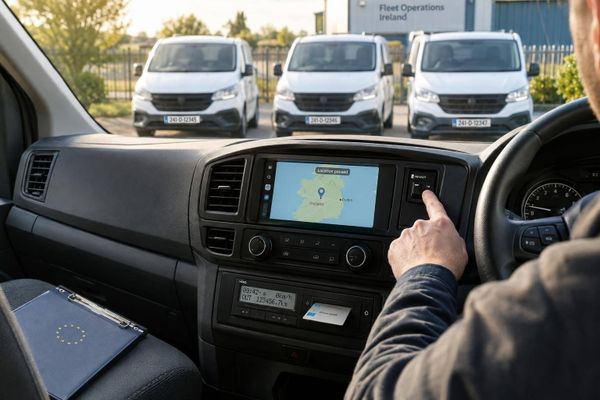
Courier businesses commonly use live vehicle location to allocate deliveries, provide estimated arrival times, investigate service failures, improve safety and recover vehicles. That operational benefit does not remove UK GDPR duties: vehicle location can be linked to an identifiable driver, and tracking a shared vehicle outside working time may intrude into private life. A courier should therefore track only what is necessary, tell drivers and passengers what is happening, switch off or limit tracking during authorised private use, and avoid treating GPS output as conclusive evidence of misconduct. If the business carries goods for hire or reward using vehicles within the operator-licensing thresholds, it may also need the appropriate goods-vehicle operator licence and must maintain transport records independently of the tracking platform.
Recent Legal Updates
As at 8 October 2026, the core position remains risk-based rather than a fleet-tracking-specific consent or installation mandate: the ICO’s current guidance emphasises transparency, necessity, proportionality, lawful basis, working-hours/private-use controls and retention based on business need. The ICO also illustrates the courier scenario and explains that a manager’s contextual review of tracking data before issuing a warning is not, by itself, solely automated decision-making under Article 22. GOV.UK operator-audit guidance published 4 November 2024 remains relevant: audits may examine at least the previous three months of driver records, while the operator-licensing guide specifies, where applicable, tachograph downloads at least every 90 days for vehicle units and 28 days for driver cards, drivers’ hours records for at least 12 months, working-time records for at least 24 months and vehicle-maintenance records for at least 15 months. Recheck ICO, GOV.UK and Traffic Commissioner guidance before making material system or policy changes.
Authoritative Resources
- Information Commissioner's Office (ICO): Data protection and monitoring workers
- ICO: Surveillance in vehicles
- ICO: A guide to lawful basis
- GOV.UK: Goods vehicle operator licensing guide
- GOV.UK: Operator Compliance Audits
- GOV.UK: Being a goods vehicle operator
Related Blog Posts
- Fleet Tracking Regulations Explained: A Guide for Delivery Firms in the UK
- Fleet Tracking Regulations Explained: A Guide for Delivery Firms in England
- Fleet Tracking Regulations Explained: A Guide for Vehicle Leasing Companies in the UK
- Fleet Tracking Regulations Explained: A Guide for Vehicle Leasing Companies in England