Van Trackers vs. GPS Apps: What Startups Need
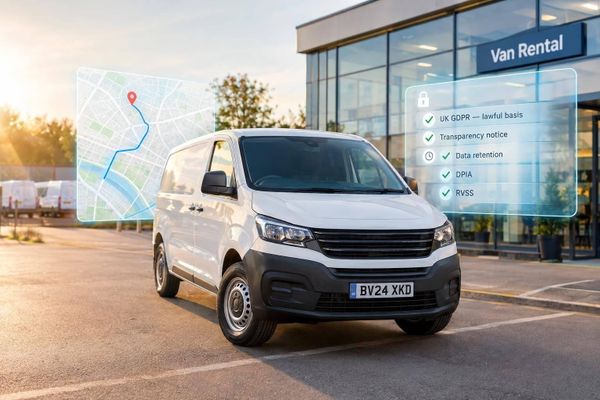
Use a GPS app to start cheaply; fit a dedicated van tracker when you need reliable tracking, theft recovery and fleet control.
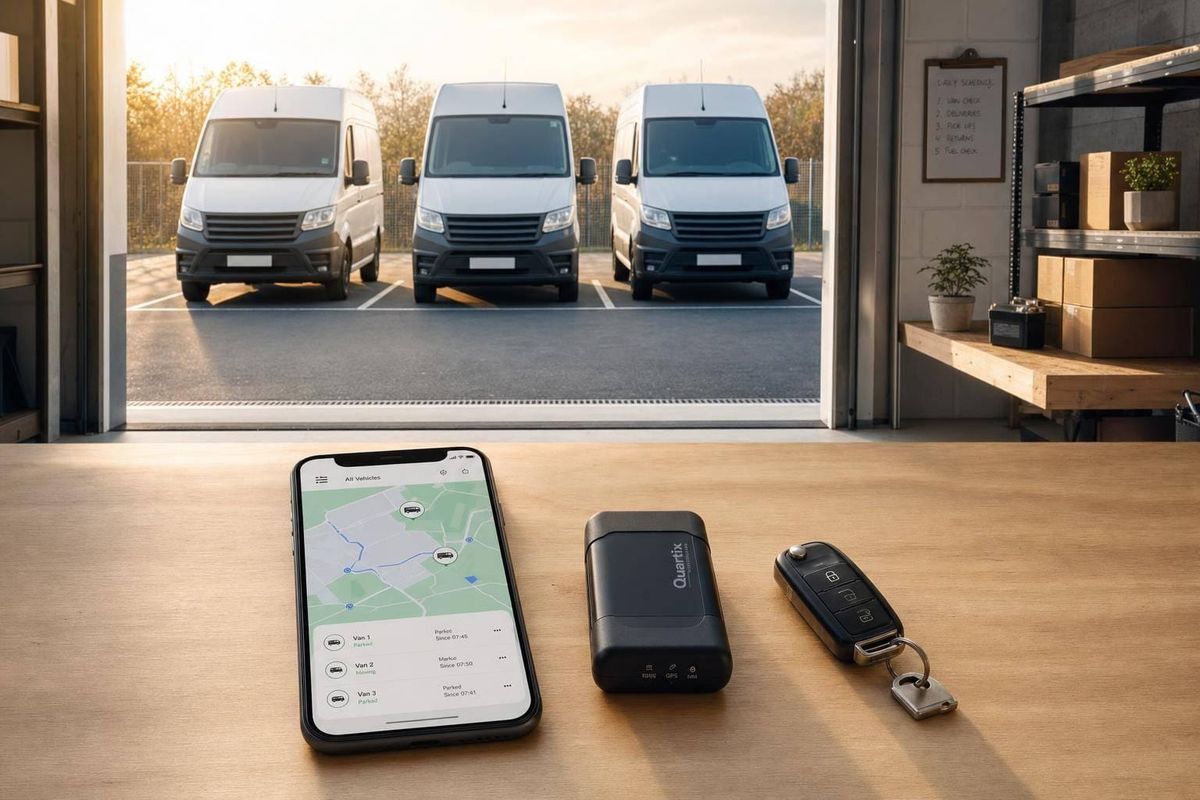
If I had to sum it up in one line: use a GPS app for the lowest starting cost, and use a van tracker if you want steadier tracking, theft cover and less day-to-day hassle.
For a UK startup with one or two vans, this choice usually comes down to three things: price, security and control. A phone app is cheap and fast to start. A fitted tracker costs more, but it stays with the van, keeps working without the driver’s phone, and can help if the van is stolen.
Here’s the short version:
- GPS apps are best if you want basic location tracking and low upfront spend
- Dedicated van trackers are better if you need live van visibility, fuel or engine data, and theft recovery support
- Apps depend on the driver’s phone, so tracking can stop if the phone is off, flat, forgotten or the app is closed
- Trackers are fitted to the van, so they keep working across shared drivers and after hours
- UK tracker plans often start from about £7 to £30 per van per month
- Van theft is not a small risk: the article notes 12,950 thefts in 2023, up 18%
If I were choosing for a startup, I’d think about five things first:
- how many vans I have now and which industry I operate in
- whether drivers share vans
- how much the tools or stock inside are worth
- whether I need clean mileage records
- whether the vans are leased or owned
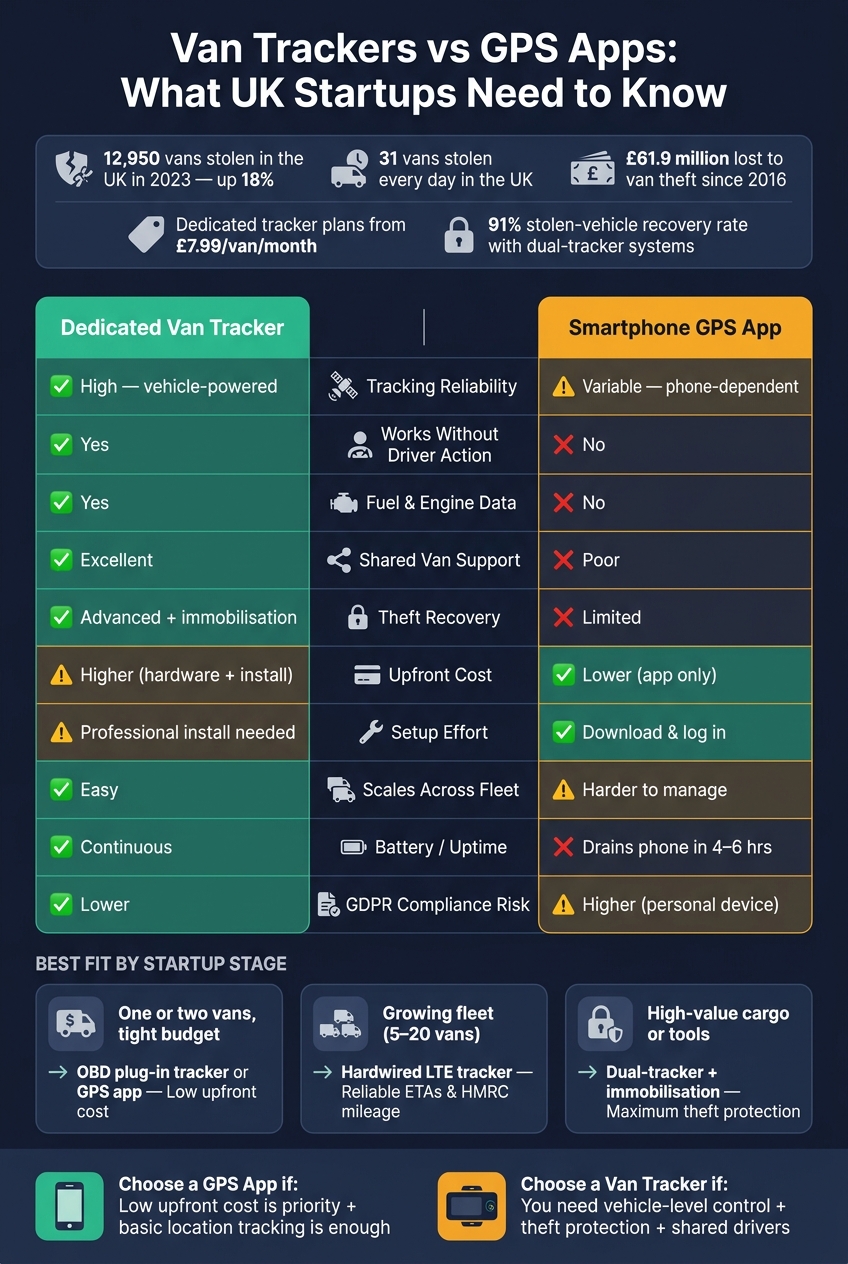
Van Trackers vs GPS Apps: Quick Comparison for UK Startups
Connect Car Apps Vs GPS Trackers
sbb-itb-499a7f0
Quick Comparison
| Check | Dedicated van tracker | Smartphone GPS app |
|---|---|---|
| Upfront cost | Higher | Lower |
| Monthly cost | Usually subscription-based | Usually app licence per user |
| Tracking reliability | High | Mixed |
| Works without driver action | Yes | No |
| Fuel / engine data | Yes, on many systems | No |
| Shared vans | Good fit | Weak fit |
| Theft support | Stronger | Limited |
| Setup | Fitting needed | Download and log in |
So if you just want a cheap way to see where one van is, an app may do the job. But if you rely on that van to keep the business moving, a tracker will usually give you more control with fewer gaps.
What Dedicated Van Trackers Offer
Dedicated trackers give you vehicle-level control, security and data that app-based tracking just can't match.
A dedicated van tracker is a device fitted to the vehicle itself. It's either hardwired into the van's electrics or plugged into the diagnostic port. It uses satellite positioning and mobile data to send location, speed and engine data to a telematics platform.
Strengths for Small Fleets
Because the tracker sits in the van, it keeps working no matter who's behind the wheel or whether they've brought their phone. You get live location, geofencing alerts and speeding alerts without depending on driver habits. That's handy after hours or when a van moves outside an approved area. If you're a startup with shared vans and rotating drivers, that steady visibility is hard to get from an app alone.
Modern trackers can deliver sub-2-metre accuracy. Some systems can also read fault codes and fuel data from the van, which a phone simply can't access.
Security and Theft Recovery
Dedicated hardware is harder to find and disable than a phone-based setup. A hardwired tracker is installed by a professional and hidden from view. Many units also support remote immobilisation, so you can cut the engine through an app if a van is taken without authorisation.
Some UK providers go a step further with dual-tracker technology. This pairs a main hardwired unit with a second hidden Bluetooth backup that switches on if the main tracker is tampered with. GRS Fleet Telematics uses this setup and reports a 91% recovery rate for stolen vehicles, with most recovered within 24 hours. If one van is doing a big chunk of your work, that recovery option deserves a close look.
Typical UK Costs and Setup
Costs usually fall into three parts:
- hardware
- installation
- a monthly subscription
At GRS Fleet Telematics, prices start at £7.99 per vehicle per month, with professional installation ranging from £0 to £100.
OBD plug-in trackers can make sense for leased vans. But they are easier to unplug than hardwired units. That's the main trade-off: simpler fitting on one side, stronger security and deeper vehicle data on the other.
What Smartphone GPS Apps Can and Cannot Do
If dedicated trackers feel a bit much for a new fleet, apps can look like the easiest place to start. They swap control for convenience.
A smartphone GPS app uses the phone's built-in GPS and mobile data to share a driver's location with a fleet dashboard. There's no engineer to schedule and no delay while hardware is fitted. For a startup with one or two vans and a tight budget, that kind of simplicity is hard to ignore.
Why Apps Appeal to Early-Stage Startups
Most apps don't come with any upfront device cost, and licensing is usually charged per driver or per active user. That means a cash-strapped startup can get set up in days: download the app, ask the driver to log in, and you get basic visibility without paying for hardware.
That's a handy way to test the waters. But there's a catch: the whole setup depends on the driver's phone.
That ease of use is the main draw. It's also the main weak point.
Where Apps Fall Short in Day-to-Day Use
Apps track the driver's phone, not the van. So if the phone is left at home, switched off, runs out of charge, or the app is closed, tracking stops.
Battery life is another problem. Continuous GPS can drain a phone in 4 to 6 hours, and tracking uptime is much lower than with dedicated hardware. On top of that, apps can't read fuel data, fault codes, or odometer data from the van.
Accuracy can also slip. In built-up areas, app location data may lag by as much as a full city block when compared with dedicated hardware. For a business that needs tight arrival windows or clean job records, that's not a small issue.
Privacy and Workforce Considerations
The last issue isn't about the tech itself. It's about how people feel using it, and what the law expects.
Using a personal phone for work tracking can create a compliance risk. The app may ask for permissions beyond location, and location history on a personal device can mix work and private data. If that isn't handled with clear notice, it can lead to driver pushback and legal risk under UK GDPR.
Under UK GDPR, startups must tell employees in writing what data is collected, why it is collected, and how long it is kept. As Jason Morjaria, Founder & CEO of Commusoft, puts it:
"You must inform employees that their vehicle is being tracked, what data is collected, how long it is kept, and why."
A weak policy here doesn't just create compliance trouble. It can also make drivers less willing to use the app in the first place.
Direct Comparison: Which Option Fits Your Startup
The summary below makes the choice a lot simpler. If you need steady tracking, better theft protection and less day-to-day hassle, a dedicated van tracker usually comes out ahead. If you just need basic location data and want to keep spend low at the start, a smartphone GPS app can do the job.
Comparison Table: Van Trackers vs. GPS Apps
| Feature | Dedicated Van Tracker | Smartphone GPS App |
|---|---|---|
| Reliability | High - vehicle-powered, so it keeps running without driver input | Variable - depends on phone charge, signal and app use |
| Data Depth | Full telematics: fuel, engine health, driver behaviour | Basic location and trip history only |
| Theft Recovery | Advanced - hidden hardware and immobilisation | Basic - easily disabled if the phone is switched off |
| Works Across Drivers | Excellent - stays with the van regardless of driver | Poor - tracking stops when the phone is off, left behind or unavailable |
| Setup Effort | Usually requires professional installation; hardwired units can cost £40–£100 to fit | App download - no hardware required |
| Cost Profile | Hardware plus installation and subscription | Lower upfront cost |
| Scales Well | Easy to expand across more vans | Harder to manage across multiple drivers |
There’s a simple way to think about it. A van tracker stays with the vehicle. An app stays with the person. That difference matters more than it first seems, especially once different drivers start using the same van or you need clean records for mileage, ETAs or theft follow-up.
Best Fit by Startup Stage and Risk
These trade-offs hit hardest when your startup is balancing shared control, security and setup cost.
| Startup Scenario | Recommended Solution | Why |
|---|---|---|
| One or two vans, tight budget | OBD plug-in tracker or app | Low upfront cost and basic visibility are enough at this stage |
| Growing fleet (5–20 vans) | Hardwired LTE Cat 1 tracker | Reliable for customer ETAs and HMRC mileage reporting |
| High-risk cargo or tools | Dual-tracker with immobilisation | Maximum theft protection and the strongest recovery prospects |
For a startup carrying pricey tools or equipment, the numbers change fast. With 31 vans stolen every day in the UK and van theft costing businesses about £61.9 million since 2016, an app on its own doesn’t give you much cover. A hardwired tracker with a concealed secondary unit is much harder to defeat.
So the decision usually comes down to this:
- Choose an app if your main goal is low upfront cost and simple location tracking.
- Choose a dedicated tracker if you need vehicle-level control, steadier tracking and better theft protection.
Pros and Cons Table: Van Trackers vs. GPS Apps
| Dedicated Van Tracker | Smartphone GPS App | |
|---|---|---|
| ✅ Pros | Vehicle-powered reliability | App-only; no hardware required |
| Deep telematics data: fuel, engine health and driver behaviour | Low upfront cost | |
| Hidden hardware and immobilisation for theft protection | Useful for basic location tracking | |
| Works across multiple drivers | - | |
| ❌ Cons | Installation cost for hardwired units (£40–£100) | Tracking stops if the phone dies or the app is closed |
| Requires a contract commitment, typically 12–36 months | No access to vehicle diagnostics or fuel data | |
| Needs professional installation | Poor fit for shared vans | |
| Needs a clear privacy policy and DPIA | Personal devices can create privacy concerns |
Conclusion: Which Option Should Startups Choose First
A GPS app handles the basics at the lowest cost, but it relies on the driver's phone. That can work at the start. But once drivers share vans or carry high-value kit, the cracks start to show.
So the choice is pretty straightforward: lower-cost visibility now, or vehicle-level control from day one.
Dedicated van trackers make more sense for growing fleets because they stay with the van, not the driver. If you use leased vans, OBD plug-in trackers are a practical middle ground. If your vans carry tools or equipment that would be costly to lose, hardwired trackers are the safer first move.
GRS Fleet Telematics starts at £7.99 per vehicle per month and includes dual-tracker protection, with a 91% stolen-vehicle recovery rate.
Key Decision Points to Review Before Buying
Use these five checks to choose the right option for the fleet you have now, not the one you might have later.
| Question | Why It Matters |
|---|---|
| How many vans do you have now, and how many in 12 months? | Growth beyond five vans leans towards hardwired tracking. |
| Do multiple drivers share the same van? | Shared vans need driver-level identification. |
| How valuable are your vans and their contents? | Higher-value vans and cargo make hardwired protection easier to justify. |
| Do you need mileage records suitable for HMRC checks? | Dedicated systems automate mileage records. |
| Are your vans leased or owned? | Leased vans suit OBD units; owned vans suit hardwired units. |
One last check applies to any hardware purchase. Buy LTE (4G) hardware in 2026. 2G is being phased out across the UK.
FAQs
Which option is better for shared vans?
For shared or multi-driver vans, hardwired systems are usually the better option. They provide constant power, steadier tracking, and stronger protection against tampering. That helps keep the data consistent, no matter who’s behind the wheel.
Plug-and-play devices are simpler to fit, which can make sense for small or short-term fleets. But there’s a trade-off: they’re easier to spot and easier to interfere with. If security matters more, especially in shared fleets, dual-tracker systems add an extra layer of cover.
Can a tracker help lower theft losses?
Yes. A tracker can help cut theft-related losses. It can put thieves off and boost the odds of getting a vehicle back fast.
GRS Fleet Telematics offers tools like geofencing and remote immobilisation, with recovery rates of up to 91–95%. On top of that, some UK insurers may offer premium discounts of 15–30% for professionally installed, Thatcham-accredited systems.
When should a startup upgrade from an app?
A startup should move from a basic GPS app to a professional van tracking system when it needs a clearer view of day-to-day operations, more room to grow, or tighter security.
That often happens when the business starts needing more than simple location data. For example, it may need vehicle diagnostics, fuel analysis, driver behaviour monitoring, compliance support, easier fleet management as more vans are added, or stronger anti-theft tools such as dual-tracker technology and immobilisation.