Top 7 Van Tracker Uses in Construction
Van trackers cut costs and downtime for construction fleets by preventing theft, optimising fuel and maintenance, monitoring drivers and improving delivery accuracy.

Managing construction fleets can be chaotic. Tools vanish, vehicles are scattered across sites, and rising costs make efficiency critical. Van trackers solve these issues by offering real-time location tracking, fuel monitoring, driver behaviour insights, and theft prevention. They save money, improve productivity, and simplify maintenance, all while providing better oversight of assets.
Key Benefits of Van Trackers in Construction:
- Real-Time Tracking: Pinpoint vehicles and tools within six feet, improving resource allocation.
- Theft Prevention: Dual-tracker systems recover stolen assets 91% of the time.
- Maintenance Scheduling: Use data like engine hours to prevent breakdowns.
- Fuel Savings: Optimise routes and reduce idle time to cut fuel costs by up to 22%.
- Driver Monitoring: Improve safety and compliance by analysing driving behaviour.
- Time Tracking: Automate job site attendance logs for accurate billing.
- Customer Service: Provide precise ETAs and proof of delivery.
With prices starting at £7.99 per vehicle per month, van trackers are an affordable way to save time, cut costs, and protect assets. For construction firms, they’re a practical tool to keep operations running smoothly.
1. Track Asset and Equipment Locations in Real-Time
Real-time tracking and monitoring capabilities
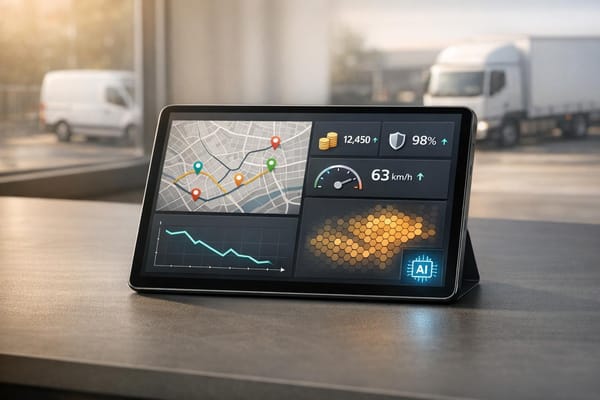
Van trackers equipped with GPS and onboard diagnostics can pinpoint vehicles and equipment to within six feet. For construction companies juggling assets across multiple locations, this level of accuracy is a game-changer.
These trackers work through a centralised dashboard, offering a complete view of everything from heavy machinery to smaller tools. As Jon King, Director at East Midlands Contracting, put it:
"Now everything, from a big tractor down to the last power tool, has a tracker on it and we can basically see where all our kit is on the same screen, which has obvious major benefits!"
What’s more, modern systems integrate seamlessly with equipment from different manufacturers. This means companies can consolidate data from a variety of brands and asset types into a single platform. Real-time location updates are displayed on detailed maps, allowing managers to track asset positions at any moment and even review past movement patterns. Features like geofencing add another layer of control by setting virtual boundaries around job sites, triggering alerts whenever equipment enters or exits these zones.
These systems don’t just stop at location tracking. They also gather data on engine hours, ignition cycles, fuel usage, braking behaviour, and maintenance schedules. This comprehensive approach not only tells managers where their assets are but also how they’re being used, leading to smarter, more efficient operations.
Operational efficiency improvements
Real-time tracking has transformed how fleets are managed. Before these systems came into play, construction companies often struggled with visibility - many didn’t know where their equipment ended up once it left the yard. This lack of oversight led to wasted time, unnecessary equipment rentals, and poor job scheduling.
With live tracking, managers can instantly see which vehicles and tools are available, making it much easier to allocate resources effectively. Jo McGarvie, Plant Manager at JMC Construction, highlighted this benefit:
"Since having the trackers on our vehicles and plant, productivity has increased during the day."
These systems also help optimise routes, cutting down on idle time and ensuring smoother travel between sites. Managers can monitor arrival times and on-site durations, which aids in accurate billing and better resource planning. Plus, with precise updates, companies can keep clients informed about equipment or engineer locations, boosting customer satisfaction.
Solutions like GRS Fleet Telematics offer these capabilities at an affordable starting price of £7.99 per month. Their dual-tracker technology not only strengthens security but also provides detailed fleet analytics, giving managers the insights they need to streamline operations across multiple sites.
2. Prevent Theft and Secure Equipment
Security Features
Theft of construction equipment can be a massive financial burden, with losses sometimes exceeding £10,000 for stolen machinery and tools. Van trackers provide a robust line of defence, using advanced security measures to safeguard these valuable assets.
Dual-tracker systems, for instance, combine a hardwired GPS tracker with a hidden Bluetooth backup. This setup ensures continuous location tracking even if the primary tracker is disabled, effectively countering GPS jamming attempts. Some systems also utilise military-grade VHF technology, which can transmit signals from locations where GPS struggles - like metal containers, underground car parks, or secure lock-ups. To further bolster security, motion sensors detect unauthorised movement outside working hours and immediately trigger alerts. Additionally, immobilisation features prevent the vehicle's engine from starting, stopping theft attempts before they escalate.
GRS Fleet Telematics offers three levels of hardware to suit different needs: Essential (£35) for basic real-time tracking, Enhanced (£79) with dual tracking capabilities, and Ultimate (£99), which includes immobilisation features. Subscription plans for all options are £7.99/month.
Real-Time Tracking and Monitoring
When theft happens, speed is critical. Real-time tracking enables instant pinpointing of stolen assets, while geofencing alerts log any movement for investigations, insurance claims, or compliance purposes. The constant surveillance also acts as a deterrent. For example, Wrights Roofing Ltd keeps a close eye on a £10,000 piece of equipment during working hours, ensuring its location is always known.
These tracking systems also record arrival and departure times for equipment, with historical data stored for up to 90 days. This not only serves as a theft deterrent but also supports smoother fleet management.
With a 91% vehicle recovery rate, GRS Fleet Telematics’ dual-tracker technology, combined with 24/7 recovery support, significantly increases the likelihood of retrieving stolen assets quickly and efficiently.
Operational Efficiency Improvements
Beyond security, van tracking systems contribute to operational efficiency. One construction company managed to save £30,000 on insurance costs by demonstrating reduced risk after adopting tracking solutions. The tracking data also helps verify equipment locations, cutting down on false theft claims and saving businesses substantial amounts.
Continuous monitoring encourages accountability among drivers, reducing losses caused by theft as well as negligence. By lowering asset replacement costs, insurance premiums, and project delays, these systems quickly pay for themselves while ensuring smoother day-to-day operations.
3. Schedule Fleet Maintenance and Extend Equipment Life
Operational Efficiency Improvements
Relying on fixed calendar schedules for fleet maintenance doesn't work well when vehicle usage varies. Van trackers solve this by enabling usage-based maintenance scheduling. This approach ensures servicing is based on actual wear and tear instead of rigid timeframes. For example, a van that sits idle over weekends naturally experiences less wear compared to one that's constantly on the move. This method avoids unnecessary servicing and ensures vehicles stay in top condition.
These trackers gather essential data like mileage, engine hours, fuel consumption, idle time, and even driver behaviour. With this information, fleet managers can pinpoint which vehicles need attention before minor issues turn into major breakdowns. Take East Midlands Contracting as an example - they equipped their entire fleet, from tractors to power tools, with tracking systems. This allowed them to monitor everything on one screen, streamline maintenance schedules, cut downtime, and extend the lifespan of their equipment. Similarly, Jo McGarvie, Plant Manager at JMC Construction, highlighted how reliable equipment availability on job sites has boosted productivity.
This level of insight also feeds directly into real-time monitoring, making scheduling even more precise.
Real-Time Tracking and Monitoring Capabilities
Building on the data collected, systems like GRS Fleet Telematics provide real-time reporting to fine-tune maintenance plans further. With tools like Fleet Analytics, managers can access detailed reports on fuel usage, maintenance needs, and performance metrics. For instance, a gradual increase in fuel consumption might point to engine trouble, while frequent harsh braking could signal accelerated brake wear. These systems also store long-term data, helping managers spot trends and schedule predictive maintenance. This proactive approach reduces the risk of emergency repairs and project delays, ensuring equipment is ready when needed.
Real-time monitoring of engine hours allows for precise preventative maintenance scheduling, cutting down on downtime. Geofencing features add another layer of efficiency by alerting managers when assets are underused, allowing for smarter reallocation. These capabilities help maximise fleet value. Additionally, modern systems support mixed fleet management, enabling centralised tracking of everything from vans to heavy machinery. Many systems integrate directly with manufacturers like CAT, John Deere, and Komatsu, making it easier to manage diverse assets.
Compliance and Safety Enhancements
Driver behaviour plays a huge role in equipment longevity, and van trackers are key to monitoring and improving this. They track actions like acceleration, braking, and cornering speed, identifying aggressive driving habits that can wear out engines, brakes, and suspension systems faster. By addressing these habits and encouraging smoother, safer driving, companies can reduce mechanical stress and lower maintenance costs.
Speed monitoring and eco-driving analytics further curb aggressive driving, while automated usage logs eliminate the need for manual record-keeping. These logs ensure maintenance records are thorough and compliant with regulations. Beyond compliance, well-documented service histories can also lead to lower insurance premiums. For many companies, improving maintenance records has translated into reduced fleet insurance costs.
4. Monitor Driver Behaviour and Maintain Safety Standards
Real-Time Tracking and Monitoring Capabilities
Van tracking systems provide a clear, up-to-the-minute view of driver activities, keeping tabs on speed, harsh braking, rapid acceleration, and sudden cornering movements. This constant monitoring allows fleet managers to address safety issues as they happen. For instance, Spirotech Group relies on tracking systems to ensure vehicles operate safely and within the law. Managers can access live map data showing vehicle locations, speeds, and key driving events in real time. If a driver exceeds speed limits in a specific area or brakes harshly while carrying equipment, the system flags the incident immediately.
In addition to real-time insights, these systems store historical data, giving construction managers a detailed record of driver performance and incident reviews. This data is particularly useful for confirming compliance with legal standards across various job sites. Supervisors can also use real-time tracking to identify driver availability, streamlining resource allocation without sacrificing safety. For example, Red Van Plumbers introduced tracking to locate their engineers without disrupting their work.
This instant visibility is a powerful tool for ensuring compliance and improving safety protocols.
Compliance and Safety Enhancements
Tracking driver behaviour naturally encourages accountability and promotes safer driving habits. Jason Tearle, Director at G & J Groundwork, highlighted improved responsibility among drivers after implementing tracking systems. These systems simplify compliance with regulations on drivers' working hours by automatically logging both active driving time and rest periods. This eliminates the need for manual record-keeping while ensuring adherence to UK employment laws and health and safety guidelines.
By analysing tracking data, managers can identify unsafe practices such as speeding, prolonged idling, or inefficient routing, enabling them to provide targeted coaching. The financial impact can be substantial. One construction company reported saving £30,000 on insurance costs thanks to better fleet visibility and driver monitoring. Insurance providers increasingly reward businesses with strong safety records, and having documented proof of safety monitoring can also protect companies during disputes.
Features like speed monitoring, geofencing, and eco-driving analytics give managers the tools to detect risky behaviour and implement corrective actions. By linking driver habits directly to operational costs, companies gain a clearer understanding of how safe driving impacts their bottom line. This insight ensures that training programmes are not only effective but also backed by real data.
These practices do more than enforce safety - they also contribute to smoother, more efficient operations.
Operational Efficiency Improvements
Safer driving directly enhances fleet productivity and minimises downtime. Responsible driving reduces the likelihood of accidents, vehicle damage, and regulatory issues, all of which contribute to smoother project timelines and reliable service delivery. These benefits not only improve operations but also appeal to safety-conscious clients.
"Since having the trackers on our vehicles and plant, productivity has increased during the day."
- Jo McGarvie, Plant Manager at JMC Construction.
Fewer emergency repairs, reduced downtime, and better resource allocation are just some of the measurable outcomes. GRS Fleet Telematics, for example, offers tools like speed monitoring, geofencing, and eco-driving analytics as standard features. These tools integrate with real-time tracking to proactively address safety concerns while optimising fleet operations.
The system also tracks both powered and non-powered assets, providing full visibility of on-site equipment and ensuring comprehensive safety management. Additional features, like motion sensors, add another layer of security by detecting unauthorised vehicle movement and alerting managers to potential breaches or improper use outside working hours.
With these tools, businesses can maintain high safety standards while improving operational efficiency.
5. Manage Fuel Consumption and Reduce Operating Costs
Real-Time Tracking and Monitoring Capabilities
Van tracking systems equipped with GPS and onboard diagnostics provide real-time updates on fuel levels and consumption. This allows fleet managers to quickly identify issues such as excessive idling or inefficient routes, which could signal misuse or operational inefficiencies.
These systems also monitor fuel usage at both the vehicle and driver levels, sending alerts for unusual drops in fuel levels or sudden spikes in consumption. With historical data stored for up to 90 days, construction companies can review past trips, identify inefficiencies, and address the root causes of waste.
Improving Operational Efficiency
One of the most effective ways to cut fuel costs is through route optimisation. By analysing trip data, fleet managers can identify inefficient routes and plan alternatives that reduce mileage and travel time. For instance, EBISS UK LTD, a logistics company specialising in freight, art, and events, adopted a tracking system with integrated fuel card and toll reader technology. This approach simplified fleet management and led to noticeable fuel savings.
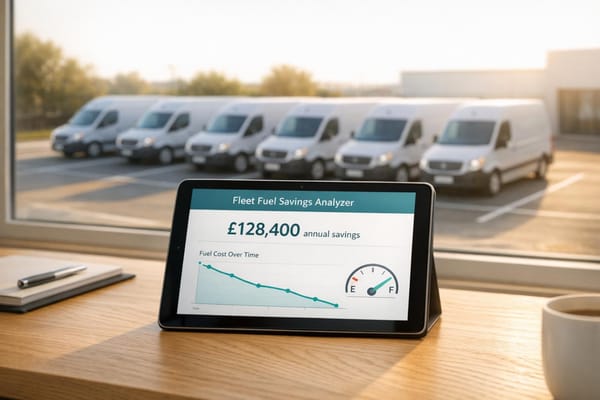
The financial benefits of these systems are undeniable. Corporate Solutions reported an 8.1% reduction in fuel costs, while WGM Engineering Group achieved an impressive 22% savings by implementing a tracking solution. Even small improvements can translate into significant annual savings for fleets.
Additionally, tracking systems help reduce idle time by monitoring engine activity during delays. This data enables fleet managers to coach drivers on fuel-efficient practices and reallocate underused vehicles, reducing unnecessary fuel consumption.
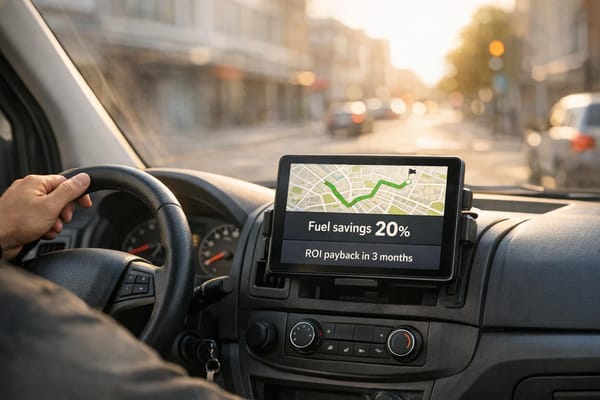
Take GRS Fleet Telematics as an example. Their system combines fuel efficiency tracking with route planning, using real-time vehicle location data to streamline operations. Starting at just £7.99 per vehicle per month (excluding VAT), this service offers a cost-effective solution with a quick return on investment.
Access to precise fuel consumption data also allows construction companies to calculate operating costs more accurately. This enables them to submit competitive bids based on actual figures rather than estimates, helping to control expenses while maintaining compliance with regulatory requirements.
Enhancing Compliance and Safety
Van tracking systems also play a key role in meeting environmental and HMRC standards. By recording fuel usage and driver behaviour, these systems provide detailed logs that support audits and ensure compliance with tax and mileage regulations.
Moreover, accurate data on mileage and time spent at job sites allows construction businesses to issue detailed, transparent invoices. This fosters trust with clients and ensures pricing reflects actual work completed, helping to strengthen customer relationships.
6. Improve Job Site Productivity and Track Time
Real-Time Tracking and Monitoring Capabilities
Van trackers take the hassle out of manual timesheets by automatically logging entry and exit times. This ensures accurate records of job site attendance. With a live map, you can see the exact location of every vehicle, while geofencing tracks when vehicles cross predefined virtual boundaries. Plus, historical data is stored for up to 90 days, making it easy to review past activities and improve scheduling or resource use.
Chris Crowley from Red Van Plumbers shared, "The tracker allows us to find out exactly where our engineers are without interrupting them while working, enabling accurate customer arrival time estimates without needing to contact engineers directly".
This kind of visibility is a game-changer, especially when customers need real-time updates. Instead of calling engineers, office staff can check the live map and provide instant, precise answers. This seamless access to information also helps streamline job scheduling and resource management.
Operational Efficiency Improvements
One company noted that using centralised tracking for all equipment simplified site management, making task scheduling and asset allocation more efficient. Real-time insights allow managers to base schedules on actual task durations rather than rough estimates. This means idle equipment can be quickly identified and moved to where it's needed most, improving overall asset use. On top of that, accurate time records lead to more precise billing.
Take GRS Fleet Telematics as an example. Their system combines real-time location tracking with fleet management tools. Starting at just £7.99 per vehicle per month (excluding VAT), the service offers automated time logging, route planning, and asset visibility. The result? Increased productivity, reduced admin work, and a quick return on investment.
Compliance and Safety Enhancements
Automated time logging also helps businesses stay compliant. Van trackers automatically record driving hours and store up to 90 days of records, meeting audit and regulatory requirements effortlessly. By cutting down on paperwork, these systems encourage safer driving practices. They also provide verifiable on-site staffing records, ensuring workers get proper rest breaks and comply with drivers' hours regulations. This not only keeps operations compliant but also prioritises on-site safety and workforce well-being.
7. Deliver Better Customer Service and Accurate Deliveries
Real-Time Tracking and Monitoring Capabilities
Van trackers give construction businesses the ability to provide precise arrival times instead of vague time windows. When customers ask about delivery timings, live maps can offer exact ETAs instantly. This level of transparency shows respect for customers' time and helps build trust.
With real-time data, delays can be identified immediately, allowing businesses to update ETAs quickly. This not only keeps customers informed but also enhances their overall experience. Additionally, the system stores location data for up to 90 days, which allows businesses to review past trips, spot patterns in delays, and make improvements to future deliveries.
Operational Efficiency Improvements
Route optimisation tools help reduce travel time and fuel consumption, ensuring teams arrive on time. Van trackers allow dispatchers to assign the nearest available driver, improving response times and making services more reliable.
Proof of delivery features automatically log vehicle arrivals and departures. This creates an objective record that’s essential for accurate invoicing. Construction and plumbing businesses can charge based on the actual time spent at a job, rather than relying on estimates. This approach reduces billing disputes and strengthens trust with customers.
GRS Fleet Telematics offers these features starting at just £7.99 per vehicle per month (excluding VAT). Their system includes real-time tracking, route planning, and proof of delivery tools, helping construction businesses provide exceptional customer service while reducing admin tasks. These tools also contribute to smoother fleet operations and compliance management.
Compliance and Safety Enhancements
Van tracking systems simplify compliance by recording exact vehicle locations and movement patterns. Historical data on driver activity ensures adherence to UK regulations, reducing the risk of penalties. Automating this process not only ensures compliance but also supports better safety practices, as well-rested drivers are more likely to deliver excellent service and represent the business professionally.
Additionally, tracking data provides clear evidence for performance reviews. Managers can identify drivers who consistently deliver on time and allocate their time effectively at job sites. This data can guide targeted improvements, such as refining schedules or offering additional training, which directly benefits the customer experience. Maintaining compliance not only avoids fines but also reinforces customers' confidence in the service provided.
4 Reasons Why I Use GPS Tracking for Construction Vehicles
Conclusion
Van trackers have become a game-changer for construction businesses, tackling multiple challenges at once. From safeguarding expensive equipment to cutting fuel costs by as much as 22% through smarter routing and driver behaviour monitoring, these systems offer a host of advantages.
The security benefits alone make them a worthwhile investment. Tracking systems significantly improve asset recovery rates and can even lower insurance premiums. Beyond security, many companies report noticeable efficiency gains, including better fleet visibility and smoother operations. On top of that, customer service gets a boost, as businesses can now provide precise arrival times, proof of delivery, and dependable project timelines.
These operational improvements directly impact the bottom line. With rising costs, shrinking margins, and increasing regulatory pressures, construction firms are turning to van tracking solutions for quick and measurable returns. Benefits range from 8–22% savings on fuel costs to streamlined admin processes through automated logs, better equipment usage, and maintenance schedules based on actual need rather than fixed intervals.
What’s more, tracking technology is now easier to access. For instance, GRS Fleet Telematics offers solutions starting at £7.99 per vehicle per month (excluding VAT), with hardware priced from £35. Their dual-tracker system boasts a 91% recovery rate for stolen vehicles, thanks to a combination of GPS tracking and a hidden Bluetooth backup that works even in tough conditions. Plus, free installation when paired with fleet branding services makes adoption even simpler.
Construction firms yet to adopt van tracking risk falling behind. Those who embrace this technology can bid more competitively, respond faster to customer demands, and protect their assets more effectively. Don’t wait - implement tracking systems now to unlock these advantages and stay ahead in an increasingly competitive market.
FAQs
How can van trackers help construction companies save on fuel costs?
Van trackers are a game-changer for construction companies aiming to cut down on fuel costs. These devices deliver detailed data on fuel usage, helping businesses pinpoint problem areas like unnecessary idling, inefficient routes, or even aggressive driving habits.
By tackling these challenges, companies can streamline fuel consumption, reduce waste, and bring down operating expenses. In the long run, these adjustments lead to a more efficient and cost-conscious approach to managing fleets.
How do van trackers help prevent theft and recover stolen assets in the construction industry?
Van trackers are essential for safeguarding valuable assets in the construction industry. Equipped with features like dual-tracker technology and real-time theft alerts, they provide instant notifications whenever unauthorised movement is detected, ensuring heightened security.
With an impressive 91% recovery rate for stolen vehicles, these trackers enable businesses to swiftly locate and reclaim their assets, minimising both downtime and financial setbacks. By protecting equipment and vehicles, van trackers offer construction professionals a sense of security and confidence.
How do van trackers help with maintenance scheduling and prolonging the life of construction equipment?
Van trackers simplify maintenance planning by offering detailed information about your vehicle and equipment's performance. They track data like mileage, engine hours, and usage patterns, enabling you to schedule servicing at the right time. This proactive approach helps prevent unexpected breakdowns and avoids expensive repairs.
Regular maintenance supported by van trackers not only minimises downtime but also extends the life of your construction equipment. Keeping everything in top condition means improved efficiency and smoother operations on-site.