5 V2X Benefits for Fleet Operators
V2X improves fleet safety, routing and maintenance, cuts emissions and enables V2G energy revenue — plus practical steps to pilot integration.
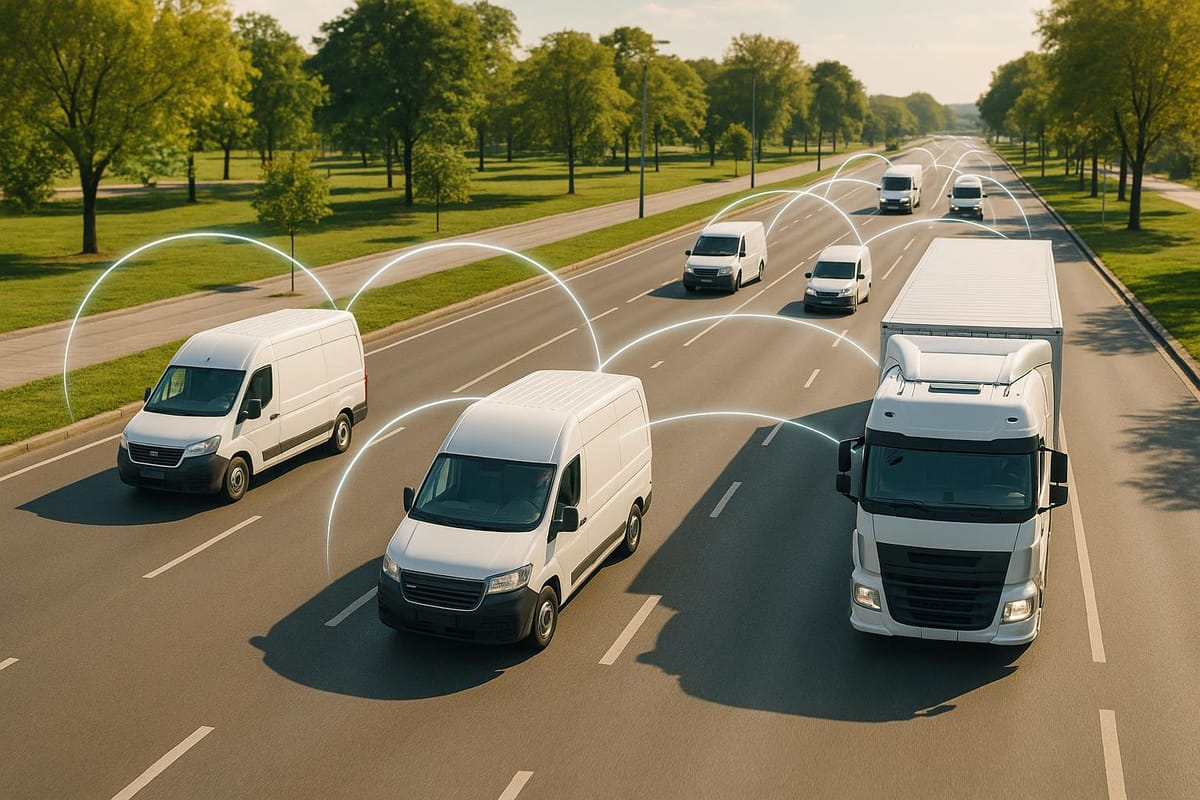
V2X (Vehicle-to-Everything) technology is transforming fleet management by connecting vehicles with each other, infrastructure, pedestrians, and the energy grid. This real-time data exchange enhances safety, reduces costs, and supports the UK’s net-zero goals. Here’s how V2X benefits fleet operators:
- Improved Safety: Alerts for hazards, sudden braking, and vulnerable road users help prevent accidents, reducing repair costs and downtime.
- Increased Efficiency: Real-time traffic updates and optimised routing lower fuel consumption and improve delivery schedules.
- Predictive Maintenance: Continuous monitoring flags issues before breakdowns, cutting emergency repair costs and extending vehicle lifespan.
- Lower Emissions: Smoother driving and smart charging reduce CO₂ emissions, aligning fleets with environmental regulations.
- Energy Integration (V2G): Electric vehicles can discharge energy back to the grid, generating revenue and supporting energy stability.
Fleet operators can integrate V2X with existing telematics systems to maximise these benefits. Starting with a pilot programme for compatible vehicles is a practical first step.
Real-world use cases demonstrate game-changing C-V2X technology
1. Better Safety and Collision Prevention
V2X technology enhances driver awareness by detecting hazards that may be hidden from view, offering an extra layer of safety on UK roads. For fleet operators managing vans and HGVs in busy city centres, along rural A-roads, or through intricate junctions, this added awareness can be the difference between a near-miss and an expensive collision.
For example, Vehicle-to-Vehicle (V2V) alerts notify drivers when the vehicle ahead brakes suddenly. Vehicle-to-Infrastructure (V2I) alerts warn of red-light violations or high-risk areas using data from roadside units. Meanwhile, Vehicle-to-Pedestrian (V2P) technology identifies cyclists or pedestrians stepping out from behind parked cars or crossing at busy zebra crossings - scenarios that are particularly risky in urban areas with limited visibility and a high number of vulnerable road users. These instant alerts provide critical reaction time, especially for heavy vehicles that require longer stopping distances.
Traditional safety systems often notify drivers only after an incident has occurred. V2X bridges this gap by sharing real-time data about potential dangers, such as a collision around a blind bend or a pedestrian unexpectedly stepping into the road. The 1–3 second warning window offered by V2X can be crucial for avoiding accidents, especially for larger vehicles.
V2X technology is designed to address common fleet accidents in the UK, such as rear-end collisions, junction crashes, side-swipes, and incidents involving pedestrians or cyclists. International studies, including research supported by the Department for Transport and Innovate UK, indicate that these connected safety systems could reduce certain crash types by double-digit percentages. For instance, V2V applications show a potential reduction of 20–30% in rear-end and intersection collisions when widely adopted. While UK-specific data is still emerging from ongoing trials, collision reduction remains a key anticipated benefit for commercial operators.
Fewer accidents translate to lower repair costs, reduced downtime, fewer replacement vehicle hires, and less administrative hassle - all of which can contribute to potential insurance savings. For UK fleet operators working within tight budgets, even a small reduction in collision rates can lead to significant annual savings per vehicle. Beyond the financial benefits, this also boosts service reliability and protects the company’s reputation.
V2X technology also provides valuable data that can be used in discussions with insurers and regulators. Time-stamped, location-specific records of hazard alerts, driver responses, and near-miss incidents can be cross-referenced with telematics data and incident logs. Fleet operators can use this information to demonstrate proactive risk management, highlight reduced risk exposure on V2X-enabled routes, support safe-driver recognition programmes, and collaborate with local authorities to improve road layouts in high-risk areas identified by frequent V2I alerts.
To maximise the benefits, fleet managers can integrate V2X alerts with existing telematics systems. This combined data can enhance risk models, refine driver training programmes, and update safe-routing rules. For example, providers like GRS Fleet Telematics can use V2X signals alongside GPS and driver behaviour data to develop more detailed risk assessments and implement proactive safety measures for UK fleets.
Getting started with V2X involves an initial audit. Identify vehicles that are already V2X-compatible, often newer EVs or connected vans, and determine which ones may need retrofit units. Collaborate with telematics providers and vehicle manufacturers to ensure compatibility between V2X hardware, vehicle platforms, and back-end systems. Focus on high-risk scenarios first, such as city-centre delivery routes, night-time operations, school zones, or areas with existing V2I infrastructure. Conduct a pilot programme with a subset of vehicles over 6–12 months, tracking incident rates, near-misses, and insurance claims before and after implementation. Incorporate V2X alerts into driver training to ensure drivers understand that these warnings are advisory and meant to complement - not replace - safe driving practices.
For fleets operating in challenging UK environments - whether it’s urban delivery vans navigating narrow streets, HGVs on motorways, or service vehicles in school zones - V2X technology offers a valuable safety net. When combined with other safety systems like automatic emergency braking, lane-departure warnings, and dashcams, V2X significantly reduces the risk of serious incidents, along with the associated legal and reputational consequences.
2. Better Operational Efficiency and Fuel Economy
V2X technology provides real-time data directly from infrastructure, giving UK fleet operators access to immediate updates that go beyond standard navigation tools. Instead of relying on historical traffic trends or delayed information, Vehicle-to-Infrastructure (V2I) and Vehicle-to-Network (V2N) systems deliver instant updates from traffic lights, roadside units, and traffic management centres. This allows fleets to sidestep traffic congestion, minimise idling, and maintain steady speeds throughout their journeys.
For fleet managers in the UK, where rising fuel costs and tight schedules are constant challenges, these features can significantly reduce operating expenses. V2X systems include tools like green-light speed advisory, which helps vehicles maintain speeds that align with green traffic signals, and congestion alerts that warn of traffic jams, roadworks, or incidents well in advance. Additionally, road restriction updates ensure compliance with low-emission zones - especially important in cities like London - and temporary closures, helping fleets avoid unnecessary detours and potential fines. This level of connectivity translates into tangible savings in both fuel and time.
Research shows that smoother driving, with fewer stop-start events, can cut fuel consumption and CO₂ emissions by 5–15% in urban areas. It also reduces wear and tear on key components like brakes, tyres, and suspensions, as well as powertrains. For electric vans, maintaining smoother acceleration not only preserves battery health but also extends the lifespan of critical components. This means fewer unplanned repairs, longer service intervals, and reduced maintenance costs, all of which are particularly beneficial for fleets operating in busy city environments.
Beyond fuel savings, V2X-enabled route optimisation enhances how vehicles are utilised. With access to live traffic updates, infrastructure alerts, and vehicle status data in one integrated system, fleet managers can make smarter dispatch decisions. For example, if a van encounters unexpected congestion, another nearby vehicle can step in to complete the task. This dynamic approach reduces empty miles, increases deliveries per shift, and improves schedule reliability.
The benefits don’t stop there. When V2X is paired with existing telematics platforms, like GRS Fleet Telematics, it creates a more comprehensive operational view. This integration supports smarter routing strategies and maximises fleet productivity, further refining dispatch decisions.
Real-world UK trials have already demonstrated the advantages of V2X technology. Government-backed initiatives, such as the FLEXET and V2Geasy projects, have highlighted how combining smart scheduling with advanced optimisation tools can lower total ownership costs. These pilots underline a key takeaway: the biggest efficiency gains come from integrating V2X with detailed fleet data and clear business rules.
To start leveraging V2X, fleet operators can take a few practical steps. First, review current telematics systems and focus on routes with strong connectivity, typically in urban areas and along major motorways. Next, establish business rules for preferred routes, time windows, driver hours, and compliance with low-emission zones. Train drivers to use V2X recommendations for speed and routing as a helpful guide alongside their own expertise.
Set measurable goals by tracking metrics like fuel or electricity usage per 100 kilometres, average speed compared to posted limits, idle time, route compliance, and jobs completed per shift. Regular evaluations and testing - such as comparing V2X-enabled routes against standard navigation - will help fine-tune the system for maximum efficiency.
Looking ahead, experts predict that smart charging and V2X adoption will become mainstream in the UK by the late 2020s, with commercial fleets leading the way due to their predictable operations. As fleet-specific V2X platforms evolve, they’ll integrate more seamlessly with existing telematics and energy management systems. This will enable UK operators to cut costs, enhance service reliability, and prepare for a more connected and efficient road network.
3. Predictive Maintenance and Vehicle Longevity
V2X technology is changing the way UK fleet operators handle vehicle maintenance, moving from reactive fixes to a more proactive approach. Instead of sticking to fixed servicing schedules, V2X systems continuously monitor vehicle performance and flag potential issues before they lead to costly breakdowns. This is made possible through constant data collection and real-time analysis.
By integrating onboard sensors, telematics, and V2X communication, these systems stream critical data to a central platform. Metrics such as engine load, coolant and oil temperatures, fuel consumption, brake usage, tyre pressure, DPF (diesel particulate filter) status, fault codes, and battery health for EVs are tracked in real time.
Advanced analytics identify unusual trends - like rising operating temperatures or increased energy use per mile - and alert fleet managers to take action before a failure occurs. This reduces unplanned breakdowns, avoids expensive emergency repairs, and helps maintain delivery schedules.
For example, urban delivery vans operating in stop–start traffic in cities like London or Manchester might show an unusual increase in DPF regeneration frequency or exhaust temperatures. The system can flag these vehicles for inspection, allowing fleets to adjust routes or provide driving guidance, avoiding costly reactive repairs and roadside recovery fees.
For electric vehicles (EVs), V2X monitoring helps optimise charging patterns to preserve battery health. The system can recommend changes to charging schedules or charge-rate limits, reducing the risk of premature battery replacement.
This predictive approach also extends the lifespan of vehicles and protects their resale value. By monitoring components like powertrains, brakes, and tyres, and replacing consumables like filters and brake pads based on actual wear, fleets can ensure vehicles are used efficiently. A well-documented maintenance history, supported by connected data, appeals to future buyers, enhancing resale value. In EVs, careful management of charging cycles slows battery degradation, preserving both range and overall value.
The UK's V2X Innovation Programme has demonstrated the benefits of this approach. Projects involving heavy EV fleets have shown that smart V2X management can keep the operating costs of electric HGVs on par with diesel over a decade. In one Innovate UK–backed initiative, a V2X platform used data on vehicle duty cycles, battery state-of-charge, and grid capacity to optimise charging and discharging times, maximising revenue while protecting battery life.
To fully capitalise on these benefits, fleet operators should:
- Evaluate their current systems: Check if vehicles support V2X or connected telemetry (via CAN bus, OBD devices, or OEM connectivity) and ensure the fleet platform can process health data.
- Partner with a telematics provider: Link a V2X or telematics solution with maintenance software so that fault codes, alerts, and usage metrics are automatically integrated into the maintenance management system.
- Set rules and thresholds: Use OEM recommendations and historical data to define alerts for conditions like high engine temperatures, repeated DPF warnings, or abnormal energy consumption.
- Update policies and train staff: Make sure drivers know how to respond to maintenance alerts, planners can reassign loads when vehicles need attention, and workshops prioritise predictive maintenance tasks.
For fleets already using systems like GRS Fleet Telematics, extending their capabilities to include vehicle health monitoring can simplify this process.
Unlike traditional servicing schedules, V2X predictive maintenance uses real-world data such as driving style, load, and conditions to tailor maintenance schedules. This is especially beneficial for mixed fleets, where internal combustion engine vehicles can benefit from condition-based checks on engines, DPFs, and gearboxes, while EVs are monitored for battery health, inverter temperatures, and charging patterns. The result is fewer unnecessary workshop visits, better parts usage, and improved fleet availability.
To measure the impact of V2X-based predictive maintenance, fleet managers should track metrics like unscheduled downtime, breakdown frequency, and roadside assistance costs. Monitoring average repair costs, planned vs. unplanned maintenance spending, and EV-specific data like battery health and charge cycle counts over 12–24 months can provide a solid case for further investment in V2X technology.
Additionally, integrating predictive maintenance with other V2X functions strengthens overall fleet performance. The same data streams that improve safety and efficiency also help reduce wear caused by stop–start driving. By optimising routes to minimise traffic disruptions, fleets can lower fuel consumption and reduce wear on brakes and drivetrains. For the best return on investment, it’s crucial to ensure that safety, energy, routing, and maintenance systems operate within a unified data framework.
4. Lower Emissions and Environmental Impact
V2X technology isn’t just about improving safety and efficiency - it also offers a way for UK fleets to reduce emissions and align with environmental goals. By connecting vehicles to traffic systems, other vehicles, and the energy grid, V2X enables smoother driving, which in turn lowers fuel consumption and cuts carbon emissions.
How V2X Reduces Fuel Consumption and Emissions
V2X gives drivers and onboard systems a heads-up on traffic conditions, signal changes, hazards, and speed limits. This allows vehicles to adjust their speed in advance, avoiding unnecessary stop-and-start driving. The result? Smoother journeys that use less fuel and release fewer emissions. For petrol and diesel fleets, this means less fuel wasted idling at red lights or in traffic queues. For electric vehicles, it reduces peak power demands, improving efficiency in terms of miles per kilowatt-hour.
Research from Giesecke+Devrient shows that cooperative intelligent transport systems using V2X can cut traffic emissions by up to 15% by easing congestion and improving traffic flow. These improvements directly lower fleet emissions, making operations greener and more cost-effective.
System-Level Emissions Reductions
V2X also plays a role in decarbonising the broader energy system. With features like smart charging and vehicle-to-grid (V2G) capabilities, V2X-enabled EVs can charge when the grid relies more on renewable energy - typically during the night - and even return energy to the grid during peak demand, reducing reliance on carbon-heavy power sources.
The UK government’s V2X Innovation Programme has showcased this potential. For instance, the Kaluza V2G project, in partnership with OVO Energy and Nissan, installed 330 V2G chargers. Participants earned between £420 and £800 annually by exporting energy during peak times while charging when energy costs and carbon intensity were low. If scaled up, this approach could save the grid up to £3.5 billion annually in reinforcement costs.
Meeting UK Environmental Regulations
V2X technology helps fleets comply with UK environmental standards. Fleets can use V2X-enabled telematics to track metrics like reduced fuel use, lower idle times, and better EV utilisation. These insights help demonstrate progress towards net zero targets and meet reporting requirements, such as Streamlined Energy and Carbon Reporting (SECR). In urban areas with Clean Air Zones, real-time V2X updates can optimise routes to minimise time spent in high-regulation zones, improving local air quality.
Practical Steps for Emissions Reduction
- Monitor Key Metrics: Use V2X-enabled telematics to track KPIs like average fuel or energy consumption, idle time, harsh braking or acceleration events, and CO₂ emissions per delivery. Analyse trends by vehicle, route, and driver.
- Set Reduction Goals: Aim to cut idle time or improve fuel efficiency by a specific percentage. Use V2X insights to redesign routes, adjust timetables, and coach drivers for better performance. These efforts can also support annual carbon reporting.
- Optimise EV Charging: For fleets with V2G capabilities, export energy during periods of high grid carbon intensity. Projects like FLEXET have shown how integrating V2X with telematics can align charging schedules with duty cycles while minimising emissions and energy waste.
Quantifying Environmental Impact
Data is key to showcasing the environmental benefits of V2X. Metrics like fuel or energy consumption per trip, idle times, and route-specific CO₂ outputs can provide clear evidence of progress. Comparing pre- and post-V2X implementation data - such as reductions in CO₂ per delivery or annual fuel savings - helps stakeholders see the tangible benefits.
For fleets already using advanced telematics systems like GRS Fleet Telematics, adding V2X data enhances existing capabilities. Beyond tracking vehicle locations and preventing theft, these systems can now provide eco-driving scores, pinpoint idle hotspots, suggest low-emission routes, and recommend optimal charging plans.
UK government findings underline the potential of V2X technologies in aiding decarbonisation and making better use of low-carbon energy sources. As policy support grows and trials expand from basic smart charging to full bidirectional energy flows, commercial EV fleets are becoming vital players in the transition to a cleaner, more efficient energy future.
5. Energy Flexibility and Grid Integration (V2G)
The evolution of Vehicle-to-Everything (V2X) technology has gone beyond improving safety, efficiency, and reducing emissions. It now offers fleet operators a new dimension: energy flexibility. Vehicle-to-Grid (V2G) technology is reshaping how electric vehicles (EVs) interact with the energy grid. By enabling vehicles to not only charge but also discharge energy, V2G transforms fleet vehicles into active participants in the energy market. This approach creates opportunities for new revenue streams while enhancing grid stability.
How V2G Fits into Fleet Operations
When electric vans or lorries are parked at their depot, their batteries can discharge stored energy during times of peak demand. By integrating V2G systems with smart charging infrastructure and fleet management tools, operators can schedule charging and discharging based on grid needs, energy costs, and operational priorities. This means vehicles can earn revenue while parked, without jeopardising their readiness for the next shift. Fleets that operate on predictable schedules, such as delivery vans, service vehicles, and refuse trucks returning to a central depot daily, are particularly well-suited for this model. This structured downtime allows operators to realise both financial and system-wide benefits.
Financial Upside for UK Fleet Operators
A UK trial involving Kaluza, OVO Energy, and Nissan demonstrated the financial potential of V2G. Participants equipped with 330 V2G devices earned between £420 and £800 annually, while the trial suggested potential national savings of approximately £3.5 billion in grid reinforcement costs. Additionally, fleet operators can reduce energy costs by charging during off-peak hours - when renewable energy is more abundant - and exporting energy during high-demand periods.
The UK government is actively supporting V2G innovation through its V2X Innovation Programme. For instance, the FLEXET project in Gateshead received £1,517,682 to test bidirectional chargers integrated with telematics and fleet energy management systems. Similarly, the V2Geasy project was awarded £959,071 to deploy wireless bidirectional charging for 20 Royal Mail delivery vehicles at a London depot. These projects aim to explore how fleet duty cycles can contribute to grid flexibility.
Bolstering Grid Stability and Renewable Energy Use
The benefits of V2G extend beyond fleet operations. By exporting energy during peak demand, V2G reduces reliance on costly and polluting peaker plants. This capability helps grid operators manage fluctuations in demand and supports the integration of renewable energy sources like wind and solar, which are inherently variable. Additionally, fleet energy platforms can participate in day-ahead energy markets, allowing stored energy to balance supply and demand. This contributes to a more resilient and sustainable energy infrastructure.
Key Considerations for Implementation
Deploying V2G effectively requires thorough planning. Operators need to account for depot space, charging accessibility, and the availability of compatible infrastructure. Projects like V2Geasy have explored wireless bidirectional charging to address connection and safety challenges.
Balancing energy trading with operational needs is another critical aspect. Advanced algorithms can optimise charging schedules by considering factors like wholesale energy prices, grid carbon content, and revenue potential. Battery health also plays a pivotal role - collaborating with energy suppliers or aggregators to manage charging cycles conservatively can help maintain battery longevity while ensuring vehicles are ready for unexpected call-outs.
Making V2G Work for Your Fleet
Fleet operators using telematics systems, such as GRS Fleet Telematics, can integrate V2G data to optimise charging strategies while ensuring vehicles remain charged for their routes.
The UK government’s V2X Innovation Programme outlines a phased rollout, with smart charging expected to become commonplace in homes and workplaces by the mid-2020s, and standard practice by the late 2020s or 2030. Fleet managers should evaluate their depot infrastructure, vehicle schedules, and opportunities to participate in energy markets. Research indicates that integrating V2X technology could make the total cost of ownership for electric heavy goods vehicles comparable to diesel alternatives within a decade, supporting the economic case for transitioning to zero-emission fleets in line with the UK’s net-zero targets.
While V2X offers substantial benefits for consumers, the energy system, and manufacturers, challenges remain. Issues such as standardisation, commercial models, and battery warranty concerns were highlighted in the UK government’s call for evidence. As these hurdles are addressed and more trials are conducted, commercial EV fleets will play an increasingly important role in building a smarter, more adaptable energy system.
Comparison Table
Traditional Fleets vs V2X-Enabled Fleets
Below is a summary of the operational differences between traditional fleets and V2X-enabled fleets. It highlights how these two models differ in terms of safety, efficiency, and emissions management.
| Metric | Traditional Fleets | V2X-Enabled Fleets |
|---|---|---|
| Safety Incidents | Higher (reactive, driver-dependent) – limited to line-of-sight warnings and driver reaction | Lower (proactive warnings and coordination) – collision, braking, and hazard alerts from vehicles and infrastructure |
| Fuel/Energy Consumption | Higher – congestion, idling, and stop-start driving with unmanaged EV charging | Reduced – optimised routing, V2X smart charging, and real-time traffic coordination |
| Maintenance Costs | Unpredictable (time or failure-based) – scheduled by mileage or reactive to breakdowns | Lower (predictive, data-driven) – real-time health data enables proactive interventions |
| Emissions Reduction | Minimal (limited optimisation) – small gains from basic route planning | Significant – smart charging, renewable energy use, and off-peak demand shifts |
| Total Cost of Ownership | Higher (limited optimisation) – no energy flexibility or grid revenue | Lower – energy flexibility, grid services, and better asset utilisation |
Safety is one of the starkest contrasts. Traditional fleets rely heavily on driver skill and basic sensors, offering minimal hazard warnings beyond the driver’s line of sight. In contrast, V2X-enabled fleets benefit from advanced alerts, including sudden braking, lane changes, and vulnerable road users, which help prevent incidents.
Energy consumption also varies significantly. Traditional fleets stick to fixed routes, often resulting in idling and inefficient stop-start driving. V2X fleets, however, leverage real-time traffic updates and signal-phase data, enabling smoother, more fuel-efficient journeys that cut down CO₂ emissions.
Maintenance costs are another area where V2X shines. Traditional fleets often follow time-based servicing schedules, addressing issues only after they cause downtime. V2X fleets, equipped with continuous data transmission, allow for predictive and condition-based maintenance, reducing unexpected failures and costs.
Emissions are notably higher in traditional fleets due to inefficient route management and time spent in congestion. V2X fleets, with their ability to optimise routes and integrate with low-emission zones, significantly cut emissions and align with net-zero objectives.
Total cost of ownership is a decisive factor. Traditional fleets, particularly diesel ones, face volatile fuel costs and cannot participate in energy markets. On the other hand, V2X-enabled EV fleets function as mobile energy assets, offering grid-balancing services that reduce costs through energy revenue, avoided grid upgrades, and improved asset use.
During the transition, many UK fleets will operate as hybrids, combining V2X for depot-charged EVs with conventional management for internal combustion vehicles. Advanced telematics systems play a crucial role here, feeding accurate data on location, duty cycles, and security into V2X platforms. In the UK, solutions like GRS Fleet Telematics enable operators to turn reduced energy costs, lower maintenance expenses, and emissions reductions into tangible business benefits.
To fully adopt V2X operations, fleets need compatible depot charging systems, efficient DC chargers, and optimisation software. These tools decide when to charge or discharge based on UK wholesale electricity prices, grid carbon intensity, and flexibility revenues. Integration with existing fleet telematics and energy management systems is also essential, as demonstrated by UK projects combining telematics data with V2X trading and optimisation tools.
Conclusion
V2X technology is paving the way for safer, smarter, and more efficient fleet operations across the UK. As we've covered, this technology shifts fleet management from a reactive approach to a forward-thinking one. By enabling real-time communication between vehicles, infrastructure, and even vulnerable road users, V2X provides hazard alerts that extend beyond the driver’s immediate view. Add to that the ability to leverage dynamic traffic and signal data for optimised routing and smoother driving, and it's clear how transformative this can be. For fleets prioritising environmental goals, V2X not only cuts emissions but also allows electric vehicles to support the power grid, boosting renewable energy use and directly contributing to the UK's net-zero ambitions.
This isn't just theoretical. V2X is already being trialled and implemented through government initiatives and commercial pilots in sectors like logistics, delivery services, and public transport. These projects have demonstrated tangible benefits, including improved safety alerts and more efficient, traffic-aware routing. On the energy front, V2G and V2X services are moving from experimental stages to early commercial applications, particularly for depot-based electric fleets. These trials have shown promising results, with financial savings for operators and broader benefits for the energy grid.
For fleet operators, the next logical step is to evaluate their current telematics systems for V2X compatibility. Starting with a pilot programme involving a small group of vehicles - especially electric ones operating from a single depot - can help test features like V2X-enabled routing, predictive maintenance alerts, and V2G charging capabilities. Advanced telematics platforms, such as GRS Fleet Telematics, provide the foundation for V2X integration, offering tools like real-time tracking, enhanced security, and actionable data insights.
In short, V2X is quickly becoming a game-changer for UK fleets. Early adopters stand to gain safer operations, reduced costs, and improved sustainability compared to traditional fleet setups. By embracing V2X telematics and charging solutions now, operators can future-proof their fleets, equip their drivers with cutting-edge tools, and stay ahead of evolving UK regulations.
FAQs
How does V2X technology enhance fleet safety, and what alerts does it provide to drivers?
V2X technology improves fleet safety by providing real-time alerts that help drivers react promptly to potential dangers. These alerts also include theft notifications, enabling quick measures to safeguard vehicles and assets.
GRS Fleet Telematics backs this up with its advanced dual-tracker system, achieving an outstanding 91% recovery rate for stolen vehicles. This ensures greater security and reassurance for fleet operators.
How can fleet operators use V2X technology with their telematics systems to improve efficiency?
Fleet operators can bring V2X (Vehicle-to-Everything) technology into their current telematics systems to boost how efficiently their fleets run. V2X allows vehicles to exchange information with each other, surrounding infrastructure, and other connected devices. This constant flow of real-time data helps streamline routes, cut down on fuel use, and avoid delays caused by traffic jams or road hazards.
When paired with advanced telematics tools, like van tracking systems, fleet managers can unlock more detailed insights into how vehicles are performing, how drivers are behaving, and the overall safety of the fleet. This combination also enables predictive maintenance, ensuring vehicles are serviced before problems occur, which helps reduce downtime and keeps repair costs in check. By integrating V2X with dependable telematics solutions, fleets can operate more smoothly, save money, and provide a better experience for their customers.
What financial and environmental advantages does Vehicle-to-Grid (V2G) technology offer fleet operators, and how can they maximise these benefits?
Vehicle-to-Grid (V2G) technology presents a game-changing opportunity for fleet operators, offering both financial savings and environmental advantages. By allowing vehicles to supply their stored energy back to the grid, operators can cut energy expenses during peak times and even earn extra income by selling surplus energy. On top of that, V2G plays a key role in promoting the use of renewable energy, contributing to lower carbon emissions and a greener future.
To get the most out of V2G, fleet managers should focus on smart charging strategies, like scheduling charging during off-peak hours when electricity rates are lower. Ensuring vehicles are equipped with V2G-compatible systems is also essential. Additionally, using advanced telematics to monitor and optimise energy usage can boost efficiency and increase savings even further.