Ultimate Guide to Thatcham-Approved Trackers
Compare S5 and S7 Thatcham-approved trackers: costs, ADR, installation, monitoring and insurer requirements to pick the right vehicle tracker.
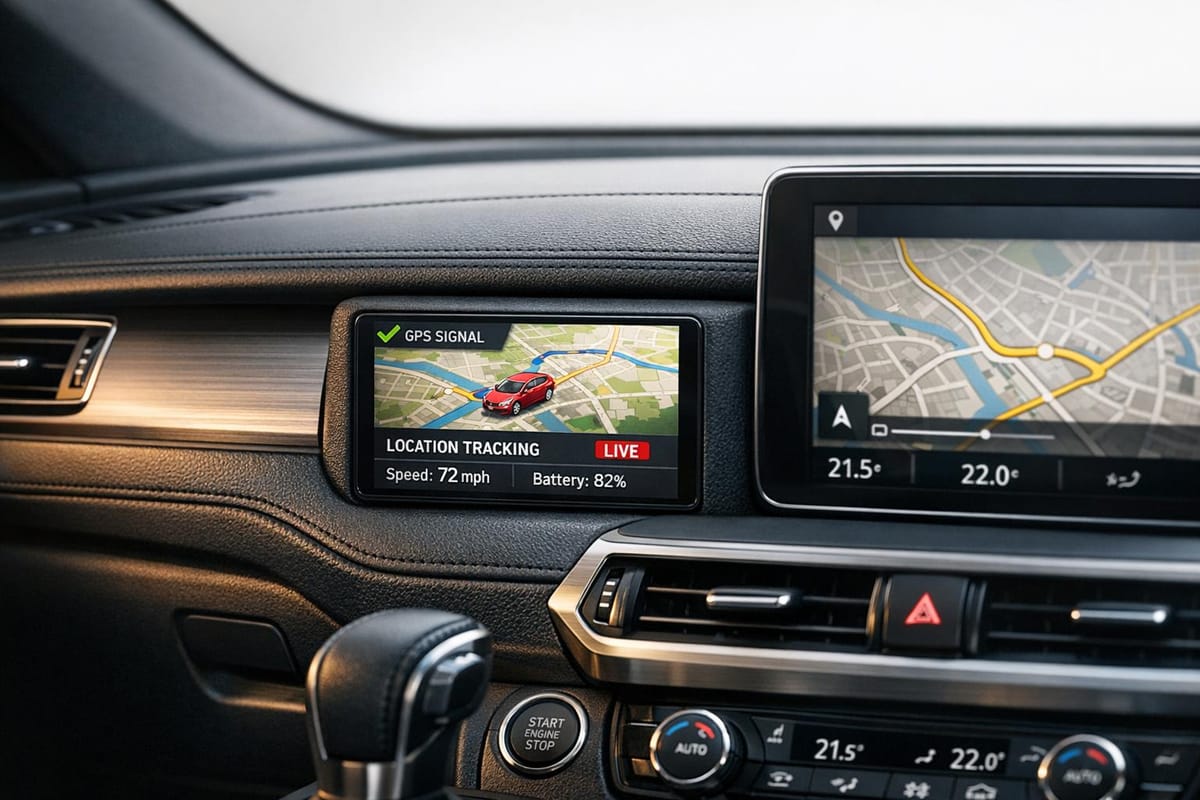
Vehicle theft is a growing problem in the UK, with over 106,000 vehicles stolen last year and 77% of cases unresolved. Thatcham-approved trackers are one of the most effective tools for protecting your car and improving recovery rates. These devices meet UK insurance standards and connect directly with police to locate stolen vehicles quickly. Here's what you need to know:
- Two Types: S7 trackers focus on vehicle recovery, while S5 trackers add driver recognition for extra security.
- Key Benefits: GPS and VHF technology help find vehicles even in hidden locations. Many insurers require these trackers for high-value or keyless vehicles.
- Professional Installation: Certified technicians must install these devices to meet insurance requirements.
- Costs: S7 trackers cost £189–£350, while S5 models range from £350–£600. Monthly monitoring fees apply.
Choosing the right tracker depends on your vehicle type and insurer's requirements. S5 trackers are ideal for luxury or keyless vehicles, while S7 suits standard cars. Professional installation and active monitoring subscriptions are essential for proper functionality.
S5 & S7 Car Tracker - What is the Difference?
How Thatcham Trackers Work
Thatcham-approved trackers rely on advanced technology to help locate stolen vehicles. These devices primarily use GPS (Global Positioning System) to pinpoint a vehicle's location. However, since thieves often use GPS jammers to block signals, VHF (Very High Frequency) technology plays a crucial role in overcoming this challenge.
GPS, VHF, and Multi-Network Technology
VHF technology, which is resistant to jamming, can locate vehicles even in challenging situations - like when they’re hidden underground, in multistorey car parks, or inside metal containers. Tracker states that this system can identify a vehicle's location to within one metre. Additionally, VHF units are integrated into over 2,000 police patrol cars and national police helicopters, enabling law enforcement to recover vehicles more efficiently.
Thatcham trackers also use multi-network SIMs, ensuring uninterrupted communication across the UK and Europe. By combining GPS, VHF, and multi-network connectivity, these trackers create a robust and highly reliable system that is difficult to bypass.
24/7 Monitoring and Theft Alerts
Alongside these detection technologies, Thatcham trackers offer continuous monitoring, which is key to their effectiveness. If a theft occurs, the tracker sends an instant alert to a Secure Operating Centre (SOC), which operates 24/7. For vehicles equipped with S5 trackers, the system uses Automatic Driver Recognition (ADR). This involves small fobs or smartphone tags that verify authorised drivers. If the vehicle moves without the tag, the SOC is alerted immediately, treating it as a high-priority theft. Meanwhile, S7 trackers focus on detecting unauthorised movements, such as towing or tampering.
Once the SOC receives an alert, operatives confirm the theft with the vehicle owner and work directly with the police to recover the vehicle. This close collaboration with law enforcement is a key advantage of Thatcham-approved trackers over standard GPS systems. However, before the SOC can fully coordinate with authorities, the vehicle owner must first report the theft to the police and obtain a Crime Reference Number (CRN). To ensure the system functions as intended - and to meet insurance requirements - an active monitoring subscription is necessary.
Thatcham S7 vs S5 Trackers
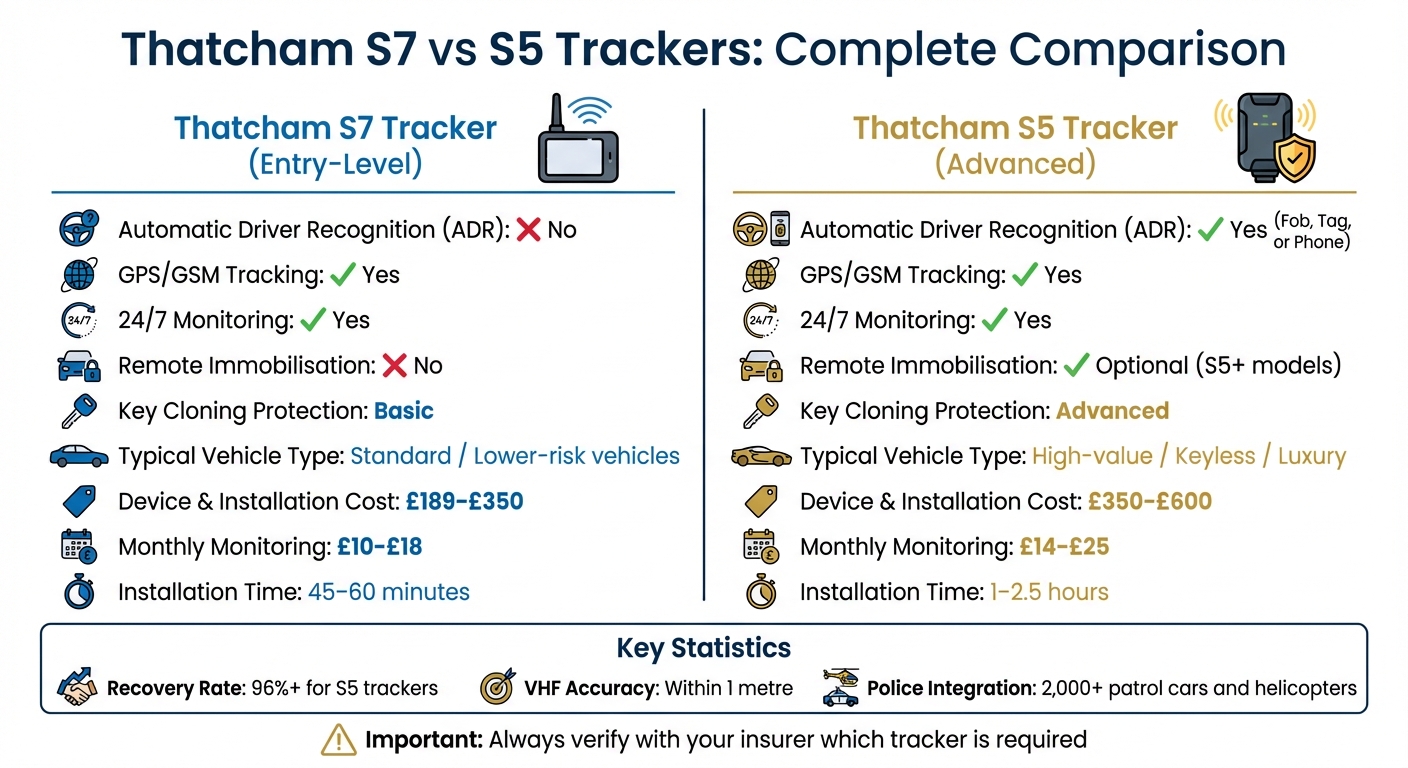
Thatcham S7 vs S5 Tracker Comparison: Features, Costs and Installation
Thatcham trackers offer advanced security solutions tailored to different vehicle protection needs. Choosing between the S7 and S5 models is crucial, as installing the wrong tracker could invalidate your insurance policy. The primary difference? Automatic Driver Recognition (ADR), a feature exclusive to S5 trackers. Let’s break down the key features, costs, and installation details for each type.
Thatcham S7 Trackers
S7 trackers are considered entry-level devices. They rely on GPS and GSM technology to locate vehicles and send alerts for incidents like towing, tampering, or battery disconnection. These trackers also provide live tracking and continuous monitoring through a secure operations centre. S7 systems are ideal for standard or mid-range vehicles, especially when insurance requirements are less demanding. Since January 2019, S7 trackers have replaced the older Category 6 and Category 7 classifications.
Thatcham S5 Trackers
S5 trackers take security a step further by adding Automatic Driver Recognition (ADR) to the features found in S7 models. ADR uses a fob, tag, or smartphone app to verify the authorised driver. If the vehicle moves without the ADR tag present, the monitoring centre is alerted immediately. This feature is particularly effective against relay attacks and key cloning, which are common vulnerabilities in keyless entry systems. With a recovery rate exceeding 96%, S5 trackers are often required by insurers for high-value cars, luxury SUVs, and vehicles with keyless entry. As Trackershop UK explains:
"The ADR feature is a game-changer. It means that even if a thief steals your keys or uses a relay device to mimic your key fob, they cannot simply drive away undetected."
Some S5 models, known as S5+ or S5 Plus, also include the option for remote immobilisation, allowing the vehicle to be disabled once stationary.
S7 vs S5: Feature Comparison
| Feature | Thatcham S7 Tracker | Thatcham S5 Tracker |
|---|---|---|
| Automatic Driver Recognition (ADR) | No | Yes (Fob, Tag, or Phone) |
| GPS/GSM Tracking | Yes | Yes |
| 24/7 Monitoring | Yes | Yes |
| Remote Immobilisation | No | Optional (S5+ models) |
| Key Cloning Protection | Basic | Advanced |
| Typical Vehicle Type | Standard / Lower-risk | High-value / Keyless / Luxury |
| Device & Installation Cost | £189–£350 | £350–£600 |
| Monthly Monitoring | £10–£18 | £14–£25 |
| Installation Time | 45–60 minutes | 1–2.5 hours |
Always check with your insurer to ensure you choose the correct tracker. Using the wrong model could void your theft coverage. For S5 trackers, remember not to store the ADR tag on the same keyring as your car keys.
Installation and Compliance
Getting the best out of your vehicle's security system and meeting insurance requirements starts with a certified installation process.
Why Professional Installation Is Required
For Thatcham-approved trackers, professional installation by an accredited technician is non-negotiable. Attempting a DIY installation not only voids the device's certification but also risks invalidating your insurance policy. Most UK insurers won't accept self-installed trackers because they can't guarantee the device is securely and discreetly positioned or properly integrated into the vehicle. Without professional fitting, you could be left without theft coverage when you need it most.
Accredited engineers are trained to locate secure, hidden spots within your vehicle and use industry-standard wiring techniques to connect the tracker to your car's electrical system. This ensures the device is tamper-resistant and doesn't affect your manufacturer's warranty. Insurers often require this level of expertise to ensure compliance and peace of mind.
After installation, you'll receive a Certificate of Installation - a key document for your insurer. This certificate not only validates your policy but could also help you qualify for premium discounts, sometimes as high as 20%. Some providers offer instant access to the certificate via an online portal, while others deliver it by email within 48 hours.
Next, we'll walk through the installation process and the time it typically takes to complete, highlighting the commitment to secure and compliant tracker fitting.
Installation Process and Timeframes
Installing a tracker usually takes between 1 and 2.5 hours, depending on the complexity of your vehicle. Many providers offer mobile services, so a technician can come to your home or workplace for added convenience. Lead times for scheduling an installation typically range from 2 to 5 working days after placing your order.
During the appointment, the technician carefully positions the tracker in a discreet location, integrates it into your vehicle's electrical system, and tests the GPS and GSM signals. They also ensure the device is communicating effectively with the 24/7 monitoring centre. This rigorous process helps achieve recovery rates of around 96%.
Choosing the Right Tracker
Now that you've got the installation process sorted, it's time to focus on picking the tracker that aligns with your vehicle's needs and your insurer's requirements. Selecting the wrong tracker could mean your theft coverage is invalid, so this decision is crucial.
Insurance and Vehicle Requirements
Start by checking what your insurer requires. Many insurers insist on a Thatcham-approved tracker, either S5 or S7, as a condition for theft coverage. This is often the main reason vehicle owners install these devices in the first place.
If you own a high-value or keyless vehicle, an S5 tracker is usually the better choice. For example, in late 2025, a vehicle owner in Rochester installed an S5 tracker on their keyless SUV at their insurer's request. Just three months after professional installation by Autosparx, the system detected an unauthorised night-time movement attempt when the ADR (Automatic Driver Recognition) tag wasn’t present, successfully preventing a theft. If your insurer hasn’t specified a category, think about factors like where you park (e.g., on-street parking), your vehicle's risk level, and whether it has keyless entry to decide between S7 and S5 for added security.
For S5 trackers, remember to keep the ADR tag separate from your car keys to avoid compromising security. Also, if you drive an electric vehicle (EV), check whether the S5+ immobilisation feature is compatible, as many EVs lack a traditional starter motor.
Once you’ve clarified your insurer’s and vehicle's requirements, it’s time to evaluate costs and features.
Budget and Features
The cost of a tracker varies depending on the type and features. Here’s a quick breakdown:
- S7 Trackers: These typically cost between £189 and £350 (including installation) with monthly monitoring fees ranging from £10 to £18.
- S5 Trackers: Prices for these start at £350 and go up to £600, with subscription costs of £14 to £25 per month.
- S5+ Trackers with Immobilisation: Advanced models begin at around £469, while premium "Sleeper" editions can cost up to £719.
If you’re looking to save on monitoring costs, multi-year subscription bundles can be a good option. For example, a five-year plan might cost around £539, offering better value in the long run.
For fleet operators managing multiple vehicles, GRS Fleet Telematics provides scalable solutions. Their plans start at just £7.99 per vehicle per month, with hardware options ranging from £35 for a basic single-tracker system to £99 for a dual-tracker setup with immobilisation. With a 91% recovery rate and free installation when combined with fleet branding, these solutions are a budget-friendly way to secure commercial vehicles across the UK.
Conclusion
A Thatcham-approved tracker not only protects your vehicle but also meets insurance requirements, offering peace of mind in a world where vehicle theft remains a persistent issue. With around 80,000 vehicles going unrecovered each year and suspects remaining unidentified in 77% of cases, having the right tracker can make all the difference when it comes to swift recovery.
In summary, selecting between the S7 and S5 models largely depends on your vehicle's risk profile and what your insurer demands. High-value or keyless entry vehicles often require the added security of an S5 tracker with Automatic Driver Recognition, while standard vehicles benefit from the reliable 24/7 monitoring and GPS tracking provided by the S7. Remember, professional installation is essential - attempting to install it yourself could void the tracker’s approval and potentially affect your insurance validity.
To keep your tracker effective, maintaining a 24/7 monitoring subscription is crucial. Opting for multi-year subscription packages can help ensure uninterrupted service while keeping costs manageable.
As outlined, features such as advanced detection, mandatory professional installation, and active monitoring work together to deliver impressive recovery rates. For instance, dual-tracker systems are achieving recovery rates of up to 91%. Fleet operators can also explore scalable solutions from GRS Fleet Telematics, which provide reliable and cost-effective tracking options.
Investing in a Thatcham-approved tracker is a proactive step towards ensuring your vehicle's safety and achieving faster recovery in case of theft.
FAQs
What is the difference between Thatcham S7 and S5 trackers?
Thatcham S5 trackers come packed with advanced security measures to protect your vehicle. They utilise multi-signal tracking technology, combining GPS, GSM, and VHF signals, ensuring precise and reliable location tracking. Additionally, they feature driver recognition through ADR (Automatic Driver Recognition) tags, adding an extra layer of security by identifying authorised users. For those seeking even more control, there's the option of remote immobilisation, which allows you to disable the vehicle remotely if needed. These features make S5 trackers an excellent choice for high-value or high-risk vehicles.
On the other hand, Thatcham S7 trackers focus on covering the basics for insurance compliance. They rely on GSM and sometimes GPS for location tracking and come equipped with motion-sensor alerts to notify you of any suspicious activity. However, they lack more advanced features like driver recognition or remote immobilisation, making them a simpler and more affordable solution for everyday vehicle security.
Why do Thatcham-approved trackers need to be professionally installed?
Professional installation plays a key role in making sure Thatcham-approved trackers meet the strict standards set by insurers. Certified engineers possess the skills needed to install these devices properly, ensuring they operate as intended and satisfy insurance requirements.
A correct installation also ensures the tracker works smoothly with your vehicle’s systems. This optimises its security features and ensures precise functionality, offering better protection for your vehicle while keeping you in line with insurance obligations.
How do Thatcham-approved trackers help recover stolen vehicles?
Thatcham-approved trackers play a key role in helping recover stolen vehicles by providing real-time, tamper-proof location tracking through GPS and VHF technology. These systems are designed with anti-jamming features and can send immediate alerts to a 24/7 secure operating centre if any interference or theft is detected.
Many of these trackers also come with remote immobilisation capabilities, allowing authorities to disable the vehicle and recover it swiftly. Thanks to this advanced technology, recovery rates have soared past 95%, giving vehicle owners both reassurance and a stronger layer of security.