Ultimate Guide to Tyre Pressure Monitoring for Fleets
How TPMS improves fleet safety, cuts fuel and tyre costs, meets UK regulations, and integrates with telematics.
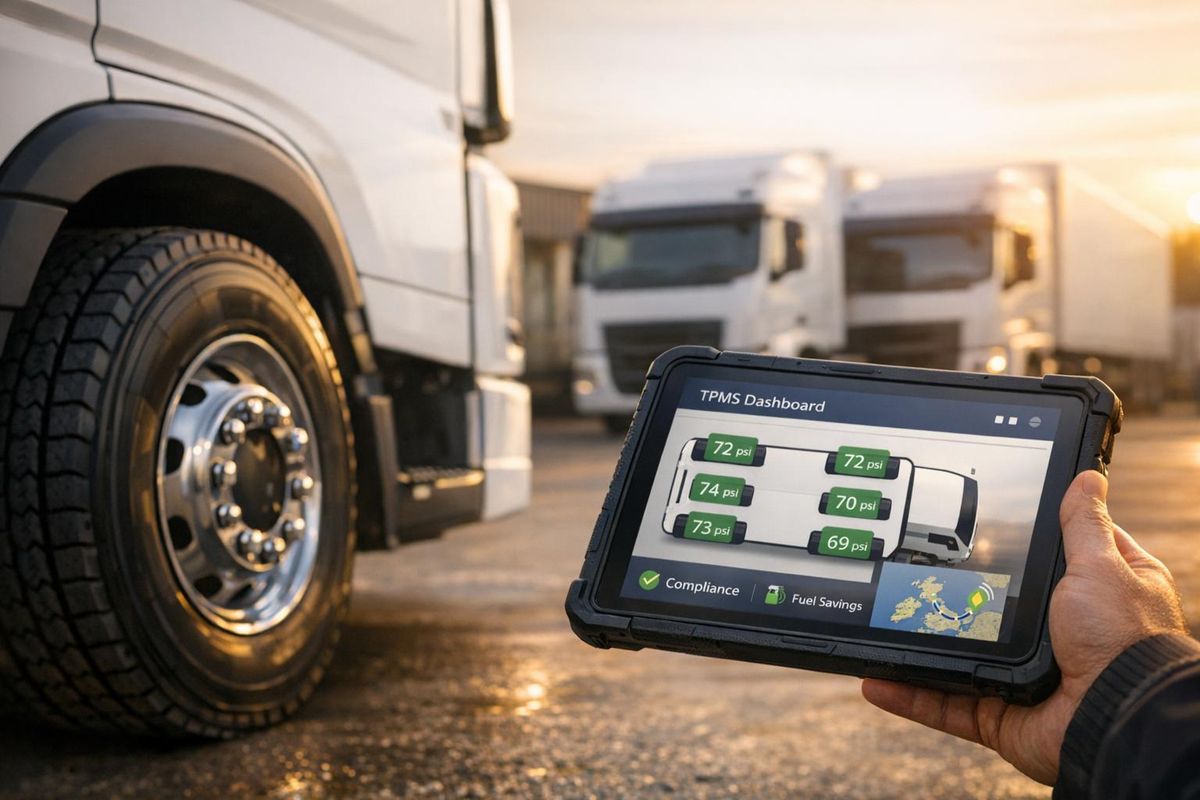
Tyre pressure monitoring is critical for fleet safety, cost savings, and compliance. Here’s why it matters and how you can implement it effectively:
- Safety Risks: Under-inflated tyres cause 30% of vehicle breakdowns and contribute to accidents. UK law imposes fines of up to £2,500 per defective tyre.
- Cost Impact: Tyres 20% under-inflated increase fuel consumption by 2.5% and wear out 25% faster, driving up expenses.
- Regulations: From July 2024, all new HGVs in the UK must have Tyre Pressure Monitoring Systems (TPMS). Faulty TPMS will also result in MOT failures starting January 2025.
- Efficiency Gains: TPMS detects slow leaks (90% of tyre breakdown causes) early, saving money on fuel, tyres, and downtime.
By integrating TPMS with telematics platforms, fleet managers can monitor tyre health in real-time, reduce breakdowns, and optimise maintenance. Most fleets recover their investment within 6–12 months through reduced costs and improved efficiency.
Keep reading to learn how TPMS works, its types (direct vs. indirect), and tips for choosing, installing, and integrating it into your fleet operations.
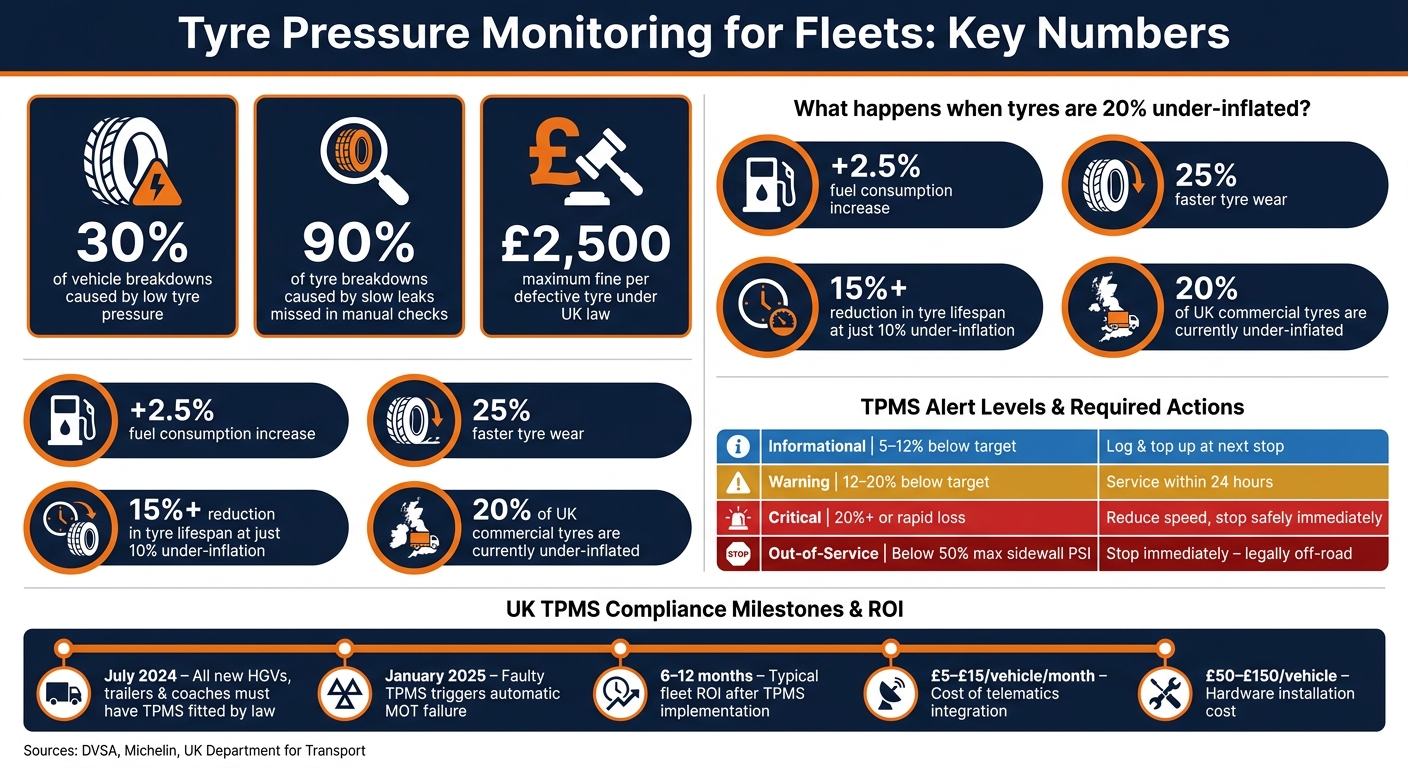
TPMS for Fleets: Key Stats, Costs & Compliance at a Glance
How To Choose The Right TPMS For My Truck? - Big Truck Lovers
sbb-itb-499a7f0
Tyre Pressure Basics and Fleet Impact
Tyre pressure, measured in bar or psi, plays a crucial role in determining how tyres interact with the road. It directly impacts grip, steering response, and wear patterns. Keeping tyre pressure within the recommended range ensures tyres perform as intended, providing optimal handling and durability. On the flip side, incorrect tyre pressure can harm fuel efficiency, shorten tyre life, and compromise safety.
Effects of Incorrect Tyre Pressure
Both under-inflated and over-inflated tyres can cause distinct problems. Under-inflation leads to excessive sidewall flexing, which generates heat and increases the risk of blowouts. It also raises rolling resistance, which means more fuel is consumed. Over-inflation, however, reduces the tyre’s contact with the road, decreasing traction and increasing the likelihood of aquaplaning on wet surfaces.
| Factor | Under-inflation | Over-inflation |
|---|---|---|
| Tyre Wear | Faster wear on shoulder edges | Faster wear on the centre tread |
| Fuel Use | Higher due to increased rolling resistance | Minimal impact |
| Handling | Sluggish steering, less precision | Harsher ride, more vibration |
| Braking | Longer stopping distances | Reduced traction, especially in wet conditions |
| Primary Risk | Heat build-up and potential blowouts | Aquaplaning and impact damage |
Even a small deviation from the correct pressure can have a big impact. For instance, tyres that are just 10% under-inflated may lose more than 15% of their lifespan. These issues can quickly add up to significant costs for a fleet.
Recommended Tyre Pressures for UK Fleets
The "right" tyre pressure isn’t universal - it depends on factors like the vehicle type, axle configuration, load weight, and tyre size. For heavy goods vehicles (HGVs), pressures generally range from 6 to 9 bar. For vans and lighter commercial vehicles, follow the manufacturer's guidelines.
Temperature also plays a role. For every 5°C drop in ambient temperature, tyre pressure decreases by roughly 1 psi. This makes it essential to check tyre pressures when tyres are cold. Using a calibrated digital gauge ensures accuracy, and adjustments should be made for vehicles carrying heavy loads. These variables highlight the importance of regular and dynamic tyre pressure checks in fleet operations.
Why Manual Tyre Checks Are Not Enough
While manual tyre inspections are valuable, they have their limits. A tyre can look fine but still have a slow pressure leak, which is a common issue. In fact, 90% of tyre-related breakdowns are caused by slow leaks.
"Underinflated or overheated tyres can cause accidents. In fact, Michelin conducted a study of 7,000 trucks in Europe and found that tyres are the leading cause of roadside truck breakdowns." - Claire Fioretti, Director of Standards and Regulations for Connected Mobility, Michelin
For smaller fleets, manual checks might suffice, but as fleets grow, they become harder to manage consistently. This is where automated tyre pressure monitoring comes in, streamlining the process and reducing the risk of human error. Next, we’ll explore how Tyre Pressure Monitoring Systems (TPMS) can transform fleet management by taking these checks to the next level.
How Tyre Pressure Monitoring Systems Work
Tyre Pressure Monitoring Systems (TPMS) are designed to keep an eye on tyre air pressure and temperature without relying on visual checks from drivers. These systems automatically track tyre conditions and provide alerts when something is off. Let’s dive into how they work, the key components involved, and the different approaches used to deliver these alerts.
TPMS Components and Data Collection
A TPMS setup for fleets relies on three main components that work together seamlessly. First, sensors are installed on each wheel. These can be mounted on the valve, placed inside the rim, or strapped on. Their job is to measure air pressure and temperature. Next, the sensors send this data wirelessly - either via RF (radio frequency) or BLE (Bluetooth Low Energy) - to a receiver in the vehicle. Finally, this information is relayed to a cloud-based fleet management platform. Fleet managers can then access detailed tyre data, trends, and automated reports through a web portal or mobile app.
"More sophisticated systems can even display the exact pressure of each tyre in real time." - Karim Essaadi, Service Designer, Michelin
Direct vs. Indirect TPMS: A Comparison
Once the data is collected, the way TPMS processes it depends on the approach used. Here’s a breakdown of the two main types:
Direct TPMS uses physical sensors to measure the actual pressure and temperature inside each tyre. On the other hand, Indirect TPMS relies on the vehicle’s Anti-lock Braking System (ABS) to monitor wheel rotation speeds. Since an under-inflated tyre has a smaller diameter, it spins faster, triggering an alert.
| Feature | Direct TPMS | Indirect TPMS |
|---|---|---|
| Measurement Method | Physical sensors measure actual pressure and temperature | ABS wheel speed sensors estimate pressure via rotation speed |
| Accuracy | High – real-time PSI/bar readings | Lower – estimates based on wheel diameter changes |
| Stationary Monitoring | Yes – detects leaks even when parked | No – requires the vehicle to be moving |
| Specific Tyre ID | Pinpoints the exact tyre with an issue | Typically provides only a general warning |
| Maintenance | Sensor batteries last 5–7 years but may need replacement during tyre changes | No batteries but requires system resets after inflation or rotation |
| Cost | Higher upfront cost | Lower cost by using existing ABS hardware |
| Ideal For | HGVs, vans, and commercial fleets | Light urban cars |
Direct TPMS is the go-to choice for fleets, holding a 63% market share in the commercial sector. Its ability to detect slow leaks on parked vehicles makes it invaluable. Additionally, starting from 7 July 2024, all new HGVs, trailers, and coaches sold in the UK and EU must be equipped with TPMS.
TPMS Alerts and Pressure Thresholds
Modern TPMS systems go beyond just warning about low tyre pressure. They can also alert for rapid deflation, high tyre temperatures (potentially indicating brake or bearing issues), dual-wheel pressure imbalances, and axle pressure differences.
By law, alerts are triggered when tyre pressure drops 20–25% below the recommended level. However, for effective fleet management, a tiered alert system is recommended:
- A 5–12% drop can be logged for the next scheduled maintenance.
- A 12–20% drop should prompt servicing within 24 hours.
- A drop over 20% or any rapid pressure loss demands immediate attention.
Setting thresholds at 10–15% below the recommended pressure offers a proactive approach to tackling issues early.
One more thing to keep in mind: from January 2025, a faulty TPMS sensor in a vehicle where it’s mandatory will result in an automatic MOT failure in the UK. Keeping sensors in good working order isn’t just smart - it’s legally required.
These details highlight the operational side of TPMS, setting the stage for understanding how they can benefit fleet management.
Business Case for TPMS in Fleet Management
Tyre Pressure Monitoring Systems (TPMS) offer more than just technical advantages - they improve safety, cut costs, and increase operational efficiency. For modern fleets, TPMS is not just a convenience; it’s a necessity.
Safety and Regulatory Compliance
In the UK, 20% of commercial tyres are under-inflated, and the consequences can be severe. Data from the Department for Transport highlights the dangers, with under-inflated or defective tyres contributing to serious and fatal accidents. TPMS helps prevent these incidents by identifying pressure drops or temperature spikes before they lead to blowouts.
From a legal standpoint, the stakes are high. Drivers can face fines of up to £2,500 and three penalty points for each defective tyre. Worse, the DVSA has the authority to detain vehicles deemed unroadworthy. Continuous tyre monitoring isn’t just advisable - it’s essential for staying compliant.
"TPMS regulations represent a proactive stride toward the future of fleet safety." - MICHELIN Connected Fleet
This proactive approach to safety doesn’t just save lives; it also lays the groundwork for operational and financial benefits.
Fuel and Maintenance Cost Savings
Maintaining proper tyre pressure not only improves safety but also delivers measurable savings. Tyres that are 20% under-inflated use 2.5% more fuel and wear out 25% faster. Even a 10% drop in pressure can reduce a tyre’s lifespan by 15% or more.
By keeping tyres at optimal pressure, fleets can extend tyre life by up to 15% for new tyres and 20% for retreaded ones. This reduces both fuel consumption and replacement costs. Additionally, every litre of fuel saved prevents 2.66 kg of CO₂ emissions.
"Maintaining the correct tyre pressures can prolong the lives of your tyres. The more kilometres you travel safely on your tyres, the more you save on investment in new tyres." - TIP Group
Reducing Downtime and Improving Efficiency
TPMS also revolutionises maintenance practices. 90% of tyre-related breakdowns are caused by slow leaks, which often go unnoticed during manual inspections. With TPMS, these issues are detected early, allowing for repairs during scheduled stops rather than costly roadside emergencies. This shift enables fleets to move from reactive maintenance to a planned, efficient approach.
When integrated with telematics systems, the advantages multiply. For instance, GRS Fleet Telematics combines TPMS data with vehicle tracking, offering managers a comprehensive view of tyre health, location, and mileage. This allows for seamless maintenance planning without disrupting daily operations.
Most fleet operators experience a return on investment within six to nine months of implementing TPMS.
"TPMS can increase a fleet's profit by reducing costs and downtimes." - Karim Essaadi, Service Designer, Michelin
Next, we’ll explore how to incorporate TPMS into your fleet operations for maximum impact.
How to Implement TPMS in Your Fleet
Now that you know the benefits, the next step is putting TPMS into action for your fleet. A smooth implementation can save you time, money, and hassle down the line. The process involves three key steps: understanding your fleet's specific needs, selecting and installing the right system, and linking it to your telematics platform.
Assessing Your Fleet's Needs
Before diving in, take a close look at your fleet's vehicles and operations. What types of vehicles do you have? How are they used? What tyre inspection processes are already in place? These questions will help pinpoint what kind of TPMS setup you need.
For example, HGVs sold in the UK after July 2024 must legally have TPMS installed. On the other hand, LCVs (vans) only need a functioning TPMS to pass their MOT if it was originally fitted as standard. If your fleet includes both vehicle types, your requirements - and budget - will vary accordingly.
Also, think about how your fleet operates. For long-haul routes where loads remain consistent, internal sensors are a good choice because they’re less exposed to road debris. Meanwhile, fleets operating in urban areas, where tyres are rotated more often, might find external valve-cap sensors more practical. These are easier to replace without removing the tyre. There’s no one-size-fits-all solution here - the best option depends on your specific needs.
It’s important to note that TPMS doesn’t replace manual tyre checks.
"TPMS is not a replacement for regular tyre or vehicle checks. Drivers should still perform routine maintenance measures and inspect tyres." - Webfleet GB
Finally, consider whether you need a standalone in-cab alert system or a fully integrated solution. Smaller fleets focused on safety alone may find standalone systems sufficient. However, larger fleets looking to optimise maintenance and cut costs will benefit more from integrating TPMS with a fleet management platform.
Choosing and Installing a TPMS Solution
For most commercial fleets, direct TPMS is the preferred choice. These systems provide real-time data on tyre pressure and temperature, even when vehicles are parked. This is particularly useful for spotting slow leaks overnight, preventing breakdowns before vehicles hit the road.
If you’re retrofitting older vehicles, plug-and-play solutions can make the process easier. For instance, Goodyear’s "TPMS Connect", launched in September 2024, allows trucks and trailers to be onboarded over-the-air within 24 hours, without needing extra SIM cards. Hardware costs generally range from £50 to £150 per vehicle, depending on the sensors and receivers, with professional installation ensuring everything is set up correctly from the start.
To minimise disruption, consider rolling out the system in phases. This approach reduces downtime and gives drivers time to get used to the new alerts. A phased rollout also makes it easier to integrate the system with your telematics platform later on.
Connecting TPMS to Fleet Telematics
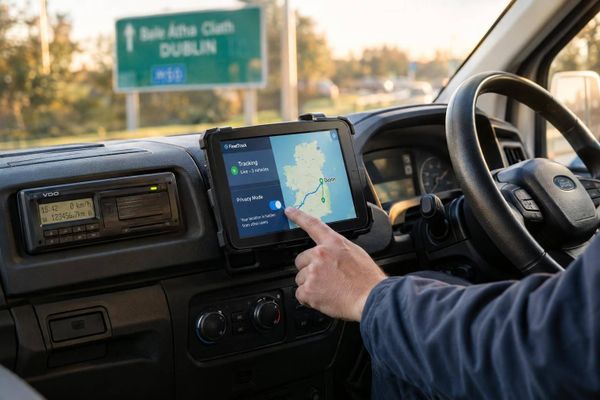
Integrating TPMS with your fleet management platform takes the benefits of safety and efficiency to the next level. Here’s how it works: sensors collect tyre data, which is transmitted through a telematics hub, processed on a cloud platform, and displayed on a fleet manager’s dashboard. This dashboard combines tyre data with other metrics like GPS location, mileage, and driver behaviour.
Platforms like GRS Fleet Telematics help bring all this information together. By combining TPMS data with live tracking, you get a complete view of each vehicle’s tyre health and location. This makes it easy to schedule maintenance proactively, rather than waiting for a breakdown. For example, if a slow leak is detected, the system can automatically flag the need for a maintenance appointment - no manual input required.
The cost for this level of integration is typically £5 to £15 per vehicle per month. While this might seem like an extra expense, most fleets recoup their investment within six to twelve months through savings on fuel and tyres.
Building a Long-Term Tyre Pressure Management Plan
Installing a TPMS is just the start; the real impact comes from weaving its data into your everyday operations.
Updating Tyre Management Policies
Once your TPMS is up and running, it's time to tweak your maintenance routines to make the most of it. While real-time alerts are a great early-warning tool, they don't replace the need for regular physical inspections.
Here are two updates to consider:
- Re-torque rule: After a tyre change, wheel fixings should be re-tightened to the manufacturer's recommended torque within the first 40–80 km of driving.
- Sensor lifecycle schedule: Plan ahead for sensor replacements based on the manufacturer's recommendations.
It's also essential to outline clear response steps for different TPMS alert levels. Here's a handy guide:
| Alert Level | Threshold | Required Action |
|---|---|---|
| Informational | 5–12% below target | Log the issue on the dashboard; top up at the next stop. |
| Warning | 12–20% below target | In-cab alert; arrange for servicing within 24 hours. |
| Critical | 20%+ or rapid pressure loss | Reduce speed right away; stop at the nearest safe location. |
| Out-of-Service | Below 50% of max sidewall PSI | Stop immediately; the vehicle is legally out of service. |
Training Drivers and Fleet Staff
Updated policies are only effective if your team knows how to implement them. Both drivers and workshop staff play pivotal roles in responding to TPMS alerts.
Drivers don't need to be tyre specialists, but they should understand how to act on different alerts. For instance, a slow-leak warning means they can finish the trip and schedule a service, but a rapid-loss alert requires pulling over immediately.
"A proactive driver can make a significant difference in preventing tyre-related problems." - MICHELIN Connected Fleet
Workshop staff, on the other hand, require more technical training. For vehicles with direct TPMS, improper handling during tyre changes can damage internal sensors. Using the right tools and replacing valve caps and core components during every tyre change helps prevent corrosion. Fleets with indirect TPMS need to recalibrate the system whenever tyres are inflated, rotated, or swapped to maintain accuracy.
With a well-trained team, you'll be better equipped to monitor and improve tyre performance.
Tracking Performance and Making Improvements
Once your policies are updated and your team is trained, the next step is to track performance using TPMS data. Focusing on the right metrics can help you spot trends and make informed decisions. Key metrics to monitor include:
- Tyre pressure compliance rate (percentage of vehicles maintaining the recommended pressure range)
- Fuel consumption patterns
- Frequency of tyre replacements
- Tyre-related downtime hours
These insights can highlight areas for improvement. For instance, low compliance rates might signal a need for further training or sensor maintenance, while frequent tyre replacements could point to tough driving conditions or poor road quality. Advanced telematics platforms, like GRS Fleet Telematics, combine TPMS data with mileage and route information to uncover actionable insights. Some systems even offer predictive models that estimate tyre service needs 30 to 60 days in advance, allowing you to shift from reactive to proactive maintenance.
"TPMS can increase a fleet's profit by reducing costs and downtimes." - Karim Essaadi, Service Designer, Michelin
Conclusion
Tyre pressure might seem like a minor detail in fleet management, but ignoring it can lead to major costs. Consider this: 30% of vehicle breakdowns are linked to low tyre pressure, and 90% of these result from slow leaks that manual checks often miss. The financial fallout isn't just about repairs - fines can reach up to £2,500 per defective tyre, not to mention the added expenses from increased fuel consumption, tyre wear, and unexpected downtime.
A well-designed Tyre Pressure Monitoring System (TPMS) can make all the difference. It detects pressure loss early, ensures compliance with regulations, and, when paired with a telematics platform, gives fleet managers a real-time overview of tyre conditions across their vehicles. This kind of proactive monitoring helps tackle problems before they escalate into costly breakdowns.
The real game-changer is integration. By combining TPMS data with platforms like GRS Fleet Telematics, fleet managers can access tyre alerts alongside GPS tracking, mileage logs, and maintenance schedules. This means they can respond to a critical pressure drop instantly, avoiding the chaos of roadside emergencies. This approach shifts tyre management from being a reactive chore to a predictive, streamlined process.
As Michelin's Service Designer, Karim Essaadi, puts it:
"A single breakdown can be costly for a fleet owner... including only replacing the tyre without the costs related to downtime, delivery delays that might incur penalties and even damaged merchandise."
The numbers back it up too. Most fleets see a return on investment within 6–12 months through savings on fuel, tyres, and fewer call-outs. The technology works, the rules are clear, and the benefits are undeniable. For UK fleets looking to enhance safety and cut costs, adopting a connected tyre pressure monitoring strategy isn't just smart - it's essential.
FAQs
Which TPMS type is best for my fleet: direct or indirect?
The right tyre pressure monitoring system (TPMS) for your fleet hinges on its specific requirements.
Direct TPMS relies on sensors installed on each wheel, providing precise, real-time data on both pressure and temperature. This makes it a great choice for heavy goods vehicles (HGVs), buses, and fleets with high-value assets. While it excels at detecting slow leaks, it does demand more upkeep.
On the other hand, Indirect TPMS offers a more budget-friendly alternative. It uses ABS sensors to estimate tyre pressure, making it well-suited for light commercial vans and fleets carrying uniform loads.
What tyre pressure drop should trigger action in my fleet?
Most tyre pressure monitoring systems will notify drivers when tyre pressure falls by 6 to 7 PSI below the recommended level. While some systems might pick up on smaller variations, this threshold is considered typical. Under-inflated tyres can lead to quicker wear, higher fuel usage, and increased safety hazards. If a warning light comes on, it’s important to pull over safely, check the tyres, and re-inflate them to the pressure specified by the manufacturer.
How do I integrate TPMS data into GRS Fleet Telematics?
To incorporate tyre pressure monitoring data into GRS Fleet Telematics, start by fitting vehicles with wireless tyre sensors that are compatible with the system. These sensors gather tyre pressure and temperature data and send it to a gateway or telematics device using OBD-II or CAN bus interfaces. From there, the data is transmitted to your cloud dashboard, enabling real-time tracking.
Make sure the sensors support open standards like MQTT to ensure smooth integration. You can also customise pressure thresholds to trigger alerts, aiding in predictive maintenance and keeping your fleet in optimal condition.