Telematics Solutions for EV Charging Stations
Telematics helps UK fleets manage EV charging with real-time SoC, smart scheduling, dynamic load management and lower energy costs.
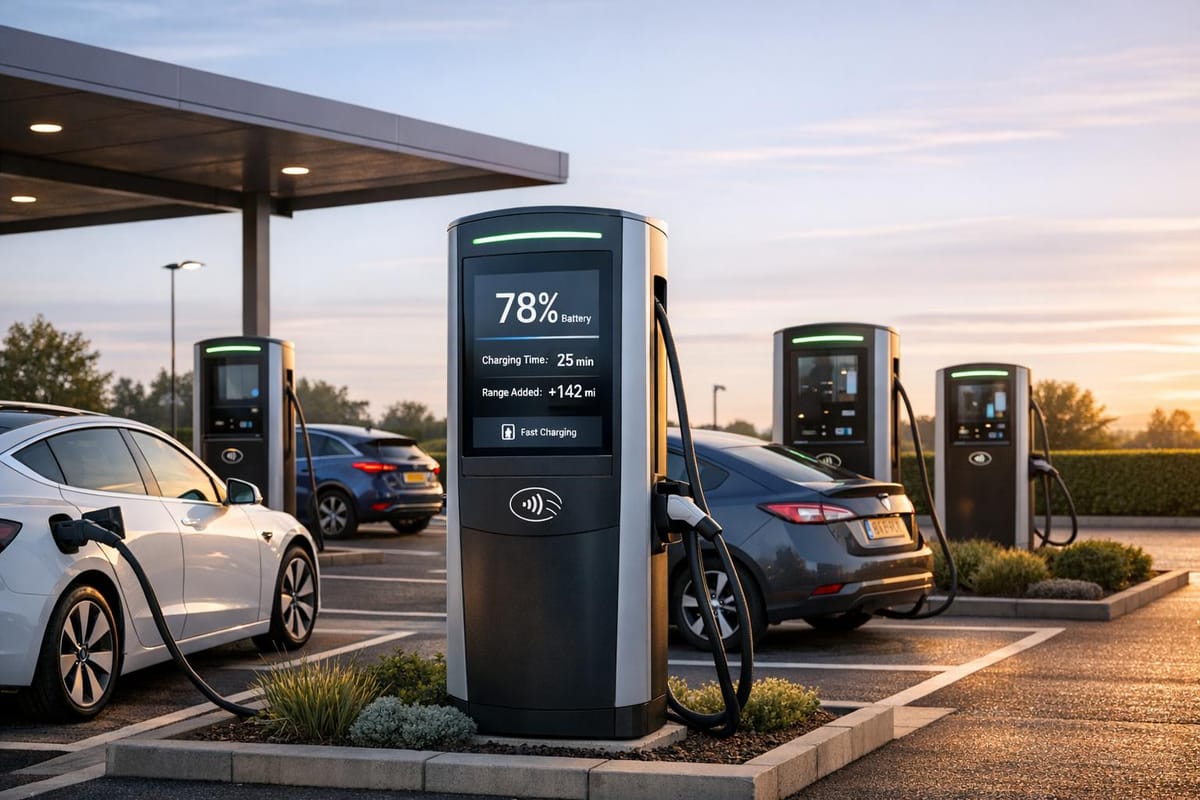
Fleet operators in the UK are adopting telematics to address the challenges of managing EV charging infrastructure. With the government aiming for all new vehicles to be zero-emission by 2035, the demand for efficient charging systems is growing. Here's a quick overview of the key takeaways:
- Current Challenges: Limited grid capacity, uneven charger usage, poor scheduling, and rising energy costs make managing EV charging complex.
- Telematics Benefits: Real-time data helps monitor battery levels, optimise charging schedules, and reduce energy costs by aligning charging with off-peak hours.
- Examples: The City of York's "HyperHubs" and Meridian Energy's fleet showcase how telematics improves efficiency and reduces operational disruptions.
- Financial Impact: Fleet operators using telematics report significant cost savings, reduced downtime, and better battery management.
Telematics systems integrate vehicles, chargers, and energy data to streamline operations, making EV fleet management more efficient and cost-effective.
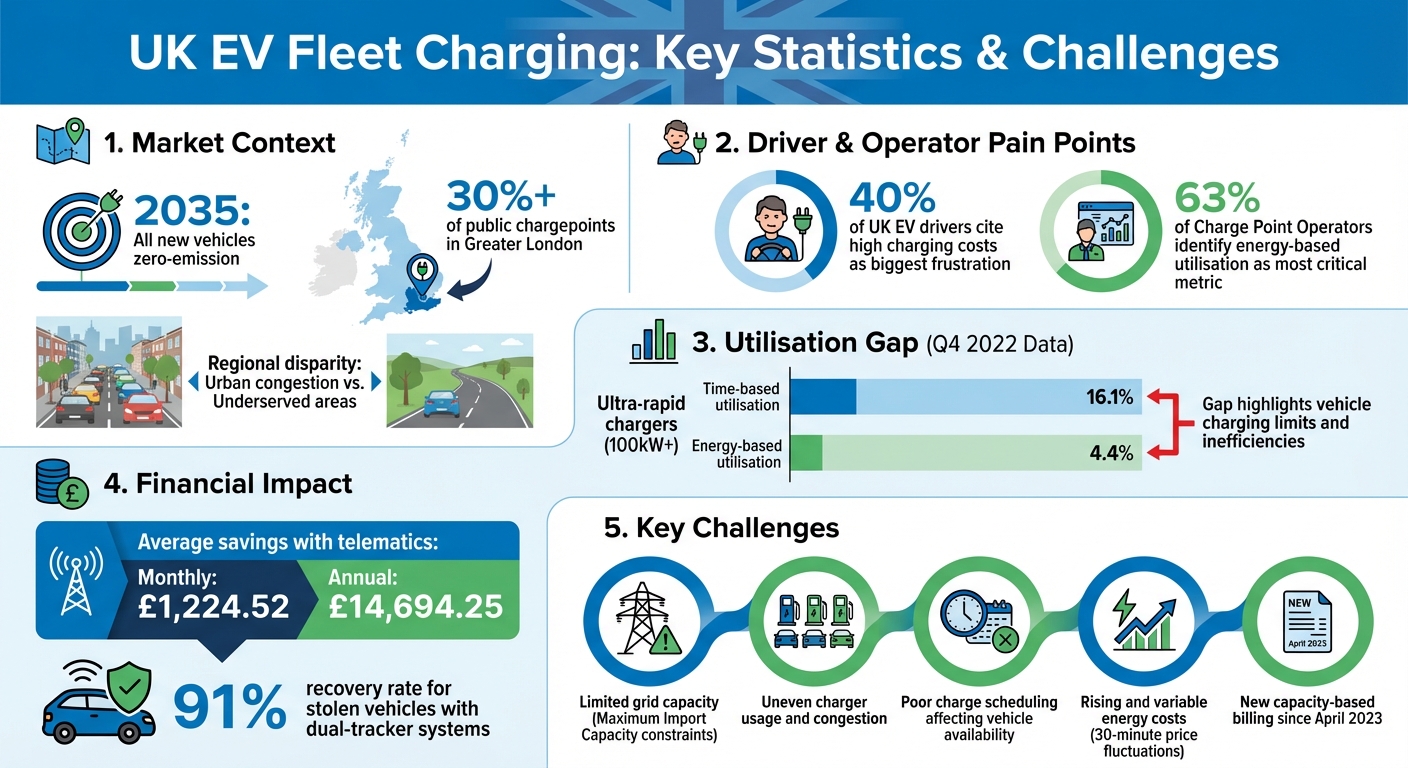
Key Statistics and Challenges in UK EV Fleet Charging Management
Inside Siemens Depot360: Smarter EV Charging Support for Fleets
Challenges in Managing EV Charging Stations
Fleet operators in the UK are quickly realising that setting up EV charging infrastructure is just the beginning. The real challenge lies in managing it effectively. Key obstacles include uneven charger usage, poor charge scheduling that impacts vehicle availability, and the unpredictability of energy costs.
Uneven Charger Usage and Congestion
Handling large-scale EV charging at commercial sites often runs into grid connection limitations. Exceeding the Maximum Import Capacity (MIC) can cause circuit breakers to trip, potentially bringing operations to a standstill.
"The local electricity grid connection is the biggest bottleneck most fleet depots face. Why? Because most commercial sites were simply never built to handle a large-scale fleet EV charging operation." - ZPN Admin
One common issue is vehicles returning at the end of a shift, all plugging in at once. This creates significant power surges, while chargers often sit idle at other times. Many systems distribute a fixed amount of power across all charging points, leading to wasted capacity - known as "light-yellow" energy - when demand drops. Another complication is the lack of insight into vehicle dwell times and battery levels. For instance, rapid chargers may be tied up for long periods, while slow chargers are used for quick turnarounds.
Regional disparities add another layer to the problem. Over 30% of UK public chargepoints are located in Greater London, creating congestion in urban areas while other regions remain underserved.
Poor Charge Scheduling and Vehicle Availability
Inefficient scheduling can cripple fleet operations. Take a site with 30kW of spare capacity: if six vehicles charge at once, each will only receive around 5kW. This can leave them undercharged for their next shift, which is especially problematic for high-demand sectors like logistics or taxi services.
"Choosing the right mix is vital. Over-investing in DC chargers for a fleet that parks overnight is a waste of capital, while relying solely on AC chargers for high-utilisation vehicles will cripple your operations." - ZPN Admin
Mismanaged charging cycles also accelerate battery wear and tear. Over-reliance on rapid DC charging, when slower AC charging would suffice overnight, is a common mistake. Aligning charger speeds with vehicle dwell times is crucial to ensure fleet readiness and keep operational costs in check.
Rising and Variable Energy Costs
Energy costs are one of the most unpredictable aspects of running EV charging infrastructure. In the UK, wholesale electricity prices can fluctuate every 30 minutes. On top of that, energy suppliers impose higher tariffs during peak demand hours - often when fleets need to charge the most.
The situation has been further complicated by Ofgem's Targeted Charging Review, introduced in April 2023. Under the new rules, sites are billed based on installed power capacity rather than actual energy consumption.
"Rather than EV charging sites paying certain network costs based on power usage, sites are now charged for installed power capacity. Industry may perceive this as being penalised for investing in infrastructure ahead of customer demand." - Office for Zero Emission Vehicles
The financial strain is evident. A survey revealed that 40% of UK EV drivers see high charging costs as their biggest frustration. Meanwhile, 63% of Charge Point Operators identify energy-based utilisation as the most critical metric for site performance. Without smart management systems, charging during peak hours not only inflates energy bills but also risks overloading site capacity, potentially causing outages and expensive downtime. Telematics systems, however, offer data-driven solutions to help optimise charger usage and reduce these challenges.
Using Telematics to Improve Charger Utilisation
Telematics provides a treasure trove of real-time data from EVs and chargers, allowing fleet operators to fine-tune their charging operations with precision. By eliminating guesswork, this data lays the groundwork for prioritising charging availability and improving overall operational efficiency.
Real-time Data from EVs and Chargers
With telematics, fleet managers can monitor the State of Charge (SoC) to keep tabs on remaining battery capacity. These systems also estimate the real-time driving range by factoring in actual driving patterns, rather than relying on manufacturer estimates. On the charger side, telematics tracks port availability, usage, and faults, while also monitoring power consumption at each station.
"Capturing data directly from the vehicle negates the need for a vehicle to be plugged into a costly smart charger to check its charging status." - Dr Sharlene Smith, Business Manager - Sustainability Initiatives, Smartrak
A great example comes from Meridian Energy in New Zealand. By 2021, they achieved a fully electric light passenger fleet - well ahead of their 2030 goal. Using Smartrak's telematics, they seamlessly integrated remote battery data across multiple sites. This allowed them to manage charging schedules efficiently and support back-to-back vehicle bookings without needing expensive smart chargers for every port.
Combined Vehicle and Charger Visibility
When vehicle and charger data are combined, fleet managers can prioritise charging based on operational needs. For instance, vehicles with urgent trips or upcoming bookings can be charged first, avoiding delays caused by a first-come, first-served approach. This ensures that vehicles ready for deployment aren’t held up by others that are already fully charged.
This approach doesn’t just simplify operations - it also boosts fleet performance. The City of York Council adopted this strategy in 2020 with their "HyperHubs", ultra-rapid charging stations paired with solar energy and battery storage. By integrating these hubs with 33 electric buses and strategically placing chargers at park-and-ride sites, they reduced city-centre traffic while maintaining dependable access to charging.
Performance Metrics for Charging Operations
Real-time data is just the starting point - performance metrics take things further by uncovering deeper trends. Telematics highlights two key utilisation metrics: time-based utilisation, which measures how long a vehicle is plugged in, and energy-based utilisation, which tracks energy delivered compared to a charger's maximum potential. These metrics help identify inefficiencies like chargers being blocked by idle vehicles or underutilised due to vehicle limitations.
For example, UK data from Q4 2022 revealed a stark difference between these metrics for ultra-rapid chargers (100kW+). Time-based utilisation stood at 16.1%, but energy-based utilisation was only 4.4%, primarily due to vehicle charging limits and performance curves. This insight allows fleet managers to evaluate whether their charger speeds align with their fleet's needs.
"It's great to see these utilisation figures coming into the public domain because they can really help us move the conversation on from simply talking about the number of charge points to looking more closely at charging behaviour and patterns." - Melanie Shufflebotham, Co-founder & COO, Zapmap
Other useful metrics include energy consumption per kilometre, which helps calculate running costs, and State of Health (SoH), which predicts battery lifespan and safeguards asset value. Regular tracking enables operators to identify inefficiencies and fine-tune their charging strategies for better results.
Fleet Charging Behaviour Insights
Understanding how drivers charge their vehicles provides insights far beyond basic charger usage data. Telematics offers a detailed view of when, where, and how often drivers plug in, directly impacting fleet efficiency and operational costs.
Tracking Charging Patterns and Trends
Telematics systems can pinpoint preferred charging locations by analysing where vehicles spend the most time idle. For instance, if vans tend to pause for around 45 minutes during lunch breaks at specific spots, fleet managers might consider installing rapid DC chargers at those locations. This allows for quick top-ups during natural downtime instead of waiting for vehicles to return to the depot. By aligning charging with existing workflows, fleets can minimise disruption and streamline operations.
Additionally, telematics can uncover typical charging durations and peak usage times at each station. This information helps managers stagger charging schedules to prevent overloading site power limits. It also provides an overview of charging activity across large networks, offering valuable visibility.
"By mapping out these dwell periods, you can align your charging infrastructure with your natural operational workflow. This minimises disruption and ensures that charging happens when vehicles are already idle."
- ZPN Admin
These insights pave the way for improving how drivers approach charging.
Improving Driver Charging Habits
Telematics data can quickly highlight inefficiencies in charging behaviour. For example, vehicles left plugged in after charging is complete can block access for others. With automatic alerts, fleet managers can identify and address such issues directly with drivers.
Another concern is the overuse of rapid DC chargers. While these chargers are convenient, frequent use can speed up battery wear compared to slower, overnight AC charging. By monitoring drivers who heavily rely on rapid chargers and cross-referencing this with battery health data, managers can introduce coaching programmes to promote better habits, extending battery life and protecting long-term asset value.
Automated notifications can further enhance compliance. For example, systems can send reminders - such as at 6 PM - if a vehicle's State of Charge drops below a set level (like 50%) while parked in a geofenced depot area. Driver identification tools, such as pin pads or key fobs linked to telematics, also help ensure that vehicles use the correct charging ports and allow managers to track individual compliance.
"Each driver should know well in advance when and where their next charge is coming from, so forward planning for fleet managers will be key."
- Heather Waters, fleet telematics expert
Implementing Telematics for UK Fleets
Technical Requirements and Integration
To implement telematics effectively, you'll need to install devices in vehicles, utilise smart chargepoints, and connect them all through a centralised data platform. According to the Electric Vehicles (Smart Charge Points) Regulations 2021, new private chargepoints must include smart features. These features allow the chargepoints to respond to signals for adjusting charging rates and come with pre-set off-peak default hours.
For larger fleet depots, it's crucial to contact your local Distribution Network Operator (DNO) early, as grid capacity assessments can take anywhere from 5 to 65 working days. A significant update from 1 April 2023 means demand connection customers no longer face charges for distribution network reinforcement needed for new connections. If you're planning a site upgrade, consider hiring Independent Connections Providers (ICPs) for contestable electrical work. They often offer more competitive pricing compared to working directly with your local DNO.
Working with UK Energy Tariffs and Infrastructure
Telematics plays a key role in scheduling vehicle charging during off-peak hours, helping to reduce electricity costs while ensuring your fleet is always ready to go. The UK Power Networks (UKPN) Site Planning Tool is particularly handy - it lets you model various charging scenarios to identify the most cost-effective approach for depot electrification.
If your site has limited electrical capacity, telematics can facilitate dynamic load management. This feature distributes available power across multiple vehicles without exceeding your site's limits. Additionally, some DNOs offer "time-profiled" or flexible connections, which allow you to draw different power levels at different times. These options should be explored early in your planning discussions.
By combining these energy strategies with telematics solutions, you can optimise fleet operations while keeping costs under control.
GRS Fleet Telematics for EV Charging
GRS Fleet Telematics builds on these strategies by offering UK fleets a range of tools, including real-time tracking, eco-driving insights, and vehicle utilisation reports. These features help with precise planning of chargepoint locations and even provide automated geofenced alerts for low battery levels.
Their hardware options come with monthly subscriptions starting at £7.99 per vehicle. This includes SIM data, an account manager, and full access to the platform. For fleets with high-value electric vehicles, GRS offers a dual-tracker system that boasts a 91% recovery rate for stolen vehicles, thanks to GPS and Bluetooth backup.
Conclusion
Managing EV charging doesn’t have to mean expensive upgrades or constant challenges. Telematics solutions offer real-time insights into key metrics like State of Charge, battery health, and vehicle location - ensuring your fleet is always ready when needed. By automating off-peak charging and employing dynamic load management, you can stay within your site’s Maximum Import Capacity (MIC) while also benefiting from lower energy tariffs available in the UK. These tools not only simplify operations but also help control costs and improve efficiency.
Fleet operators using GRS Fleet Telematics typically save an average of £1,224.52 per month or £14,694.25 annually. These savings come from optimised charging schedules, smarter energy use, and extending battery life through slower AC charging during overnight stops. Additionally, detailed emissions reporting supports compliance with environmental standards in the UK, helping fleets meet growing regulatory demands.
GRS Fleet Telematics goes beyond just tracking. It provides a comprehensive solution for UK fleet operators, offering real-time tracking, eco-driving insights, and automated alerts - all backed by dedicated account management. Its dual-tracker system combines GPS and Bluetooth backup, achieving a 91% recovery rate for stolen vehicles, ensuring maximum security.
For fleets of all sizes, telematics can revolutionise vehicle readiness, cut energy costs, and enhance overall efficiency. Whether it’s dealing with grid capacity issues, uneven charger usage, or fluctuating energy tariffs, telematics directly addresses the challenges discussed throughout this article. The technology is already available - the next step is finding a partner who truly understands the unique needs of UK fleets.
FAQs
How can telematics improve the efficiency of EV charging schedules?
Telematics systems collect real-time data from electric vehicles, including battery charge levels, location, and usage patterns. This data helps fleet managers identify the ideal times to charge vehicles - especially during idle periods when electricity rates are lower. By synchronising charging schedules with off-peak tariffs, businesses can cut costs and avoid overloading their site's electrical capacity.
These systems also enable advanced features like staggered charging, which prevents strain on the electrical supply. Another benefit is bidirectional charging (Vehicle-to-Grid or V2G), which allows vehicles to feed energy back into the grid during peak demand. This not only supports grid stability but also creates an opportunity for businesses to earn additional revenue. Automated alerts, such as low battery reminders, ensure charging stations are utilised efficiently.
By coordinating charging schedules with fleet operations and energy-saving measures, companies can reduce electricity expenses, improve vehicle readiness, and make the most of their fleets across the UK.
How can telematics help fleet operators save money?
Telematics offers fleet operators a smart way to cut costs by delivering real-time updates on vehicle location, battery status, and overall performance. With this information, managers can fine-tune routes, cut down on unnecessary mileage, and schedule charging during off-peak hours. These adjustments can slash electricity or fuel costs by as much as 20%. Plus, spotting under-used vehicles means fleets can operate more efficiently without splurging on extra vans.
On top of that, telematics helps keep maintenance costs down by providing predictive alerts on things like battery health, engine wear, and tyre pressure. Tackling these issues early can prevent expensive breakdowns, extend the life of vehicles, and lower repair bills. For electric fleets, scheduling charging during cheaper, low-rate periods adds another layer of savings.
With GRS Fleet Telematics, businesses across the UK can tap into these advantages for as little as £7.99 a month. This also comes with added security features to help protect valuable assets.
How can telematics help manage grid capacity for EV charging stations?
Telematics turns EV charging points into intelligent, data-powered tools that optimise grid management. With real-time insights into battery charge levels, vehicle locations, and expected usage patterns, telematics makes it possible to adjust charging schedules. This helps avoid peak demand periods and shifts charging to times when demand is lower or when renewable energy is more readily available. The result? Less strain on the grid and improved energy efficiency.
Pairing telematics with Vehicle-to-Grid (V2G) technology takes things a step further. Idle fleet vehicles can send stored energy back to the grid during periods of high demand. This not only supports the grid but also opens up a potential revenue stream for fleet operators. By automating these processes, telematics reduces the need for expensive infrastructure upgrades, making EV charging more economical, efficient, and aligned with the UK's net-zero ambitions.