5 Ways Telematics Reduces Fleet CO₂ Emissions
Five telematics tactics—fuel monitoring, route optimisation, idle reduction, driver coaching and proactive maintenance—that cut fleet CO₂ and operating costs.
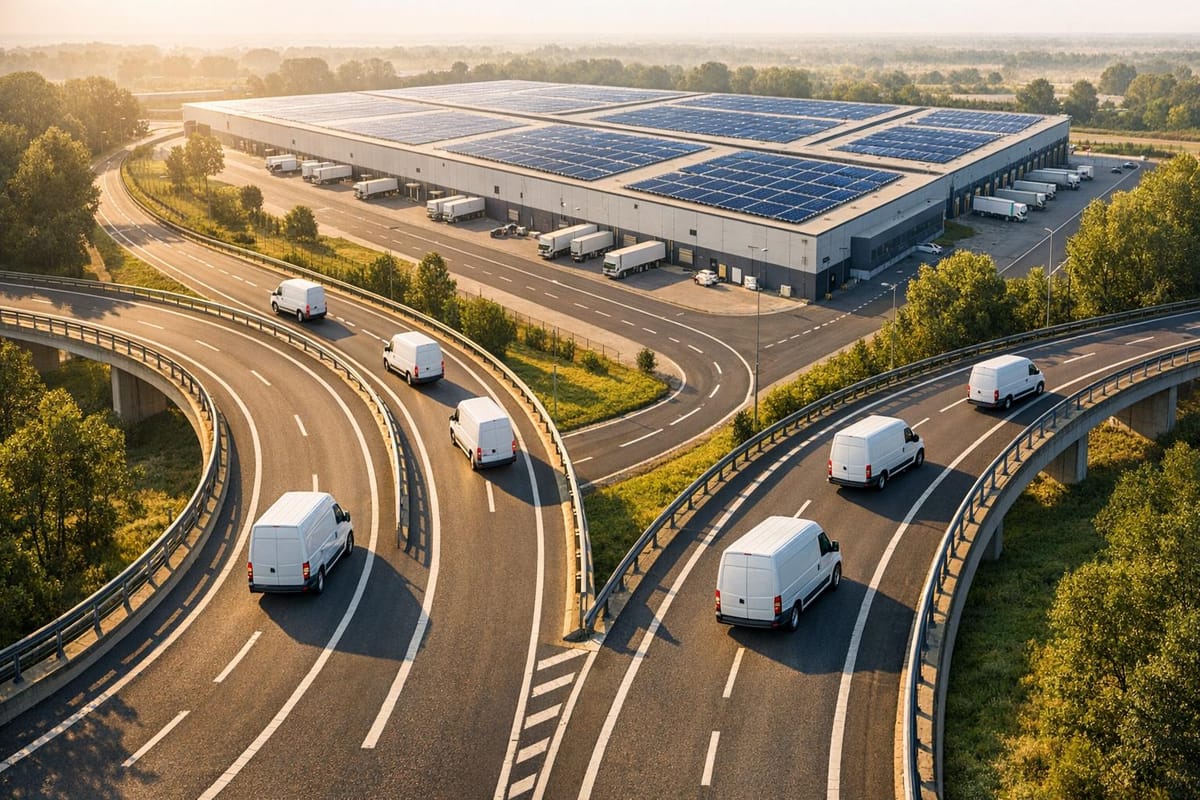
Telematics helps fleet managers in the UK cut CO₂ emissions by tracking fuel use, monitoring driver behaviour, and optimising routes. These systems provide real-time data that improves efficiency, reduces fuel waste, and supports compliance with emissions regulations. Here's a quick summary of how telematics makes a difference:
- Fuel Monitoring: Tracks fuel consumption and highlights wasteful habits like idling or speeding.
- Route Optimisation: Uses GPS and traffic data to find the most efficient paths, cutting fuel use by up to 20%.
- Idle Time Reduction: Identifies unnecessary idling, saving fuel and reducing emissions.
- Driver Coaching: Analyses driving habits to promote smoother, more efficient driving, reducing fuel use by 10%.
- Proactive Maintenance: Alerts managers to vehicle issues early, avoiding inefficiencies and extra emissions.
Telematics is a practical tool for fleets aiming to reduce emissions, save costs, and meet sustainability targets. Starting at £7.99 per vehicle per month, systems like GRS Fleet Telematics offer real-time tracking, driver feedback, and maintenance alerts to improve fleet performance.
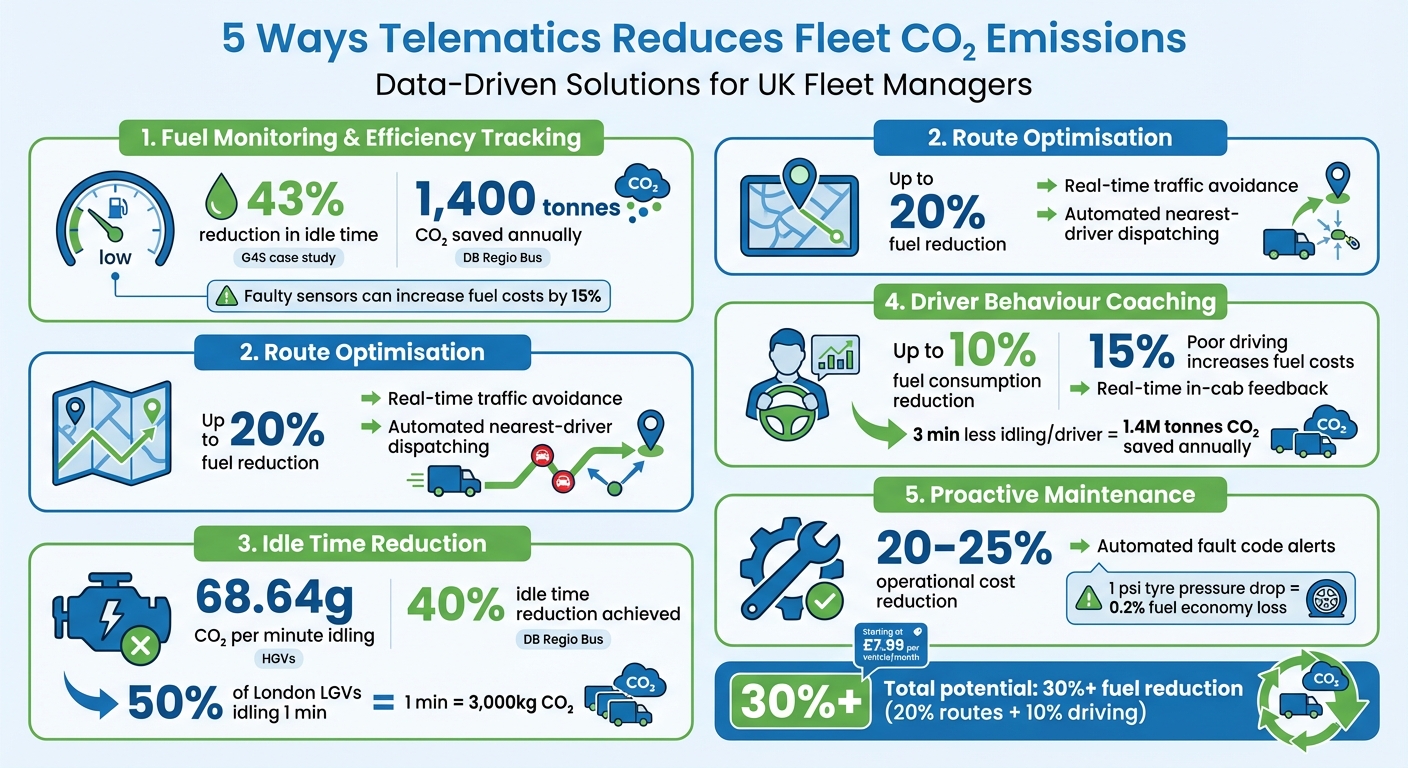
5 Ways Telematics Reduces Fleet CO2 Emissions - Key Statistics and Savings
How can fleets use telematics to improve operational efficiency, driver safety and sustainability?
1. Fuel Monitoring and Efficiency Tracking
Telematics systems pull data from engines and fuel cards to keep tabs on fuel consumption. This real-time tracking provides insights into total fuel usage, distance covered, and fuel efficiency - measured in miles per gallon for traditional vehicles or miles per kilowatt-hour for electric ones. It also highlights wasteful habits like excessive idling, rapid acceleration, and speeding. These insights have been shown to significantly improve fleet efficiency.
Practical examples back this up. Between 2023 and 2025, DB Regio Bus in Germany equipped nearly 5,000 buses with telematics. By tracking driving behaviours and idling in real time, the fleet cut idling by 40% within a year, reducing annual CO₂ emissions by 1,400 tonnes. In the UK, G4S installed onboard computers and driver feedback screens, slashing idle time by 43% and cutting CO₂ emissions by two tonnes annually.
The financial perks are just as impressive. For instance, faulty oxygen sensors can increase fuel costs by up to 15%. Even small issues, like tyres underinflated by just 1 psi, can negatively affect fuel economy by 0.2%.
Setting up these systems is straightforward. Options include hard-wiring, connecting via the OBD-II port, or using smartphone apps. Once in place, the system delivers instant insights, alerting drivers and managers in real time when idling thresholds are exceeded. By integrating fuel card data, every litre of fuel is tracked, making it easier to spot discrepancies or unauthorised use.
"You cannot manage an electric fleet without telematics technology. Geotab's real-time and remote data is key to analyse the state of each vehicle and improve efficiency and sustainability."
– Enrique García, Technician of the Department of Climate Change, Madrid City Council
2. Route Optimisation
Telematics takes efficiency to the next level by optimising routes using GPS data and real-time conditions, such as traffic, speed limits, and road layouts. By analysing these factors, it identifies the most fuel-efficient paths and helps avoid congestion before it even becomes an issue. For instance, if a vehicle travels below the posted speed limit for 25 minutes or more, the system flags this as a bottleneck. Fleet managers can then set up alternative routes to steer clear of these trouble spots.
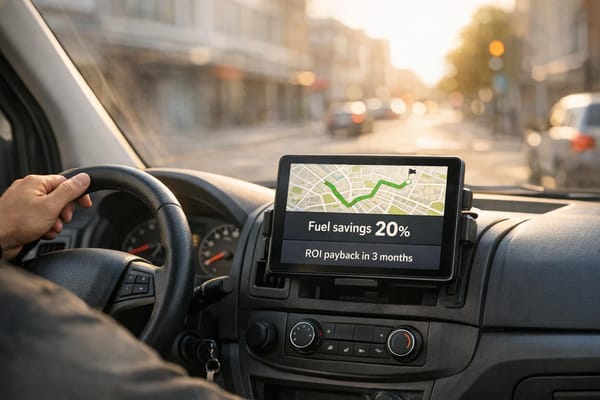
The impact on fuel consumption is impressive. Route optimisation can reduce fuel use by up to 20%.
Real-time dispatching adds another layer of efficiency. It automatically assigns the nearest available driver to new tasks. For electric vehicles, it even incorporates public charging stations into routes and calculates range while accounting for factors like elevation, weather, and traffic.
Fleet managers can use platforms like MyGeotab to pre-configure routes. These routes are then sent directly to drivers' in-cab devices, providing turn-by-turn navigation and simplifying the planning process.
"With MyGeotab, you can pre-set routes for drivers and avoid these known high-traffic areas... This will result in less fuel wastage, increased productivity/profitability and again, fewer carbon emissions." – Geotab
3. Idle Time Reduction
Telematics doesn’t just stop at route efficiency and fuel monitoring - it also tackles the issue of unnecessary idling. Idling vehicles are a major source of fuel waste, and telematics systems address this by tracking when a vehicle's ignition is on but it isn’t moving. With real-time data, these systems categorise idle time into two types: necessary ("working idle") and avoidable ("wasted idle"). This allows for precise monitoring and automated alerts to prompt immediate action when needed.
Here’s the impact: HGVs consume up to 21.7g of diesel and emit 68.64g of CO₂ for every single minute spent idling. To put that into perspective, if just 50% of all LGVs in London idled for one minute at traffic lights, they’d emit nearly 3,000 kg of CO₂. Even smaller vehicles burn through more than half a gallon of fuel per hour while idling. By cutting down on this wasted engine operation, fleets can significantly lower both their fuel consumption and CO₂ emissions.
Telematics systems make this process actionable. Fleet managers receive "long idle alerts" via push notifications or email whenever a vehicle exceeds pre-set idle thresholds - commonly set at 5, 20, or 30 minutes. Weekly reports then provide a breakdown, identifying the worst offenders and total idle minutes per stop. This data makes it easier to spot patterns and coach specific drivers on how to reduce unnecessary idling.
The financial benefits are hard to ignore too. For example, idling an HGV for just 10 minutes a day over 190 days racks up more than £58 in fuel costs.
"Sometimes it pays to catch the worst idling offenders in the act so you can step in and act before more fuel is wasted, and before someone reports the vehicle for an idling violation." – Mark Rose, Managing Director, Tracker UK
4. Driver Behaviour Coaching
Telematics systems are a game-changer for monitoring vehicle routes and driving habits. By combining GPS, onboard sensors, and CANbus integration, these systems capture detailed data on every gear change and fuel usage. This information highlights fuel-draining behaviours such as harsh acceleration, excessive speeding, and aggressive braking [16,19]. With this insight, fleets can implement targeted driver coaching to cut emissions further.
Smoother driving isn't just good for the environment - it’s also cost-effective. Eco-driver reporting and coaching can trim fleet fuel consumption by up to 10%. On the flip side, poor driving habits can inflate fuel costs - and CO₂ emissions - by as much as 15%. Even minor changes make a difference. For instance, reducing idling by just three minutes per driver daily could prevent 1.4 million tonnes of CO₂ emissions annually.
Telematics has evolved beyond just generating reports. Many systems now provide real-time, in-cab feedback, alerting drivers instantly when they exceed efficiency thresholds. This allows them to adjust their behaviour on the go, rather than waiting for a post-trip analysis [17,18]. Fleet managers can also use this data to create "Driver Behaviour Scores" and league tables, encouraging friendly competition and self-improvement. These initiatives not only promote better driving habits but also amplify the financial benefits, such as the fuel savings from reduced idling.
"By harnessing this data to create personalised training programmes fleets can reduce speeding, aggressive acceleration and other behaviours that contribute to C02 emissions." – Teletrac Navman
5. Vehicle Maintenance Insights
Telematics connects directly to a vehicle’s OBD system, providing instant access to engine data and fault codes. This allows managers to address issues - like a faulty oxygen sensor or engine inefficiencies - before they become bigger problems. With automated alerts, repairs can be scheduled in advance, shifting from reactive fixes to a more proactive approach. This not only ensures smoother operations but also supports maintenance strategies that help lower emissions.
Keeping vehicles in top condition is crucial for efficiency and reducing emissions. Poor maintenance can increase fuel costs by up to 15%, and even a 1 psi drop in tyre pressure can lower fuel economy by 0.2%. Telematics keeps an eye on these metrics, ensuring vehicles operate at their best while avoiding unnecessary wear and tear - ultimately cutting carbon emissions.
The advantages of proactive monitoring are clear:
"Access to critical engine data for proactive vehicle maintenance can help to identify early engine faults, such as faulty oxygen sensors that would otherwise reduce fuel efficiency." – Aaron Jarvis, Associate Vice President, Sales and Business Development, UK & Ireland, Geotab
A practical example comes from DB Regio Bus, which equipped 5,000 buses with Geotab GO9 devices over two years. This system provided real-time engine data, leading to a reduction of 1,400 tonnes of CO₂ emissions annually, alongside lower fuel and maintenance costs.
Proactive maintenance systems can reduce operational costs by 20–25%. Features like real-time alerts for Diagnostic Trouble Codes and automated service scheduling ensure timely tune-ups, which help lower emissions and extend the lifespan of vehicles. In turn, longer vehicle lifespans reduce the need for frequent fleet replacements, aligning with broader goals to cut emissions and support decarbonisation efforts.
Integrating GRS Fleet Telematics
Integrating a dedicated telematics system like GRS Fleet Telematics takes fleet performance to the next level, especially for UK businesses aiming to cut emissions. By blending real-time tracking with detailed fuel monitoring, this system provides a practical way to manage and reduce a fleet's carbon footprint. Hard-wired directly into vehicle engines, it delivers precise data on energy use, journey distances, and MPG performance, giving fleet managers the tools to estimate CO₂ emissions and pinpoint areas for improvement.
The platform also focuses on driver behaviour, offering eco-driving insights to address habits that contribute to higher emissions. Issues like speeding, harsh acceleration, and excessive idling are flagged in real-time, allowing drivers to make immediate adjustments while managers provide tailored coaching to reinforce better habits.
GRS Fleet Telematics doesn’t just stop at emissions management. It includes robust security features, such as a dual-tracker system with a hardwired GPS tracker and a hidden Bluetooth backup. This setup has achieved a 91% recovery rate for stolen vehicles. For those opting for the Ultimate hardware package, remote immobilisation adds an extra layer of protection. Fleet managers can easily access all data through a web platform or mobile app, ensuring they can monitor and manage performance from anywhere.
The pricing is straightforward: software subscriptions start at £7.99 per vehicle per month, covering SIM data, platform access, and a dedicated account manager. Hardware options include the Essential single tracker at £35 and the Ultimate package with immobilisation for £99. Free installation, combined with fleet branding services from GRS Fleet Graphics, makes it an affordable way to enhance both emissions reduction and vehicle security.
Additionally, the system supports Corporate Social Responsibility goals and regulatory compliance. Managers can download raw fleet data to develop precise decarbonisation strategies, aligning with broader sustainability objectives.
Conclusion
Telematics has transformed fleet management, moving it beyond simply tracking mileage to fine-tuning every aspect of a journey for efficiency and impact. By using strategies such as fuel monitoring, route optimisation, idle time reduction, driver behaviour coaching, and vehicle maintenance insights, fleet managers can address Scope 1 emissions - an area where they hold the most control. Together, these methods can deliver impressive results: route optimisation alone can slash fuel consumption by up to 20%, while driver coaching can add another 10% reduction. Additionally, cutting idle time and improving maintenance further eliminate waste.
These emissions reductions don’t just benefit the environment - they also lead to tangible cost savings and operational improvements. Case studies highlight real-world successes, showcasing significant cuts in emissions and expenses. Beyond compliance with environmental goals, fleets can enjoy reduced fuel bills, lower maintenance costs, and even an improved public image.
For fleet managers in the UK, who are navigating tighter emissions regulations and rising costs, telematics offers a practical tool for immediate gains and future planning. The data it provides can uncover inefficiencies, like fuel-wasting maintenance issues, and even help in planning the transition to electric vehicles through detailed assessments.
Adding GRS Fleet Telematics into the mix amplifies these benefits. With features like fuel monitoring, route planning, idle time reduction, and driver coaching, the platform supports long-term decarbonisation goals while keeping costs manageable, starting at just £7.99 per vehicle per month. With the global vehicle telematics market projected to hit £11 billion by 2027, it’s clear that this technology is no longer optional - it’s a cornerstone of modern fleet management.
FAQs
How does telematics help fleets reduce fuel consumption?
Telematics plays a key role in cutting fuel consumption for fleets by offering real-time data that enhances route planning and reduces unnecessary idling. With optimised routes based on live traffic updates and vehicle locations, businesses can see fuel usage drop by as much as 20%. Additionally, minimising idle time - an often-overlooked fuel drain - boosts overall efficiency.
Another advantage of telematics is its ability to promote better driving habits. By tracking behaviours like harsh acceleration or speeding, which are known to waste fuel, fleet managers can provide targeted feedback and training. This helps drivers adopt smoother, more fuel-efficient driving techniques. These changes don’t just save money on fuel; they also cut CO₂ emissions, supporting more environmentally friendly operations.
How does telematics help reduce vehicle idling and its impact on emissions?
Telematics systems are a game-changer when it comes to tackling vehicle idling. By tracking engine activity during idle times, these systems give fleet managers real-time data to pinpoint and address unnecessary idling.
With this information, managers can optimise routes and encourage better driving habits, potentially slashing idling by up to 40%. The benefits are twofold: businesses can cut fuel costs - saving as much as £116 per vehicle each year - and reduce their carbon footprint by burning less fuel while vehicles are stationary. In short, telematics helps fleets run more efficiently, saving money and being kinder to the planet at the same time.
How does telematics help with vehicle maintenance?
Telematics plays a crucial role in keeping your vehicles in top shape by offering real-time data on their health and performance. It keeps an eye on essential metrics like engine performance, fuel consumption, and sensor readings. This constant monitoring helps identify potential problems early, so you can fix them before they turn into expensive repairs or breakdowns.
What’s more, telematics allows you to schedule maintenance based on the actual condition of a vehicle, rather than sticking to rigid time-based intervals. This means servicing happens exactly when it’s needed, cutting down on unnecessary downtime. Plus, automated alerts for maintenance ensure your fleet stays efficient, reduces emissions, and remains reliable on the road.