How Telematics Cuts Delivery Costs and Failures
How telematics reduces fuel use, prevents breakdowns, boosts first-time delivery rates and strengthens security for UK fleets.
Telematics can transform delivery operations by reducing costs, improving efficiency, and preventing failures. It uses GPS and onboard devices to track vehicle location, driver habits, and performance in real-time. Here's how it makes a difference:
- Fuel Savings: Real-time route optimisation can cut fuel costs by up to 30%, saving fleets thousands of pounds annually.
- Driver Behaviour Monitoring: Reducing aggressive driving and idling lowers fuel consumption and maintenance expenses.
- Improved Delivery Success: Tools like live GPS tracking and geofencing boost first-attempt delivery rates, saving time and resources.
- Predictive Maintenance: Early fault detection prevents costly breakdowns, saving up to £3,000 per vehicle annually.
- Security: Dual-tracker systems improve vehicle recovery rates, reducing losses from theft.
Companies across various industries like Currys, AO, and Travis Perkins have already achieved significant savings and operational improvements using telematics. With low initial costs and a high return on investment, telematics is a smart choice for any fleet aiming to cut expenses and improve performance.
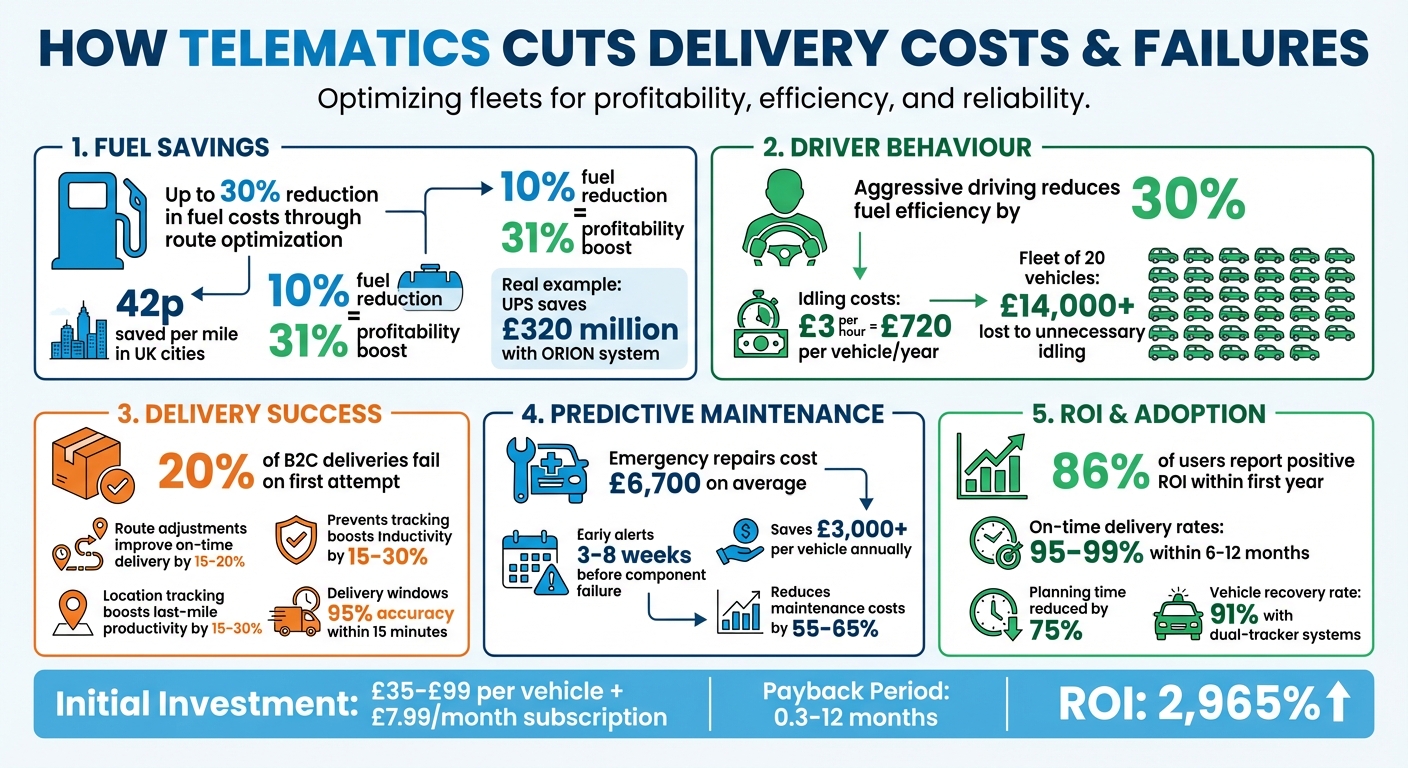
How Telematics Reduces Delivery Costs: Key Statistics and Savings
How fleets are leveraging telematics to improve their bottom line
How Telematics Reduces Delivery Costs
Telematics helps cut delivery costs by focusing on two key areas: route planning and driver behaviour management. Let’s take a closer look at how these strategies translate into savings.
Route Optimisation for Fuel Savings
Adjusting routes in real time can slash fuel consumption by up to 30%. In traffic-heavy cities across the UK, this means saving an average of 42p per mile. Multiply that by thousands of deliveries, and the savings quickly add up.
Take UPS as an example. Their ORION system has saved the company £320 million annually. Even smaller operations report cost reductions ranging from 13% to 20%. Route optimisation software doesn’t just save on fuel - it can cut overall mileage by up to 20%. And the knock-on effect? A 10% cut in fuel consumption can boost profitability by 31%. These small efficiency gains can snowball into major financial benefits.
But route planning is only half the story. Keeping an eye on driver behaviour is just as critical for cutting costs.
Driver Behaviour Monitoring
Aggressive driving habits - like harsh acceleration, speeding, and sudden braking - can reduce fuel efficiency by as much as 30%. Telematics systems track these behaviours using sensors and provide drivers with real-time alerts, helping them adjust and eliminate wasteful habits on the spot.
Idling is another overlooked expense. A single vehicle idling for just one hour a day wastes about £3 in fuel. Over a year, that’s £720 per vehicle. For a fleet of 20 vehicles, this adds up to more than £14,000 lost to engines running unnecessarily. Beyond the fuel costs, aggressive driving also increases wear and tear on vehicles. By offering drivers real-time feedback through eco-driving analytics, you can tackle fuel-wasting habits like excessive idling and harsh braking, saving money and extending vehicle life.
How Telematics Improves First-Attempt Delivery Rates
Did you know that up to 20% of business-to-consumer deliveries fail on the first attempt? That’s a lot of wasted time, money, and resources. Telematics is stepping in to solve this issue by giving fleet managers and customers the tools they need to make sure someone is ready when the delivery arrives.
Real-Time Vehicle Tracking
Live GPS tracking is a game-changer for delivery communication. With telematics, fleet managers can send tracking links that show exactly where a parcel is in real time. Instead of sitting at home all day, customers can plan their schedules around a more accurate delivery time. And if something goes wrong - like traffic or delays - dispatchers can spot the problem immediately and work with the customer to reschedule the delivery window. This level of coordination helps avoid the frustration of drivers showing up to an empty address.
"When you can see the entire last mile unfolding at a glance, you can identify potential delivery exceptions and work to manage them proactively." - DispatchTrack
Telematics also enables dynamic rerouting, where routes are recalculated on the fly using live data on traffic, weather, and road conditions. This keeps delivery windows predictable even in the face of unexpected disruptions. The result? Route adjustments can improve on-time deliveries by 15% to 20%, and location tracking has been shown to boost last-mile productivity by 15% to 30%. These tools pave the way for even greater precision with geofencing.
Geofencing for Delivery Accuracy
Geofencing takes delivery precision to the next level by setting up virtual boundaries around delivery addresses. When a vehicle enters one of these zones - say, within a mile of the destination - the system automatically sends a "driver approaching" notification via SMS or email. This gives customers enough time to prepare for the handover, reducing the likelihood of missed deliveries.
But geofencing isn’t just for customer notifications. Fleet managers can use it to monitor operations more effectively. For example, virtual boundaries around depots can track when vehicles arrive and leave, helping to identify bottlenecks during loading. In urban areas with Low Emission Zones (LEZ) or Ultra Low Emission Zones (ULEZ), geofencing can alert drivers or reroute them to avoid restricted areas, preventing fines and delivery delays. With telematics, delivery windows can achieve 95% accuracy within 15 minutes, turning vague timeframes into dependable commitments.
Predictive Maintenance and Long-Term Cost Savings
An emergency repair can set you back around £6,700 when you tally up the repair itself, towing, and the productivity lost during downtime. Telematics systems help fleets sidestep these unexpected expenses by keeping tabs on vehicle health in real time, alerting managers to potential issues before they spiral into costly problems.
Early Fault Detection
Telematics systems continuously monitor vehicle health, tracking critical metrics like engine fault codes, battery voltage, coolant temperature, and oil pressure. More advanced systems go a step further, analysing data such as engine vibrations and RPM spikes to flag potential failures. Fleet managers often receive alerts three to eight weeks before a component is likely to fail. This gives them the opportunity to schedule repairs during non-peak hours, avoiding the chaos of a breakdown on the road.
Take Sainsbury's, for example. In 2025, they implemented IoT-enabled telematics across their "Smart Charge" EV fleet. By identifying anomalies like unusual vibrations early on, they managed to prevent mechanical breakdowns and cut repair costs by 10%. Similarly, PostNL in the Netherlands used predictive tools for their 1,000+ electric light commercial vehicles, reducing roadside failures by 15%.
"By acting before components fail, fleets avoid the domino effect of breakdowns – delayed deliveries, angry customers, overtime pay, vehicle unavailability." - Frank Jacobs, Fleet Europe
Switching from reactive to condition-based maintenance can prevent about 85% of emergency repairs. Fleet managers can also consolidate multiple services into one visit - like combining an oil change with a predicted coolant flush - minimising downtime. This proactive approach doesn't just save money; it also extends vehicle life and improves overall efficiency.
Reducing Vehicle Wear and Tear
Telematics systems also help reduce wear and tear by monitoring driver behaviour. Habits like harsh braking, rapid acceleration, and aggressive cornering accelerate wear on components such as brake pads, tyres, and engines. In-cab alerts prompt drivers to adjust these behaviours in real time, easing the strain on critical systems like transmissions and brakes.
Since engines and related systems (including exhaust, cooling, and fuel systems) make up roughly 60% of total fleet maintenance budgets, catching these issues early can lead to substantial savings. For instance, DHL Germany used telematics with AI algorithms to monitor the health of its light commercial vehicle fleet. By identifying early signs of battery strain and motor wear, they scheduled maintenance during off-hours, cutting breakdown-related delivery delays by 12%.
"Telematics data and sensors can help detect maintenance issues and encourage preventative (cheaper as well as safer) care. Such symptoms may include excessive vibration, potentially caused by tyre or suspension issues." - Asparuh Koev, CEO, Transmetrics
The long-term benefits are clear. Predictive maintenance can slash maintenance costs by 55% to 65% compared to reactive strategies. On average, systematic use of telematics data saves fleets more than £3,000 per vehicle annually. Poor maintenance practices, on the other hand, can reduce fleet productivity by 5% to 20%. Keeping vehicles in top condition not only protects delivery schedules but also safeguards revenue.
Measuring the Return on Investment
For most businesses, the benefits of GPS fleet tracking solutions become apparent quickly, with 86% of users reporting a positive return on investment (ROI) within their first year of implementation. To get a clear picture of these benefits, companies should establish baseline metrics over a 4–8 week period. This helps in tracking improvements in areas like fuel consumption, maintenance costs, and delivery performance. These metrics lay the groundwork for assessing the system’s impact with concrete examples.
Key Performance Indicators
The impact of telematics can be measured through several key performance indicators (KPIs). Initially, ROI often shows up as savings in fuel and maintenance costs, with on-time delivery rates improving to 95–99% within six to twelve months. Some businesses even see planning time drop by as much as 75% almost immediately.
Monitoring driver behaviour is another critical area. By tracking actions like harsh braking, rapid acceleration, and excessive idling, companies can reduce vehicle wear and improve fuel efficiency. Tools like geofencing help track how long vehicles spend at depots or disposal sites, pinpointing productivity issues. Real-time coaching, delivered via in-cab devices, has proven more effective than reviewing retrospective reports. This approach allows drivers to adjust their behaviour in real time rather than addressing issues days later.
UK Fleet Case Studies
Several UK-based companies have demonstrated the financial and operational benefits of telematics.
Currys adopted Lightfoot's real-time coaching system across its fleet of 600 vans between 2016 and 2026. Under the leadership of Head of Compliance Chris Georgiou, the company achieved annual fuel savings exceeding £416,000 (about £620 per van). They also saw a 10.8% improvement in miles per gallon (MPG), a 15.8% reduction in at-fault accidents, and an annual reduction of 843 tonnes in CO₂ emissions.
"Real-time feedback has been a game-changer. It's helped our drivers become safer and more efficient, while rewards like cash prizes and consumer tech have boosted engagement."
– Chris Georgiou, Head of Compliance, Currys
AO, the online retailer, used Samsara's telematics platform to cut fleet costs by 16% across its 1,000+ commercial vehicles. Regional Manager Shaun Carter reported impressive results, including a 31% annual saving on maintenance, an 8% reduction in tyre expenses, and a 25% drop in insurance premiums.
Travis Perkins improved fleet utilisation so effectively that it removed nearly 400 vehicles from its operations, saving over £50,000 annually for each heavy goods vehicle (HGV) taken off the road. Group Fleet Director Graham Bellman also reported a 70% reduction in daily idling time and a 12.6% decrease in accident-related costs.
"The cost of the system was paid for by the fuel savings we have made. Everything else has been a bonus and delivered savings totalling millions of pounds year-on-year to the company's bottom line."
– Graham Bellman, Group Fleet Director, Travis Perkins
Hovis, using Microlise telematics since 2015, has also seen remarkable results. With a fleet of 400 vehicles and 600 drivers, they’ve achieved a 62% reduction in accidents and maintained a daily on-time delivery rate of 95–98%. Additionally, 95% of their drivers now perform at the highest "A-C" standard for driving style.
GRS Fleet Telematics Solutions
GRS Fleet Telematics builds on established telematics research to help UK fleets cut costs and improve efficiency.
Security and Tracking Technology
To combat vehicle theft, GRS Fleet Telematics employs dual-tracker technology. This system pairs a primary hardwired unit with a hidden Bluetooth backup tracker. Even if thieves disable the main tracker, the concealed device continues to monitor the vehicle's location, achieving an impressive 91% recovery rate for stolen vehicles.
There are three package options:
- Essential (£35): Includes a wired tracker.
- Enhanced (£79): Adds a Bluetooth backup tracker.
- Ultimate (£99): Includes remote immobilisation, allowing managers to disable the engine if unauthorised use is detected.
Each package requires a monthly subscription of £7.99 per vehicle, covering SIM data, platform access, and dedicated support.
Beyond security, the system focuses heavily on improving operational efficiency.
Fleet Optimisation Features
GRS Fleet Telematics addresses operational challenges with features like automated route optimisation, which can lower fuel costs by 10–15% and boost delivery capacity by up to 25%. The AI-driven routing system can reduce failed delivery attempts by as much as 40% and cut planning time by 75%. These benefits align with earlier findings on fuel savings and improved delivery precision, showcasing the impact of smart telematics on fleet performance.
Geofencing offers another layer of efficiency, helping drivers navigate restricted zones like London's ULEZ. Real-time alerts ensure compliance and reduce fines.
The system also includes eco-driving analytics, which track behaviours like harsh braking, rapid acceleration, and idling. These insights can slash fuel losses by over 30%. All data is secured with end-to-end encryption to meet GDPR standards, ensuring sensitive fleet information remains protected. Additionally, businesses can customise tracking portals with their own branding to enhance customer engagement.
With initial costs ranging from £35 to £99 per vehicle and a payback period as short as 0.3–12 months, GRS Fleet Telematics offers a return on investment of 2,965% [4, 11]. For a typical fleet operation, the system can deliver estimated monthly savings of £1,224.52, adding up to approximately £14,694.25 annually.
Conclusion
Telematics systems bring noticeable improvements to every aspect of fleet operations in the UK, streamlining processes and boosting efficiency. One standout benefit is fuel efficiency, which directly impacts profitability. In today’s competitive landscape, telematics has shifted from being a luxury to a financial must-have.
Security is another critical factor. With vehicle theft becoming more common, dual-tracker technology offers effective solutions for monitoring and recovering stolen vehicles. Features like geofencing, which helps fleets comply with ULEZ regulations, and predictive maintenance, which reduces the risk of costly breakdowns, further tackle a wide range of operational challenges.
UK fleets also face increasing pressures, including congestion costs projected to reach £7.7 billion in 2024, stricter environmental regulations, and growing consumer demand for real-time delivery updates. As Pascal Six, Senior Business Development Manager at Geotab, explains:
"Telematics is not just advantageous, but essential. By leveraging data-driven insights, organisations can optimise operations, enhance safety, and achieve sustainability objectives".
The financial case for telematics is compelling too. With hardware packages starting at £35 and subscriptions as low as £7.99 per vehicle, the initial investment is minimal compared to the significant returns. These systems provide immediate operational benefits, enabling businesses to tackle modern logistics challenges with confidence. From cost reductions and improved security to better maintenance and operational efficiency, telematics equips UK fleets to thrive in an evolving industry.
FAQs
How does telematics help improve first-time delivery success?
Telematics improves the chances of successful first-time deliveries by leveraging real-time route optimisation. This helps drivers steer clear of delays, enabling them to reach their destinations more quickly and efficiently. Additionally, it incorporates driver behaviour monitoring, promoting safer and more dependable driving habits. Another key benefit is proactive communication, which lets businesses share accurate delivery updates with customers.
Together, these features help cut down on missed deliveries, lower operational costs, and enhance customer satisfaction.
How does predictive maintenance through telematics help reduce costs?
Predictive maintenance, driven by telematics, offers a smart way to cut costs by spotting vehicle issues early - before they turn into costly breakdowns or repairs. In fact, businesses can save up to 55% on maintenance expenses by tackling problems proactively.
With real-time vehicle health monitoring, telematics systems help fine-tune servicing schedules, reduce unexpected downtime, and even extend the lifespan of fleet vehicles. This not only keeps expenses in check but also ensures operations run smoothly and deliveries stay reliable.
How does telematics improve vehicle security and help recover stolen vehicles?
Telematics enhances vehicle security through features like real-time GPS tracking, geofencing, and remote immobilisation. These tools not only deter unauthorised use but also send instant alerts if a vehicle exits its designated area.
In theft scenarios, telematics systems play a crucial role in recovery. Thanks to advanced tracking and dual-tracker technology, stolen vehicles can be located swiftly, boasting a recovery success rate of up to 91%. This helps businesses minimise financial losses while offering greater peace of mind.