Telematics for Last-Mile Fuel Efficiency
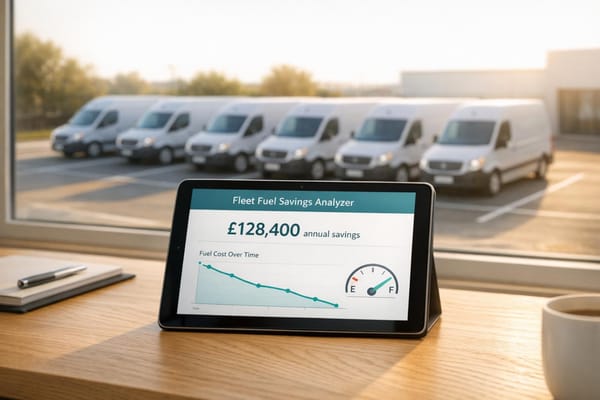
Telematics cuts last‑mile fuel use by improving route optimisation, driver behaviour and fuel tracking, typically saving 15–35% and lowering emissions.
Telematics is transforming last-mile delivery by helping businesses reduce fuel costs, improve driver behaviour, and optimise routes. With fuel expenses making up nearly 25% of fleet operational costs and urban congestion adding to the challenge, telematics offers actionable solutions. Here's what you need to know:
- Fuel Savings: Businesses report up to 25–35% reductions in fuel costs within the first year of using telematics.
- Driver Monitoring: Real-time tracking of harsh braking, idling, and speeding allows for immediate feedback and coaching, cutting fuel waste.
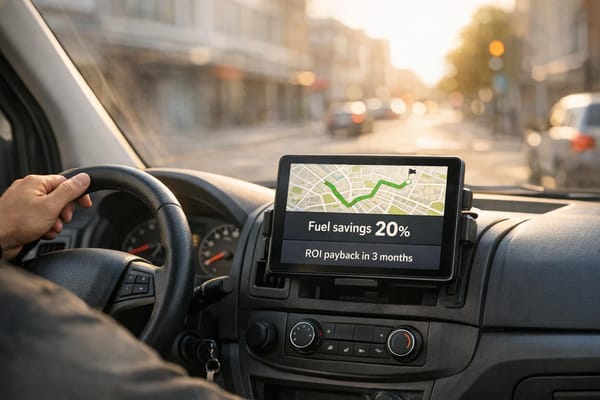
- Route Optimisation: AI-driven systems adjust routes based on live traffic, reducing delays and unnecessary mileage.
- Cost-Effective Solutions: Tools like GRS Fleet Telematics start at £7.99 per vehicle per month, delivering quick returns on investment through savings.
- Environmental Impact: Companies like Currys and the Post Office have reduced emissions by 11–17% using telematics.
Webinar | Telematics For Efficient Fuel Management | Teltonika
Last-Mile Fuel Consumption Challenges
Last-mile delivery operations face a mix of problems that push up fuel costs, shrink profit margins, and complicate sustainability efforts. Understanding these challenges is the first step in tackling them. Below, we dive into how urban congestion, driver habits, and inefficient route planning all contribute to fuel waste.
Urban Congestion and Fuel Costs
Traffic congestion in cities is a major fuel guzzler. Delivery vehicles often get stuck in stop-and-go traffic, which not only burns more fuel but also wears down the engine faster, leading to higher maintenance costs. On top of that, longer delivery times mean increased labour expenses and fewer deliveries completed per shift.
To address these issues, some companies are setting up micro-fulfilment centres closer to customers, cutting down the distance drivers need to cover. Others are experimenting with staggered shifts to avoid peak traffic hours, aiming to save both time and fuel costs.
Driver Behaviour and Fuel Waste
The way drivers handle their vehicles can have a huge impact on fuel consumption. Aggressive habits like hard braking and rapid acceleration can increase fuel use by over 37%. Idling - leaving the engine running while stationary - also wastes fuel without adding any value.
Training drivers in eco-friendly techniques, such as smooth acceleration, shifting gears early, and maintaining steady speeds, can cut fuel usage by up to 25%. Anti-idling policies, which encourage switching off the engine after one or two minutes of waiting, typically result in savings of 1% to 5%. Additionally, telematics systems are becoming a popular tool for monitoring driver behaviour. These systems send real-time alerts for speeding or harsh driving, allowing for immediate feedback and corrections.
Poor Route Planning
Bad route planning is another fuel waster. When delivery routes involve backtracking, empty runs, or scattered drop-offs, drivers end up covering unnecessary miles. On top of that, failing to account for live traffic conditions - like roadworks or accidents - means delays that could have been avoided.
Many fleet managers are now turning to AI-powered tools for route optimisation. These systems use live traffic data to dynamically re-route drivers, cutting down on delays. Another solution is the use of smart lockers, which consolidate deliveries and reduce the number of failed attempts, improving overall efficiency.
Addressing these inefficiencies opens the door to telematics solutions that can tackle these issues head-on.
How Telematics Reduces Fuel Consumption
Telematics transforms vehicle data into actionable insights, identifying inefficiencies such as traffic congestion, poor driving habits, and suboptimal routes. By combining GPS, engine diagnostics, and live traffic updates, it provides a comprehensive view of fleet operations. Fleets often see fuel cost reductions of 25–35% within the first year through better route planning, reduced idling, and improved driving behaviour. These savings aren't hypothetical - they're based on real-world results from operators who have adopted telematics in their last-mile delivery systems. This technology enables real-time adjustments, starting with improving driver habits.
Real-Time Driver Monitoring
Telematics systems continuously track behaviours like harsh acceleration, sudden braking, speeding, and idling. These insights are compiled into eco-driving reports, enabling immediate and focused driver coaching. For example, CameraMatics users experienced a 37% drop in harsh braking and a 42% reduction in speeding events within a year. Such changes highlight how ongoing monitoring can significantly influence driver behaviour.
The McCulloch Group, a railway solutions provider in Scotland, utilised telematics to uncover excessive idling across their fleet. By tailoring their driver coaching programme based on this data, they achieved an 80% reduction in idling and improved fuel efficiency. This demonstrates how data-driven interventions can lead to meaningful results.
Route Optimisation
Telematics leverages GPS-based route planning to minimise unnecessary mileage and avoid traffic bottlenecks. It dynamically adjusts routes in response to changing road conditions. A 2023 study by Transport for London revealed that telematics reduced journey times by 15% across their fleet, improving productivity and cutting costs simultaneously.
UPS offers a compelling example of the power of route optimisation. By integrating telematics and live traffic data, the company saved 10 million gallons of fuel in a single year. These systems also ensure that the most suitable driver is assigned to each job, based on factors like proximity and qualifications, using industry-specific van tracking solutions. This not only reduces travel time but also provides detailed insights into fuel consumption patterns, paving the way for further efficiency improvements.
Fuel Usage Tracking and Analysis
Telematics combines fuel transaction data with GPS tracking to pinpoint inefficiencies such as idling, poor route choices, or mechanical problems. This allows fleet operators to take swift corrective action. For instance, a UK-based fleet of 130 vehicles reduced business miles by 10% within a few months of implementing telematics, leading to lower fuel consumption and reduced wear on vehicles. Predictive maintenance alerts further enhance efficiency by identifying issues like underinflated tyres or clogged filters before they cause significant problems. Once benchmarks are set, comparing metrics from before and after telematics implementation highlights measurable improvements in fuel usage, journey times, and overall efficiency.
GRS Fleet Telematics Solutions for Fuel Efficiency
GRS Fleet Telematics focuses on cutting last-mile fuel waste with tools that improve routing, driver habits, and vehicle security. By tracking driver behaviour, monitoring fuel use, and providing real-time updates, the system helps reduce costs without complicating daily operations.
Eco-Driving Analytics and Real-Time Tracking
The platform keeps an eye on harsh acceleration, braking, idling, and speeding, producing clear eco-driving reports to highlight fuel inefficiencies. Drivers benefit from instant feedback via in-cab alerts and post-trip scorecards, which help them adjust their habits quickly. Industry data shows that behaviour coaching can lead to 15–20% fuel savings for fleets.
GRS takes this further by combining fuel usage data, GPS tracking, and engine diagnostics into a single dashboard. This allows fleet managers to connect spikes in fuel consumption with specific behaviours like idling or aggressive driving and address them with tailored coaching. Automated maintenance alerts also ensure vehicles stay in top condition, addressing issues like underinflated tyres or clogged filters that quietly drive up fuel costs.
Affordable Pricing
GRS pairs its advanced features with pricing designed to deliver value.
Starting at just £35 per unit and £7.99 per vehicle per month, the system offers three hardware options: Essential (£35) for basic tracking, Enhanced (£79) with dual-tracker backup, and Ultimate (£99) featuring immobilisation capabilities. Each option includes SIM/data, access to an account manager, and platform use. These low costs allow UK SMEs to recover their investment quickly through fuel savings. One fleet in the UK reported annual insurance savings of £135 per vehicle and reduced mileage, showcasing the platform’s cost-effectiveness.
Security and Theft Prevention Features
GRS also prioritises security to prevent fuel waste caused by unauthorised vehicle use.
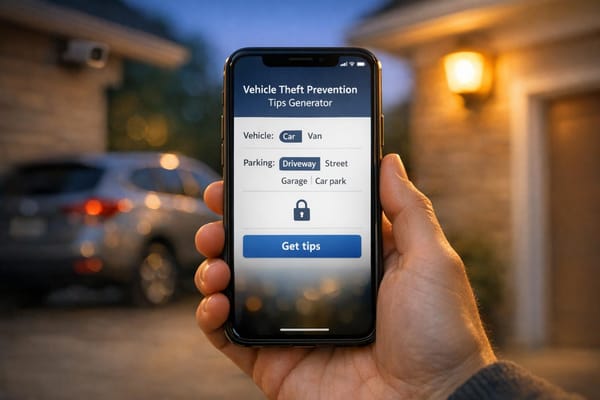
The system’s dual-tracker technology boasts a 91% stolen vehicle recovery rate and includes immobilisation features like remote engine cut-off. Geo-fencing alerts notify managers of unauthorised movements, while immobilisation ensures fuel is only used for planned, optimised routes. These tools not only reduce theft-related downtime but also help businesses control fuel costs and keep operations running smoothly.
Telematics Impact on Fuel Efficiency
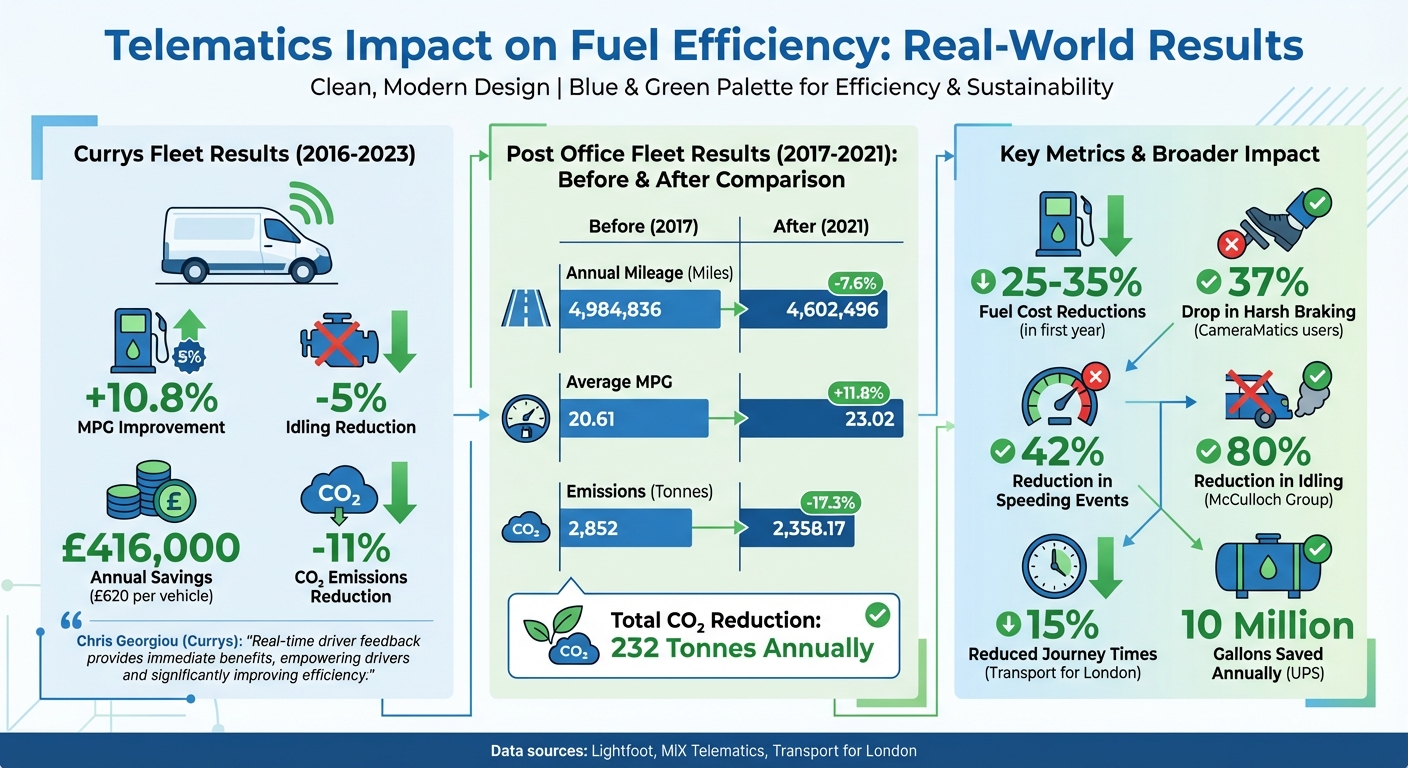
Telematics Fuel Efficiency Impact: Real-World Fleet Savings and Emissions Reductions
Real-world data highlights how advanced telematics solutions significantly improve fuel efficiency and reduce emissions. Examples from Currys and the Post Office demonstrate their effectiveness in optimising last-mile delivery operations.
Measured Fuel Savings
Telematics has helped UK fleets achieve noticeable fuel savings. Currys, for instance, implemented telematics across 672 vans between 2016 and 2023. This led to a 10.8% increase in MPG, a 5% reduction in idling, and annual savings of £416,000 - approximately £620 per vehicle.
"From the early days of working with Lightfoot, we recognised the huge benefit that real-time driver feedback has to play in changing driving styles for the better. It's a world apart from using telematics retrospectively."
– Chris Georgiou, Head of Compliance for Supply Chain and Service Operations, Currys
Similarly, the Post Office introduced the MiX Telematics RIBAS system to its cash-in-transit fleet between 2017 and 2021. The system monitored driver behaviour, resulting in an 11.8% improvement in MPG (from 20.61 to 23.02) and a 7.6% reduction in annual mileage. These changes underline the system's impact on operational efficiency.
| Post Office Fleet Data | 2017/18 | 2020/21 | Change |
|---|---|---|---|
| Annual Mileage | 4,984,836 | 4,602,496 | −7.6% |
| Average MPG | 20.61 | 23.02 | +11.8% |
| Emissions (tonnes) | 2,852 | 2,358.17 | −17.3% |
These results confirm that telematics is a powerful tool for improving last-mile delivery efficiency. Beyond cutting costs, the technology also brings considerable environmental advantages.
Carbon Emissions Reduction
Reduced fuel consumption directly translates to lower emissions. Currys recorded an 11% drop in CO₂ emissions, while the Post Office achieved a 17.3% reduction, cutting 232 tonnes of CO₂ annually over four years.
"The vast majority [of drivers] have improved their driving style using the in-cab 'RIBAS' feedback and this has paid dividends, not just in terms of fuel and emissions economy, but we've also seen a reduction in accident rates too."
– Rob Leslie, Head of Fleet, Post Office
Conclusion
Addressing urban congestion, poor driving habits, and inefficient route planning, last-mile delivery telematics can help cut fuel costs by an estimated 15–20%, while also contributing to reduced emissions.
GRS Fleet Telematics offers affordable and practical fuel efficiency tools for UK businesses. Starting at just £7.99 per month, features like eco-driving analytics, real-time GPS tracking, and driver behaviour monitoring provide fleets with instant insights into fuel waste caused by idling, harsh acceleration, and inefficient routes. The dual-tracker technology, boasting a 91% vehicle recovery rate, not only enhances security but also supports better fuel efficiency. This blend of cost-effective tracking and actionable insights helps businesses achieve operational improvements.
These benefits lead to fleet-wide gains, including improved efficiency and profitability. Tracking key metrics has shown noticeable reductions in mileage and insurance costs within months. By adopting telematics, companies can lower fuel expenses, meet sustainability goals, and improve their bottom line.
As transport accounts for the UK's second-largest emissions output, telematics plays a crucial role in cutting costs while ensuring compliance with regulations. With its immediate return on investment, improved operational oversight, and positive environmental impact, now is the perfect time to implement solutions that deliver tangible results.
FAQs
How quickly will telematics cut my fuel costs?
Telematics can help cut fuel costs by as much as 25–30%. How? By using real-time monitoring, it enables smarter route planning and encourages better driving habits. Plus, these systems often pay for themselves in just 8–12 months, making them a smart investment for improving last-mile delivery efficiency.
What data should I track to reduce idling and harsh driving?
To cut down on idling and aggressive driving, keep an eye on key metrics like engine idle time, speed, acceleration, and braking. Keeping track of these elements can highlight inefficient driving habits and lead to better fuel efficiency.
How do I roll out GRS Fleet Telematics without disrupting drivers?
To introduce GRS Fleet Telematics without causing unnecessary interruptions for drivers, it's a smart move to rely on professional installation services handled by certified technicians. This guarantees a fast and efficient setup while keeping daily operations running smoothly.
It's also important to involve drivers from the start. Share the advantages of the system - like enhanced safety and better route planning - and offer training sessions to help them get comfortable with the new technology. Timing the rollout during less busy periods or implementing it step-by-step across different vehicle groups can also help keep disruptions to a minimum.