How Telematics Improves Last-Mile Delivery
How telematics improves last-mile delivery with real-time tracking, route optimisation, driver safety, cost savings and emissions monitoring.
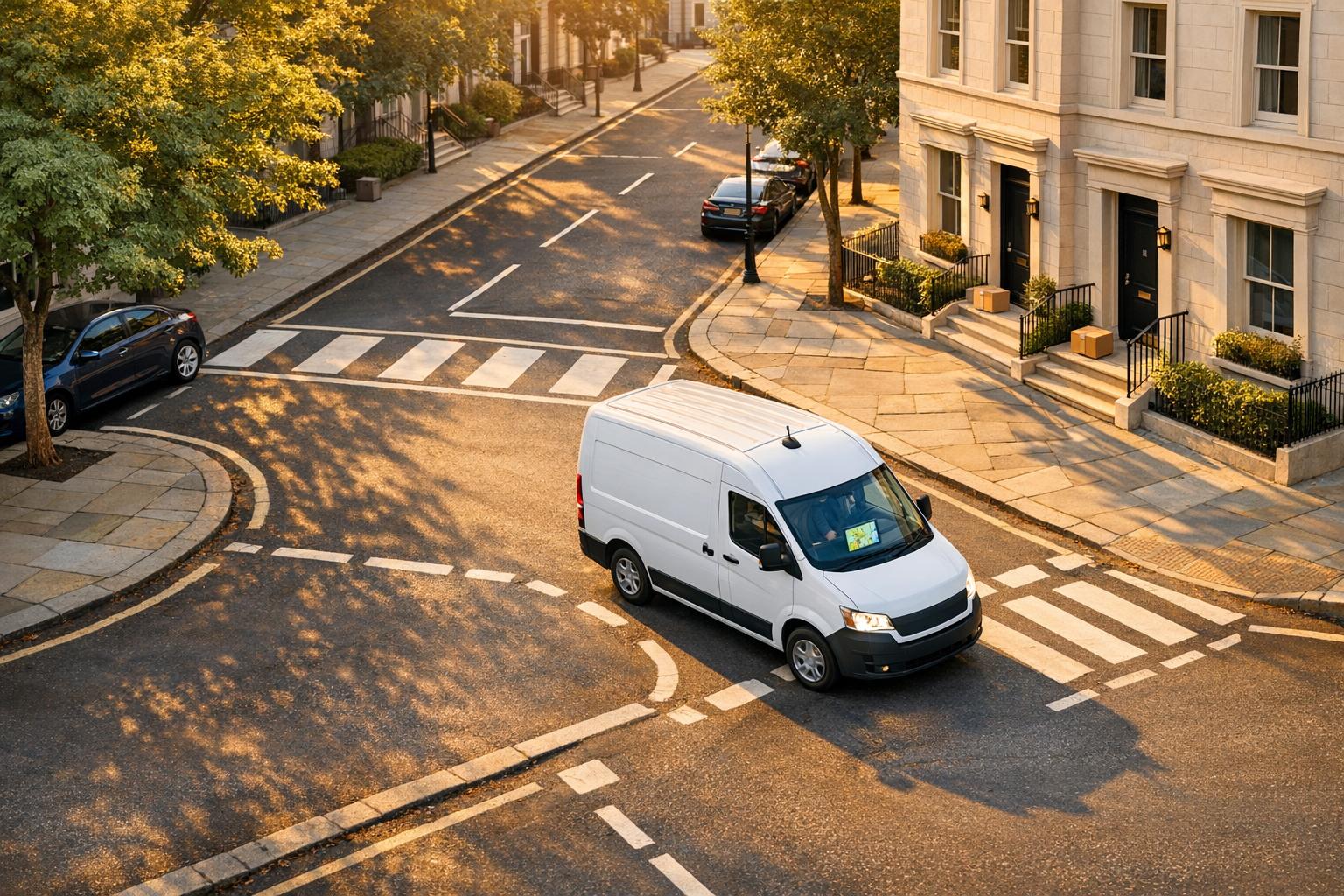
Telematics is transforming last-mile delivery by reducing costs, improving efficiency, and enhancing driver safety. This technology uses real-time data from GPS, vehicle diagnostics, and communication tools to optimise routes, track vehicles, and monitor driver behaviour. Key benefits include:
- Real-time tracking: Provides live updates on vehicle location and status for quick decision-making.
- Route optimisation: Minimises delays, reduces fuel consumption, and clusters deliveries efficiently.
- Driver safety: Monitors driving habits, offers feedback, and ensures compliance with UK transport regulations.
- Cost savings: Cuts fuel waste, reduces failed deliveries, and supports eco-driving initiatives.
- Sustainability goals: Tracks emissions and supports the transition to electric vehicles.
For UK fleet managers, telematics is a practical tool to streamline operations, boost delivery reliability, and meet customer expectations. With features like geofencing, dynamic re-routing, and performance tracking, it’s a straightforward way to improve delivery outcomes while saving money.
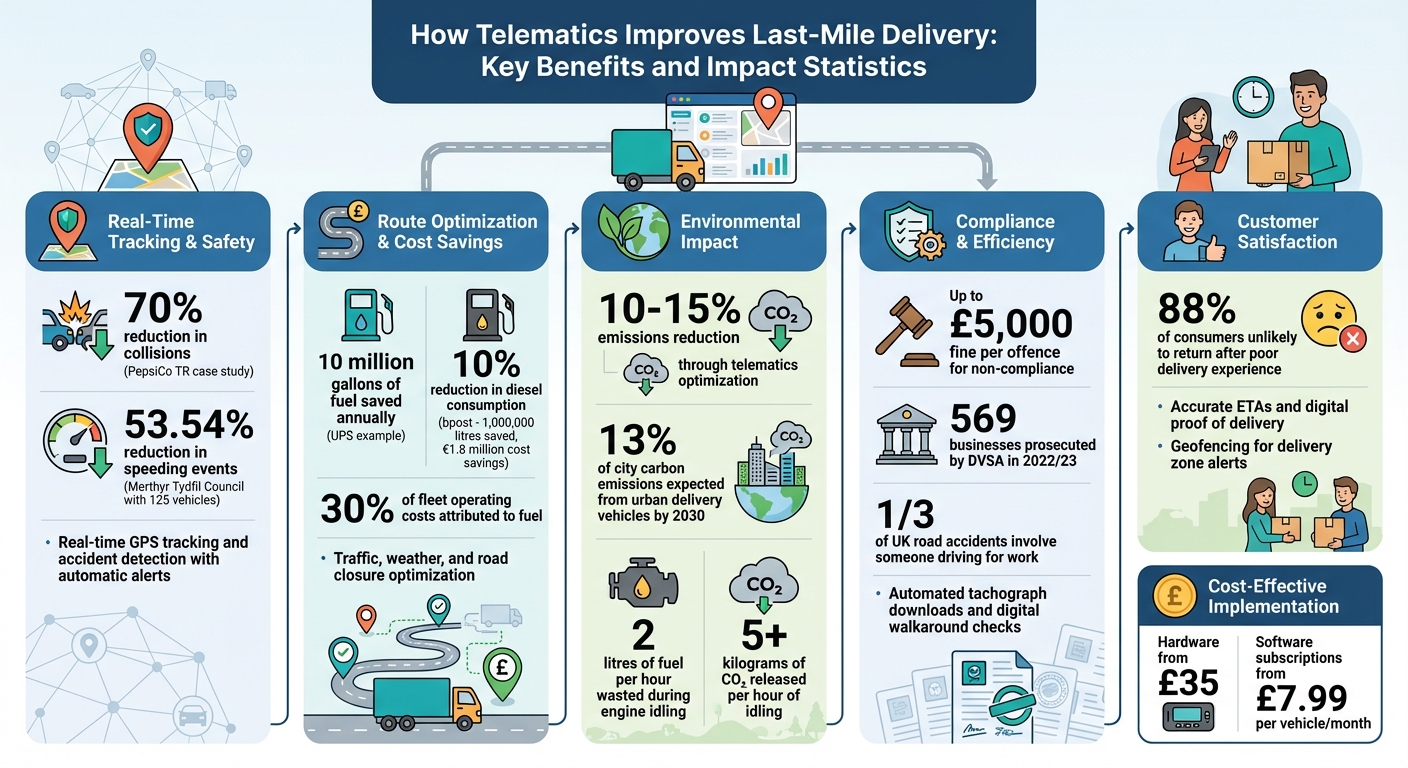
How Telematics Improves Last-Mile Delivery: Key Benefits and Impact Statistics
Last Mile Delivery Tracking: Benefits and Enabling Technologies
Real-Time Tracking and Fleet Visibility
Telematics systems integrate GPS tracking hardware with fleet management software to deliver vehicle location, speed, and diagnostic data directly to a centralised dashboard. This setup gives dispatchers a real-time overview of every vehicle's position and status, enabling operational decisions to be made instantly. The constant stream of data ensures that adjustments can happen on the fly, keeping operations running smoothly.
The introduction of 5G connectivity is revolutionising how quickly this data is transmitted. With its reduced latency and increased bandwidth, 5G facilitates near-instant communication between vehicles and dispatch centres. Cloud-based platforms further enhance this system by ensuring scalability. At GRS Fleet Telematics, tracking solutions combine affordability with efficiency, offering hardware options starting from £35 and software subscriptions from £7.99 per vehicle per month.
Using Live Data for Immediate Decisions
Real-time tracking allows for quick and informed decision-making. Dispatchers can respond immediately to disruptions like traffic jams, accidents, or bad weather. For instance, if a vehicle is delayed or goes off-route, managers can reroute drivers or notify customers about alternative delivery windows. This reduces the costs linked to failed deliveries and reverse logistics.
Having full visibility over the last-mile delivery process means teams can spot potential issues before they escalate. For example, minor delays can be addressed early to avoid larger disruptions.
PepsiCo TR provides a compelling example of the impact of telematics. By adopting real-time tracking and safety-focused solutions, the company achieved a 70% reduction in collisions. Deniz Tuna, Sales and Fleet Health and Safety Manager at PepsiCo TR, highlighted the benefits:
MyGeotab's unified view of individual and organisational data and insights helps PepsiCo TR proactively manage risks, improve our metrics, elevate safety culture and promote care for our drivers and other road users.
Additionally, integrating GPS data with driver mobile apps enriches the tracking experience. Dispatchers can see not only where a vehicle is but also which deliveries are completed and which are still pending. Automated notifications ensure customers stay updated about their delivery status.
Geofencing for Accurate Deliveries
Geofencing adds another layer of efficiency by creating virtual boundaries around specific locations, such as depots or delivery zones. When vehicles enter or leave these areas, the system logs their movements and triggers relevant actions automatically.
This technology helps reduce detention times by monitoring how long vehicles spend at depots during loading or unloading. Fleet managers can then address any inefficiencies before they disrupt schedules. Geofencing also ensures drivers stick to planned routes and meet timing expectations.
Beyond tracking, geofencing can automate processes like fuel and energy reconciliation. By matching vehicle locations with fuel card usage, managers can ensure drivers refuel only at authorised stations. It can also enhance customer satisfaction by triggering alerts when a driver enters a delivery zone, ensuring someone is ready to receive the package.
Route Planning and Cost Reduction
Telematics has revolutionised route planning, making the process smarter and more efficient. By leveraging real-time data - like traffic conditions, road closures, and weather updates - telematics software fine-tunes delivery schedules. This eliminates unnecessary detours and extra miles, which often inflate operational costs. Fleet managers can group deliveries by location and time slots, increasing the number of stops per trip and reducing the number of vehicles needed. Here’s how data-driven planning and eco-conscious driving help save costs.
Data-Based Route Planning
Telematics software continuously updates routes by considering live traffic, roadworks, and weather, ensuring deliveries are grouped efficiently. When unexpected delays like congestion or road closures arise, the system recalculates alternative routes to maintain smooth operations and minimise fuel use. By clustering deliveries within a specific area, fleets can cut down on unnecessary mileage while increasing delivery density.
One critical aspect of route optimisation is verifying customer addresses. Incorrect delivery details can lead to failed attempts and wasted trips. By ensuring all addresses are accurate before dispatch, fleet managers can prevent costly errors and allow routing algorithms to perform at their best.
Not only do optimised routes reduce travel distances, but they also lower fuel consumption and emissions, creating a win-win for both budgets and the environment.
Cutting Fuel Waste and Emissions
Fuel is a major expense for fleets, often accounting for up to 30% of total operating costs. Telematics helps tackle this by monitoring fuel-wasting behaviours like engine idling, which can burn up to 2 litres of fuel per hour and release over 5 kilograms of CO₂. The system flags excessive idling, enabling managers to provide targeted training to drivers as part of eco-driving initiatives.
Driving habits such as rapid acceleration, harsh braking, and speeding also increase fuel consumption. Telematics tracks these behaviours, offering real-time feedback to drivers and supporting eco-driving programmes. Additionally, scheduling vehicle maintenance based on actual usage ensures engines operate at peak efficiency. With urban delivery vehicles expected to contribute 13% of city carbon emissions by 2030, these strategies not only cut costs but also help meet environmental goals.
For UK fleet managers aiming to improve route efficiency and reduce expenses, solutions like GRS Fleet Telematics provide real-time tracking, dynamic re-routing, and eco-driving analytics tailored to streamline last-mile delivery operations. These tools demonstrate how telematics can achieve both economic and environmental benefits.
Driver Safety and Regulatory Compliance
Improving routes won’t mean much if driver safety is ignored. Telematics systems offer real-time insights into driving habits while helping operators stay within legal boundaries.
Monitoring and Improving Driver Behaviour
Telematics platforms monitor behaviours like harsh braking, rapid acceleration, and sharp cornering. These actions not only pose safety risks but also drive up costs. When such patterns are detected, managers can step in with tailored coaching to address the issues.
In urban areas, real-time in-cab alerts play a crucial role. For instance, when a driver enters a 20 mph zone, the system can issue an audible warning, prompting immediate correction before a speeding violation occurs. A striking example comes from Merthyr Tydfil County Borough Council. Following the introduction of new speed limits, their fleet's monthly speeding alerts skyrocketed from 80 to over 11,000. To address this, they equipped 125 vehicles with a GPS-controlled safety solution. Ioan Vantu, their Transport Manager, shared:
"We used to be able to address the alerts with specific drivers. However, this number [11,000 alerts] made it impossible to deal with on a one-to-one basis. Since having the system fitted... we have found a reduction of 53.54% in speeding events."
Telematics also boosts safety with accident detection. Built-in accelerometers can identify high G-force events, such as collisions, and automatically notify a control room with precise GPS coordinates - even if the driver is unresponsive. Severn Trent Services experienced this when their system flagged an incident where a driver was found unresponsive in a hedgerow. Lauren James, Business Support Manager at Severn Trent Services, explained:
"The incident, no matter how rare, reassured our workers that we take their safety seriously and that should the worst happen, we're able to help them."
Research highlights that sharing driving data with employees often encourages safer habits over time, focusing on positive behavioural change rather than punitive measures.
Beyond improving behaviour, telematics ensures compliance with stringent UK transport regulations.
Meeting UK Transport Regulations
Fleet operators in the UK must adhere to strict legal standards, with non-compliance potentially leading to fines of up to £5,000 per offence. The DVSA prosecuted 569 businesses during the 2022/23 financial year, and up to one-third of UK road accidents involve someone driving for work - emphasising the need for robust compliance measures.
Telematics supports legal compliance by offering:
- Remote tachograph downloads: Automates the collection of driver card data (every 28 days) and vehicle unit data (every 90 days), ensuring they’re submitted within the required seven-day window. Scheduling downloads every 21 days for driver cards and every 60 days for vehicle units ensures deadlines are met.
- Digital walkaround checks: Replaces paper-based inspections with timestamped, geolocated records, creating a reliable audit trail for DVSA reviews.
- Live hours tracking: Monitors driving hours and rest periods in real time, helping managers avoid violations of the Drivers' Hours rules and the Working Time Directive.
For fleets operating in Greater London, Advanced Driver Assistance Systems (ADAS) combined with video telematics help meet the Direct Vision Standard (DVS) and Moving Off Information Systems (MOIS) requirements. From October 2024, all HGVs over 12 tonnes in Greater London must have a DVS permit. These standards are beginning to shape policies in other cities, making early compliance a smart move.
Performance Tracking and Environmental Goals
Beyond ensuring safety and meeting compliance standards, performance tracking plays a crucial role in improving operational efficiency and reducing environmental impact.
Monitoring Key Performance Indicators
van tracker systems consolidate data from GPS, onboard sensors, and vehicle diagnostics to deliver essential metrics like delivery times, fuel efficiency, vehicle utilisation, and idle time. This real-time feedback allows managers to address issues immediately rather than waiting for end-of-week reports.
Driver scorecards and gamification features not only identify areas where training is needed but also help increase driver engagement and retention.
For fleets transitioning to electric vehicles (EVs), telematics offers an additional layer of monitoring. These systems can track the state of charge even when the vehicle is off, monitor battery health over time, and send alerts for required charging before it becomes a problem. This ensures EV fleets stay operational while safeguarding the long-term value of their batteries.
These insights don't just optimise daily operations - they also contribute to long-term strategies for sustainability.
Reducing Environmental Impact Through Fleet Management
Telematics does more than track efficiency - it provides a way to measure and improve environmental performance. Adjustments like reducing idling time, optimising routes, and training drivers for smoother acceleration and braking can cut emissions by 10–15%.
The first step is establishing a baseline. Telematics systems gather detailed data on fuel consumption, greenhouse gas emissions, and idle time, which supports accurate carbon reporting. With this baseline, businesses can pinpoint areas for improvement and focus their efforts where they’ll have the most impact.
Real-world examples highlight the effectiveness of these tools. Take bpost, the Belgian postal operator, for instance. By combining eco-driver training with telematics-based sustainability tools, they managed to cut diesel consumption by 10%, saving 1,000,000 litres of fuel and approximately €1.8 million in costs. This builds on earlier eco-driving initiatives, showing how telematics can deliver both financial and environmental benefits.
For businesses looking to electrify their fleets, telematics data is invaluable. By analysing vehicle usage patterns, range requirements, and payload data, managers can determine which vehicles are ready for electrification, eliminating much of the uncertainty in planning.
Even smaller details, like tyre pressure, can make a big difference. Integrating Tyre Pressure Monitoring Systems (TPMS) with telematics helps identify underinflation, which can reduce fuel efficiency by 1–2% if tyres are just 10 psi below the recommended level. Across a large fleet, addressing this issue can lead to significant savings.
Conclusion
Telematics has transitioned from being a helpful add-on to becoming a must-have for last-mile delivery operations. Take UPS, for instance - they managed to save a staggering 10 million gallons of fuel in just one year by optimising their delivery routes. Stories like this highlight how real-time data can lead to smarter, more efficient decisions in delivery operations, proving telematics' importance in every aspect of last-mile logistics.
With telematics, managers can act quickly when delays or mechanical issues arise, cutting down response times. Route optimisation not only trims fuel expenses but also reduces emissions, while monitoring driver tracking and behaviour enhances safety and can even lower insurance costs. For businesses moving towards electric vehicles, telematics becomes even more crucial, offering insights into battery health and usage patterns to guide electrification strategies.
"In the demanding landscape of last-mile delivery, telematics is not just advantageous, but essential."
– Pascal Six, Senior Business Development Manager, Geotab
Pascal Six captures the essence of how technology and safety work hand in hand in modern fleet management.
Customer expectations are higher than ever, with 88% of consumers unlikely to return to a brand after a poor delivery experience. Telematics directly addresses this challenge by providing accurate ETAs, digital proof of delivery, and the operational efficiency needed to consistently meet or exceed expectations.
For fleet operators, implementing telematics doesn't have to be overwhelming. Starting with a pilot programme is a smart way to test the technology on a smaller scale. This approach helps gather valuable driver feedback and demonstrate ROI before rolling it out across the entire fleet. The combination of cost savings, improved safety, and better customer experiences makes telematics one of the most impactful tools available for modern delivery operations.
FAQs
What telematics data matters most for last-mile delivery?
Telematics plays a crucial role in last-mile delivery by providing key data points like real-time route updates, vehicle location, and operational performance metrics.
With real-time routing, delivery teams can dodge traffic jams, roadworks, or weather disruptions. This not only helps cut costs but also ensures deliveries are completed more efficiently. Vehicle tracking adds another layer of reliability, enabling businesses to monitor delivery progress and respond swiftly to any unexpected issues.
Additionally, telematics offers valuable insights into metrics such as driver behaviour, fuel consumption, and maintenance requirements. These details help improve security, fine-tune delivery schedules, and ultimately boost customer satisfaction. In short, telematics is a game-changer for keeping last-mile operations running smoothly.
How quickly will telematics pay for itself in a UK fleet?
Telematics systems used in UK fleets often pay for themselves within 8 to 12 months. In some cases, the return on investment can happen in as little as 0.3 months. These savings mainly come from cutting fuel costs, lowering maintenance bills, and streamlining operations.
How do drivers usually react to being monitored by telematics?
Drivers often have varied feelings about telematics. At first, worries about privacy and the sense of being watched can create pushback. But when the system is explained clearly - emphasising its role in improving safety and efficiency - many drivers start to view it more positively. Telematics can promote safer driving by pointing out habits like speeding or harsh braking, helping drivers recognise it as a helpful aid rather than just a monitoring tool.