How Telematics Improves Emergency Dispatch
Telematics speeds emergency response with real-time tracking, live route optimisation, vehicle health monitoring and driver behaviour data to reduce delays and costs.
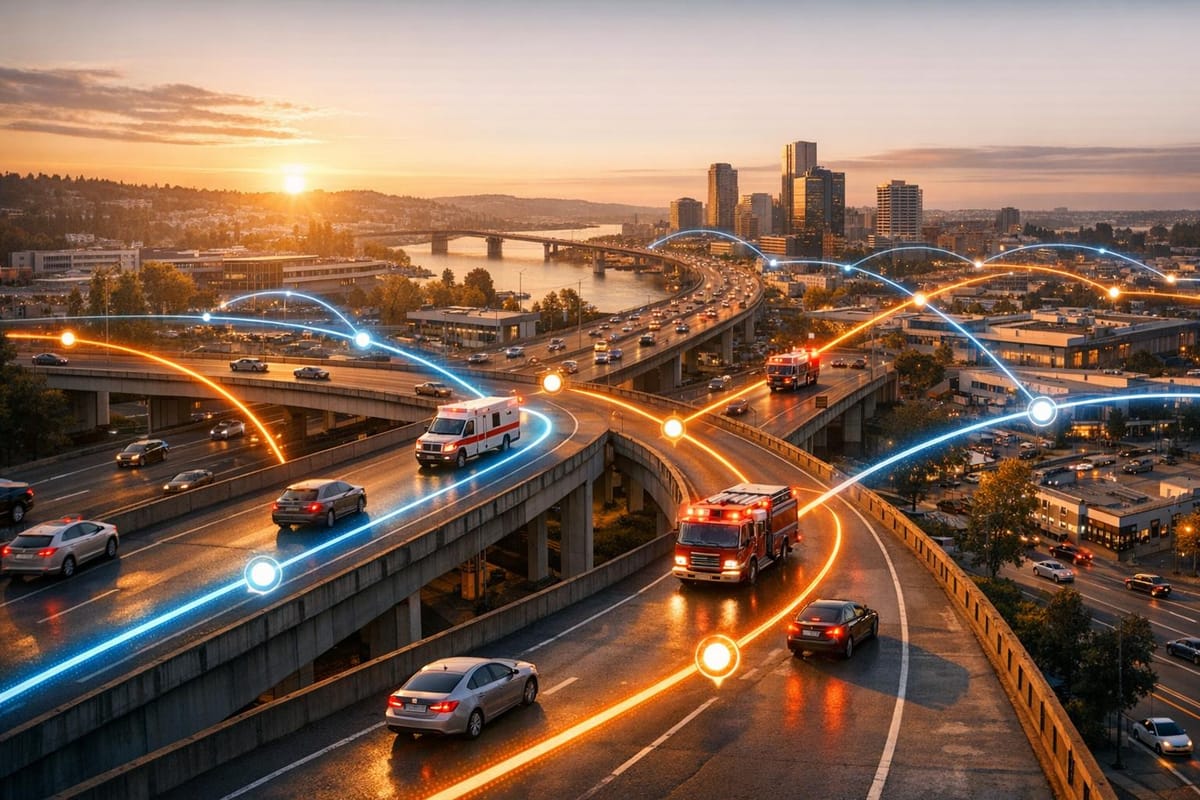
Telematics is transforming emergency services by improving response times, reducing costs, and ensuring vehicles stay operational. Here's how it works:
- Real-Time Tracking: Pinpoints vehicle locations, enabling dispatchers to send the nearest unit.
- Route Optimisation: Uses live traffic data to find faster routes, cutting travel times by up to 25%.
- Vehicle Health Monitoring: Tracks engine health, tyre pressure, and other diagnostics, reducing breakdowns by 70%.
- Crash Detection: Accelerometers automatically send GPS coordinates after impacts, ensuring rapid response.
- Driver Behaviour Monitoring: Reduces accidents by up to 45% through monitoring and coaching.
For example, the Welsh Ambulance Service reduced admin costs by 60% using fleet management systems, while South East Coast Ambulance Service saved £600,000 annually on fuel.
Telematics combines GPS, diagnostics, and communication tools to create efficient, reliable emergency operations. Systems like GRS Fleet Telematics offer dual-tracker technology, live updates, and integration with dispatch systems, starting at £7.99 per vehicle per month.
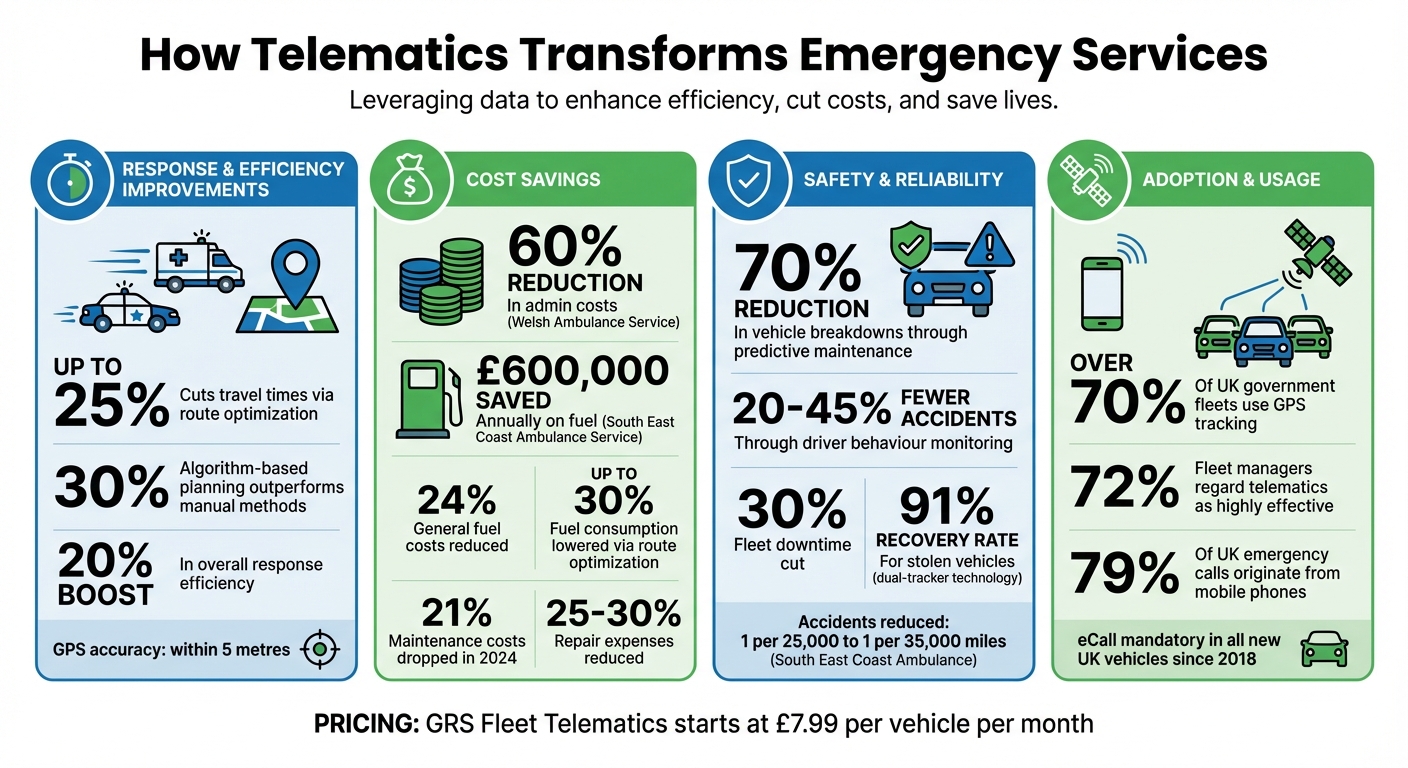
Telematics Impact on Emergency Services: Key Statistics and Benefits
How Telematics Works in Emergency Services
What is Telematics?
Telematics combines GPS technology, vehicle diagnostics, and telecommunications into a single system that provides real-time monitoring of vehicle fleets. The core hardware includes GPS modules - accurate to within 5 metres - accelerometers to detect crashes and harsh driving, and engine diagnostic tools to track vehicle performance and health. This data is transmitted via cellular networks or satellite, feeding directly into Computer-Aided Dispatch (CAD) software. This setup ensures control rooms can monitor vehicles in real time, even in remote locations.
One standout feature is eCall, a system mandatory in all new UK vehicles since 2018. When an airbag deploys, eCall automatically sends critical information, such as the vehicle's exact location, make and model, and propulsion type. This data equips emergency responders with essential details to handle potential hazards before they even arrive on the scene. This seamless flow of information is the backbone of efficient emergency dispatch systems.
Why Emergency Dispatch Needs Telematics
Telematics plays a crucial role in enhancing the efficiency of emergency response services. By leveraging real-time location data, it enables proximity-based dispatch, ensuring the nearest available unit is deployed. This capability significantly reduces response times, which is especially important given that 79% of emergency calls in the UK now originate from mobile phones. Van tracking solutions is indispensable for effective coordination.
The system also minimises the risk of operational failures during emergencies. Real-time monitoring ensures vehicles are always in optimal condition, ready to respond when needed. In cases of accidents where the driver is incapacitated, accelerometers can automatically detect the crash and send alerts with precise GPS coordinates.
Beyond improving response times, telematics also delivers cost and safety benefits. Over 70% of UK government fleets now use GPS tracking, and 72% of fleet managers regard it as highly effective. Additionally, telematics has been shown to cut fuel costs by 24% and reduce accidents by 20–45%.
Core Telematics Features for Emergency Dispatch
Real-Time Vehicle Tracking
At the heart of emergency dispatch lies white-label van tracking, which allows control centres to pinpoint the exact location of every vehicle. This enables dispatchers to send the closest available unit to an incident, ensuring swift responses. With constant location updates, dispatchers gain real-time insight into vehicle status - whether it's ignition, speed, or precise coordinates. This approach eliminates the outdated reliance on traditional zone assignments, making response times more efficient.
Geofencing adds an extra layer of coordination. By setting virtual boundaries around hospitals and high-risk areas, the system sends automatic alerts when an ambulance enters these zones. This gives emergency room staff crucial preparation time, ensuring equipment and personnel are ready. This process is especially critical in life-threatening situations, such as cardiac arrests, where every minute of delay can reduce survival chances by 10%.
Safety for emergency personnel is another key benefit. Sheriff John Wilson of Clare County Police Department highlights this, saying:
"There's no cost on officer safety when it comes to knowing where they're at. If they all of a sudden go chasing someone and didn't notify dispatch, we know exactly where their car's at".
In addition, built-in accelerometers play a vital role in safety. These sensors detect high G-force events, such as crashes, and automatically send GPS coordinates to the control room. This allows for rapid emergency coordination, even if the driver is unable to respond.
Beyond tracking, telematics enhances efficiency further through route optimisation.
Route Optimisation with Live Traffic Data
Relying on outdated maps or traffic information can lead to costly delays. Telematics systems solve this by integrating live updates - covering traffic, weather, and road closures - directly into dispatch software. AI-driven algorithms process this data alongside historical trends to determine the fastest route, recalculating in real time as conditions shift.
The results are impressive. Algorithm-based planning outperforms manual methods by 30%, cutting travel times by an average of 25%. John Griffiths, Head of Fleet and Logistics at South East Coast Ambulance Service NHS Foundation Trust, explains:
"Putting crews within four miles of a job instead of seven cuts the response time and removes three miles of travel".
Griffiths' trust applied ATSR telematics to 75% of its fleet, leading to a reduction in accidents - from one every 25,000 miles to one every 35,000 miles - and saving £600,000 annually on fuel costs.
Pre-positioning adds another layer of efficiency. Using historical data to identify high-incident areas, dispatchers can strategically station vehicles in these hotspots during peak times. This reduces the distance crews must travel before receiving a call. Combined with route optimisation, which can lower fuel consumption by up to 30%, telematics turns emergency response into a precise, well-orchestrated operation.
Once routes are optimised, effective communication systems ensure smooth coordination in the field.
Communication and Coordination
Telematics systems integrate two-way messaging platforms, enabling dispatchers to send job details, routes, and urgent updates directly to drivers or teams. This streamlined communication eliminates delays and confusion that can occur with traditional radio systems, especially during complex, multi-vehicle operations.
These systems also maintain reliable connectivity even in areas with poor cellular coverage, thanks to satellite redundancy. For hospitals, telematics shares live location data and estimated arrival times, allowing medical teams to prepare for incoming patients instead of waiting for ambulances to arrive. This seamless flow of information ensures that everyone involved in the emergency response - drivers, dispatchers, and hospital staff - has the details they need when they need them, transforming the operation into a highly coordinated effort.
How Telematics Improves Emergency Operations
Vehicle Maintenance Monitoring
Telematics does more than just track vehicles and optimise routes - it plays a key role in keeping emergency fleets ready for action through proactive maintenance. By connecting directly to a vehicle's OBDII port, telematics systems continuously monitor critical components like engine health, battery voltage, brake performance, and tyre pressure. This real-time data helps fleet managers spot potential problems early, schedule timely repairs, and avoid disruptions during operational hours.
The impact of predictive maintenance is striking: it cuts fleet downtime by 30% and reduces breakdowns by up to 70%. In 2024, British companies using telematics saw maintenance costs drop by 21%, with repair expenses reduced by 25–30% thanks to proactive monitoring.
Take the South East Coast Ambulance Service as an example. Under John Griffiths, Head of Fleet and Logistics, telematics was used to identify vehicles under heavy usage, prioritising them for preventative maintenance. When data highlighted issues with auxiliary battery depletion, the service installed small solar panel arrays to provide trickle charging, significantly reducing battery-related downtime. Digital inspections replaced traditional paper checklists, enabling instant fault reporting, while automated reminders for mileage or engine hours ensured MOT compliance and maintained safety standards.
While vehicle maintenance is essential, telematics also enhances safety by focusing on driver behaviour.
Driver Behaviour Monitoring
Telematics systems monitor key safety aspects like speeding, harsh braking, sudden acceleration, and sharp cornering. They also log emergency lighting use, distinguishing between urgent responses and routine driving. This allows managers to analyse driver behaviour in context and deliver tailored coaching to improve safety.
The results speak for themselves: monitoring driver behaviour has been shown to reduce accidents by 20–45%. For instance, Severn Trent Services achieved a 30% reduction in engine idling across their 177-vehicle fleet between December 2023 and December 2024. Business Support Manager Lauren James led this initiative, showcasing how telematics-based coaching can enhance both engine performance and operational efficiency.
In-cab feedback systems take it a step further by providing real-time alerts, prompting drivers to make immediate adjustments. Combined with post-shift analysis, this creates a cycle of continuous improvement, boosting both crew safety and public protection during high-pressure emergency responses.
TiPS Episode 25 1208 – From Panic to Predictive: The Next Era of Real-Time ECC Decision Engines
GRS Fleet Telematics for Emergency Dispatch
GRS Fleet Telematics takes emergency response to the next level by streamlining dispatch operations with its specialised features. Designed specifically for emergency services across the UK, the platform combines real-time tracking, theft prevention, and operational monitoring into one cohesive system. Whether you’re managing a small ambulance fleet or a large police department, this technology is built to scale, ensuring quick and efficient emergency responses. With professional installation and flexible plans, GRS Fleet Telematics delivers seamless connectivity and reliability to meet the unique demands of emergency services.
Dual-Tracker Technology
One standout feature of GRS Fleet Telematics is its dual-tracker system, which pairs a hardwired unit with a hidden Bluetooth backup. This setup ensures uninterrupted monitoring, even in areas with weak signals or in cases where the primary device is tampered with. Impressively, this system supports a 91% recovery rate for stolen vehicles. For added security, the Ultimate package includes remote immobilisation, allowing the engine to be disabled if unauthorised use is detected. Geofencing further enhances control by sending instant alerts when vehicles enter or exit designated zones, such as hospital grounds or other sensitive locations. The trackers are professionally installed to remain discreet while ensuring strong signal performance, all without interfering with critical safety systems.
Pricing and Plans
GRS Fleet Telematics offers three hardware tiers to suit different security needs:
- Essential package (£35): Includes a single wired tracker for basic real-time monitoring.
- Enhanced package (£79): Adds a secondary Bluetooth backup, increasing the recovery rate to 85%.
- Ultimate package (£99): Features dual tracking with remote immobilisation, achieving a 91% recovery rate.
Each package comes with a monthly subscription of £7.99 per vehicle, covering SIM, data, platform access, and account management. Installation is provided at no extra cost and includes fleet branding services through GRS Fleet Graphics. These options are competitively priced, offering a comprehensive solution for fleet security and management.
Security Features and Support
GRS Fleet Telematics doesn’t just focus on theft prevention - it also provides real-time diagnostics to monitor engine health, fuel levels, and maintenance needs, reducing the likelihood of breakdowns during critical missions. The system stores up to 365 days of journey data, which is invaluable for compliance checks and resolving disputes. Driver identification is managed through swipe cards, ensuring accurate tracking of vehicle usage. Additional features like geofencing and speed monitoring help maintain safe operational standards. The platform also integrates seamlessly with Computer-Aided Dispatch (CAD) software through APIs, allowing dispatchers to send optimised routes directly to emergency responders, ensuring faster and more efficient responses when every second counts.
Conclusion
Telematics has reshaped the way emergency services operate, turning them into highly efficient, data-driven systems. With real-time tracking, dispatching the nearest unit becomes instantaneous, route optimisation helps navigate traffic seamlessly, and predictive maintenance ensures vehicles are ready when they’re needed most. These advancements have led to a 20% boost in response efficiency, a game-changing improvement when every second matters.
But the advantages don’t stop there. By monitoring driver behaviour and implementing predictive maintenance, these systems not only enhance safety for both responders and the public but also cut vehicle downtime by 30%. This means more vehicles are available and ready to respond to emergencies.
GRS Fleet Telematics stands out as a prime example of how technology can revolutionise emergency fleet management. With dual-tracker technology boasting a 91% recovery rate for stolen vehicles, real-time tracking, geofencing alerts, and seamless integration with existing Computer-Aided Dispatch systems, the platform offers a comprehensive solution. Professional installation ensures the equipment is discreetly placed without interfering with critical safety features.
For emergency services working under tight budgets while maintaining high reliability, GRS Fleet Telematics provides a cost-effective option. With hardware flexibility and subscriptions starting at just £7.99 per vehicle per month, this system combines affordability with cutting-edge functionality - delivering exactly what’s needed in situations where every moment counts.
FAQs
How can telematics help emergency services respond faster?
Telematics plays a key role in helping emergency services respond faster by offering real-time GPS tracking. This technology allows dispatchers to pinpoint the exact location of both vehicles and incidents, making it easier to assign the closest available team to the scene.
On top of that, automated route optimisation calculates the quickest and most efficient routes, steering clear of traffic jams or road closures. When paired with instant communication tools, telematics ensures emergency teams stay connected and can adjust to shifting circumstances, cutting down response times significantly.
How does telematics help reduce costs for emergency services?
Telematics is proving to be a game-changer for UK emergency services, helping them save money while boosting efficiency. With real-time GPS tracking, dispatching the nearest vehicle via the quickest route becomes a breeze. This simple adjustment can cut fuel consumption by up to 24%, potentially saving an emergency fleet a staggering £1.8 million annually.
But it doesn’t stop there. By keeping tabs on engine diagnostics and driver behaviour, telematics enables predictive maintenance. This proactive approach reduces unplanned breakdowns by around 30%, meaning fewer costly repairs, less downtime, and vehicles that stay on the road longer.
Other perks include trimming down unnecessary mileage and speeding up vehicle turnaround times at servicing stations. These savings on fuel and wear-and-tear add up quickly. More importantly, the money saved can be redirected to essential services, making telematics not just a practical tool but a financially savvy choice for emergency operations.
How does monitoring driver behaviour enhance safety during emergency dispatch?
Driver behaviour monitoring leverages telematics to keep an eye on crucial driving habits like speed, harsh braking, sharp turns, and idling. The data gathered is transformed into real-time alerts and detailed reports, enabling dispatch managers to quickly spot risky driving patterns and address them. By raising driver awareness and encouraging safer practices, emergency fleets can cut accident rates by up to 45%, creating safer conditions for everyone involved.
This system also supports compliance with UK road-safety regulations, reducing the likelihood of crashes and delays. Dispatchers can prioritise high-risk calls by assigning them to the safest drivers, which not only improves response times but also protects both the public and emergency teams. By continuously monitoring driver behaviour, this technology boosts safety while ensuring operations remain efficient and dependable during critical moments.