Telematics for Fuel Efficiency: Key Benefits
How telematics cuts fuel use with route optimisation, driver coaching, proactive maintenance and fuel security to save UK fleets money.
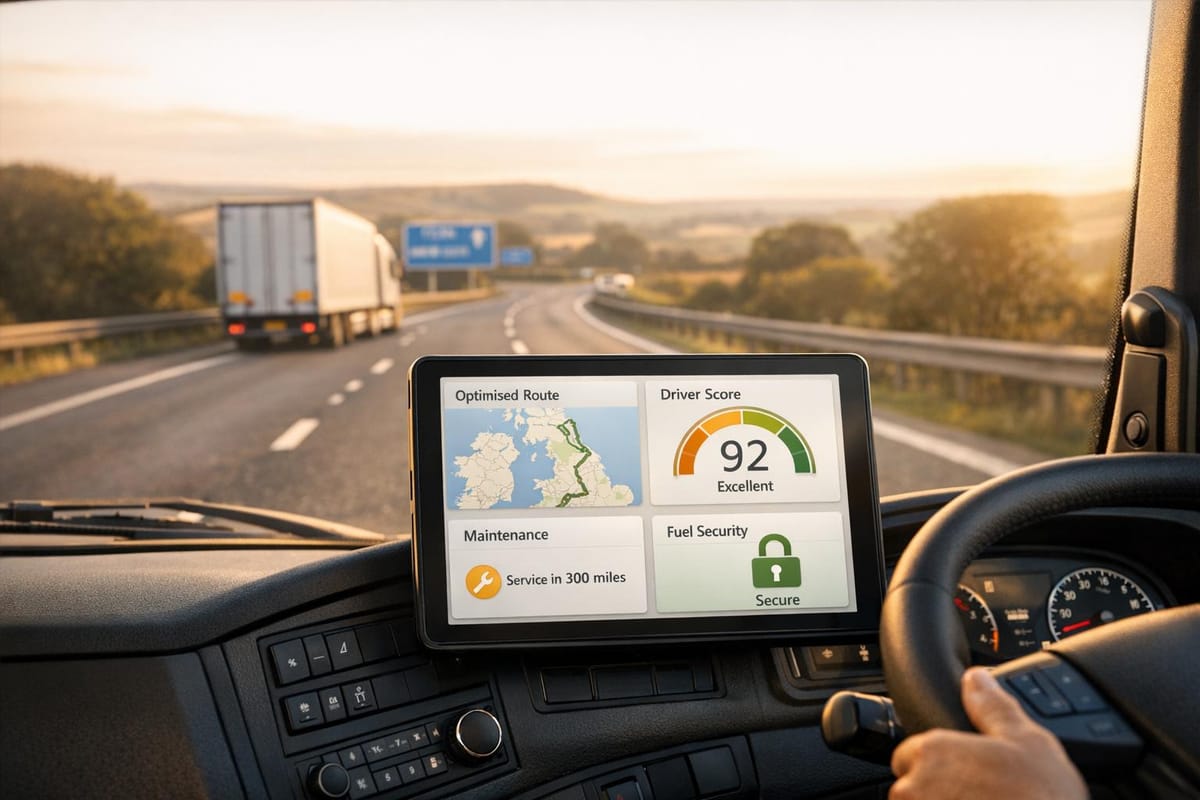
Telematics helps UK fleets save money on fuel by addressing inefficiencies like poor route planning, bad driving habits, delayed maintenance, and fuel theft. Using GPS tracking and real-time vehicle diagnostics, fleet managers can cut costs and improve performance. Here's how:
- Route Optimisation: Real-time traffic data reduces unnecessary mileage and fuel use, saving up to 9.3%.
- Driver Monitoring: Analysing behaviour (e.g., speeding, harsh braking) helps reduce wasteful habits.
- Proactive Maintenance: Early issue detection (e.g., tyre pressure) prevents fuel-draining problems.
- Fuel Security: Prevents theft and misuse with GPS-linked fuel tracking and alerts.
For fleets covering 50,000 miles annually, telematics could save thousands on fuel costs while simplifying operations. Starting at £7.99 per vehicle per month, systems like GRS Fleet Telematics provide an affordable way to reduce waste and boost efficiency.
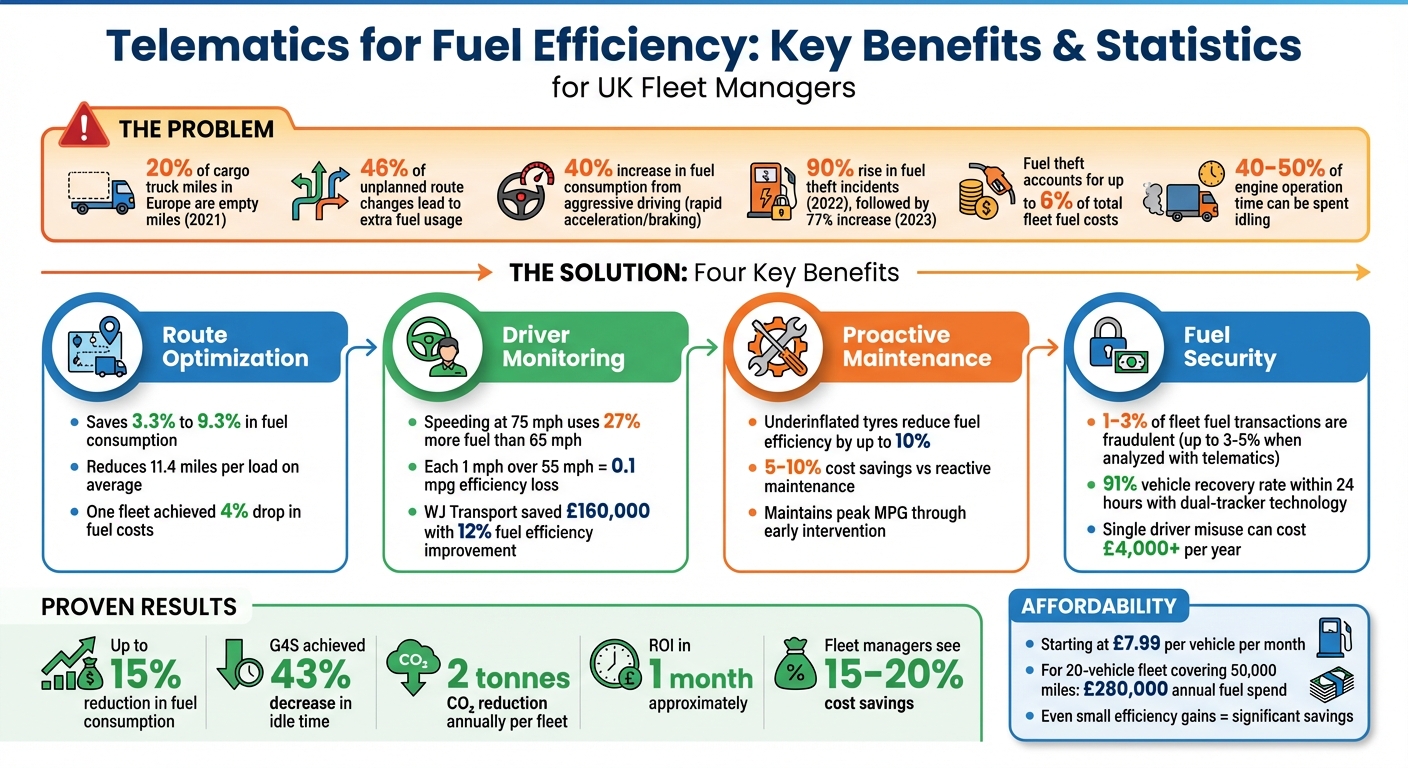
Telematics Fuel Savings: Key Statistics for UK Fleets
Webinar | Telematics For Efficient Fuel Management | Teltonika
Problem: Poor Route Planning Wastes Fuel
When routes aren't well planned, vehicles end up travelling unnecessary distances, leading to higher fuel consumption. In the UK, where fuel costs around £0.55 per mile, inefficient routing can quickly become a costly problem for fleets. The issue gets worse when considering "empty miles" - trips made without carrying any cargo.
Empty miles are a major drain on resources. In 2021, over 20% of the distance covered by cargo trucks across Europe was driven without freight. For UK fleets, even a small reduction - just 1% fewer empty miles per truck - could save over 380 litres of fuel per vehicle annually.
Route deviations add another layer of inefficiency. Without real-time monitoring, drivers may take unscheduled detours, which waste fuel and time. Studies show that 46% of unplanned route changes lead to extra fuel usage. To make up for lost time, drivers often speed, which can increase fuel consumption by as much as 20%. Static route planning also overlooks fuel-intensive manoeuvres, such as left-hand turns in the UK, further driving up costs.
Altogether, these inefficiencies lead to avoidable expenses that telematics technology can significantly reduce.
Solution: Real-Time Route Optimisation
Telematics systems leverage live traffic data and GPS tracking to create more fuel-efficient routes. Unlike static plans that can quickly become outdated, these tools allow fleet managers to adjust routes dynamically, avoiding delays caused by congestion or roadworks. This "eco-routing" approach can cut fuel consumption by 3.3% to 9.3% compared to traditional methods.
The benefits are clear in practice. One large European fleet used detailed route planning to track "Planned vs. Actual Stops" and doubled its order capacity - all without increasing its workforce or extending working hours. Similarly, an electrical product supplier adopted automated routing and tracking systems, reducing unnecessary trips and achieving a 4% drop in fuel costs.
GRS Fleet Telematics offers tools specifically designed to help UK businesses reduce fuel waste. For instance, its geofencing feature establishes virtual boundaries around designated routes, immediately notifying dispatchers if a vehicle strays off course.
The platform also allows fleet managers to compare scheduled stops with real-time GPS data, identifying whether deviations are due to unavoidable traffic issues or preventable driver behaviour. Insights like these help refine routing strategies and cut down on inefficiencies.
"The return on telematics is quite immediate, maybe about a month. Fleet managers could see 15 to 20% savings on their costs." – Juan Cardona, VP Sales, Latin America, Geotab
Additionally, multi-stop routing features ensure vehicles are used more efficiently by reducing empty miles. By bundling loads and seeking backhaul opportunities, some fleets have cut empty miles from 25% to 22%, saving millions of miles overall. On average, this approach reduces 11.4 miles per load, making a noticeable difference in operational costs.
Problem: Driver Habits That Burn Extra Fuel
The way a driver handles a vehicle has a direct impact on fuel consumption. Aggressive driving, which includes rapid acceleration, hard braking, and speeding, pushes the engine to work harder than necessary. For instance, rapid acceleration burns more fuel, while harsh braking wastes the energy that has already been used.
Studies in Europe show that frequent quick acceleration and sudden braking can boost fuel consumption by as much as 40%. Speeding makes things worse: a truck driving at 75 mph uses 27% more fuel compared to one going at 65 mph. For heavy vehicles, every 1 mph increase above 55 mph results in a 0.1 mpg drop in fuel efficiency.
Excessive idling is another common issue. Drivers often leave engines running during breaks, deliveries, or while waiting at depots. However, idling for more than 10 seconds uses more fuel than restarting the engine. In some fleets, idle times can account for 40% to 50% of total engine operation time.
These habits not only waste fuel but also increase wear and tear on vehicles, leading to higher maintenance costs. Without proper insight into driver behaviour, fleet managers may find it challenging to identify who needs guidance or pinpoint areas of inefficiency.
Telematics offers a way to tackle these challenges by providing real-time feedback on driver performance.
Solution: Driver Behaviour Monitoring and Coaching
Telematics systems monitor driving habits in real time, giving fleet managers detailed insights into vehicle operation. By tracking metrics like acceleration, braking, speeding, and idling, these systems generate reports that pinpoint areas for improvement.
The results can be impressive. Scott Logan, Transport Manager at WJ, used telematics data to improve fuel efficiency by 12%, saving the fleet £160,000 overall. This initiative also reduced vehicle breakdowns and the time spent on repairs.
GRS Fleet Telematics provides eco-driving analytics that help businesses in the UK identify and address fuel-wasting habits. Managers can set specific idling limits, such as 30 seconds or less, to cut down on unnecessary fuel use. Some systems even offer in-cab alerts that prompt drivers to turn off the engine if idling exceeds three minutes.
Promoting eco-driving techniques, like smooth acceleration and anticipating traffic to avoid sudden braking, becomes much easier with the help of telematics. Instead of relying on assumptions, managers can provide targeted feedback based on actual data, helping drivers understand how their actions affect both fuel consumption and vehicle health.
Problem: Delayed Maintenance Hurts Fuel Economy
When maintenance is only addressed reactively, small issues like underinflated tyres or clogged filters can linger, quietly sabotaging fuel efficiency. Over time, worn-out components demand more fuel to keep vehicles running. For instance, something as simple as underinflated tyres can significantly reduce fuel economy. Without regular checks, these problems often go unnoticed until they lead to costly breakdowns and emergency repairs.
This approach not only increases repair bills but also affects day-to-day operations. Vehicles running with unresolved issues burn more fuel, reducing miles per gallon and driving up costs. As Teletrac Navman UK aptly puts it:
"A well-maintained truck operates at maximum efficiency, and that includes getting the most out of every drop of petroleum burned".
The absence of real-time diagnostics means fleet managers are stuck with fixed service schedules or delayed alerts, allowing inefficiencies to persist. Shifting to a proactive approach is essential for maintaining fuel-efficient operations.
Solution: Scheduled Maintenance Based on Vehicle Data
Telematics offers a smarter way to manage maintenance by introducing a proactive, data-driven model. These systems use real-time diagnostics and OBD-II data to monitor vehicle health continuously, identifying inefficiencies before they escalate into bigger problems. Instead of sticking to arbitrary service intervals, condition-based maintenance adjusts schedules based on how vehicles are actually used and the wear they experience. Automated alerts notify managers of potential issues - like reaching mileage thresholds or triggering diagnostic codes - helping keep engines in peak condition.
Fleet managers can also automate reminders for routine services and certification checks, ensuring nothing important is overlooked. Pre-trip electronic inspections further enhance efficiency by flagging fuel-draining issues, such as low tyre pressure, before vehicles hit the road. Integrated tyre sensors take this a step further, sending instant alerts for underinflation, which can cut fuel efficiency by up to 10% if left unchecked.
This forward-thinking approach minimises emergency repairs and keeps vehicles running at their best. By tackling problems early, fleets can maintain consistent performance, reduce rolling resistance, and lower overall maintenance costs.
Here’s a comparison to illustrate how telematics-enabled maintenance outshines traditional reactive methods:
| Feature | Telematics-Enabled Maintenance | Traditional Reactive Management |
|---|---|---|
| Scheduling Basis | Real-time diagnostics and actual usage | Fixed intervals or breakdown response |
| Issue Detection | Automated alerts for early wear signs | Driver reports or manual inspections |
| Fuel Impact | Maintains peak MPG through early intervention | Efficiency declines as components wear |
| Cost Profile | Lower planned costs with 5–10% savings | Higher emergency repairs and lost productivity |
Problem: Fuel Theft and Unauthorised Vehicle Use
Fleet managers without proper monitoring tools face a major challenge: fuel theft and unauthorised vehicle use. These issues not only drive up costs but also disrupt the smooth running of operations.
The numbers paint a worrying picture. Reports show a 90% rise in fuel theft incidents in 2022 and a further 77% increase in 2023, with losses accounting for up to 6% of a fleet's total fuel costs. Considering that fuel typically makes up 30–40% of total operating expenses, even minor theft can hit the bottom line hard. Nori Gale from WEX explains the wider impact:
"Fuel theft... not only incurs direct financial losses but also disrupts operations, affecting delivery schedules and client trust."
But theft isn’t the only problem. Unauthorised personal use of fleet vehicles adds to operating costs. Some drivers use company vehicles for personal errands or side jobs, racking up unnecessary mileage and burning fuel without contributing to business revenue [18,20]. Rush Akin, Chief Revenue Officer at RoadFlex, highlights the potential cost:
"A single driver fuelling a personal vehicle just twice a week can cost an agency over £4,000 per year."
For mid-sized fleets, the financial toll can be staggering. If just 10% of drivers misuse fuel cards, annual losses could exceed £50,000. Fraudulent practices like filling "jerry cans" or "buddy fills" further distort fuel data. Studies reveal that 1–3% of all fleet fuel transactions are fraudulent, and this can climb to 3–5% when analysed alongside telematics data.
Solution: Fuel Tracking and Vehicle Security
Telematics offers a powerful way to tackle fuel theft and misuse. By combining real-time monitoring with precise transaction tracking, fleet managers can pinpoint suspicious activity. For example, telematics can cross-check fuel card transactions with GPS data, flagging transactions made when a vehicle isn’t at a fuel pump [17,20]. Alerts for sudden fuel level drops while a vehicle is stationary can indicate siphoning attempts [16,19]. Additionally, transactions exceeding a vehicle's tank capacity can expose "jerry can" or buddy fill fraud [17,18].
Geofencing adds another layer of protection. By setting virtual boundaries around depots or authorised areas, managers receive instant notifications if a vehicle leaves these zones during unauthorised hours. Continuous tracking ensures that unauthorised use is quickly identified, no matter the time.
For fleets facing higher risks, GRS Fleet Telematics offers dual-tracker technology. This includes a primary wired tracker backed by a secondary Bluetooth device. Even if thieves disable the main tracker, the backup ensures the vehicle remains traceable, resulting in a 91% recovery rate within 24 hours. The system also includes remote immobilisation, which allows managers to disable vehicles being used without permission.
Technology alone isn’t enough, though. Clear internal policies are essential to reinforce these measures. Nadia Nyaz from Fleetyr underscores this point:
"The 'I didn't know the fuel card could only be used for the work car' excuse has actually been a winning defence method [in court]... It's up to your internal company policy to outline to employees the rules."
Telematics provides the hard evidence needed to hold employees accountable, while clear policies ensure everyone understands the rules. With prices starting at just £7.99 per month per vehicle, these tools integrate easily into existing operations, turning fuel data into actionable insights that safeguard both assets and budgets.
Measurable Results: What Telematics Delivers
Telematics systems have proven to be a game-changer for addressing fuel wastage, delivering measurable improvements in both cost efficiency and operational performance. Many UK fleets already using these systems report clear financial benefits, along with reduced environmental impact. By providing concrete data, telematics allows fleet managers to set achievable goals and justify their investments with confidence.
One standout benefit is the reduction in fuel consumption - by as much as 15%. This is made possible through features like AI-powered route optimisation, smarter stop planning, and real-time monitoring of driver behaviour. Jeb Lopez, Founder and CEO of Wheelz Up, highlights the transformative impact, stating:
"AI has significantly enhanced our fleet management at Wheelz Up by automating real-time decision-making and streamlining operational efficiency."
The impact of telematics goes beyond saving fuel. For example, G4S installed on-board computers to monitor fleet activities, leading to a 43% decrease in idle time and a reduction of two tonnes of CO₂ emissions annually. For organisations aiming to meet emissions targets or comply with Clean Air Zone regulations, these improvements align cost savings with environmental responsibility.
Additional features, such as real-time GPS tracking and automated maintenance alerts, also play a key role in cutting waste. These systems can address issues like underinflated tyres, which can reduce fuel efficiency by 10%, or excessive speeding, with each mph over 55 mph lowering fuel economy by 0.1 mpg. Together, these small adjustments contribute to fewer miles driven, reduced expenses, and extended vehicle lifespans.
GRS Fleet Telematics: Affordable Solutions for UK Businesses
For fleet operators across the UK aiming to cut down on fuel waste, GRS Fleet Telematics offers a cost-effective solution starting at just £7.99 per vehicle per month. The system monitors key metrics like fuel consumption, idle times, and driving habits, providing actionable data to identify areas for improvement. Real-time alerts highlight inefficiencies such as harsh acceleration, sudden braking, and speeding, enabling managers to address these behaviours before they become costly habits.
The platform doesn’t just collect data - it turns it into practical steps. With detailed eco-driving reports and weekly automated updates, managers can easily identify underperforming drivers and deliver targeted training where it’s most needed. Real-time in-cab alerts also help drivers adjust their behaviour immediately, further enhancing fuel efficiency.
Beyond monitoring, GRS Fleet Telematics includes robust security features to combat fuel theft and unauthorised vehicle use. The dual-tracker system, featuring a secondary Bluetooth backup, ensures continuous tracking for enhanced theft protection. This system works alongside a professional recovery team that collaborates with law enforcement, boasting an impressive 91% recovery rate within 24 hours of a theft. Geofencing adds another layer of control, allowing managers to set approved operating zones and time restrictions, preventing unauthorised use outside designated hours or locations.
To meet varying security needs, GRS Fleet Telematics offers three hardware packages:
- Essential (£35): A single wired tracker for basic real-time tracking.
- Enhanced (£79): Includes the Bluetooth backup for added theft protection.
- Ultimate (£99): Features vehicle immobilisation for maximum security.
Fleet operators who combine tracker installation with GRS Fleet Graphics branding services benefit from free hardware installation. The system is designed to scale effortlessly, whether you’re managing a small fleet of five vehicles or a larger one with fifty. With 24/7 support and white-label branding options, GRS Fleet Telematics provides a practical and cost-effective way to improve fuel efficiency and security.
Conclusion
Fuel inefficiency can drive up operational costs through poor route planning, inefficient driving habits, delayed maintenance, and unauthorised vehicle use. Telematics tackles these challenges head-on by providing real-time data that transforms raw information into actionable insights. Instead of relying on manual logs or waiting for issues to arise, fleet managers gain access to precise, automated monitoring that leads to measurable cost savings.
Switching from manual processes to telematics-based operations brings clear benefits. Real-time tracking replaces outdated static planning, instant driver feedback offers continuous improvement beyond occasional training sessions, and proactive maintenance helps avoid costly reactive repairs. For UK fleets, the financial impact is significant - consider a 20-vehicle operation covering 50,000 miles annually, which could spend around £280,000 on fuel. Even small improvements in efficiency can lead to meaningful savings.
GRS Fleet Telematics offers these capabilities for just £7.99 per vehicle per month, integrating fuel monitoring, driver behaviour analysis, and security features into a single platform. The system enhances security with features like geofencing and in-tank sensors to prevent unauthorised use or fuel theft. Additionally, flexible hardware options allow fleets to customise their security setup, and free installation is available when paired with GRS Fleet Graphics branding.
Whether you're managing a small fleet of five vans or a larger operation with fifty vehicles, this system provides the tools needed to cut fuel waste and improve performance. With 24/7 support and automated reporting, it simplifies fleet management while boosting efficiency.
Visit GRS Fleet Telematics to take control of your fuel costs and optimise your operations.
FAQs
How can telematics help fleet operators save on fuel costs?
Telematics offers fleet operators a practical way to cut fuel expenses by leveraging real-time data to streamline routes, track driving habits, and enhance vehicle performance. By creating more efficient routes and steering clear of traffic jams, fleets can avoid unnecessary mileage and save on fuel consumption.
Beyond route planning, telematics pinpoints inefficient driving behaviours such as harsh acceleration, excessive idling, and speeding. With this information, managers can deliver focused coaching to drivers, reducing fuel usage while encouraging safer driving habits. Additionally, telematics supports proactive vehicle maintenance by monitoring engine performance and identifying potential issues early, ensuring vehicles run efficiently.
By using telematics, fleet operators can make smarter, data-informed choices that not only lower fuel costs but also minimise emissions and improve overall operational efficiency.
How can telematics help UK fleets save on fuel costs?
Telematics offers UK fleets a smart way to cut fuel costs - potentially by as much as 25%. How? By streamlining route planning to minimise unnecessary mileage and promoting safer, more fuel-efficient driving behaviours.
With real-time data on vehicle performance and driver habits, fleet managers can pinpoint areas of inefficiency and make precise, targeted changes. Over time, these tweaks not only help save money but also contribute to lowering the fleet's carbon footprint.
How does telematics help prevent fuel theft and unauthorised vehicle use?
Telematics plays a key role in tackling fuel theft and unauthorised vehicle use by offering real-time monitoring and instant alerts. It keeps an eye on crucial data like fuel levels, refuelling events, and vehicle locations, enabling fleet managers to spot suspicious activities - such as sudden drops in fuel levels or unexpected vehicle movements - right away.
With features like GPS tracking and geofencing, telematics ensures vehicles operate within approved areas and schedules. If a vehicle crosses a boundary or operates outside designated times, managers receive immediate alerts. Some advanced systems even analyse fuel consumption patterns, flagging irregularities that could point to theft or misuse, allowing issues to be addressed early.
By delivering detailed insights and timely notifications, telematics strengthens fleet security and helps businesses cut down on losses related to theft or unauthorised activity.