How Telematics APIs Integrate with Fleet Software
How telematics APIs connect vehicle trackers to fleet software for real-time data, automation, secure access and UK GDPR‑compliant reporting.

Fleet operators in the UK are transforming how they manage vehicles through telematics APIs. These tools connect vehicle tracking systems with fleet management software, enabling real-time data flow and automated processes. The result? Reduced downtime, lower costs, and better compliance.
Key takeaways:
- APIs eliminate manual data entry, integrating systems like CRM, ERP, and billing.
- Real-time tracking improves safety, efficiency, and theft recovery (91% recovery rate with dual-trackers).
- Businesses save on fuel and maintenance while improving reporting accuracy.
- Open APIs ensure compatibility across different vehicle brands and systems.
For example, Beacon Mobility reduced downtime by 18% and boosted compliance accuracy by 22% in just six months. Starting at £7.99 per vehicle monthly, solutions like GRS Fleet Telematics offer scalable options for fleets of all sizes.
Keep reading for a step-by-step guide to preparing, integrating, and securing your telematics API system.
What Telematics APIs Are and How They Work
Defining Telematics APIs
Telematics APIs are protocols that enable software applications to exchange data automatically, acting as a bridge between vehicle tracking hardware and fleet management software. This ensures that data flows smoothly and efficiently between systems.
In traditional fleet setups, systems often operate in isolation, requiring manual data entry - a time-consuming and error-prone process. APIs eliminate this by automating data transfer. For example, when a van's tracking device gathers information like GPS location, fuel usage, driver behaviour, or diagnostics, the API sends this data to your central system in real time. Additionally, APIs can transmit commands, such as route adjustments or driver alerts, back to the vehicle.
This technology is particularly valuable for UK fleets managing vehicles from different manufacturers. Original Equipment Manufacturer (OEM) telematics systems often struggle to integrate with aftermarket solutions, leading to compatibility issues. APIs solve this problem by consolidating data from all systems into one centralised platform. For example, Wales and West Utilities collaborated with UK Telematics to modify vehicle tracking firmware and in-cab installations, creating a unified system that bridged the gap between OEM and aftermarket solutions.
By enabling seamless communication between systems, telematics APIs unlock a range of operational benefits.
Main Benefits of API Integration
Telematics APIs offer more than just data exchange - they transform fleet management by streamlining operations and enhancing decision-making. Here are some of the key advantages:
- Real-time insights: Fleet managers gain instant access to critical data, such as vehicle locations, driver behaviour, fuel consumption, and route efficiency. This enables faster, more informed decisions.
- Automation: APIs remove the need for manual data entry, reducing errors and cutting operational costs. Data is automatically integrated into essential business systems like CRM, ERP, HR, billing, and safety platforms, allowing teams to focus on strategic tasks.
- Cost savings: The financial impact of API integration can be substantial. For instance, Beacon Mobility implemented advanced APIs in 2023 to unify data from various telematics and maintenance platforms. Over six months, they reduced vehicle downtime by 18% and improved compliance reporting accuracy by 22%.
- Scalability: As your fleet grows, API integrations can handle increasing data volumes and evolving requirements without compromising performance. Cloud-based solutions and middleware ensure that data routing remains efficient, with pricing for UK fleets like GRS Fleet Telematics starting at £7.99 per vehicle per month.
- Enhanced security and compliance: APIs allow for customisable permissions, ensuring that data access is restricted to authorised roles. Detailed records also help meet regulatory requirements. For example, GRS Fleet Telematics' dual-tracker technology boasts a 91% recovery rate for stolen vehicles. Automated compliance reporting in UK-specific formats - using GBP, DD/MM/YYYY dates, and metric measurements - simplifies legal processes.
Additionally, open and standardised APIs ensure that different software systems can communicate effectively, reducing the risk of vendor lock-in. This flexibility allows your technology to grow alongside your business.
These benefits set the stage for the practical steps required to integrate APIs effectively, which will be discussed in the next sections.
Fleet Stack REST API Guide - Leveraging Powerful Integrations for Fleet Management
Preparing Your Systems for API Integration
Getting your systems ready for telematics API integration is more than just a technical step - it’s a critical foundation. Without proper preparation, you risk running into compatibility problems, security vulnerabilities, and compliance issues. Taking the time to set everything up correctly ensures your systems work together smoothly from day one.
Hardware and Software Compatibility
Start by making sure your fleet management software and tracking devices support open APIs. Your hardware - whether it’s hardwired GPS units or Bluetooth trackers - should integrate seamlessly with your vehicles. Using equipment tied to proprietary protocols can restrict your options as your business grows, so flexibility is key.
For reliable results, professional installation of tracking devices is recommended. This ensures devices are correctly connected to your vehicle’s electrical systems, reducing the chance of errors down the line.
If your fleet includes vehicles from multiple manufacturers, integration becomes more complex. Your API must be able to handle data from a mix of OEM systems and aftermarket trackers. To prepare, document all your current system specifications - this includes software versions, hardware models, and data formats like date and number configurations. Identifying potential compatibility issues early can save you headaches later.
Your IT infrastructure also plays a big role. Whether you’re using cloud-based systems or on-premise servers, the way APIs route and process data will vary. Assess your setup now to plan for any adjustments or mediation solutions needed.
Data Infrastructure and Security Requirements
Building a strong data and security framework is just as important as hardware compatibility.
Telematics systems generate a constant flow of data - everything from GPS locations and driving speeds to maintenance logs and fuel usage. Your infrastructure must handle this data in real time while also managing growing volumes as your fleet expands. Start by evaluating your network’s bandwidth to ensure it can support uninterrupted data streams. You’ll also need sufficient database storage for historical data, which is vital for compliance and operational analysis.
Security is non-negotiable. All API connections should use TLS/SSL encryption to protect sensitive operational and driver data. Role-based access controls are essential, limiting access to only those who need it. Implement secure authentication protocols like OAuth 2.0 or rotating API keys, and maintain detailed audit trails that log data access and changes. This is especially important for meeting UK regulatory requirements.
Data validation processes are another area to focus on. Your system should automatically check GPS coordinates for accuracy, verify vehicle IDs against your fleet registry, and flag any unrealistic fuel consumption figures. This helps ensure poor-quality data doesn’t disrupt your operations.
UK GDPR compliance is a major consideration. Since telematics systems collect personal driver data, you’ll need clear agreements with your telematics provider outlining how data will be collected, stored, and used. Follow data minimisation principles by only collecting what’s necessary for fleet operations and safety. Drivers must also be informed about tracking activities, in line with UK employment law and GDPR. Preparing documentation for Data Protection Impact Assessments (DPIAs) can help evaluate privacy risks. Additionally, your system should be able to generate compliance reports in formats familiar to UK regulators, such as using GBP currency and DD/MM/YYYY date formats.
Middleware solutions can be valuable for large fleets or when integrating multiple telematics platforms. These tools dynamically route data, simplifying complex integrations. Before going live, test everything in a sandbox or staging environment. This allows you to confirm that data flows correctly without affecting your live systems. Check that date formats, currency values, and metric measurements are processed accurately, and consider running your old system alongside the new API integration to ensure consistency.
Security measures go beyond encryption and access controls. Advanced tracking technologies integrated into your API can also help reduce risks like vehicle theft. Conduct penetration testing and security audits before launch to identify and fix any vulnerabilities.
Finally, prepare your organisation for the transition. Bring together a cross-functional team with representatives from IT, fleet operations, compliance, and finance. Assign clear roles, train your staff on API management and security, and document your data governance policies. Establish change management protocols to guide the process smoothly.
Once all these steps are complete, you’ll be ready to move forward confidently with your API integration.
How to Integrate Telematics APIs: Step-by-Step Process
Building on the earlier system preparations, here’s a clear guide to integrating your telematics API with your fleet management software.
Choosing the Right API for Your Needs
Start by auditing your current systems. Identify key applications that need to exchange data, such as CRM platforms, ERP systems, billing software, maintenance tools, and fuel management systems. Think about your operational goals - whether it's cutting fuel costs, improving compliance reporting, or enhancing driver safety.
Keep your fleet size and future growth in mind. Solutions that work well for a fleet of 20 vehicles might struggle with a fleet of 200. Consider where you expect your business to be in three to five years.
Opt for APIs that are open and standardised, allowing different systems to work together without locking you into a single vendor. Many fleet management platforms offer pre-configured integrations, making the process simpler. If your fleet includes vehicles from multiple manufacturers, ensure the API can handle data from both OEM systems and aftermarket trackers. Request case studies or references to verify the provider’s track record.
A 2023 case study showed that integrating an advanced API reduced vehicle downtime by 18% and improved compliance reporting accuracy by 22% within six months.
Look for pricing structures that fit your fleet's growth. For instance, GRS Fleet Telematics offers scalable options starting at £7.99 per vehicle per month, with dual-tracker technology achieving a 91% recovery rate for stolen vehicles. The API you choose will influence later steps, such as endpoint configuration and monitoring.
Ensure the provider complies with UK-specific standards, including GBP currency, DD/MM/YYYY date formats, and metric measurements. Audit trails can also simplify regulatory inspections.
Setting Up and Testing the Connection
Your provider will supply API credentials and authentication keys. Store these securely and limit access to authorised IT personnel.
Set up endpoint URLs and communication protocols. Define how data from your telematics system will map to fields in your fleet management software. Decide on the frequency of data updates - whether you need real-time updates, hourly syncs, or daily batches. While real-time updates offer immediate insights, they require more bandwidth and processing power.
Configure error-handling protocols to manage connection issues or data inconsistencies. Use logging and monitoring tools to keep track of all data exchanges.
Begin testing in a sandbox or staging environment that mirrors your live setup but uses test data. Validate data mapping by comparing source data with its corresponding fields in the fleet management system. Test performance with large data volumes to spot any bottlenecks. Simulate errors like connection losses to ensure the system can recover without losing critical information. Verify that audit trails and data retention align with UK regulations.
Run end-to-end tests that mimic real-world scenarios. For example, track a vehicle route, monitor fuel usage, and generate compliance reports. Document your findings and resolve any issues with your provider before moving forward.
Once the system meets your operational needs, proceed with a phased live deployment.
Going Live and Monitoring Performance
After thorough testing, roll out the integration gradually. Start with a pilot programme covering 10–20% of your fleet to ensure the system performs well in real-world conditions. Monitor the pilot for two to four weeks, focusing on data accuracy, system uptime, and user feedback.
Before expanding, establish training and support protocols. Make sure escalation procedures are in place for critical issues. Gradually include more vehicles in the integration, allowing time to address any new challenges. Keep legacy systems running during the transition as a fallback option.
Document the entire deployment process, including any customisations and lessons learnt. Communicate with stakeholders about the timeline, expected benefits, and any temporary disruptions.
Once fully live, keep a close eye on key metrics. Monitor system reliability, aiming for API uptime of 99.5% or higher, and track data synchronisation accuracy. Measure operational improvements, such as lower fuel consumption, reduced vehicle downtime, and better route planning.
Assess user adoption by reviewing how often team members access integrated data and reports. Evaluate cost savings from reduced manual data entry, fewer errors, and more efficient maintenance scheduling. Monitor data quality by checking the percentage of records that pass validation.
Compare these results to baseline metrics from before the integration.
In one aviation case study, telematics API integration cut fuel consumption by 60%.
Review performance metrics monthly for the first six months, then switch to quarterly reviews. Use these insights to fine-tune your system and justify further investment. Regular monitoring ensures the integration continues to deliver value as your fleet and business evolve.
Security and Compliance for API Integration
After setting up your telematics API integration, the next priority is safeguarding your data and ensuring adherence to regulatory standards.
Protecting Data with Security Protocols
End-to-end encryption is a must-have for secure API operations. By encrypting data both in transit and at rest using TLS protocols, you can shield sensitive information like vehicle locations, driver behaviour data, and operational metrics from unauthorised access. This ensures secure communication between your fleet management system and backend tools like CRM, ERP, or billing software.
Authentication mechanisms are equally critical. These systems, including API keys, authentication tokens, and OAuth 2.0, ensure that only authorised users and systems can access your telematics data. Store these credentials securely, limiting access to authorised IT personnel. For instance, GRS Fleet Telematics employs stringent protocols, contributing to its high recovery rates.
Data validation adds another layer of protection by filtering out corrupted or malicious inputs. Your API integration should automatically verify GPS coordinates, check vehicle IDs against your fleet registry, and confirm realistic fuel consumption data, helping to identify and block anomalies before they disrupt operations.
Role-based access control lets you tailor permissions based on team responsibilities. For example, drivers might only see their performance metrics and routes, while maintenance staff access vehicle condition and service records. Managers, on the other hand, can review aggregated fleet data and compliance reports without exposing individual driver details.
Real-time monitoring is essential for spotting security threats early. By establishing baseline metrics for normal API activity, you can set up alerts for unusual behaviours, such as large data transfers or unexpected access attempts. Monitoring failed logins, irregular API usage, and unauthorised changes to fleet data further strengthens your defences.
Cloud solutions and middleware often include multi-layered security features. Ensure your cloud provider complies with UK data residency laws and holds certifications like ISO 27001 to guarantee secure data handling.
Meeting UK Legal Requirements
Technical safeguards are only part of the equation - compliance with UK legal standards is equally important. The UK General Data Protection Regulation (GDPR) governs how personal data, including driver information, is collected, stored, and processed. API integrations can simplify compliance by formatting data to meet UK-specific norms, such as GBP currency, DD/MM/YYYY dates, and metric measurements.
Data retention policies are another key area. Under GDPR, personal data should only be kept for as long as necessary. Define clear retention schedules for telematics data, such as GPS logs, driver behaviour records, and fuel usage, and configure your API to automatically delete or anonymise data once the retention period ends.
Audit trails are vital for regulatory transparency. Your API system should log every data transaction, access event, and modification to fleet records. These logs should include timestamps (in DD/MM/YYYY format), user IDs, action details, and data changes, ensuring traceability and compliance during inspections.
In 2023, Beacon Mobility implemented advanced API systems to consolidate data from multiple telematics and maintenance platforms. Over six months, the integration reduced vehicle downtime by 18% and improved compliance reporting accuracy by 22%. Predictive maintenance and real-time driver monitoring were key contributors to these results.
Third-party integrations can complicate compliance, so vetting these partnerships is essential. When working with providers like fuel card services or route optimisation tools, conduct thorough security reviews. Ensure they hold relevant certifications, have data processing agreements in place, and store data within the UK or European Economic Area - or use compliant transfer mechanisms.
Document your data handling procedures to meet GDPR requirements, including privacy impact assessments and "privacy by design" policies. These should be readily available for regulatory audits.
GRS Fleet Telematics simplifies compliance with pricing from £7.99 per vehicle per month. Its built-in compliance features can reduce the need for separate systems, easing the burden on fleet managers.
Lastly, prepare for data subject access requests under GDPR. Your API should allow for quick retrieval, export, or deletion of personal driver data. Regularly review your compliance measures - monthly for the first six months and quarterly thereafter - to ensure your integration keeps up with evolving regulations as your fleet expands.
Getting the Most from Your Telematics API Integration
This section dives into evaluating the performance of your telematics integration and preparing for future growth.
Measuring Success with Key Metrics
Before assessing your telematics integration, it’s important to establish a solid baseline. Start by recording key data points like fuel purchases and miles driven over a 30-day period to calculate your cost per mile in GBP. Track vehicle downtime by documenting maintenance incidents, repair durations, and related costs. Don’t forget to log the hours your staff spends on data gathering, reporting, and regulatory submissions. For UK operations, ensure all data aligns with local formats, such as DD/MM/YYYY for dates and metric units for measurements.
One of the most telling indicators of success is vehicle downtime reduction. For example, a 2023 case study highlighted an 18% drop in downtime and a 22% improvement in compliance reporting accuracy, thanks to predictive maintenance and real-time driver monitoring. Compare your monthly downtime stats with these benchmarks to gauge your integration’s impact.
Fuel consumption tracking is another area where immediate savings can be realised. By consolidating data, you can pinpoint high-fuel vehicles and focus on improving driver habits.
Actavo Group, which manages 2,000 vehicles across 29 airports, used Transpoco’s telematics API integration to cut fuel consumption by 60% and significantly reduce operational costs.
Monitor your fuel spend in GBP per mile and observe monthly trends to quantify savings.
Driver behaviour metrics also play a key role in reducing costs and improving safety. Look at historical data to identify patterns like excessive idling or aggressive driving. Real-time insights enable coaching that can lower fuel usage by 10–15%. Metrics such as speed, geofencing alerts, and eco-driving analytics can help you measure progress and even reduce insurance premiums.
The vehicle recovery rate is a critical metric for security. For instance, UK businesses using GRS Fleet Telematics benefit from a 91% recovery rate for stolen vehicles, thanks to dual-tracker technology. Keep track of theft incidents, recovery times, and associated costs to understand the financial advantages of enhanced security.
Efficiency in compliance reporting is another benefit of telematics integration. By automating data collection and formatting it for UK standards (e.g., GBP, DD/MM/YYYY), API-driven solutions can save your team significant time. Measure the hours saved each month and convert these into cost savings.
Improvements in route optimisation often become apparent within weeks. By analysing historical routes against traffic patterns, you can identify inefficiencies. Compare journey times and distances before and after integration to estimate fuel savings and better route planning.
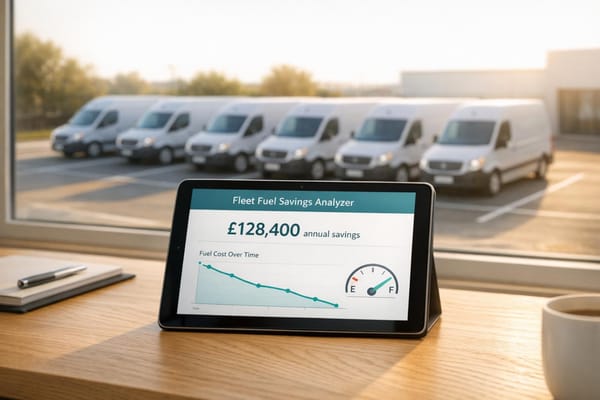
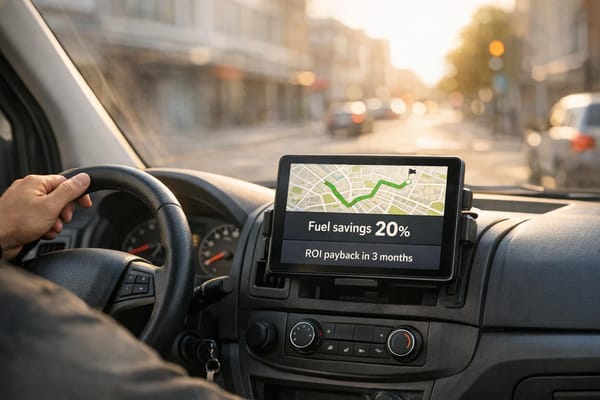
Finally, calculate your return on investment (ROI). Compare your baseline costs to post-integration figures. For instance, cutting fuel costs by 20% on a £50,000 annual spend saves £10,000. Combine this with savings from reduced downtime (e.g., £100 per hour) and subtract integration expenses like software fees and training. Providers like GRS Fleet Telematics offer flexible pricing, making ROI calculations straightforward for fleets of all sizes.
With these metrics in hand, you’ll be well-positioned to plan for growth and adopt emerging technologies.
Planning for Growth and Future Technology
Once you’ve seen measurable benefits from telematics integration, it’s time to focus on scaling and future-proofing your system.
Scalability should be a priority from the start. Cloud-based solutions and middleware can dynamically manage data flow, ensuring consistent performance as your fleet grows. Providers like GRS Fleet Telematics offer systems designed to adapt as your needs evolve.
To avoid being locked into a single vendor, choose API integrations based on open standards rather than proprietary systems. This approach ensures compatibility with emerging technologies, such as advanced electric vehicle (EV) telematics and autonomous driving systems.
It’s also crucial to maintain clear documentation and version control. Document all aspects of your integration, including data transformations, API endpoints, and authentication methods. These records are invaluable for onboarding new staff, troubleshooting, or expanding your system.
Regular performance testing can help identify potential issues before they impact operations. Monitor API response times, data processing speeds, and resource usage. Set alert thresholds for performance drops and conduct monthly reviews during the early stages of integration, transitioning to quarterly reviews once the system stabilises.
Start with basic integrations - such as telematics, fuel management, and maintenance scheduling - and expand as your team gains experience. This phased approach simplifies implementation and allows for smoother growth over time.
If your fleet includes vehicles from multiple manufacturers, ensure your integration supports multi-brand fleet management. A centralised dashboard that consolidates repair, service, and operational data reduces the need for multiple tools and lowers administrative workload.
As you transition to cleaner technologies, prepare for electric vehicle integration. Your API system should handle EV-specific data like battery levels, charging stations, and energy consumption. Choose providers that regularly update their platforms to support new vehicle technologies.
For businesses considering rebranding or reselling, white-label capabilities can offer the flexibility to adapt the system to specific branding and operational needs.
Finally, ensure robust data validation protocols are in place. Automated checks, such as GPS coordinate verification and vehicle ID validation, ensure data accuracy and scale seamlessly as your fleet grows.
Review and adjust your integration strategy quarterly to keep up with business growth and regulatory changes. Regular evaluations of system performance, security, and compliance - combined with team feedback - will help you optimise your telematics integration as a long-term asset.
Conclusion
Bringing telematics APIs into your fleet management software represents a leap forward for UK businesses in managing their vehicle operations. This guide has walked through the essential steps - from preparing your systems to ensuring secure integration and monitoring performance - showing how this approach can lead to meaningful changes. By combining data from various sources, API integration eliminates isolated data systems, simplifies fleet management, and boosts efficiency, cost savings, and security.
Real-world examples across industries highlight these advantages. Businesses have reported cutting vehicle downtime, achieving better compliance accuracy, and significantly lowering fuel consumption. With added security features and automated compliance tools tailored to UK regulations, administrative tasks are reduced, and regulatory audits become much more straightforward.
Telematics API solutions are not only effective but also affordable. Flexible pricing models mean organisations of all sizes can adopt these systems without needing to make large upfront investments. For instance, GRS Fleet Telematics offers plans starting at just £7.99 per vehicle per month.
Cloud-based platforms and ready-made integrations provide a scalable solution, allowing your system to grow alongside your fleet. Adopting these technologies now sets your fleet operations on a future-ready path as your business continues to develop.
FAQs
How can telematics APIs enhance the efficiency and safety of fleet management?
Telematics APIs are transforming fleet management by offering real-time vehicle tracking, monitoring driver performance, and delivering data-based insights. These capabilities help businesses optimise their operations, cut costs, and improve road safety.
GRS Fleet Telematics delivers advanced solutions, such as dual-tracker technology that boosts security and achieves an impressive 91% recovery rate for stolen vehicles. Starting at just £7.99 per month, these services provide UK businesses with a cost-effective way to safeguard their assets and enhance efficiency.
What should I consider to ensure data security and compliance when integrating telematics APIs with fleet software?
When connecting telematics APIs with fleet management software, data security and regulatory compliance should be at the forefront of your planning. Make sure the API provider follows established standards like GDPR, which is key for data protection in the UK. This involves secure methods for data transmission and storage.
To protect sensitive information, use encryption protocols and set up robust authentication measures to manage access. Conduct regular system audits to uncover potential weaknesses and keep up with any updates to compliance regulations. These measures will help safeguard your fleet's data and ensure smooth operations.
How can businesses evaluate the ROI of integrating telematics APIs with fleet software?
Measuring the return on investment (ROI) from integrating telematics APIs comes down to evaluating how these tools improve efficiency, cut costs, and boost overall performance. Here are some key areas to focus on:
- Fuel savings: Optimised routing and reduced idling can significantly lower fuel expenses.
- Lower maintenance costs: Predictive maintenance insights can help prevent costly repairs and extend vehicle lifespan.
- Enhanced security: Features like dual-tracker technology aid in recovering stolen vehicles, reducing financial losses.
Take GRS Fleet Telematics as an example. Their van trackers, starting at just £7.99 per month, provide an impressive 91% recovery rate for stolen vehicles. By tracking these benefits, businesses can clearly see how the integration offsets expenses and delivers lasting value.