Smart City Logistics: ROI for Fleet Operators
Smart city logistics and telematics cut fuel, maintenance and failed deliveries, boost capacity and ULEZ compliance — typical UK fleet ROI in 8–12 months.

Urban fleet operators in the UK face growing pressure from congestion, rising costs, emissions regulations, and customer demands for faster deliveries. Traditional methods no longer work, so many are turning to smart city logistics. These systems use real-time data, AI-powered routing, and telematics to improve efficiency, reduce costs, and comply with clean air rules.
Key takeaways:
- Savings: Fuel costs drop by 10–15%, maintenance by 12–18%, and failed deliveries by up to 40%.
- Performance Boost: Delivery capacity improves by 20–25%, with on-time rates reaching 95–99%.
- Fast ROI: Most fleets recover investments in 8–12 months, with some seeing returns in as little as four months.
- Compliance: Tools like geofencing help avoid fines in zones like London’s ULEZ.
The Future of Urban Logistics: AI-Driven Optimisation and Connected Vehicles
What Smart City Logistics ROI Means
When it comes to smart city logistics, ROI is about much more than just cutting costs. For fleet operators in the UK, it includes immediate financial perks - like savings on fuel and fewer fines - alongside long-term benefits such as stronger customer loyalty and better regulatory compliance. These platforms bring value across various areas, from streamlining operations to boosting brand image. Understanding this layered value is key to grasping how smart city systems work in practice.
What Are Smart City Logistics Platforms?
Smart city logistics platforms are digital networks that link urban infrastructure with fleet operations. They combine traffic management, loading zone data, LEZ/ULEZ mapping, and fleet telematics into one cohesive system.
In cities like London and Manchester, these platforms rely on several key components. Real-time traffic updates help fleets navigate congestion, accidents, and road closures. Traffic signal priority systems can give freight vehicles the green light at junctions, cutting idle time and saving fuel. Dynamic kerbside management allows operators to reserve and pay for loading bays in advance, reducing double parking and failed deliveries. By connecting this city-level data with fleet telematics - such as GPS tracking, driver behaviour monitoring, and route planning - these platforms turn insights into actionable strategies for individual vehicles.
The result? Vans can avoid traffic jams in real time, drivers get notified about available loading spaces, and fleet managers can easily prove ULEZ compliance. For instance, platforms in London use live ULEZ data to redirect non-compliant vehicles away from restricted areas while prioritising low-emission vehicles at traffic lights. This level of coordination, which goes far beyond traditional static maps and manual planning, not only makes urban deliveries more efficient but also underpins the ROI that these systems bring.
Telematics providers like GRS Fleet Telematics play a crucial role in this ecosystem by supplying the real-time data that powers these platforms.
How to Calculate ROI for Fleet Operators
Calculating ROI for smart city logistics isn’t complicated: (Net Financial Benefit ÷ Total Investment) × 100%. Essentially, the net benefit is your annual savings minus ongoing costs, and the total investment includes hardware, software, and implementation expenses. For UK fleets, upfront costs for a mid-sized operation typically range from £7,000 to £15,000, with monthly subscriptions, data, and training adding £1,600 to £5,000. Most fleets see payback within 8–12 months, though some advanced systems can deliver ROI in under four months.
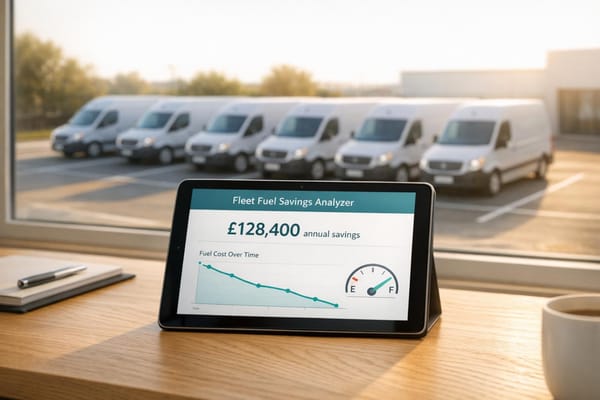
Key metrics for UK operators include fuel savings, often measured in pence per mile. For example, a 12% reduction in fuel costs on a £50,000 annual spend equates to about £6,000 saved. Avoiding ULEZ/LEZ fines also adds up quickly, especially in London, where non-compliant vehicles face a £12.50 daily charge. Better route planning and improved driver behaviour lead to lower maintenance costs, with typical reductions in tyre wear and upkeep ranging from 12% to 18%. Cutting down on failed deliveries saves driver hours and reduces overtime costs.
Smart routing also boosts asset utilisation. If a fleet averages 10 deliveries per vehicle per day and routing improvements increase that to 12, that’s a 20% capacity increase without adding more vehicles. On-time-in-full (OTIF) rates are another critical measure. UK retailers using AI-powered routing report OTIF rates of 95% to 99%, compared to 80–85% with manual planning. Tracking these metrics over six to twelve months provides a clear picture of both immediate financial gains and longer-term service improvements.
Direct vs. Indirect ROI Benefits
Direct financial benefits are the easiest to measure. These include lower fuel costs, reduced maintenance expenses, fewer fines, and quicker route planning - all of which immediately impact the bottom line.
Indirect benefits, while harder to quantify, often deliver even greater value over time. Improved delivery performance strengthens customer relationships and can justify premium pricing for reliable services. Many UK retailers using smart routing have seen a 15–25% increase in delivery capacity, alongside OTIF rates exceeding 96%, which boosts customer loyalty and encourages repeat business. Enhanced driver safety and morale can lead to fewer accidents, reduced insurance premiums, and less sick leave. Better compliance with environmental rules not only improves brand reputation but also opens doors to new contracts.
Other indirect gains include reduced vehicle theft and damage, which cut replacement costs and insurance claims. Real-time visibility adds another layer of resilience, allowing managers to respond quickly to disruptions and maintain consistent service levels, even in tough conditions.
Understanding the difference between direct and indirect ROI is essential when building a business case. Direct benefits make it easier to justify the initial investment and gain approval from financial stakeholders. However, it’s the indirect benefits that often turn smart city logistics into a lasting competitive edge. UK operators who track both types of ROI over six to twelve months generally report the strongest returns and the clearest path to scaling their operations.
Research Findings on Smart City Logistics
Case Studies and Pilot Programmes
Recent pilot programmes across the UK have demonstrated how smart city logistics can significantly improve fleet performance. For example, Tesco implemented AI-based routing that combined real-time traffic data with route planning. This approach cut delivery times by an impressive 18%. Similarly, Sainsbury's managed to increase vehicle capacity by 20–25% while pushing on-time delivery rates into the mid-to-high 90% range. Metro Cash & Carry's trials in London and Manchester also highlighted gains, with fuel efficiency improving and compliance with Low Emission Zone (LEZ) regulations enhanced through the use of telematics integrated with smart city infrastructure.
In dense urban areas, cargo bikes have proven to be highly effective, completing 15–20 deliveries per hour compared to the 8–12 deliveries typically achieved by traditional vans hindered by traffic and parking challenges. This greater delivery density not only boosts labour productivity but also reduces the cost per drop for last-mile parcel and grocery deliveries.
Electric vehicle (EV) pilots in Birmingham and Manchester revealed further benefits. By leveraging smart charging infrastructure, operators reduced electricity costs by 30–50% by scheduling charging during off-peak tariff periods. This strategy shortened EV payback periods and lowered overall ownership costs, making EV adoption more financially viable.
These findings clearly demonstrate the tangible economic benefits of smart city logistics, offering measurable returns on investment (ROI) for operators.
Measured ROI Results
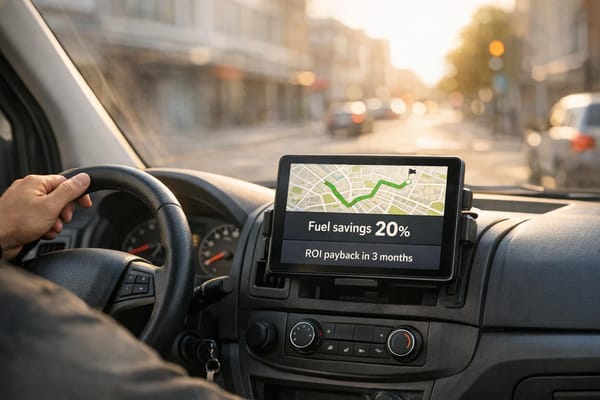
Building on the success of these pilot programmes, the measured ROI results confirm that smart city logistics can lead to significant cost savings and operational improvements. For instance, AI-driven routing and real-time traffic data typically reduce fuel costs by 10–15%. For a fleet operator spending £50,000 annually on fuel, this translates to savings of £5,000–£7,500 per year - often enough to cover the costs of implementing such platforms within the first year.
Telematics also helps cut maintenance costs by 12–18%. Predictive maintenance systems reduce harsh braking events, optimise routes to avoid stop-start driving, and provide early warnings for potential issues. This results in fewer tyre replacements, brake repairs, and unexpected breakdowns.
Failed delivery attempts can drop by up to 40% with tools like address validation, real-time customer communication, and smart loading bay reservations. Each avoided failed delivery saves approximately £8–£12, while also improving customer satisfaction.
Mid-sized fleets typically achieve ROI within 8–12 months, with some high-impact deployments seeing returns in as little as four months. Larger fleets, particularly those with over 200 vehicles, often realise faster payback periods as fixed costs are spread across more vehicles.
| Metric | Typical Improvement | ROI Impact |
|---|---|---|
| Fuel costs | 10–15% reduction | £5,000–£7,500 annual saving on a £50,000 fuel spend |
| Maintenance costs | 12–18% reduction | Lower tyre wear, fewer breakdowns, and reduced servicing costs |
| Failed deliveries | Up to 40% reduction | £8–£12 saved per avoided failed delivery |
| Delivery time | 18% reduction | More deliveries per shift and reduced overtime expenses |
| Vehicle capacity | 20–25% increase | Delays the need for additional vehicle investments |
| On-time delivery | 95–99% (vs 80–85%) | Improved customer loyalty and potential for premium pricing |
| Payback period | 8–12 months | Faster ROI for larger fleets operating in urban areas |
London's LEZ and congestion charge schemes further enhance savings for operators using zone-aware routing. Advanced telematics providers, such as GRS Fleet Telematics, play a crucial role by offering real-time GPS tracking, vehicle performance monitoring, and other essential data for smart city logistics platforms.
However, achieving these benefits requires more than just adopting new technology. Operators who see the best results often start with pilot programmes in a single depot or city. They set clear performance goals, such as improving fuel efficiency, increasing on-time deliveries, and maximising vehicle utilisation. Driver training is also a key factor, as it helps build confidence in AI-generated routes. By rolling out changes in phases and sharing transparent performance data, companies can overcome initial resistance and ensure both management and drivers see the value of these solutions.
Main Factors That Drive ROI in Smart City Logistics
Smart city logistics enhances ROI by improving efficiency, safety, and asset usage. Fleet operators who focus on these key areas can implement changes that yield faster returns and long-term benefits.
Efficiency Gains Through Dynamic Routing
Dynamic routing transforms fleet operations by replacing fixed routes with systems that adapt to current conditions. Instead of sticking to a predetermined path, vehicles adjust their routes based on live traffic updates, roadworks, delivery schedules, and urban restrictions like London's ULEZ boundaries or congestion charge zones.
The impact on costs is both immediate and measurable. AI-powered routing can reduce fuel consumption by 10–15%, thanks to shorter distances, less time idling in traffic, and smoother driving patterns that avoid stop–start conditions. These savings add up quickly over a year.
But it’s not just about fuel. Delivery times can drop by as much as 18%, while vehicle capacity increases by 20–25%. For example, a fleet that previously required 10 vans might handle the same workload with only eight or nine vehicles. This not only delays the need for additional vehicles but also spreads fixed costs - like insurance and telematics subscriptions - across more productive mileage.
In the UK, where urban areas like London, Manchester, and Birmingham have complex networks of emission zones, congestion charges, and time restrictions, these systems are invaluable. Routing platforms that account for these factors help fleets assign the right vehicles to the right zones, avoiding costly penalties. GRS Fleet Telematics, for instance, offers real-time tracking and route optimisation to help fleets navigate these challenges efficiently.
Alternative delivery modes also play a role in boosting efficiency. In central London, where parking is scarce and traffic is unpredictable, cargo bikes can handle 15–20 deliveries per hour compared to 8–12 for vans. This nearly doubles productivity per labour hour, making bikes a practical choice for last-mile deliveries like parcels and groceries.
These efficiency improvements also contribute to safer and more compliant operations.
Safety and Compliance Benefits
Safety improvements don’t just protect drivers - they also deliver financial returns. Fewer accidents mean lower repair costs, reduced vehicle downtime, and fewer fines. Telematics systems monitor risky behaviours like harsh braking, speeding, or sharp cornering, providing real-time alerts and post-trip coaching to encourage safer driving habits.
The financial benefits are clear. Fewer collisions reduce repair expenses and keep vehicles on the road. Smoother driving also extends the life of tyres, brakes, and suspension components. Predictive maintenance systems further cut costs by identifying potential issues before they become major problems.
Insurance savings are another major advantage. Many UK insurers offer better terms or lower premiums to telematics-equipped fleets. GRS Fleet Telematics adds value with advanced security features like dual trackers and a 91% recovery rate for stolen vehicles, which protect both the vehicles and their cargo, reducing claims and operational disruptions.
Compliance tools built into logistics platforms can save fleets from hefty penalties. Geofencing technology, for instance, alerts drivers when they approach restricted zones like London's ULEZ or congestion charge areas, helping avoid non-compliant entries. Integration with tachograph systems also flags potential violations of driver working hours, ensuring compliance and minimising risks to business operations.
These safety and compliance gains lay the groundwork for optimised asset management.
Better Asset Utilisation
Maximising vehicle usage is a direct route to improving ROI. GPS and IoT tracking provide insights into how each vehicle is being used, monitoring metrics like engine-on time, driving versus idling, loaded versus empty mileage, and delivery drops per shift. This data helps fleet managers spot inefficiencies, such as prolonged idling or unnecessary empty runs.
By addressing these inefficiencies, fleets can consolidate tasks onto fewer, better-planned routes. This can increase deliveries per vehicle by 20–25% and eliminate redundant trips. The financial benefits are twofold: existing vehicles can handle more work, and planned purchases of new vehicles can be postponed or cancelled. For instance, avoiding the purchase of five new vans at £30,000 each could save £150,000 in capital expenses.
Improved utilisation also reduces the cost per delivery by spreading fixed costs over a higher number of jobs. Smart logistics platforms further enhance efficiency by using historical and real-time data to identify peak traffic times or frequent loading delays, allowing planners to adjust schedules or appointment windows. Vehicle assignments can also be fine-tuned - for example, deploying ULEZ-compliant vans or cargo bikes in central London while routing older vehicles through less restricted areas.
GRS Fleet Telematics provides detailed dashboards that break down performance by vehicle, route, and driver. This granular data helps fleet managers identify top-performing drivers or routes and replicate those successes across the operation.
Proactive maintenance is another key factor. Instead of waiting for breakdowns, fleets can use predictive systems to schedule maintenance during quieter periods, ensuring vehicles are available when demand is highest. This approach keeps revenue-generating assets on the road longer and avoids costly emergency repairs.
Finally, with the UK logistics market expected to grow 7.5% annually and reach £251.8 billion by 2030, the pressure to adopt smarter technologies is only increasing. Fleets that optimise their assets through smart city logistics will be well-positioned to expand without dramatically increasing costs or fleet size.
Smart City Logistics for UK Urban Fleets
Urban fleets in the UK are navigating a unique landscape shaped by Clean Air Zones and congestion charges. These regulations present both challenges and opportunities, making it vital for fleet operators to understand their financial impact. By embracing smart city logistics, businesses can not only meet compliance requirements but also gain a competitive edge in urban markets.
How UK Policy and Infrastructure Affect ROI
Urban policies in the UK have significantly altered the economics of fleet operations. For instance, non-compliant vehicles operating in central London face steep daily charges, which can accumulate into substantial costs over time.
Smart logistics platforms offer a practical solution by embedding zone boundaries and compliance rules. These systems automatically assign compliant vehicles to restricted areas and reroute non-compliant ones, reducing fines and eliminating the need for manual tracking. Instead of relying on drivers to remember zone restrictions, these platforms ensure the right vehicles are deployed in the correct locations.
Electrification becomes even more appealing under these policies. Electric vans and cargo bikes are often exempt from charges that apply to non-compliant vehicles. For fleets frequently operating in city centres, these exemptions can help offset the higher upfront costs of electric vehicles. Pilot programmes have shown that these vehicles not only deliver cost savings but also offer environmental benefits, strengthening the return on investment for fleet operators.
Investments in infrastructure are also creating new opportunities. Government funding for smart city initiatives has supported the development of digital transport platforms and urban logistics innovations. Meanwhile, the rollout of 5G in major cities has enabled real-time tracking and improved vehicle-to-infrastructure communication. Additionally, smart charging systems that use time-of-use tariffs can cut electricity costs by 30–50%, further lowering the total cost of ownership for electric vehicles - even before factoring in regulatory exemptions.
Telematics systems, such as those offered by GRS Fleet Telematics, enhance fleet security and provide valuable journey data. With features like dual-tracker security and a 91% recovery rate for stolen vehicles, these systems protect investments in compliant and electric fleets, ensuring they remain operational and revenue-generating.
The UK logistics market is projected to grow by 7.5% annually, reaching an estimated £251.8 billion by 2030. By integrating technology and policy compliance, fleets can not only reduce fines but also better manage urban congestion, setting the stage for long-term success.
Challenges and Opportunities for UK Fleets
While efficiency and compliance gains are within reach, UK fleets face operational challenges that can undermine profitability. Cities like London and Manchester are plagued by congestion, which increases fuel consumption, extends driver hours, and raises the likelihood of late deliveries. Stop-start traffic and limited kerbside access add to the delays and fines.
Navigating the regulatory landscape is another hurdle. Rules vary across regions, such as the differences between London's Ultra Low Emission Zone and other Clean Air Zones, making manual route planning both time-consuming and error-prone.
Transitioning to low-emission or electric fleets introduces its own complexities. Higher upfront costs, the need for tailored charging infrastructure, and range limitations require precise data on energy use and duty cycles to optimise electric vehicle deployment.
Driver shortages and increasing labour costs add further pressure. In 2024, UK businesses registered 64,000 more battery-electric vehicles than the previous year, highlighting the rapid pace of electrification and the need for efficient integration into fleet operations.
Smart city logistics platforms address these challenges by offering dynamic routing that accounts for real-time traffic, restricted zones, and loading constraints. Trials of AI-powered systems have delivered impressive results, including up to 20% fuel savings, 12–18% lower maintenance costs, and an 18% reduction in delivery times. These systems also improve capacity and on-time performance. For example, a UK builders merchant reported a 25% increase in delivery capacity and a 15% improvement in on-time performance after adopting real-time route optimisation and tracking.
Sustainability is now a critical factor in securing contracts. Many tenders require proof of low emissions and sustainability efforts. Fleets that can demonstrate these improvements through telematics and smart routing gain not only more business opportunities but also enhanced reputational benefits. Smart city logistics platforms provide the data and reporting needed to turn compliance into a competitive advantage.
Alternative last-mile delivery solutions are also gaining traction. Electric cargo bikes, for instance, can handle 15–20 deliveries per hour in central London, compared to 8–12 for vans. These bikes are exempt from restricted zone charges, can access areas where larger vehicles struggle, and align with growing expectations for low-carbon delivery. For fleets willing to adapt their operations, these vehicles can significantly improve delivery efficiency in dense urban areas.
With the UK urban logistics market valued at approximately £13 billion and poised for further growth, fleets that adopt smart city logistics - combining compliant vehicles, real-time routing, telematics, and data-driven optimisation - are well-positioned to thrive. In contrast, those relying on traditional methods may find it increasingly difficult to compete.
Telematics has become indispensable for staying competitive in the UK market. Rising fuel and operational costs, stricter regulations, and the complexities of transitioning to electric vehicles make data-driven fleet management essential. Fleets that invest in these capabilities now will be better prepared to tackle both current challenges and future opportunities.
How GRS Fleet Telematics Supports ROI in Smart City Logistics

GRS Fleet Telematics offers fleet operators tools to tackle urban challenges like traffic congestion, compliance issues, and asset protection, all while focusing on operational efficiency and security. With prices starting at £7.99 per vehicle per month, it’s a practical choice for UK businesses aiming to cut costs, enhance efficiency, and safeguard assets in busy city environments. These features fit seamlessly into smart city logistics systems, delivering direct returns on investment (ROI).
Features That Drive ROI
GRS Fleet Telematics provides advanced capabilities that address key cost factors and improve fleet performance.
- Real-time GPS tracking: This feature gives live updates on vehicle location, speed, and status through web and mobile apps, allowing quick responses in congested urban areas.
- Dual-tracker security system: A standout feature in the UK market, this includes a primary hardwired GPS tracker and a hidden Bluetooth backup tracker. Even if the main tracker is disabled, the system continues transmitting, achieving a 91% recovery rate. This reduces costs associated with vehicle theft, insurance claims, and downtime.
- Driver behaviour monitoring: By tracking harsh braking, rapid acceleration, speeding, and idling, fleet managers can coach drivers to adopt smoother driving habits. This not only improves safety but also reduces fuel consumption by 10–15% and cuts maintenance expenses by 12–18%.
- Route optimisation and fleet analytics: Using historical journey data and real-time traffic updates, the system identifies efficient routes, helping drivers avoid congestion and restricted zones. Detailed analytics on fuel usage, mileage, and performance enable data-driven decisions, crucial for fleets managing Clean Air Zone compliance and tight delivery schedules.
- Vehicle immobilisation: Available in Enhanced and Ultimate hardware packages, this feature prevents the engine from starting in the event of theft. Combined with 24/7 recovery support, it minimises financial losses from vehicle crime.
ROI Benefits for Fleet Operators
GRS Fleet Telematics delivers measurable benefits in several critical areas:
- Theft Prevention and Recovery: Van theft is a costly problem in UK cities, with replacement costs, lost revenue, and administrative burdens adding up to tens of thousands of pounds per incident. The 91% recovery rate significantly reduces these risks and can lead to better insurance terms over time.
- Fuel and Maintenance Savings: By addressing driver behaviour and optimising routes, the platform tackles two major cost centres. For instance, a mid-sized UK fleet with an annual fuel budget of £50,000 could save around £6,000 per year through a 12% reduction in fuel consumption. Smoother driving habits also extend vehicle component life, cutting maintenance costs by 12–18%.
- Improved Delivery Performance: Real-time tracking and dynamic re-routing help reduce delivery times and increase the number of jobs completed per shift. Route optimisation can cut delivery times by up to 18%, boost vehicle capacity by 20–25%, and lower failed delivery attempts by up to 40%.
- Reduced Downtime: Quick recovery of stolen vehicles and 24/7 support ensure minimal downtime, keeping vehicles on the road and revenue flowing.
- Compliance and Risk Management: Configurable geofencing alerts drivers and planners when vehicles approach Low Emission Zones or Ultra Low Emission Zones, helping operators avoid fines. Reliable journey records also assist with compliance to driver hours regulations, reducing the risk of penalties.
A Real-World Example
Take a UK-based builders' merchant operating 20 vans in Birmingham. Before adopting GRS Fleet Telematics, they faced frequent van thefts, high fuel costs, and inconsistent delivery performance. After implementation, the results were clear:
- The 91% recovery rate significantly reduced replacement and insurance costs.
- Fuel consumption dropped by 12%, saving approximately £6,000 annually on a £50,000 fuel budget.
- Maintenance expenses fell by 15% thanks to improved driving behaviours.
- Route optimisation increased daily deliveries per van by 20%, while failed delivery attempts dropped by 40%.
These improvements helped the fleet achieve ROI within 8–12 months, alongside better customer satisfaction and regulatory compliance.
Flexible Pricing for All Fleet Sizes
GRS Fleet Telematics offers scalable pricing to suit fleets of any size. Hardware packages start at £35 for the Essential package (single wired tracker), £79 for the Enhanced package (dual-tracker system), and £99 for the Ultimate package (dual-tracker with immobilisation). The monthly service fee of £7.99 per vehicle includes SIM/data, account manager support, and full platform access. Free installation is available when paired with fleet branding through GRS Fleet Graphics, lowering upfront costs.
Tracking ROI
Fleet operators can measure ROI by monitoring key performance indicators such as:
- Average fuel consumption
- Reduction in harsh driving events
- Average delivery times
- On-time delivery rates
- Deliveries per vehicle per day
- Vehicle downtime
- Total fuel spend
- Maintenance costs
- Insurance premiums
Comparing these metrics before and after implementation provides a clear picture of the financial impact.
GRS Fleet Telematics also integrates smoothly with broader fleet management and smart city logistics platforms. Its data can enhance route optimisation, AI planning systems, scheduling, and dispatch software, enabling precise dynamic routing and improved job allocation. This further amplifies the platform’s ROI potential.
Conclusion
The Business Case for Smart City Logistics
Smart city logistics is reshaping urban transport, offering both operational efficiency and measurable financial benefits. For UK fleet operators, adopting telematics and AI-powered routing systems has proven to cut costs and boost performance. Here's how: fuel expenses drop by 10–15%, maintenance costs decrease by 12–18%, and delivery capacity grows by 20–25% - all without adding extra vehicles. Most fleets see a return on investment within 8–12 months.
But it’s not just about saving money. Smart city logistics significantly enhances service reliability and customer satisfaction. Real-time tracking and dynamic rerouting help achieve on-time delivery rates of 95–99%, while failed deliveries are reduced by up to 40%. These improvements not only keep customers happy but also secure contract renewals and unlock opportunities for premium "green delivery" projects that prioritise sustainability.
UK-specific challenges add even more weight to the argument. With cities like London, Birmingham, and Manchester expanding Low Emission Zones (LEZ) and Ultra Low Emission Zones (ULEZ), inefficient routing or non-compliant vehicles can lead to hefty fines. Smart routing systems with geofencing alerts help operators sidestep these penalties while meeting strict environmental regulations. Moreover, government-backed investments in smart-city infrastructure and digital connectivity enable fleets to tap into advanced features like live traffic signal integration, priority routing, and shared data platforms.
Real-world results underline these benefits. Tesco, for instance, cut delivery times by 18% while increasing deliveries per vehicle by 22%. Sainsbury's achieved a 96% on-time delivery rate and reduced last-mile costs by 15%. Similarly, Metro Cash and Carry reported a 13% drop in delivery expenses, and a UK builders' merchant boosted delivery capacity by 25% while improving on-time performance by 15%.
Modern telematics solutions are designed to scale easily. With pricing based on a per-vehicle, per-month model, they avoid the need for large upfront investments. Savings on fuel, overtime, and reduced theft often cover these monthly fees in just a few months.
Next Steps for Fleet Operators
To unlock these benefits, fleet operators should take a structured, step-by-step approach:
- Evaluate current operations: Analyse fuel consumption, delivery volumes, overtime hours, fines, and insurance claims to establish a performance baseline.
- Set clear goals: Define measurable targets, such as cutting fuel use by 10%, increasing drops per route by 15%, or reducing failed deliveries by 20% within six to twelve months.
- Pilot the technology: Run a trial with a small group of vehicles in cities like London or Manchester to test features like dynamic routing, live tracking, and driver feedback systems. Use this phase to validate assumptions and refine processes before scaling up.
- Choose the right telematics provider: Look for a partner that offers UK-specific features, such as ULEZ/LEZ geofencing, driver hours monitoring, and seamless integration with your existing systems. For example, GRS Fleet Telematics provides GPS tracking, route optimisation, and driver behaviour monitoring - all starting at £7.99 per vehicle per month.
- Involve your team: Share real-time dashboards with drivers and operations teams to encourage collaboration and maximise efficiency gains.
- Scale and refine: Compare pilot results against your baseline, identify successes, and make adjustments as needed. Once the system proves its value, roll it out to more depots and vehicles, tracking metrics like fuel savings, delivery times, and maintenance costs.
Smart city logistics and telematics are no longer just concepts - they’re practical tools that deliver measurable results. With payback periods as short as 8–12 months and success stories across fleets of all sizes, the question isn’t whether to adopt these technologies, but how soon you can start reaping the rewards.
FAQs
How do smart city logistics platforms work with existing fleet management systems to improve efficiency?
Smart city logistics platforms are built to work effortlessly with existing fleet management systems, offering operators better tools to monitor, plan, and refine their operations. Using real-time data, these platforms can help businesses cut fuel costs, optimise routes, and reduce vehicle downtime.
Take advanced van tracking and dual-tracker technology, for instance. These features enhance security by ensuring vehicles are always traceable. Meanwhile, the data insights provided enable fleet managers to make smarter, more informed decisions. Embracing these technologies not only simplifies daily tasks but also delivers a clear return on investment, making them a smart choice for fleet operators across the UK.
What challenges do fleet operators face when adopting electric vehicles in smart city logistics?
Fleet operators making the shift to electric vehicles (EVs) in smart city logistics face a variety of obstacles. One of the primary concerns is the high upfront cost of EVs and the necessary charging infrastructure. While these expenses can be daunting, the potential for long-term savings on fuel and maintenance often helps to balance the scales over time.
Another issue is range limitations. EVs may not always be ideal for fleets that cover extensive distances, especially in rural areas where charging stations are scarce. This lack of widespread charging infrastructure can complicate logistics and planning.
On top of that, operators must familiarise themselves with new technologies. This often involves training staff to use telematics systems, which are essential for tracking vehicle performance and planning efficient routes. While these adjustments require effort, the benefits of EV adoption are hard to ignore. Reduced emissions, compliance with environmental standards, and better operational efficiency are just a few of the long-term advantages.
How can fleet operators calculate the ROI of adopting smart city logistics solutions?
Fleet operators can determine the return on investment (ROI) of smart city logistics solutions by looking at both immediate and longer-term benefits.
Direct ROI involves tangible, measurable savings. These include cutting fuel costs, improving route efficiency, and lowering vehicle maintenance expenses. Operators can track these savings by comparing operational costs before and after adopting the solutions.
Indirect ROI, on the other hand, highlights benefits that unfold over time. For example, faster deliveries can boost customer satisfaction, while enhanced vehicle security and adherence to environmental regulations add value in the long run. Advanced van tracking systems play a role here too, aiding in the recovery of stolen vehicles, which helps safeguard assets and minimise financial losses.
By factoring in both direct and indirect outcomes, fleet operators can better evaluate the overall impact of smart city logistics platforms.