Shared Delivery Networks: Reducing Last-Mile Costs
Shared delivery networks cut last‑mile costs and emissions by consolidating parcels into lockers and micro‑hubs and using telematics to boost efficiency.
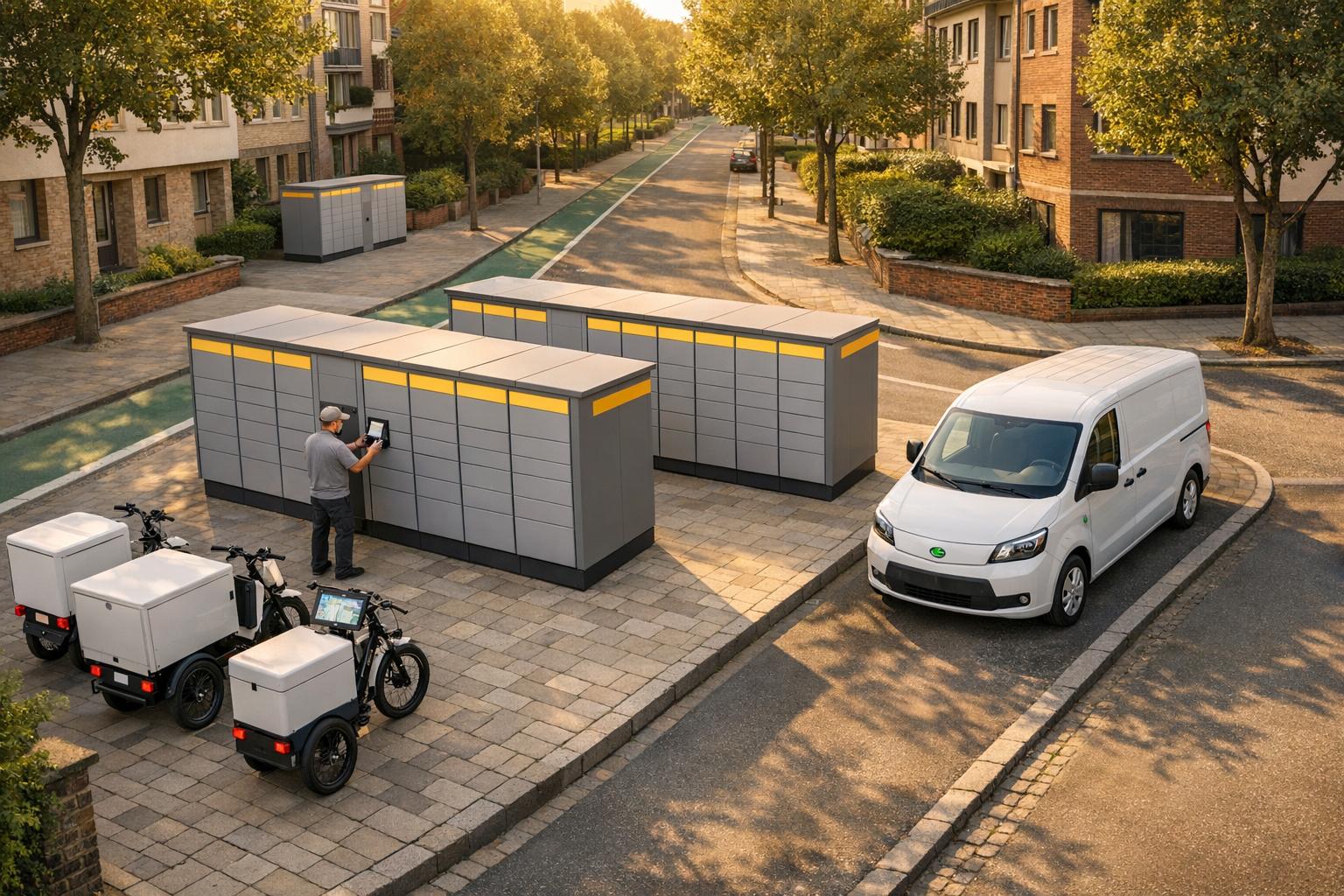
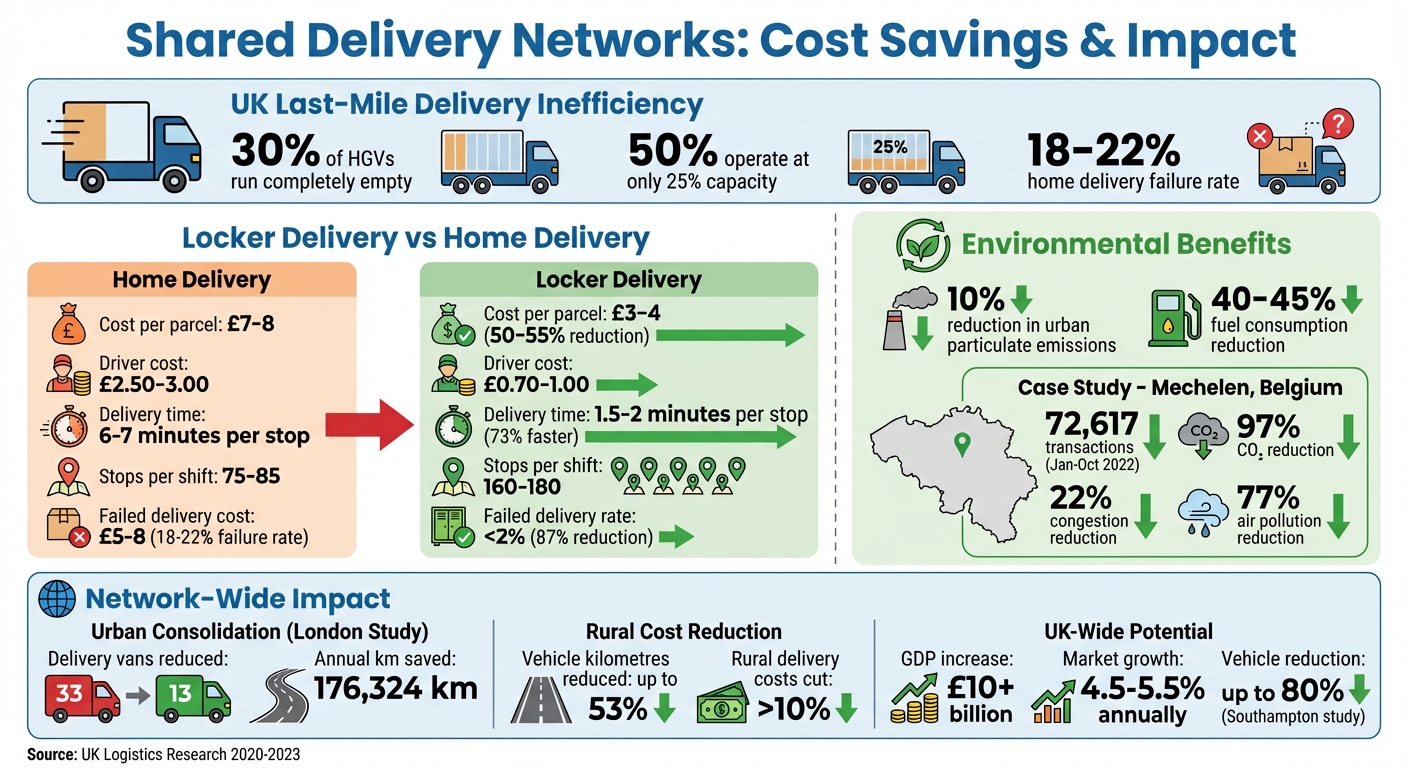
Shared delivery networks are transforming last-mile logistics by combining resources like vehicle space, consolidation hubs, and portering services. This approach reduces inefficiency, lowers costs, and addresses urban congestion and pollution. In the UK, where 30% of HGVs run empty and 50% operate at just 25% capacity, these networks offer a solution to wasted capacity and high delivery expenses.
Key takeaways from the article:
- Cost Savings: Locker deliveries cut per-parcel costs by 50–55%, reduce failed deliveries by 87%, and improve driver productivity by enabling up to 180 stops per shift.
- Environmental Impact: Shared networks can lower urban particulate emissions by 10% and significantly reduce CO₂ output.
- Efficiency Gains: Consolidating deliveries through shared platforms like "Sequence" optimises routes, reduces empty miles, and improves vehicle utilisation.
- Rural Challenges: Shared models cut rural delivery costs by over 10%, bridging the urban-rural delivery gap.
- Telematics Integration: Tools like GPS tracking and route optimisation further enhance efficiency and security.
The UK parcel market is growing rapidly, and shared delivery networks are proving to be a practical way to handle increasing demand while cutting costs and emissions. With tools like telematics and consolidation hubs, these networks are reshaping last-mile logistics for both urban and rural areas.
Cost Savings and Efficiency Gains of Shared Delivery Networks
Leveraging Shared Truckload for a More Efficient Shipping Strategy | Tire Tracks Podcast 30
Cost Savings Through Consolidation
Consolidation changes the game for last-mile delivery by swapping scattered home drop-offs for centralised collection points. Think about it: instead of making 100 individual stops, a courier can handle just 5–7 locker visits, each managing 15–25 parcels. This approach cuts out the time spent parking, walking to front doors, and waiting for recipients who might not even be home.
The cost difference is striking. Delivering to a home costs around £7–8 per parcel, while locker deliveries bring that down to £3–4 - a reduction of 50–55%. Driver costs per parcel drop from £2.50–3.00 to just £0.70–1.00, vehicle running costs go down by 60%, and the budget for failed deliveries shrinks by a massive 87%.
Locker Networks and Cost Reduction
The benefits of consolidation aren’t just about saving money; they also improve efficiency. Smart locker systems tackle one of the biggest headaches in home delivery: the 18–22% failure rate caused by recipients not being available. Each failed delivery, which costs £5–8, is almost entirely avoided with lockers, bringing the failure rate down to under 2% and practically eliminating redelivery expenses.
Delivering to a locker takes just 1.5–2 minutes per stop, compared to the 6–7 minutes needed for residential visits - a time saving of 73%. This is largely because lockers solve the so-called "parking and approach" problem, where drivers spend up to 40% of their time simply moving between vehicles and delivery points.
Take the city of Mechelen in Belgium as an example. Between January and October 2022, over 50 small parcel lockers were installed in partnership with courier Bpost. During that time, 72,617 transactions were recorded, and by using a city hub with zero-emission vehicles, Bpost cut CO2 emissions by 97%, reduced congestion by 22%, and lowered air pollution by 77%.
Impact on Vehicle Utilisation
Consolidation also boosts driver productivity in a big way. Traditional residential routes allow for 75–85 stops per shift, but locker-based routes enable 160–180 stops. This increased efficiency means fewer vehicles are needed to handle the same number of parcels, cutting fleet operating costs significantly.
Fuel consumption sees a 40–45% reduction thanks to optimised routes focused on fixed locker locations instead of constantly changing home addresses. And when it comes to reverse logistics, the advantages are even more evident. Using lockers for returns reduces processing costs from £10–15 per home pickup to just £2–3 per item.
UK-Specific Insights on Shared Delivery Networks
In the UK, shared delivery networks are becoming a practical way to address the long-standing urban-rural delivery divide, offering solutions that benefit both cost efficiency and environmental impact.
Urban-Rural Cost Bridging
Delivering to rural areas has always been more expensive than urban deliveries, but shared networks are helping to narrow this gap. Research from Anglia Ruskin University reveals that consolidating carriers can reduce vehicle kilometres by up to 53% across England and Wales, with rural delivery costs dropping by over 10%.
The issue lies in rural orders' lower demand and greater distances, which make dedicated fleets too costly. A case study from a West London packing site highlighted this challenge: while 80% of orders could be economically served by a dedicated fleet, rural locations like Carlisle, Newcastle, Swansea, East Anglia, and Plymouth proved unfeasible. By transferring these rural orders to a shared parcel carrier, the company saved 17% compared to their original model.
In a 2023 study, the University of Southampton examined a shared-fleet initiative between Carnival UK and Southampton City Council. This collaboration integrated warehouse collections into the council’s courier routes, using just five vans. The results were impressive: an 80% reduction in vehicles, a 32% decrease in vehicle kilometres, and an 89% cut in CO2 emissions. Such partnerships not only improve delivery efficiency but also provide local councils with additional revenue streams.
These examples highlight the potential for scaling shared networks across the growing UK parcel market.
Scaling Potential of Shared Models
With the UK parcel market expected to grow by 4.5–5.5% annually, shared delivery models are becoming increasingly vital. A 2020 study simulated the operations of five carriers in a 3.7 km² area of central London. By consolidating 3,000 daily items, the number of delivery vans was reduced from 33 to 13, saving 176,324 km annually.
Maren Schnieder from Anglia Ruskin University summarises the impact:
"Carrier consolidation shows significant potential in reducing the overall VKT (up to 53%)".
One promising approach is the "carrier's carrier" model, where a single provider manages last-mile deliveries for multiple competing carriers within a specific area. This method is particularly suited to business-to-consumer logistics, which typically involve handling large volumes of small, lightweight items.
Shared networks are not just a cost-cutting measure - they represent a smarter, more sustainable way of meeting the demands of a rapidly growing parcel market.
Telematics Integration for Optimisation
Telematics technology takes the efficiency of shared delivery networks to the next level by fine-tuning how vehicles operate on the road. While shared networks already cut costs by consolidating deliveries, telematics adds another layer by enabling smarter operations through real-time tracking, route planning, and enhanced security features.
Route Optimisation and Fuel Efficiency
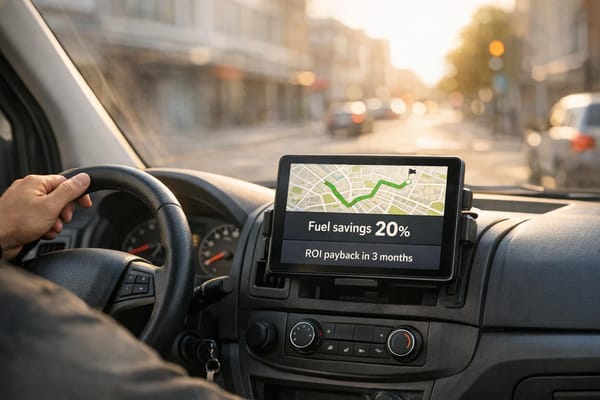
Telematics platforms use GPS and live traffic data to map out the most efficient routes, reducing both fuel consumption and delivery times. For shared networks managing parcels from multiple carriers, every kilometre saved multiplies the efficiency across daily operations.
These systems also track driver behaviour, identifying issues like harsh braking, excessive idling, or sudden acceleration. Fleet managers can then provide tailored coaching to encourage more fuel-efficient driving habits. This not only saves fuel but, when combined with the shorter routes enabled by consolidation, creates a ripple effect of efficiency gains.
But telematics isn't just about optimising routes - it also plays a critical role in fleet security.
Enhanced Security and Theft Prevention
Theft in shared delivery networks can disrupt multiple businesses at once. Advanced telematics systems address this with layered security measures.
Many telematics devices are designed with tamper-resistant housing to prevent removal or deactivation by thieves. Features like advanced encryption and multi-factor authentication safeguard vehicle systems against hacking attempts. Geofencing adds another layer of security by sending alerts if a vehicle leaves its designated area, while continuous monitoring can flag suspicious activity before it becomes a bigger issue.
Take GRS Fleet Telematics as an example. Their dual-tracker technology is tailored for high-risk situations. The Enhanced package (£79 hardware) includes a main tracker and a secondary Bluetooth backup, achieving an impressive 91% recovery rate for stolen vehicles. Their Ultimate package (£99) adds a remote immobilisation feature, allowing managers to disable vehicles if theft occurs. With a monthly software subscription starting at just £7.99 per vehicle, even smaller operators can access these advanced features.
Challenges and Future Potential
Shared delivery networks have proven their ability to cut costs and improve efficiency, but they still face hurdles, especially in densely packed urban centres and sparsely populated rural areas. By examining these challenges and the solutions being trialled, we can get a clearer picture of where this model is headed.
Managing Congestion in Urban Areas
In cities, last-mile delivery often means multiple carriers running separate routes, which clogs up traffic and makes navigating narrow streets during busy times a headache. Shared delivery networks tackle this by using micro-consolidation points - small hubs in urban areas where parcels from various carriers are stored temporarily before being delivered.
A study from July 2023, conducted by researchers at the University of Southampton, tested this model in London using real data from two competing carriers. They introduced a third-party portering service, where walking couriers replaced delivery vans for the final stretch. By applying a specialised routing algorithm, the shared model significantly reduced transport costs. These findings in urban areas could pave the way for tackling the unique challenges of rural deliveries.
Scalability for Rural Deliveries
Rural areas present a different set of challenges, but shared models show potential here as well, particularly through Neutral Host Network (NHN) frameworks. These involve multiple operators sharing infrastructure, which can cut total costs by 10% to 50% compared to standalone deployments. For rural 5G strategies, shared approaches have been shown to increase profitability by 30% to 90% over non-sharing models.
A compelling example comes from Italy, where the Regione Marche authority launched a Shared Service Centre initiative in 2009. This project unified ICT facilities for 80% of the region’s rural authorities, enabling over 600 small municipalities - many with fewer than 5,000 residents - to access digital services they couldn’t afford on their own. Using the Tecut portal, this shared infrastructure created the scale needed to support innovation in these low-density areas.
The potential for shared networks in rural markets is further underscored by large-scale investments like Amazon’s £3.2 billion commitment between 2021 and early 2026. This kind of backing highlights the growing confidence in shared solutions for overcoming rural delivery challenges.
Conclusion
Shared delivery networks present a practical way to tackle the high costs of last-mile delivery. For instance, the European Freight Alliance has already shown promising results, cutting empty running by 22% and reducing annual CO₂ emissions by 17% across its 200-member network.
In the UK, enhancing last-mile logistics through shared networks could add over £10 billion to GDP while also cutting urban particulate emissions and congestion by 10% within the next decade.
Telematics integration plays a key role in making these networks more efficient. Features like real-time capacity visibility, dynamic route optimisation, and asset tracking enable seamless collaboration. Dr Amar Dhokia from Digital Catapult highlighted this during the Logistics Living Lab project:
"The approach could be scaled up to every transportation provider in the country. The bigger it gets, the greater the economies of scale".
Platforms like GRS Fleet Telematics make this possible by offering real-time tracking and fleet optimisation tools, available for as little as £7.99 per vehicle per month. These tools empower businesses to join and benefit from collaborative delivery models.
With proven advantages like consolidation and telematics integration, shared delivery networks can scale effectively in both urban and rural settings. From micro-consolidation hubs in London to flexible operations for fleets of all sizes, the result is fuller trucks, fewer trips, and lower costs.
FAQs
How do shared delivery networks work in practice?
Shared delivery networks bring businesses together to share resources such as micro-consolidation points and portering services. By combining parcels from various companies into fewer delivery trips, these networks help cut costs and streamline operations. Using advanced routing tools, they can reduce transport expenses by up to 14%. This approach works particularly well in urban areas, improving efficiency while tackling last-mile delivery issues and promoting more sustainable practices.
When do lockers and micro-hubs make the biggest difference?
Lockers and micro-hubs play a key role as shared micro-consolidation points, offering temporary storage for goods. This setup supports last-mile delivery by allowing parcels to be grouped together, making delivery routes more efficient and cutting down on costs. They're especially useful in collaborative delivery systems aimed at simplifying operations and keeping expenses low.
What telematics features matter most for shared fleets?
Telematics offers several key features that are invaluable for managing shared fleets. Real-time GPS tracking allows fleet managers to keep an eye on vehicle locations at all times, ensuring greater control and oversight. Dynamic route optimisation helps adjust routes on the fly, taking into account factors like traffic congestion or sudden changes in weather, which can significantly reduce delays and fuel usage.
On top of that, live data sharing ensures that everyone involved - drivers, dispatchers, and managers - stays updated, enabling smoother communication and quicker decision-making. With the addition of AI-powered systems, fleets can operate even more efficiently by cutting down on empty miles, speeding up delivery times, and reducing operational costs. The result? A more streamlined operation that saves money while keeping customers happy.