Route Optimisation vs. Manual Planning: Cost Comparison
Manual route planning wastes UK fleets time and money. Automated route optimisation cuts fuel, labour and maintenance costs, saving about £7,240 a year.
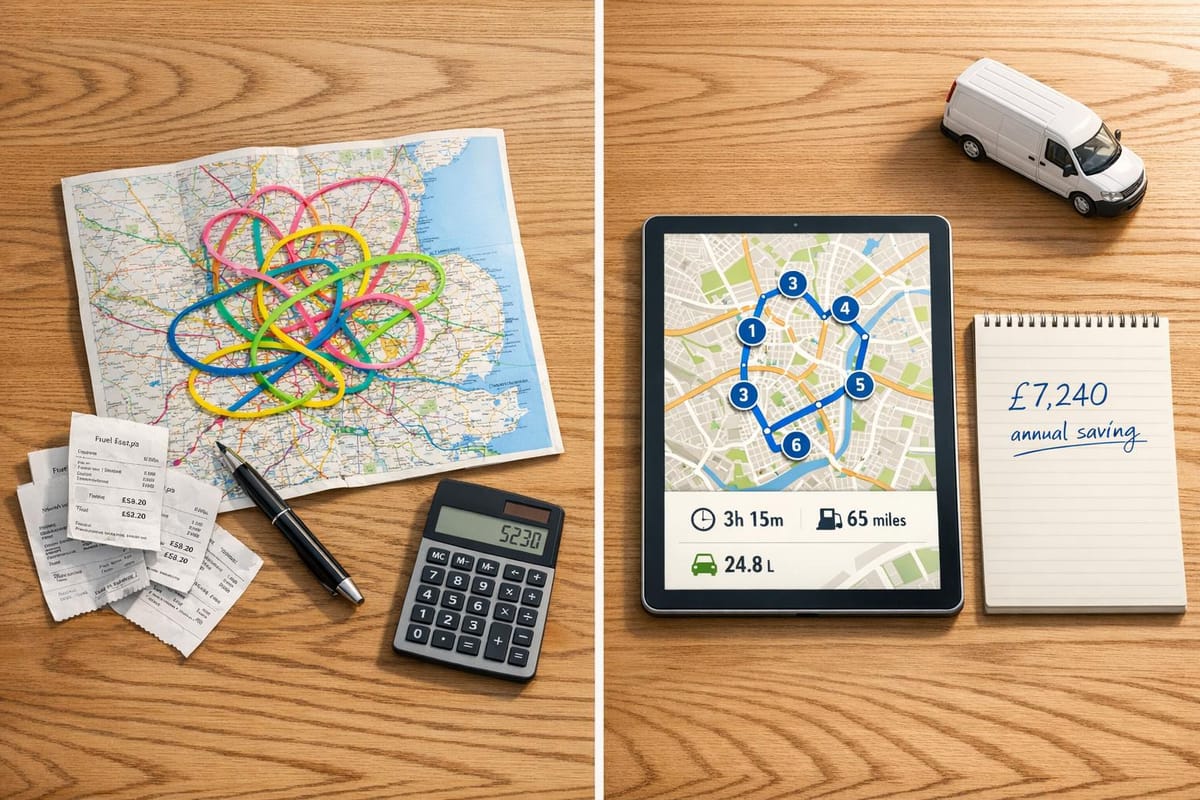
Manual route planning is costing fleets time and money. Automated route optimisation saves up to 30% in fleet costs by reducing fuel usage, cutting planning time, and improving delivery efficiency. In the UK, where fleets face high fuel prices and tight margins, the financial impact is clear.
- Manual planning drawbacks: Time-consuming, prone to errors, higher fuel consumption, and increased maintenance costs. Dispatchers spend hours daily creating routes, while drivers face longer journeys and overtime.
- Automated optimisation benefits: Cuts planning time by 75%, reduces fuel costs by 10–30%, and boosts delivery capacity by 25%. Tools like GRS Fleet Telematics offer real-time adjustments and data-driven routing for better efficiency.
Quick Comparison
| Aspect | Manual Planning | Route Optimisation |
|---|---|---|
| Planning Time | ~96 hours/year | ~24 hours/year |
| Fuel Costs | £30,000/year | £24,000/year (20% less) |
| Maintenance Costs | £5,000/year | £4,250/year (15% less) |
| Software/Hardware | £0 | £1,310/year |
| Annual Savings | - | ~£7,240 |
Switching to automated systems not only saves money but also simplifies operations, allowing fleets to focus on growth. For UK fleets, the investment in tools like GRS Fleet Telematics quickly pays off through reduced costs and improved productivity.
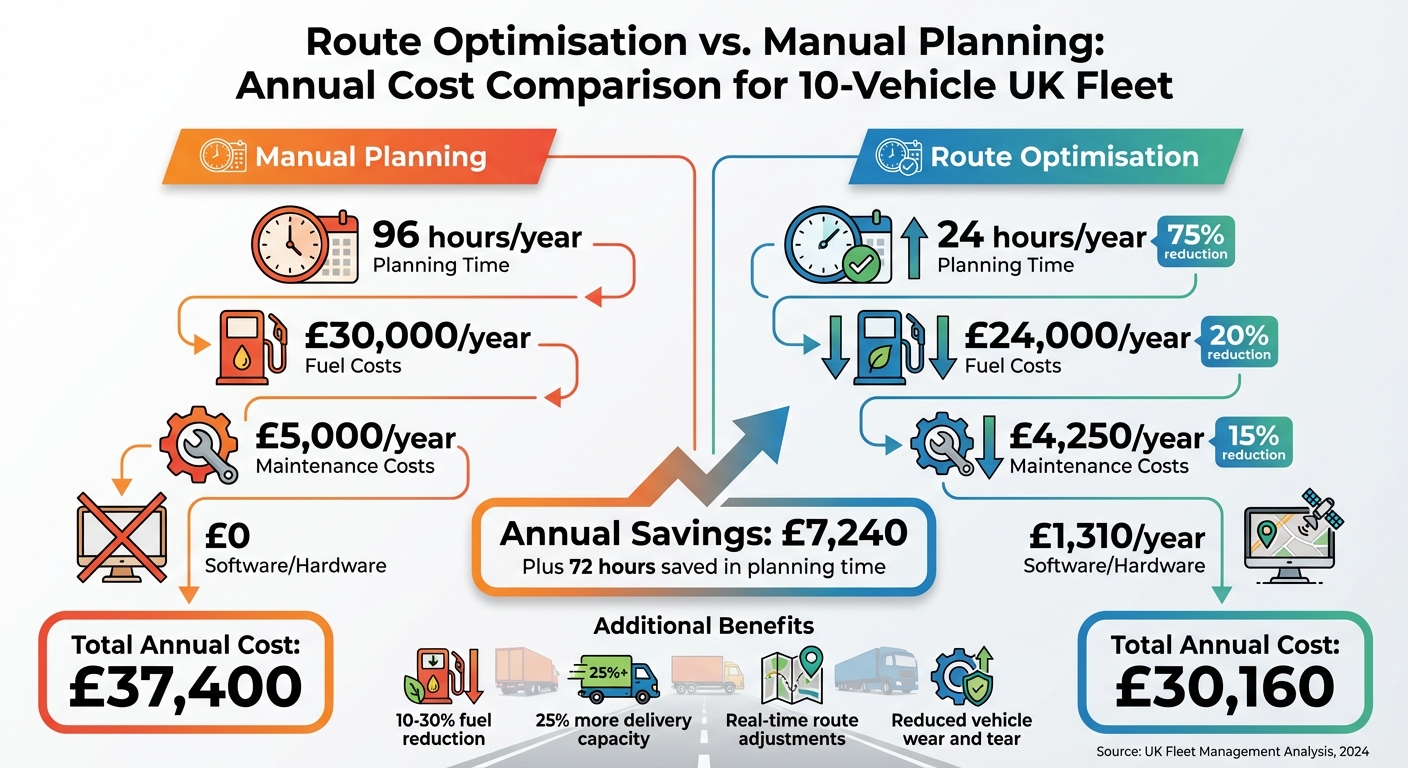
Manual Route Planning vs Route Optimisation Cost Comparison for UK Fleets
Rising Fuel Costs? Cut Transport Costs by 20% with AI Route Optimization
Manual Route Planning Costs
Manual route planning brings a range of hidden costs that can significantly impact profit margins for UK fleets. Dispatchers often spend hours each day manually creating routes, checking traffic updates, and juggling spreadsheets to keep things running smoothly. For a business handling 50 deliveries daily, this can result in an extra 5 hours of driving time each day. Over time, these inefficiencies add up, with managers losing around 144 hours annually to manual scheduling tasks. These operational delays drive up labour, fuel, and maintenance costs, eating into profits.
Labour Costs
The cost of manual planning isn’t limited to paying dispatchers. Poorly optimised routes mean drivers spend more time on the road, often leading to higher overtime expenses. In fact, routes planned manually can take approximately 10% longer compared to those created with automated systems. This inefficiency not only increases costs but also impacts driver satisfaction, as unrealistic schedules can lead to frustration. High turnover rates and the associated recruitment and training costs add another layer of expense. Switching to automated route planning can cut labour costs by about 15%, freeing up staff to focus on enhancing customer service rather than constantly firefighting logistical issues.
Fuel Inefficiency
Fuel is a major expense for fleets, accounting for up to 30% of total operating costs. Manual route planning often results in inefficient routing, leading to "dead miles" and unnecessary detours. For instance, driving an extra 500 miles per month in a 12-foot truck (with an average of 10 mpg) can significantly increase annual fuel costs. On top of that, idling during poorly planned stops can burn up to 2 litres of fuel per hour, further inflating fuel expenses.
Operational Risks
Manual planning introduces several risks that can jeopardise both service quality and compliance. Managing variables like hours-of-service regulations is challenging without automated tools, increasing the likelihood of fines. Additionally, missing one extra service call per week due to inefficient routing could result in an annual revenue loss of approximately £6,480. Poorly optimised routes also lead to excessive wear and tear on tyres, brakes, and engines, driving up maintenance costs. Another issue is the reliance on "tribal knowledge" - undocumented expertise held by specific staff. If these key individuals are unavailable, operations can grind to a halt until replacements are fully trained.
Route Optimisation Costs and Benefits
Switching from manual planning to automated route optimisation involves an initial investment, but the returns are swift. By using real-time data, automated systems can instantly adjust routes, reducing downtime and cutting costs. For example, if a delivery gets cancelled or unforeseen conditions arise, routes are recalculated on the spot - avoiding the static limitations and human errors associated with manual planning. These efficiencies lead to noticeable savings, as explored below.
Initial Investment and Monthly Fees
Calculating the cost of route optimisation is simple. GRS Fleet Telematics provides three hardware options tailored to different budgets:
- Essential Tracker: Priced at £35, it offers basic real-time tracking.
- Enhanced Package: At £79, it includes dual-tracker technology for theft protection.
- Ultimate System: For £99, it adds immobilisation features for extra security.
The monthly subscription fee is £7.99 per vehicle. This includes SIM and data costs, platform access, and support from a dedicated account manager. Plus, if you use GRS Fleet Graphics for vehicle branding, installation is free. This transparent pricing structure makes it easy to calculate your total cost of ownership.
Fuel and Time Savings
Automated route optimisation can reduce fuel consumption by 10–30% and cut planning time from hours to mere minutes. For instance, a medium-sized fleet spending around £3,000 monthly on fuel could see significant savings. As businesses grow, manual planning becomes increasingly complex and error-prone, whereas automated systems handle larger workloads effortlessly.
Fleet Productivity Gains
The benefits go beyond cost savings. Optimised routes allow drivers to complete more deliveries each day without extending their working hours. This means businesses can handle increased demand without adding more vehicles or staff, boosting profitability. Real-time adaptability also ensures schedules stay on track, improving service reliability. Additionally, with GRS Fleet Telematics, you gain access to features like speed alerts and eco-driving analytics. These tools not only enhance driver safety but can also lower insurance premiums and reduce vehicle wear.
Cost Comparison: Manual Planning vs Route Optimisation
Switching to automated route optimisation can save a lot of time and money for fleet managers. For a 10-vehicle fleet, it reduces the time spent on planning from 96 hours to just 24 hours a year. That’s 72 hours freed up - almost 2½ weeks that can be redirected to more strategic work.
Fuel savings are another big advantage. Manual planning often adds around 500 unnecessary miles per month due to inefficient routing. This extra mileage can increase fuel consumption by up to 20%. For a fleet with an annual fuel bill of £30,000, moving to automated planning could slash costs by about £6,000 each year.
Additionally, optimised routing isn’t just about fuel - it also reduces wear and tear on vehicles. By cutting mileage by 15–20%, it lowers expenses on tyres, brakes, and engine maintenance.
Fleet Cost Comparison Table
Here’s a clear breakdown of the annual costs for a 10-vehicle fleet operating in the UK, comparing manual planning with automated route optimisation:
| Cost Category | Manual Planning | Route Optimisation | Annual Savings |
|---|---|---|---|
| Planning Labour (manager time at £25/hour) | £2,400 (96 hours) | £600 (24 hours) | £1,800 |
| Fuel Costs | £30,000 | £24,000 (20% reduction) | £6,000 |
| Maintenance | £5,000 | £4,250 (15% reduction) | £750 |
| Software & Hardware | £0 | £1,310 (GRS subscription: £959/year + hardware amortised) | –£1,310 |
| Total Annual Cost | £37,400 | £30,160 | £7,240 |
This table highlights the potential savings - approximately £7,240 annually - for a modest 10-vehicle fleet that switches to route optimisation. But the benefits don’t stop there. Optimised routes allow drivers to handle more jobs without working extra hours. Even adding one additional service call per vehicle each week could mean thousands of pounds in extra revenue every year.
Automated route optimisation clearly offers a compelling financial advantage for UK fleets.
ROI Examples for UK Fleets
Cost savings are a key motivator for UK fleets adopting route optimisation, and the numbers speak for themselves. Take, for instance, a UK fleet of 10 vehicles, each covering 25,000 miles annually. With an average fuel spend of around £30,000, implementing route optimisation to achieve a 20% fuel reduction could save about £6,000 per year. That’s a clear example of how quickly these solutions can make a financial difference.
Here’s how the investment breaks down: GRS Fleet Telematics' Enhanced hardware costs £79 per vehicle, totalling £790 for a fleet of 10. Add to that a monthly subscription fee of £7.99 per vehicle, which comes to £959 annually. Altogether, the first-year cost is £1,749 - a figure that’s swiftly offset by the significant fuel and operational savings.
The benefits aren’t just hypothetical. Phil West, Director at Pegasus Couriers, highlights that dynamic routing tools can slash fuel costs by up to 30%. Similarly, Musgrave, a food wholesaler, reported a 27% reduction in travel distances and a 20% decrease in transportation costs after adopting advanced routing technology. Pret A Manger also saw impressive results, using optimised routing to serve an additional 1,000 customers daily without needing extra vehicles or staff.
For UK fleets grappling with congestion, unpredictable traffic, and rising fuel costs, route optimisation provides a clear path to rapid ROI.
Cost Efficiency Summary
This section brings together the key cost-saving advantages discussed earlier. Automated route optimisation plays a crucial role in cutting operating and fuel costs, which is especially impactful for UK fleets where fuel can account for up to 30% of total operating expenses.
Relying on manual planning introduces hidden costs, as inefficiencies lead to longer routes and unnecessary fuel consumption. Additionally, administrative labour costs rise when dispatchers spend hours manually sequencing stops in spreadsheets - time that could be better spent on more strategic tasks. These inefficiencies highlight the opportunity for automated systems to deliver noticeable cost savings.
Route optimisation tackles these issues with data-driven routing that considers factors like traffic, delivery time windows, and vehicle capacity. This approach boosts fleet productivity by increasing the number of stops per route. In busy UK urban areas, optimised routing not only improves punctuality but also helps fleets avoid penalties from low-emission zones.
GRS Fleet Telematics provides a cost-effective solution with Enhanced hardware priced at £79 per vehicle and monthly subscriptions starting at £7.99. As outlined above, adopting GRS Fleet Telematics can lead to measurable annual savings for UK fleets by reducing mileage, cutting fuel usage, and improving overall fleet efficiency - all while maintaining strong asset security.
FAQs
How quickly will route optimisation pay for itself?
Route optimisation systems often recover their costs within 8 to 12 months, making them a smart investment for businesses. For AI-powered systems, the payback can be even faster - sometimes as little as 0.3 months. This quick return is largely thanks to substantial savings, including 10–20% reductions in fuel costs, decreased maintenance spending, and smoother, more efficient deliveries.
What fleet size benefits most from route optimisation?
Mid-sized to larger fleets stand to gain the most from route optimisation. For smaller fleets, manual planning might suffice, but when managing higher delivery volumes, automated systems can make a huge difference. These tools not only improve efficiency but also help cut costs and boost capacity. In fact, they can increase daily deliveries by up to 25% - all without needing extra vehicles or drivers. Many mid-sized fleets typically see a return on investment within 8–12 months, while larger fleets often enjoy even greater cost savings.
Do I need new hardware to use GRS Fleet Telematics?
No new hardware is needed to use GRS Fleet Telematics. Starting at just £7.99 per month, our solutions work effortlessly with your current vehicle systems. This makes it an affordable and hassle-free choice for managing your fleet.