How Remote SOS Tools Improve Driver Safety
Remote SOS systems—GPS, one-touch alerts and automatic collision detection—speed responses, reduce risk and cut fleet downtime.
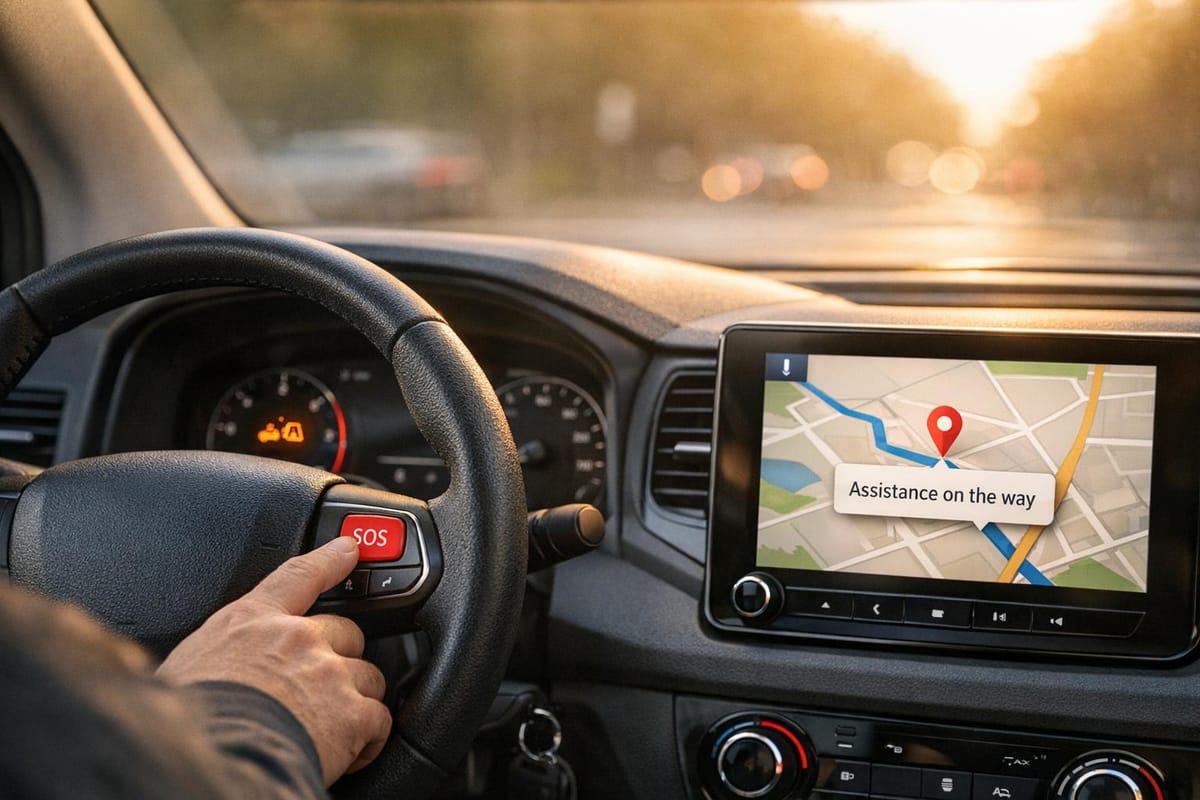
Remote SOS tools are transforming driver safety by enabling faster emergency responses, reducing risks, and improving fleet efficiency. These systems use GPS, real-time alerts, and automatic collision detection to ensure help reaches drivers quickly. Between June 2023 and January 2024, Lanes Group plc saw an 84% drop in high-risk drivers, while companies like Elis UK Ltd saved millions in insurance and fuel costs. Here's what makes these tools effective:
- Emergency alerts: Instant SOS activation via buttons, apps, or sensors.
- Precise GPS tracking: Pinpoints location within 2 metres, even in challenging areas.
- Automatic collision detection: Triggers alerts during impacts or medical issues.
- Fleet management benefits: Reduced downtime, theft prevention, and predictive maintenance.
These tools not only protect drivers but also streamline fleet tracking solutions, saving time and money while ensuring safety on the road.
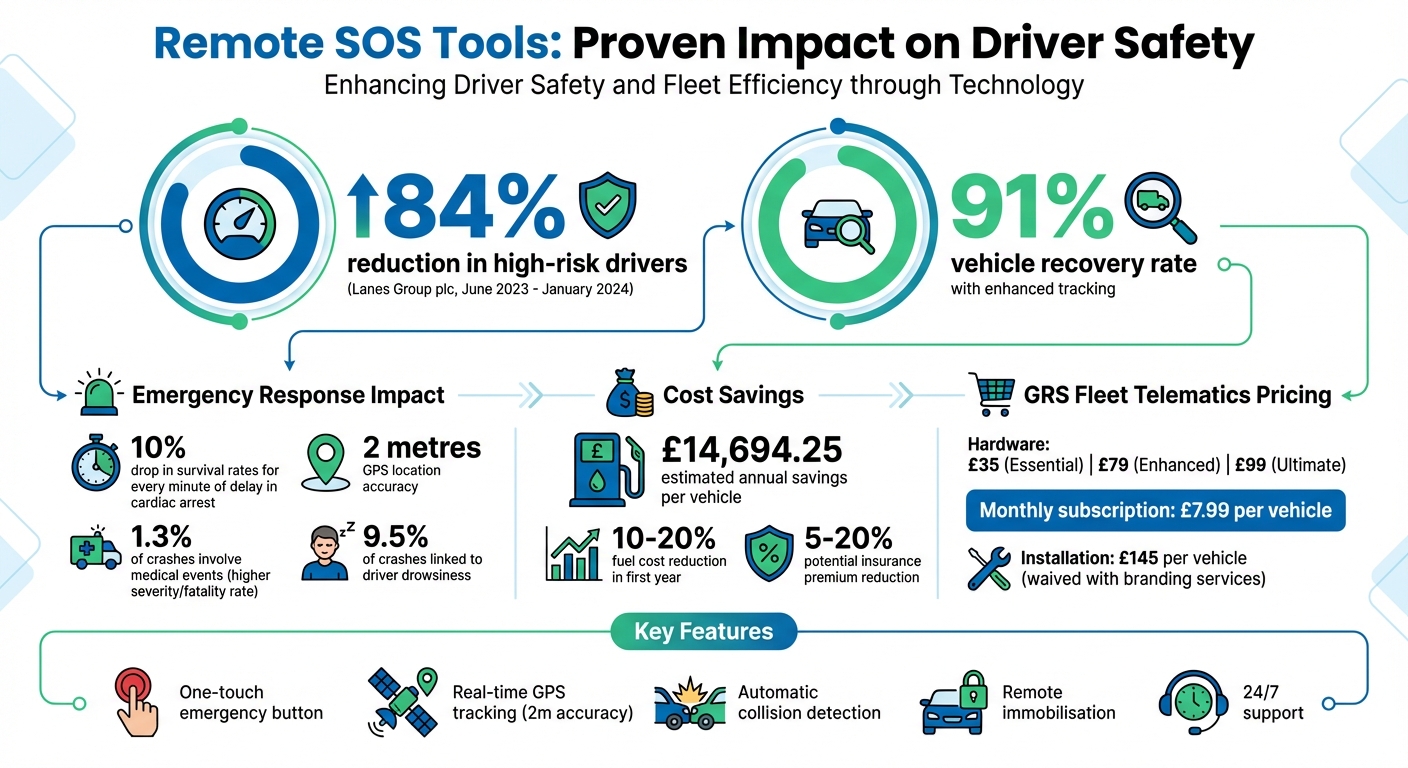
Remote SOS Tools Impact on Driver Safety and Fleet Efficiency Statistics
What Are Remote SOS Tools?
Remote SOS tools are advanced systems designed to help drivers quickly signal for assistance during emergencies. These tools combine physical hardware - like panic buttons, vehicle sensors, or smartphone apps - with software that sends critical information to emergency responders or fleet managers. The process is straightforward: in the event of a medical issue, collision, or threatening situation, the driver activates the system, which then transmits their exact GPS location and incident details.
Unlike traditional 999 calls, where drivers must verbally explain their situation and location, these tools automatically send a data packet. This packet includes essential information such as the user's identity, precise coordinates, and the nature of the emergency. For instance, one system utilises data from over 540 million connected devices to assist more than 21,000 public safety agencies.
Main Features of Remote SOS Tools
The core of these systems lies in their one-touch emergency button. Drivers can activate alerts using a physical button in the vehicle, a smartphone app, voice commands, or even by shaking their device. These buttons are designed for quick and discreet access, ensuring drivers can call for help even in stressful or dangerous situations.
Another key feature is real-time GPS location sharing. Modern systems can pinpoint a driver's location with an accuracy of up to 2 metres. This level of precision is vital, especially in hard-to-reach places like remote areas, underground car parks, or multi-storey buildings. To maintain connectivity, many tools combine GPS satellites, GSM mobile networks, and VHF signals. VHF is particularly useful for environments where GPS might fail, such as inside shipping containers or underground spaces.
Automatic collision detection adds another layer of safety. Using vehicle sensors and cameras, these systems can assess the severity of an impact. If airbags deploy or the vehicle experiences sudden deceleration, an SOS call is triggered automatically. Some tools even integrate biometric monitoring to detect medical emergencies, such as abnormal heart rhythms, and notify nearby medical facilities.
Together, these features ensure that drivers can access help quickly and reliably when they need it most.
How Remote SOS Tools Operate
When a driver activates the system or when it's triggered by collision detection, a data packet is sent within seconds. This packet includes critical details like the driver’s identity, their location, and specifics about the incident. The information is transmitted directly to emergency communication centres, such as 999 in the UK, significantly reducing response times.
Fleet managers also receive alerts that provide essential details, including the vehicle’s status, the driver’s location, and the type of emergency. This allows them to coordinate assistance effectively. In cases of vehicle theft, some systems even enable remote immobilisation, allowing managers to safely disable the engine once the vehicle has stopped.
These operational capabilities make Remote SOS tools an invaluable resource for improving safety and response efficiency.
How Remote SOS Tools Improve Driver Safety
Remote SOS tools play a key role in improving driver safety by cutting response times, boosting driver confidence, and keeping disruptions to a minimum.
Faster Emergency Response Times
In emergencies, every second matters. Remote SOS tools use automated alerts to notify fleet managers instantly when incidents like collisions, thefts, or risky driving behaviours occur. This eliminates the delays caused by manual calls and ensures immediate action can be taken. Managers can quickly dispatch emergency services or roadside assistance, saving precious time.
Real-time tracking enhances emergency response efficiency by 20%, while continuous monitoring helps reduce accidents by 20–45%. In critical situations like cardiac arrest, where survival rates drop by 10% for every minute of delay, these tools can make a life-saving difference.
"GPS has given managers a quantum leap forward in efficient operation of their emergency response teams." - National Coordination Office for Space-Based Positioning, Navigation, and Timing
Proximity-based dispatching further speeds up response times by identifying the nearest available unit to the scene. Dynamic route optimisation uses live traffic data to guide responders along the fastest route, recalculating in real-time as conditions change. Additionally, automated forensic data - such as speed, timestamps, and location - provides a clear timeline for emergency teams and insurers, helping to process incidents more efficiently.
These swift responses not only save lives but also give drivers peace of mind, knowing help is always close at hand.
Better Driver Confidence and Peace of Mind
Having one-button access to emergency support can be a game-changer for drivers. It offers reassurance, especially for those working in remote areas, during late-night shifts, or in high-risk locations. Knowing that help is just a button press away allows drivers to focus on their tasks without the constant worry of "what if."
"There's no cost on officer safety when it comes to knowing where they're at. If they all of a sudden go chasing someone and didn't notify dispatch, we know exactly where their car's at." - John Wilson, Sheriff, Clare Country Police Department
This sense of security is particularly important in medical emergencies. Although only 1.3% of crashes involve drivers experiencing a medical event, these incidents are more likely to result in severe or fatal injuries. Advanced systems that monitor driver attention and can bring a vehicle to a controlled stop with hazard lights activated offer essential protection in cases of drowsiness or medical emergencies. Considering that 9.5% of crashes are linked to driver drowsiness, such features are crucial.
Remote SOS tools also help businesses uphold their duty of care. By monitoring driver hours and alerting managers when legal limits are approached, these systems help prevent fatigue-related incidents, ensuring compliance with UK Working Time Regulations.
Less Fleet Downtime and Fewer Disruptions
These tools don’t just protect drivers - they also keep fleet operations running smoothly. Real-time alerts allow managers to tackle issues before they escalate, dispatching assistance or recovery services immediately to minimise delays for rental fleets.
Roadside assistance becomes far more efficient with advanced systems that send diagnostic data directly to support centres. Technicians can arrive on-site with the right tools and parts, reducing the need for costly and time-consuming tows. This "right-first-time" approach keeps vehicles on the road and schedules intact.
Predictive maintenance is another benefit. By analysing data collected from vehicles, potential mechanical issues can be identified and addressed before they lead to breakdowns. Theft and tamper alerts also notify managers of unauthorised use instantly, enabling swift intervention —a feature often integrated into white-label tracking solutions for bespoke fleet management.. Additionally, route optimisation features help drivers avoid traffic and road closures, ensuring deliveries stay on schedule.
Using GRS Fleet Telematics for Emergency Response
GRS Fleet Telematics offers remote SOS features tailored to fleets of all sizes. This system combines cost-effective hardware, straightforward setup, and 24/7 support, with direct coordination with UK police to ensure fast vehicle recovery. By leveraging these remote SOS tools, GRS Fleet Telematics enhances fleet safety and simplifies integration.
GRS Hardware Options with SOS Features
GRS provides three hardware packages to suit different fleet needs:
- Essential tracker (£35): A hardwired GPS/GSM system offering real-time location tracking. Ideal for local fleets focused on basic monitoring.
- Enhanced tracker (£79): Adds a discreet Bluetooth backup for dual-layer tracking, increasing reliability. This option boasts a 91% recovery rate for stolen vehicles.
- Ultimate tracker (£99): Includes both tracking layers plus remote immobilisation, enabling managers to disable a vehicle's engine if unauthorised use is detected.
Installation costs start at £145 per vehicle but are waived when paired with GRS Fleet Graphics branding services. For potential insurance savings, check with providers regarding Thatcham S5/S7 certification, which could lower premiums by 5% to 20%.
Monthly Subscription and What's Included
The monthly subscription fee is £7.99 per vehicle, covering SIM and data, platform access, and a dedicated account manager. This includes real-time SOS tools, geofencing alerts, and 24/7 recovery support. The subscription also helps fleets save money, with tools like route optimisation cutting fuel costs by 10–20% in the first year and reducing overall fuel and maintenance expenses by an estimated £14,694.25 annually per vehicle.
"Our platform has been proven globally across fleets of all sizes. Whether you manage 5 vehicles or 500, our GPS tracking system for car fleets grows seamlessly with your business." - GRS Leadership Team
How to Implement GRS Tools
The time required for implementation depends on fleet size:
- Small fleets (1–10 vehicles): Installation can be completed in one day during routine maintenance.
- Medium fleets (11–50 vehicles): A phased rollout takes 1–2 weeks, prioritising high-value vehicles first.
- Large fleets (50+ vehicles): Deployment typically takes 2–4 weeks and includes project management support.
Driver training is essential for compliance and maximising system benefits. UK law mandates that drivers must be informed about vehicle tracking - this transparency builds trust and ensures legal compliance. Training should cover emergency features, geofencing alerts, and how the system monitors safety.
"It is illegal to track a vehicle without informing the driver. Transparency is essential to remain compliant and maintain employee trust." - Fleetsmart
Conclusion
Remote SOS tools offer a powerful way to protect drivers during emergencies and keep fleets running efficiently. With the ability to reduce accident rates by up to 72% and recover stolen vehicles in hours rather than days, these tools provide both peace of mind and practical benefits. GRS Fleet Telematics supports these efforts with plans starting at just £7.99 per month per vehicle and hardware priced from £35. Their dual-tracker technology achieves an impressive 91% recovery rate, minimising downtime and operational disruptions.
Additional features, such as geofencing, predictive maintenance, and remote immobilisation, safeguard assets while cutting fuel costs by an average of 24%.
Choosing remote SOS tools goes beyond theft prevention or accident reduction. It’s about ensuring driver safety, protecting your fleet, and maintaining uninterrupted business operations during critical moments.
FAQs
Will an SOS still work with poor signal?
When it comes to sending an SOS message, it’s often possible even with a weak signal. However, the success of the message largely depends on the technology at play. Certain systems are built to work effectively in areas with limited connectivity, while others might need a stronger signal to function properly. To ensure you're prepared, it’s worth checking the exact capabilities of your system to see how well it performs in low-signal conditions.
How does automatic crash detection avoid false alarms?
Automatic crash detection works by using a combination of sensors and cameras to evaluate the severity of an impact and keep track of the vehicle's environment. This ensures SOS calls are made only when a real collision occurs, cutting down on false alarms and unnecessary alerts.
What do drivers need to know about tracking privacy in the UK?
Drivers in the UK should be aware that vehicle tracking is allowed but must adhere to privacy regulations, including the Data Protection Act 2018 and UK GDPR. Tracking should only be used for valid business reasons, and drivers need to be informed about how their data is collected, used, and stored. Employers are also required to put proper security measures in place and respect drivers' rights, such as giving them access to their data and allowing them to challenge any monitoring they feel is excessive.