Remote Diagnostics for Fleet Emergencies
Real-time telematics and CAN data send instant fault alerts and enable predictive maintenance to cut downtime, reduce costs and improve emergency response.
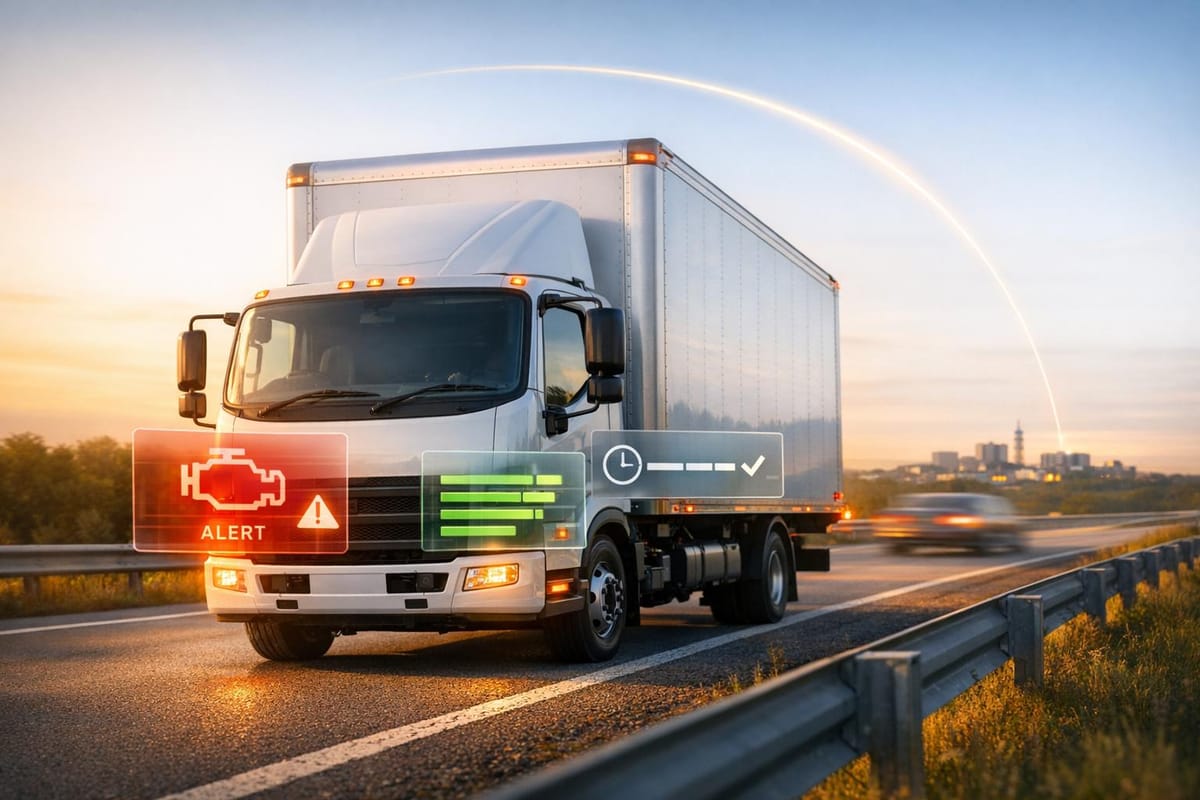
Remote diagnostics help fleet managers monitor vehicle health in real time using telematics systems connected to vehicle sensors. These systems detect issues like engine faults or brake problems, sending instant alerts via 4G/5G to central platforms. This enables quicker responses, reduced downtime, and improved safety - especially for emergency services where every second counts.
Key takeaways:
- Real-time fault detection: Identifies problems early, cutting breakdowns by up to 70%.
- Cost savings: Predictive maintenance reduces repair costs by 25–30%.
- Driver monitoring: Reduces accidents by 20–45% and related costs by up to 28%.
- Emergency readiness: Ensures vehicles are operational for time-sensitive missions.
- Security features: GPS tracking, dual trackers, and remote immobilisation recover up to 91% of stolen vehicles.
Systems like GRS Fleet Telematics offer affordable solutions starting at £7.99 per month, combining advanced tracking, fault alerts, and security tools. Whether for emergency services, logistics, or rental fleets, remote diagnostics improve efficiency and minimise disruptions.
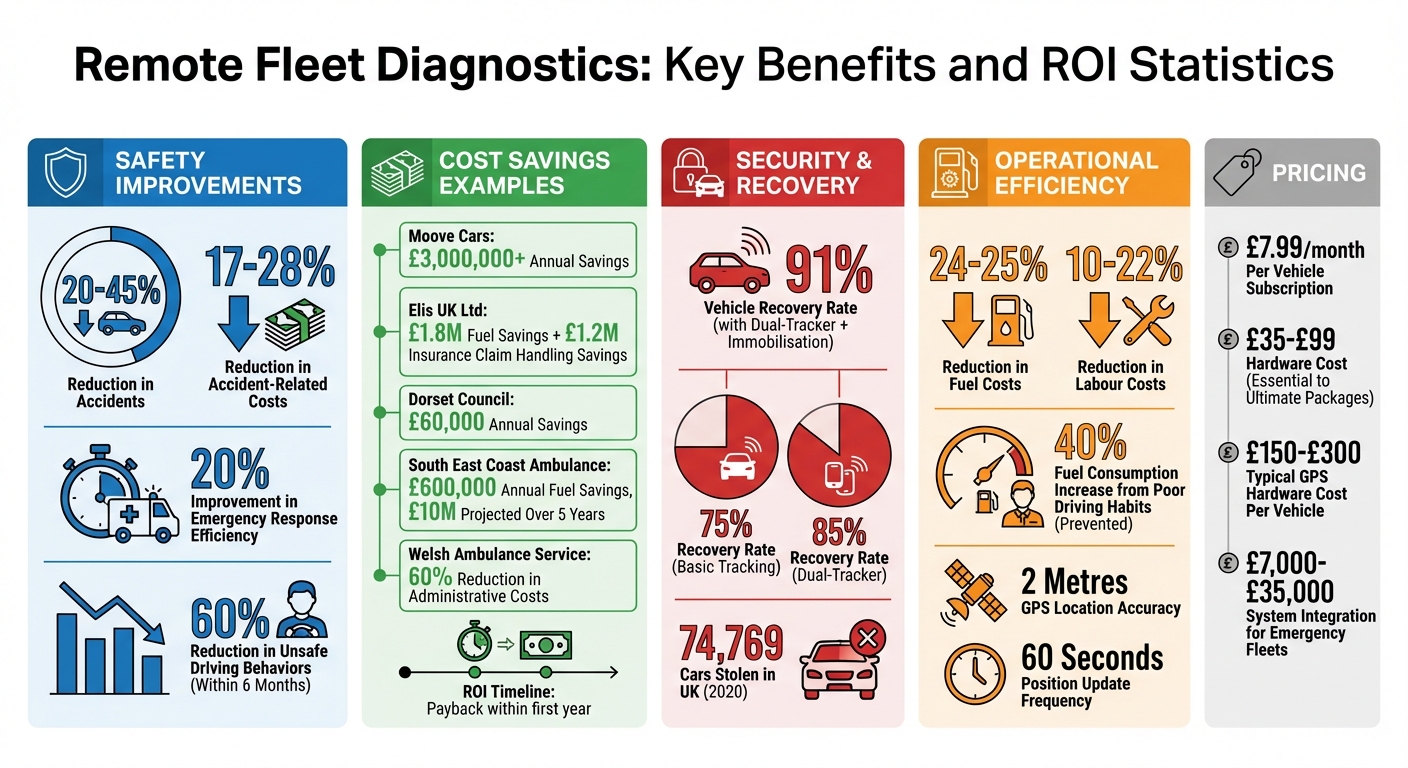
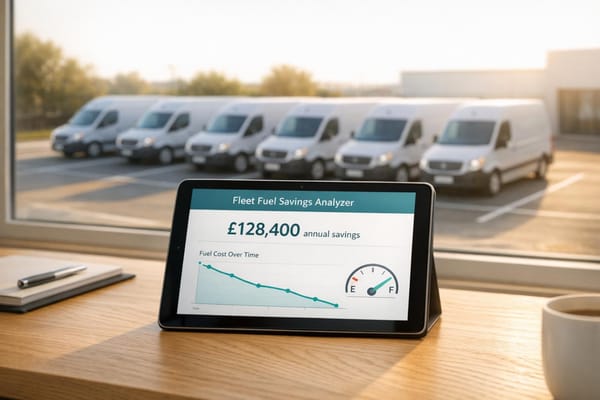
Remote Fleet Diagnostics: Key Benefits and Cost Savings Statistics
How Remote Diagnostics Work During Fleet Emergencies
Vehicle Sensors and CAN Data
In emergency situations, quick fault detection is essential, and the Controller Area Network (CAN) system plays a key role in this process. Modern vehicles are equipped with numerous sensors that monitor critical aspects like engine temperature and brake pad wear. These sensors feed data into the CAN system, which generates a Diagnostic Trouble Code (DTC) whenever a fault arises - whether it’s a failing alternator, low oil pressure, or an overheating engine.
This system eliminates the need for drivers to rely solely on visual warnings, like dashboard lights or unusual noises. Instead, faults are flagged the moment they occur. The telematics device captures this CAN data and transmits it via 4G or 5G networks to cloud servers for immediate analysis. Position updates are sent every 60 seconds, giving fleet managers near real-time insights into the vehicle's status.
By delivering this fault data instantly, telematics devices enable faster emergency responses.
Telematics Devices and Fault Detection
Telematics devices act as the central communication hub, processing the sensor data from the CAN system. Hardwired trackers, which are integrated directly into the vehicle’s electrical system, provide added security and tamper-resistance - especially important for emergency fleet tracking. These devices read the DTCs and forward the information to the fleet management platform.
Once the data reaches the cloud, it is categorised into tiered alerts. For example, a minor issue like a worn air filter might trigger a low-priority warning, while critical faults such as brake failures generate immediate emergency alerts. This system helps fleet managers prioritise responses, distinguishing between routine maintenance and urgent issues requiring immediate attention.
How Data Is Displayed for Emergency Response
Fleet management platforms present diagnostic information in an intuitive way, displaying fault severity, vehicle location, and recommended actions on dashboards. These platforms often integrate with dispatch systems to enable proximity-based dispatching, ensuring the closest available emergency unit is sent to a call. For instance, when a 999 call is received, the system identifies the nearest vehicle, checks its diagnostic status, and confirms it’s ready for deployment.
Geofencing technology adds another layer of functionality. By setting virtual boundaries around key areas like hospitals or high-risk zones, the system can send automatic alerts when emergency vehicles enter or leave these zones. This feature has been transformative for organisations like the Welsh Ambulance Service, which reported a 60% reduction in administrative costs after adopting automated data processing and reporting. Additionally, real-time monitoring has helped reduce unsafe driving behaviours by 60% within six months.
Main Features of Remote Diagnostics for Emergencies
Real-Time Fault Alerts
Quick notifications are essential for effective emergency responses. When a vehicle's sensors detect an issue - like engine trouble, brake problems, or overheating - the system sends alerts to fleet managers automatically, eliminating the need for manual checks. If the initial alert isn't addressed, the system escalates the issue to higher management, ensuring no critical faults slip through the cracks and reducing the risk of costly downtime.
These real-time alerts can cut fault identification times by as much as 70%. Unitemp Inc. describes fault detection and diagnostics (FDD) as:
an early warning system that monitors building systems and looks for subtle signs of developing issues... allowing operators to fix problems before they impact operations or become emergencies.
This approach shifts fleet management from reacting to problems after they occur to addressing them before they escalate.
AI-powered analytics take this a step further by analysing sensor data to identify patterns and deviations from normal operations. For instance, instead of just alerting when a temperature exceeds a set limit, machine learning algorithms can detect subtle anomalies that indicate potential problems - giving managers the chance to intervene early.
Building on these instant alerts, features like customisable notifications and geofencing refine emergency response strategies even further.
Custom Alerts and Geofencing
Custom alerts let fleet managers focus on the most critical aspects of their operations. With geofencing, virtual boundaries can be set around key locations - such as hospitals, construction sites, or high-risk areas. When a vehicle enters or exits these zones, the system sends automatic notifications. This is especially useful during disasters, helping to reroute vehicles away from danger zones like wildfires or floods and guiding them to safer paths.
Geofencing technology offers impressive precision, with accuracy often within 10 metres. For emergency services, this enables proximity dispatching, where the nearest available vehicle is identified and sent to an incident site, cutting response times significantly.
Security is another major benefit. Custom alerts can flag unauthorised vehicle use or route deviations, allowing quick action in coordination with authorities. This is particularly relevant in the UK, where 74,769 cars were reported stolen in 2020. To avoid overwhelming staff with notifications, it’s best to start with essential triggers, such as engine failure or geofence breaches.
Integration with Security Systems
When combined with security features, remote diagnostics become even more effective at protecting fleets.
Dual-tracker technology is one example, pairing primary GPS with a Bluetooth backup system. This ensures vehicles remain traceable even if the main tracker is tampered with or the signal is jammed. Such redundancy is vital during theft attempts, where criminals often try to disable tracking systems.
Another powerful tool is remote immobilisation. If a vehicle is stolen or used without permission, fleet managers can remotely disable its engine, preventing further movement and aiding recovery efforts. The results speak for themselves: systems that combine dual-tracker technology with remote diagnostics boast a 91% recovery rate for stolen vehicles.
| Feature | GRS Essential | GRS Enhanced | GRS Ultimate |
|---|---|---|---|
| Theft Recovery Rate | 75% | 85% | 91% |
| Tracking Technology | Wired GPS | Dual (GPS/Bluetooth) | Dual + Backup |
| Immobilisation | None | None | Full Remote |
| Hardware Cost | £35 | £79 | £99 |
| Monthly Subscription | £7.99 | £7.99 | £7.99 |
The £7.99 monthly subscription typically includes SIM data, access to the platform, and a dedicated account manager. This makes advanced security features accessible even for smaller fleets. Integration with dispatch and maintenance software further streamlines operations, automating tasks like arrival logs and service scheduling. Additionally, GPS tracking and driver behaviour monitoring can help reduce accidents by up to 20%. By combining diagnostics with real-time security measures, fleets can maintain smooth operations even in the face of emergencies.
Benefits of Remote Diagnostics for Fleet Operators
Lower Downtime and Maintenance Costs
Fleet operators know that vehicle downtime can eat into 8–11% of revenue. It's a constant challenge, but remote diagnostics offer a solution by monitoring Diagnostic Trouble Codes (DTCs) in real time. This means issues like engine or brake malfunctions can be flagged and dealt with early, preventing minor problems from snowballing into major, costly repairs.
Predictive maintenance, powered by these systems, is a game-changer. It can cut breakdowns by up to 70% and reduce repair costs by 25–30%. In the UK, fleets have reported an average maintenance saving of 21%. Some standout examples? Moove Cars saved over £3 million annually as of February 2025, while Elis UK Ltd cut £1.8 million in fuel costs and £1.2 million in insurance claim handling costs across its 480 HGVs and 270 LCVs. Dorset Council also managed to save £60,000 annually.
And what about the initial investment? It's manageable. GPS hardware typically costs between £150 and £300 per vehicle, with system integration for emergency fleets ranging from £7,000 to £35,000. These upfront costs are quickly offset by fewer unplanned repairs and extended vehicle lifespans.
Better Driver Safety
Cost savings are great, but safety is paramount. Remote diagnostics significantly enhance fleet safety by detecting critical faults - like brake issues or engine overheating - before they lead to breakdowns. This is especially vital for emergency services, where every second counts; for instance, cardiac arrest survival rates drop by 10% for every minute of delay in response.
Driver behaviour monitoring adds another layer of safety. By keeping an eye on driving habits, accidents can be reduced by 20–45%, and accident-related expenses drop by 17–28%. A UK construction company managing over 100 vehicles saw a remarkable 75% reduction in at-fault collisions after introducing remote behaviour monitoring. These systems also provide instant notifications and forensic data after accidents, helping teams analyse causes and implement preventative strategies. Plus, dual-tracker van tracking solutions ensure up to a 91% recovery rate for stolen vehicles, keeping fleets operational when they're needed most.
Beyond safety, these tools contribute to smoother fleet operations overall.
Better Operational Efficiency
When downtime and safety improve, efficiency naturally follows. Remote diagnostics help fleets cut waste and streamline tasks. For example, fuel costs - often 30% of operating expenses - can drop by 24–25% through route optimisation and driver behaviour monitoring. These systems identify fuel-wasting habits like idling, speeding, and aggressive driving, which can spike fuel consumption by up to 40%.
Take Hill Country Construction as an example. In 2025, they implemented a fuel management system alongside telematics for their 180-vehicle fleet. The result? A 13% reduction in fuel consumption, a 10% drop in mileage thanks to better routing, and an 80% cut in maintenance costs through predictive scheduling. Altogether, these changes saved the company £650,000 annually. Colin Sutherland, Executive Vice President of Sales and Marketing at Geotab, summed it up well:
Safer, more efficient driving boosts fuel economy.
Labour and administrative costs also take a hit - in a good way. GPS tracking systems can lower labour expenses by 10–22%, while automated data collection and reporting reduce manual work and human error in scheduling and compliance. For instance, after adopting FleetWave management technology, the Welsh Ambulance Service slashed its administration costs by 60%, freeing up staff to focus on essential duties.
How GRS Fleet Telematics Supports Remote Diagnostics
GRS Fleet Telematics offers remote diagnostic tools tailored specifically for UK-based fleets. It combines cost-effective solutions, strong security features, and 24/7 support to ensure vehicles remain operational when it matters most. This system integrates advanced hardware with dedicated support, enhancing emergency response capabilities.
Dual-Tracker Technology
To prevent data loss due to device tampering or failure, GRS employs a dual-tracker system. The primary hardwired GPS tracker connects directly to the vehicle’s power source, while a hidden Bluetooth tracker serves as a backup. This setup ensures uninterrupted tracking, even if the main unit is disabled. The system provides location accuracy within 2 metres, a critical feature for recovering stolen vehicles quickly.
Our Double-Tracker System: Wired GPS tracker plus hidden Bluetooth backup ensures continuous data even if the main device is compromised. - GRS Fleet Telematics
The Ultimate package also includes remote immobilisation, allowing fleet managers or the Secure Operating Centre to disable a vehicle’s engine remotely. To ensure safety, this feature is only activated when the vehicle is stationary, minimising risks to drivers and the public.
Pricing from £7.99 per Month
GRS Fleet Telematics ensures affordability without compromising on features. For just £7.99 per vehicle per month, customers receive SIM data, platform access, and a dedicated account manager. Hardware options cater to various budgets:
- Essential Package (£35): Provides basic real-time tracking.
- Enhanced Package (£79): Adds the backup Bluetooth tracker.
- Ultimate Package (£99): Includes remote immobilisation capabilities.
Installation is free for fleets using GRS Fleet Graphics branding. For stolen vehicle recovery, GRS operates on a pay-per-recovery model - you’re charged only if the vehicle is successfully recovered. With a 91% recovery success rate, this approach ensures value for fleets of all sizes, from small businesses to large logistics operations.
GRS combines competitive pricing with expert support, ensuring swift and effective responses when time is critical.
24/7 Support and Instant Alerts
GRS provides round-the-clock recovery support, with teams experienced in UK recovery protocols. The system sends instant notifications for theft, unauthorised movement, geofence breaches, or hardware tampering. It also monitors engine performance, fuel consumption, and maintenance schedules in real time, helping to identify and address issues before they lead to costly breakdowns.
In the event of theft or emergencies, GRS recovery specialists work directly with UK law enforcement, supplying precise location data to speed up vehicle recovery. This seamless coordination between diagnostic alerts and expert support minimises downtime and keeps fleets running efficiently, reducing disruptions that could impact business operations.
Remote Diagnostics Use Cases in the UK
Remote diagnostics cater to the specific demands of emergency services, logistics, and rental companies, each dealing with unique operational hurdles. Examining how UK fleets utilise this technology highlights its practical applications across various sectors. Here's how different fleet types are using remote diagnostics to improve efficiency and performance.
Emergency Services Fleets
Ambulance trusts, fire departments, and police forces depend on remote diagnostics to ensure their vehicles are always ready to respond. For example, the South East Coast Ambulance Service (Secamb) has equipped 75% of its fleet with telematics under the leadership of John Griffiths, Head of Fleet. By remotely monitoring auxiliary battery health and incorporating solar panels for trickle charging, the service has significantly reduced downtime caused by battery issues. Additionally, disabling speed limiters when the '999' button is pressed has not only sped up response times but also cut fuel costs by £600,000 annually. With predictive maintenance tailored to the unique demands of emergency vehicles, the trust anticipates saving £10 million over five years.
"Our workshop teams can undertake preventative maintenance on vehicles showing heavy use." - John Griffiths, Head of Fleet and Logistics, South East Coast Ambulance Service NHS Foundation Trust
Real-time GPS data plays a critical role in proximity-based dispatching, allowing emergency services to cut response times by up to 20% - a crucial factor in life-or-death situations. Accelerometers installed in vehicles detect high G-force events during crashes, automatically sending GPS coordinates to dispatchers, even if the driver is unable to respond. It's worth noting that over 70% of UK government fleets currently use GPS tracking, with 72% of managers finding it invaluable for making operational decisions.
Logistics and Delivery Fleets
For logistics fleets, the emphasis is on timely deliveries and operational efficiency. Severn Trent Services, for instance, achieved a 30% reduction in engine idling between December 2023 and December 2024. In one case, an accelerometer-triggered alert in rural Kent helped locate an unresponsive driver hidden in a hedgerow, enabling an emergency rescue. Similarly, Elis UK Ltd rolled out remote diagnostics across its 480 HGVs and 270 LCVs, saving £1.8 million in fuel costs and reducing insurance claim handling expenses by £1.2 million.
The instant detection of Diagnostic Trouble Codes (DTCs) ensures that engine or brake issues are flagged immediately, avoiding delays caused by communication bottlenecks. By monitoring driver behaviours like harsh braking, speeding, and idling, logistics fleets have cut accidents by 17% to 28% while staying compliant with UK driving hours regulations. Automated maintenance scheduling based on real-time vehicle conditions further prevents breakdowns that could disrupt deliveries.
Rental and Leasing Companies
For rental and leasing firms, remote diagnostics provide critical insights that help minimise downtime and safeguard revenue. These companies use predictive maintenance alerts to address engine or brake issues before they lead to costly breakdowns. Remote software updates also eliminate the need for vehicles to visit workshops, saving both time and money. Real-time location tracking ensures customers are kept informed and reassured.
With downtime potentially costing 8–11% of revenue, early fault detection is a financial necessity. Rental firms using GPS tracking have reported a 9% reduction in fuel costs and a 15% decrease in accident-related expenses. To avoid overwhelming operators with alerts, tiered notification systems are used: minor issues trigger early warnings, while critical faults prompt immediate action. This approach ensures that serious mechanical risks are prioritised without causing alert fatigue.
How to Implement Remote Diagnostics for Your Fleet
Rolling out remote diagnostics for your fleet takes thoughtful planning. Fleet managers should tackle this in stages: selecting the right hardware, configuring the system, and ensuring staff are properly trained. Each step is essential for building a reliable diagnostic system that works seamlessly with your fleet's needs.
Choosing the Right Telematics Hardware
The hardware you choose should reflect the size of your fleet, the value of your vehicles, and your security priorities. For example, GRS Fleet Telematics offers three tracker options tailored to different requirements:
- Essential: Provides basic real-time tracking with a 75% recovery rate.
- Enhanced: Adds dual-tracker Bluetooth backup, increasing recovery rates to 85%.
- Ultimate: Includes immobilisation features, delivering a 91% recovery rate.
These options start at just £7.99 per month. Beyond tracking, integrate telematics data with tools for maintenance, routing, and reporting to create a cohesive system.
Setting Up Alerts and Data Monitoring
When it comes to alerts, a gradual setup is the way to go. Start with early warnings that flag issues before scheduled maintenance, giving you time to plan ahead. Follow up with final reminders for urgent issues. For example, engine fault alerts could go to your workshop manager, while security breach notifications might be directed to your operations director. Assigning both primary and backup responders ensures nothing falls through the cracks.
Establish clear escalation procedures, so everyone knows their responsibilities. A structured approach like this paid off for Elis UK Ltd, which saved £1.8 million in fuel costs and £1.2 million in insurance claim handling by applying telematics across its fleet of 480 HGVs and 270 LCVs.
"Telematics gives your team a real-time pulse on every vehicle, so maintenance decisions happen faster and with greater confidence." - GRS Fleet Telematics
Training Your Fleet Staff
With hardware installed and alerts configured, the final step is staff training. This ensures your team can fully utilise the system. Training should cover both the technical aspects of the interface and the strategic insights the data provides. Equip your team to spot trends like excessive idling, recurring fault codes, or unusual driving behaviours that require attention.
A five-week training programme is a good benchmark, focusing on system navigation, data analysis, and emergency protocols. Tailor the training to specific roles within your team. This approach worked wonders for Moove Cars, which reported annual savings of over £3,000,000 in February 2025 after combining telematics with comprehensive staff training.
Conclusion
Remote diagnostics are reshaping how UK fleets handle emergency management. By moving from reactive repairs to predictive maintenance, these systems can detect mechanical issues early, preventing costly breakdowns. Features like real-time tracking and fault alerts allow for quicker emergency responses, while tools such as remote immobilisation have achieved recovery rates as high as 91%.
The benefits go beyond just technical improvements - they bring measurable financial and safety advantages. Fleets equipped with remote diagnostics experience noticeable cuts in fuel costs and accident-related expenses. Take Elis UK Ltd as an example: they managed to save £1.8 million in fuel costs across their fleet of 480 HGVs and 270 LCVs, highlighting the clear return on investment.
These systems also prioritise driver safety and operational efficiency. Tracking driver behaviour has been shown to reduce accidents by 20% to 45%, while real-time coordination can boost emergency response efficiency by up to 20%. The Welsh Ambulance Service serves as a prime example, cutting administrative costs by 60% after implementing fleet management technology.
To maximise these benefits, it’s crucial to invest in the right hardware, configure alerts effectively, and provide thorough staff training. GRS Fleet Telematics offers solutions starting at just £7.99 per month, ranging from basic tracking systems to advanced dual-tracker setups with immobilisation. Most fleets see a return on their investment within the first year.
FAQs
What vehicles can remote diagnostics monitor?
Remote diagnostics work hand in hand with telematics systems to keep a close eye on vehicles like vans, trucks, and other fleet units. By combining GPS trackers with sensors, these systems provide real-time updates on everything from performance and location to overall operational status. This constant flow of data helps fleet managers maintain efficiency and respond swiftly in case of emergencies.
Do remote diagnostics work in areas with poor mobile signal?
Remote diagnostics can still work well in areas with poor mobile signal, thanks to edge computing. This technology processes essential data directly within the vehicle itself, allowing operations to continue smoothly even when connectivity is unreliable.
How long does it take to install and set up alerts?
Installing and setting up alerts for DIY tracking systems usually takes between 5 and 30 minutes. If you opt for professional installation, the process typically lasts 30 to 60 minutes, though this can vary depending on the tracker type and the complexity of the setup.