5 Ways Predictive Models Cut Fuel Costs
Predictive models plus telematics can cut fleet fuel use 15–30% by optimising routes in real time, forecasting demand, scheduling maintenance and coaching drivers.
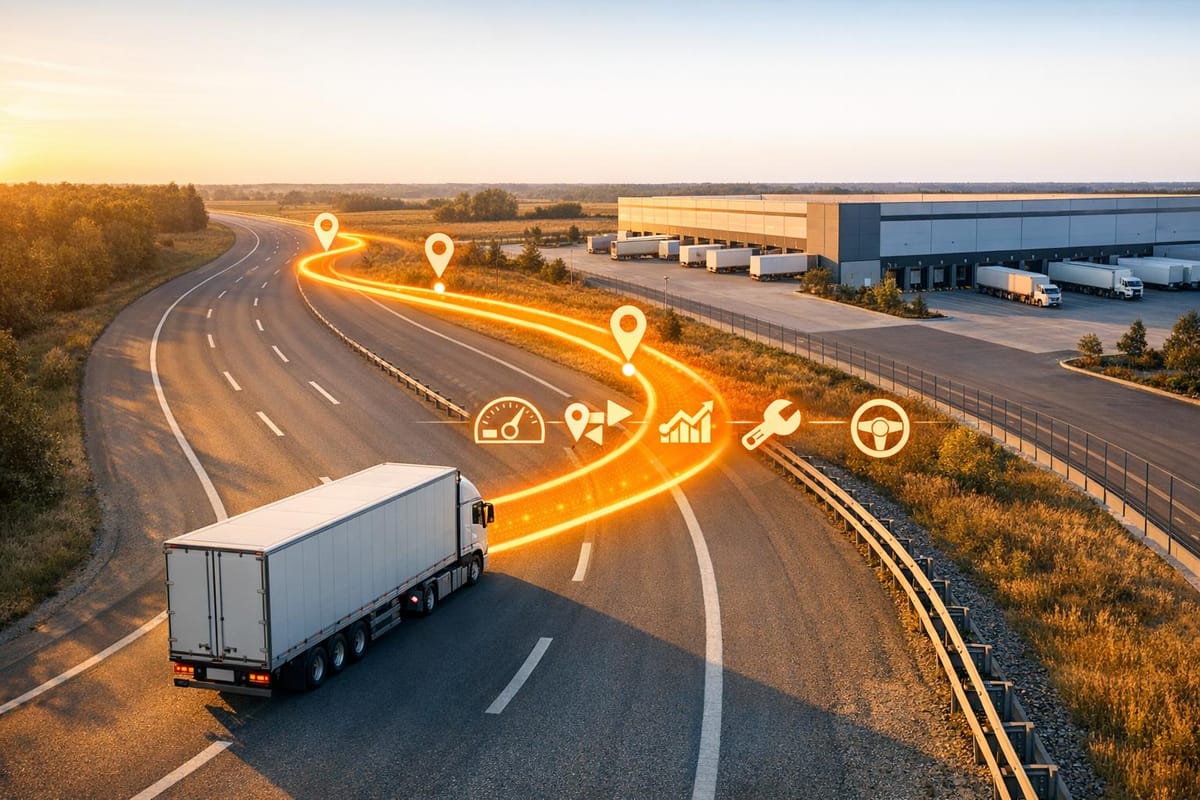
Fuel costs can account for up to 30% of fleet operating expenses in the UK. Predictive models, powered by AI and telematics, help fleets lower these costs by addressing common issues like inefficient routes, idling, aggressive driving, and poor maintenance. These systems can reduce fuel consumption by 15–30% and deliver substantial savings.
Key strategies include:
- Route optimisation: AI recalculates routes in real time, cutting mileage and fuel use.
- Accurate forecasting: Predicts fuel needs, avoiding over-purchasing and waste.
- Predictive maintenance: Prevents inefficiencies by scheduling repairs before breakdowns.
- Driver coaching: Monitors driving habits to reduce fuel-wasting behaviours.
- Telematics integration: Combines real-time data with predictive models for better decisions.
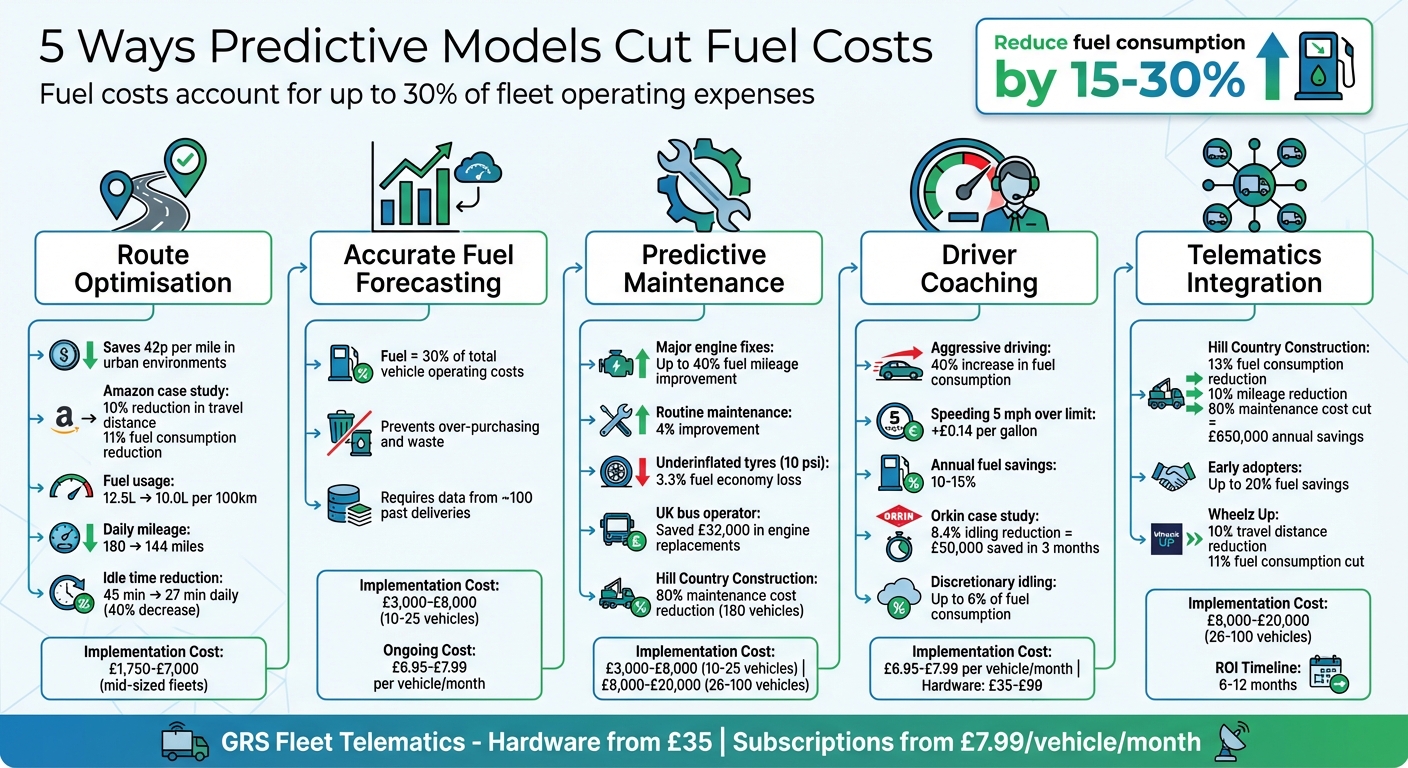
5 Ways Predictive Models Reduce Fleet Fuel Costs - Key Statistics and Savings
Maximizing Fleet Efficiency with IoT: A Comprehensive Guide by Upkeep
1. Route Optimisation with Real-Time Predictions
Predictive route optimisation takes navigation to the next level by using AI to process live traffic updates, weather conditions, and road closures. Unlike traditional GPS systems, which stick to pre-planned routes, these systems adapt on the fly, recalculating the best path in real time.
In busy urban environments, this approach can save around 42p per mile. For instance, Amazon's AI-powered delivery system managed to cut travel distances by 10% and reduce fuel consumption by 11% - a clear win for both efficiency and cost savings.
Fuel Cost Savings Potential
The savings from real-time route optimisation are both practical and measurable. Fleets that adopt these systems typically see fuel usage drop from 12.5 litres to 10.0 litres per 100km, while daily mileage shrinks from 180 to 144 miles. On top of that, cutting idle time is another game-changer. Vehicles idling for just 45 minutes a day can burn up to 0.5 gallons of fuel per hour, but reducing idle time by 40% - to just 27 minutes daily - can significantly lower fuel costs.
Implementation Requirements
To make the most of these savings, start by conducting a 3–6 month data audit of your fleet's historical fuel analytics and delivery performance. This will help establish a baseline for assessing your return on investment (ROI).
Your system should also support open APIs to integrate live traffic data from sources like Transport for London and National Highways. Combine this with weather updates and geofencing for zones like ULEZ or LEZ to ensure compliance and efficiency. For mid-sized fleets, the initial setup costs usually range between £1,750 and £7,000. A phased rollout - starting with a few vehicles - allows you to test and fine-tune the system before scaling it across your entire fleet.
2. Accurate Fuel Consumption Forecasting
Predictive fuel budgeting models take into account a combination of vehicle-specific factors like weight, engine condition, and tyre pressure, alongside operational constraints such as customer time windows and capacity limits. This method allows for proactive adjustments to routes and schedules, helping to avoid unexpected increases in fuel consumption.
Fuel Cost Savings Potential
With fuel making up around 30% of total vehicle operating costs, accurate forecasting can play a key role in cutting expenses. By aligning fleet capacity with actual fuel demand, managers can avoid both over-purchasing fuel and underutilising resources, leading to more efficient operations.
Implementation Requirements
To ensure accurate forecasting, start by auditing data from roughly 100 past deliveries to confirm that recorded times and fuel usage are reliable. Your system should be capable of tracking engine diagnostics, fuel consumption rates, and driver behaviour - these are essential elements for creating effective models.
For smaller fleets of 10–25 vehicles, setup costs usually range from £3,000 to £8,000. Additionally, telematics subscriptions, which provide real-time data, are available at costs starting from £6.95 to £7.99 per vehicle per month. To maintain accuracy, update predictive models quarterly to reflect seasonal changes, such as school holidays or the high demand in December. Regularly comparing forecasted fuel usage with actual consumption helps refine the models and quickly identifies inefficiencies.
Using advanced telematics solutions, like those offered by GRS Fleet Telematics, ensures access to high-quality, real-time vehicle data. This data serves as the backbone for precise fuel forecasting and opens the door to further operational improvements through advanced fleet management strategies.
3. Predictive Maintenance to Prevent Inefficiencies
Predictive maintenance is a game-changer when it comes to cutting down fuel waste caused by poorly maintained vehicles. By using telematics to spot potential issues early, it prevents inefficiencies like running engines that aren’t performing at their best, worn-out parts, or tyres with low pressure. This approach goes beyond traditional reactive maintenance - which waits for breakdowns - by analysing sensor data to schedule repairs exactly when they’re needed.
Impact on Efficiency
The benefits of predictive maintenance are hard to ignore. Addressing major engine problems can improve fuel mileage by as much as 40%, while routine upkeep can lead to a 4% improvement. Even something as simple as tyres underinflated by 10 psi can lower fuel economy by 3.3%. A great example comes from a UK bus operator that used telematics to track engine temperatures. By setting alerts for readings over 103°C, they managed to step in early three times, saving three engines and avoiding nearly £32,000 in replacement costs.
Hill Country Construction saw even bigger savings. With a fleet of 180 vehicles, they slashed their maintenance costs by 80% through predictive scheduling. These examples highlight just how much efficiency can be gained with the right approach.
Implementation Requirements
For smaller fleets of 10–25 vehicles, the cost of implementing predictive maintenance generally ranges from £3,000 to £8,000. For mid-sized fleets of 26–100 vehicles, the investment typically falls between £8,000 and £20,000. To get started, check if your telematics system monitors key diagnostics like engine temperature, oil pressure, and emissions - not just GPS location. It’s also crucial to have automated tyre pressure alerts, as even an 8 psi drop can increase fuel consumption by 4% .
Training is another essential piece of the puzzle. Drivers and maintenance teams need to know how to act on real-time alerts and carry out regular preventative checks. To encourage best practices, consider introducing driver scorecards and reward programmes. These can promote habits like avoiding harsh braking, which helps reduce wear and tear on vehicles.
4. Driver Coaching Through Behaviour Analytics
Fuel Cost Savings Potential
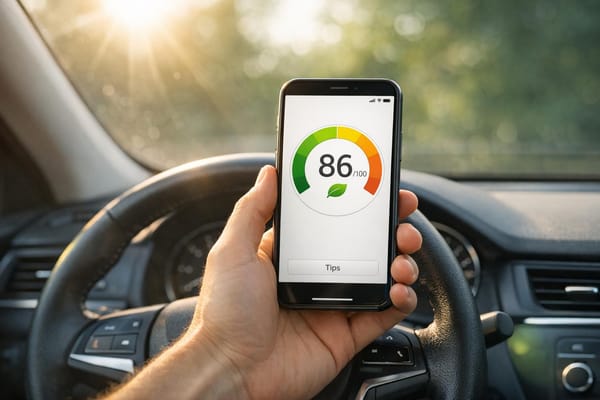
Did you know that how a driver operates a vehicle can have a massive impact on fuel consumption? Aggressive driving - things like rapid acceleration, harsh braking, and speeding - can increase fuel use by as much as 40%. Even driving just 5 mph over a 50 mph limit can tack on an extra £0.14 per gallon to fuel costs. By using telematics to monitor and address these behaviours, fleets can see annual fuel savings in the range of 10–15%.
Take Orkin, the pest control company, as an example. They used telematics to run a driver contest focused on cutting down engine idling. The result? An 8.4% drop in idling time, which saved them about £50,000 in fuel costs over just three months. It's proof that targeted coaching and data-driven insights can lead to impressive savings.
These examples highlight how understanding and addressing driver behaviour can boost overall fleet efficiency.
Impact on Efficiency
Metrics like speeding, harsh braking, rapid acceleration, and idling offer a clear picture of where fuel is being wasted. Interestingly, analytics can also differentiate between necessary and avoidable idling. For instance, mandatory breaks for drivers fall under necessary idling, while leaving the engine running during downtime is discretionary. This distinction is important because discretionary idling alone can account for up to 6% of fuel consumption.
This level of detail enables fleet managers to tackle the real issues without unfairly penalising drivers for things they can't control.
"When designed thoughtfully, driver scorecards motivate positive habits rather than serving as punitive measures and can improve the driver experience."
- Sherry Calkins, Senior Vice President of Global Strategic Accounts, Geotab
Implementation Requirements
The good news? Implementing driver behaviour analytics doesn’t have to break the bank. Entry-level telematics systems start at just £6.95–£7.99 per vehicle per month, while hardware options from GRS Fleet Telematics range from £35 for a basic wired tracker to £99 for more advanced dual-tracker systems.
However, before rolling out any monitoring systems in the UK, it's crucial to conduct a Data Protection Impact Assessment to ensure compliance with UK GDPR. Building trust with drivers is equally important - be transparent about what’s being tracked and focus on positive reinforcement. Gamification is a great way to do this: driver scorecards, league tables, and rewards like quarterly bonuses can encourage better performance without creating a punitive environment.
5. Telematics Integration for Complete Fleet Efficiency
Fuel Cost Savings Potential
Integrating telematics systems with predictive models can lead to impressive results. For example, in 2025, Hill Country Construction linked their fuel management system with telematics across a fleet of 180 vehicles. The outcome? A 13% drop in fuel consumption, a 10% reduction in mileage thanks to optimised routes, and an 80% cut in maintenance expenses - saving the company an impressive £650,000 annually.
Early adopters of such systems have reported fuel savings of up to 20%. The secret lies in the switch from periodic reports to real-time data and alerts, which allow inefficiencies to be flagged and addressed immediately. This proactive approach doesn't just lower costs - it transforms how quickly and effectively problems are resolved.
Impact on Efficiency
Integrated telematics also enhances operational efficiency by enabling rapid responses to emerging issues. While traditional systems might take weeks to identify inefficiencies, predictive models powered by telematics can detect and address them within hours. With real-time alerts, fleet managers can act swiftly, preventing minor problems from escalating into major expenses.
Take the example of Wheelz Up, a last-mile delivery company. In May 2025, they implemented AI-driven tools to monitor fuel usage and driver behaviour. According to founder and CEO Jeb Lopez, the system flagged issues like harsh driving and extended idling, which led to tailored driver coaching and improved overall efficiency. Additionally, by using AI to optimise stop consolidation and route planning, the company reduced total travel distance by 10%, achieving an 11% cut in fuel consumption.
Implementation Requirements
For mid-sized fleets (26–100 vehicles), the cost of implementing these solutions typically ranges from £8,000 to £20,000. A good starting point is a data capability audit to ensure your current telematics hardware can capture essential metrics like engine diagnostics and driver behaviour.
Integration is key - verify that your telematics platform supports API connections to allow seamless data flow between systems. Most businesses recover their investment within 6 to 12 months through savings on fuel and labour.
For example, GRS Fleet Telematics offers a subscription model at around £7.99 per vehicle per month. Hardware costs range from £35 for basic wired trackers to £99 for advanced dual-tracker systems with features like immobilisation. This integrated approach ensures continuous improvement by leveraging real-time monitoring and analysis to drive smarter decision-making.
Conclusion
Predictive models are changing the way fleets manage fuel costs, offering a smarter approach that leads to noticeable savings and better control over expenses. These tools allow for more accurate budgeting, helping to forecast fuel costs with confidence and uncover hidden issues like fuel theft or unauthorised use before they become major problems. Even small improvements in fuel management can translate into meaningful savings.
But it’s not just about the bottom line - there’s a bigger picture here too. Cutting fuel consumption doesn’t just save money; it also reduces environmental damage, helps combat climate change, and lowers dependency on non-renewable resources like oil. These models also make it easier for fleets to comply with regulations in Low Emission Zones and Ultra Low Emission Zones, avoiding fines while working towards sustainability goals.
To unlock these advantages, having a strong telematics system in place is crucial. GRS Fleet Telematics offers the tools needed for effective predictive modelling, with hardware starting at £35 and software subscriptions from £7.99 per vehicle each month. Their systems provide real-time vehicle tracking, insights into driver behaviour, and detailed analytics.
"By connecting your fleet to a centralised system, telematics provides real-time data about your vehicles - tracking their location, monitoring driver behaviour, and even keeping tabs on fuel consumption or maintenance needs".
For fleet managers, combining predictive models with advanced telematics isn’t just a smart move - it’s becoming essential to stay ahead in an increasingly competitive and efficiency-driven industry.
FAQs
What fleet data do predictive fuel models need?
Predictive fuel models use a combination of fleet data to improve fuel efficiency. This includes details like vehicle location, speed, idling time, driver behaviour, route history, traffic conditions, weather, and vehicle performance metrics. By analysing this information, these models pinpoint opportunities to cut fuel usage and support more cost-efficient operations.
How quickly will I see fuel savings and ROI?
Most systems start showing fuel savings almost right away after introducing telematics and route optimisation. Many businesses recover their investment within 8–12 months, and some even see returns in as little as 9 days. By streamlining routes and eliminating inefficiencies, these tools help reduce costs from day one.
Does driver monitoring comply with UK GDPR?
Driver monitoring through telematics aligns with UK GDPR as long as it adheres to key data protection principles. These include having a lawful basis for processing data, being transparent with individuals about how their data is used, and ensuring robust data security measures are in place. Telematics systems are built to help businesses navigate UK regulations, making it easier to fulfil their legal responsibilities.