Police Partnerships in Fleet Telematics Recovery
UK police and telematics providers use VHF, GPS, GSM and mesh tracking to recover stolen fleet vehicles fast, cutting downtime and costs.
UK police and telematics providers have teamed up to recover stolen fleet vehicles faster and more effectively. This partnership leverages advanced tracking systems, including VHF technology, which works even in underground areas or metal containers. Here’s what you need to know:
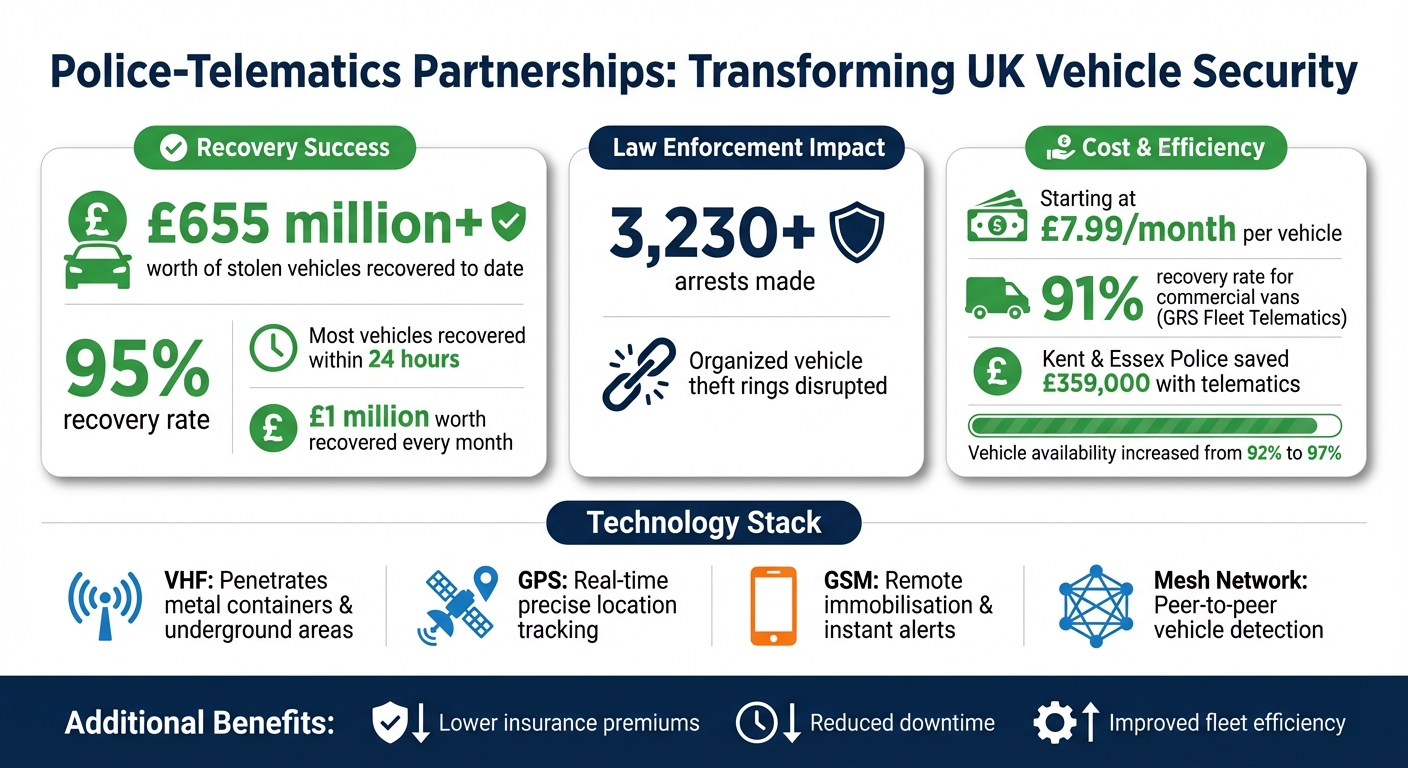
- Over £655 million worth of stolen vehicles recovered to date.
- 95% recovery rate with most vehicles found within 24 hours.
- Technology like VHF, GPS, and GSM ensures reliable tracking.
- Close coordination between police and telematics providers enables swift action.
- Over 3,230 arrests made, disrupting organised vehicle theft rings.
Fleet operators benefit from reduced downtime, cost-effective solutions (starting at £7.99/month per vehicle), and even lower insurance premiums. These systems not only protect vehicles but also improve overall fleet efficiency.
This collaboration is transforming vehicle security in the UK, showcasing the power of technology and law enforcement working together.
UK Police Telematics Partnership Results: Recovery Rates, Arrests, and Cost Savings
Ford Pro Helps Police Find Stolen Van | Ford UK
How Police Partnerships Improve Vehicle Recovery
In the UK, the effectiveness of vehicle recovery efforts heavily relies on direct collaboration between telematics providers and police forces. By integrating technology into their operations, police can track stolen vehicles in real-time using detection units installed in patrol cars and helicopters. This eliminates delays caused by waiting for external coordination.
When a theft is reported and a Crime Reference Number (CRN) issued, the response is swift. Telematics providers operate 24/7 Secure Operating Centres that share live tracking data directly with police dispatch teams and officers in the field. Thanks to this collaboration, police can often intercept stolen vehicles within hours.
The sections below detail how telematics data is utilised by UK police and the technologies that enable these rapid recoveries.
How UK Police Use Telematics Data
Telematics data serves two primary purposes for UK police: recovering stolen vehicles and managing their own fleets. Detection units in patrol vehicles allow officers to pinpoint stolen assets quickly.
Control rooms also use telematics to coordinate resources during active operations. For example, in Dartford, Kent and Essex Police successfully intercepted thieves who had used a mechanical digger to steal a cash machine. Telematics allowed the control room to locate all nearby patrol vehicles, even those with radios turned off. John Gorton, Head of Transport for Kent and Essex Police, noted:
"The force control room used the telematics so they could see all the police vehicles that were near, even the ones with the radios turned off... and they got them".
This data-driven approach is further supported by the advanced technologies outlined below.
Technologies That Enable Police Collaboration
The success of these operations depends on robust technologies that ensure secure and continuous data transmission.
Three key technologies underpin these partnerships: VHF (Very High Frequency), GPS, and GSM. Each plays a unique role during recovery efforts. VHF is particularly effective as it can penetrate barriers like metal containers and underground car parks, making it indispensable at UK sea ports where stolen vehicles are often hidden in shipping containers for export.
GPS offers real-time tracking with precise location data, while GSM facilitates data transmission to Secure Operating Centres and enables features such as remote immobilisation. Additionally, mesh network technology allows vehicles equipped with detection systems to automatically locate and relay the position of stolen vehicles. This creates a network of interconnected "listening" vehicles across the UK, extending coverage far beyond fixed detection points.
| Technology | Role | Benefit |
|---|---|---|
| VHF | Long-range tracking via radio | Penetrates metal containers and underground car parks; resists jammers |
| GPS | Real-time location mapping | Provides accurate coordinates for deployment |
| GSM | Data transmission to centres | Enables remote immobilisation and instant alerts |
| Mesh Network | Peer-to-peer location relay | Expands coverage using other equipped vehicles |
Criminals often use jamming devices to disrupt standard GPS tracking, which is why dual-tracker systems combining VHF with GPS/GSM have become critical. This layered approach ensures that even if one system is compromised, police can still track the vehicle using alternative methods.
Case Studies: Stolen Vehicle Recoveries Through Police Partnerships
Examples from real-life incidents show just how effective the combination of telematics and police collaboration can be. These stories highlight how quickly and efficiently stolen vehicles have been recovered across different regions in the UK, involving various vehicle types and theft methods.
Case Study 1: Fife, Scotland – Audi TT Recovery
In September 2024, thieves in Fife used a hijacked van to break into a workshop, stealing a 20-year-old Audi TT worth just £2,000, likely for its spare parts. The theft was reported the next morning, setting off a swift chain of events. The car owner contacted their telematics provider, which immediately activated the recovery system. Tayside Police, other Police Scotland units, and the National Police Air Service worked together, with patrol vehicles equipped with detection units tracking the stolen car. Within three hours of the report, officers found the Audi TT and the getaway van on a quiet road in Dundee.
Steve Whittaker, Tracker Police Liaison Manager, explained the importance of acting quickly:
"We often find stolen vehicles parked temporarily on quiet roads or in car parks while the thieves watch and wait to see if it will be tracked... We have no doubt that this car would have been stripped for parts if Tracker had not helped the police locate it quickly."
Thanks to the telematics system and rapid police response, the vehicle was saved from being dismantled for parts.
Case Study 2: Maida Vale – Lexus RX Recovery
A £40,000 Lexus RX stolen in Maida Vale was recovered almost immediately, thanks to the seamless collaboration between police and telematics providers. Once the theft was reported, the telematics system was activated, enabling police to locate the vehicle quickly. Equipped units intercepted the Lexus before it could be hidden. The advanced dual-tracker system, which combines GPS for pinpoint accuracy and VHF to penetrate physical barriers, ensured continuous tracking throughout the operation. This case highlights how such technology offers reliable protection for high-value vehicles.
Case Study 3: GRS Fleet Telematics – Van Recovery Successes
Commercial fleets also benefit significantly from telematics and police partnerships. GRS Fleet Telematics has achieved an impressive 91% recovery rate for stolen vans using dual-tracker technology and close collaboration with law enforcement. The dual-tracker system ensures location data remains accessible even if one device is tampered with, providing robust protection for vehicles often targeted for their valuable tools and equipment.
Fleet operators using GRS Fleet Telematics enjoy 24/7 monitoring, immediate activation upon theft reports, and a cost-effective pay-per-recovery model. With subscription fees starting at just £7.99 per vehicle per month, businesses receive enterprise-level security without hefty upfront costs. This proactive approach maximises recovery chances and protects vital business assets across the UK.
Benefits of Police-Telematics Partnerships for Fleet Operators
The collaboration between police forces and telematics providers is proving to be a game-changer for fleet operators. These partnerships bring together advanced tracking technology and law enforcement expertise to create a security network that not only protects vehicles but also helps reduce costs and ensures smoother operations.
Higher Recovery Rates and Faster Recovery Times
Integrated telematics systems have shown impressive results in recovering stolen vehicles. With recovery rates reaching up to 95%, most vehicles are returned within 24 hours, significantly reducing downtime and safeguarding valuable assets. In fact, around £1 million worth of stolen vehicles is recovered every month, showcasing the effectiveness of these systems.
The impact goes beyond just recovering stolen vehicles. For instance, when Kent and Essex Police implemented telematics across 1,400 vehicles between 2015 and 2020, they boosted vehicle availability from 92% to 97%. This initiative, led by Fleet Manager Tony Petts and Head of Transport John Gorton, not only improved operational efficiency but also saved £359,000. Additionally, it allowed the redeployment of 49 vehicles, eliminating the need for new purchases.
Affordable Security Solutions
For fleet operators, cost is always a major factor, and telematics solutions offer a highly cost-effective approach. GRS Fleet Telematics provides subscription plans starting at just £7.99 per vehicle per month, offering advanced security without hefty upfront investments. Their pay-per-recovery model ensures predictable expenses, while hardware options range from the £35 Essential tracker to the £99 Ultimate package, which even includes immobilisation features.
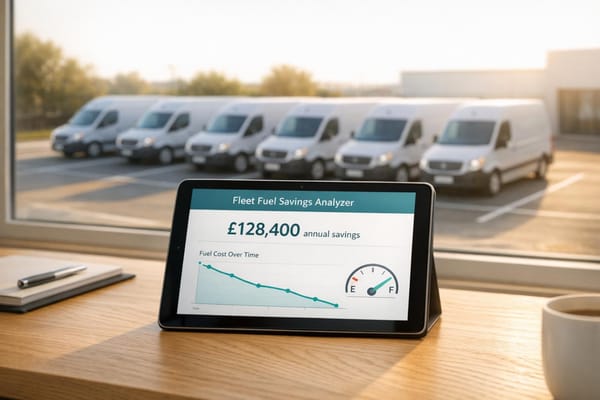
The financial advantages extend further. Telematics systems help cut operational costs by improving fuel efficiency, reducing fuel consumption, and lowering incident rates. Additionally, installing Thatcham-approved telematics systems can lead to reduced insurance premiums. These combined savings and benefits make police-integrated telematics solutions a smart choice for fleet operators looking to enhance both security and efficiency.
Conclusion
Police partnerships across the UK are transforming how vehicle security is managed, especially for fleet operators. These collaborations have set new standards in protecting vehicles, achieving impressive outcomes in both theft prevention and asset recovery.
The numbers tell a powerful story: hundreds of millions of pounds’ worth of stolen goods have been recovered, thousands of arrests have been made, and organised crime groups have been disrupted. For fleet operators, this means faster recoveries and smoother operations, with some systems boasting 95% recovery rates and stolen vehicles often found within 24 hours.
GRS Fleet Telematics offers these benefits to businesses with subscription plans starting at just £7.99 per vehicle per month. Their dual-tracker technology, paired with a 91% recovery rate and 24/7 police-coordinated support, ensures fleets remain secure and productive. A standout example comes from Kent and Essex Police, where £359,000 was saved, and vehicle availability increased to 97%, highlighting the real-world impact of these partnerships.
This evidence makes it clear: fleet operators now have access to a reliable and highly effective security solution.
FAQs
How do police partnerships with telematics providers help recover stolen vehicles?
Police collaborations with telematics providers have greatly improved the recovery of stolen vehicles by blending cutting-edge tracking technology with the skills of law enforcement. Many telematics systems use VHF-based trackers, which emit distinct signals, enabling police to pinpoint stolen vehicles - even in challenging spots like underground car parks.
On top of that, specialised police liaison teams play a vital role by maintaining close communication with officers. This ensures quick coordination during recovery efforts, significantly boosting success rates and shortening the time it takes to reunite vehicles with their owners.
What technologies are used to track and recover stolen vehicles effectively?
Effective vehicle tracking and recovery systems rely on a blend of cutting-edge technologies to deliver real-time location updates. These systems often integrate GPS, GSM communications, and VHF radio signals, working in harmony to provide accurate and dependable tracking. Some also feature a mesh network that interacts with police-mounted trackers, making it easier for law enforcement to locate stolen vehicles.
This combination of tools has consistently demonstrated success in aiding police efforts and achieving impressive recovery rates, offering peace of mind to both businesses and individuals seeking to safeguard their vehicles.
How can telematics systems help fleet operators save money?
Telematics systems offer fleet operators a wealth of real-time information, including vehicle location, driver behaviour, and overall vehicle health. This data isn't just insightful - it translates directly into cost savings. By cutting down on unnecessary mileage and fuel consumption, fleets can significantly lower their operating expenses. For instance, one UK police fleet managed to slash its annual fuel usage by an impressive 27%. On top of that, telematics simplifies maintenance scheduling, reduces repair costs, and even helps lower collision rates, all of which contribute to healthier financial outcomes.
Another major advantage is theft recovery. Advanced tracking systems, such as those provided by GRS Fleet Telematics, boast a 91% recovery rate for stolen vehicles. This not only spares operators from hefty financial losses but can also lead to reduced insurance premiums. And with pricing starting at just £7.99 per month, telematics proves to be a cost-efficient choice for fleets across the UK.