Plug-and-Play vs Hardwired Trackers: Key Differences
Compare plug-and-play and hardwired GPS trackers — installation, costs, security and features to help choose the right tracking solution for your fleet.
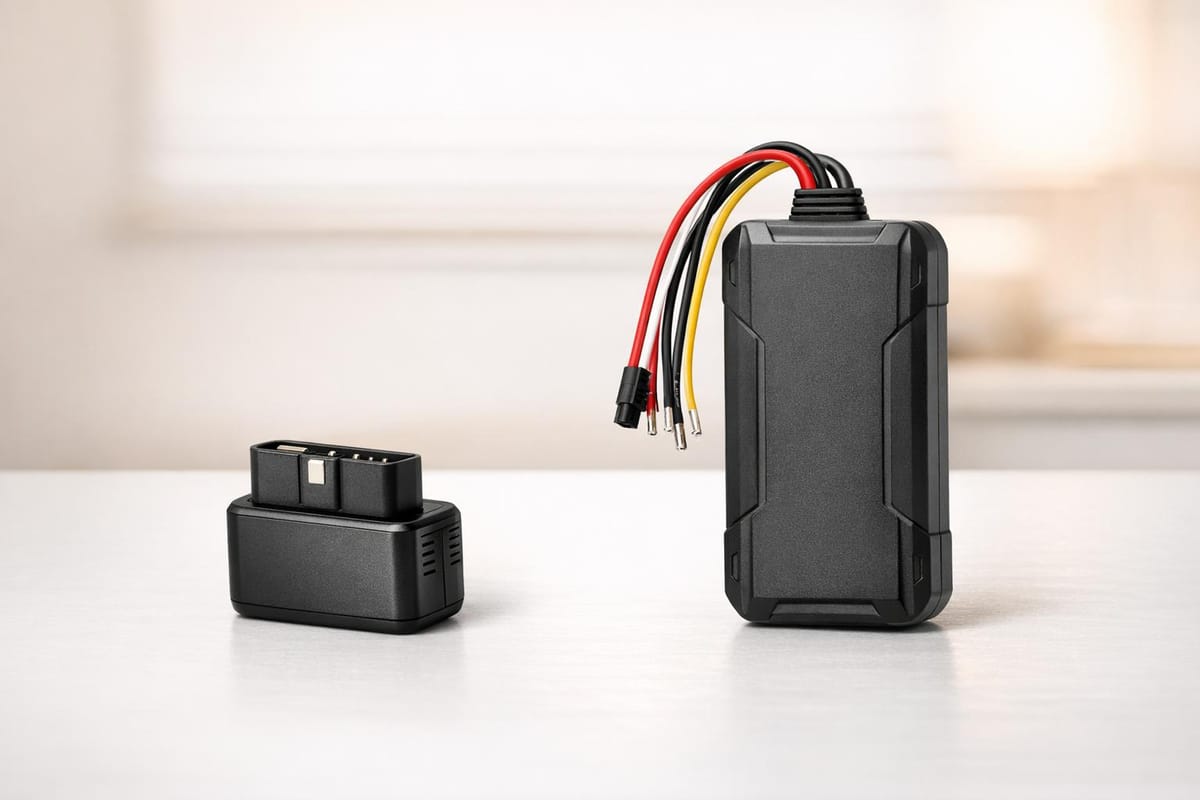
Plug-and-play and hardwired trackers serve different needs in fleet management. Plug-and-play devices are easy to install, connecting to the OBD-II port, and are highly portable, making them ideal for leased or temporary vehicles. Hardwired trackers, on the other hand, are professionally installed into a vehicle’s electrical system, offering better security and advanced features like engine immobilisation and driver ID.
Here’s a quick breakdown of the main distinctions:
- Plug-and-Play: Quick DIY installation (5-10 minutes), costs £34–£85, portable, but more prone to tampering.
- Hardwired: Requires professional installation (£145+), costs £60–£179, tamper-resistant, advanced data capabilities, and helps meet insurance requirements like Thatcham S5/S7.
Quick Comparison
| Feature | Plug-and-Play Trackers | Hardwired Trackers |
|---|---|---|
| Installation | DIY (5-10 minutes) | Professional (30-60 mins) |
| Hardware Cost | £34–£85 | £60–£179 |
| Installation Fee | £0 | From £145 |
| Portability | High | Low |
| Security | Moderate | High |
| Advanced Features | Basic (GPS, mileage) | Advanced (immobilisation, PTO) |
| Insurance Discounts | Minimal | 5–20% annually |
Choose plug-and-play for flexibility and cost-effectiveness or hardwired for better security and advanced tracking. For mixed fleets, a hybrid approach may work best.
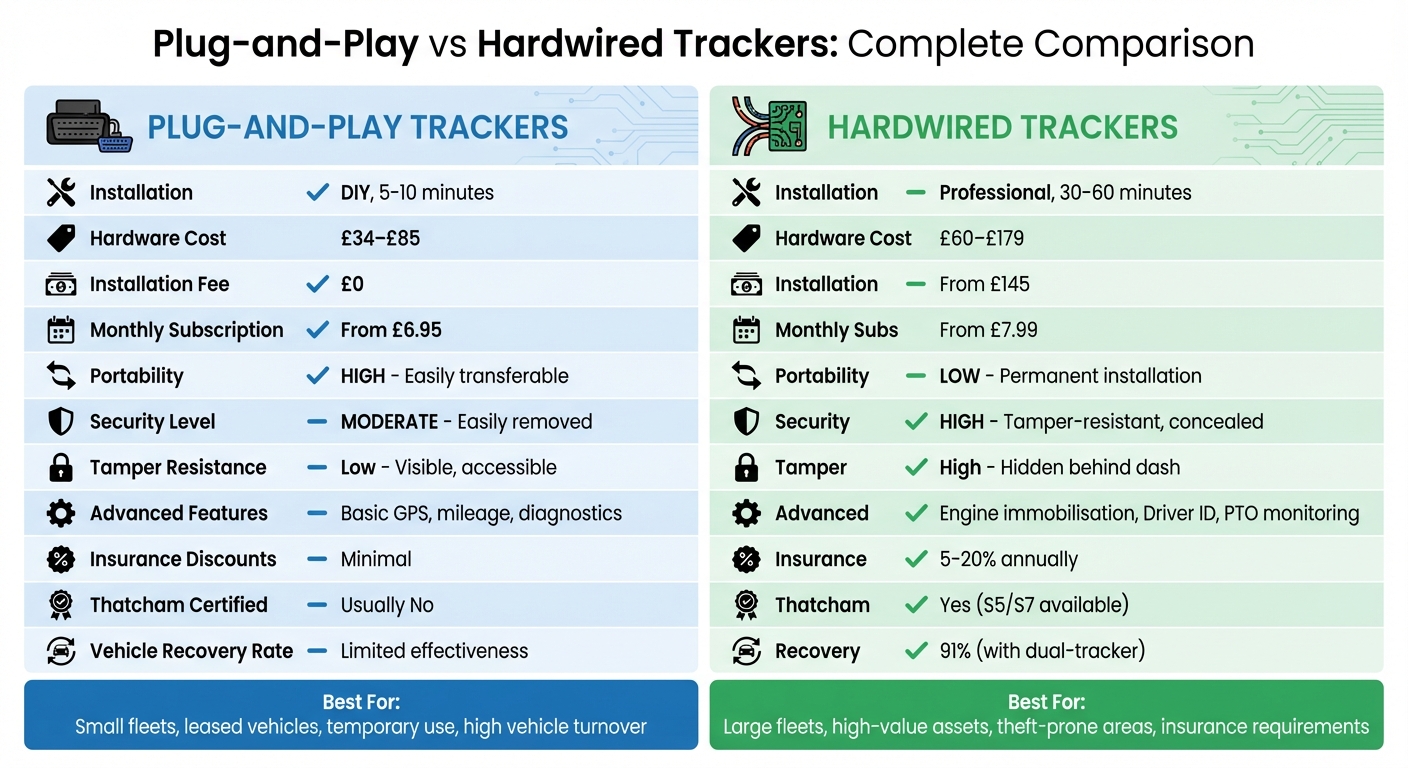
Plug-and-Play vs Hardwired GPS Trackers Comparison Chart
Top 4 BEST GPS Trackers (2025) | Features & Installation | SafeTag Trackers
What Are Plug-and-Play Trackers?
A plug-and-play tracker is a small GPS device designed to connect directly to your vehicle's On-Board Diagnostics (OBD-II) port. This rectangular port is a standard feature in most cars manufactured after 2000 and is usually found under the dashboard near the steering wheel. The beauty of these devices is their simplicity - they don’t require tools, wiring, or professional installation. Just plug them in, and they draw power from the vehicle's electrical system. Even if the device is disconnected or the car's battery fails, an internal backup battery keeps it running. Besides tracking your vehicle's location, these trackers can pull engine diagnostics and other data straight from the car's computer.
One of the standout benefits of plug-and-play trackers is their portability. They can be moved between vehicles in a matter of minutes, making them perfect for leased fleets, temporary contractors, or businesses that frequently replace vehicles.
Features of Plug-and-Play Trackers
Plug-and-play trackers aren’t just easy to install - they’re packed with useful features for managing fleets. They offer real-time GPS tracking, engine diagnostics, mileage reporting, and basic vehicle health data, all accessed through the OBD-II connection. If cellular connectivity drops, some models can store up to 500 trip events internally, ensuring no data is lost.
These trackers are particularly handy for smaller fleets or leased vehicles where permanent modifications aren’t an option. Installation is a breeze, typically taking only 5 to 10 minutes. The hardware costs range from £34 to £85, and monthly subscriptions start at just £7.99 per vehicle. Many modern models also include tamper alerts, notifying you immediately if the device is unplugged or if the vehicle moves while the tracker is disconnected.
What Are Hardwired Trackers?
When it comes to safeguarding high-value vehicles, hardwired trackers provide a sturdy and reliable solution. Unlike plug-and-play trackers that connect to the OBD-II port, hardwired trackers are permanently installed into the vehicle's electrical system. This involves a three-wire connection - power, ignition, and ground - and typically requires a skilled auto-electrician to fit them discreetly, often behind the dashboard or under the bonnet. Once installed, they’re virtually invisible, and the process usually takes 30 to 60 minutes per vehicle. This integration not only enhances reliability but also boosts security.
Being soldered into place makes these trackers highly resistant to tampering, whether by drivers or thieves. Designed for both 12V and 24V systems, they draw power continuously and include an internal backup battery to keep them running even if disconnected. This ensures uninterrupted operation and adds an extra layer of security. Tamper detection mechanisms further strengthen their reliability.
"The hardwired unit has tamper detection as it's soldered into place – any interruption would be noticed. This ensures that if someone tries to interfere with a tracker, you as the fleet manager will know about it." - Quartix
Despite their compact size (9cm × 5.5cm × 2.4cm, weighing just 90g), these devices are built to endure tough conditions. Many models come with IP67-rated casings, offering protection against water, dust, and extreme temperatures ranging from -20°C to +60°C.
Features of Hardwired Trackers
Hardwired trackers don’t just offer secure installation - they also come packed with features tailored for fleet management. For instance, they support engine immobilisation, enabling you to remotely disable a vehicle's starter in case of theft. Other advanced functionalities include geofencing, fuel monitoring, and detailed engine diagnostics.
These trackers can also monitor additional equipment via digital inputs. For example, fleets operating refrigerated lorries, construction vehicles, or emergency service vehicles can track the status of tailgate lifts, emergency doors, temperature sensors, or Power Take-Off (PTO) systems. Driver identification is another handy feature, often achieved through key fobs or iButton readers.
The security advantages are impressive. Systems that combine hardwired primary units with backup trackers have achieved a 91% recovery rate for stolen vehicles. Additionally, hardwired trackers with Thatcham certification can help businesses save on insurance premiums, with discounts ranging from 5% to 20% annually. The financial benefits don’t stop there - businesses often see a return on investment within 90 days, with annual savings of £1,000 to £2,000 per vehicle thanks to improved fuel efficiency and optimised routes.
"Hardwired GPS trackers allow you to unlock the vehicle's doors, remotely engage or turn off the motor, enable/disable a vehicle's starter, or monitor the vehicle's components such as the status of the PTO." - Azuga
Installation and Maintenance Comparison
Installing plug-and-play trackers versus hardwired ones is a completely different experience. Plug-and-play devices are straightforward: just connect the unit to your vehicle's OBD-II port (usually found under the steering wheel) or clip it onto the battery terminals. No tools, no technical skills, and no professional help are required. The whole process takes about 5 to 10 minutes.
On the other hand, hardwired trackers demand professional installation. A trained auto-electrician integrates the device into your vehicle’s electrical system by connecting it to the power, ignition, and ground wires. This often involves working behind the dashboard or under the bonnet using tools like a voltage meter, wire cutters, and screwdrivers. The process typically takes between 30 and 60 minutes per vehicle.
"Self-install plug & play devices can be installed by the user and set up in a matter of minutes, so if time off the roads is a serious concern, this will likely be the best option for your business." - Fleetsmart
Installation Time and Tools Required
For plug-and-play trackers, no tools are needed. Simply locate the OBD-II port, plug in the device until it clicks, or attach it to the battery terminals. This simplicity makes them a great choice for small fleet industries or leased vehicles where trackers might need to be swapped frequently.
Hardwired trackers, however, require a technician to access your vehicle's wiring. They’ll identify the correct power and ignition wires and connect the tracker securely using methods like "poke and wrap" wiring. Providers usually recommend setting aside an hour for installation to allow for proper testing, which means some unavoidable vehicle downtime. The upside? Hardwired trackers are installed discreetly and are harder to tamper with.
Installation Costs
The cost difference between the two types of trackers starts with installation. Plug-and-play devices are designed for DIY setup, so there’s no installation fee - just the hardware cost, which ranges from £34 to £85. In contrast, hardwired systems come with professional installation fees starting at around £145, and the hardware itself costs between £35 and £179. Some providers even offer bundled services or waive installation fees for larger fleets.
Here’s a breakdown of costs and considerations:
| Cost Element | Plug-and-Play | Hardwired |
|---|---|---|
| Installation Fee | £0 (DIY) | From £145 |
| Hardware Cost | £34–£85 | £35–£179 |
| Installation Time | 5–10 minutes | 30–60 minutes |
| Tools Required | None | Voltage meter, wire cutters, screwdrivers |
| Vehicle Downtime | None | Scheduled appointment required |
While plug-and-play systems are quicker and cheaper to set up, hardwired trackers have their own advantages. They draw continuous power from your vehicle, which means less frequent maintenance. In contrast, plug-and-play devices might require occasional battery checks. It’s important to consider these factors when planning your long-term budget.
Feature Differences Between Plug-and-Play and Hardwired Trackers
Expanding on the differences in installation and maintenance, here’s a closer look at how plug-and-play and hardwired trackers stack up in terms of functionality and features.
One of the biggest distinctions lies in the level of integration. Hardwired trackers can connect directly to your vehicle's internal systems, allowing them to monitor detailed components like Power Take-Off (PTO), beacon lights, and even seatbelt usage through physical wire connections. This makes them a better fit for businesses needing in-depth operational insights. On the other hand, plug-and-play trackers are generally limited to basics such as engine diagnostics, mileage tracking, and ignition status.
Security is another area where these two tracker types differ. Hardwired trackers are installed discreetly behind the dashboard, making them much harder for potential thieves - or even drivers - to locate and tamper with. Plug-and-play trackers, however, are plugged into the easily accessible OBD-II port, meaning they can be removed in seconds. While many plug-and-play models are designed to send tamper alerts if disconnected, their visibility still makes them more vulnerable to deliberate removal.
"Hardwired trackers are positioned underneath the hood/dash of the vehicle and well out of sight of any occupant." - Azuga
When it comes to power reliability, hardwired systems have the upper hand. These trackers draw power directly from your vehicle's electrical system, maintaining consistent performance without interruptions. Plug-and-play devices, however, depend on the OBD-II port connection, which can sometimes become loose or disconnected. Additionally, hardwired systems support advanced features like remote engine immobilisation, door unlocking, and driver ID verification using key fobs.
The table below provides a side-by-side comparison of these features:
Feature Comparison Table
| Feature | Plug-and-Play Trackers | Hardwired Trackers |
|---|---|---|
| Portability | High; easily transferable between vehicles | Low; requires professional removal and re-installation |
| Tamper Resistance | Low; easily accessible and removable | High; hidden behind the dash and securely installed |
| Power Reliability | Moderate; depends on OBD-II port connection | High; directly connected to the vehicle's battery |
| Data Capabilities | Basic engine diagnostics (OBD-II) | Advanced monitoring of PTO, sensors, and hardware |
| Security Features | Limited; tamper alerts if unplugged | Includes remote immobilisation and driver ID features |
| GPS Precision | 5–10 metres | 5–10 metres |
This comparison highlights the strengths and limitations of each type, helping you decide which tracker aligns best with your specific needs.
Pros and Cons of Plug-and-Play Trackers
After looking at their features and installation process, it's worth weighing the main benefits and drawbacks of plug-and-play trackers.
Plug-and-play trackers shine when it comes to quick setup and portability. You can install one in as little as 5 to 10 minutes, with no tools or professional help required. This means you can have your fleet up and running in just a few hours. Plus, you save on professional installation costs, which usually range from £40 to £120 per vehicle. Their portability is another big win - these devices can be switched between vehicles in seconds, making them especially useful for fleets with high turnover, leased vehicles, or seasonal rentals.
Another perk is their cost-effectiveness. These trackers are budget-friendly, both in terms of hardware and subscription fees. Despite their lower cost, they still provide essential features like engine diagnostics through the OBD-II port.
However, there are some notable downsides. The most significant is their vulnerability to tampering. Since these trackers connect via the exposed OBD-II port, they can be easily unplugged by anyone, including drivers. As Teletrac Navman UK explains:
"Easy to install means easy to remove. Since these devices are not securely hardwired to the vehicle, removing them is easy, which makes stolen vehicle tracking nearly impossible" (see our van tracker systems for recovery statistics).
Another limitation is their reduced functionality compared to hardwired systems. Plug-and-play trackers lack external input/output ports, so they can't monitor specialised equipment like snowploughs, Power Take-Off systems, or door sensors. Additionally, because they occupy the OBD-II port, they may interfere with other diagnostic tools that need the same connection.
Here’s a quick comparison of the pros and cons:
Pros and Cons Table
| Advantages | Disadvantages |
|---|---|
| Quick installation (5–10 minutes, no tools needed) | Easily unplugged or removed by drivers |
| No professional installation costs (£0 labour fees) | Incompatible with external sensors or specialised equipment |
| Highly portable; can be transferred between vehicles in seconds | Limited usefulness for stolen vehicle recovery |
| Provides engine diagnostics via OBD-II | Only works with vehicles that have OBD-II or JBUS ports |
| Affordable hardware and subscription plans | Blocks access to other diagnostic tools using the OBD-II port |
While plug-and-play trackers are a convenient and cost-efficient solution for many fleets, their limitations mean they may not be the best fit for every situation.
Pros and Cons of Hardwired Trackers
Hardwired trackers come with a mix of benefits and challenges. These devices are designed to provide seamless fleet monitoring thanks to their discreet and secure installation. Once installed, they become almost invisible, making tampering a tough task. As Quartix highlights:
"The unit is completely hidden from view following installation... extremely difficult to tamper with".
Because they are integrated directly into the vehicle’s electrical system, hardwired trackers are resistant to accidental disconnection. They also send tamper alerts if someone tries to interfere with them. Plus, with an internal backup battery, tracking continues even if the vehicle loses power, contributing to an impressive 91% recovery rate.
These trackers bring advanced features to the table, such as remote engine immobilisation, Driver ID verification through key fobs or iButton tags, and the ability to monitor specialised equipment like tailgate lifts or emergency door sensors. Since they draw power directly from the vehicle’s battery, there’s no need for manual charging. Many models also meet Thatcham S5 or S7 certification standards, which could lead to insurance savings of 5% to 20% annually for businesses.
That said, hardwired trackers aren’t without their downsides. They require professional installation, which typically takes 30–60 minutes and can result in vehicle downtime. The upfront costs can be steep, with installation fees starting at £145 and hardware prices ranging from £60 to £179. Additionally, their fixed nature makes them a poor fit for fleets that frequently transfer devices between vehicles.
Here’s a quick look at the main advantages and disadvantages:
Pros and Cons Table
| Advantages | Disadvantages |
|---|---|
| Installed discreetly behind the dashboard or under the bonnet, making them hard to locate and tamper with. | Requires professional installation, which takes 30–60 minutes and causes vehicle downtime. |
| Offers advanced features like Driver ID, remote engine immobilisation, and monitoring of auxiliary equipment. | Higher upfront costs, including installation fees (from £145) and hardware (£60–£179). |
| Powered continuously by the vehicle battery, with a backup battery ensuring uninterrupted tracking. | Lack of portability - relocating the device requires another professional installation. |
| Often meets Thatcham S5/S7 standards, potentially qualifying for 5%–20% insurance discounts. | Unsuitable for fleets with frequent vehicle turnover, leased vehicles, or short-term rentals. |
| Sends immediate tamper alerts if the device is interfered with. |
Cost Breakdown: Plug-and-Play vs Hardwired Trackers
Hardware and Installation Costs
The initial costs for these tracking systems can differ significantly. Plug-and-play devices are priced between £34 and £85, while hardwired units range from £60 to £179. For hardwired systems, there’s also an installation fee, starting at £145 [4,24].
GRS Fleet Telematics provides three options: the Essential wired tracker at £35, the Enhanced dual-tracker at £79, and the Ultimate package with immobilisation at £99. They even offer free installation when combined with their fleet branding services [4,5,19]. After covering these initial costs, it’s worth considering the ongoing subscription fees for these systems.
Monthly Subscription Costs
GRS Fleet Telematics charges a competitive £7.99 per vehicle per month, which is notably lower than the UK market average of £12–£30 per vehicle per month [4,5,19,24].
Hardwired systems often include access to advanced features like remote immobilisation, fuel monitoring, and engine diagnostics. However, these premium capabilities can push subscription costs to £20 to £30+ per month with some providers [26,24]. Additional expenses may also apply, such as activation fees (up to £50+), device replacements, or penalties for early contract termination. Despite these potential extras, these systems remain a cost-effective solution for fleet management.
Security and Reliability Comparison
When it comes to safeguarding your fleet against theft and tampering, hardwired trackers stand out as the more secure option. These trackers are discreetly installed behind the dashboard or under the bonnet, making them virtually invisible. Because they are directly integrated into the vehicle’s electrical system, locating and removing them is a challenge. As Quartix explains:
"The unit is completely hidden from view following installation... any interruption would be noticed".
In contrast, plug-and-play trackers are much more exposed. Installed in the easily accessible OBD-II port, they can be unplugged in seconds, leaving the vehicle untracked. Teletrac Navman UK highlights this vulnerability:
"Since these devices are not securely hardwired to the vehicle, removing them is easy, which makes stolen vehicle tracking nearly impossible".
Both systems offer tamper alerts, but they work differently. Hardwired trackers detect disruptions like power loss or wire cutting, immediately notifying fleet managers. On the other hand, plug-and-play devices send an alert when unplugged, but tracking ceases instantly. Despite these differences, both types maintain reliable power connections, thanks to direct vehicle power and backup batteries that keep the system running for hours, even during power interruptions.
For added security, some companies, like GRS Fleet Telematics, take a dual-tracker approach. By pairing a hardwired unit with a hidden Bluetooth backup, they achieve an impressive 91% recovery rate for stolen vehicles.
Security Metrics Table
| Feature | Hardwired Trackers | Plug-and-Play (OBD) Trackers |
|---|---|---|
| Visibility | Hidden (behind dash/under bonnet) | Visible (plugged into OBD-II port) |
| Tamper Resistance | High (soldered/wired, tamper seals) | Low (easily unplugged by hand) |
| Power Reliability | High (direct vehicle power + backup) | High (OBD power + backup) |
| Portability | Low (requires professional removal) | High (swapped in seconds) |
| Installation | Professional (30–60 minutes) | DIY (under 5 minutes) |
Best Use Cases for Each Tracker Type
If you manage small fleets or leased vehicles, plug-and-play trackers are a practical choice. These devices can be quickly installed and transferred between vehicles without requiring any permanent changes. Their portability makes them ideal for high-turnover vehicles and temporary projects. For instance, you can easily deploy them for short-term hires and retrieve them once the project ends, all without altering the vehicle. This makes them especially handy for subcontractor fleets where flexibility is key [2, 11].
On the other hand, hardwired trackers are the go-to option when security is a top priority. These systems are perfect for permanently owned fleets, high-value assets, and operations in areas where theft is a concern. Installed discreetly behind the dashboard or under the bonnet, they’re tamper-resistant and offer a robust level of protection. They’re also well-suited for heavy machinery, HGVs, and plant equipment, especially when you need to monitor specialised components like tail-lifts, emergency doors, or PTO (Power Take-Off) status [13, 3, 6].
If your fleet includes a mix of vehicle types, a hybrid approach might be the best solution. For core, company-owned vehicles requiring advanced telematics and enhanced security, hardwired systems are a solid choice. Meanwhile, plug-and-play devices can be deployed for subcontractor, hired, or seasonal vehicles. This approach strikes a balance between cost efficiency and operational flexibility.
When deciding on a tracker, it’s essential to consider both operational needs and insurance requirements. For example, if your insurance policy mandates Thatcham certification for coverage or discounts, plug-and-play devices won’t meet the criteria. In such cases, you’ll need a professionally installed hardwired system to comply [4, 5].
Dominic Dysart, Marketing Manager at Fuelwise, highlights the importance of choosing the right system:
"Whether you choose a self-install tracker for flexibility or a hard-wired system for reliability, what matters most is having a solution that delivers accurate data, helps reduce costs, and supports better decision-making".
Conclusion: Choosing the Right Tracker for Your Fleet
When it comes to fleet tracking, the choice between plug-and-play and hardwired trackers boils down to your specific needs, budget, and security priorities. Plug-and-play devices are easy to install, budget-friendly, and perfect for smaller fleets or leased vehicles. They offer flexibility with minimal upfront costs. On the other hand, hardwired trackers provide enhanced security and more advanced tracking features. While they involve a higher initial outlay - hardware costs range from £60 to £179, plus around £145 for professional installation - they can offset these expenses through annual insurance discounts of 5–20% and better asset protection. For instance, dual-tracker systems boast an impressive stolen vehicle recovery rate of 91%.
It's worth checking with your insurance provider whether a Thatcham-certified system is necessary for coverage or premium reductions. Many UK commercial insurance policies require professionally installed hardwired trackers. If your needs are limited to basic GPS tracking and mileage reporting, plug-and-play devices will do the job. However, for features like driver identification, engine diagnostics, or specialised monitoring (e.g., PTO status), hardwired systems are the way to go.
A hybrid approach might be the best solution for some UK fleet operators. Using hardwired trackers for secure, company-owned vehicles and plug-and-play devices for leased or temporary fleets strikes a balance between cost-effectiveness and operational flexibility. This approach ensures that diverse fleet management needs are met without compromising on efficiency or security.
GRS Fleet Telematics offers solutions that combine robust security with straightforward installation, ensuring your fleet remains safe and efficient regardless of the tracker you choose.
To help you decide, here's a quick comparison of the key differences:
Final Comparison Table
| Factor | Plug-and-Play | Hardwired |
|---|---|---|
| Installation Time | 5–10 minutes (DIY) | 1–2 hours (professional) |
| Hardware Cost | £34–£85 | £60–£179 |
| Installation Fee | £0 | From £145 |
| Monthly Subscription | From £6.95 | From £7.99 |
| Security Level | Moderate (easily removed) | High (concealed, tamper-proof) |
| Insurance Discounts | Minimal | 5–20% annually |
| Best For | Small fleets, leased vehicles | Large fleets, high-value assets, theft-prone areas |
| Portability | High (swappable between vehicles) | Low (requires professional installation) |
| Data Features | Basic GPS, mileage, ignition | Advanced diagnostics, driver ID, PTO monitoring |
| Thatcham Certified | Usually no | Yes (S5/S7 available) |
Choosing the right tracker is crucial for keeping operations smooth and protecting your assets. Match your tracker choice to your fleet's specific needs to maximise efficiency and security.
FAQs
What insurance benefits do hardwired trackers offer?
Hardwired trackers are directly integrated into a vehicle's electrical system, ensuring they stay powered and deliver real-time location updates around the clock. This constant operation makes vehicles with these trackers less risky for insurers, often leading to lower premiums. In fact, many Thatcham-approved hardwired trackers can cut insurance costs by as much as 20%, and in some cases, advanced systems can offer even bigger savings.
On top of reduced premiums, insurers might also provide more attractive terms, such as lower excesses, since the risk of theft is significantly diminished. If a theft does occur, the ability to swiftly locate and recover the vehicle not only reduces disruption but also keeps claim costs down, making hardwired trackers a smart choice from an insurance perspective.
What happens to data if a plug-and-play tracker is unplugged?
Plug-and-play trackers draw power from a vehicle’s OBD-II port or 12V socket. If they’re unplugged, the live data feed stops. However, many modern trackers come with a small internal backup battery. This handy feature keeps the tracker running for a few hours, storing GPS data locally. Once power is restored, the device uploads the saved data to the telematics platform, ensuring minimal data gaps.
If the backup battery runs out or the tracker stays offline for too long, it will be marked as "offline". When power and a stable signal are available again, the tracker reconnects and uploads any stored location data. For those who need uninterrupted tracking, GRS Fleet Telematics provides hardwired installation options. These ensure continuous power, removing the risk of disconnection or data loss.
Why is a hybrid tracking approach ideal for mixed fleets?
A hybrid approach blends the benefits of hardwired and plug-and-play trackers, making it a smart choice for mixed fleets with different vehicle types and purposes. Hardwired trackers are permanently installed, offering strong security and tamper-resistant monitoring for high-value or heavily used vehicles. However, they tend to come with higher installation costs and are tied to specific vehicles.
On the other hand, plug-and-play trackers are budget-friendly, simple to install, and can be moved between vehicles with ease. This makes them an excellent option for temporary, seasonal, or less critical vehicles. By combining these two types, businesses can assign hardwired trackers to essential vehicles for enhanced security while relying on plug-and-play devices for greater flexibility and cost efficiency on secondary vehicles.
This hybrid setup also ensures long-term adaptability. Plug-and-play trackers can be reassigned as vehicle roles evolve, while hardwired devices continue to provide consistent and dependable tracking for key assets. This balance helps to optimise costs, minimise downtime, and deliver tailored tracking solutions for every vehicle in the fleet.