AI in Pedestrian Detection: What Fleet Managers Need to Know
How AI pedestrian detection reduces blind‑spot collisions, ensures DVS/PSS compliance, lowers costs and links with telematics for safer fleet operations.
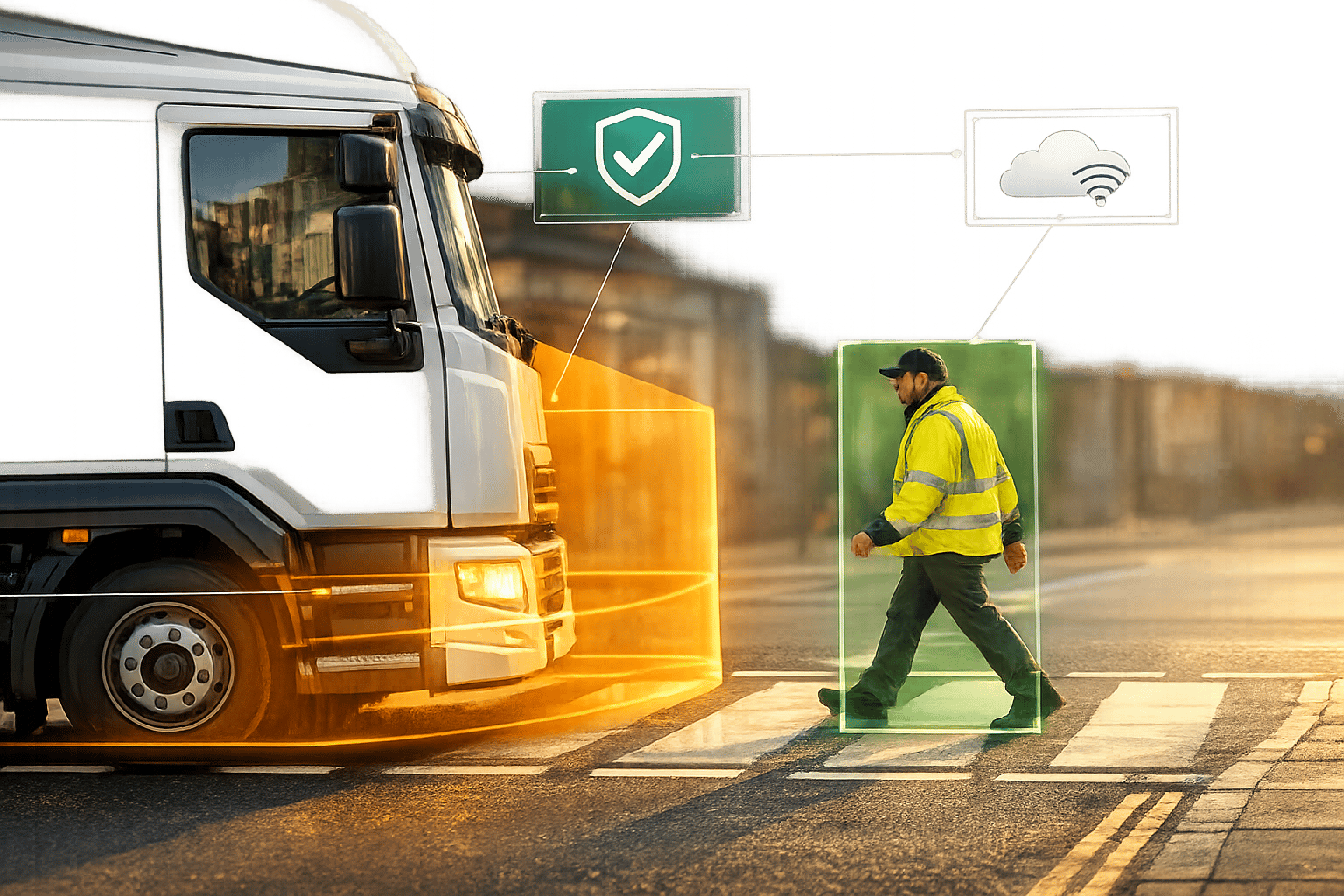
AI pedestrian detection is transforming fleet safety by reducing accidents, meeting regulatory standards, and cutting costs. Here's what fleet managers need to know:
- Why it matters: With over 42 million vehicles on UK roads by 2025, vulnerable road users like pedestrians and cyclists face increased risks. AI systems help prevent collisions by accurately identifying pedestrians and reducing false alarms.
- How it works: These systems use computer vision and machine learning to monitor blind spots, ignoring static objects like bollards while alerting drivers to real hazards. Alerts are delivered visually and audibly, ensuring quick driver response.
- Key benefits:
- Up to 85% reduction in accidents and related costs.
- Compliance with London's Direct Vision Standard (DVS) and Progressive Safe System (PSS) regulations, mandatory for HGVs over 12 tonnes.
- Lower insurance premiums and less vehicle downtime. These benefits apply across various sectors using van tracking.
For fleet managers, investing in AI pedestrian detection ensures safer roads, regulatory compliance, and long-term cost savings. Read on for implementation tips and future developments in fleet safety.
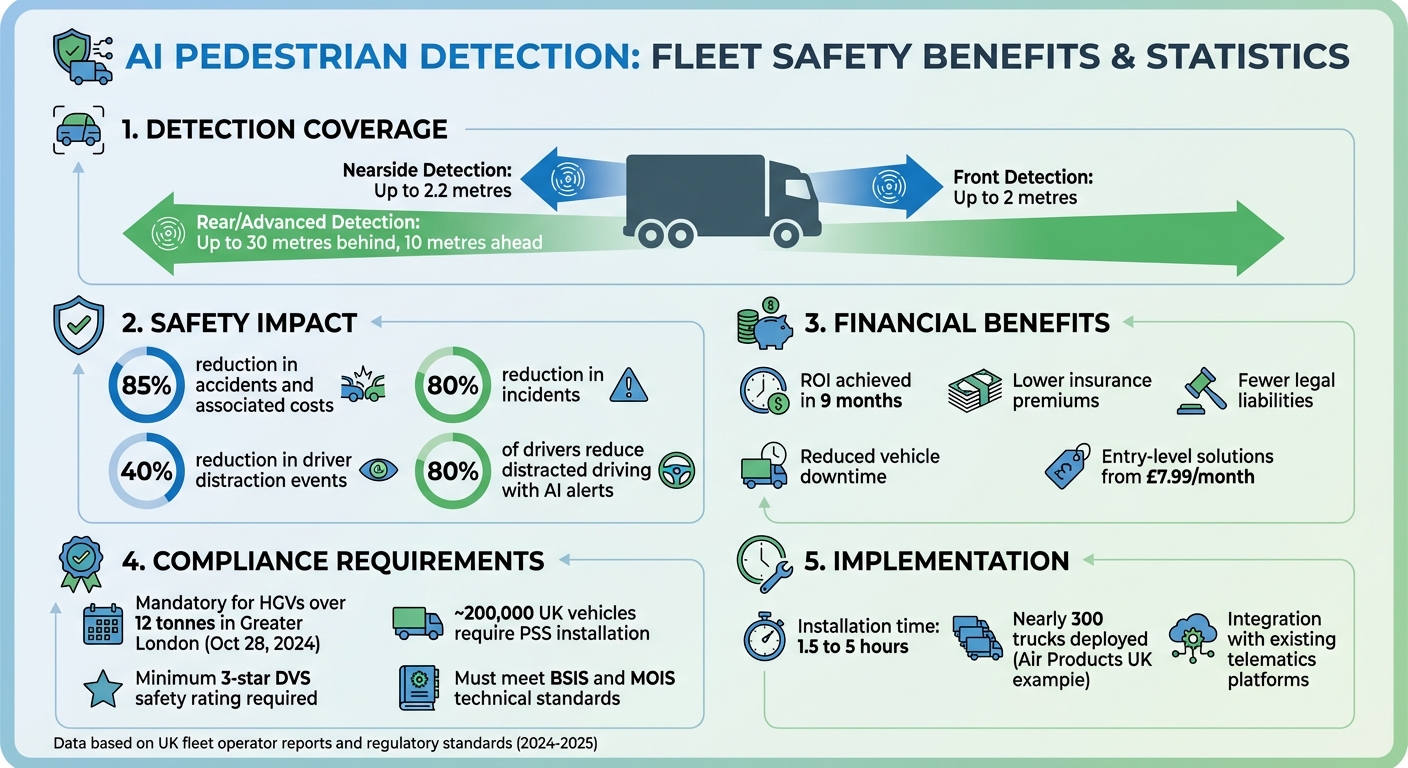
AI Pedestrian Detection Benefits for Fleet Safety: Key Statistics and ROI
How AI Improves Pedestrian Detection Systems
Machine Learning and Computer Vision Technology
AI-powered cameras rely on computer vision to keep a constant watch on blind spots around large vehicles, such as HGVs and buses - areas where drivers have limited or zero visibility. By using machine learning algorithms, these systems can identify Vulnerable Road Users (VRUs), including pedestrians and cyclists, while ignoring static objects like bollards, bins, or parked cars. This helps reduce false alarms and prevents drivers from becoming desensitised to alerts. The technology processes high-definition video feeds in real time, providing immediate visual and audio warnings in the cab whenever pedestrians enter hazardous zones. This allows drivers to react swiftly, avoiding collisions during risky manoeuvres like lane changes or turns. These detection systems also integrate seamlessly with broader fleet safety solutions.
Integration with Fleet Telematics Platforms
AI pedestrian detection systems don’t just stop at in-cab alerts - they connect effortlessly with fleet telematics platforms, sending safety alerts directly to fleet managers for remote monitoring. For example, when paired with tools like GRS Fleet Telematics, these systems offer a detailed overview of safety incidents and near-misses across the fleet. Managers can review alerts, analyse footage, and pinpoint high-risk behaviours or accident-prone locations. This data supports proactive fleet safety management, enabling long-term analysis and GDPR-compliant safety assessments, rather than focusing solely on immediate incident responses.
Key Safety Features
AI systems are designed to address the specific dangers vulnerable road users face. High-definition video output ensures drivers have a clear and detailed view of their surroundings, making it easier to verify alerts. Both visual and audio warnings are provided, catering to various driving environments and noise conditions. The intelligent identification feature distinguishes humans from static objects, reducing unnecessary distractions. Additionally, these systems can be tailored to monitor specific zones around a vehicle’s most hazardous blind spots. This is particularly crucial for vehicles over 12 tonnes operating in London, where pedestrian AI is a mandatory part of the DVS Progressive Safe System.
How Does AI Improve Fleet Safety?
Benefits of AI Pedestrian Detection for Fleet Safety
AI pedestrian detection systems are transforming fleet safety by reducing risks and operational costs, while also ensuring compliance with regulatory standards.
Reducing Blind Spot Collisions
Blind spots are a major challenge for large vehicle operators, and traditional mirrors often fall short in addressing this issue. AI-powered systems step in by detecting vulnerable road users up to 2.2 metres on the nearside and 2 metres in front of the vehicle. These systems provide escalating alerts, starting with visual amber warnings and progressing to flashing red alerts with audio as collision risks increase. Fleet operators have reported up to an 85% reduction in accidents and associated costs.
This technology also helps drivers avoid "alert fatigue." As Steve Blacker, an HGV driver at Air Products, noted:
Having the different levels of visual and audible warnings which determine the difference between street furniture, pedestrians and cyclists is revolutionary. What's great is that the system cuts out being constantly warned because it thinks a barrier or street sign is a danger.
Air Products has implemented this Progressive Safe System across nearly 300 trucks in the UK, with the project set to conclude in April 2025 under the leadership of UK Distribution Manager Mark Pawsey.
Meeting UK Fleet Safety Regulations
Beyond improving safety, these systems ensure compliance with UK regulations. For HGVs over 12 tonnes operating in Greater London, AI pedestrian detection is mandatory under Transport for London's Direct Vision Standard starting 28th October 2024. Vehicles must achieve a minimum three-star safety rating or install a Progressive Safe System (PSS) to secure permits and avoid fines. It's estimated that around 200,000 vehicles in the UK will require PSS installations to remain compliant.
AI systems meet the technical requirements for Blind Spot Information Systems (BSIS) and Moving Off Information Systems (MOIS) by accurately detecting vulnerable road users while ignoring static objects. Fleet managers are advised to ensure installations are carried out by accredited professionals, such as those certified under the FCS Installer Training and Accreditation Scheme (FITAS) or the Association of Vehicle Installers (AVI). Additionally, post-installation reports should be requested as proof of compliance.
Lower Costs and Insurance Premiums
The financial benefits of AI pedestrian detection are substantial. With up to an 80% reduction in incidents, fleets experience lower insurance premiums, less vehicle downtime, and fewer legal liabilities. Many fleet operators report a positive return on investment within just nine months of deploying these systems.
Savings come from multiple areas: reduced collision repair costs, fewer compensation claims, and less time lost to vehicle repairs. Drivers also benefit, as AI systems cut down on false alarms, allowing them to focus on genuine risks. This not only improves road safety but also reduces stress, leading to better driver retention. Insurance companies are increasingly recognising the value of this technology, offering premium reductions when fleets demonstrate lower incident rates.
Implementation Considerations for Fleet Managers
To truly benefit from AI pedestrian detection, fleet managers need to focus on seamless implementation. This involves coordinating hardware, software, and personnel to ensure these systems deliver the promised safety improvements.
Selecting the Right Camera Setup
The choice of camera setup depends on the type of vehicles in the fleet, the environment in which they operate, and relevant regulations. For example, larger vehicles navigating busy city streets may require multi-camera systems to provide a full view and address blind spots. In contrast, smaller fleets might benefit from more focused solutions targeting specific high-risk areas. Once the ideal camera system is selected, the next step is integrating it into the existing telematics infrastructure.
Connecting with Existing Telematics Systems
Integrating AI pedestrian detection systems with telematics platforms can offer a comprehensive safety solution. This integration allows managers to link alerts with GPS data, driver behaviour insights, and incident records. For instance, GRS Fleet Telematics offers tracker packages that connect with additional sensors using standard protocols, creating a unified dashboard for monitoring operations. Ensuring compatibility through protocols like CAN bus is essential to maintaining seamless data sharing. With the systems in place, attention must turn to equipping drivers with the skills to respond effectively to these technologies.
Driver and Team Training
Technology alone cannot prevent incidents - driver training is essential. Drivers need to understand how to react to AI alerts promptly and correctly. A strong example comes from General Mills, where Fleet Services Manager Mike Camnetar introduced "Prompt Like a Boss" workshops in December 2025. These workshops, combined with a custom AI assistant for real-time safety data queries, helped drivers act more proactively.
"Historically, fleets have been more reactive. For example, we only talk to drivers after an accident. AI lets us move to a preventive model, which is better for both people and budgets."
- Mike Camnetar, Fleet Services Manager, General Mills
Fleet managers can also use AI-driven scoring systems to identify high-risk drivers for targeted coaching. For instance, Nauto's Manager-Led Coaching workflow, updated in 2026, highlights the top three areas for each driver - like road awareness or near-misses - to make coaching more effective. Research shows that AI alerts reduce distracted driving in 80% of drivers. Additionally, mobile apps that allow drivers to review their performance encourage self-improvement, creating a safer fleet overall.
Future Developments in AI-Powered Fleet Safety
As AI continues to evolve, its role in fleet safety is expanding beyond detection and compliance. The next wave of advancements focuses on preventing incidents before they happen.
Predictive Analytics for Risk Management
AI is moving from reactive to predictive capabilities, aiming to foresee risks before they materialise. By analysing driver habits, traffic patterns, and historical incident data, these systems can pinpoint high-risk scenarios and notify fleet managers ahead of time. Modern AI cameras now monitor broader areas, with some capable of watching up to 30 metres behind and 10 metres ahead. This allows for proactive measures, reducing downtime and directing safety efforts where they’re most needed.
Regulation-Driven AI Developments
In the UK, evolving regulations are shaping the adoption of advanced AI safety systems. Transport for London (TfL), for instance, mandates that these technologies differentiate between vulnerable road users - like pedestrians and cyclists - and static objects such as bollards. This reduces false alarms, which can otherwise lead to driver fatigue. Paul Lawrence, Managing Director at AddSecure, highlights the efficiency of these systems:
AI technology only detects what it needs to - such as pedestrians and cyclists - drivers will receive less visual and audio alerts, enabling them to focus on safe driving.
With areas like Greater Manchester and the West Midlands rolling out Vision Zero strategies, regulatory demands are pushing safety innovations forward. These standards are also making AI solutions more adaptable and affordable for fleets, regardless of size.
Scalable AI Solutions for Different Fleet Sizes
AI-powered safety tools are no longer reserved for large operators with substantial budgets. Scalable and cost-effective options are becoming widely available, making these technologies accessible to smaller fleets. For instance, fleets using AI safety kits have reported an 85% drop in accidents and related costs. Installation times range from 1.5 to 5 hours, allowing businesses to upgrade gradually with minimal disruption. Companies like GRS Fleet Telematics offer entry-level van tracking solutions starting at just £7.99 per month, demonstrating that advanced safety doesn’t have to break the bank. The key lies in selecting systems that integrate smoothly with existing telematics platforms, ensuring a cohesive safety strategy without the need for a complete infrastructure overhaul. These advancements continue to build comprehensive safety ecosystems, benefiting fleets across the UK.
Conclusion
AI-powered pedestrian detection is transforming fleet safety and compliance. Fleets using these systems have reported a 40% reduction in driver distraction events, a significant step forward in operational safety. For operators in the UK, particularly those preparing for London's 2024 Direct Vision Standard, this technology not only safeguards vulnerable road users but also helps meet stringent regulatory requirements.
The benefits extend beyond compliance. Real-time alerts address high-risk behaviours such as mobile phone use and fatigue, complementing the detection capabilities discussed earlier. Stuart Cawthorne, Transport Manager at A1 Group, highlighted the impact of these systems after implementing AI video telematics across 110 vehicles in July 2025:
The AI-powered cameras are already making a positive impact across our commercial fleet giving us greater visibility of operational performance, improving driver behaviour and helping to reduce road risk.
Modern AI solutions seamlessly integrate with existing telematics platforms, shifting fleet safety strategies from reactive responses to proactive risk management. By analysing patterns and predicting high-risk scenarios, these systems provide actionable insights that improve driver behaviour and reduce incidents.
For fleet managers planning their next steps, investing in Progressive Safe System (PSS)–compatible technology ensures both legal compliance and improved operational efficiency. As part of the 2024 Direct Vision Standard, PSS-compatible solutions not only fulfil regulatory needs but also create safer and more efficient fleets for the future. AI pedestrian detection is setting a new standard for fleet safety and operational excellence.
FAQs
Will AI pedestrian detection work in rain, fog or at night?
AI pedestrian detection systems can struggle in conditions like rain, fog, or at night due to poor visibility. However, newer technologies such as thermal imaging, infrared cameras, and multi-sensor setups are making strides in addressing these challenges. These tools work together to improve detection capabilities, enhancing safety even in tough weather or low-light situations.
What proof do I need to show DVS/PSS compliance after installation?
To prove that your vehicle meets the requirements for DVS and the Progressive Safe System (PSS), you’ll need to provide documentation or certification. This should confirm compliance after all the required systems have been installed. Ensure that the evidence clearly demonstrates your vehicle adheres to the specified standards.
How do I estimate ROI for my fleet before buying?
To get a sense of ROI before investing in AI solutions, start by calculating your current expenses for fuel, maintenance, and deliveries. Then, use industry benchmarks to estimate potential savings - fuel costs might drop by 10–15%, while maintenance expenses could decrease by 12–18%. Compare these projected savings to the cost of the system to estimate the payback period, which usually falls between 8–12 months. Looking at case studies from fleets similar to yours can also give you a clearer picture of the savings and efficiency gains you might achieve.