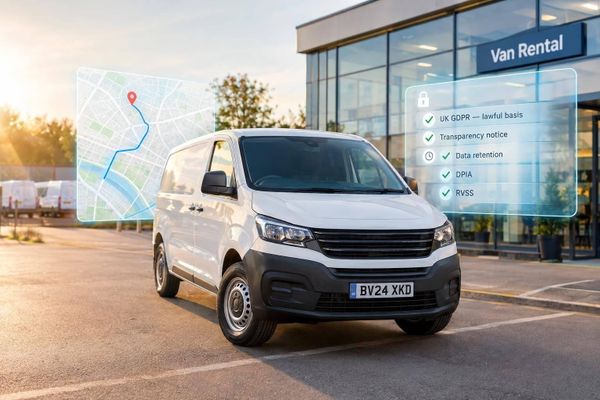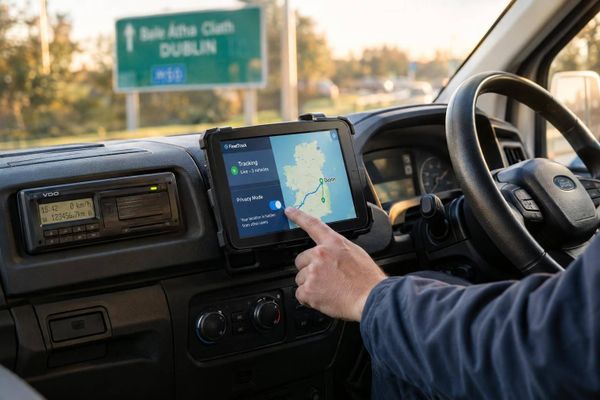
Study: Impact of Parking on Delivery Times
UK delivery drivers lose hours and money searching for parking; real‑time kerb data, telematics and bookable bays can cut route delays.
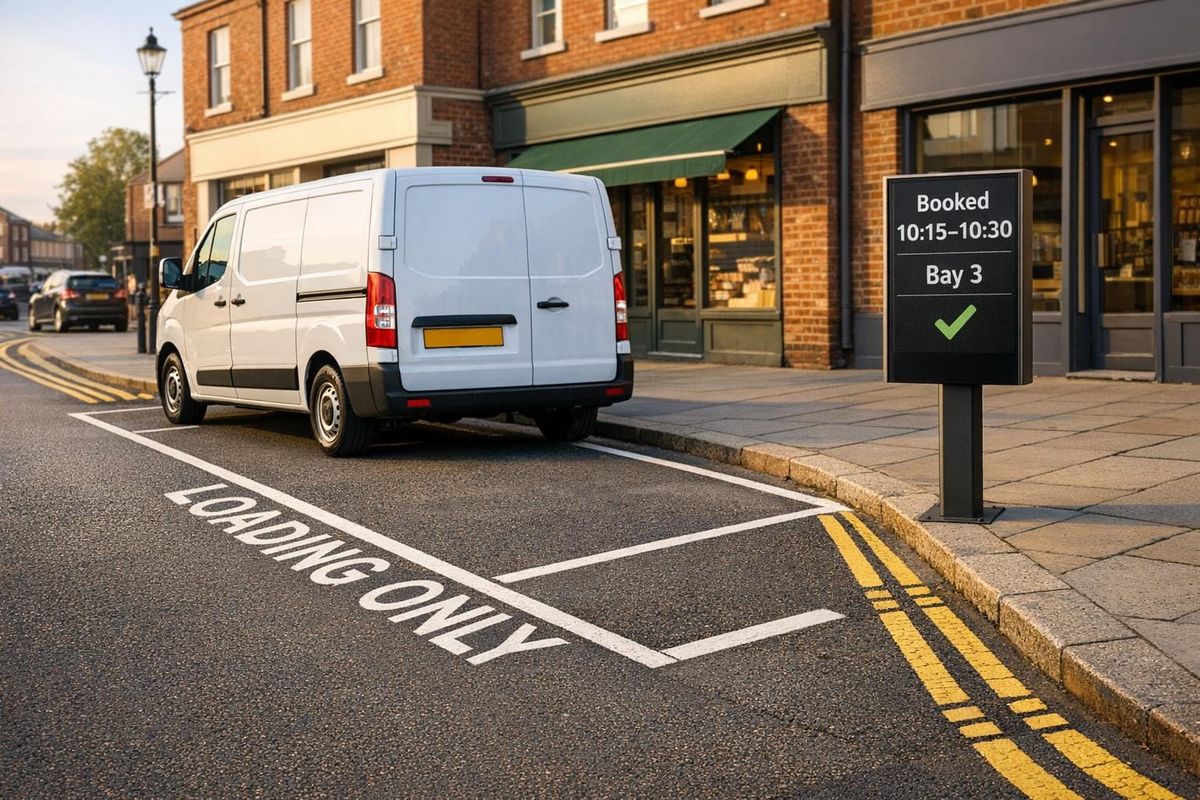
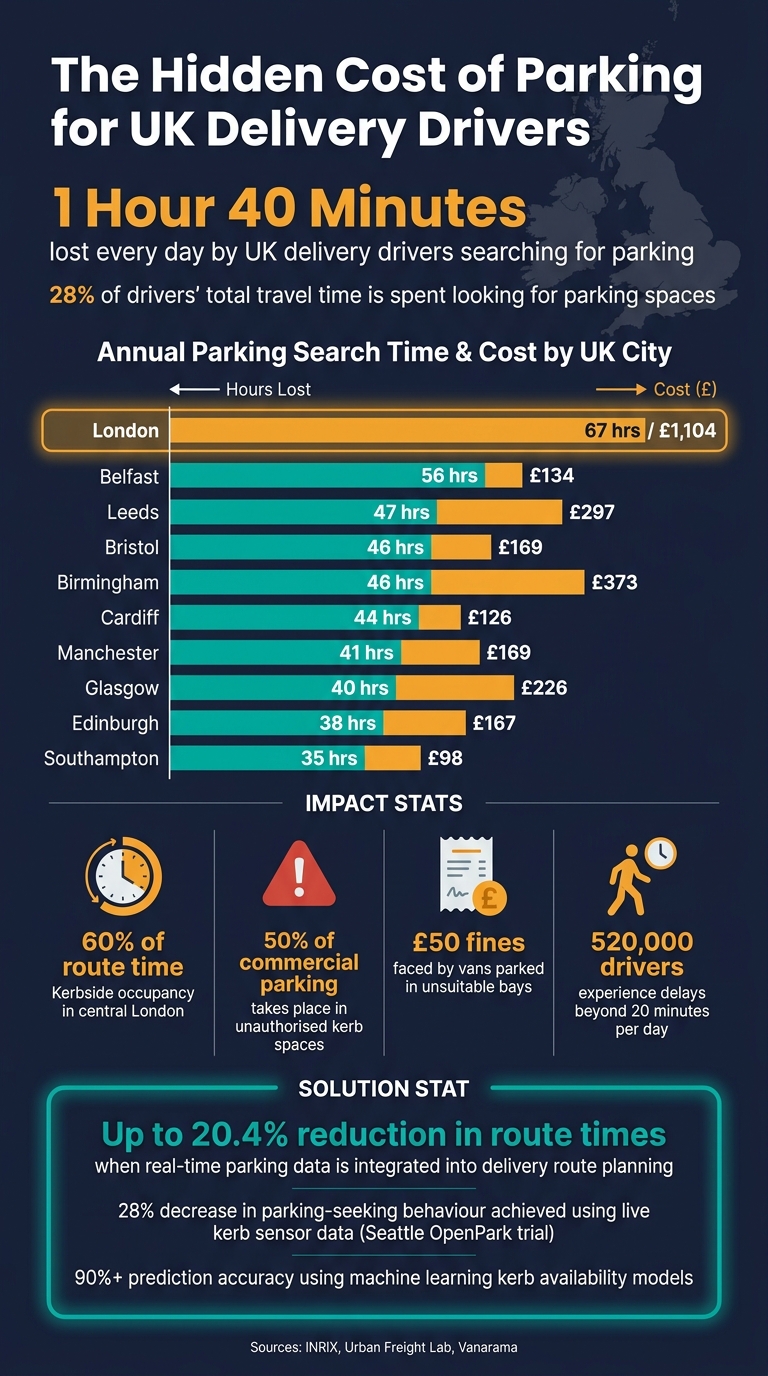
Finding parking is one of the biggest challenges for delivery drivers in urban areas. In the UK, drivers spend up to 1 hour 40 minutes daily searching for spaces, which delays routes, increases costs, and worsens emissions.
Key Takeaways:
- Time Wasted: 28% of drivers' travel time is spent looking for parking.
- Costs: London drivers lose £1,104 annually due to parking delays.
- City Centre Struggles: Kerbside occupancy can take up to 60% of route time.
- Fines: Many vans face £50 fines due to unsuitable parking bays.
- Solutions: Real-time parking data and smarter route planning could cut delays by up to 20.4%.
What Can Help?
- Telematics: Tools like real-time kerb data and geofencing can improve efficiency.
- Policy Changes: Digital booking systems for loading bays reduce congestion and fines.
- Smart Routing: Factoring parking availability into delivery plans saves time.
Parking inefficiencies are a major issue for UK fleet operators, but technology and better kerbside management can make deliveries faster and more reliable.
UK Delivery Parking Crisis: Key Stats & City Cost Breakdown
Research Findings: How Parking Affects Delivery Times
How Long Drivers Spend Searching for Parking
UK delivery drivers, on average, spend 1 hour and 40 minutes daily searching for parking - roughly 2 minutes per delivery stop. For 16% of van drivers, an estimated 520,000 individuals, delays can stretch beyond 20 minutes. Adding to the challenge, many commercial vehicles are longer than standard parking bays, often resulting in £50 fines.
"Van drivers have been known to get bad press... but our examples show that they often have no other option as the current parking system is not fit for purpose." - Vanarama
How Parking Problems Affect Route and Delivery Performance
Parking issues don’t just cause delays at individual stops; they disrupt entire delivery routes. Research on the Capacitated Delivery Problem with Parking (CDPP) highlights how extended parking search times can lead to delivery routes diverging significantly from traditional distance-based models.
When parking spaces are far from drop-off points, drivers either re-route or wait for a spot, increasing both walking and vehicle round times. In central London, for instance, kerbside occupancy can account for up to 60% of total round time. However, studies by the Urban Freight Lab suggest that integrating real-time parking availability into van tracking solutions could cut route times by as much as 20.4% in dense urban areas.
Comparing Urban Parking Studies
The impact of parking challenges extends across cities worldwide, with delays worsening in densely populated areas. In New York City, over 50% of trucks parked legally spend more than 15 minutes searching for a spot. Brisbane sees an average on-street parking search time of 13.38 minutes. By contrast, a nationwide study in the Netherlands found an average search time of just 36 seconds per car trip, showcasing the stark difference between national averages and the realities of crowded city centres.
In the UK, the story is equally challenging. London drivers spend an average of 67 hours per year searching for parking, costing each driver an estimated £1,104 annually. While cities like Manchester (41 hours) and Edinburgh (38 hours) fare slightly better, the overall burden remains high. This challenge affects businesses across various sectors and industries.
| City | Hours Spent Searching Per Year | Estimated Cost Per Driver |
|---|---|---|
| London | 67 hours | £1,104 |
| Belfast | 56 hours | £134 |
| Leeds | 47 hours | £297 |
| Bristol | 46 hours | £169 |
| Birmingham | 46 hours | £373 |
| Cardiff | 44 hours | £126 |
| Manchester | 41 hours | £169 |
| Glasgow | 40 hours | £226 |
| Edinburgh | 38 hours | £167 |
| Southampton | 35 hours | £98 |
Source: INRIX
The overarching issue is clear: drivers lack reliable information about parking availability before reaching their destination.
"We have an information problem more than a parking problem. A problem that technology can help fix." - Dr Graham Cookson, Chief Economist, INRIX
Urban Conditions That Make Parking Harder for Delivery Drivers
Urban Design and Kerb Policy Problems
City streets weren’t designed with today’s delivery demands in mind. Kerbside space is a battleground shared by private cars, taxis, cyclists, outdoor diners, and delivery vehicles. The result? The demand for parking far exceeds the available supply. In densely populated areas, this problem is even more pronounced, with around 50% of commercial parking events taking place in unauthorised kerb spaces. Why? Because the authorised ones are almost always occupied.
This lack of space often forces drivers to park in less-than-ideal spots. They frequently choose safer locations that might not be the most efficient, just to avoid risky manoeuvres. Even when designated loading bays are available, they’re often filled by overstaying vehicles. For instance, passenger load zones see overstay rates as high as 80%, compared to just 13% in zones reserved for commercial vehicles. This means delivery drivers regularly arrive to find their allocated spaces hijacked by private cars.
However, targeted kerbside policies can make a difference. Take the example of Walworth Road in Southwark, London. Grid Smarter Cities introduced five digitally bookable loading bays, which led to a 40% drop in Penalty Charge Notices (PCNs). The scheme also achieved a Benefit to Cost Ratio of 3.8 in its first year. According to Stantec’s analysis, just one supermarket supplier saved enough time to complete up to 66 extra deliveries annually.
"Our analysis indicates that scaling digitally managed kerbside solutions across London could enable around 21% more deliveries annually while reducing CO₂ emissions by approximately 15,000 tonnes." - Tim Hapgood, Senior Associate, Stantec
While these policy improvements show promise, operational challenges on the ground continue to complicate matters.
Delivery Constraints That Worsen Delays
The physical limitations of urban spaces are just one side of the problem. Tight delivery schedules and vehicle-specific requirements make delays even worse. Drivers often operate within strict time windows, and research shows that if parking searches exceed 1.6 minutes, it can be more efficient to reroute to a central hub rather than circle endlessly. But rerouting isn’t a perfect solution - it increases mileage, burns more fuel, and risks missing delivery slots.
Vehicle size adds another layer of complexity. Larger vans need more space to park safely, which reduces kerbside turnover and makes it harder for others to find a spot. Deliveries involving mail or heavy goods often require longer dwell times, further limiting kerb availability. And when a stop exceeds 10 minutes, traffic conditions tend to deteriorate, creating ripple effects for everyone on the road.
These challenges vary significantly depending on the delivery environment.
City Centre vs Suburban vs Industrial Delivery Conditions
Parking difficulties shift depending on the area. City centres are the toughest. Here, drivers face intense competition for kerbside space, tight delivery windows, and minimal room for error. Even a 20 to 30-minute delay caused by searching for parking can lead to missed dock appointments and bottlenecks at receiving areas.
Suburban routes, on the other hand, are generally more manageable. There’s less competition for kerbside space, and parking is more predictable. However, occasional overstays and scheduling variances can still cause hiccups. For those managing fleets, van tracking for rental and leasing companies can help monitor these variances in real-time.
At the other end of the spectrum, industrial zones and city-edge distribution hubs are far easier to navigate. These areas are often used as staging points where bulk loads are broken down before being sent into busier urban cores.
| Environment | Parking Difficulty | Key Risk |
|---|---|---|
| City centre | High | Missed delivery windows, PCNs, congestion |
| Suburban | Moderate | Scheduling variance, occasional overstays |
| Industrial/city edge | Low | Minimal - used as staging and consolidation points |
"Treat truck parking scarcity as a network-design variable, not a driver problem. If you do not model parking into scheduling, you are underestimating true transit time and overstating on-time performance." - Jordan Ellison, Senior Supply Chain Content Strategist, Milestone
The challenges in urban areas mean that fleet planners can’t take a one-size-fits-all approach. Dense city routes will always face more obstacles than suburban ones - not because of driver inefficiency, but because of the inherent difficulties of the urban environment.
How Telematics Can Reduce Parking-Related Delays
Using Real-Time Kerb Data to Cut Search Times
One of the biggest challenges drivers face is the lack of visibility into available loading bays before they arrive. Without this information, they often commit to a route only to find the space they were counting on is already occupied. This leads to "cruising" for a replacement spot, a behaviour that significantly adds to parking search times in busy urban areas.
Real-time kerb data has the potential to fix this issue. Between 2018 and 2021, the Urban Freight Lab tested a system called OpenPark in Seattle's Belltown neighbourhood. Using in-ground sensors, the system provided live updates on parking availability. Over the 10-block area studied, this approach led to a 28% decrease in parking-seeking behaviour, exceeding the project's 20% target.
But it didn’t stop there. The app also offered predictive capabilities, showing not just current availability but also forecasts for 5, 15, or 30 minutes ahead, based on a driver’s estimated time of arrival. By using machine learning models with kerb occupancy data, the system achieved a prediction accuracy of over 90%. Drivers could even filter results based on their vehicle size, ensuring they only saw spaces that could accommodate their van.
These real-time insights don’t just help drivers find parking faster - they also open the door to smarter route planning.
Route Planning with Parking Data
Incorporating real-time kerb data into routing systems allows delivery schedules to account for parking search times, something traditional tools often overlook. While most routing tools optimise for distance and traffic, they fail to consider how long it takes to find a parking spot. This oversight can lead to unrealistic journey time estimates.
When parking search times are factored into routing models, delivery efficiency improves significantly. For example, integrating kerb occupancy data into route planning can reduce total route time by an average of 1.5%, with savings reaching up to 20.4% in densely populated urban areas.
"The CDPP [Capacitated Delivery Problem with Parking] outperforms industry practice and models in the literature showing the greatest advantage when the parking time is high." - Sara Reed, Ann Melissa Campbell, and Barrett W. Thomas
Advanced routing models can also identify when it’s more efficient for a driver to park once and complete multiple nearby deliveries on foot, rather than driving to a new spot for each stop. This strategy is particularly useful in city centres where kerbside turnover is low, and parking search times are high.
GRS Fleet Telematics: Tools for UK Fleet Operators
For fleet operators in the UK grappling with parking-related delays, GRS Fleet Telematics offers practical solutions designed to ease these challenges. Their real-time van tracking provides live updates on vehicle locations and helps fleet managers monitor how long a vehicle remains stationary. This makes it easier to spot when excessive time is being spent at a single location due to parking issues.
Geofencing adds another layer of efficiency. Operators can set up virtual boundaries around key loading zones or delivery points, enabling them to track dwell times and identify recurring problem areas. Combined with advanced route planning tools and historical GPS data, this feature allows fleet managers to proactively address bottlenecks and streamline operations.
GRS Fleet Telematics' service is available from £7.99 per vehicle per month, with hardware options ranging from a basic wired tracker (£35) to a dual-tracker setup with immobilisation capability (£119). This range of options ensures flexibility for fleets of all sizes and risk levels.
sbb-itb-499a7f0
What UK Fleet Operators and Local Authorities Can Do
Guidance for Fleet Operators
Studies indicate that the time spent searching for parking can significantly impact operational costs. One way to address this is by using van tracker systems to monitor the time between a vehicle entering a geofenced delivery area and the moment its engine is turned off. This data helps pinpoint problem areas - specific postcodes, times, or routes where delays are frequent. Once these hotspots are identified, you can factor in a 'parking risk' when planning routes. For example, you might schedule earlier departure times or adjust the order of stops in zones known for parking difficulties. Separating delivery lanes by parking complexity can also lead to more realistic transit times, helping to avoid the domino effect of one delay disrupting the entire schedule.
"Parking challenges extend beyond localisation - they reflect network inefficiencies."
In urban areas where space is tight, boosting delivery efficiency often requires rethinking the final delivery leg. For instance, in city centres where van parking is particularly limited, combining van use with micro-mobility solutions can be a game-changer. Parking the van once and completing nearby deliveries on foot or using e-cargo bikes can save time compared to constantly moving the van for each stop.
Policy Steps for Local Authorities
While fleet operators can optimise their operations, local authorities play a critical role in reducing kerbside congestion. A major step forward would be moving away from the "first-come-first-served" approach to loading bays. For example, Westminster City Council partnered with Grid Smarter Cities in March 2024 to trial the "Kerb" booking platform. This system allows electric van drivers to pre-book loading slots at designated bays, such as those on Abbey Orchard Street and Russell Street near Covent Garden.
"The Kerb app enables commercial EV LGV drivers or fleet managers to book their slots in signed 'permit' loading bays which... help better manage freight, servicing and delivery activities at the kerbside. This is an exciting change from the first-come-first-served approach to kerbside access." - Neil Herron, CEO of Grid Smarter Cities
Local authorities can further ease congestion by encouraging off-peak deliveries, setting up micro-hubs near busy areas, and introducing flexible arrival windows.
Comparing Mitigation Strategies
The effectiveness of these strategies varies depending on fleet size, urban density, and the infrastructure in place. Here's a quick comparison of their benefits and challenges:
| Strategy | Pros | Cons |
|---|---|---|
| Telematics integration | Quickly identifies problem areas; improves route planning; cost-effective | Requires consistent data management and geofencing setup |
| Dynamic kerb management (e.g., digital booking) | Ensures space availability; reduces idling; supports EV use | Requires digital infrastructure and operator pre-registration |
| Off-peak delivery incentives | Enhances kerb access; easy for authorities to implement | Needs cooperation from receivers; not suitable for all businesses |
| Micro-hubs / staging points | Reduces large vehicle movements in congested areas | Medium-to-high setup costs; requires secure locations and inventory systems |
| Flexible arrival bands | Improves punctuality; easy to implement | Needs clear communication with customers and receivers |
No single solution can address all challenges. The best results come from combining operator-level strategies, like telematics, with proactive kerbside policies from local authorities. When these efforts work together, they create a more efficient and reliable delivery system across the UK.
Conclusion: Key Findings and Next Steps
Parking challenges are more than just an inconvenience - they drain time, fuel, and money, creating ripple effects across every stage of delivery routes. The findings discussed here highlight the daily delays faced by drivers in UK cities, making it clear that solutions need to address these inefficiencies head-on.
"Parking is a necessary component of traditional last-mile delivery practices, but finding parking can be difficult. Yet, the routing literature largely does not account for the need to find parking." - Sara Reed, Ann Melissa Campbell & Barrett W. Thomas
Even small disruptions can snowball, especially in densely populated urban areas. Research shows that incorporating parking data into route planning can reduce total route time by as much as 20.4%. These tools already exist, offering a practical way to achieve measurable improvements.
For fleet operators in the UK, the logical next step is to integrate real-time kerbside data into their routing systems. Providers like GRS Fleet Telematics offer white-label van tracking solutions with geofencing to pinpoint where parking delays occur and adjust route planning accordingly. Pairing this with broader measures, such as common carrier parcel lockers - which can cut vehicle dwell time by 33% - can amplify these gains. Together, these strategies offer immediate benefits while laying the groundwork for future advancements.
The future lies in predictive parking data. Machine learning models, already capable of forecasting kerb availability with over 90% accuracy, have the potential to transform urban logistics. However, widespread deployment across UK cities is still in its early stages. Fleet operators who adopt data-driven practices now will be better positioned to leverage these advancements as they become more accessible.
FAQs
How can I measure how much time my drivers lose to parking?
You can estimate parking-related delays by leveraging GPS data to track vehicle movement during deliveries. By examining instances of slow driving or circling near a destination before coming to a stop, you can gauge the time spent looking for parking. GRS Fleet Telematics provides advanced van tracking tools tailored for UK businesses, helping them monitor fleet performance and enhance efficiency, with prices starting at just £7.99 per month.
What telematics features help cut parking delays and fines?
Telematics helps drivers avoid parking delays and fines by leveraging real-time data and integrating with smart city systems. For instance, features like real-time curb availability allow drivers to locate parking spots more quickly, reducing cruising time by over 27%. Additionally, digital booking systems for loading bays can decrease Penalty Charge Notices (PCNs) by as much as 40%. Tools like route optimisation and geofencing further enhance efficiency by easing congestion and monitoring time spent in designated areas.
What kerbside policy changes should councils prioritise to help deliveries?
Councils could benefit from adopting digital kerbside management systems to streamline delivery operations. Features like pre-booked loading and unloading slots, combined with real-time availability updates displayed through e-ink signage, can significantly cut down on parking-related delays, reduce congestion, and minimise idle time. These steps not only improve traffic flow but also contribute to better road safety and adherence to regulations. Companies like GRS Fleet Telematics back these efforts with advanced van tracking tools, enabling businesses across the UK to optimise their fleet operations effectively.