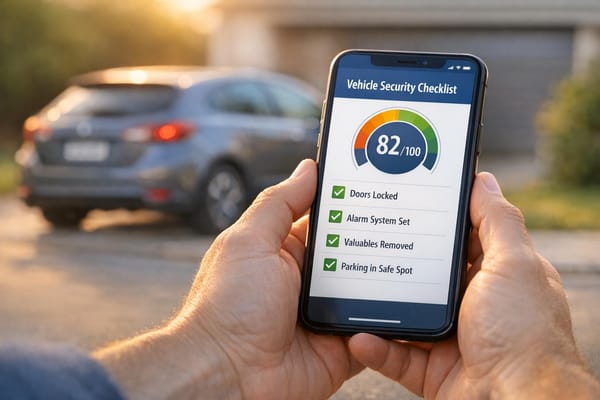
Vehicle Security Checklist Tool
Assess your car's security with our free Vehicle Security Checklist Tool. Get a score, tips, and practical advice to keep your vehicle safe!

Assess your car's security with our free Vehicle Security Checklist Tool. Get a score, tips, and practical advice to keep your vehicle safe!

How hybrid classroom and simulation training, combined with telematics, scale drone operator programmes—cutting costs, improving compliance and flight precision.

Use real-time telematics and AI to predict vehicle faults, reduce emergency repairs, lower maintenance costs and cut downtime for fleets.
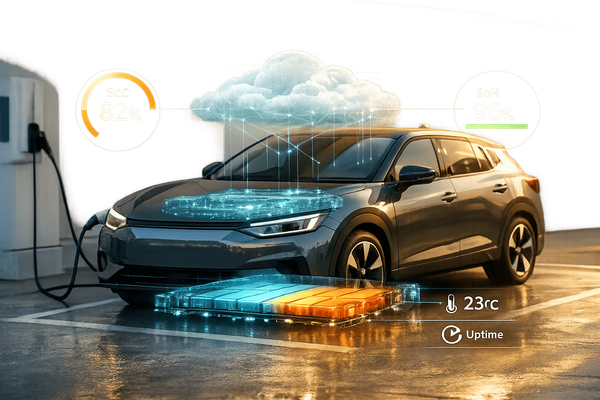
Telematics turns EV batteries into cloud digital twins, providing real‑time SoC and SoH insights to cut costs, extend lifespan and reduce downtime.

Key fleet depreciation metrics — straight-line, per-mile and market retention — plus how telematics, predictive maintenance and smart vehicle choice cut costs.
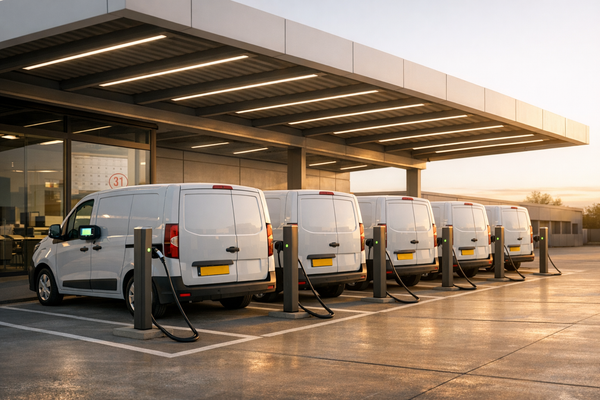
Which UK grants, tax reliefs and telematics will reduce costs when switching your fleet to EVs — eligibility, application steps and savings before 31 March 2026.
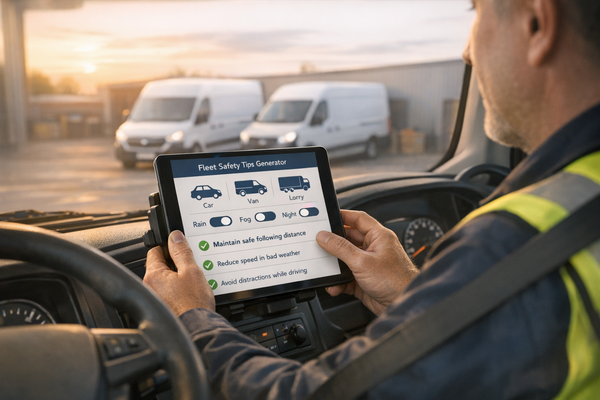
Generate tailored safety tips for your fleet drivers with our free tool. Input vehicle type and conditions for actionable advice in seconds!
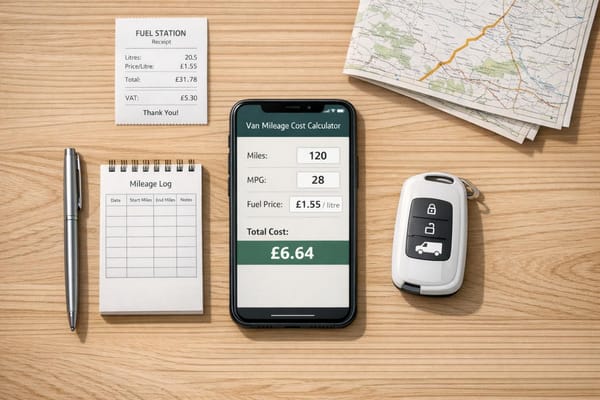
Calculate your van's mileage costs easily with our free tool. Input miles, fuel efficiency, and prices to get a detailed cost breakdown!
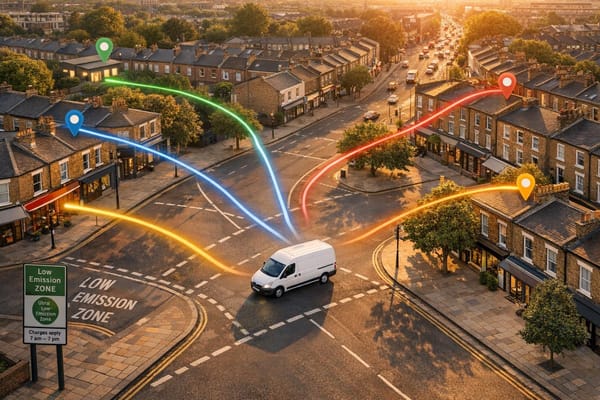
Five AI routing tools that cut last-mile costs, reduce mileage, improve on-time delivery and handle urban limits like ULEZ and traffic.

Battery storage helps fleets cut energy costs, shave peak demand, integrate onsite renewables, avoid grid upgrades and optimise charging with telematics.

Tailored routes that use driver skills, vehicle specs and live data to cut fuel, improve safety and ensure compliance for construction fleets.

Measure and reduce fleet CO₂ with fuel, idling and EV energy metrics, telematics insights and UK compliance guidance (SECR, UK SRS).