5 Benefits of Over-the-Air Updates for Fleets
OTA updates reduce fleet downtime, boost cybersecurity, simplify maintenance, cut operating costs and keep vehicles compliant with UK regulations.
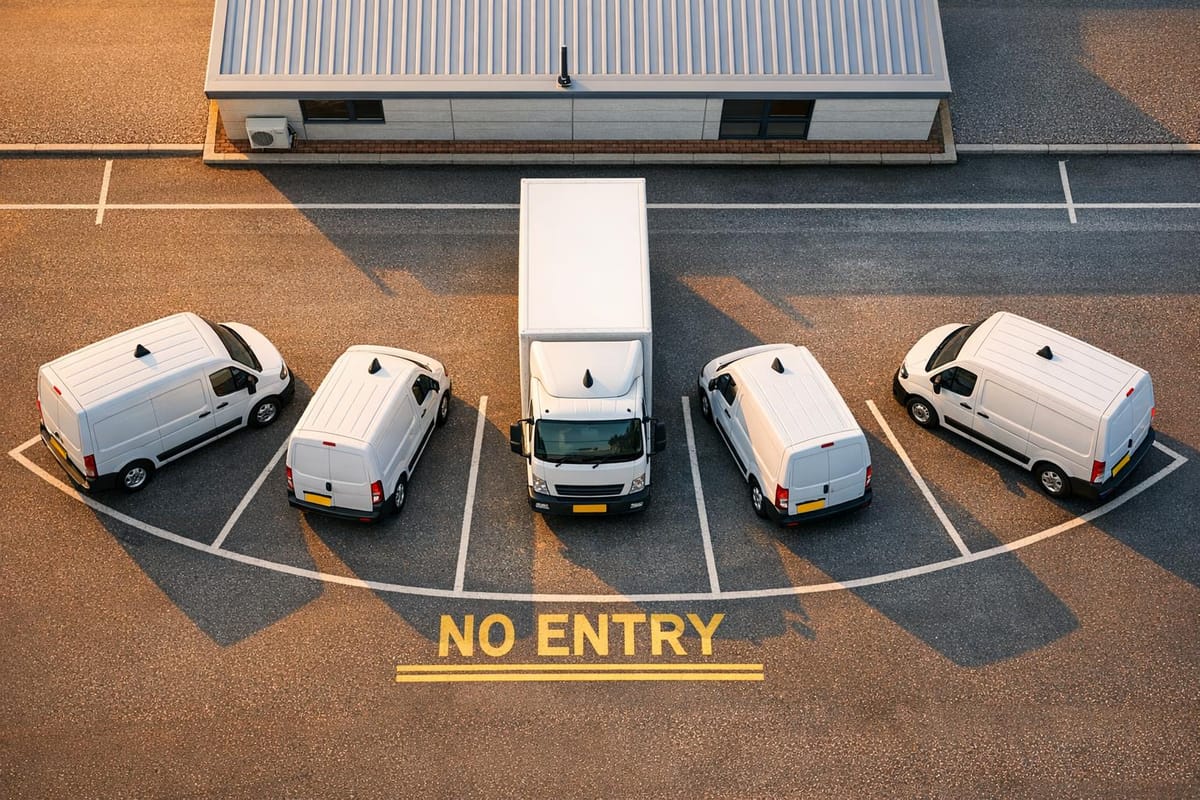
Over-the-air (OTA) updates simplify fleet management by delivering software updates wirelessly, saving time and reducing costs. Here's how they improve fleet operations:
- Less Downtime: Updates are installed remotely, often overnight, keeping vehicles on the road longer.
- Improved Security: Swift patches protect against cyber threats, safeguarding vehicles and data.
- Simplified Maintenance: Updates are automated, removing the need for workshop visits.
- Lower Costs: No transport or technician fees for software fixes.
- Regulatory Compliance: Updates ensure vehicles meet evolving UK regulations and safety standards.
What the future of OTA updates means for the future of trucking
1. Less Vehicle Downtime
Over-the-air (OTA) updates offer a smarter way to keep your fleet running efficiently with van tracking solutions. Unlike traditional methods that require vehicles to visit a service centre, OTA updates allow manufacturers to remotely fix bugs and install firmware updates. This means your vans spend more time on the road, generating revenue, and less time parked in a garage.
Here’s how it works: software updates are downloaded in the background via 4G/5G or Wi-Fi. Once downloaded, the installation - critical for systems like brakes or steering - is scheduled during off-peak hours to minimise disruption. According to Polestar, OTA installations typically take about 90 minutes, and vehicles need at least a 40% battery charge to complete the process successfully.
Modern vehicles are equipped with dual-bank (A/B) firmware, which stores both the current and updated software versions. If an update fails, the system automatically rolls back to the previous version, ensuring your vehicles remain operational.
To make the most of OTA updates, fleet managers can enable automatic downloads and schedule updates during long non-operational periods. This proactive approach keeps downtime to a minimum and your fleet running smoothly.
2. Better Security Protection
On top of reducing downtime, OTA updates play a crucial role in strengthening your fleet's security. With cyber threats increasingly targeting fleet vehicles, the ability to respond swiftly is essential. A staggering 93% of data breaches occur within minutes, yet detecting them takes an average of 207 days. OTA updates allow you to deploy patches fleet-wide in real time, closing off vulnerabilities before they can be exploited.
When a security flaw is identified - whether in tracking devices, mobile apps, or vehicle control systems - OTA updates deliver fixes remotely. This rapid response helps guard against threats like malware, man-in-the-middle attacks, and unauthorised access, which could compromise sensitive data or even enable remote vehicle control. Andrew Till, General Manager of Secure Platform at Trustonic, emphasises:
One major misconception is that cyber security can be added late in development but, in reality, it needs to be part of the foundation.
The financial implications of a breach are severe. Globally, ransomware attacks cost organisations over £3 million per incident, and for UK fleet operators, non-compliance with GDPR can lead to fines of up to £17.5 million or 4% of annual global turnover.
To bolster your security measures, consider activating automated patch management for smooth, fleet-wide updates. Use staged rollouts by testing updates in controlled settings before deploying them to the entire fleet. This ensures vulnerabilities are addressed without disrupting operations.
Here’s a quick look at key security threats and how OTA updates help mitigate them:
| Security Threat | Impact on Fleet | OTA Benefit |
|---|---|---|
| Malware Infiltration | System compromise or data theft | Rapid deployment of anti-malware patches |
| Man-in-the-Middle | Interception of sensitive fleet data | Updates to encryption keys and TLS protocols |
| Unauthorised Access | Remote vehicle control or theft | Immediate patching of authentication flaws |
| Charging Station Hacks | Power disruption and data leaks | Remote hardening of infrastructure security |
3. Easier Maintenance Management
OTA updates take the hassle out of maintenance management. Instead of coordinating workshop visits for every software patch or recall, fleet managers can now push updates remotely to all vehicles at once. These updates are delivered through 4G, 5G, or Wi-Fi networks, allowing vehicles to refresh their software while parked - or even while driving - without requiring any manual intervention.
The best part? It all happens in the background. Software packages download during the day and install overnight, ensuring no interruptions during working hours. As Polestar explains:
OTA updates save you from the hassle of visiting the dealership. Updates can be scheduled to occur during the night or when the car is parked, meaning zero downtime for you.
A great example of this came in September 2024, when Polestar rolled out its 15th major OTA update to all Polestar 2 vehicles. This update included a YouTube app and a performance improvement that boosted efficiency by 10% - all achieved without a single trip to the workshop.
To make the most of OTA updates, it’s a good idea to enable automatic downloads, schedule installations for off-peak hours, and ensure electric vehicles have at least a 40% battery charge before starting the process. Fleet management software can also help by tracking which vehicles have received the latest updates, keeping everything running smoothly.
This move from physical repairs to digital management brings some big advantages. Critical bugs and vulnerabilities can be addressed instantly across the entire fleet. Remote diagnostics allow fleet managers to monitor vehicle performance, access diagnostic data, and update software - all without stepping foot on-site. This seamless integration helps reduce repair times and cuts down on operating costs, making fleet operations more efficient than ever.
4. Lower Operating Costs
OTA updates do more than just reduce downtime - they also cut operating costs by removing the need for labour-intensive diagnostics and recall logistics. Traditionally, software updates required vehicles to be taken to workshops, leading to transport costs, technician fees, and revenue losses during downtime. As Start Rescue highlights:
Car companies can patch bugs remotely - sometimes overnight. This saves you the time and inconvenience of having to take your vehicle to the dealership to get a software update.
By automating diagnostics and recall processes, OTA updates further reduce expenses. They identify and fix software issues remotely, slashing labour costs. Recalls become more efficient too, as fixes can be deployed wirelessly across an entire fleet, avoiding the logistical nightmare of returning every affected vehicle to a workshop. This is especially relevant as fleet maintenance costs increased by 7% in the first half of 2024.
For electric fleets, the savings go even further. OTA updates can optimise battery management, improve charging speeds, and enhance energy efficiency - all without replacing physical components. These adjustments not only cut energy costs but also extend the battery's lifespan, which is often the most expensive part of an electric vehicle.
Unlike conventional methods that require hands-on diagnostics and significant downtime, OTA updates happen remotely - often overnight - with minimal disruption. This shift brings immediate cost savings. Sabina Martin, Vice President of Product Management at Geotab, notes:
Fleet maintenance is a major cost driver, and unexpected breakdowns can significantly impact operations... [New solutions] will help fleets move from reactive to predictive maintenance - improving efficiency, lowering costs, and keeping vehicles on the road.
To get the most out of OTA updates, prioritise vehicles with full Firmware-Over-The-Air (FOTA) capabilities for essential systems like powertrains and ADAS, rather than just infotainment. This strategy helps maintain your fleet's value over time.
5. Better Compliance and Performance
OTA updates do more than simplify maintenance and security - they help your fleet stay compliant with evolving UK regulations while maintaining top-notch performance, all without setting foot in a workshop. When new legislation like the Data (Use and Access) Act 2025 comes into play, manufacturers can remotely update vehicle firmware to meet the latest legal standards, ensuring your fleet stays on the right side of the law.
These updates also play a crucial role in vehicle safety. Essential safety systems, such as braking, airbags, and Advanced Driver Assistance Systems (ADAS), receive mandatory updates that operators cannot bypass. This ensures every vehicle adheres to DVSA roadworthiness standards. Beyond compliance, these updates fine-tune features like emergency braking and lane-keeping, making vehicles safer and more reliable than when they were first manufactured.
Performance improvements are another key advantage. Manufacturers can remotely optimise battery management, charging systems, and powertrain controls, helping vehicles run at peak efficiency. For electric vehicles, OTA updates can enhance horsepower, torque, and charging speeds while delivering more accurate range estimates. These ongoing software adjustments improve performance without needing any hardware changes.
Cybersecurity compliance is also strengthened through these updates. Security patches are deployed automatically to protect vehicle systems from cyber threats, meeting connected vehicle security regulations. With end-to-end encryption and digital signatures, these updates provide a robust defence against potential cyber-attacks.
To fully benefit from these updates, make sure "Automatic download" settings are enabled on all compatible vehicles. For electric vehicles, ensure they have sufficient charge to handle updates seamlessly in the background without interrupting operations.
Comparison Table
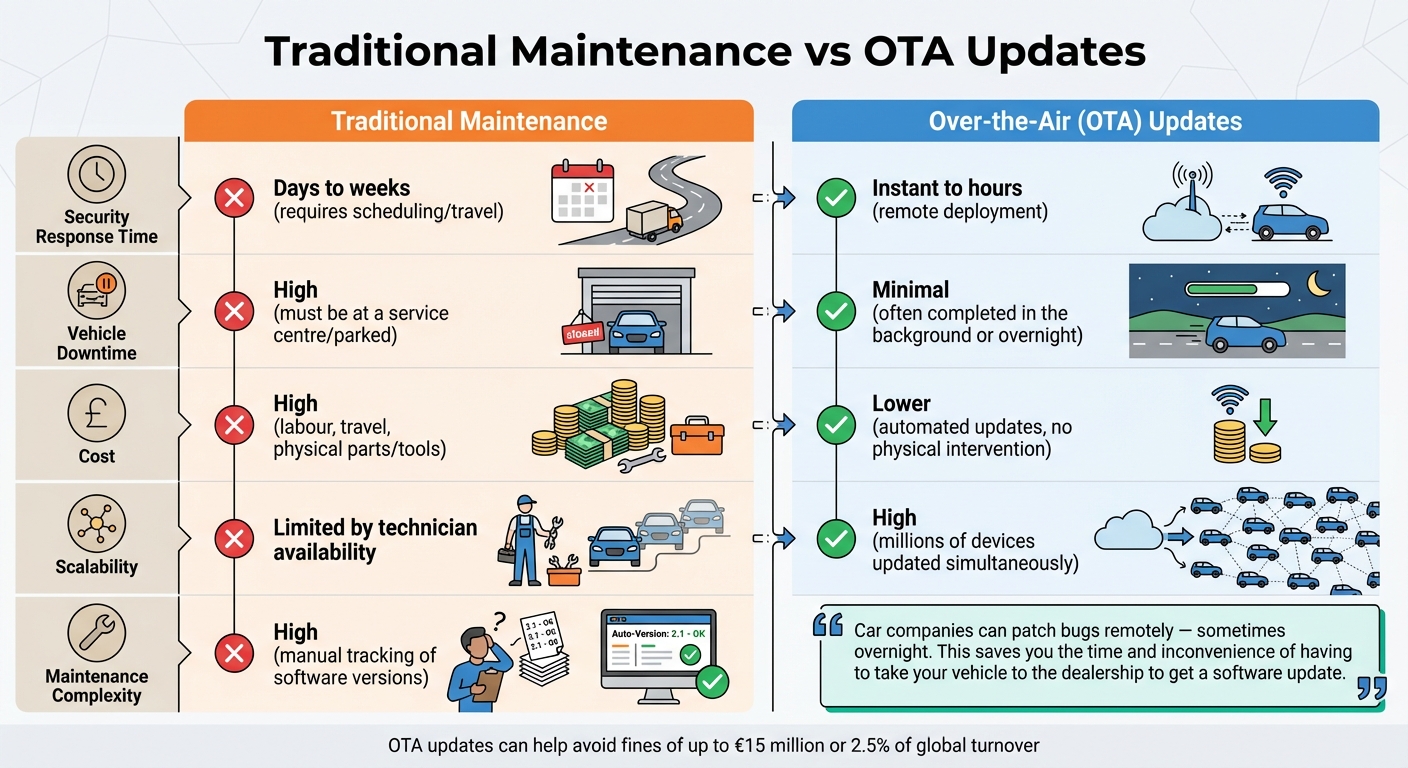
Traditional Maintenance vs OTA Updates: Key Differences for Fleet Management
The table below lays out the operational differences between traditional maintenance methods and over-the-air (OTA) updates, showcasing how each approach impacts efficiency and cost.
Traditional maintenance typically involves taking vehicles to a service centre, leading to increased downtime and expenses. In contrast, OTA updates allow software fixes to be sent wirelessly, whether the vehicle is stationary or on the move.
"Car companies can patch bugs remotely - sometimes overnight. This saves you the time and inconvenience of having to take your vehicle to the dealership to get a software update."
- Startrescue.co.uk
One of the standout differences is how quickly security vulnerabilities are addressed. Traditional methods might take days or even weeks to schedule and resolve an issue for each vehicle. OTA updates, on the other hand, can push fixes to an entire fleet within hours. This rapid response not only mitigates risks but also helps companies avoid fines of up to €15 million or 2.5% of global turnover.
Here’s a summary of the key operational differences:
| Factor | Traditional Maintenance | Over-the-Air (OTA) Updates |
|---|---|---|
| Security Response Time | Days to weeks (requires scheduling/travel) | Instant to hours (remote deployment) |
| Vehicle Downtime | High (must be at a service centre/parked) | Minimal (often completed in the background or overnight) |
| Cost | High (labour, travel, physical parts/tools) | Lower (automated updates, no physical intervention) |
| Scalability | Limited by technician availability | High (millions of devices updated simultaneously) |
| Maintenance Complexity | High (manual tracking of software versions) | Lower (automated versioning and compatibility checks) |
Conclusion
Over-the-air (OTA) updates are transforming the way fleets are managed. The five key benefits - less downtime, stronger security, streamlined maintenance, cost savings, and better compliance - combine to create a more efficient and reliable operation. By enabling updates to be deployed remotely, often while vehicles are idle overnight, businesses can minimise service centre visits and maximise uptime.
Among these advantages, security takes centre stage. With modern vehicles containing over 100 chips controlling critical systems like brakes and steering, OTA updates allow manufacturers to address vulnerabilities remotely, safeguarding both assets and drivers from potential risks. The reduction in labour and travel costs further underscores the importance of OTA updates for forward-thinking fleets.
In addition to cost and security benefits, fleet operators in the UK can boost efficiency by integrating OTA updates with advanced tracking solutions. For instance, GRS Fleet Telematics offers van tracking from £7.99 per month, featuring dual-tracker technology and an impressive 91% recovery rate for stolen vehicles. This combination of cutting-edge vehicle updates and reliable tracking helps businesses stay ahead of challenges while keeping expenses under control.
FAQs
Do OTA updates work without Wi‑Fi?
Yes, over-the-air (OTA) updates can function without Wi‑Fi. Instead, they rely on cellular networks like LTE or 3G to deliver essential updates when Wi‑Fi isn't available. This ensures your fleet remains up-to-date and secure, even in locations where Wi‑Fi access is limited or unavailable.
Can OTA updates break my vehicles?
Over-the-air (OTA) updates aim to improve a vehicle's functionality and security. Although it's uncommon, problems can sometimes occur if an update is not implemented correctly or if there are software bugs. That said, the primary goal of these updates is to boost performance without introducing any negative effects.
What should fleet managers do before an OTA update?
Before rolling out an over-the-air (OTA) update, fleet managers need to plan meticulously to keep disruptions to a minimum. Start by clearly defining the goals of the update - what are you trying to achieve? Next, evaluate whether your systems are compatible with the update to avoid unexpected issues. It's also crucial to establish a well-thought-out timeline for implementation, ensuring each step is manageable and organised.
Testing both hardware and software configurations ahead of time can prevent hiccups during the rollout. Finally, make sure your staff are well-prepared. Training them on the update process not only boosts efficiency but also ensures everyone complies with the necessary procedures. A little preparation goes a long way in making the update seamless.