IoT in Van Tracking: Key Benefits
IoT van tracking for UK fleets: real-time location, theft recovery, driver behaviour insights, fuel & maintenance savings, and CAZ/ULEZ compliance

IoT technology is transforming van tracking for UK businesses, offering tools that improve vehicle security, reduce costs, and simplify compliance. With real-time data from sensors and GPS, fleet managers can monitor van locations, driver behaviour, and vehicle health. Here's what IoT van tracking delivers:
- Real-Time Tracking: Monitor live van locations, optimise routes, and provide accurate ETAs.
- Improved Security: Dual-trackers, geofencing, and remote immobilisation help recover stolen vans and prevent theft.
- Driver Safety: Analyse driving behaviour to reduce accidents and lower fuel costs.
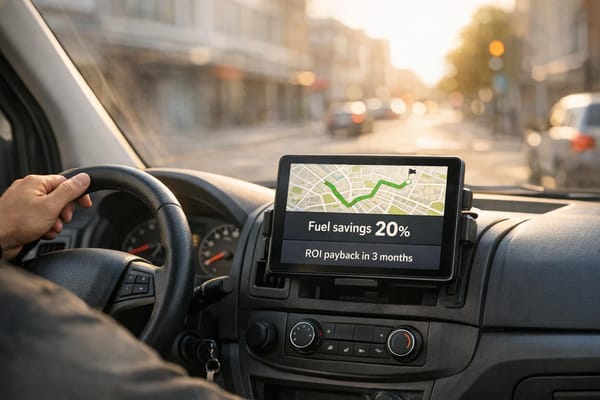
- Fuel Efficiency: Cut fuel use by up to 15% with better routes and reduced idling.
- Predictive Maintenance: Prevent breakdowns by addressing issues early with vehicle health monitoring.
- Cost Management: Identify underutilised vans and track mileage to optimise fleet size and expenses.
- Compliance Support: Simplify reporting for Clean Air Zones (CAZ) and Ultra Low Emission Zones (ULEZ).
Starting at £7.99 per month, solutions like GRS Fleet Telematics offer affordable tools to protect assets, save money, and meet UK regulations. Whether you're managing a small fleet or a large operation, IoT van tracking is a smart choice to improve efficiency and security.
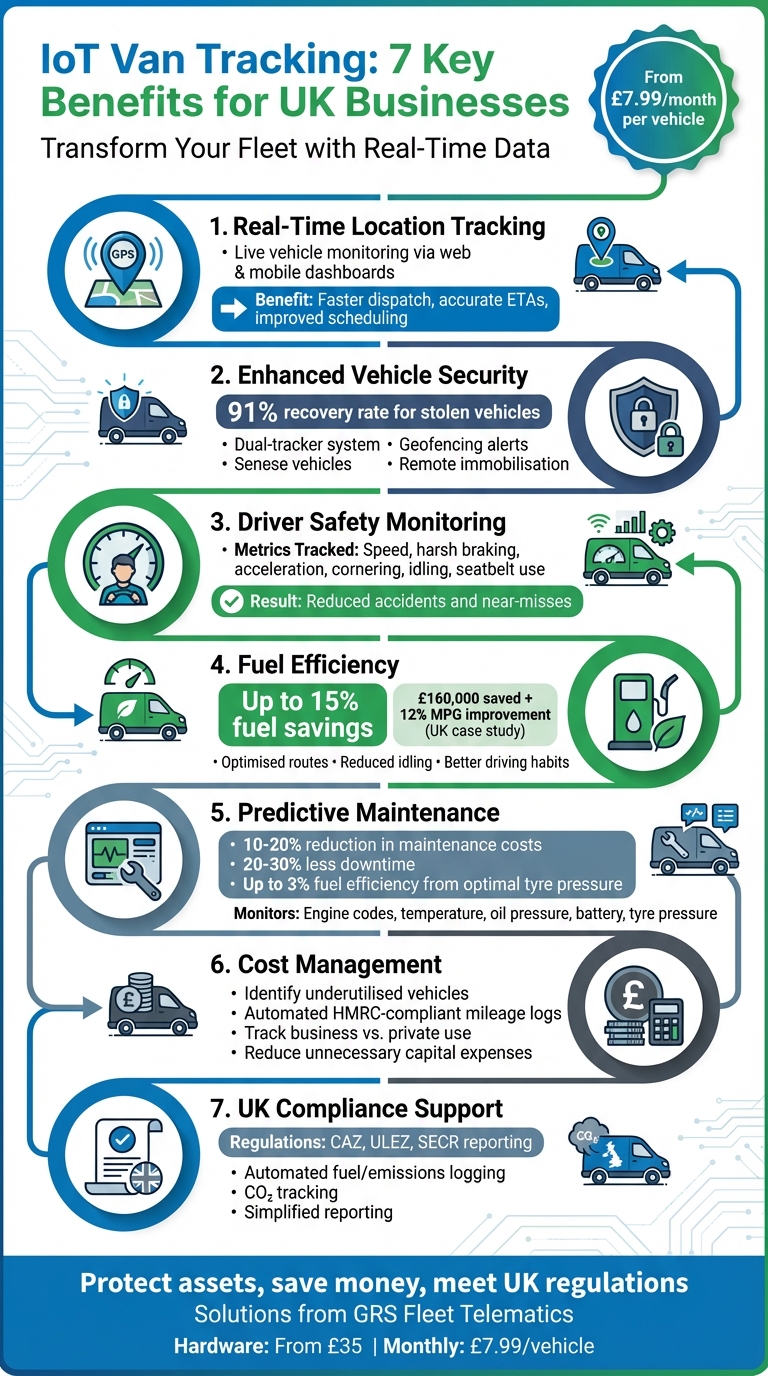
7 Key Benefits of IoT Van Tracking for UK Fleets
What Is IoT's Role in Modern Fleet Management?
1. Real-Time Location Tracking and Fleet Visibility
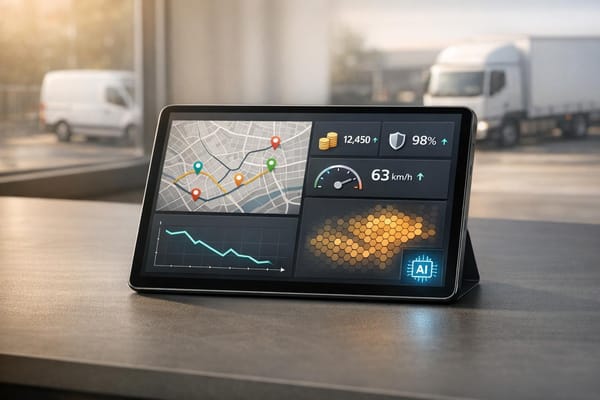
IoT-powered van tracking has transformed fleet management by providing continuous GPS updates. With this technology, you can monitor every van's live location through web or mobile dashboards, cutting out the need for phone calls or guesswork. You gain instant oversight of your fleet’s movements, status, and speed, paving the way for improved scheduling, security, and dispatch operations.
This kind of visibility leads to tangible efficiency improvements. For instance, the University of Birmingham’s transport team used live tracking maps to locate vehicles quickly and maintain operational schedules. For businesses managing emergency call-outs, real-time tracking allows office staff to pinpoint the nearest technician to an urgent job - whether it’s a burst pipe or a power outage - ensuring faster dispatch and quicker response times.
Job scheduling becomes more efficient by identifying the closest van to a new task. This not only boosts productivity but also enables smarter task allocation throughout the day. You can even provide customers with live ETAs based on actual vehicle locations, reducing "where's my van?" calls and building stronger client trust.
Geofencing adds another level of control by triggering automatic alerts when vans enter or leave specific areas, such as depots or customer sites. This feature helps confirm job attendance and flags any unauthorised movements, giving you greater oversight. Together, these tools improve day-to-day decision-making, while the real-time data they generate lays the groundwork for broader fleet optimisation strategies.
GRS Fleet Telematics offers this real-time tracking solution for as little as £7.99 per vehicle per month, making immediate fleet visibility affordable for businesses across the UK.
2. Better Vehicle Security and Theft Prevention
Van theft continues to be a serious problem across the UK. For businesses that depend on their vans, the impact of a theft goes beyond just losing the vehicle. It often includes losing valuable tools and equipment, as well as facing disruptions to customer appointments and schedules.
IoT tracking technology has made a real difference in recovering stolen vans. Dual-tracker systems combine a hardwired GPS with a hidden Bluetooth backup. If thieves manage to disable the main tracker, the secondary device can still transmit location data, making it much harder for criminals to hide the vehicle. For example, GRS Fleet Telematics uses this dual-tracker system and boasts a 91% recovery rate for stolen vehicles - more than double the national average.
But tracking is just one piece of the puzzle. Other features add another layer of security. Remote immobilisation allows you to stop the engine remotely when the van is stationary, preventing thieves from restarting it. Geofencing alerts are another useful tool, notifying you immediately if your van moves outside a designated area or during unauthorised times. These features let you respond quickly to suspicious activity, often before a theft even occurs.
3. Driver Safety and Behaviour Monitoring
IoT van tracking systems go beyond simply tracking vehicle locations. With on-board sensors, these systems gather a wealth of data on driving performance. They monitor details like speed, direction, and force, transmitting this information to the cloud in real time. This allows fleet managers to gain a detailed understanding of driving habits, capturing key behaviours such as speeding, harsh braking, rapid acceleration, sharp cornering, idling, and even seatbelt usage.
By analysing this data, fleet managers can take proactive steps to improve road safety. For example, speeding and harsh braking are well-known contributors to accidents. UK fleet telematics data shows that using driver behaviour reports to address these issues can significantly reduce road incidents and near-misses. Repeat violations can be flagged, and targeted coaching can be provided to encourage safer driving habits, such as adhering to speed limits. This not only reduces the likelihood of accidents but also ties into broader operational benefits, which are explored in later sections.
Driver behaviour dashboards are often reviewed regularly, with metrics like events per 100 miles, safety scores, and driver rankings taking centre stage. These insights form the basis for one-to-one coaching sessions and toolbox talks, where specific trips are reviewed, and actionable improvement goals are set. To encourage a safety-first mindset, many UK businesses also implement incentive schemes, rewarding drivers who perform well or show marked improvement in their driving habits.
The advantages of better driving behaviour go beyond safety. Smoother, more compliant driving can lead to fuel savings - some UK fleets report reductions of 10–15%. Additionally, less aggressive driving reduces wear and tear on vehicles, extending service intervals and lowering maintenance costs. Insurers may also offer reduced premiums for fleets that demonstrate safe driving practices through telematics data.
GRS Fleet Telematics offers a comprehensive solution by combining advanced van trackers with driver behaviour analytics, enabling fleet managers to mitigate both driver and vehicle risks through a single platform. Real-time alerts for extreme driving behaviour further enhance safety, helping to protect drivers, vehicles, and the reputation of businesses on UK roads. By focusing on safer driving, companies not only improve road safety but also achieve cost savings and ensure longer vehicle lifespans, complementing the tracking and security benefits covered earlier.
4. Route Planning and Fuel Efficiency
IoT van tracking transforms route planning into a precise, data-driven process. With real-time GPS data streaming from each vehicle to a central platform, fleet managers gain instant visibility of vehicle locations, traffic conditions, and job statuses. This enables dispatchers to assign the closest van to a new job, reroute vehicles around traffic jams or road closures as they happen, and eliminate the guesswork of manual scheduling. Over time, analysing historical journey data helps identify inefficient routes, recurring bottlenecks, and unnecessary detours, allowing planners to refine schedules and cut down on wasted mileage. These insights directly improve fuel usage and delivery accuracy.
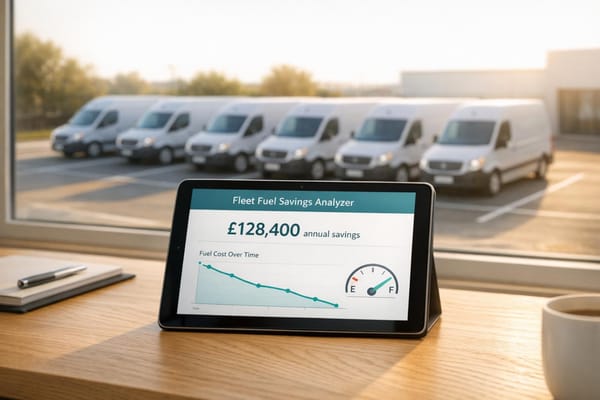
The effect on fuel consumption is striking. IoT systems track key metrics like vehicle speed, idle time, routes taken, stop durations, and instances of harsh driving behaviours such as sudden braking or rapid acceleration. This data helps fleet managers identify and address fuel-wasting habits, including excessive idling, unnecessary detours, or aggressive driving. For instance, a UK transport manager reported saving £160,000 in fuel costs and achieving a 12% improvement in miles per gallon (MPG) by using driver behaviour and trip reports to optimise routes and driving practices.
Reducing idle time is another major advantage. IoT tracking precisely logs when a van is stationary with its engine running and for how long it remains at each stop. Fleet managers can set alerts for excessive idling, encourage drivers to turn off engines when appropriate, and adjust routes or delivery schedules to avoid congestion and peak traffic times. By cutting idle time and avoiding traffic hotspots identified through historical data, fleets not only save on fuel but also improve response times.
Improved routing also ensures faster and more reliable deliveries. Real-time tracking allows dispatchers to assign urgent jobs to the nearest van or quickly redirect vehicles when traffic incidents occur, without waiting for updates from drivers. Over time, detailed analysis of journey and stop data enables businesses to create more accurate estimated time of arrivals (ETAs) for different routes, ensuring customers receive reliable delivery windows. For UK fleets navigating urban congestion, roadworks, and low-emission zones, IoT data provides essential insights into how these factors affect travel at different times, helping planners avoid predictable delays and maintain fuel-efficient speeds.
GRS Fleet Telematics offers UK-based van tracking solutions with real-time mapping, detailed journey histories, and driver behaviour analytics for as little as £7.99 per month per vehicle. By leveraging IoT data alongside smart scheduling, businesses can minimise unnecessary mileage, cut fuel costs, and deliver faster, more reliable service - ultimately boosting revenue through improved efficiency and customer satisfaction.
5. Predictive Maintenance and Vehicle Health Monitoring
IoT-powered van tracking has revolutionised how fleets handle maintenance, shifting the focus from reactive repairs to proactive prevention. By connecting telematics devices to a van's ECU, fleet managers can monitor critical parameters like diagnostic codes, engine temperature, oil pressure, battery voltage, and tyre pressure through a centralised platform. When any of these metrics veer outside normal ranges - such as a misfire code, elevated coolant temperature, or a slow tyre leak - real-time alerts are sent via dashboards, emails, or apps. This allows issues to be addressed swiftly, preventing them from escalating into costly roadside breakdowns.
This technology moves fleets away from rigid maintenance schedules and towards a usage-based approach. By analysing factors like mileage, engine hours, duty cycles, and recurring fault patterns, fleets can predict component failures instead of relying on arbitrary service intervals. Fleets employing predictive maintenance report impressive results, including up to 10–20% reductions in maintenance costs and 20–30% less downtime. Just as real-time tracking improves route efficiency, predictive maintenance enhances vehicle uptime.
For UK van operators navigating stop-and-go urban traffic with heavy loads, tyre pressure monitoring proves especially beneficial. Under-inflated tyres not only increase fuel consumption but also lengthen braking distances and heighten the risk of blowouts. IoT-enabled tyre pressure monitors provide live data on pressure and temperature for each tyre, issuing instant alerts for issues like slow leaks, rapid deflation, or overheating. Maintaining optimal tyre pressure can boost fuel efficiency by up to 3% and significantly extend tyre lifespan.
In the UK, where fleets contend with dense traffic and unpredictable weather, predictive maintenance tailors service intervals to actual usage. This approach reduces the risk of MOT failures, ensures vehicles remain roadworthy, and minimises downtime - a crucial advantage for time-sensitive industries like courier services, trades, and field operations.
Building on earlier benefits like enhanced security and efficiency, GRS Fleet Telematics offers IoT-enabled van tracking solutions that integrate location tracking with advanced vehicle health monitoring. Their system transforms raw ECU and sensor data into actionable maintenance insights, starting at just £7.99 per vehicle per month. By identifying potential faults early and scheduling maintenance during natural downtime, this system not only cuts repair costs but also extends vehicle lifespan and keeps fleets running smoothly.
6. Asset Use and Cost Reduction
IoT tracking is changing the game for UK businesses managing van fleets by delivering detailed insights into vehicle usage. With data on trips, mileage, engine hours, idling, and off-hours activity, fleet managers can identify which vans are underused or overworked. This kind of visibility allows for better workload distribution and smarter decisions about fleet size.
The financial impact of these insights can’t be overstated. According to ABAX, tracking data ensures vans are "no longer sitting idle without explanation." This level of detail also supports the implementation of automated systems, simplifying administrative tasks and reducing overheads.
These tracking systems don’t just improve daily operations - they also lead to smarter cost management. Savings can come from optimised routes that lower fuel consumption, reduced maintenance costs by addressing wear and tear early, and avoiding unnecessary capital expenses by redeploying or removing surplus vehicles.
Automated mileage logs, which comply with HMRC requirements, minimise manual work and help accurately separate business and private mileage for tax purposes. Alerts for unauthorised or out-of-hours use of vans further trim expenses by cutting down on fuel, maintenance, and overtime costs.
For UK fleets, solutions like GRS Fleet Telematics offer detailed utilisation and cost reports, starting at just £7.99 per vehicle per month. When compared to the potential savings, this subscription cost is a small price to pay, making it a practical choice even for smaller fleets looking to optimise their operations and cut expenses.
7. Meeting UK Environmental Regulations
UK van fleets face increasing pressure to comply with environmental rules like Clean Air Zones (CAZ), London's Ultra Low Emission Zone (ULEZ), and Streamlined Energy and Carbon Reporting (SECR) for larger organisations. IoT tracking systems make this process easier by automatically logging fuel usage, mileage, idling times, and route data. This creates a reliable, digital record that eliminates the need for manual logs. Beyond ensuring compliance, this data also helps improve overall fleet efficiency.
By combining GPS journey data with engine metrics from a vehicle's CAN bus or OBD port, these systems calculate fuel consumption for each trip and use emissions factors to estimate CO₂ output. Fleet managers can analyse emissions data by day, route, driver, or contract, enabling them to meet SECR requirements and enhance their internal ESG reporting.
IoT platforms also support active efforts to cut emissions. Dashboards pinpoint areas like excessive idling, inefficient routes, or harsh driving behaviours that lead to higher fuel consumption. Using these insights, fleet managers can coach drivers and adjust routes to avoid congestion, helping many UK fleets achieve fuel savings of 10–15%. Additionally, cleaner vehicles can be prioritised for jobs in Clean Air Zones, and managers can monitor progress against CO₂ or mpg targets.
Automated reporting tools further ease administrative tasks. Fleet managers can schedule reports on mileage, fuel consumption, and idling, which can be exported in formats like CSV or PDF. These reports are invaluable for SECR submissions or corporate sustainability records.
For fleets prioritising environmental compliance and reporting, GRS Fleet Telematics offers a comprehensive solution. Their van tracking system includes detailed fuel-use monitoring, driver-behaviour analysis, journey history with geofencing, and customisable reporting tools. This not only enhances vehicle security but also provides the critical data needed for effective environmental and cost management.
Conclusion
IoT-enabled van tracking has become a game-changer for UK businesses that rely on their fleets. It tackles three major priorities: security, efficiency, and compliance. With features like real-time location tracking, geofencing alerts, and remote immobilisation, businesses can protect their vehicles, tools, and revenue. On top of that, IoT systems help cut costs - fleets often see fuel savings of up to 15% thanks to smarter routes and better driving habits. These benefits go beyond just cost and security, paving the way for operational improvements and reduced environmental impact.
For trades like electricians, plumbers, and builders, these systems streamline everyday tasks. Dispatchers can quickly assign the closest van to urgent jobs, cutting response times and increasing the number of jobs completed in a day. Automated trip logs and maintenance alerts save admin time and reduce the risk of unexpected breakdowns. Meanwhile, driver monitoring - tracking behaviours like speeding, harsh braking, and idling - fosters safer driving habits, helping to lower accident rates and improve insurance profiles over time.
IoT tracking also simplifies compliance with UK environmental standards. By reducing unnecessary mileage, cutting idling, and promoting smoother driving, businesses can lower CO₂ emissions and meet Clean Air Zone requirements more easily. Automated reporting tools make it simpler to handle SECR submissions and sustainability records, turning compliance into an advantage rather than a hassle.
Modern systems are not only effective but also affordable and easy to use. GRS Fleet Telematics offers advanced van tracking solutions tailored for UK businesses, with hardware starting at just £35 and a monthly fee of £7.99 per vehicle. Their dual-tracker technology boasts a 91% recovery rate for stolen vehicles. Many fleets have already embraced telematics to enhance safety, distribute workloads fairly, and protect assets, with open communication ensuring drivers are on board.
For UK businesses, now is the time to evaluate current operations - considering factors like security issues, rising fuel costs, missed opportunities, and compliance hurdles. Starting with a small trial can help validate the benefits before committing to a full rollout. With the right partner, adopting IoT van tracking is straightforward, offering a smart, long-term solution for any business that relies on vans.
FAQs
How does IoT technology enhance van tracking security?
IoT technology boosts van tracking security by offering real-time GPS tracking, geofencing options, and instant alerts for any unauthorised activity. These tools allow businesses to keep a closer eye on their vehicles and respond promptly to potential threats.
With features like advanced dual-tracker systems and an impressive 91% vehicle recovery rate, IoT-enabled solutions make it easier to locate and recover stolen vehicles quickly. This not only cuts downtime but also helps minimise financial losses, giving fleet operators the confidence that their valuable assets are well-protected.
How can IoT van tracking help businesses save money?
IoT van tracking offers a practical way for businesses to cut costs by streamlining operations, lowering fuel usage, and reducing vehicle downtime. With real-time updates on vehicle locations and performance, companies can fine-tune routes, avoid unnecessary mileage, and save on fuel expenses.
Starting at just £7.99 per month, GRS Fleet Telematics provides an economical solution to boost fleet security and improve efficiency, paving the way for long-term savings.
How does IoT van tracking support environmental compliance in the UK?
IoT van tracking plays a pivotal role in helping UK businesses meet environmental standards and reduce their carbon footprint. By enabling route optimisation, it cuts down on unnecessary mileage and fuel usage, directly lowering emissions.
Beyond route planning, these systems also track driver behaviour, promoting eco-friendly driving habits like minimising idling and practising smoother acceleration. These measures not only support compliance with environmental regulations but also lead to long-term cost savings for businesses.