IoT Asset Tracking for Fleet Management
IoT tracking turns UK fleet management from reactive to proactive, cutting fuel and maintenance costs, improving security and ensuring regulatory compliance.
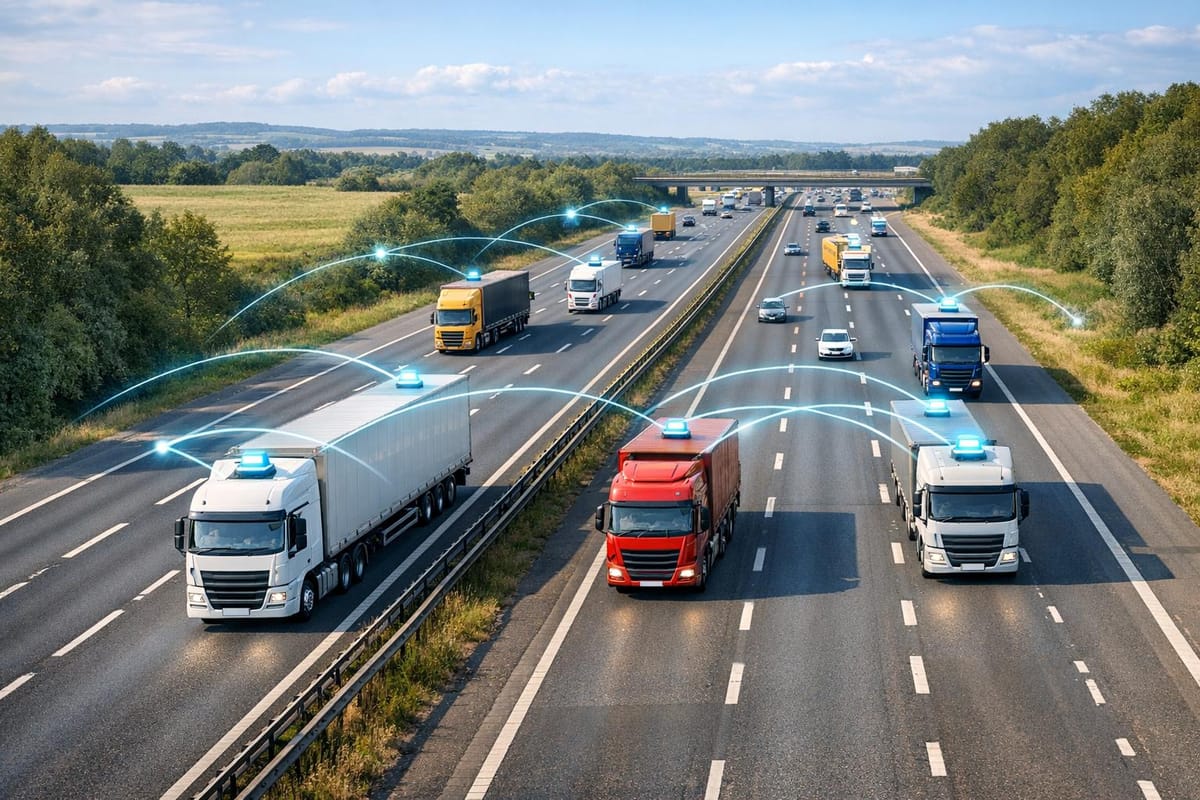
IoT asset tracking is transforming fleet management in the UK, offering real-time insights into vehicle location, performance, and security. By integrating GPS, sensors, and telematics, it helps operators reduce costs, improve efficiency, and comply with regulations.
Key benefits include:
- Fuel savings up to 15% and maintenance cost reductions by 20%.
- 91% recovery rates for stolen vehicles using dual-tracker systems.
- Enhanced compliance with DVSA safety standards and Clean Air Zone rules.
- Real-time data on vehicle health, driver behaviour, and route optimisation.
With over 70% of UK fleets adopting GPS or telematics by 2025, IoT tracking is becoming a standard for cutting costs and improving security. Systems like GRS Fleet Telematics provide affordable options starting at £7.99 per vehicle per month, offering features like remote immobilisation, geofencing, and driver behaviour monitoring. These tools ensure fleets remain efficient, secure, and compliant.
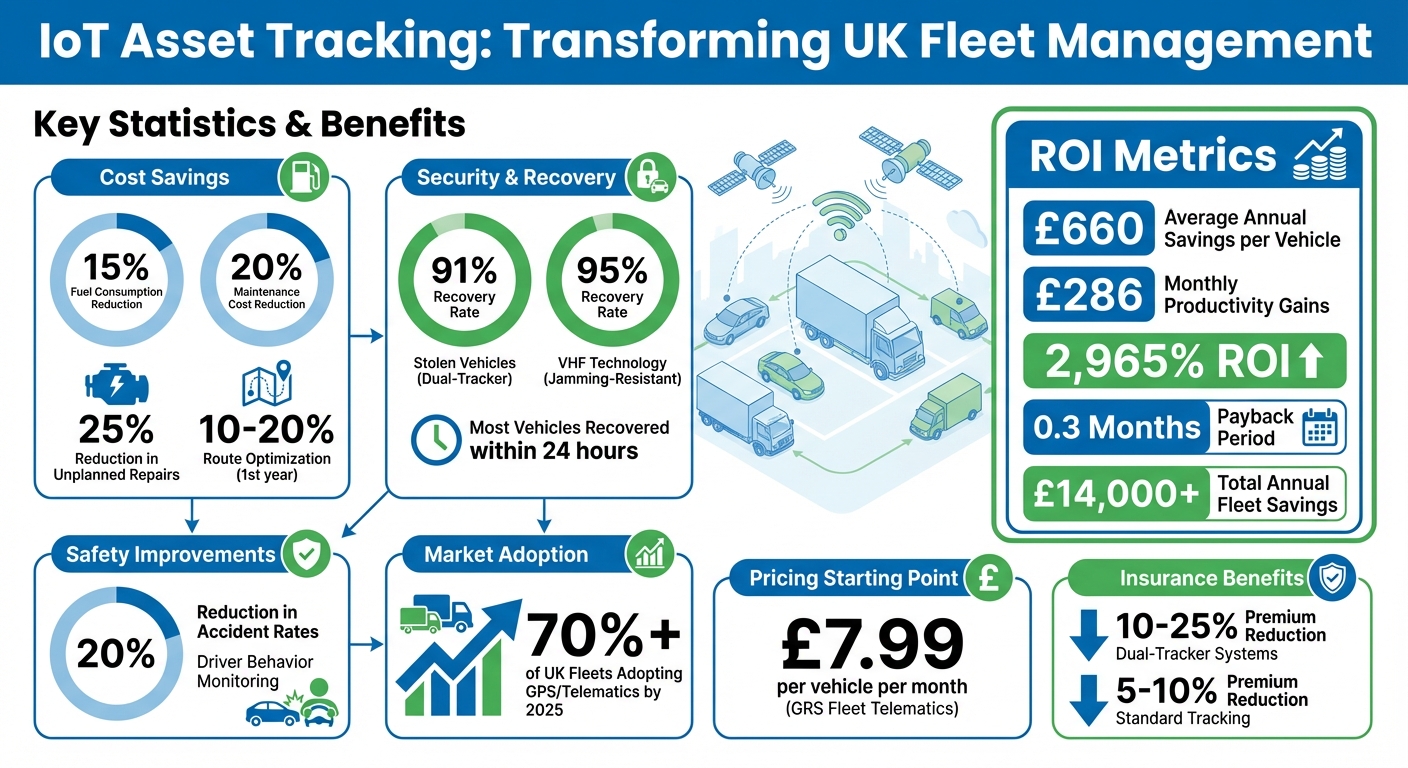
IoT Fleet Tracking Benefits: Cost Savings and ROI Statistics for UK Operators
How IoT Powers Fleet Management
How IoT Asset Tracking Works
IoT asset tracking brings together various technologies to provide real-time visibility for fleet operations, ensuring smooth and efficient management.
Main Components of IoT Asset Tracking
An IoT tracking system is built on four key components: hardware devices, connectivity infrastructure, cloud platforms, and management software.
Hardware devices, like GPS trackers and On-Board Diagnostics (OBDII) units, are installed directly in vehicles. These devices gather data on location and vehicle health metrics, such as engine temperature, battery status, and fault codes. For non-powered assets like trailers or containers, specialised sensors monitor conditions such as temperature, humidity, and vibration.
The connectivity infrastructure ensures that data flows from vehicles to central systems. In the UK, cellular networks (4G/5G/LTE-M) are the most common choice, but satellite or LPWAN options are available for specific needs. Once transmitted, the data is processed by cloud platforms, which handle encryption, ensure GDPR compliance, and run analytics. Finally, management software, accessible through web dashboards or mobile apps, presents this data in user-friendly formats like real-time maps, geofencing alerts, and detailed operational reports. Together, these components create a smooth and reliable system for UK fleets.
"IoT in the transport and logistics industry is often called telematics, which is the foundational technology behind fleet tracking and fleet management software." - Teletrac Navman
Connectivity Options for UK Fleets
Choosing the right connectivity option is critical for balancing reliability and cost. In the UK, cellular networks dominate due to their extensive coverage - reaching approximately 99% of the population, though they only cover about 15% of the earth's surface. GPS/GNSS is another key technology, offering global outdoor location tracking with an accuracy of around three metres, provided there’s a clear line-of-sight to satellites. For remote or international operations, satellite connectivity is indispensable, though it comes with higher costs. For short-range needs, Bluetooth (BLE), with a range of up to 240 metres, is ideal for indoor tracking or as a hidden backup. Meanwhile, LPWAN technologies like NB-IoT are perfect for low-power, cost-efficient tracking of assets that require occasional updates.
| Connectivity Type | Coverage | Cost | Best Use Case |
|---|---|---|---|
| Cellular (4G/5G) | Widespread (≈99% UK population) | Moderate | Real-time road fleet tracking and diagnostics |
| GPS/GNSS | Global (outdoor only) | Low | Primary location tracking with ~3m accuracy |
| Satellite | Global (including remote areas) | High | International shipping and remote operations |
| Bluetooth (BLE) | Short-range (up to 240m) | Low | Indoor tracking and backup units |
| LPWAN (NB-IoT) | Site-specific coverage | Low | Monitoring non-powered assets needing infrequent updates |
Blended connectivity options are increasingly popular among UK providers. By combining cellular and satellite technologies, these solutions ensure uninterrupted monitoring, even in areas with weak mobile signals.
Real-Time Data Collection and Analysis
IoT systems convert raw sensor data into actionable insights through continuous monitoring and analysis. Modern systems can provide live location updates every 60 seconds, enabling quick responses to emergencies, real-time route adjustments, and accurate ETAs.
Driver behaviour tracking is another critical feature. Metrics such as speeding, harsh braking, rapid acceleration, and idling are monitored to identify risky habits. Addressing these behaviours can reduce accident rates by up to 20%.
Proactive maintenance is also made possible through IoT. Data collected via OBDII ports and sensors is transmitted to the cloud, where it is analysed and displayed on intuitive dashboards. These systems monitor engine health in real time, reading fault codes directly from the vehicle’s computer. This approach can reduce unplanned repairs by up to 25% and cut maintenance costs by 20%. Additionally, IoT systems automate compliance by logging driving hours and rest periods to meet UK DVSA regulations.
"Asset tracking is not just about location... It's in the interest of dairy producers, for instance, to monitor the temperature of their assets to ensure they don't spoil." - BT Business
Security features like geofencing add another layer of protection. Virtual boundaries around depots or high-risk areas trigger instant alerts if a vehicle moves unexpectedly. Dual-tracker systems, which pair a hardwired unit with a hidden Bluetooth backup, provide extra security against theft attempts involving signal jamming or device removal.
Benefits of IoT Asset Tracking for UK Fleet Operators
Harnessing advanced IoT technology, asset tracking offers UK fleet operators significant advantages in security, operational efficiency, and meeting regulatory standards. By 2025, more than 70% of UK fleet operators are predicted to use GPS tracking or telematics, showcasing the widespread adoption and effectiveness of this technology.
Better Security and Theft Prevention
IoT-enabled dual-tracker systems and remote immobilisation have transformed vehicle security. These tools enable fleet managers to disable a vehicle's engine remotely if theft occurs, stopping criminals from relocating the asset. Impressively, recovery rates for stolen vehicles using this technology reach 91%. Additionally, solutions incorporating Very High Frequency (VHF) technology are resistant to GPS and GSM jamming, achieving a 95% recovery rate, with most stolen assets retrieved within 24 hours.
In the UK, Secured by Design accreditation allows police to track stolen vehicles via built-in systems. Fleet operators are also encouraged to choose hardware with Thatcham Quality Assured certification, which not only enhances security but can also reduce insurance premiums. These advancements don’t just safeguard assets - they also contribute to smoother fleet operations.
Increased Fleet Efficiency
IoT systems provide fleet operators with tools to significantly cut costs and improve operations. For instance, route optimisation uses live traffic updates to minimise mileage and bypass congestion, reducing fuel expenses by 10–20% within the first year. Fuel management features track idling, speeding, and harsh acceleration, while integration with fuel cards helps identify potential fraud. Together, these measures can lower fuel consumption by up to 15%.
Proactive maintenance is another game-changer. By monitoring engine performance and fault codes, fleet operators can prevent breakdowns, cutting unplanned repairs by 25% and reducing overall maintenance costs by 20%. Automated MOT reminders, based on real-time mileage data, ensure vehicles stay roadworthy and avoid fines.
Jason Payne, Head of Logistics at EBISS UK, highlights the impact: "The degree of information it gives us as a business...enables us to quantify what works, what's not working, and where we need to make improvements".
Meeting UK Regulations
IoT platforms make navigating UK regulations far simpler. Automated systems record driver hours and breaks, ensuring compliance with DVSA and Working Time Directive rules. Emissions tracking helps operators avoid fines in Low Emission Zones (LEZ) and Clean Air Zones (CAZ). For fleets carrying temperature-sensitive goods, real-time monitoring of refrigerated trailers ensures adherence to food safety standards, preventing stock losses and regulatory violations. Modern platforms also incorporate GDPR-compliant data management, addressing privacy concerns as a standard feature.
GRS Fleet Telematics: IoT Solutions for UK Fleets
For UK fleet operators needing a reliable IoT tracking solution, GRS Fleet Telematics offers a blend of advanced security features and straightforward pricing. Designed to suit businesses of all sizes, the platform combines dependable hardware with transparent costs. Here's an overview of its standout features, pricing options, and the advantages it brings to fleet management.
Main Features of GRS Fleet Telematics
GRS Fleet Telematics uses dual-tracker technology to ensure continuous vehicle monitoring, even if one tracker is compromised, achieving an impressive 91% recovery rate. Real-time updates are accessible through user-friendly dashboards and mobile apps, keeping fleet managers informed at all times.
The Ultimate package includes remote immobilisation, allowing managers to disable a vehicle's engine remotely in cases of unauthorised use. Additionally, the system tracks driver behaviour, monitoring factors like speed, harsh braking, rapid acceleration, and idling. These insights not only improve safety but also help reduce fuel consumption. Geofencing features let managers set virtual boundaries around specific areas, sending instant SMS or email alerts when vehicles enter or leave these zones.
Other key features include 24/7 recovery assistance and free installation for UK fleets that choose vehicle branding services through GRS Fleet Graphics.
Pricing Plans
GRS Fleet Telematics provides three hardware options, all with a monthly service fee of £7.99 per vehicle. This subscription covers SIM and data costs, platform access, and dedicated account management support.
| Plan | Hardware Cost | Monthly Service | Key Features |
|---|---|---|---|
| Essential | £35 | £7.99 | Single wired tracker, real-time tracking, core features |
| Enhanced | £79 | £7.99 | Primary tracker plus concealed Bluetooth backup, dual-tracker technology |
| Ultimate | £99 | £7.99 | Dual trackers, remote immobilisation, 24/7 recovery support |
The hardware cost is a one-time fee, with no hidden charges. On average, businesses save £660 per vehicle annually through reduced theft and fuel expenses, while improved route planning and task allocation can add £286 in monthly productivity gains. With an estimated ROI of 2,965%, the system pays for itself in just 0.3 months.
These flexible pricing options are just part of what makes GRS Fleet Telematics a smart choice for UK fleets.
Why Choose GRS Fleet Telematics?
Starting at just £7.99 per month, GRS Fleet Telematics is tailored to address the specific security needs of UK fleet operators. Its dual-tracker system delivers a recovery rate of up to 91%, and users can benefit from insurance premium reductions of 10–25%, compared to the 5–10% discounts offered by standard tracking systems.
One UK delivery company reported a 15% drop in fuel costs and a 20% reduction in insurance premiums within six months of adopting the system. Free installation, offered through GRS Fleet Graphics, eliminates upfront costs that typically range from £75 to £200 per vehicle with other providers. The platform is also cloud-based and offers white-label options, enabling businesses to customise the system for internal use or resale.
These features align with the growing demand for secure, efficient, and cost-effective fleet management solutions, making GRS Fleet Telematics a standout choice for UK operators.
How to Implement IoT Asset Tracking
Setting up IoT asset tracking doesn’t have to be overwhelming. For most fleet operators in the UK, the process can be completed in just 2–4 weeks, from the initial planning stage to full deployment. The key is to break it down into three straightforward steps: evaluating your fleet’s needs, selecting and installing the right hardware, and training your team to use the system effectively.
Assess Your Fleet Needs
Start by identifying your main objectives. Are you aiming to cut fuel costs, improve stolen vehicle recovery times, or enhance driver safety? Each goal will influence the features you need. Begin by categorising your assets into two groups: powered vehicles (like vans, lorries, and heavy machinery) and non-powered equipment (such as trailers, containers, or tools). Powered assets often require hardwired trackers, while smaller tools can get by with more affordable, battery-powered sensors.
Also, think about where your vehicles typically operate. If your fleet travels through rural areas or across borders, you’ll need multi-carrier connectivity. Decide whether you need real-time updates - say, every 60 seconds - or if periodic reporting is enough. Keep in mind that this choice impacts both battery life and data costs. For high-risk fleets, advanced options like dual-tracker technology or remote immobilisation may be essential. Lastly, ensure that your IoT platform can integrate with your existing business systems, such as payroll, maintenance schedules, or ERP software, through open APIs. Involving drivers and managers early in the process can help everyone understand how to use the data to make smarter decisions.
Select and Install IoT Hardware
Once you’ve outlined your goals, the next step is to choose hardware that matches your fleet’s security and performance requirements. The type of hardware you need depends on the value and security needs of your assets. Hardwired units are ideal for heavy equipment since they connect to a permanent power source, while OBDII plug-and-play devices are a better fit for lighter vehicles. Make sure the hardware meets UK insurance standards by checking for Thatcham or TASSA approval, which can also help you qualify for insurance discounts.
Professional installation usually takes about one to two hours per vehicle. Many providers offer mobile fitting services, allowing installations to be done at depots or job sites, so vehicles remain operational. For example, GRS Fleet Telematics offers free installation - typically costing £75 to £200 per vehicle - for UK businesses that also use their fleet graphics and branding services. A quality installation not only improves performance but also enhances security and overall fleet management.
After installation, configure features like geofences and maintenance alerts. Geofences allow you to set virtual boundaries around depots or job sites, sending alerts if a vehicle moves without permission. Maintenance reminders can also be set based on actual engine hours or mileage instead of fixed calendar dates, which can extend vehicle life and cut unplanned repairs by up to 25%.
Train Teams and Monitor Performance
With the hardware in place, the focus shifts to ensuring your team knows how to use the system effectively. Even the most advanced hardware won’t deliver results if your team isn’t properly trained. Conduct training sessions on the system’s dashboard so staff can understand real-time maps, historical reports, and customisable alerts. Be transparent about privacy policies and data usage to comply with GDPR and address any concerns.
Make it clear that tracking driver behaviour - such as speeding, harsh braking, or idling - is meant to support coaching, not to penalise. Set clear Key Performance Indicators (KPIs) from the start, such as measuring the time between maintenance cycles, fuel efficiency, and response times. For example, one UK courier company reduced fuel costs by 15% and accidents by 20% within a year of implementing real-time tracking and driver behaviour monitoring. In another instance, dual-tracker technology helped recover two stolen vans within 24 hours, saving over £40,000 in potential losses.
Regularly review performance data - weekly at first, then monthly. Use these insights to optimise routes, address bottlenecks, and fine-tune operational processes. Ongoing monitoring ensures the system performs at its best and highlights the efficiency and security benefits. Many businesses see a return on investment within 6 to 12 months, with annual savings of £1,000–£3,000 per vehicle.
Conclusion
IoT asset tracking has revolutionised fleet management, turning it into a proactive and data-driven process. For UK fleet operators, it’s no longer just about knowing where vehicles are; it’s about tackling rising fuel costs, meeting regulatory demands, and combating vehicle theft. The results speak for themselves: up to a 15% reduction in fuel consumption, a 20% drop in maintenance expenses, and an impressive 91% theft recovery rate. With over 70% of UK fleet operators expected to adopt GPS tracking or telematics by 2025, the shift is undeniable.
The added security features - like geofencing, remote immobilisation, and driver behaviour monitoring - enhance both asset protection and operational efficiency. Real-time route optimisation helps operators navigate traffic congestion and reduce fuel costs, while automated compliance logging simplifies adherence to key regulations, including DVSA safety standards, GDPR, and the Working Time Directive. This not only cuts down on admin but also minimises legal risks.
GRS Fleet Telematics offers a practical and cost-effective solution to these challenges. Starting at just £7.99 per vehicle per month, their service includes free installation when paired with fleet branding. Their dual-tracker technology ensures a 91% theft recovery rate, which is recognised by UK insurers, and their platform’s open APIs allow seamless integration with existing systems. With a return on investment calculated at 2,965% and a payback period of just 0.3 months, fleets can see savings of over £14,000 annually.
Implementation is quick and straightforward, with most UK operators completing the process within 2–4 weeks. By clearly defining goals, choosing the right hardware, and training their teams, fleet managers - whether overseeing a handful of vehicles or a large operation - can take control and ensure their businesses stay competitive and compliant. This streamlined approach offers UK fleet operators the tools they need to succeed.
FAQs
How does IoT asset tracking enhance vehicle security and help recover stolen vehicles?
IoT asset tracking leverages GPS-enabled sensors to deliver real-time updates on the location and status of vehicles. These systems are designed to send immediate alerts if any unauthorised activity is detected, enabling swift action to deter theft.
With advanced features like remote immobilisation and dual-tracker technology, security and recovery efforts are taken to the next level. These tools have proven highly effective, with recovery rates reaching around 91% for stolen vehicles. This not only helps businesses minimise potential losses but also provides an added layer of confidence in their operations.
How does IoT asset tracking improve fleet efficiency and reduce costs?
IoT asset tracking plays a key role in boosting fleet efficiency by delivering real-time insights into vehicle location, fuel consumption, and driver behaviour. With this information, businesses can fine-tune routes, cut down on idle time, and plan maintenance proactively, leading to smoother day-to-day operations.
The impact on cost savings is hard to ignore. For instance, better fuel management can reduce fuel consumption by as much as 25%, translating to annual savings of £3,500 to £8,500 per vehicle. Add to that lower maintenance costs and improved theft recovery rates, and the benefits extend beyond just cutting expenses. It also enhances fleet security and ensures greater reliability across the board.
What are the connectivity options for IoT asset tracking in the UK, and how do they compare?
IoT asset tracking in the UK uses a range of wireless technologies, each tailored to specific needs. Here's a breakdown of the most common options:
- Cellular (3G/4G/5G): This offers extensive coverage across the UK with fast data speeds, making it perfect for real-time GPS tracking and telemetry. However, it tends to consume more power and comes with higher monthly costs.
- LPWAN (NB-IoT, LTE-M): Designed for low-bandwidth and infrequent data transmissions, this option provides excellent battery life and wide coverage, making it ideal for periodic location updates.
- Wi-Fi: Best suited for assets that stay within depots or warehouses, as it relies on a nearby Wi-Fi network. While it supports high data rates, its range is limited to localised areas.
- Bluetooth/BLE: A great choice for short-range tasks, like connecting sensors within a vehicle. It's highly energy-efficient but not suitable for large-scale or continuous tracking.
- Satellite: Perfect for remote or offshore locations where cellular networks are unavailable. It offers global connectivity but comes with higher costs and latency.
The choice of technology depends on factors like the required coverage, frequency of data transmission, and battery life. For instance, cellular and satellite work well for large-scale tracking across wide areas, while LPWAN and Bluetooth are more practical for low-power or localised use cases.