Hydrogen Fuel Cell Vans: Pros and Cons for Fleets
Hydrogen fuel cell vs diesel vans for UK fleets — compare costs, range, refuelling, emissions and infrastructure.
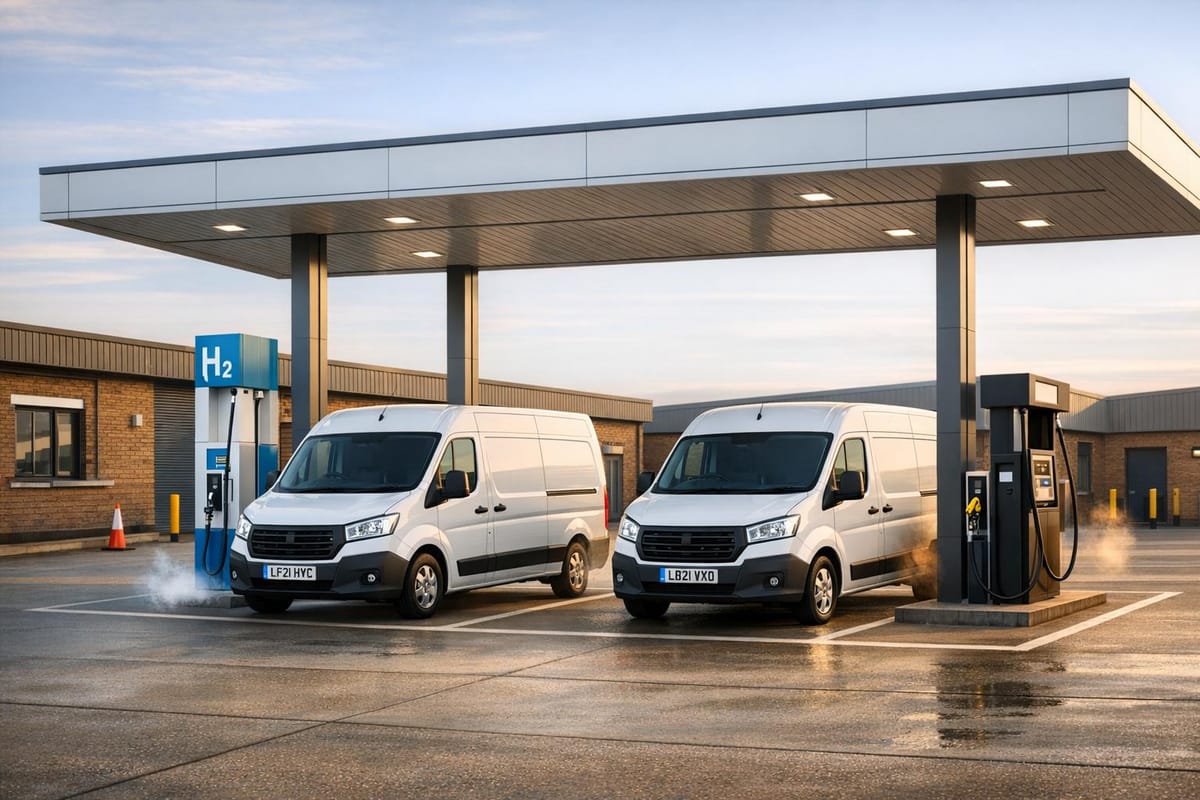
Hydrogen fuel cell vans are emerging as a potential replacement for diesel vehicles in UK fleets. They produce zero emissions, refuel in 5–10 minutes, and offer a range of 250–400 miles. However, they come with high upfront costs (£60,000–£80,000+) and limited refuelling infrastructure, with fewer than 20 stations across the UK as of early 2025. Diesel vans remain cheaper (£25,000–£35,000) and offer greater range (400–600 miles), but they emit pollutants and face increasing restrictions in Clean Air Zones.
Key Points:
- Hydrogen Vans: Zero-emission, quick refuelling, lower maintenance (often monitored via fleet telematics), but expensive and reliant on limited refuelling stations.
- Diesel Vans: Affordable, long range, extensive fuelling network, but high emissions and subject to charges like ULEZ fees.
- Decision Factors: Fleet size, route lengths, refuelling access, and budget.
Quick Comparison:
| Factor | Hydrogen Vans | Diesel Vans |
|---|---|---|
| Purchase Cost | £60,000–£80,000+ | £25,000–£35,000 |
| Range | 250–400 miles | 400–600 miles |
| Refuelling Time | 5–10 minutes | 5–10 minutes |
| Annual Maintenance | ~£700 | ~£1,000 |
| Fuel Cost (20k miles) | ~£4,500 | ~£3,000 |
| Emissions | None (water vapour only) | High CO₂ and NOx |
| Infrastructure | Limited (20 stations) | Extensive (nationwide) |
Hydrogen vans suit fleets prioritising emissions reduction and operating near refuelling hubs. Diesel remains practical for long-distance routes and tight budgets, but its future is uncertain with upcoming bans and stricter regulations.
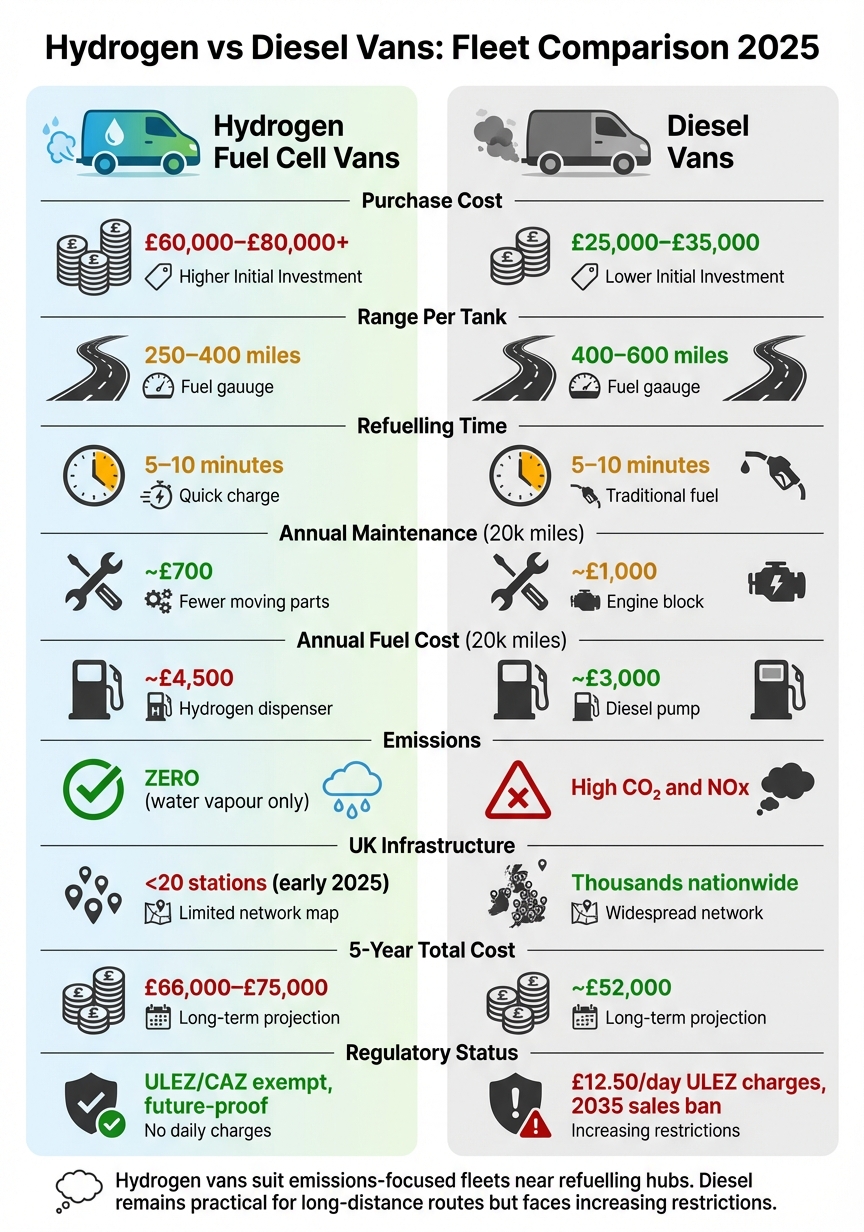
Hydrogen vs Diesel Vans: Cost, Range and Emissions Comparison for UK Fleets
1. Hydrogen Fuel Cell Vans
Refuelling Time
Hydrogen vans can be refuelled in just 5–10 minutes, a clear advantage over battery-electric vans, which may need anywhere from 30 minutes to over 12 hours to recharge. This quick turnaround is especially beneficial for fleets involved in multi-shift operations or long-distance regional deliveries, as it reduces downtime and keeps vehicles operational.
A trial using a MAN TGE hydrogen van showcased its capabilities, covering over 1,200 miles in cold weather conditions. Driver Alun Jones shared his experience:
It's lovely to drive – and the fact that you can refuel it quickly is a major advantage rather than having to charge it up overnight.
The trial involved five to six emergency call-outs per day, demonstrating hydrogen's potential for high-demand schedules.
Range
Hydrogen vans typically offer a range of 250–400 miles per tank, striking a balance between battery-electric vehicles (100–250 miles) and diesel vans (400–600 miles). While diesel still leads in range, hydrogen provides ample capacity for most regional and long-distance fleet needs, without the weight penalties associated with large batteries.
Another advantage? Hydrogen vans maintain consistent performance in cold weather and under heavy loads. Nicolas Champetier, CEO of HYVIA, highlighted this:
With a fuel cell, you don't lose 30% of your range when it gets cold.
This reliability makes hydrogen vans a dependable choice for utility and construction fleets that operate in tough conditions year-round. These range figures make hydrogen a strong contender for regional routes, paving the way for further discussions on costs and environmental benefits.
Costs
Hydrogen vans come with a hefty price tag, costing £60,000–£80,000+ (excluding VAT), compared to £25,000–£35,000 for diesel alternatives. Operating costs range between £0.20–£0.30 per mile, and hydrogen fuel is priced at roughly £10–£15 per kilogramme. However, maintenance costs are lower than diesel vehicles due to fewer moving parts and no need for oil changes.
To ease the financial burden, UK businesses can take advantage of the Plug-in Van Grant, which offers up to £5,000. Additionally, hydrogen vans are exempt from ULEZ and CAZ charges, saving operators around £12.50 per day in areas like London. These incentives can help offset the higher upfront costs and make hydrogen vans more viable for fleet operators.
Environmental Impact
Hydrogen vans produce only water vapour and low-grade heat, meaning zero emissions of CO₂, nitrogen oxides, or particulate matter at the point of use. When powered by green hydrogen generated from renewable energy, the entire lifecycle of these vehicles can achieve near-zero greenhouse gas emissions.
Aberdeen City Council provided a real-world example in June 2022, using nine diesel–hydrogen dual-fuel vehicles, including six refuse collection trucks. Each vehicle covered about 1,000 kilometres that month, cutting CO₂ emissions by nearly 2.5 tonnes per vehicle. Similarly, AC Transit in California reduced over 12,800 metric tonnes of CO₂ by deploying fuel cell buses, achieving more than 5 million miles of zero-emission travel.
While the environmental benefits are clear, the limited availability of refuelling stations poses a challenge.
Infrastructure
A lack of widespread refuelling stations continues to limit the practicality of hydrogen vans in the UK. As of early 2025, public refuelling options remain scarce. However, the government has committed over £100 million to expand the hydrogen refuelling network, and companies like Element 2 are working on further developments. For now, hydrogen vehicles are most suitable for fleets with dedicated refuelling facilities or those operating within specific regions.
Brad Miller from Stellantis UK summed up the situation:
A fuel cell van can be refuelled in no more than five minutes.
While the speed of refuelling is a major advantage, the limited infrastructure remains a key obstacle for broader adoption.
2. Diesel Vans
Refuelling Time
Diesel vans shine when it comes to refuelling speed, taking just 5–10 minutes to fill up. This quick turnaround keeps fleets moving, especially for businesses with tight schedules or multi-shift operations. Unlike electric vehicles that need extended charging times, diesel vans ensure consistent productivity throughout the day.
Range
With a range of 400–600 miles per tank, diesel vans outpace hydrogen alternatives by an extra 150–200 miles on average. This makes them a reliable choice for long-distance routes. Plus, the extensive network of diesel stations across the UK means drivers can refuel with ease, eliminating any concerns about running out of fuel. For long-haul operations, this combination of range and accessibility makes diesel a practical and cost-effective option.
Costs
Diesel vans also make financial sense for many operators. They typically cost between £25,000 and £35,000 to purchase, with annual fuel expenses around £3,000 and maintenance averaging £1,000 for a van covering 20,000 miles a year. Over five years, the total cost of ownership comes to approximately £52,000, which is far lower than hydrogen alternatives. However, operators in London and other Clean Air Zones need to factor in daily charges like the £12.50 ULEZ fee, which can add up to over £3,000 annually for vehicles running five days a week.
Environmental Impact
Diesel vans do come with a significant environmental cost. They are a major source of CO₂ and nitrogen oxide (NOx) emissions. For example, Dundee City Council found that replacing a single diesel refuse collection vehicle with a zero-emission model could cut 19,620 kg of CO₂ emissions each year. As the UK moves towards its 2050 net-zero goals, the environmental drawbacks of diesel are becoming harder to ignore.
Infrastructure
One of diesel's biggest strengths is its well-established refuelling infrastructure. The UK boasts thousands of diesel stations, ensuring nationwide coverage for operators. Whether in urban centres or remote areas, fleet managers can count on easy access to fuel. In contrast, hydrogen vehicles face significant challenges, with fewer than 20 refuelling stations expected to be available across the UK by early 2025. This widespread accessibility gives diesel vans a clear operational edge over their hydrogen counterparts.
Hydrogen fuel cell Ford E-Transit van

Advantages and Disadvantages
Fleet managers face a tricky balancing act when deciding between hydrogen and diesel vans. It's all about weighing up the operational and financial factors, and the table below lays out the key comparisons for UK fleet operations:
| Factor | Hydrogen Fuel Cell Vans | Diesel Vans |
|---|---|---|
| Environmental Impact | Zero tailpipe emissions (only water vapour); exempt from ULEZ and CAZ charges | High CO₂ and NOx emissions; subject to daily charges (e.g., £12.50 ULEZ fee) |
| Purchase Cost | £60,000–£80,000+ | £25,000–£35,000 |
| Refuelling Time | Quick refuelling compatible with busy operations | Quick refuelling compatible with busy operations |
| Range | 250–400 miles per tank | 400–600 miles per tank |
| Annual Fuel Cost | ~£4,500 (20,000 miles) | ~£3,000 (20,000 miles) |
| Annual Maintenance | ~£700 (fewer moving parts) | ~£1,000 (complex engine, oil changes) |
| Infrastructure | Fewer than 20 UK stations (early 2025) | Thousands of stations nationwide |
| 5-Year Total Cost | £66,000–£75,000 | ~£52,000 |
| Regulatory Compliance | Compliant with upcoming diesel bans | Subject to increasing restrictions |
This breakdown highlights the trade-offs. Hydrogen vans shine when it comes to environmental benefits and lower maintenance needs, making them appealing for businesses prioritising sustainability. Their quick refuelling also suits high-demand operations. However, the steep upfront costs - more than double that of diesel vans - and limited refuelling infrastructure are significant hurdles for many fleet managers.
Diesel vans, on the other hand, remain a practical choice for now. They excel in range, with 400–600 miles per tank, and benefit from a well-established refuelling network across the UK. For fleets with long-distance routes or tight budgets, diesel's lower total cost of ownership is a big draw. But with ULEZ charges rising and the 2035 sales ban on the horizon, diesel's long-term viability is shrinking.
"Hydrogen vans effectively bridge this gap, combining the environmental credentials of BEVs with the operational efficiency of diesel vans." - Transport for London
Ultimately, the decision comes down to your fleet's specific needs. Many businesses find that tailored tracking solutions for your industry help clarify these operational costs before making the switch. If your routes align with emerging hydrogen hubs, it might be worth considering an early switch. Otherwise, diesel could remain the go-to option until hydrogen infrastructure catches up.
Conclusion
Choosing the right option depends on the specific needs of your fleet. Hydrogen vans stand out for operations that are harder to transition, such as long-distance routes, heavy payloads, and high-utilisation cycles. If your vans regularly travel over 200 miles a day or operate in Ultra Low Emission Zones, hydrogen provides a zero-emission alternative without the long charging times associated with electric vehicles.
However, location and refuelling infrastructure are key factors to consider. With fewer than 20 public refuelling stations available as of early 2025, fleets near established hubs like those run by Element 2 or ITM Power - or those able to support depot-based refuelling - are better positioned to adopt this technology.
It’s also important to assess operational risks with van tracker systems. For example, ensure roof-mounted tanks clear height restrictions, confirm breakdown recovery services can handle the additional weight, and provide driver training for high-pressure (700 bar) refuelling.
On the financial side, incentives can help bridge the cost gap. The OZEV Plug-in Van Grant offers up to £5,000 towards the purchase price, and hydrogen vans are eligible for 100% First Year Capital Allowances. These schemes make the higher upfront costs more manageable, while advancements in the technology are expected to bring costs down further, with manufacturers aiming for parity by 2030.
Hydrogen vans offer a practical and forward-looking solution for fleets prepared to embrace the future. For those with the right operational needs and access to infrastructure, they provide rapid refuelling, extended range, and a clear path towards zero-emission operations.
FAQs
Is hydrogen practical where my vans operate?
Hydrogen vans offer a practical solution for fleets that require long-range travel and quick refuelling. With a range of 250–400 miles per tank and refuelling times of just 5–10 minutes, they provide efficiency and convenience. Plus, they produce zero tailpipe emissions, making them an eco-friendly choice.
However, the UK’s hydrogen refuelling network remains limited, which could be a hurdle depending on your location and routes. Additionally, the purchase cost is steep, ranging from £60,000 to £80,000 or more. These factors mean that the viability of hydrogen vans largely depends on your access to refuelling stations and how well they align with your specific operational needs.
What does it cost per mile compared with diesel?
The cost of running hydrogen fuel cell vans per mile hinges on fuel prices and the vehicle's efficiency. In the UK, hydrogen is priced at approximately £10–£15 per kg. Most vans require 5–7 kg to fill their tank, translating to a running cost of about £0.20–£0.30 per mile. While diesel typically offers a lower cost per mile, fuel prices fluctuate. There’s potential for hydrogen costs to drop as infrastructure develops, but for now, electric vans are the most economical option per mile.
What safety and training is needed for hydrogen refuelling?
Hydrogen refuelling safety and training revolve around recognising hydrogen's unique properties, including its flammability and the challenges of high-pressure storage. Proper handling procedures are essential to mitigate risks. While refuelling stations are engineered for safe and straightforward operation, even with minimal training, staff must still be familiar with safety standards such as NFPA2. Additionally, hydrogen vehicle tanks undergo thorough testing to prevent leaks or explosions, ensuring they remain safe when used according to established protocols.