How Telematics Adjusts Routes for Weather Changes
Telematics uses live weather, vehicle sensors and AI to reroute fleets, improve driver safety, reduce delays and cut fuel costs in changing conditions.
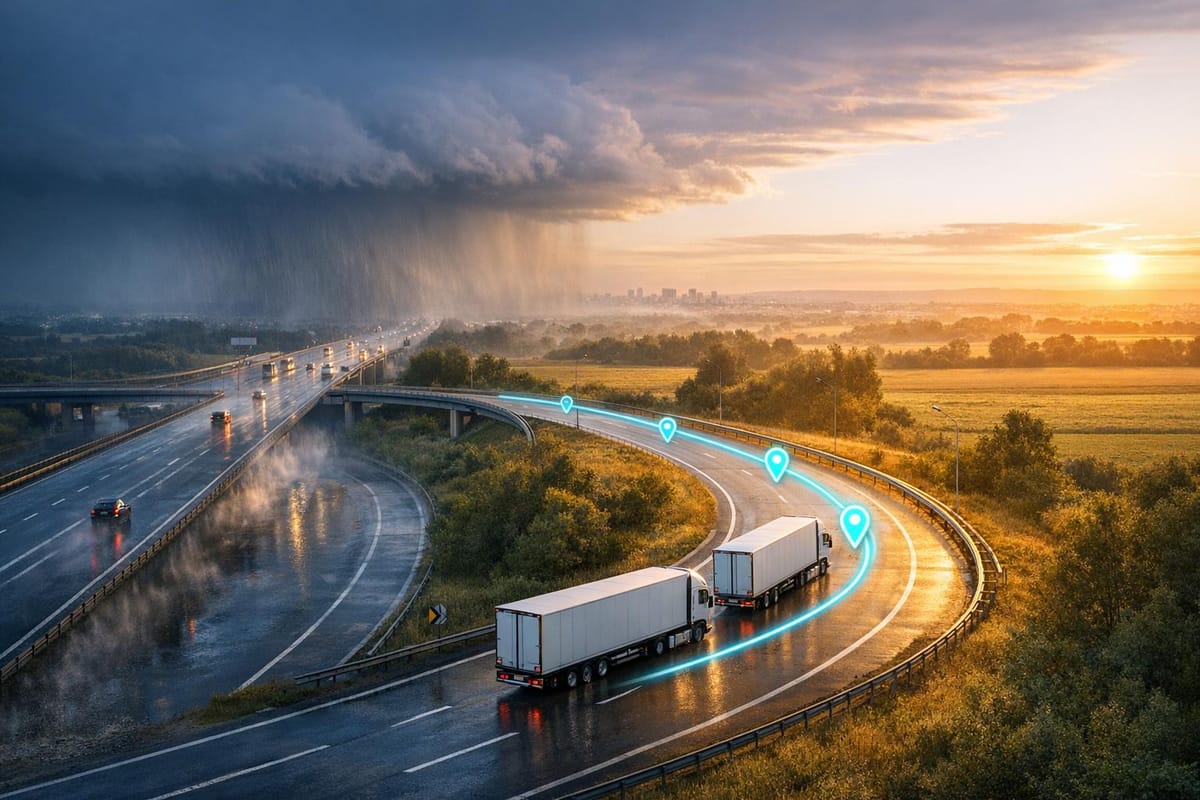
Van tracking solutions help fleets handle unpredictable weather by combining GPS, IoT sensors, and real-time weather data. This technology ensures safer and more efficient routes by dynamically adjusting based on conditions like rain, snow, or wind. Key benefits include:
- Real-time weather tracking: Uses satellite, radar, and ground data to monitor precipitation, visibility, and road surface conditions.
- Dynamic route adjustments: Automatically recalculates safer routes when weather thresholds are exceeded.
- Predictive planning: Forecasts risks hours or days ahead, enabling proactive scheduling.
- Driver safety monitoring: Tracks behaviour like braking or speed, factoring in local weather for better risk assessment.
- Cost savings: Reduces delays, fuel waste, and vehicle wear caused by adverse conditions.
With features like live updates and predictive intelligence, telematics helps fleets navigate weather challenges while improving safety and reducing costs.
How Telematics Systems Process Weather Data for Dynamic Route Adjustments
Carrier, Fleet and Transportation Resources | Weather Intelligence In Cab | Trimble Transportation
How Telematics Uses Real-Time Weather Data
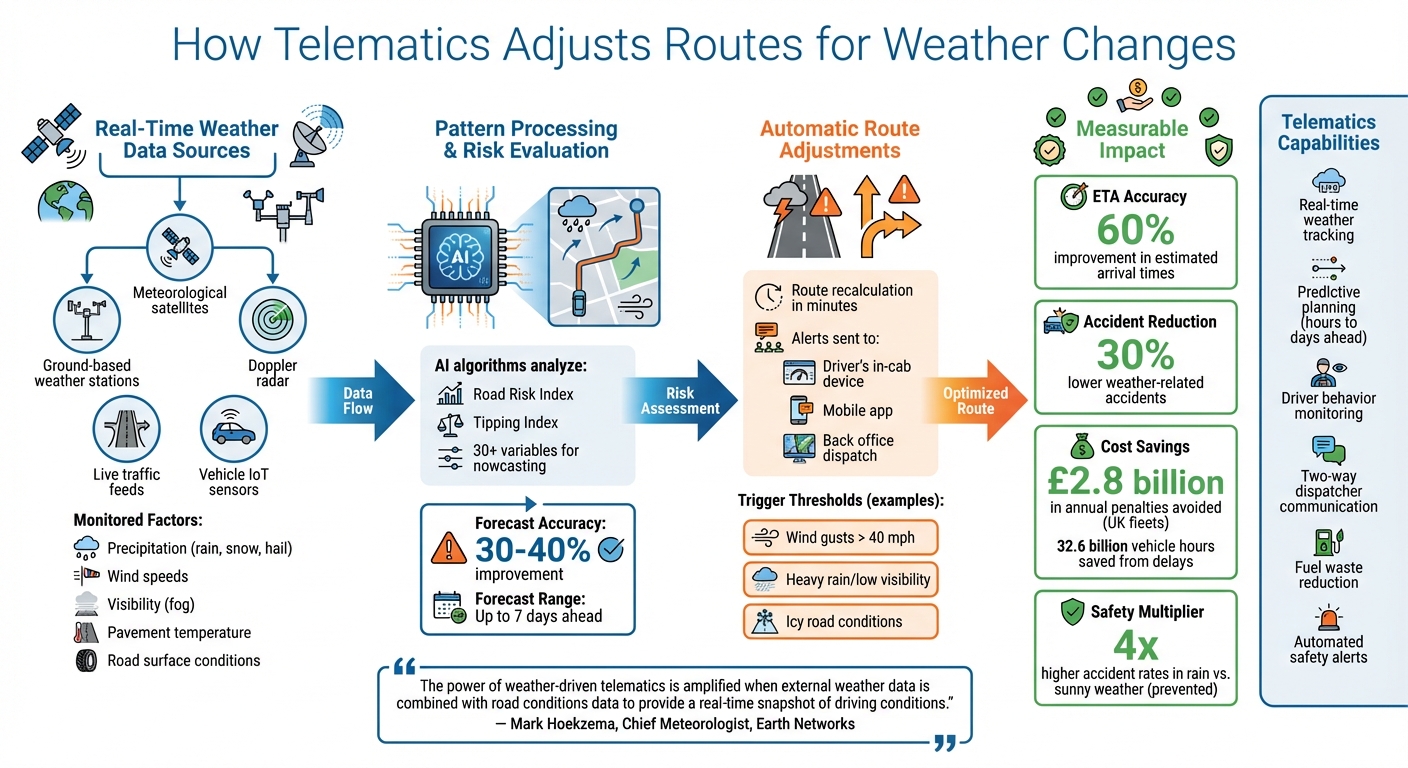
Telematics platforms combine data from meteorological satellites, ground-based weather stations, Doppler radar, and live traffic feeds to provide real-time updates and forecasts that impact fleet routes. This blend of sources gives fleet managers the ability to track current weather conditions and anticipate what’s coming in the hours ahead.
These systems monitor key factors such as precipitation (rain, snow, hail), wind speeds, visibility (especially fog), and road surface conditions like pavement temperature and icing - critical for UK operations. Pavement temperature, particularly during winter, plays a bigger role than air temperature in predicting black ice, making it a vital metric for fleet safety.
Weather Data Sources in Telematics Systems
Advanced telematics platforms turn raw meteorological data into visual overlays on vehicle routes. These overlays allow dispatchers to quickly see if weather systems, such as storms, might interfere with a driver’s planned journey. The platforms also feature tools for "scaling and selectivity", letting managers zoom in on local conditions or zoom out for broader, long-range planning.
"The power of weather-driven telematics is amplified when external weather data is combined with road conditions data to provide a real-time snapshot of driving conditions." – Mark Hoekzema, Chief Meteorologist, Earth Networks
This seamless integration of visual data makes it easier for fleets to identify and respond to weather-related risks in real time.
Processing Weather Patterns for Fleet Operations
After visualising the data, telematics systems process weather patterns to evaluate risks along fleet routes. Routing engines analyse these patterns against pre-set safety and efficiency thresholds. For example, if wind speeds become dangerous for high-profile vehicles or visibility drops below safe levels, the system recalculates routes automatically.
For UK fleets, incorporating local meteorological data is particularly valuable for managing regional hazards across various industries like flash flooding or sudden North Sea fog. Using both current conditions and predictive intelligence, these systems provide weather forecasts several hours in advance. This allows fleets to make proactive route adjustments, reducing the need for last-minute, reactive changes.
Dynamic Route Adjustments for Weather Changes
When a weather threat is detected, telematics systems spring into action, evaluating delay times, safety risks, and additional mileage to create alternative routes in just minutes. These updated routes are sent directly to the driver's in-cab device or mobile app, while the back office receives automatic notifications if a vehicle nears areas meeting specific weather thresholds - like wind gusts over 40 mph or heavy rain - allowing for immediate safety responses.
"The back office is automatically notified when a truck is approaching an area meeting predefined weather thresholds, so that a reroute can be generated and appropriate safety team response can be conducted." – Platform Science
To add another layer of precision, vehicle sensors - such as those detecting automatic wiper activation or hard braking - confirm real-time local conditions that standard radar might miss. This is particularly useful on UK roads, where light drizzle or patchy fog can create hazards without triggering typical weather alerts. These quick rerouting capabilities pave the way for further automatic and predictive route adjustments.
Automatic Route Recalculation
Once an initial reroute is made, telematics systems continue refining alternative routes as weather data evolves. Using AI, these systems assess factors like the Road Risk Index and Tipping Index, which predict specific weather impacts on different vehicle types. This is especially critical for vehicles more prone to instability in adverse conditions.
Recalculation happens automatically whenever a hazard surpasses the predefined thresholds set by fleet managers. These thresholds can account for wind speeds, visibility, or precipitation levels, ensuring the system remains responsive to changing conditions. By continuously tracking vehicle locations in relation to approaching weather systems, alerts and route changes are triggered without requiring constant human intervention.
Studies show that weather-specific routing tools can improve estimated time of arrival (ETA) accuracy by 60% and lower weather-related accidents by 30%. Considering that accident rates during rainy weather are four times higher than on sunny days, these automatic recalculations significantly enhance both safety and operational efficiency.
Predictive Routing for Advance Planning
Telematics systems don’t just react - they also predict. Using advanced algorithms, they generate alternative routes hours before disruptions occur, giving fleet managers the ability to adjust schedules or routes proactively. This is particularly beneficial for long-haul journeys, where drivers may encounter multiple weather systems in one trip.
Nowcasting algorithms, which process up to 30 variables, improve forecast accuracy by 30–40%, identifying risks as far as seven days ahead.
"When conditions change... dispatchers can reroute crews within minutes to keep operations moving." – Samsara
Fleet managers can also use tools to scale and visualise weather conditions across different distances, balancing immediate tactical decisions with longer-term strategic planning. This dual approach helps avoid costly delays or fuel wastage caused by getting caught in severe weather.
For example, GRS Fleet Telematics integrates these advanced routing features, ensuring UK fleets stay informed with real-time weather updates and dynamic route adjustments, prioritising both operational efficiency and driver safety.
Improving Efficiency and Reducing Costs During Weather Disruptions
Adverse weather conditions take a serious toll on UK fleets, causing delays that amount to 32.6 billion vehicle hours and penalties reaching up to £2.8 billion annually. Telematics systems offer a practical solution by optimising routes in real time. This not only helps fleets stick to delivery schedules during challenging weather but also reduces fuel waste. Below are some key strategies showing how weather-responsive routing can improve safety, efficiency, and cost management for UK fleets.
Fuel Savings Through Smarter Routes
Dynamic route adjustments aren't just about avoiding delays - they also bring tangible fuel savings. By steering vehicles away from areas affected by storms, congestion, or unsafe conditions, weather-responsive routing helps keep vehicles moving steadily. This prevents unnecessary idling, frequent stops, and fuel wastage.
Van tracker systems with real-time idle tracking gives fleet managers a clear picture of fuel being wasted during weather-related delays. With features like dynamic rerouting, they can cut fuel costs, reduce engine wear, and minimise time spent idling. Automated alerts for conditions like high winds, heavy rain, or icy roads further enhance these savings. Dispatchers can use visual weather maps, which convert Doppler radar data into simple, actionable roadmaps, to quickly direct vehicles along safer, more efficient routes.
Minimising Delivery Delays and Missed Deadlines
On-time deliveries are critical, even when the weather takes a turn for the worse. Predictive intelligence helps fleet managers reroute vehicles well in advance, reducing the need for last-minute changes and ensuring schedules stay intact.
Two-way communication between drivers and dispatchers is crucial in handling evolving weather conditions. If sudden fog or flooding occurs mid-route, dispatchers can quickly adjust plans to keep vehicles on track. This adaptability not only ensures timely deliveries but also protects vehicles from damage, avoiding costly repairs and downtime. By using tools that display both immediate weather updates and forecasts, fleet managers can balance short-term adjustments with long-term planning, maintaining consistent service across all routes.
Improving Driver Safety During Adverse Weather
Ensuring driver safety during challenging weather conditions is just as important as meeting delivery deadlines. Weather-related accidents play a major role in vehicle crashes and fatalities. Telematics systems tackle this issue by monitoring driver tracking and behaviour in real time. Instead of relying solely on speed limits or broad safety guidelines, these systems combine driving data with live weather updates to provide detailed road insights.
Real-Time Driver Behaviour Monitoring
Telematics devices track essential metrics like speed, harsh braking, and sudden acceleration. But when these metrics are paired with weather data, their value increases significantly. For example, driving at a certain speed might be fine in clear weather but becomes risky during heavy rainfall. This added layer of weather context is crucial for assessing risk more accurately.
Mark Hoekzema, Chief Meteorologist and Director of Meteorological Operations at Earth Networks, highlights the importance of this approach:
"The ability to understand if a driver was struggling through heavy rain and lightning is an entirely different set of data points than just the typical driver speed and time of day/night".
Advanced telematics systems go beyond basic metrics by integrating real-time weather and road conditions, such as pavement temperature and road treatment status. This allows fleet managers to differentiate between reckless driving and appropriate reactions to adverse conditions. For instance, harsh braking during a lightning storm or reduced speed on icy roads can be seen as sensible responses rather than unsafe behaviour. Such insights help managers make more informed decisions and support drivers more effectively.
Real-Time Alerts and Driver Guidance
Using behavioural data as a foundation, telematics systems further enhance safety by providing direct alerts. When severe weather conditions - like high winds, heavy rain, or icy roads - are detected, drivers and dispatchers receive immediate warnings tailored to their specific location. These alerts transform raw weather data into visual tools, displaying precipitation levels, wind speeds, and icy patches directly on the driver’s route. This makes it easier for drivers to anticipate and navigate potential hazards.
Additionally, two-way communication allows dispatchers to offer real-time guidance. They can suggest safer routes or advise drivers to pause until dangerous weather passes. This collaborative effort ensures quick and safe decision-making, reducing the risk of accidents while keeping operations as smooth as possible under challenging circumstances.
Conclusion
Weather-responsive telematics systems have become a game-changer for modern fleet management, especially in the UK, where unpredictable weather can throw operations off course in an instant. By combining real-time weather updates with dynamic routing, these systems offer measurable advantages in improving efficiency, cutting costs, and enhancing driver safety.
The financial benefits are hard to ignore. Weather-related traffic delays cost the trucking industry a staggering 32.6 billion vehicle hours annually, with UK companies facing losses of up to £2.8 billion each year due to these disruptions. Telematics systems help mitigate these losses by rerouting vehicles around affected areas, saving fuel through optimised routes, and avoiding delays that could strain client relationships.
Safety is another critical area where these systems shine. With weather-related crashes and icy roads contributing to significant fatalities each year, telematics can monitor driver behaviour in real time and send alerts that prevent accidents, safeguarding both lives and fleet assets.
Fleet managers looking to harness these benefits can explore solutions like GRS Fleet Telematics. Starting at just £7.99 per vehicle per month, their system offers real-time tracking, driver safety monitoring, and route optimisation tailored to handle Britain's unpredictable weather. With features like dual-tracker technology and an impressive 91% recovery rate, it also ensures robust security for fleet operations.
Adopting weather-responsive telematics equips fleets with the tools to stay resilient in the face of challenging conditions. By integrating predictive weather insights, dynamic route planning, and two-way communication, fleet managers can keep operations running smoothly, even when the weather tries to throw them off course.
FAQs
What weather thresholds trigger an automatic reroute?
Dynamic routing systems don’t rely on fixed weather thresholds for rerouting. Instead, they work by adapting to real-time weather data. These systems constantly track conditions and adjust routes on the fly, aiming to maintain both efficiency and reliability.
How accurate is predictive routing for storms and ice?
Predictive routing becomes a powerful tool for handling storms and icy conditions when telematics systems tap into real-time, hyperlocal weather data. By leveraging this information, vehicles can adjust their routes on the fly, steering clear of hazardous areas like storm-hit zones or icy roads. This not only enhances safety but also keeps schedules on track and reduces disruptions caused by severe weather. The result? Smoother and more dependable fleet operations, even when the weather takes a turn for the worse.
What hardware is needed to use weather-based routing?
To make weather-based routing possible, you'll need telematics systems equipped with GPS tracking devices that can handle real-time weather data. These systems work by merging live weather updates with road surface conditions to adjust routes dynamically, aiming to enhance both safety and efficiency.
At its core, the setup involves GPS trackers integrated into telematics systems. These devices are designed to receive and analyse live weather information, enabling smarter and more effective route planning.