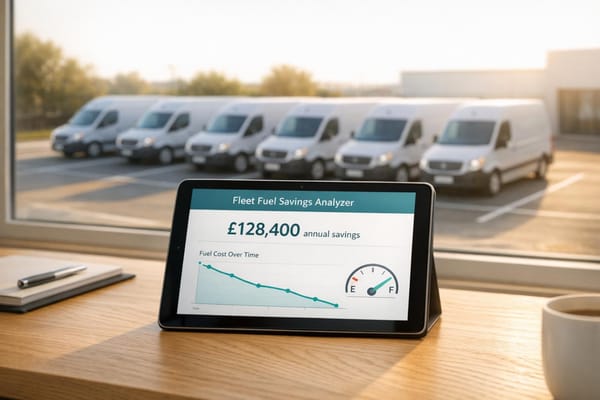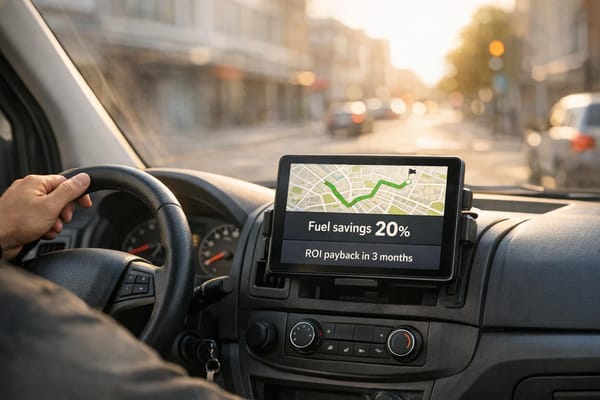
How AI Reduces Fuel Costs for Fleets
AI can cut fleet fuel use up to 20% using real-time route optimisation, driver coaching, predictive maintenance and smarter refuelling.
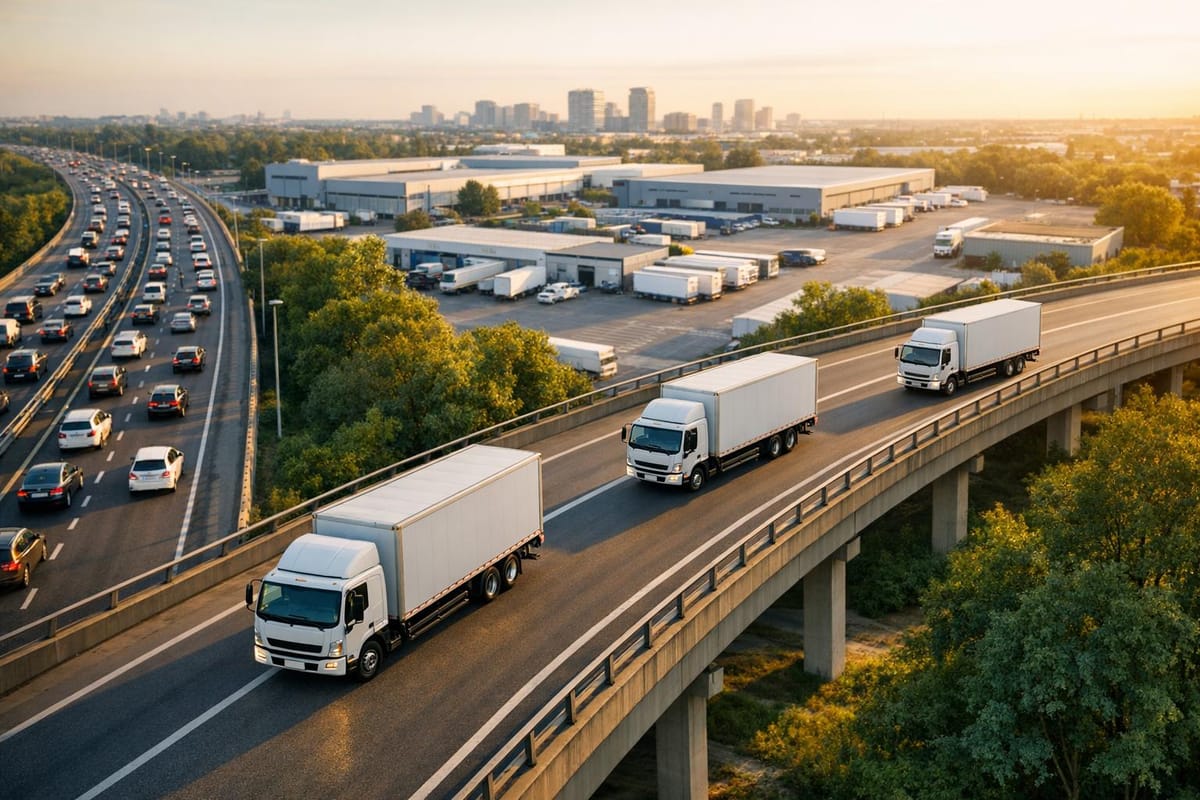
AI is helping UK fleet operators save money on fuel, which is one of their biggest expenses. By analysing data from telematics systems, AI improves route planning, monitors driver habits, predicts maintenance needs, and optimises refuelling. These tools allow fleets to cut fuel usage, reduce breakdowns, and improve delivery times.
Key Takeaways:
- Route Optimisation: Reduces mileage by up to 20%, saving thousands annually.
- Driver Monitoring: Identifies habits like harsh braking and idling to improve efficiency.
- Predictive Maintenance: Spots issues early, preventing costly repairs and fuel waste.
- Fuel Forecasting: Helps plan refuelling at the right time and place for cost savings.
For example, AI-powered systems can cut fuel costs by up to 15–20% in just a few months, making them a smart investment for fleets across various industries.
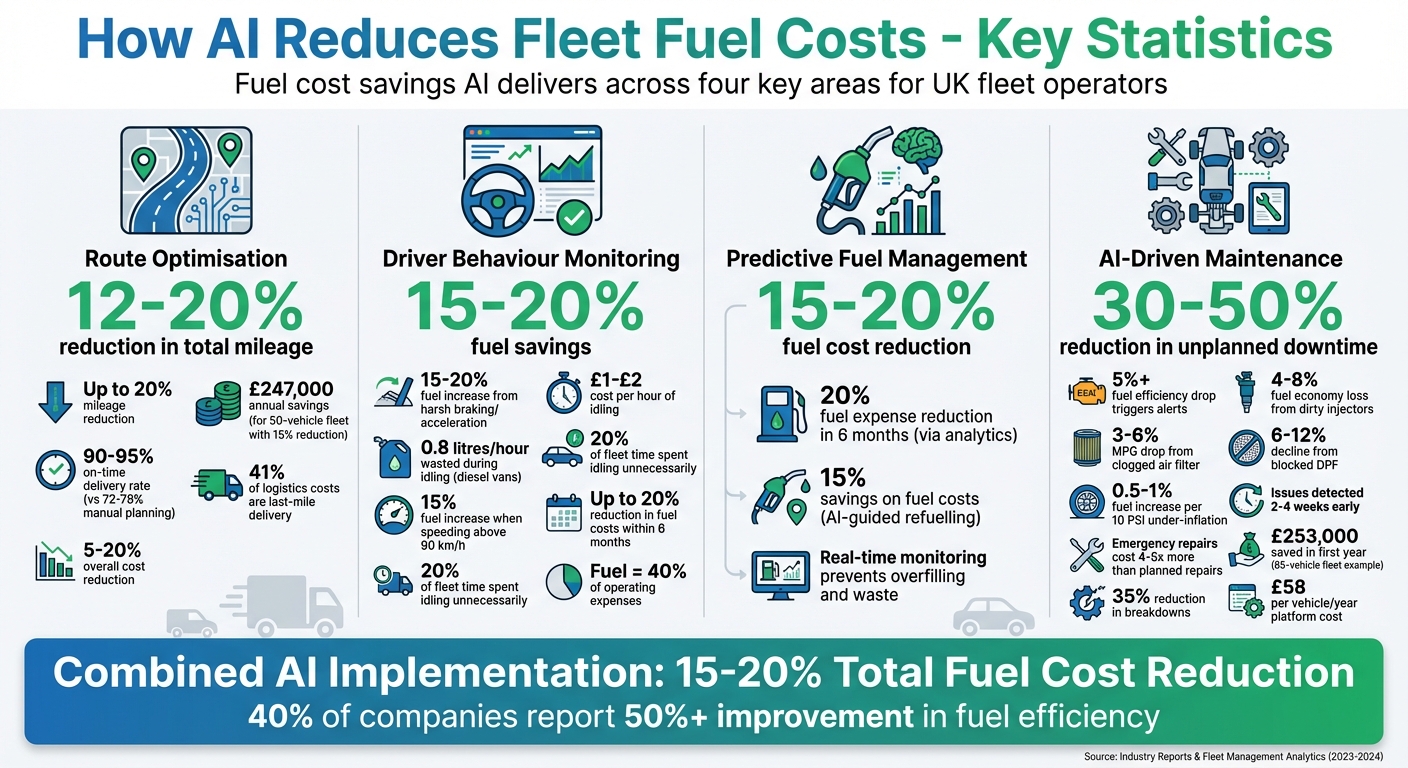
How AI Reduces Fleet Fuel Costs: Key Statistics and Savings
How AI dashcams can reduce fleet fuel usage and operational costs
Real-Time Route Optimisation Using AI
AI-driven route optimisation takes live data - like GPS, telematics and fuel analytics, traffic reports, and weather updates - and uses it to adjust routes instantly when issues arise. For example, if there's a traffic jam on the M6 or heavy rainfall, the AI recalculates the best possible route in real time. This process happens automatically, without needing dispatchers to intervene, making route adjustments smooth and efficient.
How AI Builds Better Routes
AI doesn’t just react to disruptions - it plans smarter routes by considering every possible factor. Traditional methods rely on static schedules and basic shortest-path calculations. In contrast, AI analyses live traffic updates, road closures, accidents, delivery time windows, vehicle capacities, driver regulations, and even road restrictions simultaneously. Using algorithms like Dijkstra's and A* combined with machine learning, it evaluates millions of route possibilities in just seconds.
The impact is clear. Many fleets see a 12–20% drop in total mileage within just three months of adopting AI-powered route optimisation. For a fleet of 50 vehicles, cutting mileage by 15% could save over £247,000 annually in fuel, tyre wear, and maintenance costs. AI systems can even customise routes for specific vehicles. For instance, electric vans can avoid steep hills to conserve battery power, and charging stops can be strategically placed along motorways.
Effects on Delivery Schedules
AI-optimised routes significantly improve delivery punctuality, with on-time rates jumping to 90–95%, compared to 72–78% using manual planning. This is because AI quickly adjusts to unexpected events - like an accident on the A1 - rerouting drivers in an instant to avoid delays.
The benefits are especially noticeable in last-mile delivery, which makes up 41% of total logistics costs. AI increases delivery density per route, helping businesses cut overall costs by 5% to 20%. Additionally, 40% of companies using AI report at least a 50% improvement in fuel efficiency and reduced operational expenses. To maximise these benefits, fleet managers can connect routing systems to live traffic and weather APIs, monitor performance metrics like cost-per-mile and first-time delivery success, and integrate route data with maintenance platforms to predict vehicle wear based on real-world usage rather than fixed schedules.
Monitoring Driver Behaviour for Fuel Efficiency
The way drivers handle their vehicles plays a major role in fleet fuel consumption. With white-label van tracking solutions, fleet managers can track behaviours like braking, acceleration, and idling, turning this data into actionable insights that cut costs. By keeping an eye on driving habits in real time, managers can pinpoint fuel-wasting patterns and guide drivers towards smarter, more efficient practices. This approach works hand-in-hand with route planning to maximise fuel savings, targeting both the route and the driver for a comprehensive solution. Let’s break down which behaviours waste the most fuel and how they can be addressed.
Driving Behaviours That Increase Fuel Use
Certain driving habits can cause fuel consumption to spike. For instance, harsh braking and rapid acceleration waste energy by disrupting momentum, leading to a 15–20% increase in fuel use. Each time a driver slams on the brakes or aggressively accelerates, it’s like pouring fuel down the drain.
Idling is another culprit. Diesel vans, for example, burn through 0.8 litres of fuel per hour when stationary, costing between £1 and £2. Telematics data often reveals that some fleets spend up to 20% of their time idling unnecessarily. Speeding also takes a toll - driving above 90 km/h can push fuel consumption up by 15% or more.
Using AI to Encourage Eco-Driving
Spotting inefficient driving is just the first step; AI systems also help drivers improve their habits. Advanced telematics leverage tools like sensors, GPS, and accelerometers to monitor behaviours such as speed, braking, and idling in real time. When a driver engages in wasteful actions, they receive immediate in-cab alerts to adjust their behaviour.
Driver scorecards are another powerful tool. These scorecards evaluate metrics like braking smoothness (targeting less than 0.3g), acceleration (under 2.5 m/s²), idling (below 5%), and speed compliance. Drivers are then assigned an eco-score on a scale from 0 to 100, with lower scores prompting tailored coaching sessions. Some systems even include gamified leaderboards to encourage friendly competition among drivers.
The results speak for themselves: fleets using AI to monitor and improve driving habits have reported up to a 15% reduction in fuel costs, with some achieving savings of 20% within just six months. Considering that fuel can account for as much as 40% of a fleet’s operating expenses, these savings make a noticeable difference to the bottom line.
Predictive Fuel Management with AI
AI doesn't just monitor fuel consumption - it predicts it. By analysing patterns and data, it allows fleet managers to anticipate fuel needs and plan smarter refuelling strategies. Instead of scrambling to address shortages, AI uses historical trends to forecast how much fuel your fleet will require and when. This approach reduces waste, eliminates unnecessary purchases, and ensures refuelling is both timely and cost-efficient. With fuel being one of the largest expenses for fleets, even small improvements in forecasting can lead to noticeable savings.
Using Historical Data for Fuel Forecasting
AI creates precise fuel forecasts by crunching extensive historical data. It takes into account fuel records, odometer readings, engine diagnostics, fuel analytics, driver hours, and maintenance logs. Machine learning models then identify usage patterns under different conditions, enabling detailed insights into fuel consumption.
External factors like traffic and weather are also factored in. For instance, if deliveries in a specific area tend to require more fuel during winter, AI adjusts its predictions accordingly. In one case, a company used AI-based analytics on historical real-time data to uncover inefficiencies, cutting fuel expenses by 20% in just six months through targeted adjustments and better forecasting.
This level of precision ensures that fleets avoid over-purchasing fuel while maintaining adequate reserves. AI can also flag unusual fuel usage patterns - like sudden spikes that could signal theft or mechanical problems - by comparing current consumption to historical averages. Once forecasts are established, AI takes it further by streamlining refuelling schedules.
Optimising Refuelling Schedules
Accurate fuel predictions allow AI to recommend optimal refuelling times and locations. The system evaluates real-time fuel levels, historical consumption trends, fuel prices (in £ per litre), upcoming routes, and traffic conditions. This enables drivers to refuel at stations with lower prices along their planned routes, avoiding unnecessary detours and overfilling.
AI also considers factors like vehicle fuel efficiency and maintenance schedules. For example, if a vehicle is due for a service that could enhance fuel economy, the system adjusts refuelling recommendations accordingly. Fleets that adopt AI-guided refuelling strategies have reported up to 15% savings on fuel costs. Coupled with real-time monitoring and alerts to prevent overfilling or wastage, these tools give fleet managers a firm grip on one of their most significant operating costs.
AI-Driven Maintenance for Fuel Savings
AI isn't just about route planning or improving driver habits - it’s also transforming how fleets handle maintenance. Poor upkeep can lead to higher fuel consumption, but AI steps in to detect problems early, before they snowball into costly breakdowns. Instead of relying on fixed schedules or waiting for something to go wrong, AI continuously monitors vehicles, ensuring they run smoothly and efficiently. This approach, known as condition-based maintenance, not only avoids roadside emergencies but also keeps fuel consumption in check by maintaining peak performance across all components.
Detecting Maintenance Issues with AI
AI uses data from various vehicle systems to spot issues that might be overlooked during traditional inspections. It monitors critical metrics like engine performance, tyre pressure, exhaust backpressure, oil condition, and even vibration patterns - all in real time. For instance, if a vehicle's fuel efficiency drops by 5% or more compared to its usual performance, the system sends an alert instantly.
Specific components often linked to fuel inefficiency are closely tracked. Dirty fuel injectors, for example, can reduce fuel economy by 4–8%, while a clogged air filter might cause a 3–6% drop in miles per gallon (MPG). A partially blocked Diesel Particulate Filter (DPF) can lead to a 6–12% decline, thanks to increased backpressure and regeneration cycles. Even tyre pressure matters: for every 10 PSI a tyre is under-inflated, fuel consumption increases by 0.5–1%. AI can detect these issues 2–4 weeks before they escalate, thanks to its ability to analyse data from electronic control units (ECUs), vibration diagnostics, and contextual factors like load and idling patterns.
One example comes from a logistics firm using AI vibration analysis on an International LT625 (Vehicle #23). The system flagged a sticking brake caliper 12 days before a scheduled inspection. By identifying uneven braking force that wasn’t visible during a manual check, the company avoided a potential Department of Transportation (DOT) violation and saved around £2,600 in emergency repair and fine costs. By acting on these insights, fleets can maximise performance and cut down on unnecessary fuel use.
Cutting Costs Through Preventive Maintenance
AI-guided maintenance doesn’t just save on fuel - it also slashes repair costs. Emergency roadside fixes can cost 4–5 times more than planned shop repairs. By addressing issues early, fleets can reduce unplanned downtime by as much as 30–50%.
Take the case of a regional logistics company managing 85 vehicles. Over a 12-month period ending in March 2026, they implemented AI-driven predictive maintenance. For example, the system flagged bearing wear on a Freightliner M2 106 (Vehicle #47) 18 days before it became critical. This allowed for a £1,950 scheduled repair instead of a £6,900 emergency replacement. Altogether, the company saved £253,000 in the first year and reduced breakdowns by 35%. An operations manager summed it up well:
"We were doing PM by the book, but 23% of our emergency repairs happened on vehicles that had been serviced within the last 2,000 miles. The service was done on time. The failure was invisible."
AI-powered maintenance platforms cost around £58 per vehicle per year, and for fleets without telematics, plug-in OBD-II data loggers cost less than £24 per vehicle. The return on investment comes from keeping engines, tyres, brakes, and other systems running efficiently, preventing minor issues from turning into major fuel drains. This proactive approach fits seamlessly into broader AI strategies aimed at cutting fuel costs.
Using GRS Fleet Telematics for AI-Driven Savings
GRS Fleet Telematics takes the AI strategies we've discussed and brings them to life, delivering immediate cost-saving benefits. By combining tools like route optimisation, driver behaviour monitoring, fuel forecasting, and predictive maintenance into a single platform, it provides an all-in-one solution tailored for UK fleet operators. Developed by GRS Fleet Graphics (est. 1991), the platform integrates real-time tracking with advanced analytics to help fleets cut fuel costs and improve overall performance. It works seamlessly with the AI systems mentioned earlier, offering a unified approach to managing routes and maintenance.
Key Features of GRS Fleet Telematics
The platform stands out with its dual-tracker technology, achieving a 91% recovery rate for stolen vehicles while promoting fuel efficiency through constant monitoring. Its real-time tracking and route planning tools adapt delivery schedules by factoring in traffic, weather conditions, and vehicle performance - practical applications of the route optimisation methods we've already explored.
Additionally, eco-driving analytics highlight fuel-wasting habits like harsh acceleration, excessive idling, and speeding. With this data, managers can encourage better driving practices, reducing unnecessary fuel consumption. The system also tracks vehicle health, alerting teams to potential issues before they turn into costly repairs or fuel inefficiencies.
Other benefits include 24/7 recovery support and the ability to customise the platform with white-label branding. The system is scalable, making it suitable for fleets of any size, and focuses heavily on fuel data to maximise savings.
Pricing for Fleets of All Sizes
GRS Fleet Telematics offers three hardware options to suit different needs:
- Essential (£35): Basic real-time tracking features.
- Enhanced (£79): Includes dual-tracker backup for added theft protection.
- Ultimate (£99): Adds immobilisation functionality for maximum security.
The software subscription costs £7.99 per vehicle per month, covering SIM/data usage, access to an account manager, and the full suite of platform features. Installation is free with fleet branding, and the pay-per-recovery model eliminates upfront recovery fees. At less than £8 per vehicle each month, this pricing structure makes it a cost-effective option for fleets aiming to reduce fuel expenses while staying within budget.
Conclusion
This guide has highlighted how AI can lead to measurable fuel savings for fleet operators by integrating advanced technologies into daily operations.
By leveraging tools like real-time route planning, driver behaviour analysis, predictive maintenance, and fuel forecasting, fleets can cut fuel consumption significantly. For businesses where fuel is a major expense, even small efficiency gains can translate into considerable cost savings.
Combining multiple AI-driven techniques amplifies these benefits. For instance, route optimisation becomes even more effective when paired with driver coaching, maintenance alerts, and real-time traffic updates. This synergy not only reduces fuel costs but also enhances operational efficiency, on-time delivery rates, driver satisfaction, and customer service.
To get started, assess your fleet’s current fuel usage, test AI solutions on a few vehicles, and expand as results become evident. Scaling up after successful trials ensures a smooth transition to fleet-wide implementation. Early adopters of AI-powered tools for route planning and maintenance often see faster returns on investment.
A great example is GRS Fleet Telematics, which combines real-time tracking, eco-driving insights, and detailed vehicle health monitoring. For just £7.99 per vehicle per month, this solution provides a cost-effective way to optimise fuel use without exceeding budget constraints.
Every litre of fuel saved positively impacts your bottom line. As fuel prices fluctuate and regulations become stricter, fleet operators who embrace AI-driven solutions gain a distinct edge - lower costs, improved sustainability, and more reliable operations.
FAQs
What data do I need to use AI for route optimisation?
To optimise routes using AI, you need access to real-time data covering traffic conditions, weather updates, vehicle performance, driver behaviour, and road restrictions. Telematics data - like vehicle location, speed, and status - plays a key role in improving AI decision-making. This allows for dynamic route adjustments that boost efficiency.
How do I introduce AI driver monitoring without upsetting drivers?
To bring AI driver monitoring on board without causing unease among drivers, it's crucial to prioritise open communication and focus on its role in enhancing safety and offering support. Highlight how these tools improve safety by providing real-time feedback and helping to avoid accidents. Engage drivers by clearly explaining how their data will be used in a constructive way and underline the benefits, such as alerts for potentially dangerous situations. By framing the system as a supportive tool rather than a punitive measure, you can build trust and reduce apprehension.
How quickly can AI tools pay back their cost in fuel savings?
AI tools often pay for themselves within 8 to 12 months, thanks to fuel savings and increased operational efficiency. However, this timeframe can differ depending on factors such as the size of the fleet and how it's utilised.