Fleet Tracking Regulations Explained: A Guide for Van Rental Companies in Wales
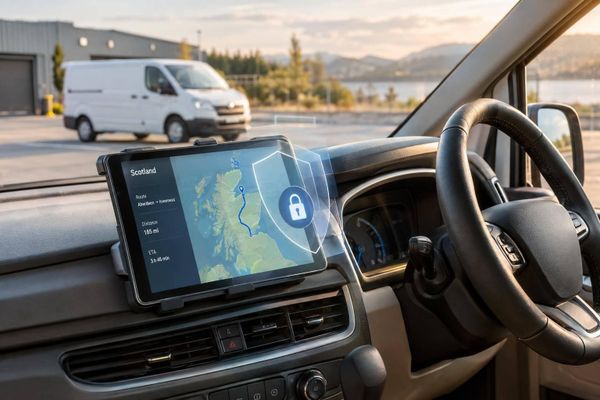
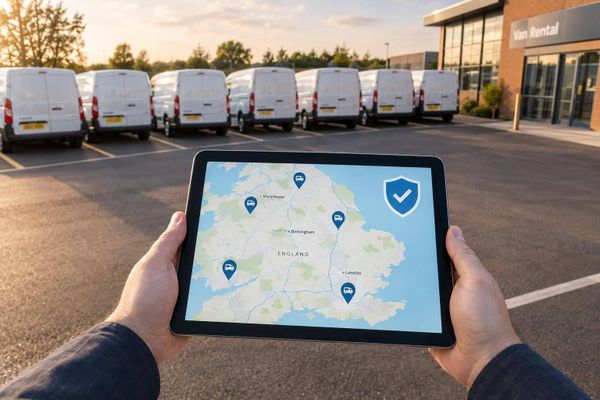
Guide to UK GDPR and practical rules for Welsh van-rental firms using GPS/telematics: lawful basis, notices, retention and security.
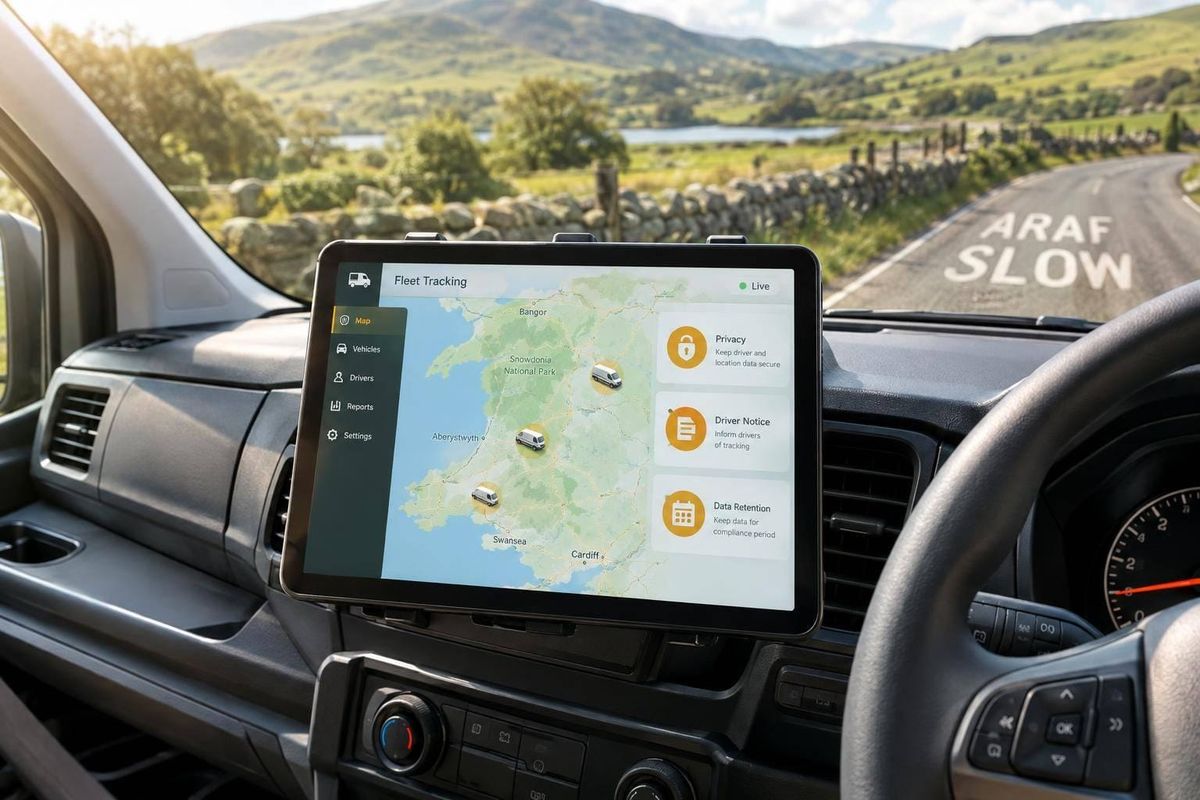
Jurisdiction Scope
Wales, under UK-wide data-protection law; Welsh public-sector/operator-licence examples may impose additional record-keeping requirements.
sbb-itb-499a7f0
Overview of Fleet Tracking Laws
Applicable Business Type
Van rental companies and vehicle-hire operators
Country or Region
United Kingdom
A Wales-focused guide to the UK legal and practical requirements for van-rental businesses using GPS or telematics. It covers lawful basis, transparency, proportionality, privacy safeguards, retention, data-subject rights, and implementation controls, while clarifying that UK law does not generally require every rental van to have real-time tracking.
Legal Requirements Summary
A Welsh van-rental operator may use tracking for legitimate security, theft-prevention, insurance or contract-administration purposes, but must comply with the UK GDPR and Data Protection Act 2018 framework: identify and document a lawful basis, give clear advance notice, limit tracking to necessary and proportionate purposes, secure and restrict access to data, support individual rights, and retain information only as long as justified. Driver consent is not universally required, and there is no general UK mandate requiring every rental van to have real-time tracking. Separate operator-licence record-keeping rules may apply.
Main Regulatory Topics
- UK GDPR lawful basis and data privacy
- Transparency and privacy notices
- Driver and hirer information
- Data minimisation and proportionality
- Driver consent
- Personal-use safeguards
- Data retention and deletion
- Data security and access control
- Data-subject rights
- Data Protection Impact Assessments
- CCTV, audio and vehicle surveillance
- Operator-licence record-keeping
- Regulatory compliance and implementation
Key Compliance Obligations
- Document a lawful basis for GPS/telematics processing, commonly contract necessity or a legitimate-interest assessment for security, theft prevention or contract administration.
- Provide privacy information before tracking starts, including the data collected, purposes, controller identity and contact details, access or recipients, retention and data-subject rights.
- Disclose tracking and relevant operational consequences in rental terms, privacy notices and information supplied to hirers and approved drivers.
- Use tracking fairly, proportionately and only for specified purposes; do not repurpose location data incompatibly with the original purpose.
- Minimise data collection, secure tracking data, restrict access and maintain appropriate processor/controller arrangements.
- Assess and document whether a Data Protection Impact Assessment is needed, particularly for systematic or high-risk monitoring of movements, cameras, audio or analytics.
- Provide safeguards for personal or non-working use, including disabling or limiting tracking where continuous monitoring is not necessary.
- Set purpose-based retention periods, securely delete or anonymise data when no longer needed, and document any extended retention for claims, disputes, investigations or legal obligations.
- Support UK GDPR rights, including access to relevant personal data and information about the processing.
- If using cameras or audio, perform a separate necessity and proportionality assessment; audio should normally be switched off unless exceptionally justified.
- Check any applicable operator-licence and vehicle-record obligations separately; an example Welsh fleet privacy notice states that records required under an operator’s licence are kept for at least two years.
Driver Consent Requirement
Consent Rule: Driver consent is not automatically required when tracking rests on another valid UK GDPR lawful basis, such as contract necessity or a carefully assessed legitimate interest. The rental company must still provide clear advance privacy information to hirers, drivers and passengers where relevant. If consent is selected as the lawful basis, it must be specific, informed, freely given and documented; tracking should be limited or disabled for private use where continuous monitoring is not necessary.
Data Retention Period
Minimum Retention: No single statutory minimum period for GPS tracking data; retain it only for as long as necessary for the documented purpose. Longer retention may be justified for claims, disputes, investigations or legal obligations. This is distinct from some operator-licence vehicle records, which may require at least 2 years.
Enforcement Authorities
- Information Commissioner's Office (ICO) — UK data-protection enforcement and complaints
- Driver and Vehicle Licensing Agency (DVLA) — vehicle records and licence verification
- Driver and Vehicle Standards Agency (DVSA) — road-transport, operator-licensing and tachograph enforcement in Great Britain
- Police and other lawful enforcement bodies — security-related information requests and vehicle-recovery investigations
Penalties for Non-Compliance
Non-compliance can lead to ICO investigation, corrective orders, restrictions on processing and potentially substantial UK GDPR/DPA monetary penalties; it can also create complaints, compensation and reputational exposure. Mishandling or unlawfully sharing DVLA data can result in refusal of future access and referral to the ICO. Breaches of rental-security, operator-licensing or tachograph requirements may lead to enforcement action, financial penalties and operational or licensing consequences. Contractual consequences—such as customer contact, recovery action or claims handling—should be clearly disclosed and must not be based on unlawful processing.
Implementation Best Practices
Maintain a written telematics policy, data map, lawful-basis assessment, retention schedule and access register. Configure the system for least-privilege access, purpose limitation and privacy-by-design; separate security/recovery functions from driver-performance monitoring where practicable. Give every hirer and approved driver concise notice at booking and vehicle handover, with a fuller privacy notice available online. Test deletion, rights-request and incident-response processes periodically. Keep an auditable record of disclosures to law enforcement and of any DVLA information use. Avoid treating driver consent as universally mandatory: consent is needed if selected as the lawful basis, but another valid basis does not remove the duties of transparency, fairness and proportionality.
Compliance Checklist
- Document a UK GDPR lawful basis for GPS/telematics processing; legitimate interests or contract necessity may be appropriate depending on the purpose.
- Provide hirers and approved drivers with clear privacy information before tracking begins, including purposes, data collected, controller identity, recipients, retention and individual rights.
- Disclose tracking in rental terms, privacy notices and operational instructions; explain any consequences of misuse or security-related intervention.
- Limit tracking to specified, necessary and proportionate purposes such as theft prevention, vehicle security, contract administration, claims and safety.
- Complete and document a legitimate-interests assessment and consider a Data Protection Impact Assessment where systematic or high-risk monitoring of movements is involved.
- Apply access controls, encryption or equivalent security measures, data minimisation and a documented retention/deletion schedule.
- Provide a mechanism for access and other data-subject rights; securely delete or anonymise data when the justified retention period ends.
- If personal or non-work use is possible, provide an appropriate privacy safeguard, such as disabling unnecessary continuous tracking.
- If cameras or audio are installed, conduct a separate necessity and proportionality assessment; keep audio disabled by default unless exceptionally justified.
- Train staff, document lawful information sharing with police or other authorities, and retain records of disclosures.
- For hires covered by the RVSS Code, use the prescribed customer and driver checks, including DVLA licence-share-code verification and additional checks for commercial-vehicle hires.
- For vehicles over 2.5 tonnes undertaking qualifying international goods transport for hire or reward, check operator-licensing and tachograph obligations; fit/use the required Smart Tachograph 2 from 1 July 2026 unless an exemption applies.
Industry-Specific Guidance
A van-rental company in Wales is generally subject to the same UK-wide data-protection and vehicle-rental rules as operators elsewhere in Great Britain; Wales does not create a separate general fleet-tracking regime. Tracking is particularly relevant to theft recovery, vehicle security, insurance, damage/claims handling and enforcing rental terms. The company should explain tracking to customers rather than assume that possession of the van constitutes consent, and should distinguish vehicle-security monitoring from intrusive monitoring of an identifiable driver. Customer booking, identity, licence, location and incident data may all be personal data. If vehicles are hired for international goods transport rather than ordinary private or domestic use, separate operator-licensing, drivers’-hours and tachograph rules can apply; the 1 July 2026 Smart Tachograph 2 requirement concerns qualifying international goods vehicles over 2.5 tonnes, not every tracked rental van.
Recent Legal Updates
As at 4 October 2026, the key recent transport update is the 1 July 2026 Smart Tachograph 2 requirement for light commercial vehicles and vans over 2.5 tonnes engaged in qualifying international goods transport or cabotage for hire or reward, subject to exemptions and the applicable UK–EU arrangements. Operators in scope need the appropriate tachograph, driver/company cards, driver training and regular downloads/retention of records. This is a transport-recording requirement and should not be confused with ordinary GPS fleet tracking. The GOV.UK RVSS Code of Practice published 7 April 2026 also sets current security, customer-checking and lawful-information-sharing expectations for participating rental operators.
Authoritative Resources
- Information Commissioner's Office (ICO): Data protection and monitoring workers; surveillance in vehicles; dashcams and UK GDPR
- GOV.UK Rental Vehicle Security Scheme (RVSS) Code of Practice
- Driver and Vehicle Licensing Agency (DVLA): V888/2B vehicle-record information requests
- GOV.UK/DVSA guidance on tachographs and international goods transport