Fleet Telematics and Battery Aging Insights
Telematics and predictive models monitor charging, temperature and SOC to forecast battery health, reduce downtime and lower EV fleet costs.
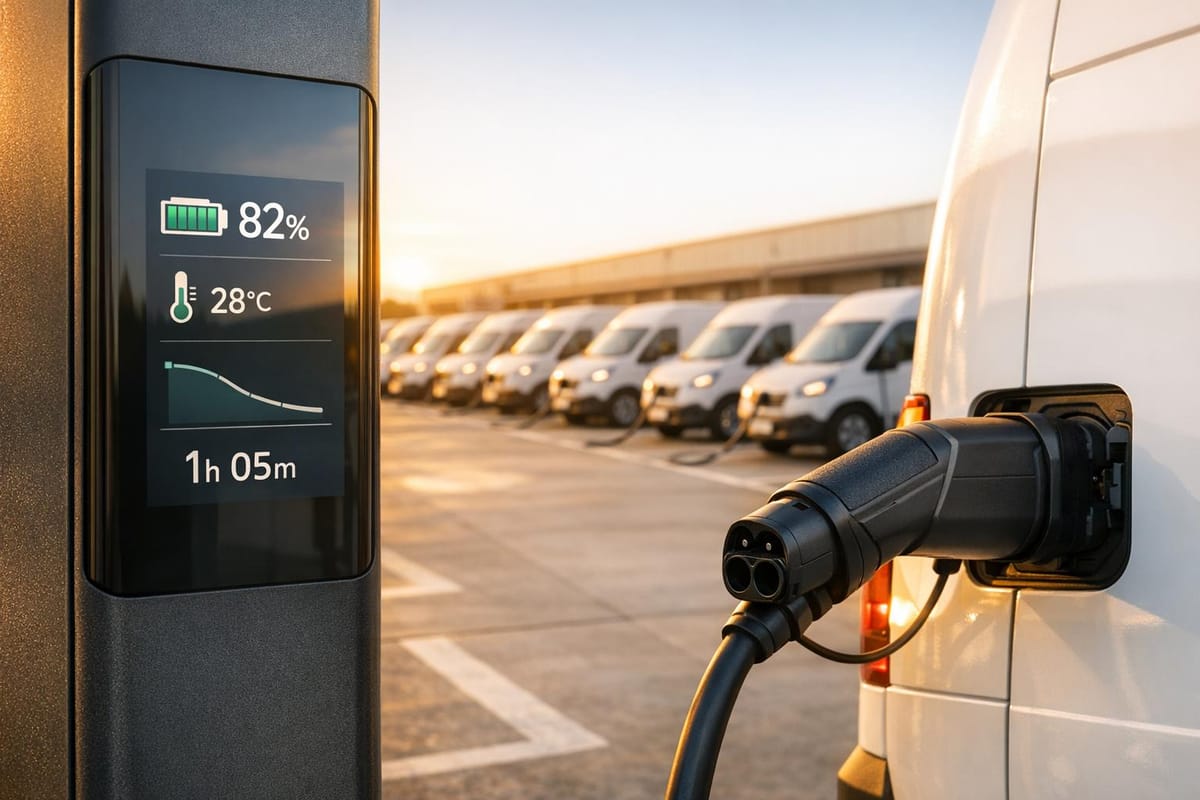
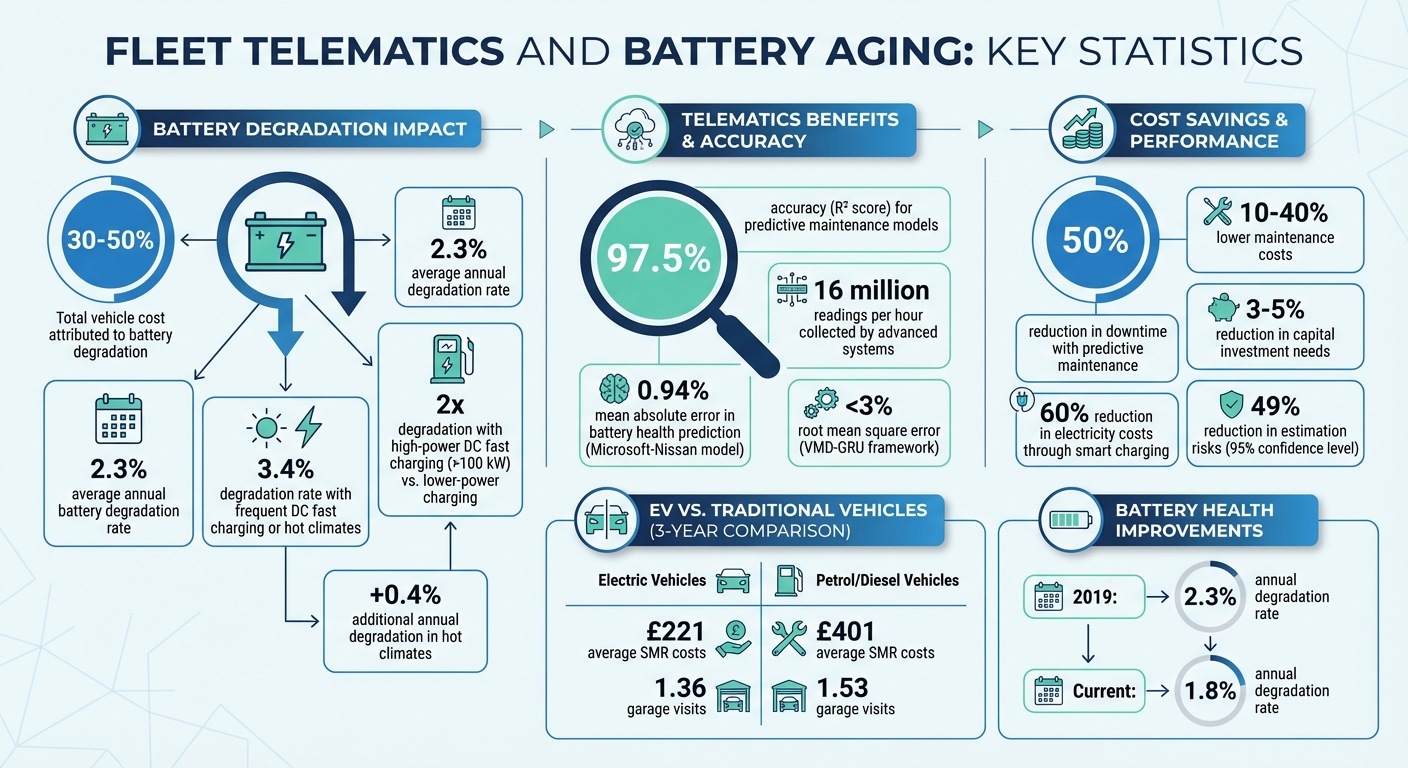
Electric and hybrid fleet managers face a major challenge: battery degradation can account for 30–50% of a vehicle's total cost. But telematics systems, like GRS Fleet Telematics, provide real-time data to monitor and predict battery health, helping reduce costs and extend battery life.
Key Takeaways:
- Battery Degradation Rates: Average annual degradation is 2.3%, but frequent high-power DC fast charging or hot climates can increase this to 3.4%.
- Telematics Benefits: Real-time data tracks charging habits, temperature exposure, and State of Charge (SOC) to prevent costly repairs and optimise maintenance.
- Predictive Models: Advanced tools like digital twins and machine learning forecast battery health with up to 97.5% accuracy, guiding replacement and cost planning.
- Cost Savings: Predictive maintenance reduces downtime by 50% and lowers maintenance costs by 10–40%.
By integrating telematics and predictive analytics, fleet operators can improve battery longevity, cut costs, and make informed decisions about maintenance and replacements.
Fleet Telematics Battery Management: Key Statistics and Cost Savings
Exploring Telematics - a data driven approach to EV fleets
1. Fleet Telematics Systems
Telematics platforms are the backbone of managing electric and hybrid fleets, continuously collecting and analysing data that directly affects battery life. A key focus is on high-power DC fast charging (DCFC), which research highlights as the leading factor in battery wear and tear. By monitoring charging habits in real time, fleet managers gain critical insights into behaviours that may speed up battery degradation. This data helps identify how operational practices influence battery lifespan.
The accuracy of these systems depends on three key factors: operational behaviour, environmental conditions, and the specific features of each vehicle. For instance, geographic location and ambient temperature play a significant role, as high temperatures increase chemical activity within battery cells. Additionally, the type of battery chemistry - such as Lithium Iron Phosphate (LFP) versus Nickel Manganese Cobalt (NMC) - and the logic of a vehicle's Battery Management System also affect the rate of cell ageing.
These factors lead to noticeable differences in battery wear. Telematics systems track charging patterns and environmental conditions with precision, allowing operators to adjust practices that impact degradation rates. For example, differences between high-power and lower-power charging sessions can significantly influence battery health. As Charlotte Argue, Senior Manager of Sustainable Mobility at Geotab, explains:
Charging behaviour now plays a critical role in battery aging, enabling operators to manage long‐term risk through smarter charging strategies.
This level of monitoring not only improves understanding of battery degradation but also supports predictive maintenance. By using real-time data from systems like GRS Fleet Telematics, operators can shift from reactive to predictive maintenance, cutting costs by 10–40% and reducing downtime by half compared to traditional methods. Within three years of operation, electric vehicles typically incur an average of just £221 in service, maintenance, and repair (SMR) costs, with 1.36 garage visits - far lower than the £401 and 1.53 visits seen with petrol and diesel vehicles.
GRS Fleet Telematics integrates real-time tracking with actionable insights, helping fleet operators pinpoint vehicles that spend too much time at extreme states of charge or rely heavily on fast charging. This kind of constant monitoring not only extends the lifespan of vehicles but also lowers capital investment needs by 3–5%. It transforms battery management from a guessing game into a precise, data-driven approach.
2. Battery Aging Prediction Models
Battery aging prediction models take fleet management to the next level by turning high-frequency telematics data into accurate forecasts about battery health. These models process raw data - such as energy throughput, temperature, charging frequency, and SOC (State of Charge) patterns - and transform it into actionable insights. Fleet APIs play a crucial role here, combining data from GPS, engine diagnostics, and maintenance records into a single dashboard. Some systems gather an astonishing 16 million readings per hour. Platforms like GRS Fleet Telematics thrive on this integration, enabling more precise, data-driven fleet optimisation. By continuously monitoring high-frequency data, machine learning algorithms establish "normal" operating baselines and quickly identify deviations that could indicate premature battery aging. These baselines are essential for assessing the accuracy of prediction models.
The performance of these models can differ significantly. Empirical models based on telematics data are particularly effective at capturing fleet-wide battery degradation trends. For instance, the VMD-GRU (Variational Mode Decomposition-Gated Recurrent Unit) framework stands out, delivering a root mean square error of less than 3% by focusing on partial charging data rather than full cycles. Meanwhile, a collaborative effort between Microsoft and Nissan resulted in a model with a mean absolute error of just 0.94% when predicting battery health at the 200th cycle using data from the first 50 cycles. Atsushi Ohma from Nissan’s EV System Laboratory highlighted the importance of this approach:
Through our collaboration with Microsoft Research Asia, we are innovating battery degradation prediction methods to enhance the effectiveness of battery recycling and promote resource reuse.
These predictive models are invaluable for fleet operations, offering insights that guide decisions on battery replacement cycles and total cost of ownership. When predictive maintenance models are built with the right data features, they can achieve an impressive R² score of 97.5%. Such precision allows operators to plan capital expenditures with confidence, knowing exactly when batteries will fall below acceptable performance levels. By seamlessly integrating these models with real-time telematics, operators can fine-tune both maintenance schedules and financial strategies. This synergy between telematics data and predictive analytics ensures a smarter, more efficient approach to fleet management.
Advantages and Disadvantages
Fleet telematics and battery ageing prediction models come with both benefits and limitations, shaping how they are adopted and implemented.
Telematics systems provide real-time insights by monitoring key metrics like State of Health (SOH), cell voltage, and charging performance. This allows fleet managers to shift from reactive to predictive maintenance, addressing small issues before they escalate into expensive repairs. Features like automated pre-conditioning and optimised charging schedules help reduce battery wear and lower energy costs. David Savage, Vice President for UK and Ireland at Geotab, highlights the long-term advantages:
With these higher levels of sustained health, batteries in the latest EV models will comfortably outlast the usable life of the vehicle and will likely not need to be replaced.
Recent data shows that modern EV batteries degrade at an average rate of just 1.8% per year, a notable improvement from the 2.3% degradation rate recorded in 2019. Despite these advancements, prediction models face distinct hurdles.
One major challenge for prediction models is data scarcity. Limited historical data - especially for second-life batteries - combined with the diversity in battery chemistries and physical formats, creates significant uncertainty. These models struggle in "out-of-distribution" (OOD) scenarios, where the battery's ageing patterns or manufacturer details differ from the training data. For instance, high-power DC fast charging (above 100 kW) can double degradation rates compared to lower-power charging, while operating in hot climates adds approximately 0.4% degradation annually. Although techniques like data-driven generative transfer learning can reduce estimation risks by 49% at a 95% confidence level, their implementation is highly complex.
| Feature | Fleet Telematics Systems | Battery Ageing Prediction Models |
|---|---|---|
| Data Handling | Strong for real-time monitoring | Effective for long-term trends but sensitive to OOD data |
| Operational Approach | Non-invasive, focused on operational monitoring | Relies heavily on high-quality training data |
| Weakness | Privacy or ownership issues may lead to data loss | Struggles with variability in battery types and extreme conditions |
From a cost perspective, telematics systems excel in calculating true range and total cost of ownership, making the case for electrification more compelling. They also enhance vehicle utilisation and resale value by maintaining battery health. However, prediction models can falter under external influences - such as randomised State of Charge (SOC) - which can cause pulse-test-based models to fail if SOC levels are inaccurately measured during testing. These complexities highlight the importance of integrated data strategies for effective fleet management.
Conclusion
The combination of telematics and ageing models creates highly accurate digital twins that help optimise fleet performance. Telematics gathers real-time operational data - like State of Charge, temperature, and current - while ageing models provide insights into long-term battery health, such as degradation trends and State of Health. Together, these tools allow fleet managers to make informed decisions, avoiding costly mistakes and improving efficiency. With this data-driven precision, battery management shifts from guesswork to actionable intelligence.
These integrated systems can slash costs by up to 40% and reduce downtime by 50%. Smart charging strategies, guided by telematics data, further cut electricity expenses - up to 60% - by leveraging off-peak rates and avoiding demand charges. After three years, electric vehicles typically incur an average service, maintenance, and repair cost of just £221, compared to £401 for petrol or diesel vehicles.
The benefits extend beyond cost savings. Accurate battery health data supports the repurposing of retired batteries for second-life energy storage. As highlighted in the Energy & Environmental Science Journal:
Repurposing these batteries for second-life applications offers a critical opportunity to extend their value, reduce environmental waste, and enable cost-effective energy storage.
Fleet operators should prioritise integrating telematics with charging management software to achieve a comprehensive view of vehicles and infrastructure across industries. Predictive insights can guide route planning and driver behaviour, helping to prevent accelerated battery wear caused by factors like extreme temperatures or high-load cycles. This proactive approach not only extends battery life but also supports transparent ESG reporting by tracking CO₂ reductions and energy efficiency improvements.
For UK fleet operators, leveraging these integrated solutions is a game-changer. GRS Fleet Telematics (https://grsft.com) provides advanced van tracking tools that empower managers to make smarter, data-driven decisions. By combining real-time monitoring with predictive analytics, operators can enhance performance, extend battery life, and minimise both operational costs and environmental impact.
FAQs
Which battery data points are key for predicting ageing?
The key factors in predicting battery ageing are cell voltage and charging performance. Keeping a close eye on these metrics allows for early detection of potential wear and tear, making it easier to maintain the battery and prolong its life.
How can we cut fast-charging without disrupting operations?
To minimise the need for fast-charging without disrupting daily operations, focus on improving charging schedules with the help of telematics data. Analysing battery health and driving habits can guide you to schedule charging during off-peak hours, which not only lowers costs but also ensures vehicles are ready when needed. Encouraging smoother driving and tracking driving behaviour can further help prolong battery lifespan.
On top of that, using predictive maintenance and vehicle-to-grid (V2G) technology can play a key role. These tools help maintain battery health while turning vehicles into energy assets. This reduces reliance on frequent fast-charging and keeps operations running smoothly.
How accurate are battery health predictions in real fleets?
Fleet managers can now rely on highly accurate predictions for battery health, thanks to the detailed analysis of telematics data. Research indicates that electric vehicle (EV) batteries degrade at a rate of about 1.8% per year, suggesting many could remain functional for over 20 years. By using predictive models that analyse factors like cell voltage and charging performance, potential issues can be spotted early. This not only boosts reliability but also helps extend the lifespan of batteries. As telematics technology continues to evolve, these predictions are becoming even more precise, enabling more proactive and efficient fleet management.