Best Practices for EV Fleet Driver Training
Guide to training EV fleet drivers on safety, charging, range management and telematics coaching to cut costs and improve fleet performance.
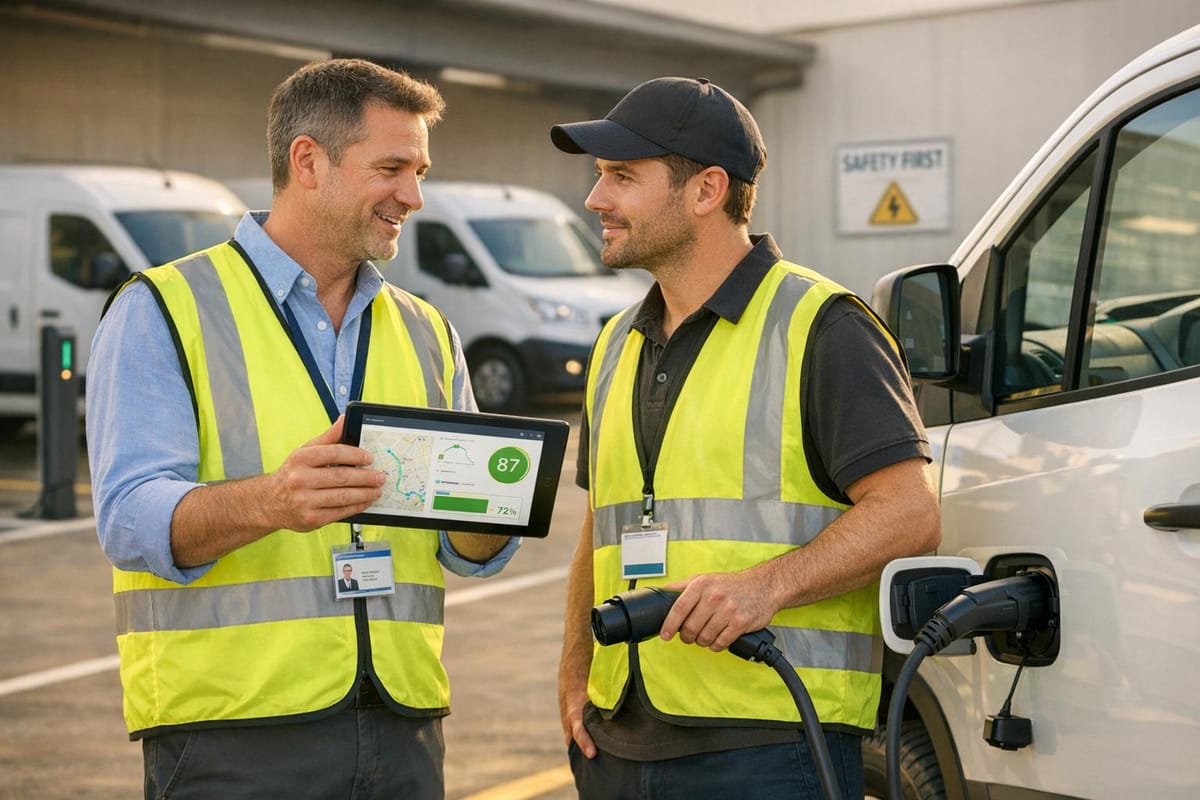
Switching to electric vehicles (EVs) isn't just about replacing petrol or diesel cars - it's about learning a new way to drive. Proper training helps drivers maximise safety, improve efficiency, and reduce costs. Without it, fleets risk increased accidents, reduced range, and higher maintenance expenses. Here’s what you need to know:
- Safety Matters: EVs are quieter, heavier, and deliver instant torque, which can be challenging for new drivers. Training reduces risks and prevents accidents.
- Efficiency is Key: Driving style impacts EV range significantly. Aggressive driving can cut range by up to 51%.
- Cost Savings: EVs are 23% cheaper to maintain over 60,000 miles, but poor habits like harsh braking or overusing rapid chargers can erode these savings.
- Training Stages: Start with basics like charging, battery care, and EV-specific driving skills. Use hands-on sessions, telematics, and seasonal refreshers.
- Ongoing Support: Use real-time driver tracking to identify and address skill gaps. Encourage feedback and provide personalised coaching to build driver confidence.
Training ensures your fleet reaps the full benefits of EVs - better range, safer driving, and lower costs.
Best EV driver training strategies
How to Structure an EV Driver Training Programme
Training for EV drivers isn’t a one-time event - it’s an ongoing process that evolves alongside your fleet. The best programmes start with a strong foundation, support drivers as they gain experience, and adapt to new technologies and operational changes. This ensures the training stays relevant and aligns with the fleet’s growth.
Initial Training Before Vehicle Deployment
Before drivers hit the road in their first EV, they need to understand both the basics and the unique aspects of electric vehicles. This stage should cover:
- The charging ecosystem: Drivers need to learn about connector types, charging speeds, and networks.
- Battery management: Teach them how to avoid issues like "vampire drain" and maximise battery lifespan.
- EV-specific driving characteristics: Highlight features such as instant torque and regenerative braking.
Since many drivers may be new to EVs, combining digital learning modules with hands-on sessions is key. For example, drivers should be aware of the near-silent operation of EVs, which requires extra attention to pedestrians and cyclists. Practical lessons, like proper charging etiquette (e.g., stowing cables to avoid damage), can also prevent costly maintenance issues.
"The same driving characteristics that make an electric vehicle's charge last longer are the same that make drivers safer, which makes it a classic 'win-win' situation".
Follow-Up and Refresher Training
Continuous training helps address skill gaps as they arise. Tools like telematics can pinpoint areas where drivers may need improvement , such as using van tracker systems to monitor safety metrics,, such as energy recuperation techniques or reducing harsh acceleration. Seasonal sessions are particularly helpful. For instance, before winter, drivers can benefit from advice on:
- Cabin preconditioning: Heating the vehicle while it’s still plugged in.
- Adjusting regenerative braking: Tailoring settings for icy roads.
- Efficient heating strategies: Using heated seats and steering wheels instead of full cabin heating.
These sessions not only enhance driver performance but also ensure the programme remains scalable as the fleet grows.
Adapting Training for Fleet Growth
As your fleet expands and new EV models are introduced, your training programme should evolve too. Digital platforms are invaluable here, offering consistent training across a larger workforce and enabling model-specific updates through remote assessments.
Creating a feedback loop is another essential step. Encourage drivers to share their experiences, tips, and questions. This real-world input helps refine the programme to address actual challenges rather than theoretical ones. For businesses in the UK, subsidised training through the Energy Savings Trust’s 'Road to Zero' initiative can make it easier to maintain a thorough training programme as your operations scale.
What to Include in EV Driver Training
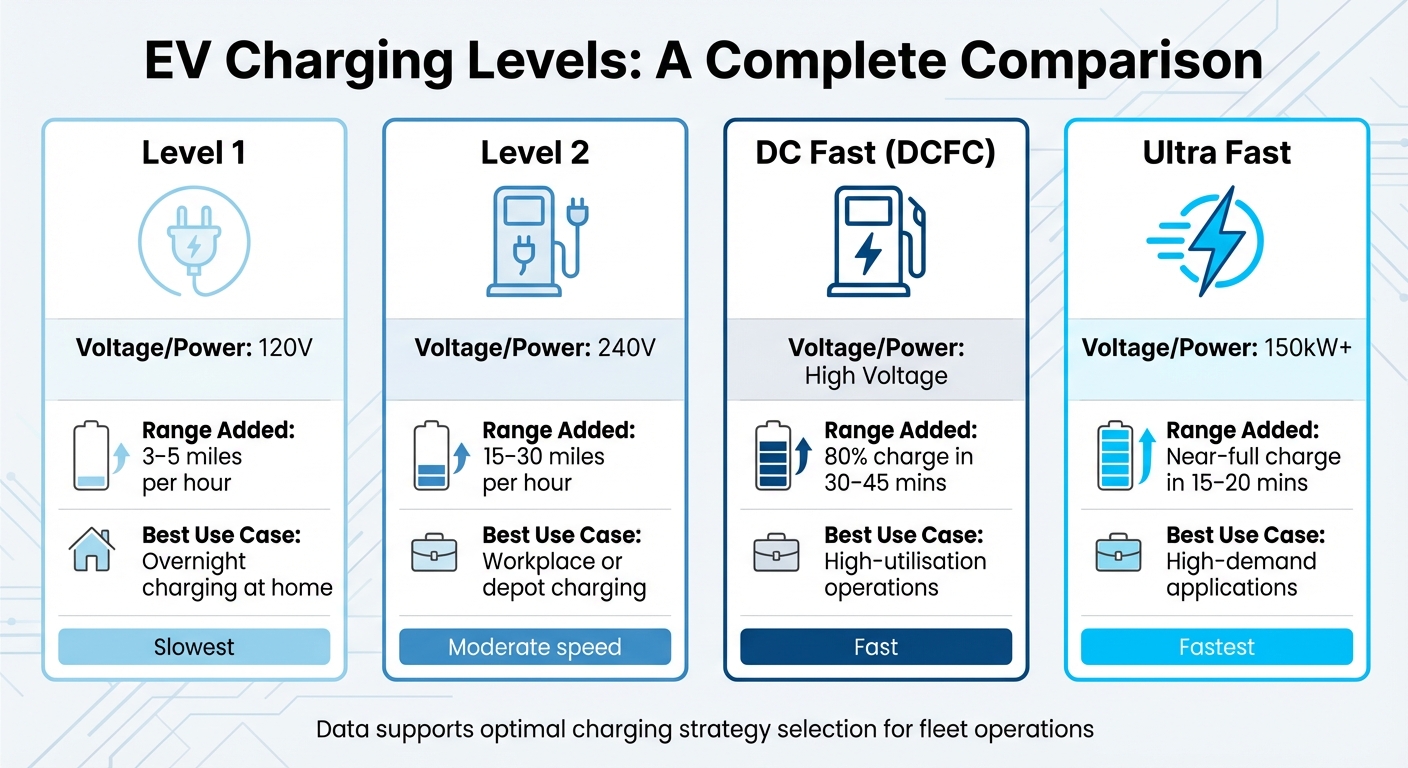
EV Charging Levels Comparison: Speed, Power, and Best Use Cases
A well-rounded EV driver training programme should focus on three main areas: understanding electric vehicle (EV) technology and features, managing charging and range, and following specific safety protocols. These components are essential for ensuring drivers can operate EVs efficiently and safely.
Understanding EV Technology and Features
One of the standout features of EVs is regenerative braking, which captures energy during deceleration to recharge the battery. Using the highest regeneration setting not only extends the vehicle's range but also reduces wear on brake pads. This technique, often called "one-pedal driving", allows drivers to slow down the car without using the brake pedal, making driving smoother and less tiring.
EVs are far more energy-efficient than traditional petrol or diesel vehicles, converting over 70% of electrical energy into power for the wheels, compared to just 30% for combustion engines. However, driving habits can significantly affect efficiency. Aggressive acceleration, heavy braking, or maintaining high speeds (e.g., 80 mph compared to 50 mph) can reduce an EV's range by as much as 51%.
Drivers should also be trained on battery care. For instance, avoiding full charges (100%) and deep discharges (close to 0%) can help slow the typical 2.3% annual battery degradation rate. Minimising the use of rapid chargers is another way to preserve battery health. Additionally, auxiliary systems like climate control, ideally set at around 21.5°C, can drain the battery and impact range.
The added weight of EV batteries changes how the vehicle handles and affects tyre wear. In winter conditions, adjusting regenerative braking settings is recommended to prevent skidding on icy roads.
With these basics covered, the next step is to teach drivers how to manage charging and optimise range.
Charging Infrastructure and Range Management
Drivers need a solid understanding of charging options, payment systems, and route planning. Training should cover the four primary charging levels and their use cases:
| Charging Type | Voltage/Power | Range Added | Best Use Case |
|---|---|---|---|
| Level 1 | 120V | 3–5 miles per hour | Overnight charging, e.g., at home |
| Level 2 | 240V | 15–30 miles per hour | Workplace or depot charging |
| DC Fast (DCFC) | High Voltage | 80% charge in 30–45 mins | High-utilisation operations |
| Ultra Fast | 150kW+ | Near-full charge in 15–20 mins | High-demand applications |
Route planning is critical for optimising range. Drivers should rely on real-world range data from van tracking solutions rather than solely trusting manufacturer estimates, as factors like payload, weather, and driving style can impact range. They should also know how to locate public charging stations in emergencies and use various payment apps or RFID cards linked to different charging networks.
Proper care of charging equipment is another key point. For instance, stowing charging cables correctly helps prevent debris build-up and reduces the risk of damage.
Finally, the programme must highlight safety protocols unique to EVs.
Safety Protocols for EVs
Safety training for EVs should address risks such as high-voltage hazards and the quiet operation of these vehicles, which can make them harder for pedestrians to detect. EVs operate at voltages up to 650 volts direct current, compared to the 12/24 volts used in conventional vehicles. Drivers must understand these high-voltage systems to avoid potentially fatal electric shocks.
"Voltages present in electric and hybrid vehicles are significantly higher (currently up to 650 Volts direct current (dc)) than those used in other vehicles (12/24 Volts dc)." – Health and Safety Executive (HSE)
Because EVs are nearly silent at low speeds, drivers need to be extra cautious around pedestrians and cyclists who might not hear them approaching. Training should also cover how to identify signs of battery faults or physical damage, as these issues could lead to thermal runaway, rapid fire spread, and even complete vehicle loss.
Emergency procedures are another crucial element. Drivers must know what to do in case of a malfunction, fire, or collision involving high-voltage components. Regular visual inspections of high-voltage systems and proper management of remote operation keys during maintenance are also essential for ensuring safety.
Training Delivery Methods
Delivering EV training effectively is just as important as the training content itself. To ensure drivers adopt safe and efficient practices, fleet operators need to combine practical and theoretical learning while accommodating diverse schedules and learning preferences. The best training programmes blend multiple methods, giving drivers both the knowledge and confidence they need to succeed. Below are some approaches that help achieve this balance.
Practical Hands-On Training
Getting behind the wheel is crucial for mastering EV-specific driving skills. These sessions range from 2-hour introductory modules to half-day real-world driving courses. During hands-on training, drivers learn techniques like one-pedal driving and regenerative braking, all while navigating actual routes. They also gain familiarity with how EVs handle.
Short demonstrations on charging cable usage can prevent costly damage, adding practical value to the sessions. For instance, Royal Mail ran a tailored EV training programme for over 1,000 drivers between 2017 and 2019. Led by Road Safety Manager Mark Bromhall, the programme focused on automatic gearboxes, regenerative braking, and vehicle performance. The result? A 31% improvement in fuel efficiency.
Telematics-enabled coaching enhances these sessions by providing instant, data-driven feedback. Using "nudge theory", this approach gently reminds drivers about better charging and driving habits without being overly critical.
Classroom and Digital Training Options
Classroom and digital formats offer flexibility, making it easier for fleets to train large groups. Micro-learning modules, which are usually about 10 minutes long, are a great way to teach fuel-efficient driving techniques without taking up too much time. Additionally, two-hour online workshops can help bridge the knowledge gap between traditional internal combustion engine (ICE) vehicles and EVs. These sessions cover essential topics like kWh consumption, charging connector types, and how features like climate control can impact range.
David Day, UK HSE Manager at ABB, shared: "ABB have been working collaboratively with Drivetech on our EV transformation journey. This has included developing and delivering a new EV familiarisation course for our company car drivers... the feedback was excellent with the training well delivered, and the content relevant."
Video libraries also allow drivers and managers to study key topics - like the ZEV Mandate, BIK tax, and charging strategies - at their own pace. Some fleets have even gamified the learning process. By using telematics-linked league tables and driver scores, they encourage healthy competition and a stronger focus on safety.
Personalised Training Approaches
While group sessions cover general topics, personalised coaching addresses specific challenges. One-to-one or small group sessions are especially effective for helping drivers overcome individual concerns, like range anxiety or confusion about technical features. These tailored approaches are invaluable for easing the transition to EVs.
The Energy Saving Trust’s "Ecodriving in EVs" programme highlights the benefits of personalised coaching. Over a three-month period, 67 drivers received focused training on smoother driving techniques, such as planning ahead to avoid sudden braking or harsh acceleration. The outcomes were impressive: a 16% drop in energy consumption and a 20% boost in vehicle range.
Telematics-based coaching also plays a role in personalisation. By using real-world data, trainers can focus on specific driving behaviours rather than relying on generic advice. This targeted approach not only improves performance but also helps measure the success of training programmes.
Gary Johnson, Director of Risk and Compliance at Lytx, noted: "Often, drivers aren't even aware that they're driving in a risky way. By reviewing the video event clip with them and bringing it to their attention, coaches can promote drivers' professional development whilst increasing their awareness".
Monitoring and Measuring Training Success
After completing structured training, it's essential to evaluate its effectiveness. By tracking clear metrics and conducting regular assessments, you can measure driver progress and justify the resources spent on training.
Pre- and Post-Training Assessments
Establishing a baseline before training begins is crucial for identifying genuine progress. A well-planned assessment schedule typically includes:
- An introductory course before vehicle delivery.
- A follow-up session after drivers gain practical experience.
- Annual refresher courses to ensure skills remain sharp.
This structured approach supports continuous improvement and helps identify areas needing attention.
Pre- and post-training evaluations highlight knowledge gaps and demonstrate the programme's success. For example, you might test drivers on topics like regenerative braking, charging protocols, or safety procedures for high-voltage systems. Post-training assessments confirm that drivers not only meet legal requirements, such as the Electricity at Work regulations, but can also operate EVs safely.
"It is vital that employees, whether they will drive an electric fleet vehicle or not, receive training to ensure they can safely work alongside EVs".
Once a baseline is set, ongoing performance monitoring becomes the next step.
Performance Monitoring After Training
After drivers hit the road, telematics systems become invaluable for tracking their performance. Tools like GRS Fleet Telematics provide real-time insights into driver behaviour, such as harsh braking, rapid acceleration, speeding, and energy consumption. This data helps determine whether drivers are applying efficient techniques like regenerative braking or slipping into unsafe habits.
Fleets using telematics often see dramatic improvements. For instance, reports show a 37% drop in harsh braking incidents and a 42% reduction in speeding within the first year. A case study from Irish broadband provider SIRO highlights these benefits. Using Geotab telematics to manage its 54-vehicle fleet (80% EV), the company achieved a 76% reduction in speeding events in target zones and cut DC charging overstays by 6% in just three months. They also achieved an average safety score of 88/100, outperforming the industry benchmark by 6%.
"The data enables us to have much more fruitful conversations with our drivers to help them optimise their charging behaviour, and the fact that it's real-time rather than a monthly overview is so much more valuable".
Key metrics to monitor include:
- Energy economy (kWh per distance).
- Charging habits (e.g. home versus public charging ratios).
- Safety indicators, such as seatbelt usage and cornering.
Aggressive driving can reduce an EV's range by up to 51%, so keeping an eye on these behaviours directly impacts operational costs. Driver scorecards and league tables can also encourage healthy competition while providing objective data for reviews.
These insights feed into detailed reporting and certification processes.
Reporting and Certification
Standardised certificates, such as IMI Levels 1–4 or CPC, are essential for documenting training completion. These certificates serve as proof that drivers have been properly trained and understand how to handle high-voltage systems safely.
Telematics reports further enhance this process by identifying areas for improvement. For example, if a driver consistently exhibits harsh braking or excessive energy consumption, targeted one-to-one coaching can address these issues without requiring all drivers to attend generic refresher courses. This data-driven strategy makes training more efficient and cost-effective.
Maintaining these reports is also vital for demonstrating due diligence. This is particularly important given that, although company drivers make up just 12% of UK licence holders, they are involved in over 50% of road traffic accidents.
Supporting Driver Transition to EVs
Switching to electric vehicles (EVs) isn’t just about adapting to new technology - it’s also about addressing the human side of change. Many drivers start their EV journey with limited knowledge, yet 9 out of 10 report a positive experience once they make the switch, with fewer than 1% reverting to petrol or diesel vehicles. Bridging this initial knowledge gap through targeted education is key to building driver confidence.
Building Confidence Through Education
Helping drivers feel at ease with EVs begins with tackling any uncertainty head-on. The focus should be on making EVs approachable, avoiding overly technical explanations. As Drivetech highlights:
"An EV is still just a car – not a spaceship. The fundamentals of driving remain the same. What's needed isn't excessive or complicated retraining, but rather simple, accessible familiarisation".
One effective method is creating "Myth Buster" guides to dispel common fears. For instance, while many worry about battery lifespan, EV batteries typically degrade by only 2.3% per year - far less than most expect. Sharing real-world examples, such as stories of drivers successfully completing long trips, can also help reduce range anxiety.
In March 2021, the Association of Fleet Professionals (AFP) launched a one-day training course to support fleet electrification. These sessions, combined with "Myth Buster" materials, provided practical guidance for businesses preparing for the 2030 ban on petrol and diesel vehicle sales. AFP Chair Paul Hollick noted:
"We believe that 2021 will be the year of fleet electrification... There is genuine enthusiasm and a thirst for knowledge from fleets of all types and sizes".
A phased approach works well for easing drivers into EVs. Assigning shorter, less demanding routes initially allows them to get comfortable with vehicle range and charging habits. Providing access to tools like charging station maps and route planners further simplifies the process, helping drivers optimise charging stops and reduce anxiety.
Once the basics are covered, creating opportunities for collaboration ensures continuous improvement.
Encouraging Collaboration and Feedback
A supportive environment where drivers can openly ask questions and share experiences is crucial. Open feedback loops allow drivers to report challenges, exchange tips, and learn from one another. Peer mentoring programmes are another effective tool, pairing enthusiastic early adopters with those who are more hesitant to help address concerns and share practical advice.
In 2023, construction company Balfour Beatty partnered with Drivetech to roll out a driver support system. This initiative uses data to identify individuals who may need extra help during the transition. Tim Fieldhouse, Fleet Services Director at Balfour Beatty, explained:
"Ensuring our people get home safely to their loved ones is of the utmost importance to me. This collaboration has meant that we can identify those drivers who need extra support and intervene quicker than ever before".
Incentive programmes can also play a role in building engagement. Recognising drivers who achieve high safety scores or extend range through efficient driving creates healthy competition and reinforces positive habits across the fleet. These initiatives not only encourage participation but also foster a sense of shared success as teams adapt to EV technology.
Conclusion
Switching to electric vehicles (EVs) is not just about swapping out combustion engines; it’s about equipping drivers with the right skills to make the most of these vehicles. Structured training is key to unlocking better range, lower running costs, safer driving, and longer battery life. As Jonathan Mosley, Sales and Marketing Director at E‑Training World, explains:
"The same driving characteristics that make an electric vehicle's charge last longer are the same that make drivers safer, which makes it a classic 'win‑win' situation."
For instance, driving at 80 mph instead of 50 mph slashes an EV’s range by 48% - a much steeper drop compared to the 29% seen in combustion vehicles. However, techniques like regenerative braking, one-pedal driving, and pre-conditioning can reduce battery consumption by 15–25%, offsetting much of this loss. Plus, EV maintenance costs are, on average, 23% lower than petrol vehicles over 60,000 miles.
But training isn’t a one-and-done deal. Ongoing monitoring plays a crucial role in maintaining efficiency and safety. Tools like GRS Fleet Telematics provide real-time data on driver habits - such as harsh acceleration, speeding, and use of regenerative braking - enabling targeted coaching. This continuous feedback loop helps drivers fine-tune their skills and ensures they maintain effective driving practices over time.
FAQs
How does EV driver training enhance fleet safety and efficiency?
Training EV drivers isn’t just a box to tick - it’s a game-changer for both safety and efficiency. Teaching drivers to maintain steady speeds and avoid harsh acceleration doesn’t just lower the risk of accidents; it also reduces wear and tear on the vehicles. Plus, when drivers understand essentials like charging protocols and how to manage an EV’s range, delays and breakdowns become far less likely.
Driver behaviour has a direct impact on energy use and performance. For example, smooth driving techniques can stretch an EV’s range, especially in stop-start urban traffic. Tools like telematics can provide ongoing feedback by monitoring driving habits, encouraging more efficient practices. This not only helps cut costs but also boosts fleet reliability.
In short, training drivers properly doesn’t just keep operations safer - it helps your EV fleet perform at its best.
What should an effective EV driver training programme include?
To prepare drivers for the shift to electric vehicles (EVs), a training programme should focus on three core areas: safety, efficiency, and compliance. Start by covering the basics - educate drivers about EV-specific fundamentals like charging protocols, battery care, and the key differences between EVs and traditional internal combustion engine (ICE) vehicles. This foundational knowledge helps drivers make informed decisions, optimising charging routines and extending battery life, which are crucial for keeping operations running smoothly.
Hands-on training is just as vital. Teach eco-driving techniques such as gentle acceleration and braking to conserve energy, and ensure drivers are comfortable with EV controls and features. Regular feedback, ongoing support, and periodic refresher courses will help drivers stay current with new advancements and maintain top performance.
Lastly, incorporate route planning and effective charging strategies into the training. By combining these with driver feedback, you can help drivers manage trips efficiently, especially when dealing with EV range limitations. A mix of theoretical lessons, practical experience, and continuous learning ensures your fleet operates at its best while easing the transition to electric vehicles.
How can telematics improve EV driver training and performance monitoring?
Telematics plays a crucial role in improving EV driver training and monitoring by offering real-time insights into driving habits that influence safety, efficiency, and vehicle performance. By examining data like speed, acceleration, braking patterns, and route adherence, fleet managers can pinpoint areas that need improvement. This allows for customised training to help drivers make better use of energy and maximise the vehicle's range.
Beyond training, telematics enables continuous performance monitoring through automated alerts and feedback. This encourages drivers to stick to good driving practices over time. The result? Better safety, improved compliance, and reduced operational costs. It’s an indispensable tool for managing EV fleets efficiently.