Emergency Response with Crash Alerts
Automated crash alerts use telematics and GPS to cut emergency response times, protect lone drivers and supply forensic data to speed claims and recovery.
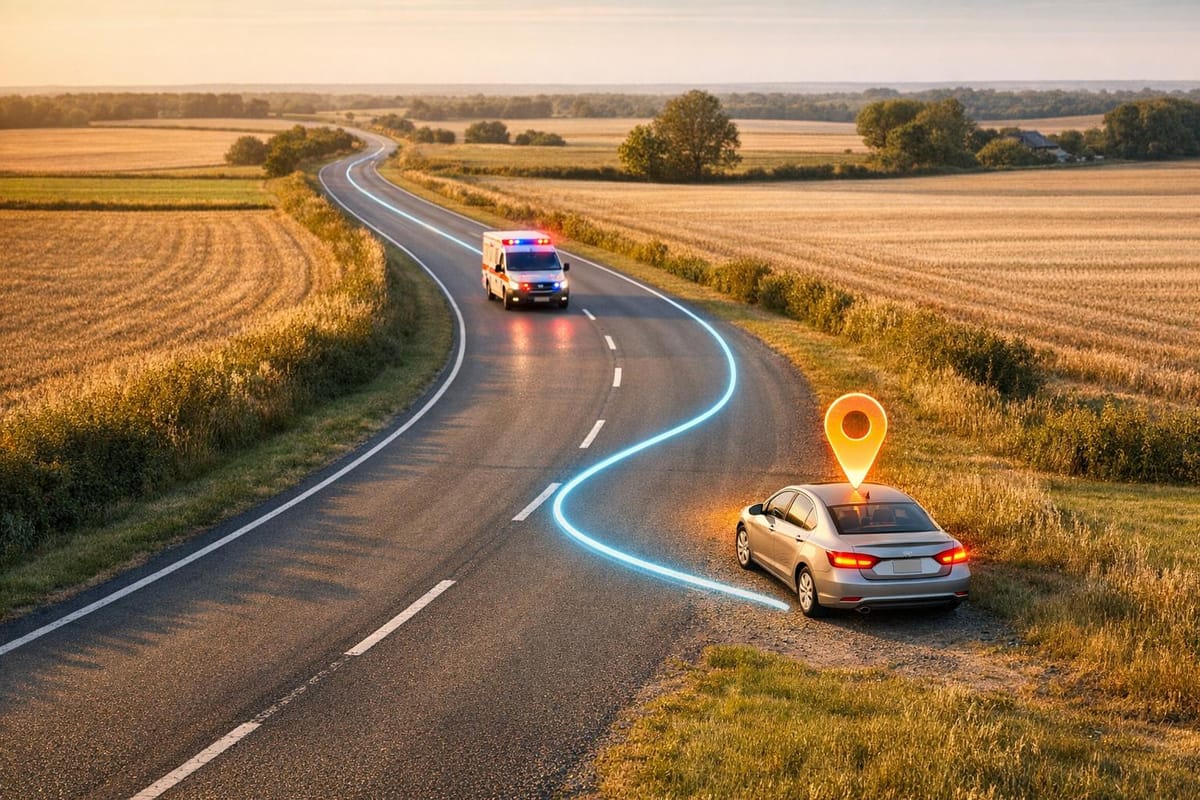
When accidents happen, every second counts. Automated crash alerts use telematics to detect collisions instantly, sending precise GPS coordinates to emergency services or fleet managers. This technology is crucial for fleet operators in the UK, especially in remote areas where drivers might be incapacitated or hidden from view.
Key Takeaways:
- How It Works: Sensors detect impact forces, trigger alerts, and share GPS data in real time.
- Why It Matters: Faster response times save lives, reduce vehicle downtime, and lower insurance costs.
- Real Example: A Severn Trent technician, trapped in a hidden van after a crash, was rescued thanks to automated alerts.
- Benefits: Prevents delays, supports compliance, improves driver safety, and provides forensic crash data for insurance claims.
Crash alert systems like GRS Fleet Telematics ensure immediate action, protecting drivers and reducing operational risks. With packages starting at £35 and a £7.99/month subscription, this solution is accessible for fleets of all sizes.
🚗 What is Automatic Collision Notification (ACN)? | How it Works & Key Challenges Explained
The Problem: Slow Emergency Response Puts Fleets at Risk
Without real-time crash detection, fleet operators face risks that go far beyond immediate medical concerns. Delays in response increase dangers to driver safety, disrupt operations, and heighten liability issues.
How Delayed Response Affects Fleet Operations
In medical emergencies, time is everything. For instance, survival rates for cardiac arrest victims drop by 10% for every minute of delay. This urgency becomes even more critical for fleet drivers who often work alone in remote areas. In such situations, the chances of being discovered by passing vehicles are slim. If a driver is unconscious, trapped, or in shock, they cannot call for help. Without automated crash detection, these drivers could remain unnoticed for hours.
The financial consequences are just as alarming. Delayed incident notifications lead to increased third-party costs and prolonged vehicle downtime. This "hidden downtime" leaves vehicles stranded or immobilised while fleet managers remain unaware of the situation. Such blind spots force companies into reactive management, resulting in escalating repair costs and legal complications when accurate incident timelines cannot be established.
The situation worsens when fleets rely solely on manual reporting systems, which are fraught with limitations.
Common Problems with Manual Incident Reporting
Manual reporting systems only add to the risks. These systems depend entirely on drivers being able to act - something they often cannot do after a severe accident. An incapacitated driver is unable to report an incident or provide accurate location details. Without automated GPS data, emergency services must rely on vague or non-existent descriptions of the driver’s location, which is particularly challenging on unfamiliar rural roads or industrial sites.
Even when drivers are physically able to report incidents, manual systems come with their own set of problems. Tools like SOS buttons are prone to human error and misuse. For example, in 2024, 85% of eCall alerts were triggered manually, and 75% of those were false alarms. These false alerts waste emergency resources and contribute to alert fatigue among control room staff. For lone workers, this reliance on manual systems is especially dangerous - if the driver is unable to act, there’s no safety net in place.
The Solution: GRS Fleet Telematics Crash Alerts
GRS Fleet Telematics fills critical gaps in emergency response with its automated crash detection system. Unlike traditional methods that depend on driver input, this solution ensures immediate notifications are sent without delay, forming the foundation of a highly responsive alert system.
Instant Crash Detection and Notifications
The core of GRS Fleet Telematics lies in its dual-tracker setup. The primary hardwired GPS tracker, which updates every 30 seconds, detects sudden deceleration and impact forces to instantly register a collision. This triggers an immediate alert, providing fleet managers with precise GPS coordinates to enable a rapid emergency response. At the same time, the system uploads forensic data for detailed crash analysis. As noted by the National Coordination Office for Space-Based Positioning, Navigation, and Timing, "GPS has given managers a quantum leap forward in efficient operation of their emergency response teams".
Better Emergency Coordination and Results
Real-time tracking has transformed how emergency services respond to accidents. Dispatchers can now locate and deploy the nearest available units with continuous visibility into vehicle locations. This proximity-based approach improves response efficiency by 20%, which is crucial when every minute counts - for example, in cardiac arrest cases, survival rates drop by 10% for every minute of delay. The system also assesses crash severity to prioritise resources effectively. Minor incidents receive appropriate attention, while severe collisions activate full emergency protocols. Additionally, a dedicated 24/7 coordination team offers human oversight to complement the automated alerts.
Main Features of GRS Crash Alerts
GRS crash alerts come packed with essential features:
- Impact Alerts: Sensors immediately notify fleet managers when collision forces are detected.
- AI Reconstruction: Analyses crash mechanics and predicts severity to help emergency teams prepare the right resources.
- Evidence Capture: Builds comprehensive records for insurance claims and supports immediate response decisions.
- Insurance Benefits: Demonstrating robust safety protocols can reduce fleet insurance premiums by 10–20%.
- Vehicle Recovery Integration: Damaged vehicles are quickly entered into the recovery process, contributing to GRS’s impressive 91% recovery rate.
These features are available in three hardware packages tailored to different needs. The Essential package (£35) provides core crash detection capabilities, while the Enhanced (£79) and Ultimate (£99) options include backup tracking layers to ensure alerts are received even in severe collisions. A monthly software subscription of £7.99 applies to all packages, making this an accessible solution for fleet operators.
Benefits of Crash Alerts for UK Fleet Operators
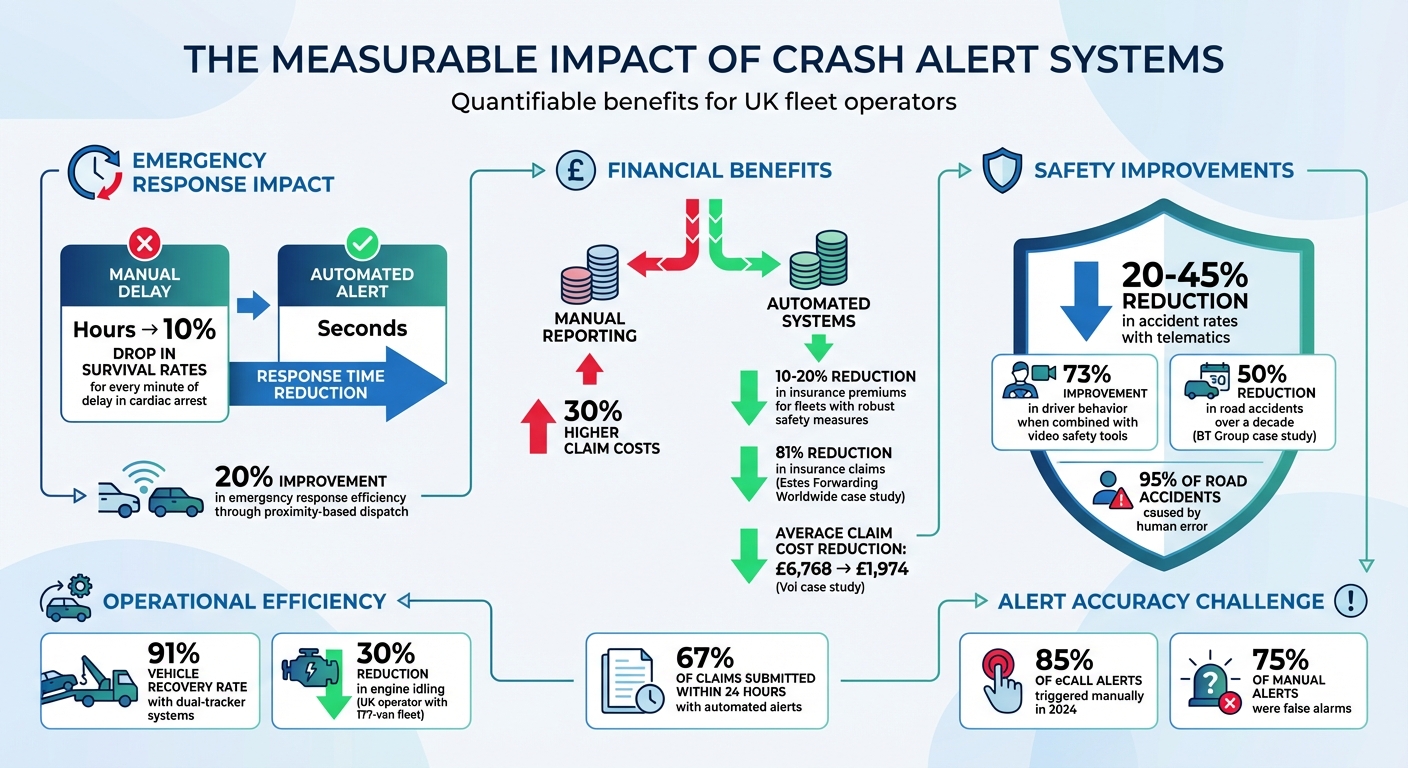
Impact of Crash Alert Systems on Fleet Safety and Cost Reduction
Faster Response Times and Lower Risks
Crash alerts bring emergency response times down from hours to mere seconds, which can make a huge difference in driver safety and recovery. The "golden hour" concept highlights how critical quick action is in reducing injury severity and speeding up recovery times.
The effectiveness of these alerts is clear: they enable emergency responses that can save lives.
"The vehicle was so well hidden in the hedgerow that the driver had to be asked to honk his horn when the emergency services arrived at the supplied coordinates, suggesting discovery by passing traffic would have been unlikely."
– Gareth Roberts, News Editor, Fleet News
This level of accuracy is vital for lone workers, especially in rural or isolated areas where accidents might otherwise go unnoticed.
But crash alerts don't just improve emergency responses - they also help streamline operational costs.
Cost Savings and Smoother Operations
Automated crash detection removes the delays and inaccuracies often seen with manual incident reporting. Traditional methods can lead to claim costs being around 30% higher due to slower intervention, but crash alert systems provide precise sensor data that speeds up insurance claims and reduces disputes. The benefits of fleet management tools are well-documented, with one UK operator cutting engine idling by 30% across its 177-van fleet.
Additionally, the instant availability of forensic crash data - such as G-force readings, speed, and exact timing - makes the claims process more efficient. Insurers benefit from receiving solid, objective evidence rather than relying solely on driver accounts. This can result in premium reductions of 10–20% for fleets that implement robust safety measures.
These operational improvements go hand in hand with enhanced safety and compliance.
Improved Fleet Safety and Regulatory Compliance
Crash alerts help UK fleets meet the requirements of the Health and Safety at Work Act 1974 and the Road Traffic Act 1988 by providing automated logs and audit trails. Studies show that using telematics and crash alert systems can lower accident rates by 20% to 45%, while combining these systems with video safety tools can improve driver behaviours by as much as 73%.
These tools tackle a major issue: human error, which accounts for 95% of all road accidents. By monitoring driving hours to ensure compliance with UK fatigue regulations and offering insights into driver behaviour, crash alert technology allows fleet managers to move from reacting to incidents to preventing them.
Lauren James, Business Support Manager at Severn Trent Services, shared how a crash alert system saved a driver’s life:
"The incident, no matter how rare, reassured our workers that we take their safety seriously and that should the worst happen, we're able to help them."
This kind of reassurance shifts the perception of safety monitoring. Instead of feeling like they're being watched, drivers see it as a genuine commitment to their wellbeing.
Implementation: Setting Up Crash Alerts for Your Fleet
Choosing the Right GRS Hardware and Subscription
GRS Fleet Telematics offers three hardware options tailored to meet various fleet requirements:
- Essential tracker (£35): A wired, real-time tracking device ideal for fleets on a budget.
- Enhanced option (£79): Includes a secondary Bluetooth backup for added theft protection.
- Ultimate package (£99): Combines both trackers with remote immobilisation for maximum security.
Each package requires a £7.99 per vehicle/month subscription, which covers SIM data, platform access, and a dedicated account manager.
Installation is free if bundled with fleet branding through GRS Fleet Graphics. Otherwise, installation can be arranged on request. The hardwired installation ensures the device connects directly to the vehicle’s electrical system, offering reliable performance and making it more resistant to tampering.
Configuring Alerts and Training Your Team
Once the hardware is installed, setting up operational parameters and training your team is crucial for effective use. Start by configuring crash alert thresholds based on vehicle type. For instance, heavier vehicles like HGVs require higher impact thresholds compared to smaller vans. You can also establish geofencing perimeters (50–100 metres is a good starting point) and set speed limits, typically 5 mph above the posted limit, to focus on meaningful safety events and reduce unnecessary alerts. Over time, the system’s machine learning capabilities will refine these settings, further minimising false alarms.
Training sessions should focus on helping managers understand how to interpret reports and trends. Emphasise that the system is a tool for emergency response, not for monitoring employee behaviour. Highlight its role in offering legal protection against false claims and providing immediate support during emergencies. Additionally, equip each vehicle with laminated reference cards that include emergency contact numbers, insurance details, and a simple incident checklist to guide drivers during crash situations.
Maximising the Benefits of GRS Telematics
Take full advantage of GRS’s 24/7 recovery support, which utilises dual-tracker data to achieve a 91% vehicle recovery rate. Integrate the system’s API with your accounting, CRM, and maintenance platforms for seamless data management across your operations. Perform monthly maintenance checks to ensure the trackers are functioning correctly, update software, and review driver safety scores. These steps not only enhance your fleet’s emergency readiness but also promote safer and more efficient operations.
Conclusion: Improving Fleet Safety with Crash Alerts
Automated crash alerts are transforming how UK fleets handle emergencies. Instead of relying on drivers to report incidents - sometimes hours or even days later - GRS Fleet Telematics provides instant notifications the moment a collision occurs. This quick response not only safeguards drivers but also protects your business's financial health. Real-world examples highlight these advantages.
Take Estes Forwarding Worldwide, for instance. They saw an 81% reduction in insurance claims thanks to real-time telematics data. Similarly, BT Group managed to cut road accidents by 50% over a decade through data-driven safety measures. Another standout example is Voi, an e-mobility company. By submitting 67% of insurance claims within 24 hours, Voi reduced its average claim cost from £6,768 to £1,974 between Q1 and Q4 2024 - a strategy made possible with automated crash alerts.
But it’s not just about responding to accidents. GRS Fleet Telematics offers round-the-clock fleet protection, boasting an impressive 91% vehicle recovery rate, which helps minimise asset losses. The system’s ability to capture objective data also simplifies insurance claims and supports compliance with regulations. Additionally, features like safety scorecards can flag risky behaviours, such as speeding - a factor in one-third of fatal crashes in the UK - before they lead to serious incidents.
With GRS Fleet Telematics, you get more than just faster emergency responses. The system enhances operational continuity, driver safety, and compliance, all at a predictable monthly cost. Whether your fleet consists of three vehicles or three hundred, we provide van tracking solutions for your industry that scale to fit your needs. It doesn’t just react to emergencies - it works to prevent them, creating a safer environment for drivers and a more resilient operation for your business. By combining instant crash detection with comprehensive fleet management tools, GRS Fleet Telematics offers a smarter, safer way to manage your fleet.
FAQs
Who gets notified when a crash is detected?
When a crash occurs, an incident alert is immediately sent out to notify both emergency services and fleet control rooms. This alert contains the GPS location and key event details, helping to ensure a swift response and improved assistance.
How do crash alerts avoid false alarms?
Crash alerts are designed to reduce false alarms by relying on advanced sensors capable of distinguishing between major impacts and minor bumps. Regular updates and refinements from device manufacturers help enhance this precision, ensuring emergency services are contacted only when it's genuinely required.
What data is captured for insurance and compliance?
Data gathered for insurance and compliance purposes covers a range of metrics, including driver hours, vehicle maintenance alerts, and driver behaviour patterns like speeding, harsh braking, seatbelt usage, engine idling, and emergency response times. This data plays a key role in enhancing safety, cutting costs, and ensuring adherence to UK regulations.