Emergency Response Features in Fleet Telematics
How fleet telematics speeds emergency response with crash detection, GPS location, SOS and medical integration for safer UK fleets and faster rescues.
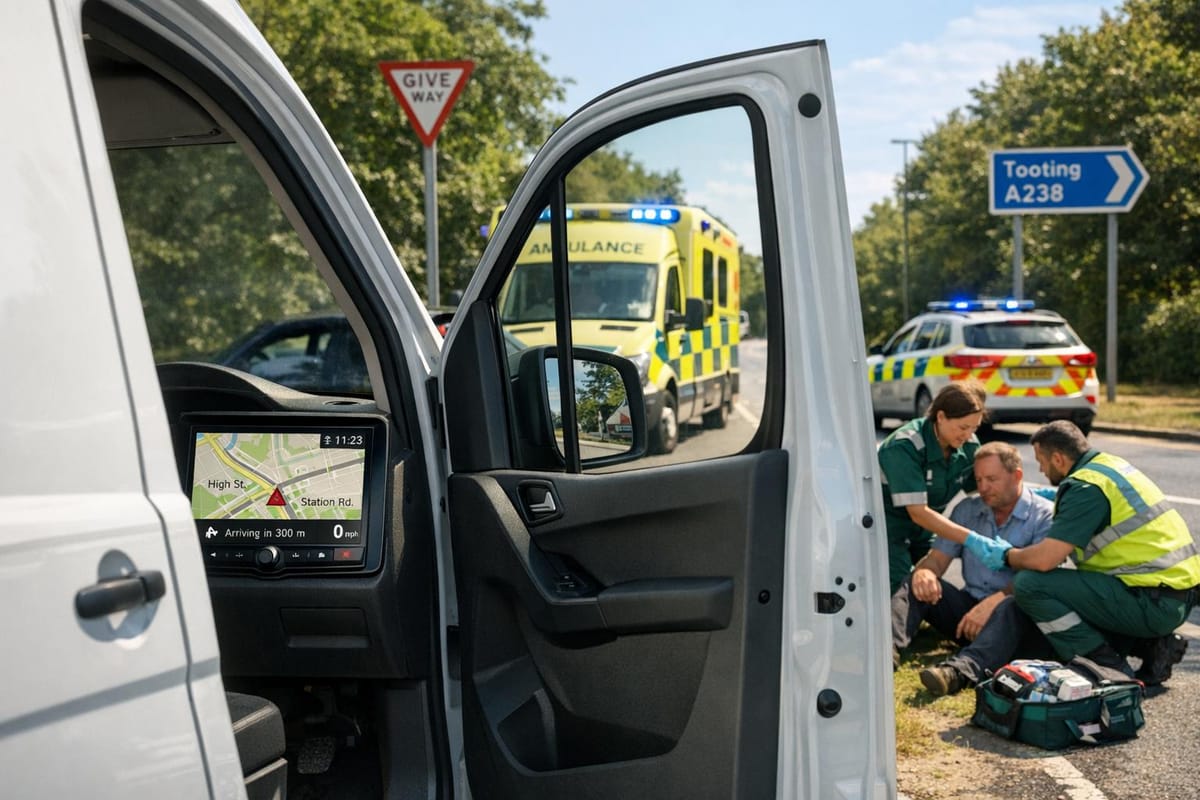
Emergency response in fleet telematics saves lives. Modern systems detect accidents, send precise GPS data, and alert emergency services instantly. For example, in December 2024, a van crash in rural Kent was quickly addressed thanks to telematics, enabling a full recovery for the driver.
Here’s what makes these systems indispensable:
- Crash detection: Sensors identify impacts and alert control rooms automatically.
- Real-time GPS tracking: Pinpoints vehicle location, even in areas with poor mobile signal.
- Driver communication tools: SOS buttons and two-way audio ensure swift help during emergencies.
- On-board diagnostics: Monitors vehicle health to prevent breakdowns.
These features are particularly useful for lone workers and fleets operating in remote areas. They also reduce accident costs and improve vehicle recovery rates, making them a smart investment for UK fleets.
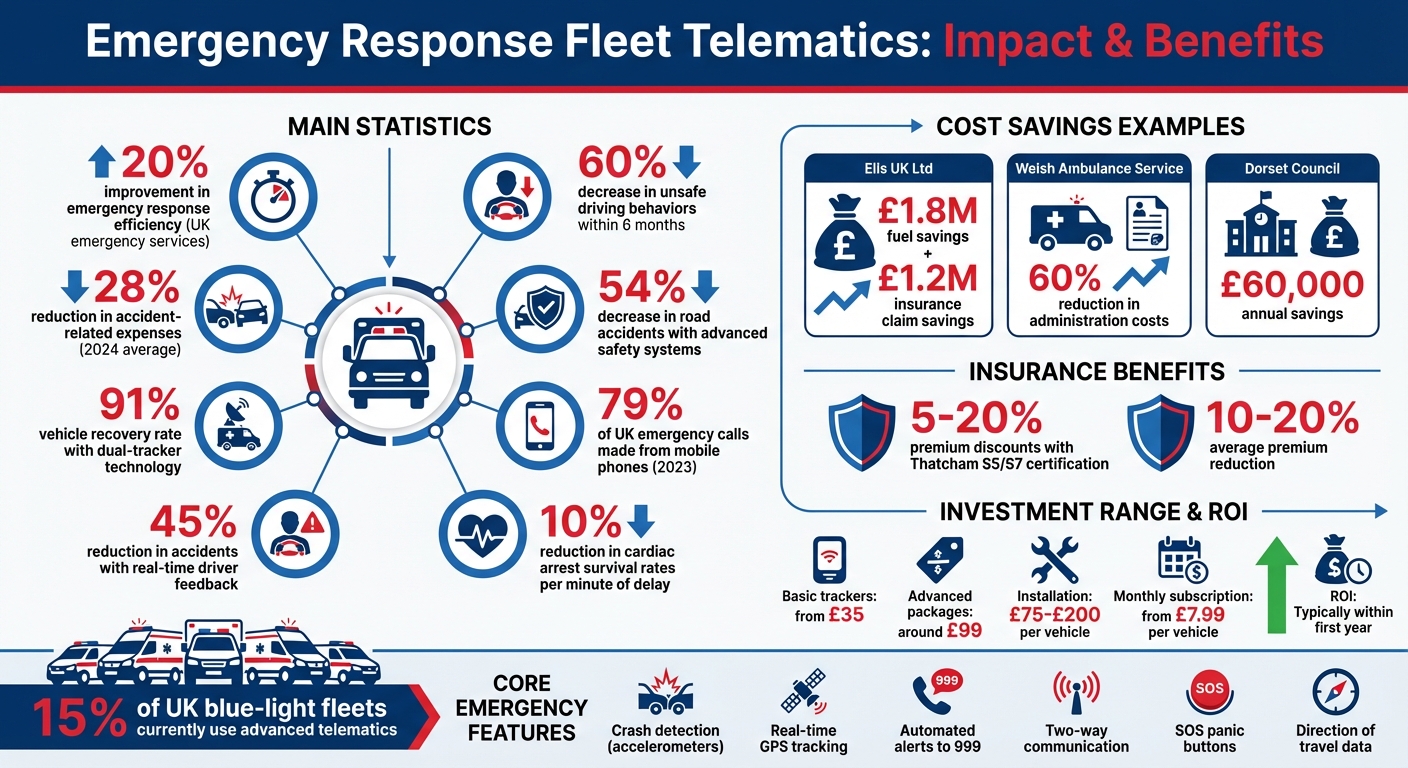
Emergency Response Fleet Telematics: Key Statistics and Benefits
From Crash to Response: Making Telematics Data Work for Emergency Response
Core Components of Emergency Response Systems
Modern fleet telematics integrates three key technologies to enhance emergency response: real-time GPS tracking, on-board sensors, and driver communication tools. Together, these systems form a vital safety net for both drivers and fleet managers.
Real-Time GPS Tracking and Incident Alerts
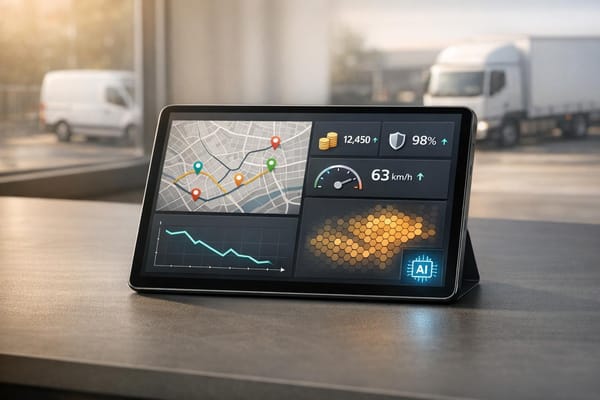
Real-time GPS tracking plays a critical role in emergency situations by providing live location updates every few seconds. This enables dispatch centres to quickly identify the nearest available units and send them to the scene without delay. In fact, one UK emergency service reported a 20% boost in response efficiency thanks to this technology alone.
Geofencing adds another layer of security by setting virtual boundaries around depots, high-risk areas, or authorised routes. If a vehicle unexpectedly crosses these boundaries, fleet managers receive instant alerts. For rural areas where mobile coverage can be unreliable, dual-tracker technology - combining cellular networks with satellite or Bluetooth backups - ensures uninterrupted location data. This approach has contributed to a 91% vehicle recovery rate.
Beyond safety, businesses using these tracking tools have seen an average 28% reduction in accident-related expenses in 2024. Basic trackers are available from £35, while more advanced packages cost around £99, plus installation fees ranging from £75 to £200 per vehicle. Fleet managers are encouraged to prioritise systems with Thatcham S5 or S7 certification, which can lead to insurance discounts of 5% to 20%.
On-Board Sensors and Diagnostics
On-board sensors, such as accelerometers, continuously monitor G-force levels, triggering alerts when thresholds are exceeded. These sensors can detect collisions, rollovers, harsh braking, and rapid acceleration, providing critical information to emergency teams. Fleet managers can fine-tune these thresholds based on vehicle type to minimise false alarms.
Engine diagnostics further enhance safety by gathering data from the vehicle's OBD-II or CAN-BUS port. This includes real-time monitoring of engine health, fuel levels, battery status, and diagnostic trouble codes, enabling predictive maintenance to prevent breakdowns in remote or hazardous areas. If an alert is triggered, integrated GPS receivers provide precise coordinates, ensuring emergency services can locate the vehicle even in hard-to-reach locations.
For fleets operating in high-risk environments, hardwired sensors are often preferred over plug-and-play OBD-II devices. These installations offer better security and are less prone to tampering. Together with location data, these systems ensure a seamless flow of information between vehicles and emergency responders.
Driver Communication Tools
In-cab communication systems serve as a vital link between drivers and response teams during emergencies. SOS buttons allow drivers to manually signal distress, while automated alerts are sent if sensors detect a crash and the driver is unresponsive. Two-way audio systems enable dispatch centres to check on driver welfare in real time.
Automatic Driver Recognition (ADR) systems use specialised tags to verify authorised drivers. If a vehicle is moved without a recognised tag, an alert is sent to a 24/7 monitoring centre - a key feature for preventing theft and unauthorised use. Real-time audio or visual feedback also promotes safer driving habits, with studies showing that such interventions can reduce accidents by up to 45%.
"There's no cost on officer safety when it comes to knowing where they're at. If they all of a sudden go chasing someone and didn't notify dispatch, we know exactly where their car's at." - John Wilson, Sheriff, Clare Country Police Department
To ensure uninterrupted communication, multi-network connectivity is used, combining cellular, satellite, and roaming networks. This redundancy is especially critical in rural areas with weak mobile signals. With 79% of UK emergency calls now made from mobile phones, having precise GPS data is an essential part of effective emergency response.
Main Emergency Response Features in Fleet Telematics
Modern fleet telematics systems go beyond basic tracking and monitoring. They incorporate advanced features designed to detect emergencies, notify control centres, and assist emergency services in reaching the scene as quickly as possible.
Crash Detection and Automated Alerts
Telematics systems use accelerometers to detect high G-force impacts, which indicate a collision. When these sensors register sudden changes in speed or direction that exceed pre-set thresholds, they send automatic alerts to a control centre. This ensures that even in severe accidents, help is dispatched promptly.
Take, for instance, an incident in rural Kent where a telematics system detected a high G-force impact and immediately alerted the control centre with precise GPS coordinates. The control room contacted the semi-conscious driver through the in-cab system and stayed connected until emergency responders arrived. Since the van was hidden by a hedgerow, the driver had to honk his horn to guide responders to his location. Thanks to the telematics system, the driver received timely assistance and made a full recovery.
"The vehicle was so well hidden in the hedgerow that the driver had to be asked to honk his horn when the emergency services arrived at the supplied coordinates, suggesting discovery by passing traffic would have been unlikely." - Lauren James, Business Support Manager, Severn Trent Services
Since April 2018, most UK vans and cars have been equipped with the eCall system, which automatically contacts 999 if airbags are deployed. Not only does it alert emergency services, but it also transmits the vehicle's direction of travel. This is particularly useful on dual carriageways or motorways, where approaching from the correct side is critical. Fleet operators should remind drivers that eCall runs a self-check every time the vehicle starts, and any warning lights on the dashboard should be addressed immediately at a dealership.
While automated crash alerts are vital, manual tools are equally important for ensuring driver safety.
Driver Panic Buttons and SOS Triggers
Panic buttons provide drivers with a manual way to call for help during emergencies, especially when a mobile phone isn’t an option. Typically located in the ceiling console or dashboard, pressing the eCall SOS button connects directly to 999 and transmits the vehicle’s exact location - even if other sensors fail.
Once activated, control room operators can communicate with the driver via in-vehicle speakers. This allows them to assess the situation and provide guidance until help arrives. Some systems also enable fleet managers to set up custom alerts for unauthorised vehicle movements or geofence breaches, which can help detect theft or other unusual activity outside of normal working hours.
Real-Time Location Sharing with Emergency Services
One of the most impactful features of telematics is its ability to share real-time location data with emergency responders. This ensures that dispatchers can identify and send the closest available units to an incident. In fact, proximity-based dispatching has improved response times for some UK emergency services by 20%.
Accurate location data is critical in emergencies. For example, every minute of delay in responding to cardiac arrests reduces survival rates by 10%. NHS England aims for a 7-minute response time for life-threatening incidents, and telematics plays a key role in meeting this target by providing instant GPS coordinates. While 79% of emergency calls in the UK in 2023 were made from mobile phones, many callers struggled to describe their exact location - especially in rural areas. With GPS integrated into vehicles, this issue is completely eliminated.
| Feature | Benefit for Emergency Response |
|---|---|
| Automatic eCall | Initiates a 999 call upon airbag deployment, even without driver input |
| Accelerometer | Detects harsh braking or high G-force impacts, signalling a crash |
| GPS Coordinates | Provides precise location data to reduce response times |
| Two-Way Communication | Enables dispatchers to assess driver condition and offer guidance |
| Direction of Travel | Helps responders approach correctly on dual carriageways or motorways |
Telematics systems combine these features to create a robust safety net for drivers, ensuring that help is never far away when it’s needed most.
Integrated Medical Assistance Systems
Modern fleet telematics systems have evolved beyond crash detection and alert features to include integrated medical assistance, providing an extra layer of safety for drivers. In emergencies, these systems can detect incidents and connect drivers with immediate help.
How Medical Assistance Integration Works
Telematics systems work hand-in-hand with medical services to create a robust safety network. When a high-impact event is detected by accelerometers, the system automatically sends critical data - such as GPS location, impact severity, and map references - to a control room. This information is then fed into Computer Aided Dispatch (CAD) systems used by emergency services, ensuring responders receive accurate and timely updates.
In some cases, these systems also share live location data with hospital emergency departments. This allows medical teams to prepare the necessary equipment and staff before the patient even arrives. This is especially important in situations like cardiac arrests, where survival rates drop by 10% for every minute of delay.
Additionally, control room operators can establish two-way voice communication with drivers immediately after an incident. This feature helps assess the driver’s condition - whether they are conscious, semi-conscious, or unresponsive - and provides reassurance until emergency teams arrive. Currently, about 15% of UK blue-light fleets use advanced telematics to enhance their emergency response capabilities. These systems not only improve response times but also pave the way for ongoing driver health monitoring.
Driver Health and Wellness Monitoring
Telematics systems are no longer limited to crash detection - they now play a role in monitoring driver wellness during everyday operations. Fatigue monitoring features assess a driver’s alertness and prompt breaks when needed. This is particularly beneficial for emergency workers on long shifts, helping to cut unsafe driving behaviours by up to 60% within six months.
For lone workers, such as mobile technicians working in remote locations or during unsociable hours, telematics offers a critical safety lifeline. These systems connect drivers to 24/7 monitoring centres, ensuring they are never completely isolated.
Sharing Incident Data with Assistance Teams
The accuracy and depth of incident data shared with medical teams play a crucial role in delivering effective emergency care. Telematics systems provide responders with detailed forensic data, including the force of impact, vehicle speed, and route history. This enables faster and more targeted medical interventions.
For public sector and emergency service fleets, it’s vital that telematics data meets evidential-grade standards, as this supports post-incident reviews and legal requirements. Organisations adopting these advanced safety systems have reported a 54% decrease in road accidents, highlighting the tangible benefits of integrating telematics into fleet operations.
Implementing Emergency Response Features for UK Fleets
Assessing Your Fleet's Risks and Needs
Before diving into emergency response technology, it's crucial to evaluate the specific risks and needs of your fleet. Start by auditing key factors like fleet size, vehicle types, driver numbers, and the nature of your routes - whether they cover urban areas, rural regions, or a mix of both. Historical data on accidents, maintenance, and operational efficiency can serve as valuable benchmarks for this process.
Identifying high-risk scenarios is particularly important. For example, fleets with lone workers in remote locations, vehicles transporting high-value goods, or those involved in time-critical operations face unique challenges compared to standard delivery services. Did you know that monitoring driver behaviour can cut accident rates by 20% to 45%? Similarly, real-time tracking has been shown to boost emergency response efficiency by 20%.
Insurance requirements also need to be factored in. Many UK insurers require Thatcham S5 or S7 certification, which can unlock premium discounts. It's a good idea to confirm these requirements before selecting hardware. Running pilot tests with a portion of your fleet can help ensure the emergency features are both practical and reliable before rolling them out across the board.
This risk assessment process helps tailor the system to address the specific challenges your fleet faces, ensuring you’re not just ticking boxes but genuinely enhancing safety and efficiency.
Configuring and Testing Emergency Features
Once you’ve identified your risks, the next step is configuring and testing the emergency response features to ensure they work seamlessly when needed. For instance, calibrate accelerometers to detect genuine incidents only, avoiding false alarms. Set up automated notification systems that instantly send GPS coordinates and digital map references to control rooms via SMS, email, or mobile apps during an emergency.
One real-world example comes from Severn Trent Services, which equipped its 177-van fleet with telematics between December 2023 and December 2024. The system successfully detected a G-force breach during an incident in rural Kent, automatically transmitting GPS data to its control room.
"Previously some viewed it [telematics] as intrusive but the incident... reassured our workers that we take their safety seriously and that should the worst happen, we're able to help them." – Lauren James, Business Support Manager, Severn Trent Services
Geofencing is another valuable tool - set it up around job sites or restricted zones to trigger alerts for unauthorised movements. For fleets operating in rural areas with unreliable mobile signals, consider dual-tracker technology that combines cellular and satellite networks to maintain uninterrupted tracking. Modern eCall systems, which self-test at vehicle start-up, offer an added layer of reliability. Ensure drivers regularly check dashboard indicators for any malfunctions.
Ensuring Compliance and Data Privacy
Since 31 March 2018, all new cars and vans in the UK must feature 112-based eCall technology. This system, mandated by EU Regulation 2015/758, automatically activates during serious accidents. However, these systems must also comply with UK GDPR laws, ensuring personal data is used strictly for emergency purposes, retained only as long as necessary, and then deleted.
To maintain compliance, fleet operators should ensure vehicles aren't subject to constant tracking. Location data should only be transmitted when the system is triggered by an incident or manually activated using an SOS button. Clear policies outlining the scope of data collection are essential, and staff should be trained on how this data is used. Emergency system memory should also be set to automatically delete stored data regularly.
"eCall is not a 'black box' and does not monitor your vehicle's movements. It will only locate your vehicle's position when this safety feature is activated." – National Highways
These measures should align with your operational protocols and technical requirements. Using Thatcham-approved trackers (S5 or S7) not only meets insurance standards but may also reduce premiums by 10–20%. For the best results, invest in professional hardwired installation, which typically costs between £75 and £200 per vehicle. This ensures the devices are discreetly placed for optimal GPS signal strength without interfering with other safety systems.
Conclusion: Improving Fleet Safety with Emergency Telematics
Emergency telematics is transforming fleet safety by boosting driver protection, operational efficiency, and compliance. Studies reveal that real-time tracking can improve emergency response efficiency by 20%. For UK businesses managing mobile teams in remote or high-risk areas, these systems serve as a vital safety net, often making the difference between life and death.
The financial benefits are equally striking. Take Elis UK Ltd, for example, which saved £1.8 million in fuel costs and reduced insurance claim handling expenses by £1.2 million. Similarly, the Welsh Ambulance Service cut administration costs by an impressive 60%, while Dorset Council reported annual savings of £60,000 through better fleet efficiency. With hardware starting at just £35 and monthly subscriptions from £7.99 per vehicle, many organisations in the UK see a full return on investment within the first year. These savings highlight the value of features like automated alerts and real-time location tracking.
Emergency telematics reshapes how fleets respond to critical situations. Tools like automated crash detection, instant alerts, and live location sharing ensure help arrives when it’s needed most. For lone workers in isolated areas, this technology provides a lifeline - ensuring their exact location is known, even if they are unable to communicate. It’s a practical safeguard that also offers reassurance.
"GPS has given managers a quantum leap forward in efficient operation of their emergency response teams." – National Coordination Office for Space-Based Positioning, Navigation, and Timing
But it’s not just about technology; it’s about fostering a safety-first culture while meeting UK regulatory standards. Systems that automate driver hours logging, comply with Thatcham certification, and uphold GDPR requirements reduce administrative workloads and ensure legal compliance. By combining enhanced safety, cost savings, and operational efficiency, emergency telematics has become an essential tool for modern UK fleet management.
GRS Fleet Telematics offers a complete solution to protect drivers and elevate fleet operations.
FAQs
How do fleet telematics systems enhance emergency response times?
Fleet telematics play a crucial role in speeding up emergency response times by delivering real-time, precise vehicle data to dispatch teams. When an accident occurs, built-in sensors detect unusual G-forces and automatically send an alert, including the vehicle's exact GPS location (accurate to within 2 metres) and a map reference. This removes the need for drivers or passengers to describe their location, ensuring emergency services can head straight to the scene without delay.
These systems also support live vehicle tracking and geofencing, enabling operators to monitor fleet positions, locate the nearest available vehicle, and adjust routes in real time. Organisations across the UK using this technology have reported up to a 20% boost in response efficiency. The result? Faster arrival times, improved outcomes for those in need, and lower operational costs. By linking telematics with dispatch software and medical assistance platforms, businesses can better coordinate resources and make sure help arrives promptly when it’s needed most.
How does integrating medical assistance with fleet telematics improve emergency response?
Integrating medical support into fleet telematics significantly improves emergency response by leveraging real-time data to accelerate aid delivery. For instance, when a crash or abrupt stop is detected, the system can automatically alert a control centre and, if configured, notify medical responders. This ensures emergency services are dispatched to the precise location without delay, cutting response times and potentially saving lives.
These systems also provide essential details such as the vehicle type, the number of passengers, and any pre-recorded health information. This enables paramedics to arrive prepared with the right equipment and treatment plans. Furthermore, incidents are logged for later analysis, giving fleet managers the insights needed to enhance safety measures and meet health and safety regulations. In the UK, companies like GRS Fleet Telematics include these features in their advanced van-tracking solutions, helping to ensure quicker medical response and minimising operational downtime.
How do telematics systems support driver health and safety?
Modern telematics systems do more than just track vehicles - they play an active role in promoting driver health and safety. By analysing real-time driving behaviours like harsh braking, rapid acceleration, or extended idling, these systems can spot potential signs of fatigue or stress. When such patterns are detected, alerts can encourage drivers to take a break, helping to minimise the risks of accidents linked to tiredness.
Many telematics platforms also come equipped with panic buttons and two-way communication tools, giving drivers a quick way to request help if they feel unwell. Some advanced systems go a step further, incorporating biometric or cabin sensors, such as heart-rate monitors or seat-occupancy detectors, to continuously monitor a driver’s health. If critical thresholds are exceeded - like in cases of sudden unconsciousness - the system can automatically notify emergency services and provide the vehicle's exact location.
GRS Fleet Telematics offers UK-based van tracking solutions designed to keep drivers safe. With features like real-time updates, dual-tracker technology, and custom alerts, fleet operators can easily focus on safety. Plans start at just £7.99 per month, making health-monitoring tools accessible for businesses of all sizes.