Dynamic Route Planning for Retail Fleets: Benefits
Live telematics-driven routing cuts mileage, improves on-time deliveries and lowers emissions for UK retail fleets.
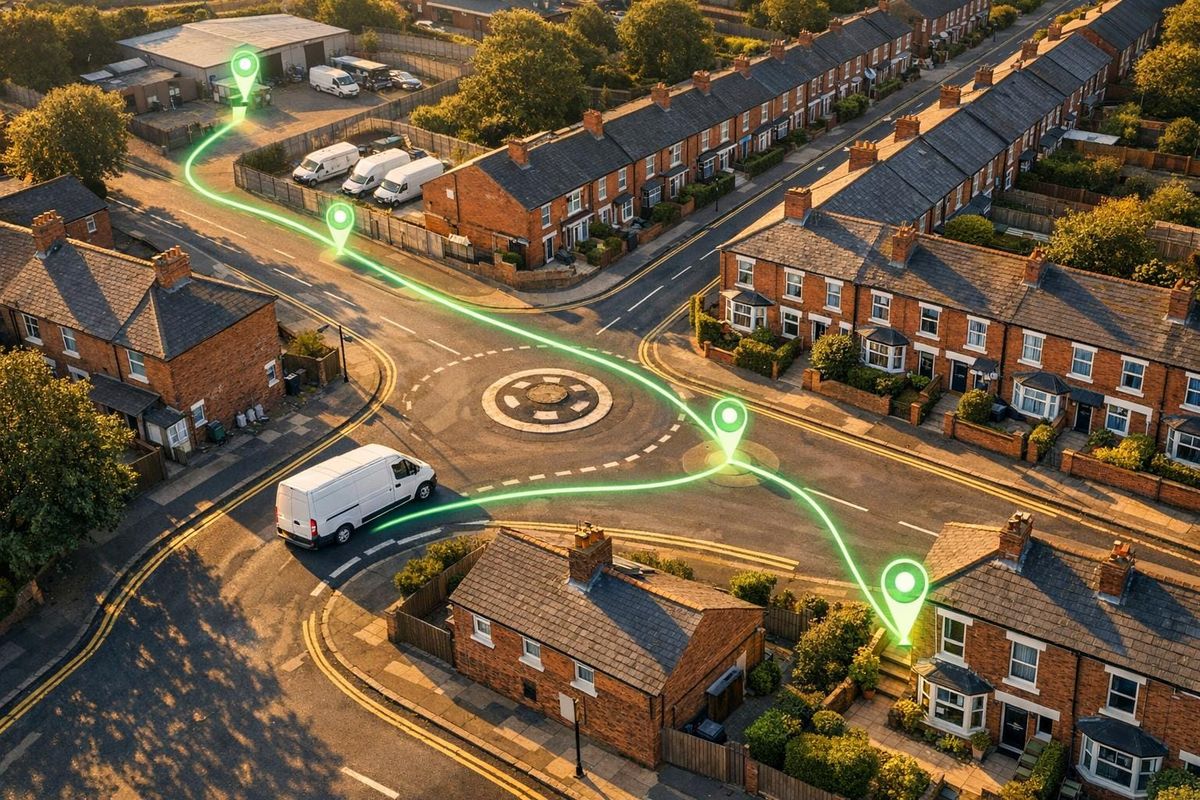
Dynamic route planning is transforming how retail fleets in the UK operate. It uses live data - like traffic updates, GPS locations, and last-minute order changes - to create efficient delivery routes in real time. This approach tackles common challenges such as rising fuel costs, missed delivery slots, and limited visibility over fleet operations. By reducing unnecessary mileage, improving delivery reliability, and cutting emissions, it helps businesses save money while meeting tighter schedules.
Key Takeaways:
- Fuel Savings: Reduces mileage by 10–30%, cutting costs and wear on vehicles.
- Improved Delivery Times: Adapts routes instantly to avoid delays.
- Higher Productivity: Enables more deliveries per shift with fewer vehicles.
- Enhanced Customer Experience: Provides accurate delivery updates and reduces missed deliveries.
- Lower Emissions: Cuts CO₂ output by up to 15%, supporting sustainability goals.
Telematics systems like GRS Fleet Telematics make this possible, offering real-time tracking and affordable solutions. Starting at £7.99 per vehicle per month, these tools provide the data needed to optimise routes, improve fleet performance, and reduce costs.
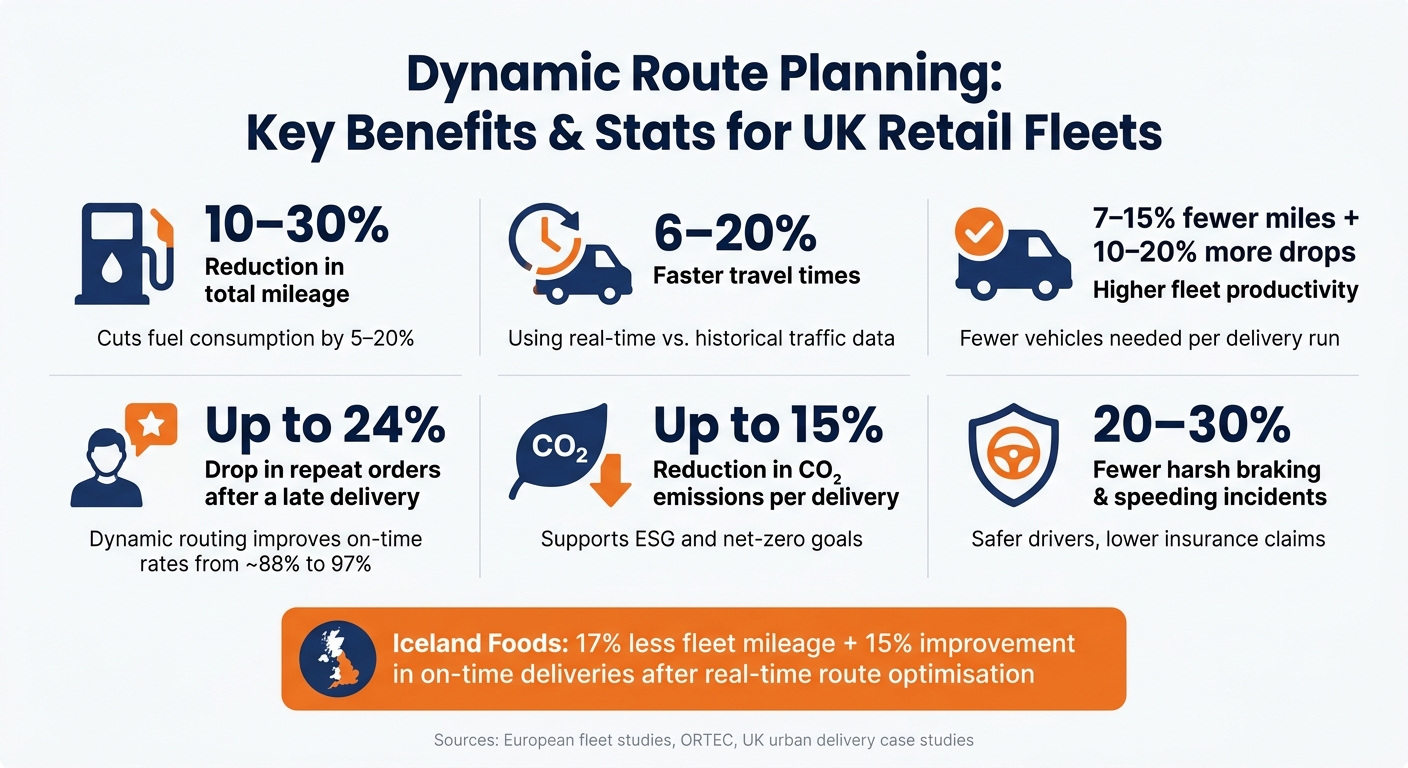
Dynamic Route Planning: Key Benefits & Stats for UK Retail Fleets
How Dynamic Route Optimization Enhances Last Mile Efficiency
sbb-itb-499a7f0
Key Challenges in Retail Fleet Operations
Retail fleets in the UK face a web of challenges, including unpredictable traffic, tight delivery schedules, and rising operational costs. Static planning struggles to address these hurdles effectively. Here's a closer look at the key obstacles.
Rising Fuel Costs and Wasted Mileage
Fuel is one of the biggest expenses for retail fleets, and inefficiencies like idling, rerouting, and congestion only make it worse. For example, a van idling at a loading bay or caught in traffic can burn over 1 litre of fuel per hour without covering any distance. Multiply this across a fleet of vehicles, and the wasted fuel quickly adds up, along with unnecessary wear on tyres, brakes, and other parts. These inefficiencies not only inflate fuel costs but also shorten the lifespan of key vehicle components.
Delivery Delays and Missed Time Slots
UK roads are anything but predictable. Roadworks, accidents, and lane closures can delay drivers, throwing off carefully planned schedules. A missed delivery slot can have a domino effect, disrupting stock availability and potentially violating service-level agreements. For example, if a store's loading bay is only accessible until 11:00, arriving late could mean rescheduling the delivery entirely. This not only frustrates store managers but also risks damaging customer trust over time.
The Limits of Static Route Planning
Static route planning assumes that conditions will stay the same throughout the day, which is rarely the case. When unexpected disruptions occur, manual replanning becomes necessary. However, this process often relies on phone calls or driver intuition rather than real-time insights, making it slow and inefficient. Drivers might end up following outdated routes, vehicles may run under capacity due to poor load distribution, and planners can find themselves stuck in constant crisis mode instead of focusing on overall efficiency.
Lack of Visibility Over Fleet Operations
Without live tracking solutions, managers can only guess where vehicles are at any given moment. This lack of visibility makes it harder to step in when a van gets delayed or deviates from its route. It also complicates efforts to reassign tasks or provide customers with accurate delivery updates. Moreover, without real-time data, patterns like frequent idling, unauthorised detours, or extended breaks can go unnoticed, quietly increasing costs. These blind spots underscore the need for dynamic, data-driven planning to improve efficiency and responsiveness across various fleet industries.
How Dynamic Route Planning Addresses Fleet Challenges
Outdated data can lead to wasted fuel, missed delivery slots, inflexible planning, and poor visibility. Dynamic route planning tackles these issues by replacing static assumptions with a steady stream of live data. By continuously updating routes with fresh, localised information, it ensures more efficient and responsive fleet operations.
Using Live Data to Optimise Routes
Dynamic route planning relies on real-time inputs like traffic updates, road incident reports, and GPS data to adjust routes throughout the day. Unlike static systems that depend on historical averages, dynamic systems can instantly determine whether the A40 in central London is flowing smoothly or jammed with traffic - and adapt accordingly. They also account for UK-specific factors, such as low-emission zones, weight restrictions, and loading bay time limits, capturing details that traditional spreadsheets often overlook.
Research into urban delivery fleets shows that using real-time traffic data can cut travel times by 6–20% compared to routes planned with historical data. For retail fleets handling numerous daily deliveries, this translates into more stops completed per shift and fewer unnecessary miles - directly addressing fuel costs and inefficiencies.
Updating Routes Throughout the Day
Dynamic systems don't just plan routes once in the morning and leave it at that. They continuously update and adapt as new information comes in. For example, if a customer in Manchester cancels their delivery at 11:00, the system automatically removes the stop and resequences the remaining route. Similarly, if a high-priority same-day order is placed, the system identifies the nearest available vehicle with the capacity to take it on, updating the driver’s route instantly via an in-cab device or mobile app. This adaptability helps fleets stick to tight schedules and minimises missed delivery slots.
Real-time rebalancing also allows quick redistribution of tasks during delays, ensuring critical deliveries are prioritised without manual adjustments. Iceland Foods, for instance, reported a 17% reduction in fleet mileage and a 15% improvement in on-time deliveries after implementing real-time route optimisation.
At the heart of these capabilities is telematics, which powers the constant adjustments that make dynamic routing possible.
The Role of Telematics in Route Planning
Telematics serves as the backbone of dynamic routing by providing essential data like GPS locations, vehicle speed, ignition status, and fuel usage. It can detect when a van is stuck in traffic, compare planned versus actual stop durations, and flag issues such as frequent idling or unscheduled detours. This data not only aids route adjustments but also feeds into driver behaviour analytics, which studies show can cut fuel consumption by an additional 5–15% through targeted coaching.
For example, GRS Fleet Telematics offers tracking solutions tailored for these needs. Their GPS technology gives fleet managers real-time visibility into vehicle locations and statuses, with dual-tracker systems adding extra security. Starting at £7.99 per vehicle per month, it’s an affordable way for retail fleets to transition from static planning to a dynamic, data-driven approach.
Benefits of Dynamic Route Planning for Retail Fleets
Dynamic route planning isn't just about better logistics; it delivers real, measurable improvements that can transform fleet operations.
Lower Fuel Costs and Fewer Miles Driven
Fuel often makes up a significant chunk of fleet expenses, sometimes reaching 30–50% of total logistics costs. A lot of this stems from avoidable inefficiencies like unnecessary detours and poor route choices. Dynamic routing addresses these issues by cutting out redundant mileage, avoiding backtracking, and creating optimal route plans.
European fleet studies show that switching from manual or static planning to algorithm-driven dynamic routing can reduce total mileage by 10–30% and fuel consumption by 5–20%. Fewer miles also mean less wear on tyres and longer intervals between servicing, which further reduces maintenance costs.
More Reliable Delivery Times
Late deliveries can seriously harm customer trust. In fact, e-commerce research shows that a late order can decrease the likelihood of a customer reordering by up to 24%. Dynamic routing helps by adapting to real-world challenges like traffic jams on the M25, unexpected roadworks, or last-minute customer changes. This flexibility ensures more consistent on-time deliveries.
Instead of sticking to a fixed plan, the system recalculates routes in real time and adjusts arrival times accordingly. This is especially useful in busy cities like London or Manchester, where conditions can change unpredictably throughout the day.
Higher Fleet Productivity
Optimised routes mean each vehicle can handle more deliveries in the same amount of time, without adding extra driver hours or vehicles. By grouping stops more efficiently, avoiding empty runs, and reallocating jobs between vehicles, dynamic routing boosts daily delivery numbers per vehicle.
According to ORTEC, fleets often see 7–15% fewer miles driven and a 10–20% increase in drop density after adopting advanced route optimisation. For example, a retailer needing 40 vans to manage 1,200 daily deliveries might reduce that to just 34–36 vehicles. This frees up capacity for busier periods and growing demand, while maintaining - or even improving - reliability.
Improved Customer Experience
Dynamic routing enhances the customer experience by enabling precise delivery windows. Real-time vehicle tracking and updated stop sequences allow for automated notifications via SMS or email, giving customers accurate updates on their delivery progress.
This reduces missed deliveries and the frustration of "sorry we missed you" notes. Improved on-time delivery rates - say, from 88% to 97% - also mean fewer customer complaints, lower redelivery costs, and stronger customer retention.
Reduced Emissions and Safer Driving
Cutting unnecessary mileage not only saves fuel but also lowers CO₂ emissions per delivery. For example, in one UK urban delivery case study, dynamic routing reduced vehicle kilometres by 17% and CO₂ emissions by 15%, all while meeting delivery time windows.
Optimised routes also alleviate time pressure on drivers, leading to safer driving habits. Telematics data shows that fleets using dynamic routing alongside driver monitoring see a 20–30% drop in harsh braking and speeding incidents. Fewer rushed actions mean fewer accidents, reduced insurance claims, and a better safety record for the business.
How to Implement Dynamic Route Planning with Telematics
Dynamic route planning can transform your fleet operations, but it requires a structured approach. Start by analysing your current processes, incorporate real-time tracking, and then fine-tune your strategy regularly. Here’s how to get started.
Review Your Current Fleet Performance
Begin with a deep dive into your fleet’s performance over the past three to six months. Key metrics to examine include total miles driven, fuel costs per vehicle, on-time delivery rates, idle times, and route deviations. For UK retail fleets, breaking this data down by postcode and delivery slot can help pinpoint whether delays are caused by poorly designed routes, unrealistic schedules, or a lack of visibility into driver activity.
By comparing planned versus actual routes over several weeks, you can identify patterns like frequent detours, vehicles with unexpectedly high fuel usage, or delivery windows that are consistently missed. These insights highlight areas where changes could deliver noticeable improvements.
Set Up Real-Time Vehicle Tracking
Once you’ve reviewed fleet performance, the next step is to equip your vehicles with GPS-enabled trackers. These devices should update vehicle positions every 30 to 60 seconds and collect data on speed, harsh braking, idling, and stop times. Without live tracking, it’s nearly impossible for dispatchers to react quickly to issues like traffic jams, failed deliveries, or last-minute changes to orders.
GRS Fleet Telematics offers a cost-effective solution for UK retail fleets, with prices starting at £7.99 per vehicle per month. Their dual-tracker system not only improves security for fleets carrying high-value goods but also provides the operational data needed for dynamic route adjustments. With this system in place, managers can make real-time decisions to avoid congestion and maintain delivery schedules.
Track Results and Refine Over Time
Dynamic route planning isn’t a one-and-done solution. Regular monitoring and adjustments are essential as traffic patterns, customer demands, and seasonal trends evolve. A route plan that works well in September might not be as effective by January.
Keep an eye on metrics like fuel efficiency, miles per delivery, on-time rates, and driver utilisation. Look for reductions in unnecessary mileage, idle times, and missed delivery windows - these are clear signs that your system is working. If issues like long dwell times, repeated delays, or frequent detours persist, investigate and tweak your routing parameters to address them. Consistent refinements will lead to steady improvements over time.
Conclusion: Measuring the Impact of Dynamic Route Planning
Dynamic route planning shifts static operations into a system that continuously adjusts and improves. The advantages are evident: reduced costs per delivery and enhanced customer satisfaction - key wins for UK retailers working within tight profit margins.
Achieving these benefits depends on accurate measurement. Telematics provides the data needed to track key metrics like fuel cost per mile, CO₂ emissions per delivery, OTIF (On Time In Full) rates, and driver safety scores. These insights not only demonstrate ROI but also validate the investment. For instance, cutting fuel consumption by 10% across a fleet of 50 vans could save tens of thousands of pounds annually. This kind of feedback helps confirm the value of dynamic routing while informing future adjustments.
Additionally, fewer miles driven and smoother driving habits contribute to lower emissions, aligning with ESG goals and net-zero commitments. These metrics are increasingly important, as UK retailers face growing regulatory demands and customer expectations around sustainability.
GRS Fleet Telematics supports UK retail fleets with tools for real-time tracking and detailed reporting. With features like dual-tracker technology, a 91% stolen vehicle recovery rate, and pricing starting at just £7.99 per vehicle per month, it offers an affordable and effective solution for businesses transitioning to dynamic route planning. By combining live tracking with robust reporting, GRS Fleet Telematics provides the foundation needed for fleets to achieve lasting improvements.
FAQs
What data do I need to enable dynamic route planning?
To make dynamic route planning work effectively, you need a constant stream of accurate, up-to-date data. Crucial inputs include real-time traffic updates, weather forecasts, and live GPS data from van trackers. Additionally, operational details like vehicle capacity, dimensions, and driver work-hour limits play a key role.
By factoring in historical delivery records, customer time preferences, and local infrastructure details - such as Clean Air Zone boundaries - the system can calculate routes that are not only efficient but also practical in real time.
How quickly can dynamic routing start saving fuel and miles?
Dynamic routing offers instant advantages by recalculating routes in real-time, taking live traffic, weather, and road conditions into account. This helps reduce congestion and avoid unnecessary detours, allowing fleets to save on fuel and lower mileage from the very start. Many companies find these savings quickly cover initial implementation costs, often within the first year. GRS Fleet Telematics enhances this process with advanced van tracking and dual-tracker technology, boosting both efficiency and security.
Will drivers need new devices or training to use it?
Drivers generally won't need to invest in new equipment, as dynamic route planning works seamlessly with the telematics systems and van trackers already installed in most vehicles. Updates are delivered through mobile apps, offering real-time navigation and estimated arrival times that adjust based on traffic conditions. This automated approach not only streamlines the driver's workload but also reduces the need for constant manual supervision, keeping training requirements to a minimum.