5 Benefits of Dynamic Route Adjustments for Fleets
Real-time dynamic routing cuts fuel use, speeds deliveries, reduces emissions and boosts fleet productivity with live GPS insights.
Dynamic route adjustments are transforming fleet management by using real-time data to optimise routes. This approach helps fleets save money, improve delivery times, and reduce emissions while enhancing overall efficiency. Here's what you need to know:
- Cost Savings: Cut fuel consumption by up to 20% and reduce vehicle wear and tear, saving thousands annually.
- Faster Deliveries: Avoid traffic and road closures, saving an average of 12 minutes per delivery.
- Improved Customer Experience: Provide accurate delivery times and real-time updates, reducing missed deliveries and increasing satisfaction.
- Better Fleet Productivity: Automate route planning, handle more deliveries per day, and minimise delays.
- Lower Emissions: Reduce idling and mileage, cutting CO₂ output by 10–20%.
Dynamic routing is no longer optional for fleets aiming to stay competitive. It offers measurable benefits for cost control, delivery performance, and meeting environmental targets. Tools like GRS Fleet Telematics make it easier than ever to adopt this technology, offering features such as live GPS tracking and eco-driving insights at affordable rates.
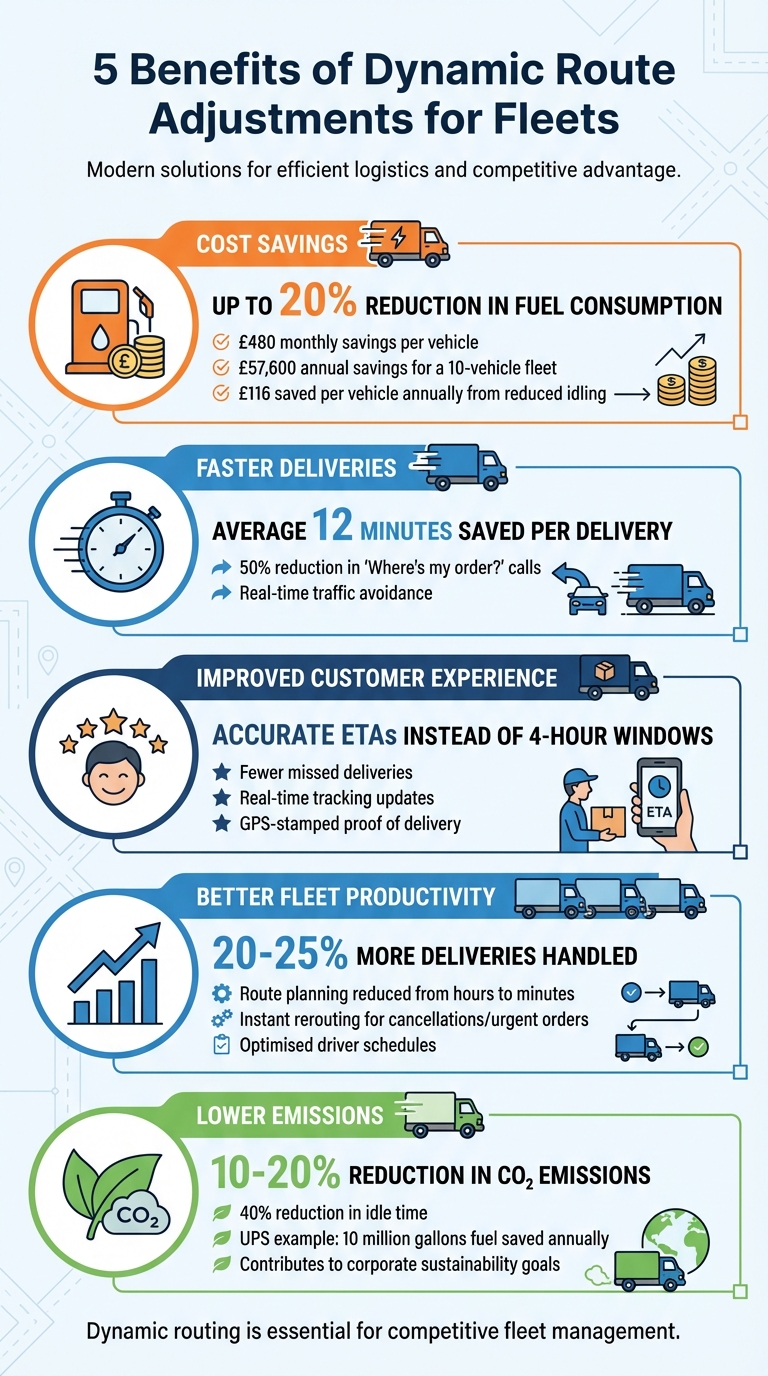
5 Key Benefits of Dynamic Route Adjustments for Fleet Management
What Is Dynamic Route Optimization in Logistics?
1. Cost Savings
Making dynamic route adjustments can lead to noticeable fuel savings. By recalculating routes in real-time to avoid congestion and unnecessary detours, vehicles cover shorter distances and spend less time idling. This can cut fuel consumption by roughly 20% per vehicle.
These savings don’t stop at fuel costs. With reduced mileage, there’s less wear on tyres, brakes, and engines, which means maintenance intervals can be stretched out. Vehicles that avoid congested routes also experience fewer replacements and repairs. For instance, industry data shows that simply cutting down on vehicle idling can save about £116 per vehicle annually in fuel and engine wear.
Here’s how the numbers stack up:
| Metric | Before Optimisation | After Optimisation | Improvement |
|---|---|---|---|
| Fuel Consumption | 12.5 litres/100km | 10.0 litres/100km | 20% reduction |
| Daily Mileage | 180 miles per vehicle | 144 miles per vehicle | 20% reduction |
| Idle Time | 45 minutes per day | 27 minutes per day | 40% reduction |
| Fuel Costs | £2,400 per vehicle/month | £1,920 per vehicle/month | £480 monthly savings |
For a fleet of 10 vehicles, those monthly savings of £480 per vehicle quickly add up to £4,800 per month, or a staggering £57,600 per year. These cost reductions not only improve profitability but also help extend the lifespan of the fleet.
2. Improved Delivery Times
Dynamic route adjustments don't just save money - they also make delivery times faster and more reliable by allowing real-time changes to routes.
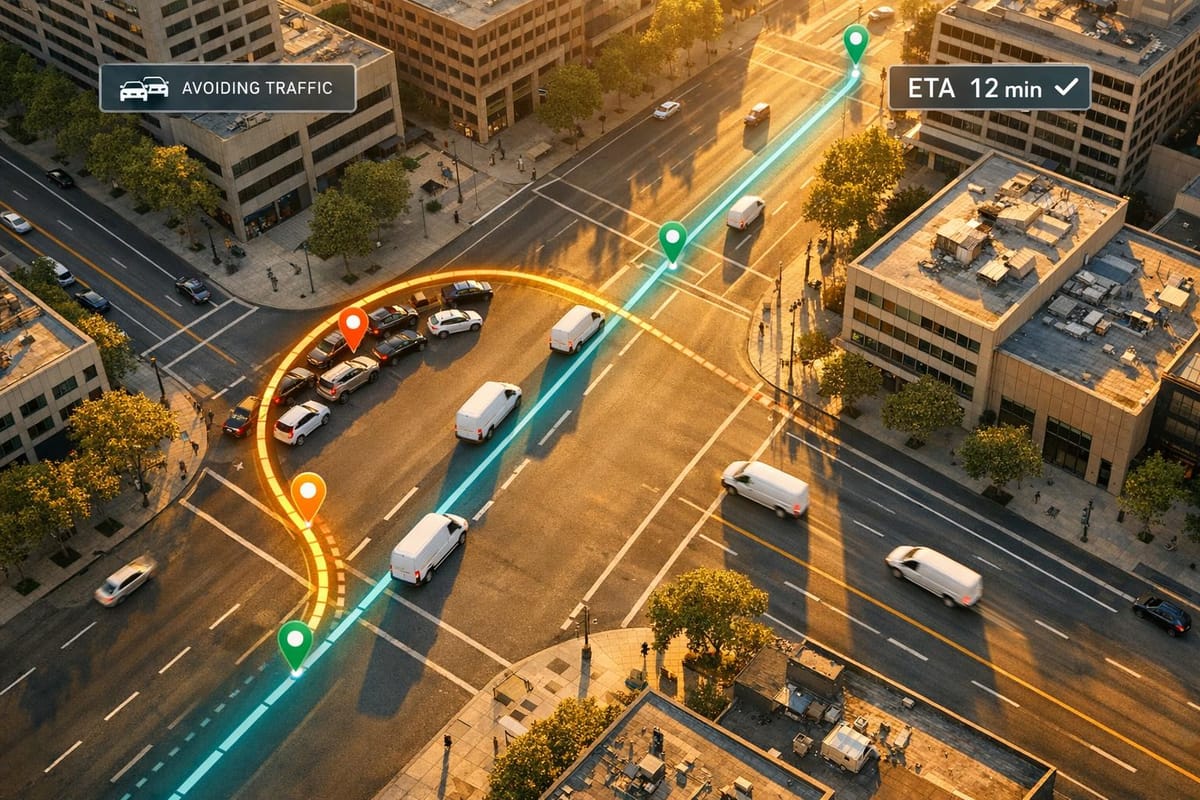
Imagine this: traffic suddenly grinds to a halt, or a road is unexpectedly closed. Instead of wasting time stuck in gridlock, dynamic route systems let drivers adjust immediately. With turn-by-turn guidance from real-time navigation tools, drivers stay focused and on track. These quick pivots save an average of 12 minutes per delivery, which adds up significantly over dozens of stops in a single day.
Tight delivery windows are easier to meet when systems can predict and avoid peak-hour traffic. By shifting non-urgent trips to quieter times and prioritising urgent deliveries, fleets can stay on schedule - even during rush hour. Automated tracking solutions also cut down on "Where's my order?" calls by as much as 50%, as customers receive proactive notifications about their delivery status without needing to reach out.
AI-driven systems also help drivers handle more stops per shift. By optimising stop sequences and loop patterns, these tools can process thousands of stops in seconds, even accommodating last-minute orders that manual planning would struggle to handle.
"Better routes mean better customer service, period." - Jim Endres, Regional Account Director, Aptean
To make these systems even more effective, consider using tiered priority tagging. Colour-coded labels for urgent orders or cancellations allow dispatchers to adjust routes on the fly. Additionally, creating a feedback loop - where drivers report site-specific issues like tricky parking - can help refine delivery window accuracy for future routes.
3. Enhanced Customer Satisfaction
Dynamic routing doesn't just improve delivery speed and reliability - it also makes life easier for customers. Knowing exactly when a delivery will arrive allows people to plan their day without unnecessary disruptions. Thanks to real-time updates on traffic, weather, and driver progress, dynamic routing provides precise ETAs instead of those frustrating four-hour delivery windows. This level of accuracy not only helps customers stay organised but also strengthens their trust in the service.
More accurate ETAs also mean fewer missed deliveries. When customers can rely on predictable schedules, they're more likely to be available to receive their orders, cutting down on the annoyance of missed deliveries and the need for re-delivery attempts. Real-time tracking links allow recipients to follow their parcel's journey, while van tracker geofencing sends automatic alerts when the delivery vehicle is nearby.
But it’s not just about punctuality - transparency plays a huge role in customer satisfaction too. If delays happen due to unexpected issues like roadworks or bad weather, dynamic systems notify customers right away. This proactive approach shows respect for their time and builds stronger relationships.
"The ability to provide accurate ETAs and respond to changing delivery requests creates a better customer experience. This responsiveness ensures that customers are kept informed and satisfied, fostering loyalty and repeat business." – Solera Fleet Solutions
Digital proof of delivery, complete with GPS-stamped signatures and photos, offers immediate confirmation of drop-offs, reducing disputes and giving customers peace of mind. Multi-channel alerts via email, SMS, and app notifications ensure everyone stays informed in the way that suits them best.
4. Increased Operational Efficiency
Dynamic routing transforms fleet operations by significantly improving productivity. Instead of managers spending hours manually planning routes and juggling schedules, automated systems handle these tasks in just minutes. This shift allows managers to concentrate on strategic priorities rather than the daily grind of logistics.
The results are clear and measurable. Fleets using AI-driven dynamic routing can manage 20–25% more deliveries, thanks to continuous optimisation of driver and vehicle assignments. These systems also recalculate routes instantly to accommodate cancellations or urgent orders, ensuring maximum efficiency.
| Feature | Manual Route Planning | AI-Powered Dynamic Routing |
|---|---|---|
| Planning Time | Hours (manual) | Minutes (automated) |
| Daily Capacity | Limited by human calculation speed | Handles 20–25% more deliveries |
| Adaptability | Requires manual recalculation and driver contact | Instant rerouting for traffic/weather |
| Resource Use | Prone to resource mismanagement and idle time | Optimises vehicle/driver matching |
Dynamic routing doesn’t just save time and money - it also streamlines workflow management. With real-time adjustments, fleet managers gain full visibility into operations. They can see where every vehicle is with van tracking solutions, identify delays, and reassign tasks to drivers who have capacity. For instance, a driver who finishes early can automatically be assigned a new delivery, while delayed drivers can have their remaining stops redistributed to others nearby.
This level of coordination eliminates the chaos of last-minute changes, phone calls, and guesswork, resulting in a smoother, more efficient operation. The entire fleet performs better when every resource is used effectively.
5. Reduced Environmental Impact
Dynamic routing isn’t just about improving efficiency - it also plays a big role in reducing the environmental footprint of fleets. By optimising routes in real-time, fleets can cut down on mileage, reduce idling, and operate more efficiently, leading to a 10–20% reduction in CO₂ emissions.
Idling, in particular, is a hidden cost. Every minute a heavy goods vehicle (HGV) idles, it emits 68.64g of CO₂ and burns 21.7g of diesel. To put that into perspective, if just half of London’s light goods vehicles idled for one minute at traffic lights, it would release nearly 3,000kg of CO₂ into the air. Dynamic routing tackles this issue by selecting the most efficient paths, cutting down unnecessary idling time.
Take UPS as an example. By rolling out their ORION (On-Road Integrated Optimization and Navigation) system across 55,000 routes, they used real-time sensor data and GPS to optimise paths. The results? A savings of 10 million gallons of fuel annually and a reduction of 100 million miles driven each year. Similarly, DB Regio Bus managed to cut vehicle idling times by 40% in just one year, which translated to an annual reduction of 1,400 tonnes of CO₂ emissions.
"Key to reducing carbon emissions is, of course, reducing fuel consumption... it's a matter of driving smarter and maximising efficiency wherever possible." – Adam Partington, Teletrac Navman UK
For UK fleets, the pressure to meet stricter environmental regulations and sustainability targets makes these gains even more critical. Metro Logistics Fleet Manager Robert Jenkins discovered that 28% of their fuel was wasted due to idling and inefficient driving. After adopting a telematics and eco-driving programme, they slashed their carbon footprint by 34% and saved over £45,000 annually on fuel costs. Dynamic routing supports these efforts by monitoring eco-driving habits, such as harsh acceleration and speeding, which directly affect carbon emissions. These environmental benefits go hand in hand with financial savings, paving the way for further advancements in fleet management technology.
How GRS Fleet Telematics Supports Dynamic Route Adjustments
GRS Fleet Telematics equips UK fleets with essential tools for making real-time route changes. Thanks to live GPS tracking, fleet managers can monitor vehicle locations continuously, enabling quick responses to unexpected disruptions. This real-time data feeds directly into route planning systems, allowing dispatchers to adjust routes as needed, ensuring operations stay efficient throughout the day.
The platform uses a dual-tracker system featuring a hardwired GPS tracker alongside a compact Bluetooth backup tracker. This setup guarantees uninterrupted tracking; if the primary device fails, the backup seamlessly takes over, maintaining location data integrity.
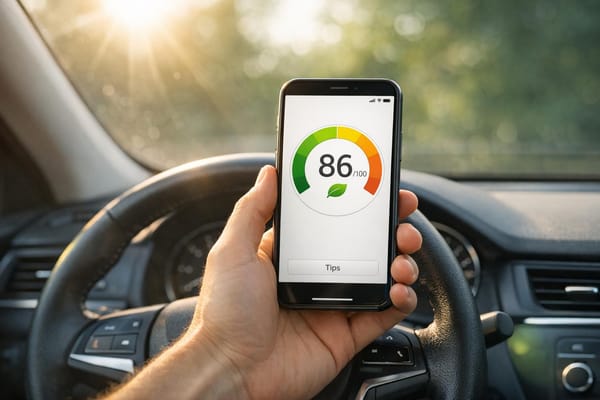
Beyond dependable tracking, GRS Fleet Telematics offers real-time insights that enhance decision-making. Customisable dashboards and a mobile app provide both fleet managers and drivers with up-to-date information. Managers can monitor fuel usage and driving habits, such as harsh acceleration, to promote eco-friendly driving. Meanwhile, drivers benefit from instant updates delivered through the app.
The system also supports cost efficiency. Businesses using GRS Fleet Telematics report average monthly savings of £1,224.52 and annual savings of £14,694.25, achieving a return on investment (ROI) of 2,965% with a payback period of just 0.3 months. Hardware packages start at £35, while software subscriptions begin at £7.99 per vehicle per month. The Ultimate package, priced at £99, includes advanced features like remote immobilisation and both tracking systems, offering enhanced security while supporting dynamic routing.
Designed with UK fleets in mind, the platform includes features such as ULEZ compliance monitoring and driver hours tracking to meet local regulations while optimising routes. Additionally, 24/7 recovery support and a 91% stolen vehicle recovery rate ensure asset protection and operational continuity.
Conclusion
Dynamic route adjustments offer UK fleets a powerful way to save money, speed up deliveries, and cut emissions - all while boosting overall efficiency and profitability.
With mature dynamic routing technology, fleets can leverage real-time tracking and live traffic updates to eliminate the inefficiencies of manual planning. This tech adapts instantly to disruptions like roadworks, accidents, or unexpected delivery changes. The result? Time and resources saved, alongside smoother, more sustainable operations.
For UK businesses, environmental performance is increasingly vital, especially with the expansion of Low Emission Zones in major cities. By reducing emissions, fleets not only help the environment but also enjoy cost savings and a stronger brand image.
Telematics systems, such as GRS Fleet Telematics, take these efficiencies a step further. Offering live GPS tracking, dual-tracker reliability, and detailed fleet insights for as little as £7.99 per vehicle monthly, these tools are more accessible than ever. The return on investment is clear, with savings on fuel, better productivity, and less vehicle wear and tear.
In a competitive market, efficiency, transparency, and a commitment to reducing environmental impact are no longer optional - they’re essential. Waiting to adopt dynamic routing could mean losing ground to competitors already reaping the rewards of smarter, more agile fleet management.
FAQs
What data do dynamic route adjustments use?
Dynamic route adjustments use real-time data like GPS locations, traffic updates, weather conditions, road closures, and restricted areas such as LEZ (Low Emission Zones) and ULEZ (Ultra Low Emission Zones). This ensures routes are planned to maximise efficiency while adhering to local rules.
How quickly can dynamic routing pay for itself?
Dynamic routing often recoups its costs within 8 to 12 months, thanks to reduced expenses and better operational efficiency. In fact, some businesses have reported achieving a return on investment (ROI) in as little as 0.3 months, highlighting its potential as a cost-efficient choice for managing fleet operations.
Will drivers need training to use dynamic routing?
Drivers might need a bit of training to get the most out of dynamic routing systems. While these tools are designed to be easy to use and handle much of the planning automatically, knowing how to interpret real-time updates, traffic data, and route adjustments is crucial. With proper training, drivers can better respond to live updates, manage unexpected changes, and boost delivery efficiency.