Driver-Specific Route Planning for Construction Fleets
Tailored routes that use driver skills, vehicle specs and live data to cut fuel, improve safety and ensure compliance for construction fleets.
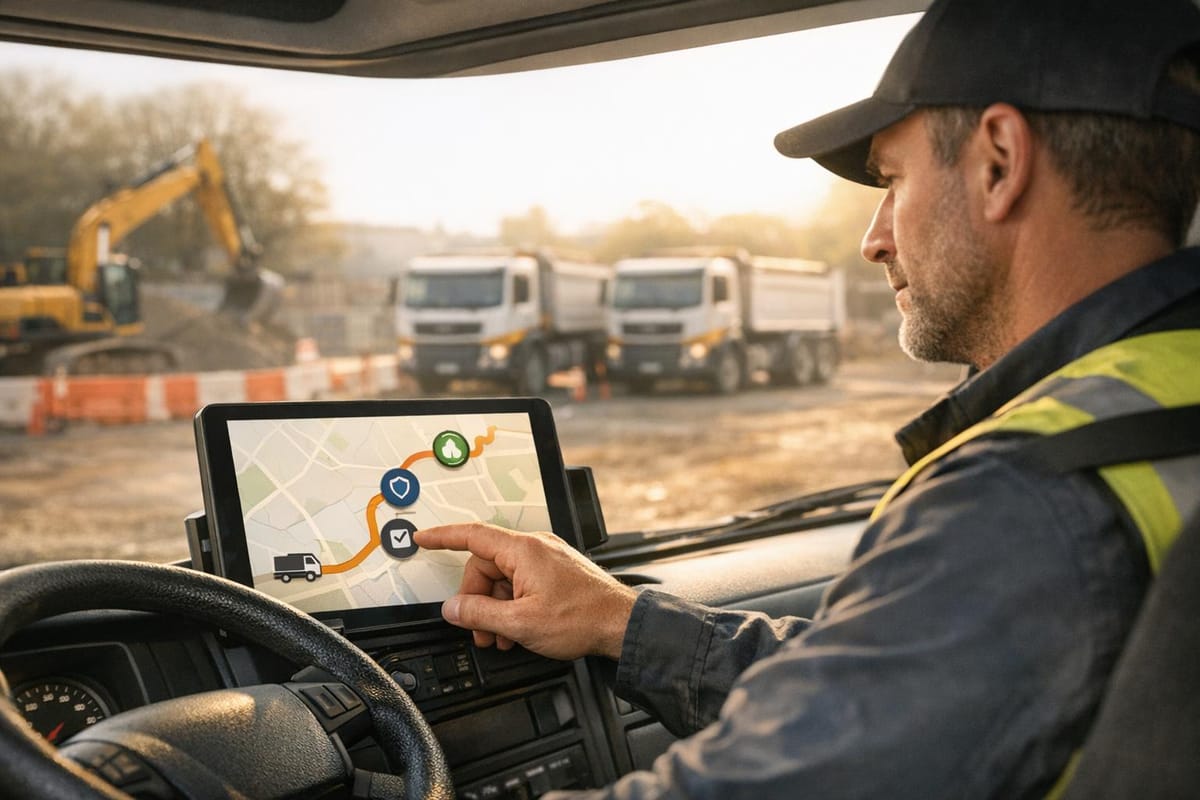
Managing construction fleets is challenging. Vehicles must navigate weight-restricted roads, low bridges, and tight site entrances, all while ensuring safety, compliance, and efficiency. Driver-specific route planning offers a tailored solution by creating routes based on driver skills, vehicle specifications, and real-time data. Here's why it matters:
- Customised Routes: Assign routes matching driver expertise and vehicle capabilities.
- Real-Time Adjustments: Avoid delays with live traffic and weather updates.
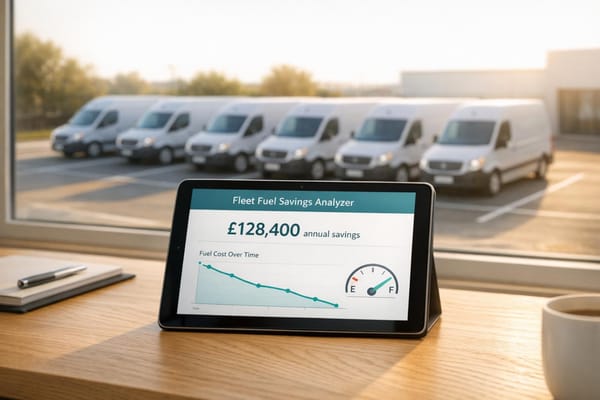
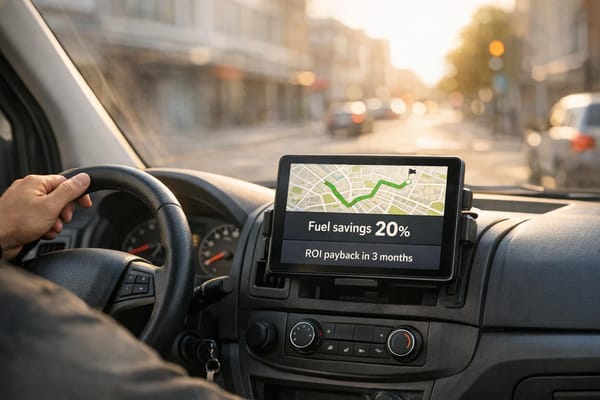
- Cost Savings: Reduce fuel expenses by up to 22% and cut administrative tasks by 75%.
- Improved Safety: Prevent accidents by avoiding unsuitable roads and monitoring driver behaviour.
- Enhanced Security: Use geofencing and dual-trackers to protect high-value machinery.
This approach not only keeps fleets running smoothly but also helps companies save money, improve safety, and stay compliant with regulations. With tools like GRS Fleet Telematics, construction firms can track vehicles, optimise routes, and prevent theft - all at affordable costs.
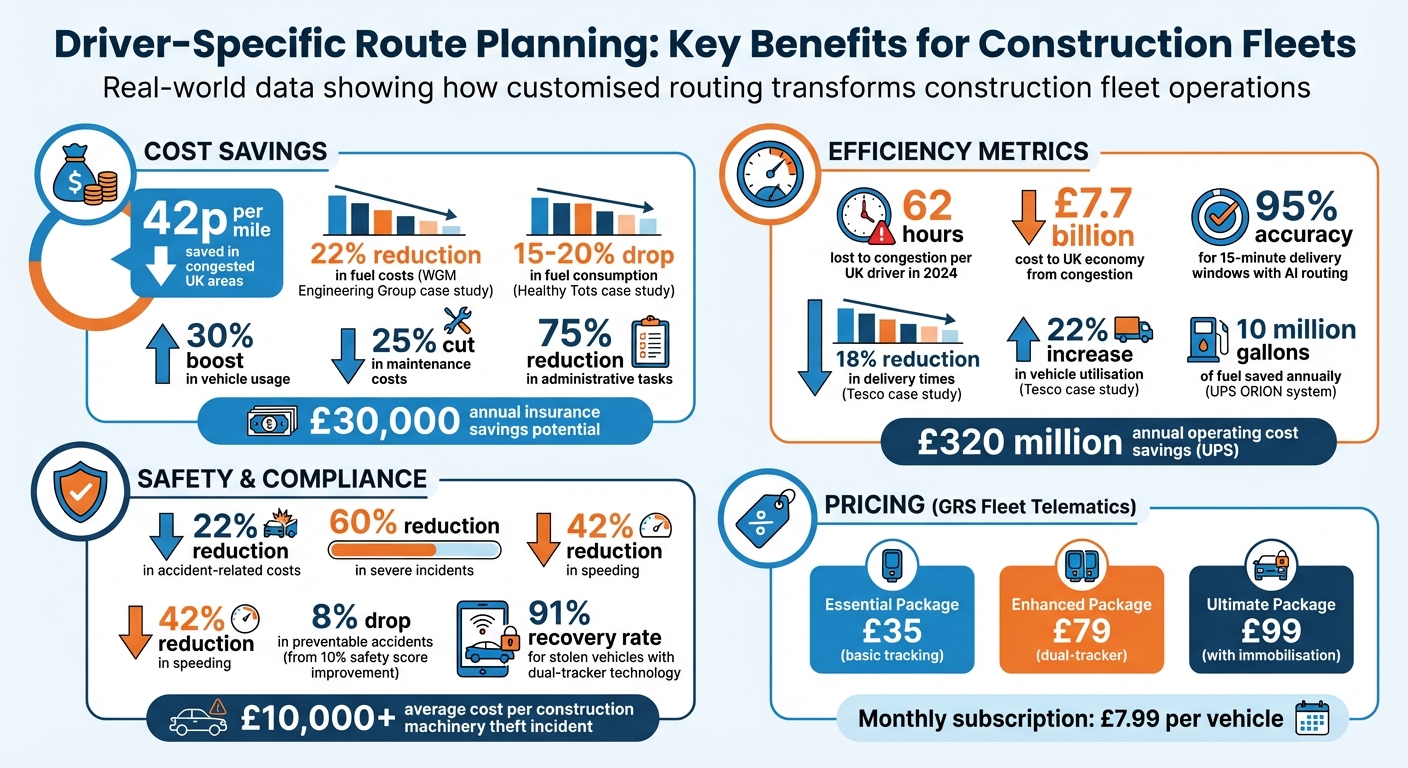
Driver-Specific Route Planning Benefits: Cost Savings and Safety Statistics for Construction Fleets
Explainer Video: What Is Route Planning and Why Is It Important?
Benefits of Driver-Specific Route Planning
Customising routes for specific drivers and vehicles allows construction fleets to operate more efficiently, improve safety, and respond swiftly to challenges. These advantages help reduce downtime and minimise risks.
Efficiency and Cost Savings
Tailored routing can save as much as 42p per mile in congested UK areas and significantly cut fuel expenses, which make up to 60% of operating budgets . By reducing idle time and fuel wastage through real-time route adjustments, fleets can streamline operations. GPS tracking also simplifies attendance logging and lowers administrative workloads.
Maintenance strategies based on actual vehicle use - such as mileage, engine hours, and braking patterns - help prevent expensive breakdowns. For example, WGM Engineering Group saw a 22% reduction in fuel costs after adopting a tracking and route optimisation system. Similarly, Healthy Tots in Scotland reported a 15–20% drop in fuel consumption, a 30% boost in vehicle usage, and a 25% cut in maintenance costs by using advanced fleet visibility tools.
"Since having the trackers on our vehicles and plant, productivity has increased during the day".
- Jo McGarvie, Plant Manager at JMC Construction
These cost savings come alongside improved fleet safety and better regulatory compliance.
Safety and Compliance
Driver-specific routing enhances safety by keeping heavy vehicles out of unsuitable areas, like narrow residential streets, low-bridge zones, and roads with weight restrictions. This reduces the need for hazardous manoeuvres, such as U-turns in tight spaces, and lowers collision risks . On-site safety is also improved, addressing the risks of vehicle-related incidents, which remain a serious concern in the industry.
Telematics systems that monitor driver behaviour can reduce accident-related costs by 22%. Studies show they can cut severe incidents by 60%, reduce speeding by 42%, and even a 10% improvement in safety scores can translate to an 8% drop in preventable accidents. Automated compliance features also prevent vehicles from entering restricted areas, such as London's Ultra Low Emission Zone, where non-compliance can lead to daily fines of £12.50 .
Security measures like dual-tracker technology further enhance protection. With construction machinery theft costing over £10,000 per incident, dual-trackers achieve a 91% recovery rate using VHF technology that works even in challenging environments like underground car parks or metal containers. Geofencing adds another layer of security by setting virtual boundaries around sites and sending alerts if equipment moves beyond authorised zones .
Real-time route adjustments build on these benefits by ensuring fleets adapt effectively to changing conditions.
Real-Time Route Adjustments
Dynamic rerouting keeps fleets efficient, even during unexpected disruptions. In 2024, UK drivers lost an average of 62 hours to congestion, costing the economy £7.7 billion. Real-time adjustments help fleets avoid contributing to these delays.
By combining historical data with live weather updates, systems can predict disruptions and adjust routes in advance. AI-powered routing achieves 95% accuracy for 15-minute delivery windows, easing the pressure on drivers to meet tight deadlines. Additionally, real-time monitoring tracks driving hours, sending alerts before legal limits are exceeded and automatically reassigning tasks to ensure compliance .
Tesco, for instance, achieved an 18% reduction in delivery times and a 22% increase in vehicle utilisation through such systems. Jon King, Director at East Midlands Contracting, highlighted the impact:
"Now everything, from a big tractor down to the last power tool, has a tracker on it and we can basically see where all our kit is on the same screen, which has obvious major benefits!".
Factors for Customising Driver Routes
Planning routes for construction fleets is a complex task that involves juggling multiple factors to ensure driver performance and operational efficiency. To achieve this, systems must consider driver skills, vehicle specifications, and real-time data. These elements work together to create routes that are safe, compliant, and cost-effective, tailored to specific needs.
Driver Experience and Skill Levels
Driver experience plays a crucial role in determining the most suitable routes. Advanced systems can assign routes based on skill levels, ensuring that tasks align with a driver’s capabilities. For instance, newly qualified drivers might be assigned routes that avoid tight urban spaces or challenging reverse manoeuvres. On the other hand, experienced drivers can handle more complex tasks, such as navigating narrow residential streets or accessing difficult sites.
Static stops can also be configured to align with operational preferences, while side-of-street optimisation ensures that drivers approach stops from the safest direction, reducing hazards during equipment unloading. Additionally, these systems automatically account for UK/EU driving regulations, such as mandatory breaks - 45 minutes after 4.5 hours of driving and a 30-minute break within a one-hour window - ensuring compliance and efficiency.
Vehicle and Load Specifications
Vehicle dimensions and load specifics are critical for optimising routes. By defining parameters like height, width, length, and weight, systems can avoid obstacles such as low bridges, narrow roads, and weight-restricted areas. For vehicles carrying hazardous materials, "ADR points" must be included at both shipment and vehicle levels to ensure legal compliance.
| Vehicle Attribute | Impact on Route Planning |
|---|---|
| Weight (kg) | Avoids weight-restricted roads and bridges; influences fuel cost calculations |
| Height (cm) | Prevents routing under low-clearance bridges or tunnels |
| Width (cm) | Avoids narrow streets and restricted lanes |
| Length (cm) | Ensures suitability for tight turns and specific road layouts |
| ADR Points | Required for routing hazardous goods |
Fuel modelling also incorporates payload weight and road gradients to predict energy consumption. For electric vehicles, routes must account for charging station locations and battery depletion. Additionally, restricted zones like Low Emission Zones (LEZ) and Ultra Low Emission Zones (ULEZ) are automatically flagged to ensure compliance.
Behavioural and Operational Data
Telematics systems provide valuable insights into driver behaviour by monitoring factors like harsh braking, rapid acceleration, idling, and sharp cornering. These behaviours can lead to increased vehicle wear and higher fuel consumption. By analysing this data, fleet managers can refine routes to minimise stop-start traffic, reduce idling, and identify drivers who may benefit from additional training.
Geofencing technology adds another layer of control, creating virtual boundaries around construction sites. This feature automatically logs vehicle entry and exit times, improving attendance tracking and alerting managers to unauthorised zone access. Maintenance schedules can also be optimised based on actual mileage and engine hours, extending equipment life and preventing unexpected breakdowns. Additionally, dwell time - the time spent on-site - can be factored into ETA calculations to improve accuracy.
One striking example of the benefits of tracking and telematics comes from Zenith Hygiene Group. By monitoring behavioural data, the company reduced annual insurance claims from £214,000 to £88,000 and saved £90,000 in fuel costs within a year.
"This solution has led to a reduction in the number of accidents: last year insurance claims amounted to £214,000, and this year it has reduced to £88,000."
- Michael Rayner, Operations Director, Zenith Hygiene Group
How to Implement Driver-Specific Route Planning
To make the most out of driver-specific routing, you’ll need to focus on three key steps: gathering data, integrating telematics, and refining routes regularly. Here’s how you can get started:
Step 1: Gather and Analyse Driver Data
Start by collecting a solid data foundation. Aim for 3–6 months of records covering fuel usage, on-time delivery rates, failed deliveries, and manual planning time. This gives you a clear benchmark to measure progress after the new system is in place.
Dive deeper into driver profiles. Identify their strengths - like whether they excel on urban routes or motorways - and assess eco-driving habits and performance metrics, such as harsh braking or rapid acceleration. Keep tabs on working hours, rest periods, and legal limits to ensure compliance with UK and EU regulations.
Vehicle data is equally important. Document details like vehicle type (HGV, van, or EV), load capacity, fuel consumption, maintenance schedules, and emissions ratings. This will help you avoid restricted zones like LEZ and ULEZ.
Don’t forget operational and external data. Use live traffic updates from sources like TfL and National Highways, weather forecasts, and information on road constraints like bridge heights and weight limits. Factor in customer needs, such as delivery time windows, specific locations, and challenges like parking or access restrictions.
| Data Category | Key Metrics to Collect | Purpose |
|---|---|---|
| Driver | Working hours, skill sets, eco-driving scores | Ensures compliance and tailored assignments |
| Vehicle | Fuel type, weight, height, maintenance status | Avoids road restrictions and breakdowns |
| Environment | Live traffic (TfL), weather, LEZ/ULEZ boundaries | Supports real-time rerouting and prevents fines |
| Operational | Planned vs. actual arrival times, idling time | Identifies inefficiencies for improvement |
Step 2: Use Telematics Tools
Choose telematics systems that work seamlessly with your routing software. Look for solutions with open APIs or built-in connectors to automatically sync data like GPS coordinates, driver IDs, and vehicle status. This eliminates manual input and keeps everything running smoothly.
For example, GRS Fleet Telematics offers hardware starting at £35 for basic tracking, £79 for dual-tracker technology, and £99 for advanced systems with remote immobilisation. Their software subscription costs £7.99 per vehicle monthly, providing SIM data, an account manager, and complete platform access.
Synchronise essential details - vehicle IDs, driver names, depot locations, and customer addresses - between telematics and planning platforms. Incorporate constraints like driver shift patterns, vehicle capacities, and restricted zones into the system. Before a full rollout, conduct a 4–8 week pilot programme to compare AI-generated routes with your current methods.
Once telematics tools are in place, you’ll have full visibility over your fleet, from large vehicles down to smaller equipment. This sets the stage for ongoing optimisation.
Step 3: Monitor and Refine Routes
The work doesn’t stop after implementation. Keep a close eye on performance and refine routes to adapt to real-world conditions. Address urgent issues like breakdowns or security alerts daily, review driver patterns weekly, and analyse operational trends monthly.
Compare predicted metrics - like fuel usage and journey times - with actual outcomes to improve the AI’s accuracy. If drivers frequently deviate from planned routes, investigate whether it’s due to flawed planning or on-the-ground challenges.
Shift planners’ roles from manually creating routes to validating AI outputs and managing disruptions. Use feedback loops where drivers can report issues like inaccurate delivery locations or unexpected road closures, helping the system learn and improve. Set up tiered notifications to prioritise critical alerts (e.g., theft or accidents) while summarising routine updates weekly to avoid overwhelming your team.
Real-world examples show the impact of these strategies. In 2024, the UK’s WGM Engineering Group cut fuel costs by 22% by adopting a tracking and route optimisation system. Similarly, UPS implemented the ORION system across 55,000 routes, saving 10 million gallons of fuel annually and reducing driven miles by 100 million. This resulted in operating cost savings of up to £320 million per year.
Using GRS Fleet Telematics for Driver-Specific Routing
Key Features of GRS Fleet Telematics
GRS Fleet Telematics provides precise real-time tracking within six feet, using AI to create dynamic, UK-specific routes. These routes take into account traffic patterns, delivery schedules, and the condition of each vehicle. The system also monitors driver behaviour, tracking instances of harsh braking, rapid acceleration, and sharp cornering. This not only promotes safer driving but also helps cut down on mechanical wear.
Geofencing is another standout feature, allowing managers to set virtual boundaries around job sites. Alerts are sent immediately if a vehicle crosses these boundaries. For theft prevention, the dual-tracker technology combines GPS with a hidden Bluetooth backup, achieving a 91% recovery rate for stolen vehicles. This setup is particularly effective against signal jamming.
Integration with major machinery brands like CAT, John Deere, and Komatsu further simplifies fleet management by centralising operations. The system also stores historical movement data, including arrival and departure times, for up to 90 days, making audits and billing much easier.
These features are tailored to meet the needs of construction fleets, offering practical and cost-efficient solutions.
Affordable Solutions for Construction Fleets
GRS Fleet Telematics provides three hardware options, each designed to address varying levels of security:
- Essential Package (£35): Offers basic real-time tracking through a single wired tracker.
- Enhanced Package (£79): Includes a primary tracker and a hidden Bluetooth backup for added theft protection.
- Ultimate Package (£99): Adds engine immobilisation to prevent unauthorised vehicle starts, ideal for high-theft areas.
The monthly software subscription, priced at £7.99 per vehicle, covers SIM data, access to the platform, and support from a dedicated account manager. Mark Richards, Operations Manager at BuildRight Construction, shared his experience:
"Tool and van theft was costing us thousands each year. Since installing GRS van trackers, we've had zero thefts and have recovered two attempted van thefts thanks to the dual-tracker system."
Some firms have managed to save as much as £30,000 annually on insurance by proving reduced risk through telematics. Additionally, fleets can cut fuel costs by up to 22% by optimising routes and minimising idle time.
Installation and Support
GRS Fleet Telematics makes implementation straightforward and hassle-free, offering free installation when bundled with fleet branding. This not only reduces upfront costs but also enhances a company's professional image. The entire integration process typically takes between 4 and 8 weeks.
Every subscription includes 24/7 recovery support to liaise with law enforcement and a dedicated account manager. Managers can configure settings to match operational needs, such as driver shift patterns, vehicle load capacities, and restricted zones like ULEZ.
The system's advanced tracking features have helped construction firms improve productivity by providing better visibility and accountability for equipment. Maintenance scheduling is also more precise, relying on engine hour data rather than calendar dates, which ensures servicing aligns with actual equipment use. Additionally, the system automatically logs entry and exit times at job sites, eliminating the need for manual timesheets and improving billing accuracy.
Conclusion
Driver-specific route planning is reshaping how construction fleet managers handle daily operations. By customising routes based on driver skills, vehicle capabilities, and real-time conditions, managers can achieve noticeable gains in efficiency, cost reduction, and overall security.
Across the industry, smarter routing has proven its worth. Many companies have reported cutting fuel usage and operational costs by leveraging data-driven strategies.
This is where GRS Fleet Telematics steps in with a practical solution. Its dual-tracker technology boasts an impressive 91% recovery rate for stolen assets, while its AI-powered routing system addresses UK-specific challenges, like navigating ULEZ zones and avoiding motorway congestion. With hardware starting at £35 and monthly plans from just £7.99 per vehicle, this solution is within reach for construction firms of any size.
Automated, intelligent routing not only saves time but also reduces vehicle wear and lowers compliance risks. As Jo McGarvie, Plant Manager at JMC Construction, put it:
"Since having the trackers on our vehicles and plant, productivity has increased during the day".
FAQs
What data do I need to start driver-specific route planning?
To kick off route planning tailored to individual drivers, start by collecting key data points like driver behaviour (such as speed, idling habits, and driving patterns), real-time location updates, vehicle performance metrics, and route-specific restrictions (like low emission zones or weight limits). Telematics systems are typically used to gather this information, allowing for dynamic route adjustments and customised planning. By analysing these factors, you can fine-tune routes for each driver, boosting efficiency and ensuring smoother fleet operations.
How does driver-specific routing keep HGVs legal on UK roads?
Driver-specific routing helps ensure HGVs stay compliant with UK road regulations by leveraging detailed data to steer clear of restrictions like low bridges, weight limits, and areas such as LEZ (Low Emission Zones) and ULEZ (Ultra Low Emission Zones). This not only keeps vehicles within legal and safety boundaries but also helps streamline their routes for better efficiency.
How quickly can I see savings after installing GRS Fleet Telematics?
You can usually start noticing savings within 8 to 12 months after implementing GRS Fleet Telematics. By streamlining routes, cutting down on fuel usage, and boosting overall efficiency, the system delivers clear and measurable cost savings.