Driver Scorecards: Metrics to Track Safety and Compliance
Driver scorecards turn telematics into clear safety, compliance and efficiency metrics for UK fleets—spot risky driving, meet OCRS rules and cut costs.
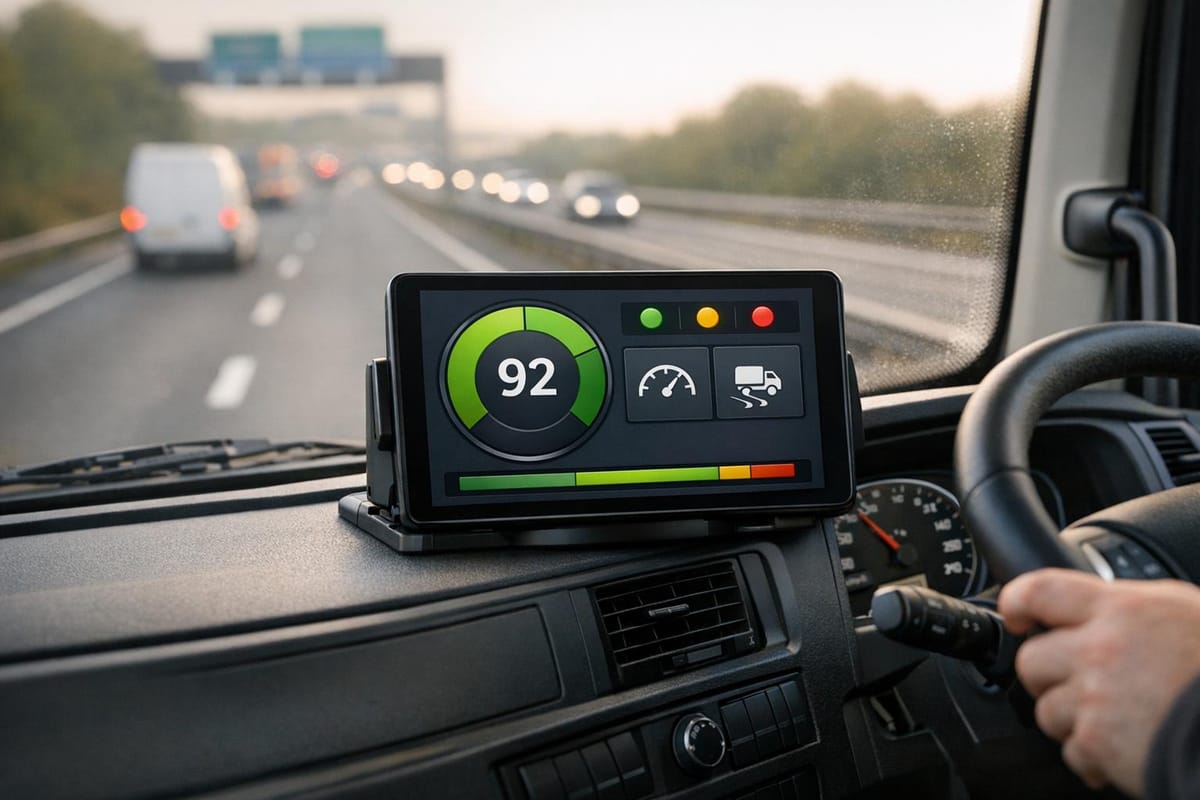
Driver scorecards are tools that help fleet managers monitor driver performance by analysing data like driving behaviour, vehicle checks, and compliance with UK regulations. They combine information from telematics, GPS, and onboard sensors to identify risky habits such as speeding, harsh braking, and rapid acceleration. By addressing these issues early, scorecards improve safety, reduce accidents, and ensure compliance with legal standards like the Operator Compliance Risk Score (OCRS).
Key features include:
- Safety metrics: Tracks behaviours like harsh braking, speeding, and idling.
- Compliance metrics: Monitors driving hours, tachograph usage, and vehicle inspections.
- Scoring models: Allocates weightings (e.g., 40–50% safety, 30–40% compliance, 20–30% efficiency) and benchmarks drivers fairly based on their roles.
Systems like GRS Fleet Telematics offer real-time insights, in-cab alerts, and automated compliance checks, while others, such as Netradyne, incorporate AI and dashcams for detailed analysis. These tools not only improve safety but also help lower costs by reducing fuel consumption, maintenance needs, and downtime.
When choosing a system, prioritise one that aligns with your fleet's needs - urban delivery fleets may benefit from metrics tailored to frequent stops, while long-haul operations require strong compliance tracking. Transparent communication with drivers and gradual implementation can build trust and maximise the system's effectiveness.
Raleigh’s Driver Scorecards | Fleet Maintenance | Benchmarking 2.0 Interviews
1. GRS Fleet Telematics
Driver scorecards take raw telematics data and turn it into clear, actionable insights to improve safety and compliance. GRS Fleet Telematics stands out by offering precise, real-time data that helps fleet managers focus on targeted improvements for their drivers.
Safety Metrics
GRS Fleet Telematics uses GPS and sensors to track behaviours like harsh braking, rapid acceleration, and excessive idling. These observations feed into driver scorecards, helping managers pinpoint risky driving habits before they lead to accidents. The system also provides real-time, in-cab alerts to give drivers immediate feedback, boosting safety on the spot. Compared to manual monitoring, GRS offers a more efficient way to deliver insights that support focused coaching efforts.
At the same time, the system ensures compliance is monitored with the same level of detail.
Compliance Metrics
Compliance is tracked in two key areas based on the UK's Operator Compliance Risk Score (OCRS): Roadworthiness and Traffic. Roadworthiness covers vehicle defects, maintenance logs, and mechanical issues. Traffic, on the other hand, focuses on driver-related factors such as hours worked, speeding, overloading, and tachograph usage. The OCRS system calculates risk levels over a three-year period, giving more weight to incidents from the past 12 months. By integrating with tachograph analysis tools, GRS automatically checks adherence to driving time and rest regulations, helping to quickly address any violations. Maintaining a Green OCRS status (indicating low risk) reduces roadside inspections and minimises downtime.
Scoring Models and Benchmarking
GRS applies standard industry weightings to its driver scorecards. The platform allows fleet managers to compare drivers dynamically against industry benchmarks, rather than relying on outdated or anecdotal comparisons. For example, drivers in urban delivery roles can be fairly evaluated against others in similar conditions, while those on motorways are assessed differently. This ensures evaluations are relevant and balanced.
The platform also integrates real-time diagnostic alerts, enabling proactive maintenance scheduling. Automated notifications replace rigid servicing schedules, addressing mechanical issues before they affect compliance scores or vehicle performance. This approach keeps fleets running smoothly while maintaining high compliance standards.
2. Other Driver Scorecard Systems
Beyond GRS Fleet Telematics, various other systems adopt distinct approaches to monitor and enhance driver performance, offering unique features and methodologies.
Safety Metrics
Most platforms rely on GPS and accelerometer sensors to track behaviours like speeding, harsh braking, rapid acceleration, and sharp cornering. Advanced systems go further, monitoring actions such as seat belt usage, tailgating, and reversing when leaving a location.
Dashcams are becoming a key addition, helping to differentiate between aggressive driving and defensive manoeuvres. For instance, Netradyne's GreenZone system incorporates AI to both reward safe driving habits and penalise risky behaviour.
While safety metrics focus on real-time driving habits, compliance metrics ensure adherence to legal and operational guidelines.
Compliance Metrics
Compliance systems are particularly vital for meeting UK regulations, especially for heavy goods vehicles (HGVs). These platforms monitor drivers' hours, tachograph offences, vehicle overloading, and weighing checks. They also track daily vehicle inspections, defect reporting, and policy acknowledgements to ensure vehicles meet roadworthiness standards. Automated tachograph analysis flags potential infractions before they affect the DVSA's Operator Compliance Risk Score (OCRS).
The OCRS system uses a traffic light framework - Green for low risk, Amber for medium risk, and Red for high risk - with recent violations carrying greater weight.
Building on these metrics, scoring models offer comparative insights tailored to specific operational environments.
Scoring Models and Benchmarking
Many systems, like GRS Fleet Telematics, allocate weightings of about 40–50% for safety, 30–40% for compliance, and 20–30% for efficiency. Some also use colour-coded risk categories, simplifying fleet-wide analysis.
Benchmarking works best when adjusted for operating conditions. For example, urban delivery drivers often face more frequent harsh braking due to dense traffic, making direct comparisons with long-haul drivers unfair. Advanced platforms factor in route complexity, traffic conditions, and vehicle load to ensure drivers aren’t penalised for factors outside their control.
In December 2024, Black & Veatch implemented a custom scorecard, sharing monthly safety scores with their drivers. This initiative led to a 28% improvement in average fleet safety scores, reduced collision rates from over 5 to 3 per million miles, and cut the number of high-risk drivers by 87%. Similarly, Frontier Technologies leveraged scorecard data to bring monthly speeding incidents down from 150 to 50.
"We've seen around a 20% improvement in driving style across the fleet. Since using Quartix, our drivers are now in the 80-100 driving score range, which is where we wanted to be." – Karl Davidson, St Austell Brewery
Advantages and Disadvantages
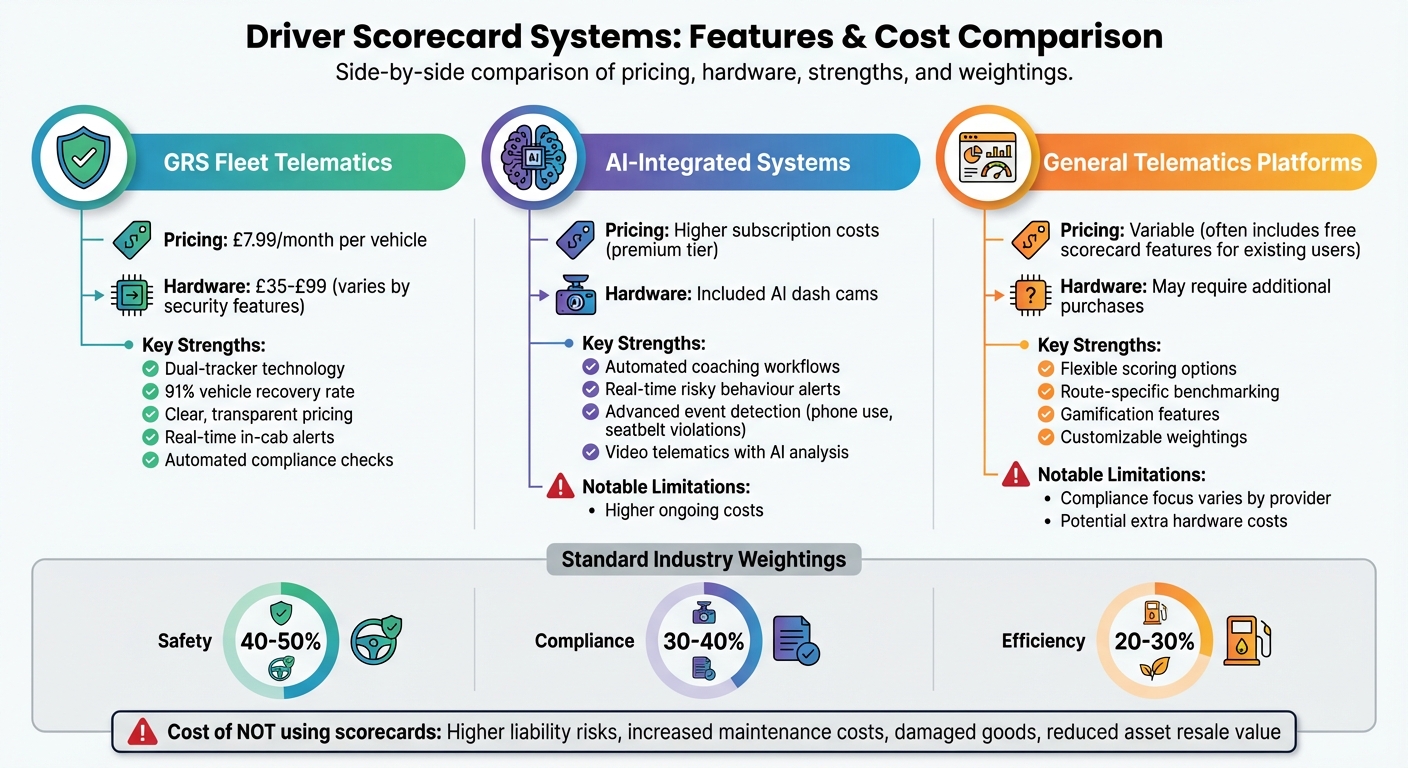
Driver Scorecard Systems Comparison: Features, Strengths and Costs
Driver scorecard systems provide objective data, taking the guesswork out of performance reviews. Fleet managers can pinpoint risky behaviours - like frequent harsh braking or speeding - before they escalate into serious incidents. This proactive approach not only enhances safety but also helps control operational costs by cutting fuel consumption, reducing brake wear, and minimising unscheduled downtime. Such systems enable detailed analysis, which is especially useful when considering varying driving environments.
That said, accuracy relies heavily on context. Modern systems adjust scores based on factors like route type, traffic conditions, and vehicle specifications. Adding video telematics to the mix provides visual context, helping differentiate between aggressive driving and defensive actions. This can minimise disputes over automated alerts and improve trust in the system.
Beyond safety, these systems offer clear financial benefits. For example, GRS Fleet Telematics provides pricing from £7.99 per month per vehicle, with hardware options ranging from £35 to £99 depending on the security features required. Some systems even include scorecard features at no extra cost for existing users, while others bundle AI dash cams and automated coaching tools at higher subscription rates. The cost savings are evident, particularly through collision prevention and reduced liability risks.
| System Type | Key Strengths | Notable Limitations |
|---|---|---|
| GRS Fleet Telematics | Affordable pricing (from £7.99/month), dual-tracker technology, 91% vehicle recovery rate, clear pricing | – |
| AI-Integrated Systems | Automated coaching workflows, real-time risky behaviour alerts, advanced event detection (e.g. phone use, seatbelt violations) | Higher subscription costs |
| General Telematics Platforms | Flexible scoring options, route-specific benchmarking, gamification features | May require extra hardware purchases; compliance focus varies |
The cost of not using a scorecard system can be much higher than subscription fees. Fleets without these tools often face higher liability risks, increased maintenance costs, damaged goods, and reduced resale value of assets. Additionally, automated data collection improves administrative efficiency by reducing the manual effort needed to identify and address poor driving habits.
Conclusion
Selecting the right driver scorecard system comes down to balancing safety, compliance, and cost-effectiveness. For fleets in the UK, the best systems rely on balanced metrics that prioritise driver safety without sacrificing fuel efficiency. At the same time, they ensure compliance by accurately tracking drivers' hours and scheduling vehicle checks to protect operator licences.
GRS Fleet Telematics stands out by offering affordable and reliable tracking solutions. Their dual-tracker technology, priced competitively for the UK market, achieves an impressive 91% recovery rate - an essential feature for security-conscious operations.
It’s crucial to tailor the system to your fleet’s specific needs. Urban delivery fleets, for instance, benefit from metrics that account for frequent stops and traffic patterns, while long-haul operations require strong Hours of Service (HOS) compliance tools. As Tristan Bacon explains:
"A well-designed driver scorecard gives fleet operators a consistent way to understand performance across individuals, vehicles, and routes".
This insight highlights the importance of aligning scorecard technology with operational goals.
Transparency plays a major role in the success of these systems. Mobile app integration allows drivers to review their scores between evaluations, encouraging self-improvement and reducing potential disputes. Gradual implementation is recommended to build trust and fine-tune benchmarks.
Ignoring the benefits of scorecards can lead to higher risks - ranging from increased liability and maintenance costs to potential damage of goods. In contrast, a well-chosen system transforms everyday fleet data into actionable insights, delivering measurable improvements in safety and cost management.
FAQs
Which driver scorecard metrics matter most for UK fleets?
Key metrics for assessing driver performance in UK fleets include speeding, harsh braking, rapid acceleration, and seatbelt use. These indicators are essential because they directly impact safety, regulatory compliance, and operating costs.
How can scorecards stay fair across different routes and driver roles?
Scorecards maintain fairness by combining a variety of metrics to provide a well-rounded assessment. Clear and straightforward data presentation ensures ease of understanding, while regular in-person reviews foster open communication. This method helps build trust, establish clear improvement goals, and ensures performance is evaluated transparently and thoroughly.
How often should we review scores and coach drivers?
Driver scores need regular reviews, whether weekly, monthly, or quarterly, depending on what works best for your operations. Align coaching sessions with these reviews to ensure feedback is timely and helps drivers improve. Adjusting the review frequency keeps the guidance relevant and actionable, promoting better safety and compliance.