What Are Driver Behaviour Monitoring Devices?
How driver behaviour monitoring uses GPS, sensors and AI to cut accidents, reduce fuel and maintenance costs and boost fleet efficiency.
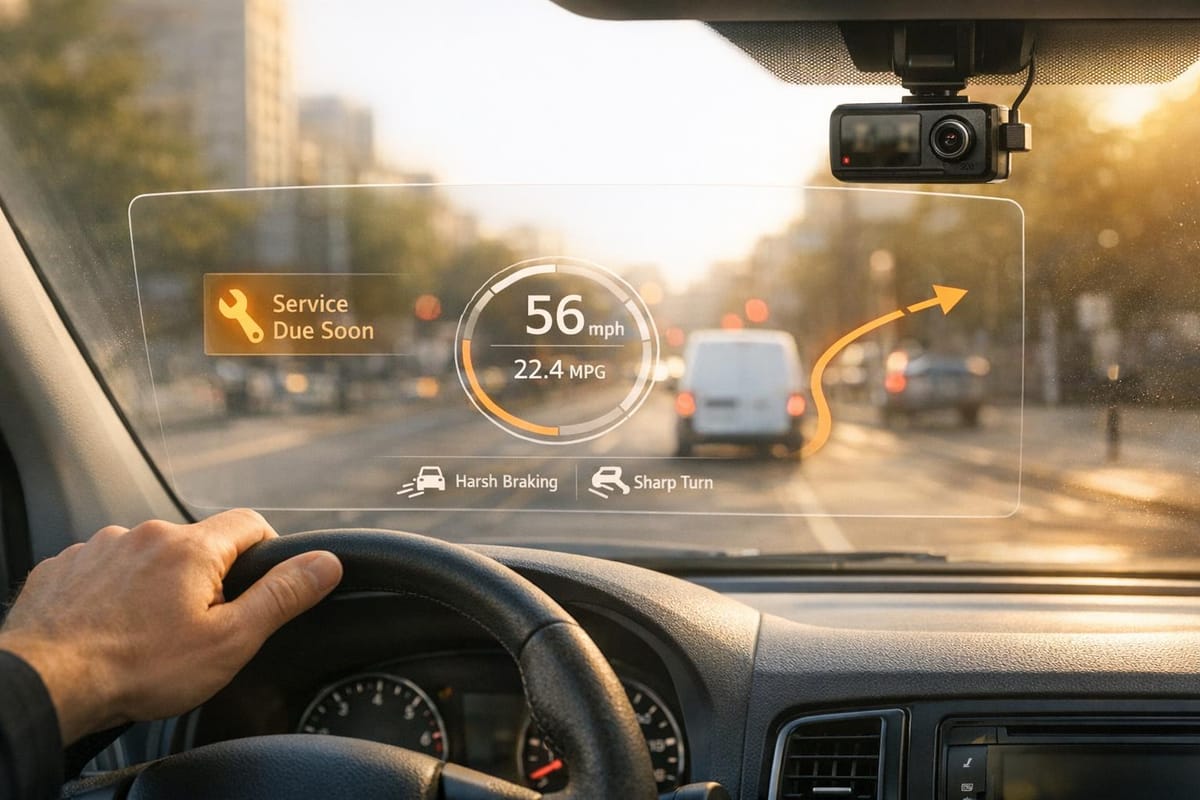
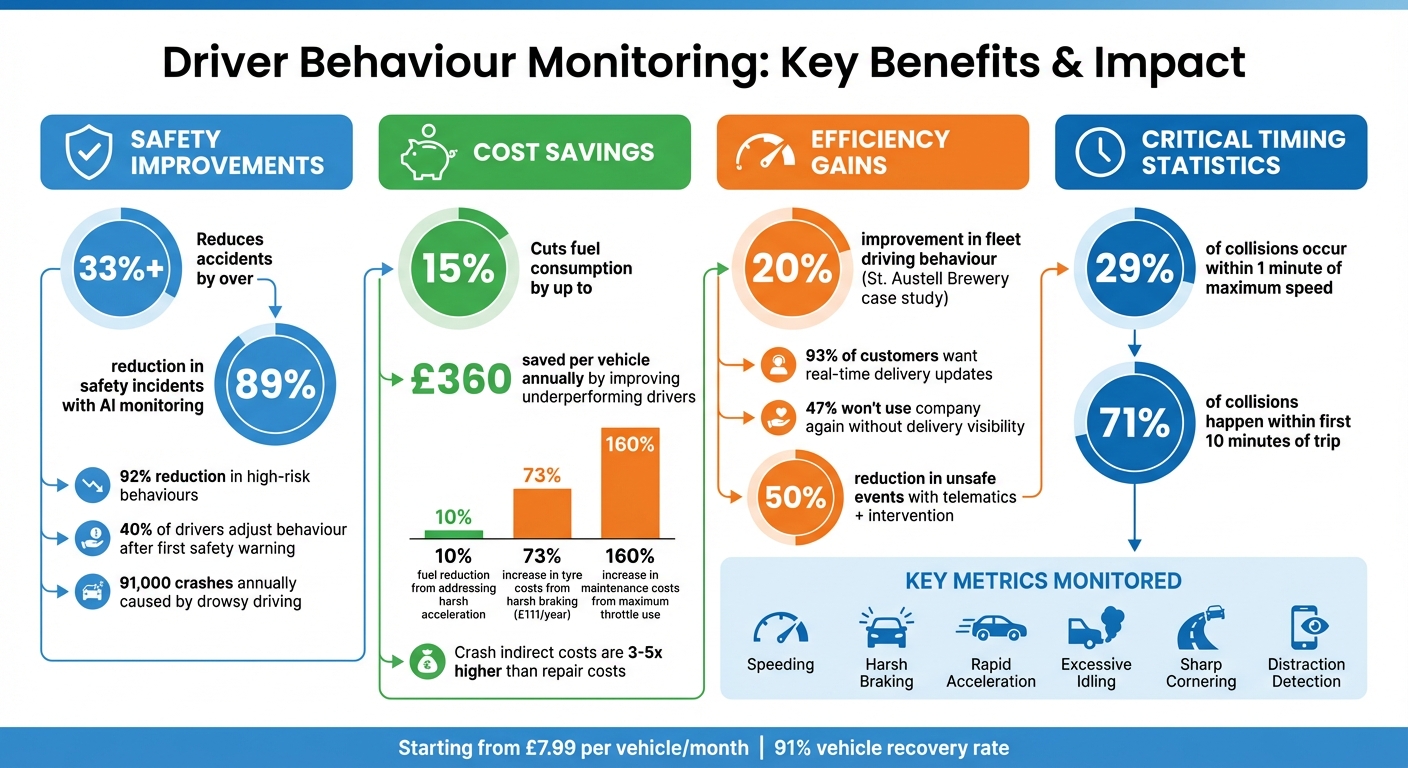
Driver behaviour monitoring devices track driving habits using tools like GPS, accelerometers, and AI-powered cameras. These systems measure behaviours such as speeding, harsh braking, rapid acceleration, and excessive idling. Fleet managers use this data to improve safety, lower costs, and reduce risks. Real-time alerts and driver scorecards encourage safer driving, while features like AI cameras detect distractions or fatigue. Businesses can also save on fuel, maintenance, and insurance premiums. Systems such as GRS Fleet Telematics offer solutions starting at £7.99 per vehicle per month, combining monitoring with theft protection and recovery features.
Key benefits include:
- Improved safety: Reduces accidents by over a third.
- Cost savings: Cuts fuel use by up to 15% and lowers repair costs.
- Efficiency: Tracks performance, optimises routes, and prevents downtime.
These devices are a practical tool for any fleet looking to manage risks and improve overall performance effectively.
Driver Behaviour Monitoring Benefits: Safety, Cost Savings & Efficiency Statistics
How Driver Behaviour Monitoring Devices Work
Technology and Components
Driver behaviour monitoring systems combine several technologies to track and analyse driving habits effectively. A GPS module pinpoints location, calculates real-time speed, and maps out routes, ensuring comprehensive tracking. A 3-axis accelerometer measures G-forces, identifying aggressive driving behaviours like sudden braking, rapid acceleration, or sharp cornering. Meanwhile, AI-powered dash cams detect signs of drowsiness and distractions, and driver ID systems - using RFID tags, scanners, or mobile logins - help ensure accountability.
Some systems go a step further by integrating with vehicle sensors to monitor seat belt usage, engine diagnostics, and excessive engine revving. For businesses looking to avoid installation costs, smartphone-based solutions offer a practical alternative, enabling monitoring for hire cars or shared vehicles. Once these technologies gather data, it is seamlessly transmitted for analysis.
Data Collection and Analysis
The collected data is sent via GPRS or cellular networks to central software, where it's processed into actionable insights. Systems like Quartix, for example, calculate driver scores by analysing speed, acceleration, and braking patterns. They ensure fairness by weighting the severity of incidents against total driving time, preventing longer shifts from being unfairly penalised. Additionally, contextual speed analysis compares a vehicle's speed to aggregated data from millions of other cars on the same road, flagging unsafe driving even if it technically complies with speed limits.
In April 2020, St. Austell Brewery adopted the Quartix system under the guidance of Depot and Transport Manager Karl Davidson. Using daily briefings based on driving style reports, the company improved fleet driving behaviour by 20%, with drivers consistently achieving scores in the 80–100 range.
Real-Time Alerts and Feedback
Once processed, the data triggers real-time alerts to prompt immediate action from drivers. For instance, in-cab buzzers emit audible warnings for harsh driving events, while AI-powered cameras alert drivers to signs of fatigue or mobile phone use. Drivers can also use mobile apps to review their performance scores and incidents, encouraging accountability without feeling overly monitored.
This approach has proven effective: 40% of drivers adjust their behaviour after receiving their first safety warning. The urgency of these alerts is underscored by statistics showing that 29% of collisions occur within one minute of reaching maximum speed, and 71% happen within the first 10 minutes of a trip. By addressing risky behaviours immediately, these feedback systems help prevent accidents, reducing potential costs and liabilities before they escalate.
Key Metrics and Behaviours Monitored
Common Metrics Tracked
Monitoring devices gather data on driving behaviours that directly impact safety and operational costs. Speeding is tracked using GPS, comparing vehicle speeds to local speed limits or typical road speeds. Harsh braking is identified through G-force sensors, which detect sudden deceleration. This often signals tailgating or distracted driving and contributes to brake wear. Similarly, rapid acceleration tracks sudden increases in speed and engine RPM, which can waste fuel and strain the engine.
Another key behaviour is excessive idling, where engines run unnecessarily while stationary, leading to wasted fuel and higher emissions. Sharp cornering is monitored to flag aggressive turns or swerves that may damage cargo and wear out tyres and suspension systems. Advanced systems now include AI-powered cameras capable of detecting risky actions like phone use, not wearing seatbelts, or other liability-prone behaviours.
By tracking these metrics, fleet managers can establish safety benchmarks tailored to their specific needs.
Customisable Safety Thresholds
Monitoring systems offer flexibility, allowing fleet managers to adapt thresholds to suit different vehicle types and operational requirements. For instance, harsh braking thresholds can be adjusted for light vans versus heavy-duty trucks, as each type reacts differently to G-forces. Additionally, localised scorecard templates can be created for fleets operating across various regions, ensuring compliance with specific safety regulations.
"Thresholds, rules and event types are totally customisable. Fleet managers can tailor scoring logic to what your business wants to measure, and choose thresholds to match specific, unique asset types." - Tenna
Custom thresholds ensure that metrics align with the characteristics of the vehicles and regional safety standards. The system uses a colour-coded scale for driver performance: 81–100 (Green), 41–80 (Amber), and 0–40 (Red). Managers also have the option to void certain violations manually - for example, when harsh braking occurs as a defensive driving measure - ensuring fair and accurate assessments.
AI-Powered Monitoring Features
AI technology has taken driver monitoring to the next level by shifting from passive observation to active prevention. Computer vision detects signs of fatigue and distraction, such as prolonged eye closure, head nodding, frequent yawning, or risky activities like using a mobile phone or eating while driving. This is particularly crucial, as drowsy driving contributes to an estimated 91,000 crashes annually.
These systems issue real-time warnings - through sounds or vibrations - to prompt immediate corrective actions. The impact is significant: AI monitoring has been shown to reduce safety incidents by 89% and high-risk behaviours by 92%. By combining sensor data with machine learning, these tools can even predict which drivers are most at risk of future accidents, enabling targeted coaching to prevent incidents before they occur.
Benefits of Driver Behaviour Monitoring for Fleets
Improved Driver Safety
Monitoring driver behaviour has a direct impact on reducing accidents by addressing risky habits before they escalate. Fleets using this technology report a reduction in accident rates by over one-third. Real-time alerts during critical moments can act as a safeguard, helping to prevent collisions.
The changes in driver behaviour are immediate and measurable. AI-enabled dashcams identify dangerous actions like mobile phone use or signs of fatigue, providing instant in-cab warnings that encourage corrective actions. Additionally, video telematics offer undeniable evidence to protect drivers from false insurance claims. Jake, Operations Director at Bishopsgate, highlights this benefit:
"The Fleet Witness system not only helps prevent accidents but in the case of an actual incident, provides clear-cut evidence to defend drivers from malicious claims".
These safety measures not only protect drivers but also contribute to reducing costs over time.
Lower Operating Costs
The financial advantages go far beyond accident prevention. Encouraging safer driving habits leads to noticeable savings on fuel and maintenance. For instance, addressing inefficient practices like harsh acceleration can cut fuel consumption by up to 10%. Improving underperforming drivers could save as much as £360 per vehicle annually, which adds up significantly across an entire fleet.
Maintenance expenses also drop when aggressive driving is reduced. Harsh braking can push tyre costs up by 73%, adding approximately £111 per year, while frequent use of maximum throttle can increase maintenance costs by as much as 160%. On top of that, the hidden costs of crashes - such as legal fees, lost work hours, and damage to reputation - are often three to five times higher than the direct repair costs.
Better Fleet Efficiency
Driver monitoring doesn’t just improve safety and cut costs - it also boosts overall fleet efficiency. Real-time data helps optimise resource allocation and operational planning. For example, tracking excessive idling can reduce unnecessary fuel waste. Analysing route history allows fleets to identify inefficient paths, enabling more deliveries or tasks to be completed during each shift.
Automated data collection also simplifies processes, replacing manual logs and reducing the need for managers to chase drivers for updates. This efficiency extends to customer service. Around 93% of customers want real-time updates on their deliveries, and nearly half (47%) say they wouldn’t use a company again if such visibility is lacking. Real-time tracking enables managers to quickly assign the nearest available driver to last-minute requests, improving customer satisfaction. Additionally, predictive maintenance alerts based on engine diagnostics help prevent breakdowns, reducing unplanned downtime and keeping vehicles on the road longer.
Implementing Driver Behaviour Monitoring in Your Fleet
Choosing the Right System
When selecting a system for driver behaviour monitoring, consider your fleet's primary goals. If reducing fuel consumption is your focus, opt for a GPS telematics platform that tracks idling and harsh acceleration. On the other hand, prioritising safety compliance might lead you to AI-powered dual-facing dashcams. These advanced systems can detect distracted driving, drowsiness, and tailgating, providing a more comprehensive layer of protection. Given that crash-related costs often exceed repair expenses by three to five times, investing in such technology becomes a sensible decision.
Ensure the system integrates seamlessly with your existing fleet management tools. Features like RFID fobs are essential for accurate driver assignment in shared vehicle setups. Look for platforms that offer customisation, allowing you to track KPIs specific to your operations. Research highlights that 29% of collisions occur within one minute of a driver hitting their maximum speed, underscoring the importance of real-time in-cab alerts for immediate feedback.
Once you've chosen the right system, the next step is to set clear policies and expectations for its implementation.
Setting Policies and Expectations
Transparency is key when introducing monitoring systems. Clearly outline the metrics being tracked - such as harsh braking, rapid acceleration, cornering, speeding, and engine idling - to address privacy concerns and build trust. Position the system as a supportive tool rather than a disciplinary one.
Engage drivers early in the process by hosting team meetings or conducting anonymous digital surveys. This involvement helps address concerns and fosters a culture centred on safety. Providing drivers with access to their performance data via mobile apps can encourage self-improvement and accountability. For example, nearly 40% of drivers adjust their behaviour after receiving their first safety warning.
Establish clear consequences for policy violations, such as requiring refresher training courses, while also recognising high-performing drivers. Reward schemes based on driver scores can promote healthy competition and reinforce positive behaviours.
Monitoring and Evaluating Performance
With policies in place, ongoing monitoring is essential for sustained improvement. Use tools like driver scorecards and colour-coded dashboards (e.g., Red/Amber/Green) to identify high-risk drivers for targeted coaching. Instead of generic training sessions, focus on specific data points. For instance, if a driver frequently brakes harshly at a particular corner, provide tailored feedback to address that behaviour.
Regularly review performance data - weekly or monthly - to track progress and refine your policies as needed. Automated rewards and league tables can further motivate safe driving by creating a sense of achievement and competition. A study of truck fleets revealed that combining telematics with driver intervention led to nearly a 50% reduction in unsafe events like sudden acceleration and hard braking.
This approach doesn't just lower accident rates; it can transform the overall efficiency and safety of your fleet operations. By focusing on data-driven insights and driver engagement, you create a safer, more accountable driving culture across the board.
GRS Fleet Telematics: Driver Monitoring Solutions
Key Features of GRS Fleet Telematics
GRS Fleet Telematics offers real-time monitoring of driver behaviour through GPS updates that refresh every minute. Using built-in accelerometers, the system detects harsh actions like sudden acceleration, hard braking, sharp cornering, and over-revving, providing detailed insights into how vehicles are operated across the UK.
Driver scorecards, complete with leaderboards, and in-cab coaching tools provide immediate feedback on unsafe practices such as speeding or abrupt braking. These features help identify areas where drivers may need additional training while also recognising and rewarding safe driving habits. The system also tracks idle time, highlighting unnecessary engine usage that could impact fuel efficiency.
Geofencing functionality allows you to designate specific zones and receive instant alerts if a vehicle exits these areas or moves during restricted hours. For added security, GRS employs dual-tracker technology: a primary hardwired GPS unit paired with a hidden Bluetooth backup. If the main tracker is tampered with, the backup continues to transmit location data. Additionally, you can remotely immobilise a vehicle’s engine to prevent theft or misuse. These features are designed to boost both fleet safety and operational efficiency.
Affordable Pricing Options
GRS Fleet Telematics combines robust features with flexible pricing to accommodate varied fleet requirements. The company offers three hardware options tailored to different security needs:
- Essential Package: Priced at £35, this includes a single wired tracker.
- Enhanced Package: At £79, it adds a secondary Bluetooth backup for enhanced theft protection.
- Ultimate Package: For £99, this package includes both trackers and engine immobilisation capabilities for maximum security.
The software subscription is £7.99 per vehicle per month, covering SIM and data, a dedicated account manager, and full access to the platform. Installation is free if paired with fleet branding through GRS Fleet Graphics; otherwise, installation costs are provided upon request. Additionally, the pay-per-recovery model eliminates upfront recovery fees, making it easier to predict and manage your fleet security expenses.
Security and Recovery Rates
GRS’s advanced security measures not only enhance safety but also ensure swift vehicle recovery. With a 91% recovery rate for stolen vehicles, most recoveries are completed within 24 hours thanks to GRS’s collaboration with professional recovery agents and law enforcement. The dual-tracker system plays a crucial role in maintaining these recovery rates, even if thieves disable the primary unit. With over 35 years of expertise in vehicle tracking and security, GRS continues to deliver reliable solutions for fleet management across the UK.
Safe Fleet MobileMule™ AI, Driver Monitoring System (DMS) Driver Behavior, Video Event Recording
Conclusion
Driver behaviour monitoring devices are now a key component of modern fleet management, helping to improve safety, cut costs, and boost efficiency. By tracking metrics like speeding, harsh braking, and excessive idling, these systems can lower accident rates by over a third and reduce fuel consumption by up to 10%. Real-time alerts also enable drivers to take immediate corrective actions.
The financial benefits are clear too. Indirect crash costs, such as litigation and lost productivity, often run 3–5 times higher than repair expenses, making monitoring a smart investment. Additionally, many insurers in the UK now offer lower premiums to fleets that actively work to improve driver safety.
But it’s not just about savings - building a positive driver culture is equally important. When monitoring is positioned as a safety aid rather than a surveillance tool, it fosters trust. Gamification features, such as scorecards and leaderboards, can further encourage safe driving by creating healthy competition and rewarding good habits. This helps promote accountability and a sense of shared responsibility across your fleet.
For those looking to implement such solutions, GRS Fleet Telematics offers a well-rounded system. With features like real-time alerts, customisable thresholds, and dual-tracker technology, it provides both operational insights and asset protection. Starting at just £7.99 per month and boasting a 91% vehicle recovery rate, it’s a practical and effective choice for fleet managers.
FAQs
How do driver behaviour monitoring devices help improve fleet safety?
Driver behaviour monitoring devices are essential tools for improving fleet safety. They track critical driving behaviours like speeding, harsh braking, rapid acceleration, sharp cornering, and idling. These metrics give fleet managers a clear view of unsafe habits that could lead to accidents or cause unnecessary vehicle wear.
With this data, managers can address risky driving through targeted training or real-time feedback, promoting safer habits behind the wheel. The benefits go beyond safety - fewer accidents mean lower insurance premiums and repair costs. Over time, these systems help create a safety-focused mindset within fleets, contributing to safer roads for everyone.
How can driver behaviour monitoring systems help businesses save money?
Driver behaviour monitoring systems offer businesses a practical way to cut costs. By encouraging safer and smarter driving practices, these systems can lead to reduced fuel usage, lower maintenance expenses, and a drop in accident rates. Fewer accidents can also mean lower insurance premiums, adding to the savings.
In fact, businesses can save as much as £360 per vehicle each year by improving fuel efficiency, minimising repair needs, and optimising fleet performance. This makes these monitoring systems a smart investment for managing fleet costs while boosting day-to-day efficiency.
How do AI-powered cameras improve driver monitoring and safety?
AI-powered cameras are transforming driver safety by analysing behaviour in real-time to spot risky actions like distraction, fatigue, mobile phone use, harsh braking, or speeding. These systems combine advanced artificial intelligence with driver-facing and forward-facing cameras to monitor activity effectively.
When unsafe actions are detected, the system can instantly issue audible or visual alerts, encouraging drivers to adjust their behaviour. For fleet managers, these cameras provide detailed performance data, helping them focus on specific training needs and ensuring better compliance with safety standards. By reducing accidents and promoting safer driving habits, AI-powered cameras have become an essential tool in modern fleet management.